
The Matter of Britain
Mythic Foundations and the Matter of Britain
Additional Information: Anglo-Saxon England
The emergence of "The Matter of Britain" in the twelfth century created a defining collection of medieval storytelling that transformed local folklore into a grand national mythology. Rather than a single historical record, this narrative framework brought together a vast network of Celtic legends, Trojan origin myths, and chivalric romances that permanently shaped the literary and cultural identity of the land.
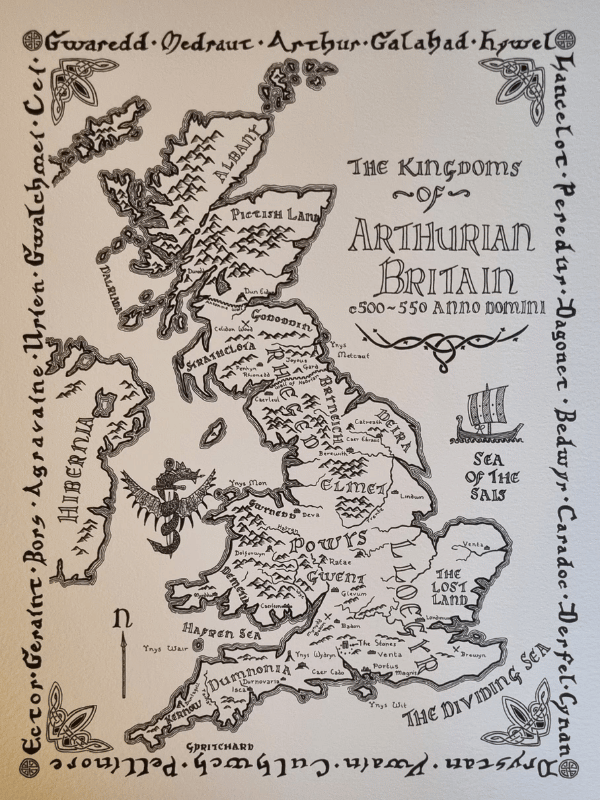
While King Arthur and his knights stand at the absolute center of this tradition, the mythic cycle reaches far beyond Camelot to chart the entire foundation and layout of the prehistoric kingdom. Throughout this narrative, we follow the long timeline of these medieval epics, tracing how early Welsh folklore and classical stories were woven together to create a supreme national mythology that backed the power, line, and legitimacy of the island's rulers.
Page Contents:
The Three Great Mythic Traditions of the Middle Ages
12th - 16th Centuries
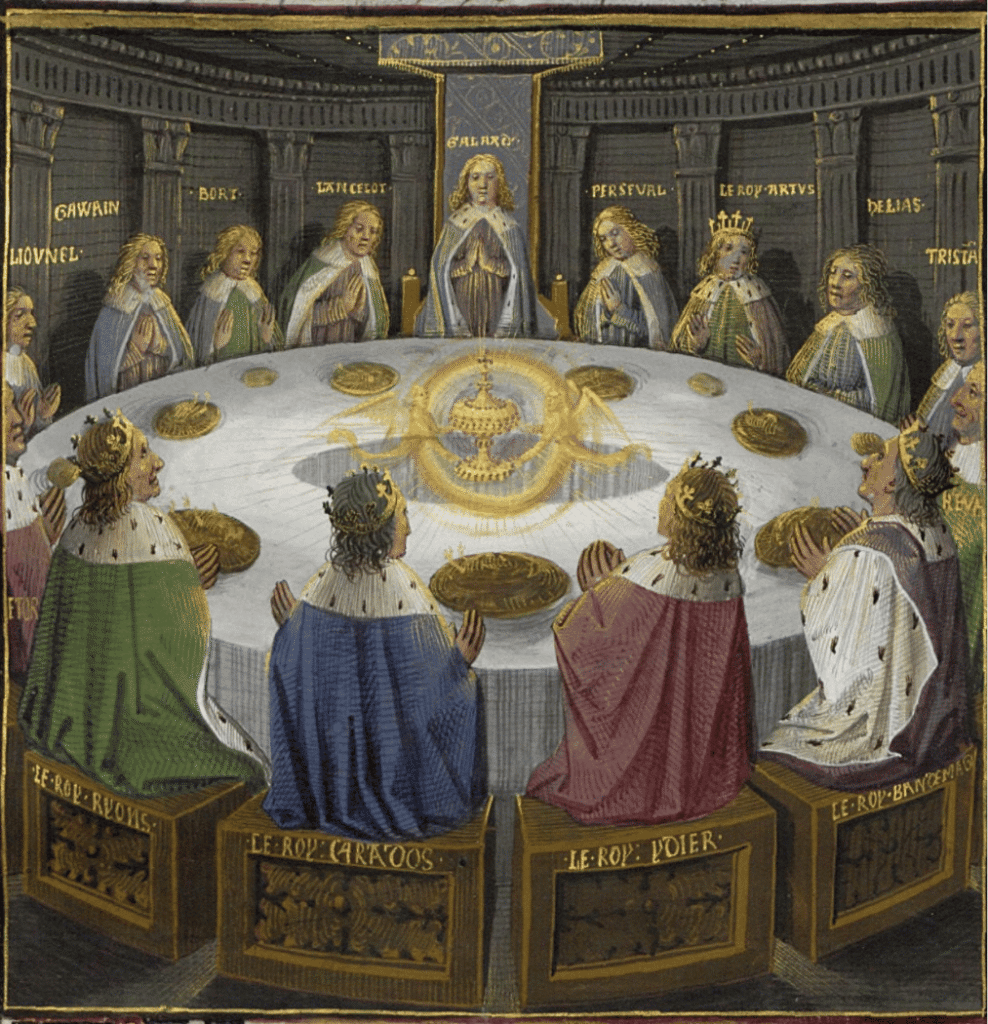
The Matter of Britain stands as one of the three core storytelling cycles that defined the literature of medieval Western Europe. In the late twelfth century, the French poet Jean Bodel famously classified all popular secular literature into three distinct thematic branches.
There was the Matter of Rome, which covered the classical history and myths of ancient Greece, Troy, and Alexander the Great; the Matter of France, which celebrated the battle exploits of Charlemagne and his holy paladins; and the Matter of Britain, which gathered the ancient folklore, local legends, and dynastic tales of the British Isles. Written down, translated, and reworked between the twelfth and sixteenth centuries, this collection of stories became a grand national mythology that captured the imagination of royal courts across Europe, spreading from England straight into the literature of France, Germany, and Spain.
While King Arthur, the fellowship of the Round Table, and the quest for the Holy Grail form the core, central topic of this tradition, the Matter of Britain covers a much wider timeline. The stories span over two thousand years of mythic history, charting the island's journey from its first discovery by ancient voyagers right down to the eventual Anglo-Saxon invasions. The texts do not just focus on knightly tournaments; instead, they act as a legendary history of the land itself.
The cycle details the clearing of primordial forests, the building of the country's oldest roads, and the founding of major cities like London, Bath, and Leicester. It tracks the dramatic reigns of ancient monarchs whose stories were treated as absolute historical fact by medieval scholars. From the tragic choices of King Lear to the sorcery of Merlin, these stories provided a shared cultural vocabulary for generations of readers, permanently locking the landscape of the shires into a world of magic, chivalry, and royal destiny.
The Celtic Bedrock and Early Welsh Folklore
600 - 1100 AD
Additional Information: The Evolution of the English Language / The Brythonic Celtic Dialect
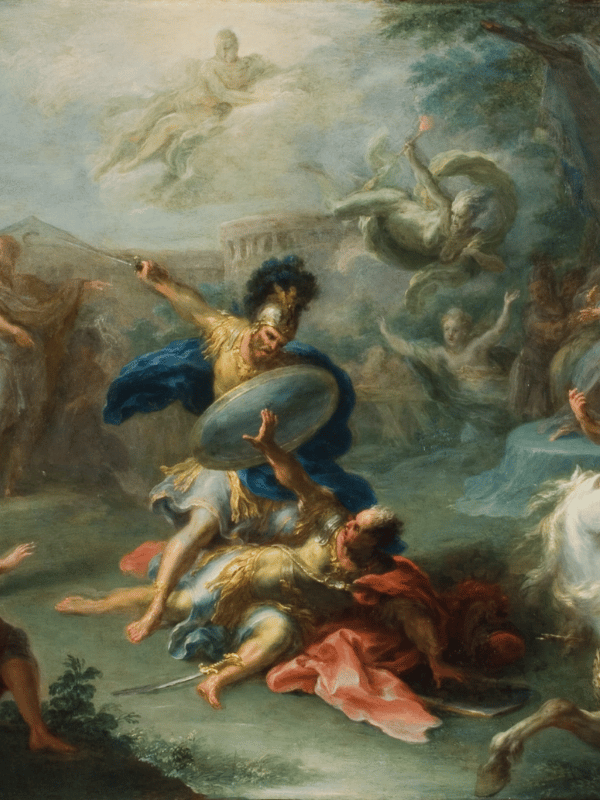
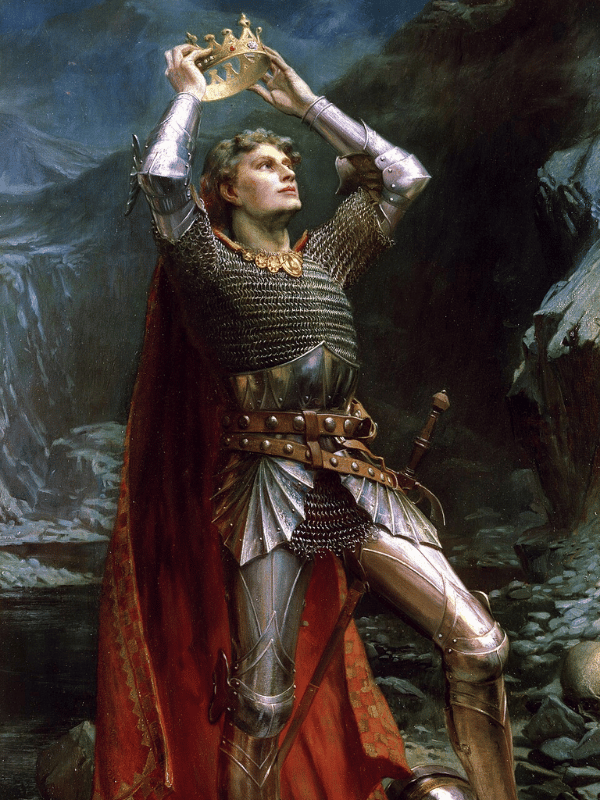
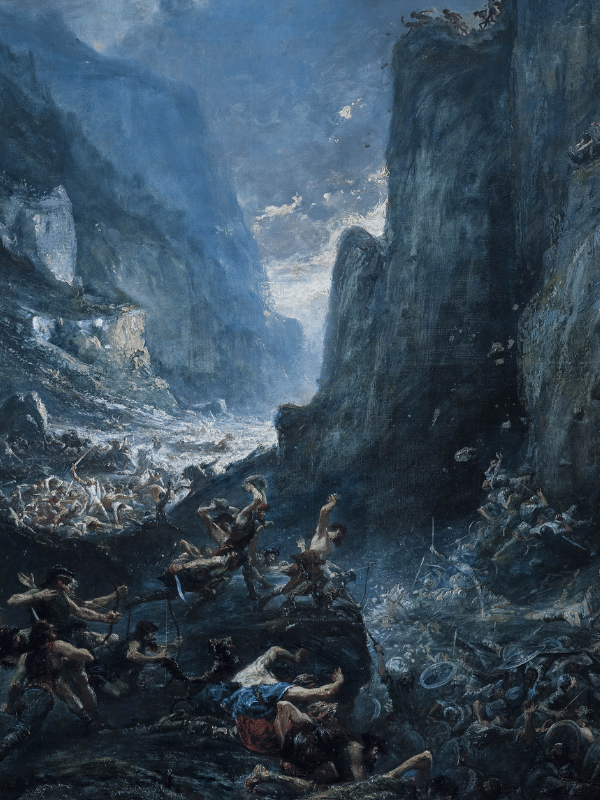
The oldest roots of these British stories did not come from French palaces or English castles, but from the spoken tales and early handwritten poems of Wales, Cornwall, and northern Britain. Long before King Arthur was imagined as a polished knight in shining armour, he appeared in early Welsh literature as a rugged, supernatural warlord leading a band of fierce tribal heroes. These early tales, created during a time of intense warfare against Anglo-Saxon invaders, mixed real historical memories of post-Roman battles with ancient Celtic myths, filling the landscape with giants, sorcerers, and enchanted beasts.
The oldest surviving fragments show an Arthur who spent his life protecting the island from both human enemies and terrifying monsters. In a famous poem called Y Gododdin, composed by the bard Aneirin around the year 600, a fallen northern soldier is praised for his incredible bravery in slaughtering his enemies, though the poet notes he "was no Arthur." This short line shows that his name was already famous as the ultimate example of a great fighter.
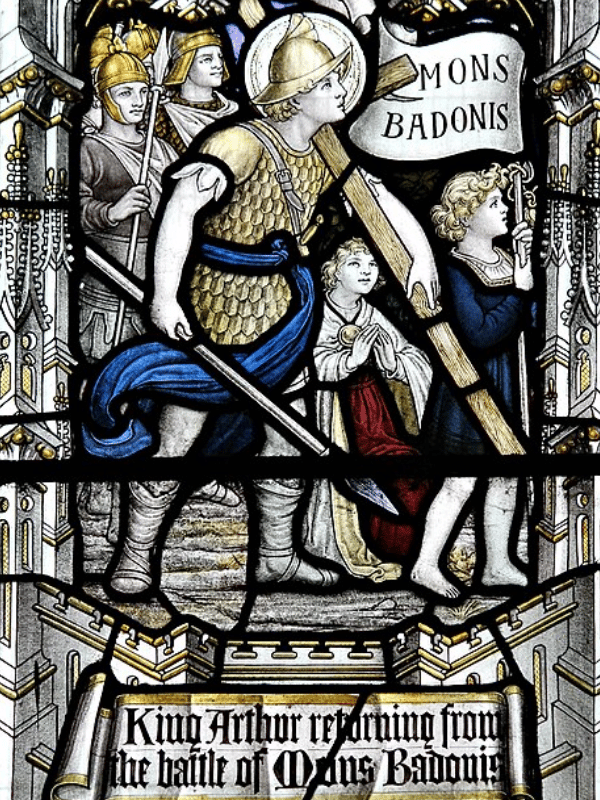
Beyond pure poetry, early Welsh historical records like the Annales Cambriae (Annals of Wales) gave this warrior a literal place in history. These records document the Battle of Badon in 516, where Arthur carried the cross of Jesus Christ for three days and nights, and the Battle of Camlann in 537, where Arthur and Mordred both fell, establishing the historical foundations for the entire legend.
This early Welsh folklore reached its peak in a collection of traditional stories known as the Mabinogion, particularly in the tale of Culhwch ac Olwen (Culhwch and Olwen). In this story, Arthur's court at Celliwig is a gathering place for heroes with strange, magical powers—like champions who can swallow the sea, burn through obstacles with their feet, or track footprints across the tops of trees. The plot follows a grand quest where the young hero Culhwch must complete dozens of impossible tasks set by a giant king before he can marry Princess Olwen. Arthur and his men step in to achieve these feats, leading a grand hunt across the countryside for the Twrch Trwyth, a ferocious, enchanted prince turned into a giant wild boar with a gold comb and shears between its ears.
Arthur’s warriors pursue the beast through Ireland, across the Bristol Channel, and straight through the valleys of Wales, cornering it to steal its treasures before driving it into the sea off Cornwall. The mythic texts also include poems like Preiddeu Annwn (The Spoils of the Otherworld), where Arthur leads a fleet of three ships into a magical, supernatural fortress to steal a giant, pearl-rimmed cauldron that refuses to boil a coward's food. By tying these fantastic chases and magical raids to real mountains, rivers, and caves across Britain, these early storytellers turned the actual landscape into a world of myth, providing the raw material that later authors would reshape into the famous legends of Camelot.
Further Information: The Celtic Bedrock and Early Welsh Folklore


Nennius and the Historia Brittonum
828 AD
Additional Information: The Chronicles of Britain / Nennius and the History of the Britons
The transformation of Arthur from an oral folk legend into a written historical figure was achieved in the early ninth century within a Latin chronicle called the Historia Brittonum (History of the Britons). Traditionally attributed to a Welsh monk named Nennius, this text was compiled during a dark era marked by devastating Viking raids and ongoing wars against the Anglo-Saxons.
Working in a monastery in Wales, Nennius looked back at the collapse of Roman rule three centuries earlier, gathering every scrap of old folklore, genealogical lists, and regional legends he could find. In his famous prologue, he admitted that he had simply "made a heap of all that he found," seeking to preserve the history of his people before it was lost forever. In doing so, he provided the very first structured record of Arthur’s military deeds, turning a legendary warrior into an official historical defender of the country.
To construct his chronicle, Nennius relied heavily on the oldest surviving dark age text: De Excidio et Conquestu Britanniae (On the Ruin and Conquest of Britain), written around 547 by the early British monk Gildas. Gildas had written a fierce, fire-and-brimstone sermon blasting the corruption of British kings and detailing the terrifying arrival of the Saxons, whom he compared to a pack of wolves entering a sheep pen. Crucially, while Gildas wrote about the famous British victory at the Battle of Badon Hill, he attributed the overall resistance to a Romanized leader named Ambrosius Aurelianus and completely omitted the name of Arthur.
Three centuries later, Nennius took Gildas's dark historical framework but systematically reworked it using local Welsh bardic traditions. Nennius explicitly clarified that while Ambrosius was a king, Arthur was the supreme dux bellorum—a dedicated military war leader who personally commanded the combined forces of the shires.
The chronicle records that Arthur led this unified counter-offensive across a sequence of twelve monumental battles, fighting in locations ranging from the banks of the River Douglas to the dense trees of the Caledonian Forest. Nennius details how Arthur won his first victory at the mouth of the River Glein, followed by four distinct battles along the banks of the River Douglas in the region of Linnuis. He then fought a sequence of highly specific engagements at a river called Bassas, inside the dark woodland of the Caledonian Forest—traditionally recorded as Cat Coit Celidon—and atop the high ridge of Gurnion Castle. During the battle at Gurnion, Nennius notes that Arthur carried a holy image of the Virgin Mary upon his shoulders, fasting and praying to secure divine protection for his men.
The list continues through intense clashes at the City of the Legion (Chester), along the banks of the River Tribruit, and at a mountain called Agned, before reaching its ultimate climax at the famous Battle of Badon Hill (Mount Badon). At Badon Hill, Nennius asserts that Arthur executed a ferocious lone infantry charge, personally slaughtering nine hundred and sixty enemy warriors in a single day, entirely breaking the strategic power of the Saxon coalitions.
By documenting these actions in written Latin, the international language of the church and scholarship, Nennius did something incredibly important for the future of the legend. He provided the historical bedrock that later medieval writers, like Geoffrey of Monmouth, would use to claim that King Arthur was an absolute, real-world historical fact rather than a fictional character from a storybook. This short, dense chapter served as the vital bridge between raw Welsh poems and the grand, chivalric stories of Camelot that would captivate the world centuries later.
Further Information: Nennius and the Historia Brittonum

The Exile of Brutus and the Voyage to Albion
(1100 BC, Legendary Chronology)
Additional Information: The Chronicles of Britain / Geoffrey of Monmouth and the Legend of Arthur
The mythic history of Britain begins not with a native king, but with a displaced Trojan exile named Brutus, who was credited with giving the island its name and founding its first royal line. This legendary origin story was first fully detailed by the Welsh cleric Geoffrey of Monmouth in his highly influential 1136 book, the Historia Regum Britanniae (History of the Kings of Britain). Seeking to give the island a glorious classical pedigree that rivalled the great empires of antiquity, Geoffrey traced Brutus's ancestry straight back to Aeneas, the legendary Trojan prince who fled the fall of Troy to found the Roman line. This grand lineage allowed medieval kings to claim that British royalty was directly linked to the gods and heroes of the ancient world.
The narrative begins in Italy with a tragic family omen. Before Brutus was born, magicians prophesied that the child would cause the deaths of both his father and mother, yet grow to become the most celebrated man in the world. The prophecy was fulfilled when his mother died in childbirth. Years later, a fifteen-year-old Brutus accidentally shot his father, Silvius, with a stray arrow during a deer hunt.
Banished from Italy for this accidental killing, Brutus traveled to Greece, where he discovered the remnants of the surviving Trojans living in brutal slavery under an oppressive Greek king named Pandrasus. Armed with his classical lineage and martial skill, Brutus organized the captive Trojans into an insurgent army. He launched a successful military campaign, routing the Greek forces in a night ambush and forcing Pandrasus to surrender his daughter, Ignoge, in marriage, along with a massive fleet of ships and treasures to fund their total exile from the Mediterranean.
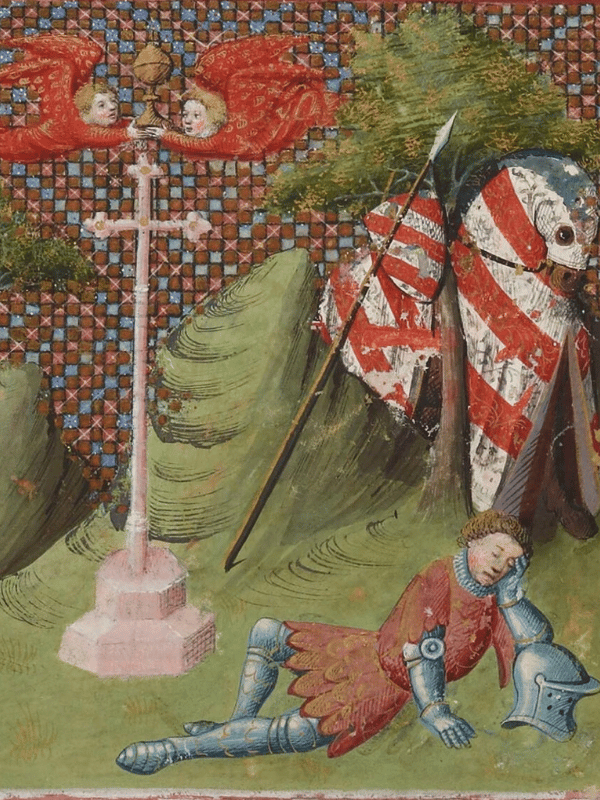
During the initial months of the voyage, Ignoge wept bitterly for her lost homeland, terrified of the open water and the uncertain future of her people. Brutus comforted his new bride as the fleet of over three hundred vessels navigated the treacherous waters of the Mediterranean. Setting sail into the open sea, the fleet landed at a deserted island called Leogecia, a place ravaged by past pirate raids. Inside the ruins of an ancient temple, Brutus performed a sacred ritual to seek guidance, pouring wine onto the altar of the goddess Diana and walking nine times around the sanctuary while holding a consecrated chalice. As he slept before the altar, the goddess appeared to him in a vision, delivering a prophetic decree that pointed toward an unknown island hidden in the western ocean, past the kingdom of Gaul. Diana promised that this land, once known as Albion, was empty of people except for a few giants, and would provide an unbroken home where Brutus and his descendants could build a new Troy and establish a royal line that would rule the entire world.
Empowered with this divine mandate, the fleet passed through the Pillars of Hercules and braved the rough Atlantic shipping lanes. Along the way, they landed on the coast of North Africa to gather freshwater and survived attacks by predatory pirates before reaching Aquitaine in modern France. There, the Trojans anchored at the mouth of the River Loire, instantly raising the suspicion of Goffarius Pictus, the King of the Aquitanians. When the king's messengers demanded to know why a foreign fleet had arrived without permission, a massive diplomatic skirmish exploded into a full-scale war.
Brutus fought a fierce campaign against the native forces, completely routing the armies of Goffarius. During the heavy fighting, Brutus's brave nephew, Turonus, was killed in battle after slaying hundreds of enemies. To honor his memory, Brutus buried him on the spot and founded the city of Tours over his grave.
In Aquitaine, Brutus also gathered vital reinforcements from a stray band of Trojan exiles led by a legendary, ultra-powerful warrior named Corineus, a giant-slayer who loved nothing more than fighting champions. With their fleets replenished, their losses replaced, and their warriors battle-tested, the combined Trojan forces departed the continent, launching their final landing on the southern coast of the island.


Clearing the Island and the Slaying of Gogmagog
(1100 BC, Legendary Chronology)
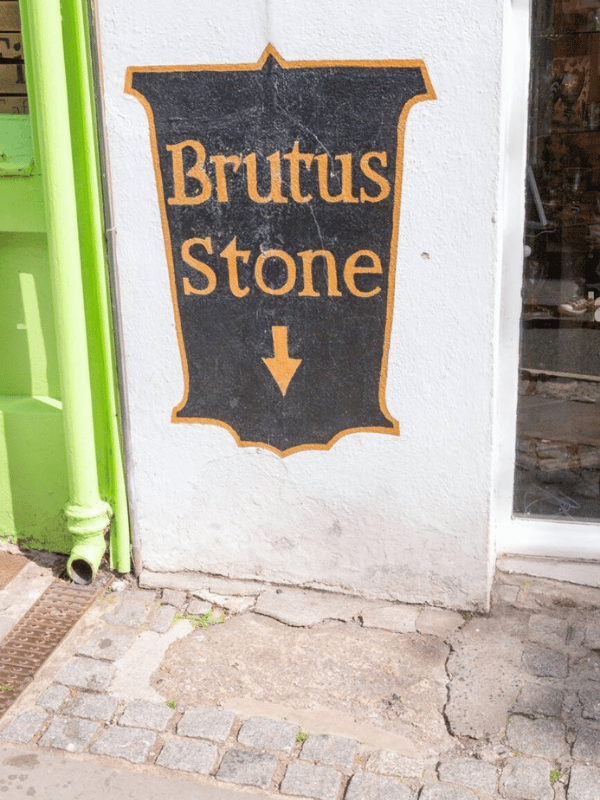
The Trojan fleet completed its long ocean voyage by sailing up the River Dart and dropping anchor at the riverside town of Totnes in modern Devon. Stepping ashore onto a large granite boulder—remembered as the Totnes Stone—Brutus formally claimed the entire territory for his followers, renaming the island Britain after himself, while his people became known as Britons. According to the accounts written by Geoffrey of Monmouth in his Historia Regum Britanniae, the land was highly fertile, covered in dense, primary forests, and rich in silver and gold veins. However, the island was far from peaceful, as it was inhabited by a surviving remnant of prehistoric giants who lived in caves and deep mountain ravines, led by a monstrous, twelve-cubit-tall giant named Gogmagog.
To clear the land for permanent farming settlements, the Trojans marched inland, forcing the giants to retreat into the wild granite moors and rocky coastlines of the far west. Brutus partitioned the conquered territories among his captains, granting the entire southwestern peninsula to his premier military champion, Corineus. This rugged region was named Cornwall in honor of its new ruler, a fitting domain for Corineus, who actively preferred wrestling giants over ordinary agriculture.
Driven to the absolute edge of the peninsula, the surviving giants fortified themselves on a jagged tidal island in Mount's Bay, constructing the massive stone stronghold known today as St Michael's Mount. Local folklore records that the giants built this tidal fortress out of huge, square granite blocks carried by hand from the inland moors of Penwith, using the island as a secure base to launch predatory cattle raids against the new Trojan farming settlements.
The simmering conflict reached a violent climax during a royal feast at the Trojan base camp. A band of twenty giants left their western strongholds and launched a surprise raid on the celebrations, slaughtering dozens of Britons with massive clubs before the Trojan infantry rallied to kill the attackers, leaving only their colossal leader, Gogmagog, alive for a formal trial of physical strength.
The captive giant was brought to the chalk cliffs of Plymouth Hoe to face Corineus in a brutal wrestling match to decide the fate of the territory. Gogmagog squeezed Corineus with such immense, superhuman force that he broke three of the Trojan champion's ribs. Enraged by the injury, Corineus hoisted the massive giant onto his shoulders, ran directly to the edge of the precipice, and threw Gogmagog headfirst off the high cliff into the crashing waves below.
The giant struck the sharp rocks and tore his body to pieces, coloring the water red—a coastal landmark that medieval sailors named Gogmagog’s Leap. This monumental victory broke the power of the prehistoric monsters completely, inspiring later Cornish legends like the giant Cormoran of St Michael's Mount. With the primary threat removed, the Britons safely established towns, cleared the ancient woodlands for grain fields, and divided the landscape into secure shires under a uniform system of laws.

Troia Nova and the Line of Trojan Kings
(1100 - 800 BC, Legendary Chronology)
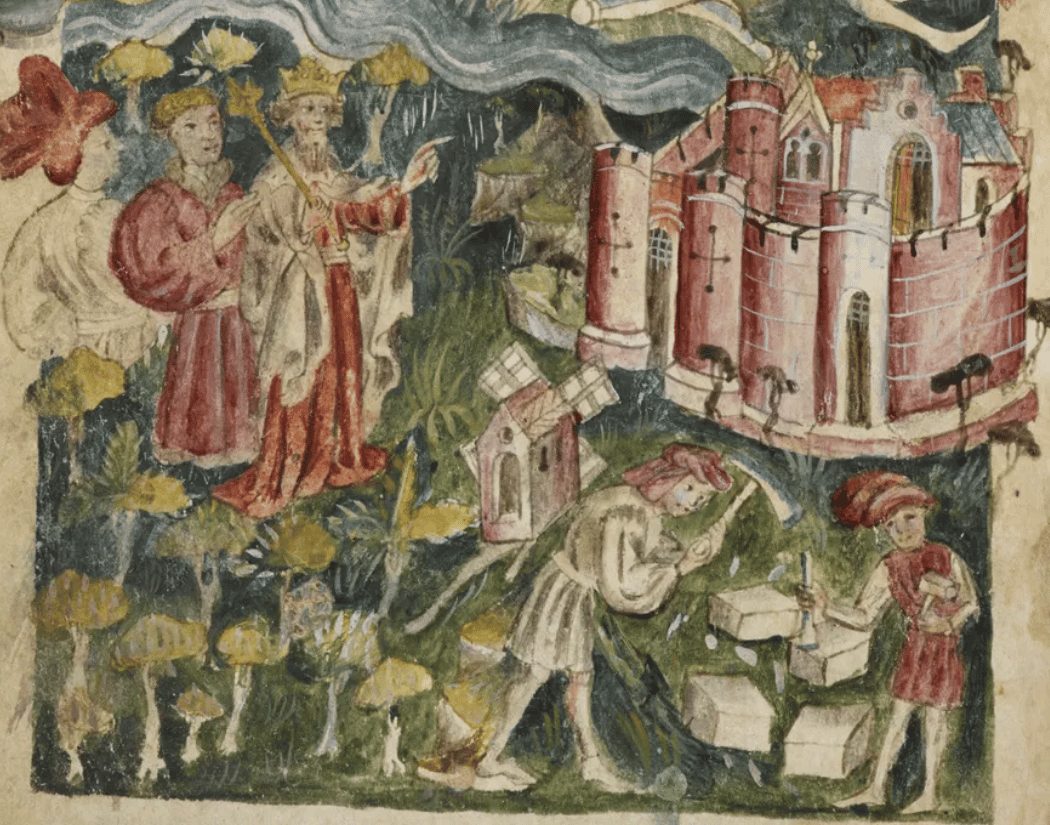
With the prehistoric giants successfully removed from the land, Brutus set out to construct a grand capital city that would serve as the seat of his new empire. Traveling along the fertile southern shires, he discovered the ideal location along the banks of the River Thames, a wide and deep waterway perfectly suited for maritime shipping and protected by natural rolling hills. On this site, Brutus founded a magnificent fortified settlement named Troia Nova (New Troy), a name that was later altered over centuries of linguistic shift into Trinovantum. To establish an enduring legal foundation for the growing population, he compiled the island's very first code of civil laws, transforming a loose band of wartime exiles into a structured society governed by the rule of law.
Following the peaceful death of Brutus after a twenty-four-year reign, the unified kingdom was partitioned among his three sons, establishing the foundational geographic borders of the island. The eldest son, Locrinus, inherited the wealthy southern core of the country, which became known as Loegria (England). The second son, Albanactus, claimed the rugged northern wilderness, naming it Albania (Scotland), while the youngest son, Camber, took the western mountain valleys beyond the River Severn, creating Cambria (Wales).
This mythic line of Trojan kings ruled the land for generations, with subsequent monarchs shaping the actual physical geography and cities of the country. Among these descendants was King Rud Hud Hudibras, who built the towns of Canterbury and Winchester, and King Bladud, a legendary scholar trained in the classical arts of Greece. Bladud used early engineering to discover the hot springs of Somerset, founding the city of Bath and constructing a temple to the goddess Minerva. His reign ended in a dramatic public disaster when he attempted to fly over New Troy using a pair of custom-built, artificial wings, crashing directly into the temple of Apollo and breaking his neck.
The final culmination of this early mythic line was achieved during the reign of Bladud's son, King Lear, who ruled the land for a prolonged, sixty-year period of peace and founded the city of Leicester along the River Soar. The twilight of Lear's reign descended into a severe constitutional and family crisis when the aging monarch decided to partition his kingdom among his three daughters—Goneril, Regan, and Cordelia—based entirely on who gave the most extravagant declaration of love.
While the two eldest daughters used lavish flattery to secure wealthy land portions, the youngest daughter, Cordelia, refused to use false praise, stating simply that she loved her father as a daughter should. Enraged by this response, Lear disinherited Cordelia, leaving her to marry the King of the Franks without a dowry, while he divided the island between Goneril and Regan.
The older daughters quickly betrayed the old king, stripping him of his royal guards and forcing him into absolute exile. Lear fled across the English Channel to seek refuge with Cordelia, who raised a massive Frankish army to launch a cross-channel counter-offensive. Her forces completely routed the armies of the older sisters, successfully restoring Lear to the British throne before his peaceful death three years later.
Further Information: Troia Nova and the Line of Trojan Kings


Geoffrey of Monmouth and the Norman Court
1136 – 1155 AD
Additional Information: Chronicles of Britain / Geoffrey of Monmouth and the Legend of Arthur
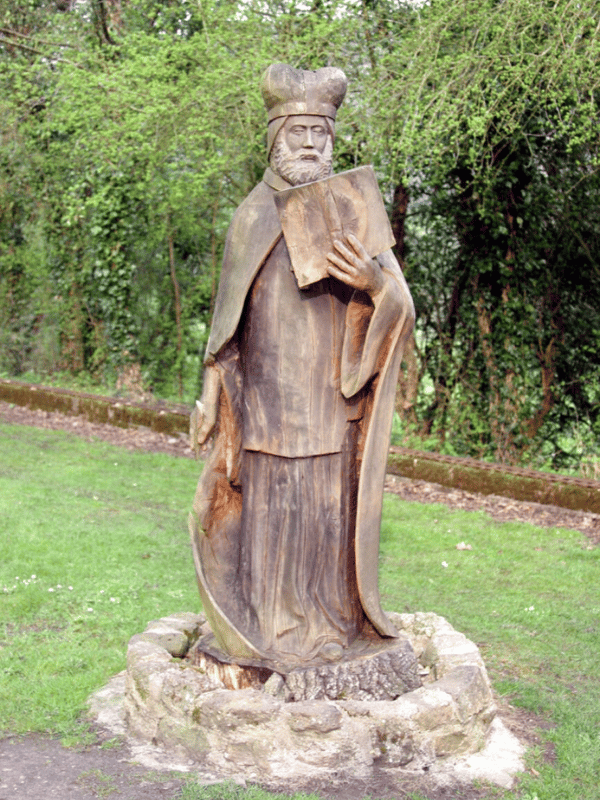
The scattered legends of Brutus and King Arthur were pulled out of regional folklore and turned into an international publishing sensation during the mid-twelfth century. This literary revolution was spearheaded by Geoffrey of Monmouth, a well-read clerk working in Oxford, who completed his landmark book, the Historia Regum Britanniae (History of the Kings of Britain), around 1136. Geoffrey claimed he was simply translating "a very ancient book in the British tongue" given to him by Walter, the Archdeacon of Oxford.
While this ancient source has never been found, modern historians recognize the work as a brilliant blend of old Welsh genealogies, local folklore, and his own creative imagination. Written in Latin, the international language of learning, his book provided a spectacular history for the island that instantly captured the attention of royal courts across Europe.
The timing of Geoffrey's book matched the political needs of the new Anglo-Norman ruling class. Following the Norman Conquest of 1066, the new barons and kings faced a deep identity crisis; they were French-speaking rulers sitting on top of a conquered Anglo-Saxon population, and they lacked a deep connection to the historic landscape of the shires. Geoffrey’s chronicle solved this problem by providing a glorious prehistoric past that completely bypassed the Anglo-Saxons. By showcasing ancient British kings who had successfully fought off Julius Caesar and conquered parts of Europe, the book allowed Norman aristocrats to view themselves as the rightful heirs to a grand, independent island empire. It even gave them ideological ammunition against the contemporary Welsh and Scottish kingdoms by asserting that the entire island had always been meant to sit under a single supreme crown.
The stories moved fast from scholarly Latin into popular court culture. In 1155, a cleric from Jersey named Wace translated Geoffrey's work into French rhyming verse, naming it the Roman de Brut (Romance of Brutus) and presenting it to Queen Eleanor of Aquitaine. Wace specifically altered the text to appeal to the tastes of the royal court, softening the raw violence of the early Welsh battles with the newly popular values of courtly love and knightly etiquette.
Crucially, Wace added the very first literary mention of the Round Table, explaining that King Arthur had it constructed so that all his proud barons would sit as equals, preventing furious arguments over who deserved the seat of honor at dinner. Decades later, a parish priest from Worcestershire named Layamon adapted Wace's text into early English alliterative verse. By translating these grand stories into the vernacular language of the shires, Layamon ensured that the tales of Brutus, Lear, and Arthur were read out in local manor halls, permanently fixing these mythic figures into the shared national memory of the country.
The Usurpation of Vortigern and the Saxon Invitation
(440 - 449 AD, Legendary Chronology)
The golden era of the Trojan kings collapsed into a dark period of betrayal and foreign invasion during the mid-fifth century. According to the accounts written by Geoffrey of Monmouth in his History of the Kings of Britain, the crisis began with the sudden death of King Constantine II, a ruler who had briefly brought stability back to the island. Constantine left behind three sons, but none were ready to rule: the eldest, Constans, was a quiet youth living as a cloistered monk in a monastery at Winchester, while the younger brothers, Aurelius Ambrosius and Uther Pendragon, were still helpless infants in the royal nursery.
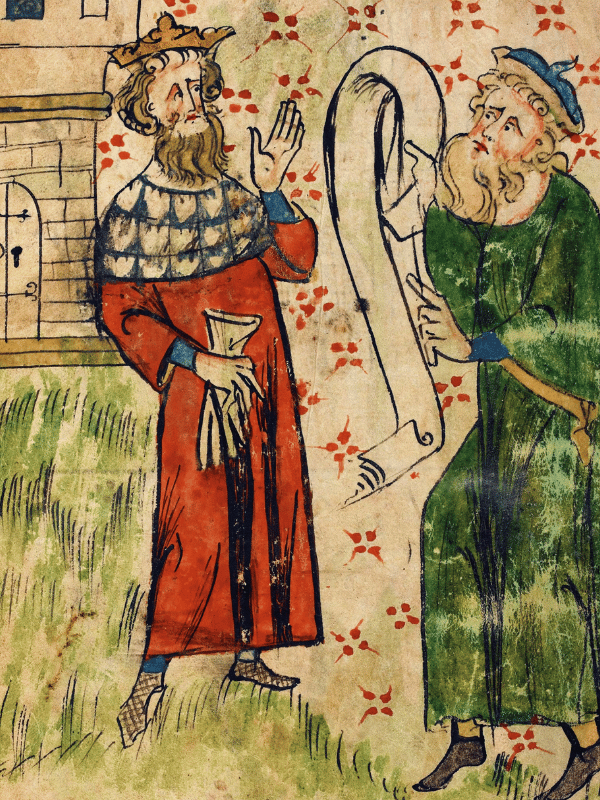
Sensing a perfect opportunity to hijack the crown, a powerful, wealthy, and deeply ambitious nobleman from Wales named Vortigern engineered a scheme to seize the supreme executive power of the land. Vortigern traveled directly to Winchester, physically pulled the young Constans out of his monastic cell, and brought him to London to be crowned king. By wrapping himself in the flag of the true royal line, Vortigern intended to use the completely inexperienced youth as a powerless puppet while holding the real day-to-day administration of the country in his own hands.
To complete his climb to absolute power and eliminate his puppet, Vortigern carefully set a bloody trap. He secretly hired a personal bodyguard of one hundred fierce Pictish soldiers from Scotland to protect the new king, intentionally housing them right inside the royal palace. Vortigern lavishly feasted these mercenaries, while quietly dropping false hints that King Constans was an ungenerous miser who had no money or desire to pay them their rightful wages.
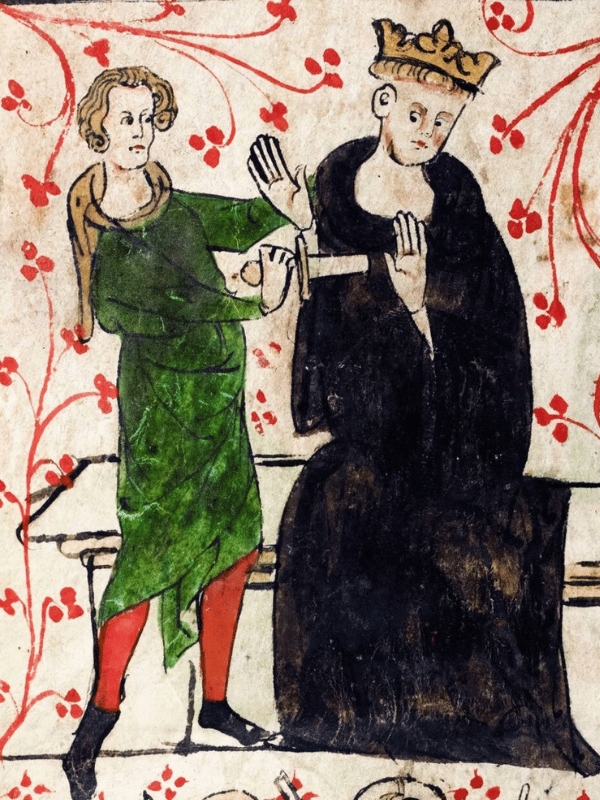
Taking the bait, the disgruntled Picts grew furious. Following a night of heavy drinking, they broke into the royal bedchamber, assassinated King Constans in his bed, and brought his severed head straight to Vortigern's chambers, expecting a massive financial reward. Pretending to be completely shocked by the horrific crime, Vortigern instantly ordered his regular guards to execute the Pictish assassins on the spot to hide his own involvement, and promptly seized the crown for himself.
Vortigern's stolen throne, however, was deeply unstable from the very first day. The British nobility highly suspected his treachery, refusing to offer him true loyalty, while the furious Picts launched a series of brutal, retaliatory wars from the north to avenge their executed comrades. Simultaneously, terrifying news arrived from across the sea: loyalist British barons had successfully smuggled the two infant princes, Aurelius and Uther, across the English Channel to safety at the court of King Budicius of Brittany. There, the young heirs were growing into formidable warriors and raising a massive continental invasion fleet to sail back to Britain and execute Vortigern for high treason.
Terrified of a domestic rebellion, a Pictish invasion from the north, and a cross-channel assault from the south, the isolated tyrant made a fateful choice. In 449, three Germanic longships, known as cyulas, landed on the coast of Kent at Ebbsfleet, filled with pagan Saxon warriors led by two tall brothers named Hengist and Horsa. Claiming to be exiles from Germany seeking honest military employment, the brothers were invited straight to Vortigern's court. The desperate king offered them extensive lands in exchange for their military protection. The Saxons fulfilled their end of the bargain almost immediately, marching north alongside British units to completely crush the Pictish armies in a series of fierce frontier battles using their heavy iron axes and long daggers.
Hengist, however, quickly realized Vortigern's total political weakness and isolation from his own people. He began writing back to Germany, importing thousands of fresh Saxon, Anglian, and Jute warriors on a second and third wave of ships, completely shifting the demographic balance of Kent. To justify taking more territory without alarming the British barons, Hengist used a brilliant piece of diplomatic deception. He asked Vortigern for just a single piece of land—only as much as could be successfully encircled by a single bull's hide—to build a small defensive fort for his men.
Vortigern readily agreed to the seemingly tiny request. Hengist then took a massive bull's hide and cut it into a single, continuous, razor-thin leather string. He stretched this leather cord around the perimeter of a massive rocky hill, claiming the entire legal boundary. On this stolen site, he constructed the heavily fortified castle of Thongcaster, establishing a permanent, unbreachable foreign foothold right in the heart of the country.
Further Information: The Usurpation of Vortigern and the Saxon Invitation

The Counter-Offensive of Vortimer and Betrayal of Rowena
(450 - 455 AD, Legendary Chronology)
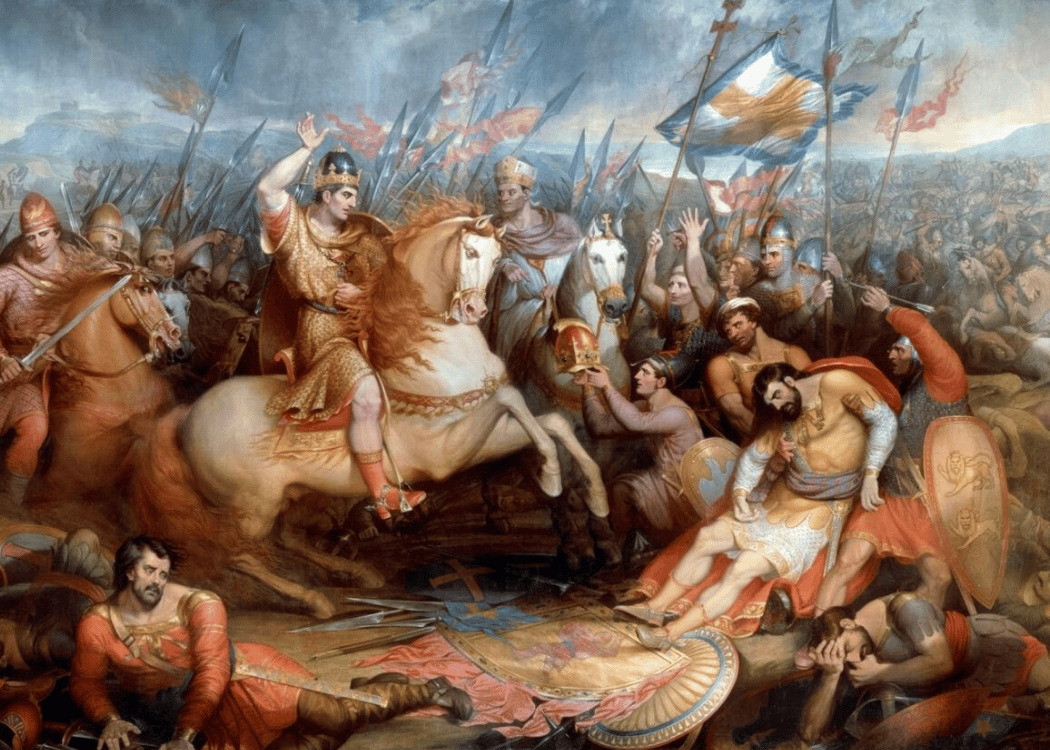
The rapid spread of the Saxons across Kent triggered an immediate wave of anger among the British nobles, who refused to sit back and watch their ancestral lands be handed over by a weak-willed king. Turning away from Vortigern, the national council chose his brave eldest son, Vortimer, to lead the defense of the country. Vortimer was a fierce defender of the old British line, and he instantly launched a relentless campaign to drive the pagan invaders back into the North Sea. Gathering his warriors, Vortimer marched down into Kent and attacked the forces of Hengist and Horsa in a series of four bloody, pitched battles along the local rivers, successfully breaking the power of the foreign invaders.
The campaign opened along the banks of the River Darent, where Vortimer’s heavy infantry successfully blocked a Saxon raiding column, forcing Hengist to retreat into the interior. The conflict reached its most violent climax during the second major clash at the Battle of Aylesford along the River Medway. In the middle of the heavy hand-to-hand fighting, Vortigern's younger son, Prince Catigern, engaged in a duel with the Saxon warlord Horsa. The two commanders struck each other down with such immense force that both died on the battlefield.
Despite losing his brother, Vortimer rallied his men and pressed the attack, routing the Saxons at a third battle near the Kentish coast and a final engagement on the shores of the Isle of Thanet. His forces systematically drove the surviving Germanic warriors straight onto their transport ships, forcing Hengist to temporarily flee back to Germany and leaving Britain temporarily secure.
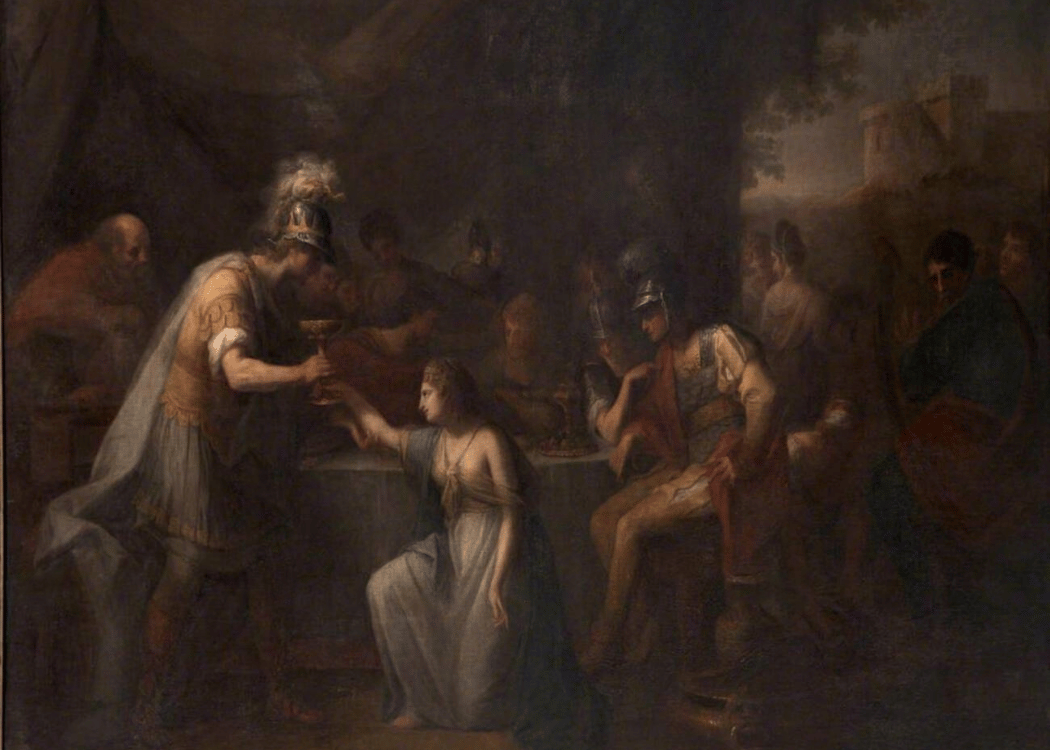
However, the victory was cut short by family treachery from within the royal court. Terrified by the total defeat of her people, Vortigern’s Saxon queen, Rowena, plotted to assassinate the young hero before he could consolidate his hold over the country. Rowena bribed a royal servant to slip a slow-acting poison into Vortimer’s wine cup during a victory celebration. As the poison took hold, the dying prince distributed his personal wealth to his soldiers and commanded that a massive bronze pyramid be built over his grave on the Kentish coast to serve as a protective talisman against foreign ships.
Following his death, the weak-willed Vortigern reassumed the crown and instantly allowed his wife to recall her father from exile. Hengist returned to Britain with an army of three hundred thousand fresh warriors, but to lull the nervous Britons into a false sense of security, he proposed a grand peace banquet at Salisbury Plain to settle the borders permanently.
The final breakdown of the British resistance occurred during this feast, traditionally remembered as the Night of the Long Knives. Hengist commanded his three hundred barons to conceal sharp daggers, known as seaxes, inside their boots. In the middle of the celebrations, as the British nobles drank heavily, Hengist unleashed the pre-arranged signal: "Nemet oure saxas!" (Take out your knives). The Saxons instantly pulled their blades, turning the banquet into a coordinated slaughter that killed four hundred and sixty British earls, barons, and judges.
The Saxons spared only Vortigern, binding the disgraced king in chains and forcing him to legally surrender the key regions of Essex, Sussex, and Middlesex to secure his release, leaving the country thoroughly broken and forcing the tyrant to flee into the wild mountains of Wales.
Merlin and the Prophecy of the Two Dragons
(455 AD, Legendary Chronology)
Fleeing the slaughter at Salisbury Plain, the disgraced King Vortigern sought refuge in the wild mountains of Snowdonia in North Wales. To protect himself from both the invading Saxons and the rightful British heirs returning from Brittany, he gathered his remaining masons to construct an unbreachable stone fortress on a rocky hill known as Dinas Emrys. However, his engineers faced an impossible problem: every time the workers spent the day raising heavy stone walls, the foundations would sink into the earth overnight, leaving the structure in complete ruins by morning. Desperate for an explanation, Vortigern consulted his court magicians, who declared that the walls would only stand if the mortar was mixed with the blood of a boy born without a human father.
Vortigern dispatched royal scouts across the shires to find this child, eventually discovering a boy named Merlin in the town of Carmarthen. His mother, a devout nun, revealed that she had been visited in her chamber by a supernatural spirit—an incubus—who fathered the boy, giving him immense magical foresight without any human lineage. Brought before the tyrant's court at Dinas Emrys, the young Merlin openly mocked the court magicians for their ignorance. He told the king that the castle walls were collapsing not because of a lack of blood, but because the hill was built directly over a hidden underground pool. Deep beneath the water, wrapped in stone cloths, sat two massive, sleeping dragons.
Vortigern commanded his laborers to dig up the hillside, and just as Merlin predicted, they discovered a subterranean lake. As the water drained away, two great beasts—one pure white and the other deep crimson—awoke from their slumber and launched into a violent, clawing battle in mid-air. The white dragon initially dominated the fight, driving the red dragon to the edge of the pool, but the red beast rallied with furious strength, breathing fire and driving its adversary back across the rocks. Terrified by the sight, Vortigern asked what the battle meant. Merlin fell into a prophetic trance, weeping as he delivered the famous Prophecy of the Two Dragons, which Geoffrey of Monmouth published as a standalone text called the Prophetiae Merlini.
Merlin explained that the Red Dragon represented the native Britons, while the White Dragon signified the Saxon invaders whom Vortigern had invited onto the island. The white dragon's early dominance predicted the immediate conquest of the shires, the slaughter of the nobility, and the total destruction of British churches. However, the red dragon's fierce counter-attack prophesied the ultimate survival of the British line.
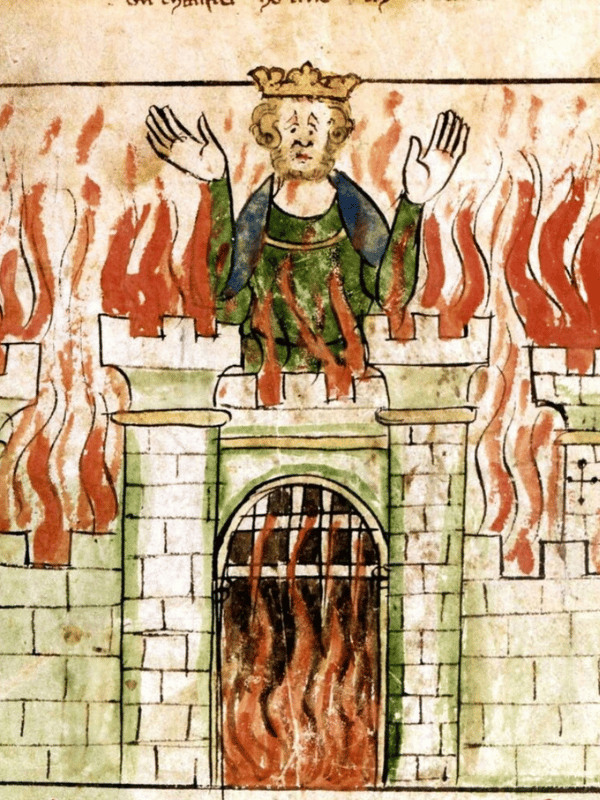
Merlin declared that the land would eventually rise up under a supreme leader—a legendary "Boar of Cornwall"—who would crush the Saxons, reclaim the borders of Brutus, and restore the rule of law to the island. This dramatic vision sealed the doom of Vortigern, as Merlin warned that the rightful avengers, the infant princes Aurelius and Uther, had just landed their invasion fleets on the southern coast to burn the tyrant inside his own fortress.

Deception at Tintagel and the Birth of Arthur
(480 AD, Legendary Chronology)
Following the dramatic fall of the tyrant Vortigern, the rightful British heirs returned from exile to reclaim the throne. The elder brother, Aurelius Ambrosius, ruled with wisdom until he was assassinated with poison by a Saxon spy, leaving the crown to his younger brother, Uther Pendragon. Uther was a fierce military leader who successfully pushed back the Saxon borders, earning his mythic surname "Pendragon" after Merlin fashioned a great golden dragon standard to lead the British armies into battle. However, the stability of the new royal line was instantly threatened not by a foreign invasion, but by Uther's intense, unyielding obsession with Igraine, the beautiful wife of his most powerful southern baron, Gorlois, the Duke of Cornwall.
The dangerous friction exploded into the open during a royal victory feast held in London to celebrate the defeat of the northern Saxons. Uther openly paraded his affection for Igraine, sending her secret gifts of wine and gold right in front of her husband. Outraged by this public insult to his family honor, Duke Gorlois abruptly gathered his knights and departed the court without the King's permission—an act of open defiance that legally allowed Uther to declare war.
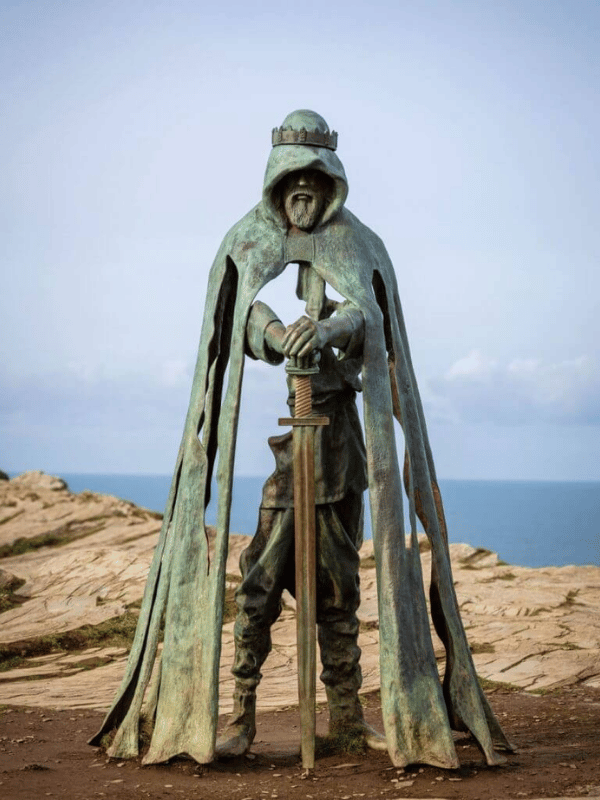
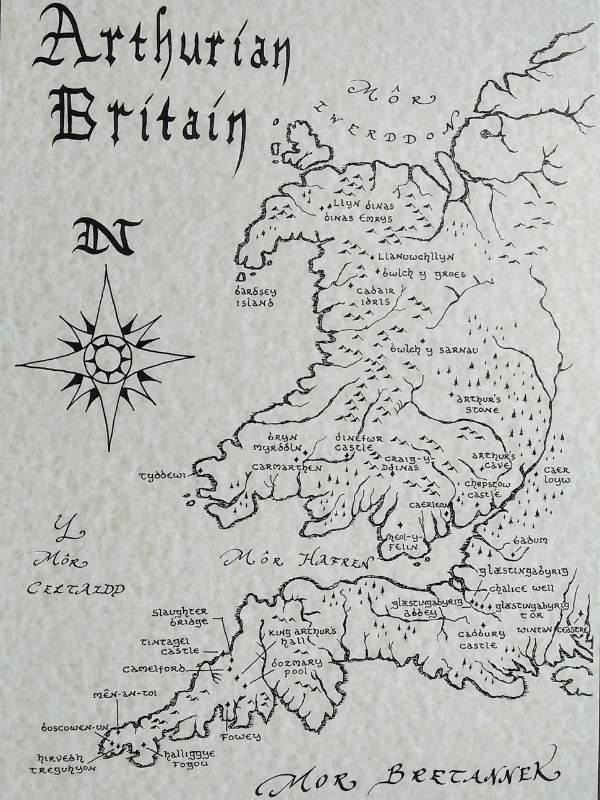
Gorlois hurried back to Cornwall to prepare his defenses. Recognizing his military weakness against the supreme royal army, he split his forces: he locked himself inside the heavily fortified castle of Dimilioc to face the king's infantry, while placing Igraine inside the unbreachable fortress of Tintagel, a castle built on a high sea-cliff surrounded completely by the crashing waves of the Atlantic, connected to the mainland only by a narrow rocky path that three knights could defend against the world.
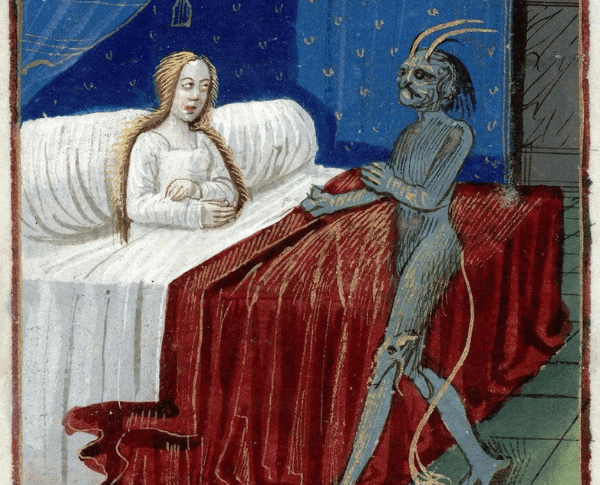
Uther marched his armies into Cornwall, launching a fierce siege against Dimilioc, but his mind remained entirely consumed by his obsession with Igraine. Driven to the brink of madness, the King begged Merlin to find a way to breach the sea-cliffs of Tintagel. Merlin agreed to assist, but demanded a heavy price: any child born from the union would be handed over to him to be raised in secret, away from the corruption of the royal court. Utilizing an ancient magical potion, Merlin transformed Uther’s physical appearance, altering his face, voice, and armor so that he looked exactly like Duke Gorlois. Merlin also transformed himself into Jordan, a trusted servant of the duke, and disguised Uther’s advisor, Ulfin, as a Cornish knight, allowing the three disguised figures to ride bloodlessly past the guards at Tintagel.
On that exact night, while the real Duke Gorlois was killed during a desperate breakout attempt at the siege of Dimilioc, Uther gained entry to Igraine’s bedchamber under the cover of the magical deception. Believing her husband had returned safely from the war, Igraine welcomed the disguised king, and on that night, the legendary King Arthur was conceived. The following morning, when news arrived that the real Duke Gorlois had actually died hours before the king arrived at Tintagel, the magic faded, exposing the total deception.
To prevent a civil war over the succession and heal the rift with the Cornish nobility, Uther immediately married the widowed Igraine, securing her status as Queen of Britain. True to his solemn promise, the moment the young Arthur was born at Tintagel, Merlin stepped out of the shadows to claim the child, spiriting the future emperor away into absolute obscurity to prepare him for his destiny.


The Sword in the Stone and Re-unification
(500 - 510 AD, Legendary Chronology)
The death of King Uther Pendragon plunged Britain back into decades of fragmentation, as rival barons fought over the crown while the Saxon armies pushed deeper into the shires. Because the young Arthur had been raised in complete obscurity by Sir Ector—growing up as a humble squire entirely unaware of his royal lineage—the land lacked a recognized heir. To prevent a total civil collapse, Merlin traveled to London to consult with the Archbishop of Canterbury. Under Merlin’s guidance, the Church summoned all the great lords, earls, and knights of the country to gather at Westminster for a grand Christmas tournament, hoping that a divine sign would reveal the true king and restore the rule of law.
On Christmas morning, the gathered nobility discovered a massive monument that had appeared in the churchyard. It consisted of a large block of marble stone, upon which sat a steel anvil, with a gleaming sword driven straight through the metal down into the rock. Written along the hilt in gold letters was a strict legal decree: "Whoso pulleth out this sword of this stone and anvil, is rightwise King born of all England."
One by one, the most powerful barons, including the ambitious King Lot of Orkney and the fierce Sir Melliagraunce, stepped forward to attempt the feat, straining with immense physical force. None could move the blade even a fraction of an inch, leaving the assembly in complete stasis and forcing the lords to delay the coronation until a series of New Year tournaments could be held.
The deadlock was broken through a chance accident during the New Year's Day games. Arthur’s foster brother, Sir Kay, had been newly knighted and was eager to join the jousts, but discovered he had foolishly left his sword behind at their lodging camp. Kay sent the young Arthur back to retrieve the blade, but when Arthur arrived, he found the lodging locked and empty. Determined not to let his brother down, Arthur rode straight into the empty churchyard at Westminster, stepped up to the stone monument, and lightly pulled the magical sword out of the anvil without any physical effort, intending to give it to Kay as a temporary replacement.
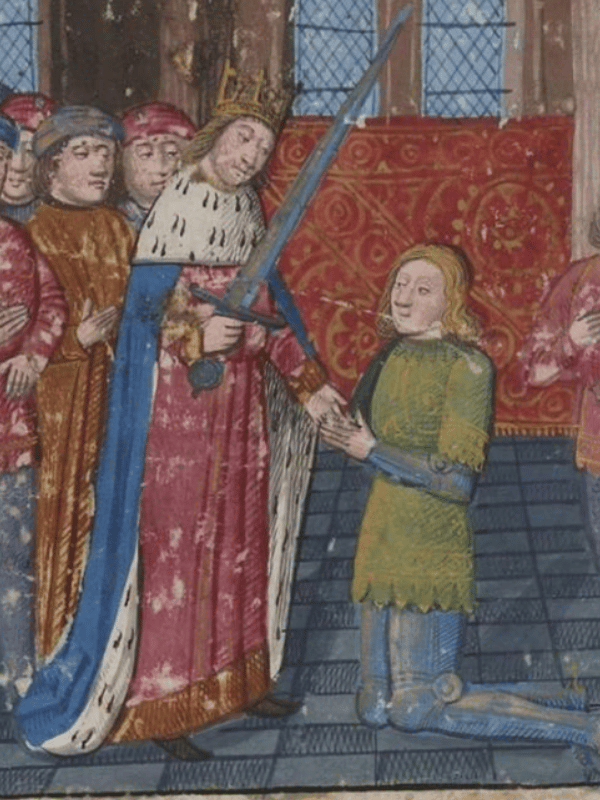
When Kay recognized the legendary weapon, he initially tried to claim the crown for himself, but Sir Ector forced both boys back to the altar to repeat the feat. Arthur easily slid the blade back into the anvil and pulled it out again in front of the Archbishop, leaving the elite barons completely stunned. While the proud nobility repeatedly delayed the coronation for months, furious that a mere boy had bested them, the common people rallied behind Arthur, shouting that it was God's will. At the feast of Pentecost, Arthur drew the sword one final time, took his solemn coronation oath to enforce justice across the land, and was officially crowned Supreme King of Britain.

The Twelve Battles and Pacification of the Shires
(500 - 510 AD, Legendary Chronology)
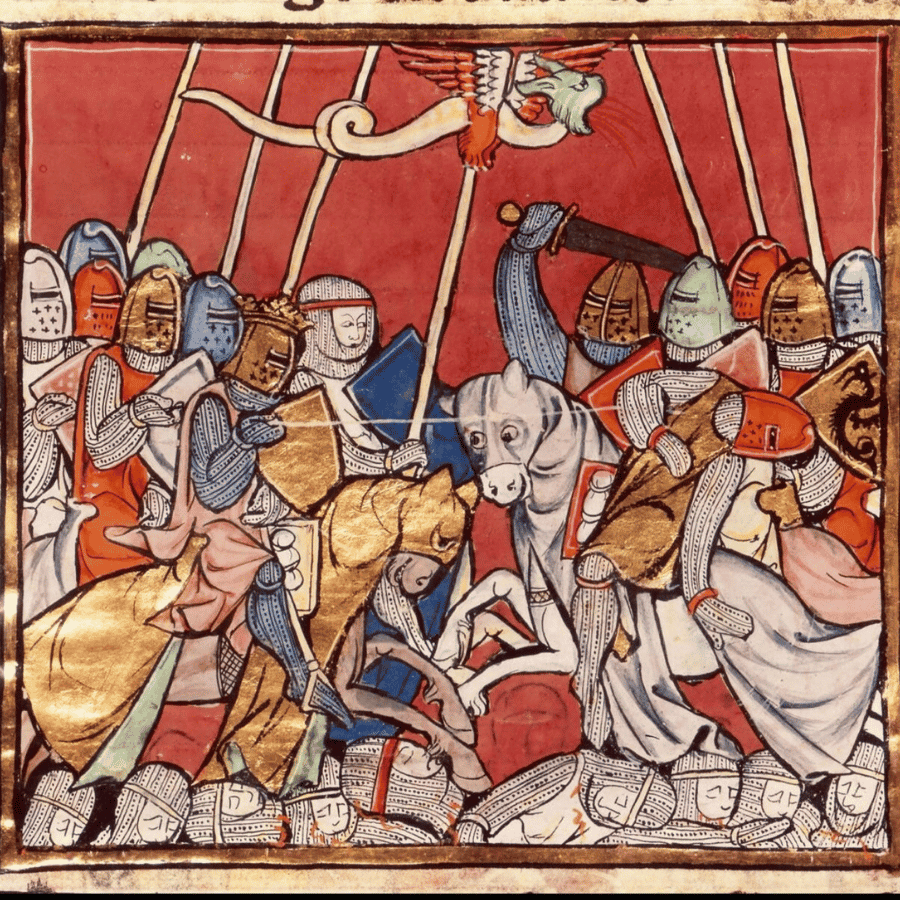
The coronation of King Arthur did not bring an immediate peace, but instead triggered a massive war of survival as the Saxon coalitions and rebellious British barons sought to crush the young monarch’s early rule. Drawing upon the historic battle lists recorded by the ninth-century monk Nennius in the Historia Brittonum (History of the Britons), the Welsh cleric Geoffrey of Monmouth detailed how Arthur systematically secured the island through a series of intense military campaigns. Armed with his legendary shield Pridwen, which bore the image of the Virgin Mary, and his unmatched sword Caliburn (later known as Excalibur), Arthur led his infantry through twelve monumental battles to crush all domestic resistance and establish control over the land.
The multi-year war opened with a succession of fierce engagements along the northern and eastern frontiers. Arthur won his first major victories along the banks of the River Douglas, followed by a running night assault in the river valleys of the Glen. He then fought a sequence of three highly technical battles at the River Bassas, inside the dense woodlands of the Caledonian Forest, and atop the high ridge of Gurnion Castle, where he broke the tactical momentum of the Saxon warlords Colgrin and Baldulf.
The domestic campaign reached its definitive climax at the legendary Battle of Badon Hill (Mount Badon). Facing a massive, combined Germanic host that had besieged the city of Bath, Arthur ordered his knights into a relentless uphill charge. As the infantry lines locked in close-quarters combat, the King drew Caliburn and rushed directly into the enemy ranks. Shouting to his warriors to defend the Christian faith, Arthur personally slew four hundred and seventy Saxons in a single afternoon, completely breaking the back of the foreign invasion and securing a generation of domestic peace for the shires.
With the southern shires secured, Arthur turned his war machine outward to lock down the territorial frontiers of the islands. He launched high-speed amphibious operations into the north, cornering the rebellious Scottish tribes and their Irish allies at Lake Lomond. His forces systematically surrounded the vast lake with sixty ships, cutting off all entry points and starving out the insurgent strongholds until the regional bishops knelt in the mud to beg for mercy. Arthur subsequently conquered Ireland, Iceland, and the Orkney Islands, forcing the defeated princes to pay massive annual financial subsidies to the royal treasury.
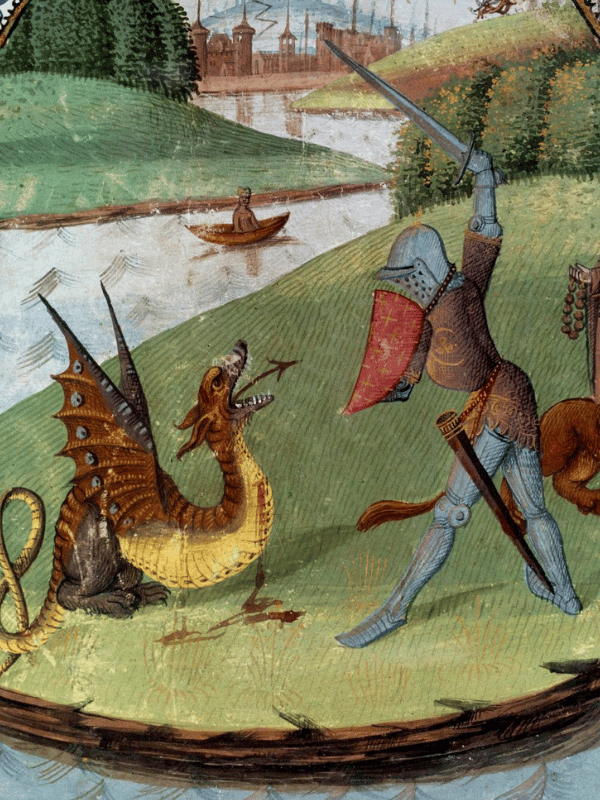
Seeking to expand his trade networks and neutralize continental rivals, he sailed his fleet to Gaul (France), where he engaged in a nine-year war of attrition against the Roman tribune Flollo. The conflict ended in a dramatic personal duel on an island outside the walls of Paris. Flollo unhorsed the King and killed his charger, but Arthur survived a severe head wound that cracked his golden dragon helmet to rally with immense force, striking Flollo down with Caliburn. This victory successfully annexed the entire French territory into his expanding empire and set an irreversible course for a direct collision with the superpower of Rome.
Further Information: Wessex and the Wider World: The Carolingian Connection

The Roman War
(510 - 530 AD, Legendary Chronology)
Additional Information: The Age of Migration / The Human Rights Act 1998 & loss of Sovereignty
The zenith of King Arthur’s imperial reach was triggered by a hostile diplomatic ultimatum sent directly from the Roman Senate. While the British court was celebrating the feast of Pentecost in the city of Caerleon, a delegation of twelve Roman ambassadors arrived bearing an official decree from the Roman Emperor, Lucius Tiberius.
The message demanded that Arthur pay immediate financial tribute to Rome and surrender his newly conquered European territories to compensate for the death of Tribune Flollo, threatening total destruction if the King refused. Instead of submitting to external threat, Arthur assembled a massive multi-national alliance of British, Welsh, Scottish, and European warriors to launch a bold cross-channel counter-offensive against the heart of the Roman Empire.
As the massive British invasion fleet landed on the shores of Brittany, Arthur was forced to detour to the tidal island of Mont Saint-Michel to confront a terrifying local crisis. A colossal, predatory giant from Spain had landed on the coast, kidnapping Helena—the niece of the Duke of Brittany—and locking her away on the rocky summit. Taking only his advisor Bedivere and his nephew Kay to avoid alarming his main invasion army, Arthur climbed the steep, windswept mountain paths under the cover of darkness. He discovered the giant roasting wild hogs over a massive fire, surrounded by the bones of past victims. In a brutal hand-to-hand duel, the giant struck Arthur with a heavy club, nearly breaking his shield, but the King evaded a crushing grapple to drive his dagger deep into the monster's skull, freeing the continental coast from terror.
With the coastal frontier secure, the British forces marched into Burgundy to face the main Roman host at the Battle of Soissons. Emperor Lucius had assembled a massive eastern army that included the kings of Libya, Syria, and Egypt, completely outnumbering the British lines. The conflict descended into a bloody war of attrition, filled with heavy cavalry charges and devastating infantry clashes that left thousands dead across the fields. The tide turned when Arthur personally rallied his elite guard, cutting his way through the Roman ranks. During the chaotic close-quarters fighting, Emperor Lucius was struck down and killed by a British spear, completely breaking the morale of the Roman legions.
Arthur ordered his forces to package the bodies of the Emperor and his senators in coffins and send them straight back to Rome, declaring that this was the only tribute Britain would ever send. Arthur then began a direct march through the Alps to conquer Rome itself, a grand campaign that was halted only by catastrophic news of family treason waiting for him back across the English Channel.
While Geoffrey of Monmouth’s original 1136 chronicle immediately followed the King back across the sea to detail the final civil war, the evolution of the legend paused for several decades. Before the narrative reached its tragic conclusion in printed English books, continental authors intercepted the timeline, completely reshaping the internal structure of Arthur's court.


The French Chivalric Romances
1170 - 1220 AD
During the late twelfth century, the Matter of Britain underwent a major change as French poets took the raw military epics of Geoffrey of Monmouth and reshaped them for aristocratic audiences. The pioneer of this new storytelling style was the French poet Chrétien de Troyes, who wrote a series of highly popular stories under the direct patronage of Marie de Champagne, the daughter of Queen Eleanor of Aquitaine.
Chrétien shifted the focus of the legends away from sweeping political wars against Rome to follow the individual adventures of single knights riding out from the royal court. By introducing the newly popular concept of courtly love, these French texts completely re-engineered the character of King Arthur, turning him from a rugged, battlefield warlord into a passive, sophisticated monarch ruling over a world of magic, romance, and strict knightly manners.
This French poetic movement fundamentally rewrote the structure of the legendary cycle, inventing the core elements that most people today associate with the Arthurian world. In his romance Lancelot, le Chevalier de la Charrette (Lancelot, the Knight of the Cart), Chrétien introduced Lancelot du Lac to the narrative, setting him up as an unmatched warrior raised by a water-spirit who becomes Arthur's premier champion.
The poet also created the highly dangerous plotline of Lancelot's secret, adulterous love affair with Queen Guinevere, which introduced a profound moral tension into the court. Furthermore, in his final, unfinished work, Perceval, le Conte du Graal (Perceval, the Story of the Grail), Chrétien introduced the mysterious concept of the Grail—originally described as a jeweled serving platter—which transformed the knightly quests into deep spiritual journeys. This shift meant that a knight's greatest challenge was no longer just defeating a rival in battle, but proving his spiritual purity before God.
Following Chrétien's success, the legends grew even deeper through a massive collection of anonymous French prose texts known as the Vulgate Cycle (or the Lancelot-Grail Cycle), written down between 1215 and 1235. These texts expanded the mythology into five distinct, massive volumes that traced the entire history of the Grail from the death of Christ down to the final destruction of Camelot.
Further Information: The French Chivalric Romances
The Vulgate Cycle and Prose Romances
1215 – 1235 AD
Between 1215 and 1235, a network of anonymous French Cistercian scribes compiled a collection of prose texts known as the Vulgate Cycle or the Lancelot-Grail Cycle. Moving away from the short, courtly verse poems of the late twelfth century, these monastic writers used prose to give the legends the serious tone of a genuine historical chronicle. The project expanded the Arthurian world into a synchronised timeline, creating a layered religious and historical mythology that connected the feats of the Round Table to the biblical era of the New Testament. The authorship was attributed to the fictional clerk Walter Map, a literary deception designed to provide the texts with secular administrative authority.
The introduction of these prose books altered the moral code of the Matter of Britain by subordinating secular chivalry to strict Cistercian theology. In the early verse romances, knightly identity was validated through worldly combat, courtly love, and baronial loyalty. The Vulgate scribes changed this ethos, turning tournaments and individual duels into tests of internal spiritual purity. Under this new ethical system, traditional heroic values were treated as spiritual failures. The bards condemned the pride and sin of established champions, rendering Sir Gawain a proud, violent figure who refuses spiritual counsel, and penalising Sir Lancelot by barring him from achieving the highest mysteries due to his adulterous transgression.
To ground this spiritual code within the narrative, the monastic authors invented the character of Sir Galahad, Lancelot's pure-hearted son. Galahad was engineered to serve as an idealized champion who could surpass the failures of the older generation, achieving the Grail quest through a commitment to virginity and spiritual devotion rather than raw battlefield force.
This theological focus transformed the geography of the legends, turning the wild shires of Britain into a landscape of hermitages, ruined chapels, and trials. The five books established a linear timeline that mapped out the birth, flowering, and eventual fall of Camelot, providing the narrative blueprint that later English compilers used to structure the definitive versions of the legend.
Further Information: The Vulgate Cycle and Prose Romances
The Round Table, Camelot, and the Arrival of Lancelot
(515 AD, Legendary Chronology)
With the land pacified and his rule secured, King Arthur established a magnificent royal headquarters at Camelot, creating a legendary center of justice, festive tournaments, and strict knightly behavior. To cement this new society and secure his dynastic line, Arthur married Princess Guinevere, the daughter of King Leodegrance of Cameliard.
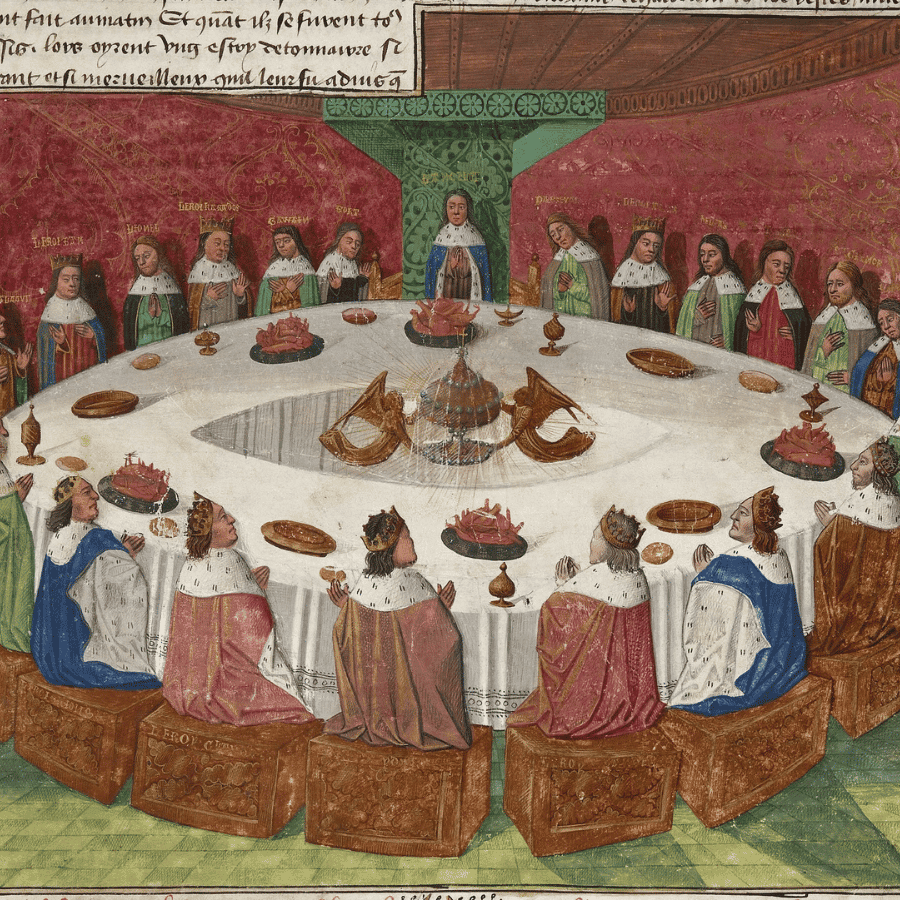
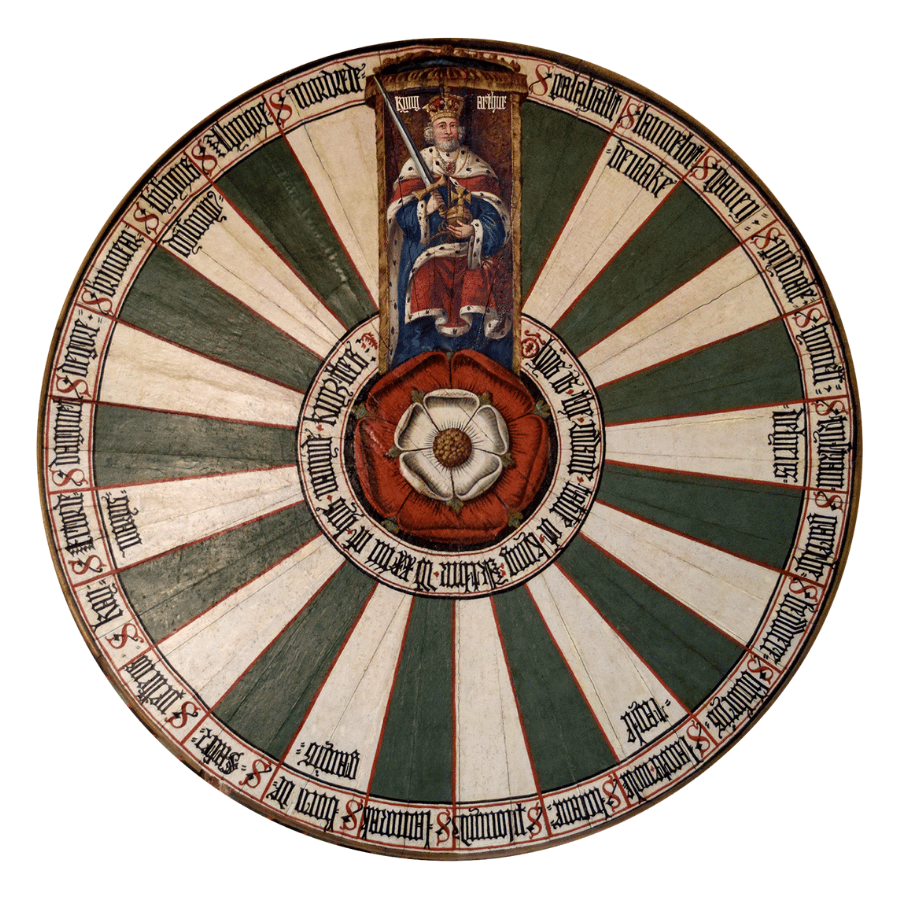
As a monumental wedding gift, Leodegrance presented the young king with the Round Table, a massive circular piece of furniture originally built by the wizard Merlin for King Uther Pendragon. The table was vast, capable of seating up to one hundred and fifty of the land's top warriors at a single gathering. Its circular design was a brilliant piece of social engineering; by eliminating a distinct head of the table, it guaranteed that every sitting baron sat as an absolute equal, completely ending the bloody arguments over family rank and seating precedence that had historically divided the British nobility.
To govern this powerful brotherhood, Arthur instituted the Pentecostal Oath, a strict legal and moral code that every knight was required to swear to each year during the feast of Pentecost. Under this code, recorded in its definitive English form by Sir Thomas Malory, the warriors swore never to execute unlawful murder, to avoid all corporate treason, and to grant mercy to anyone who begged for it on the battlefield. Crucially, the oath legally bound the knights to actively protect women, widows, and orphans, using their martial skills to defend the vulnerable rather than terrorize the countryside. This code transformed the raw, violent warriors of the post-Roman shires into a polished brotherhood dedicated to justice and corporate honor under the crown. When a knight broke this vow, he faced immediate expulsion from the table and total disgrace across the shires.
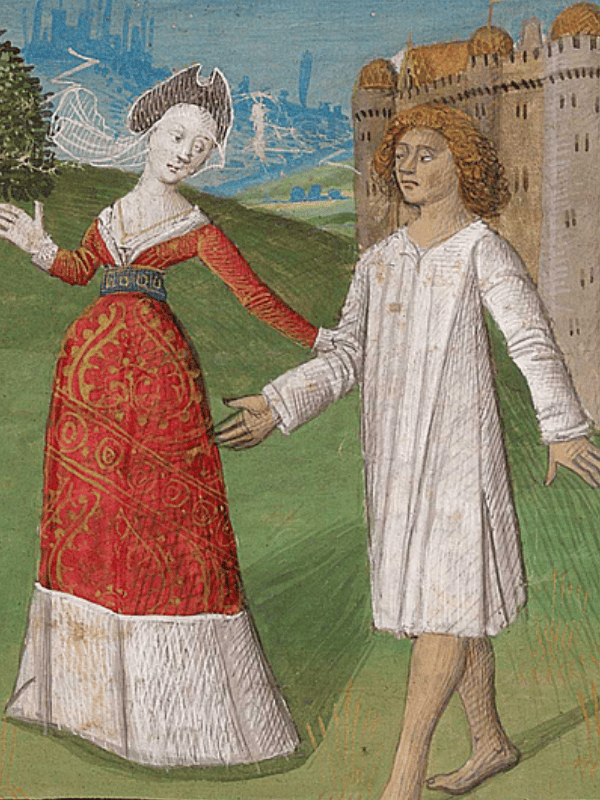
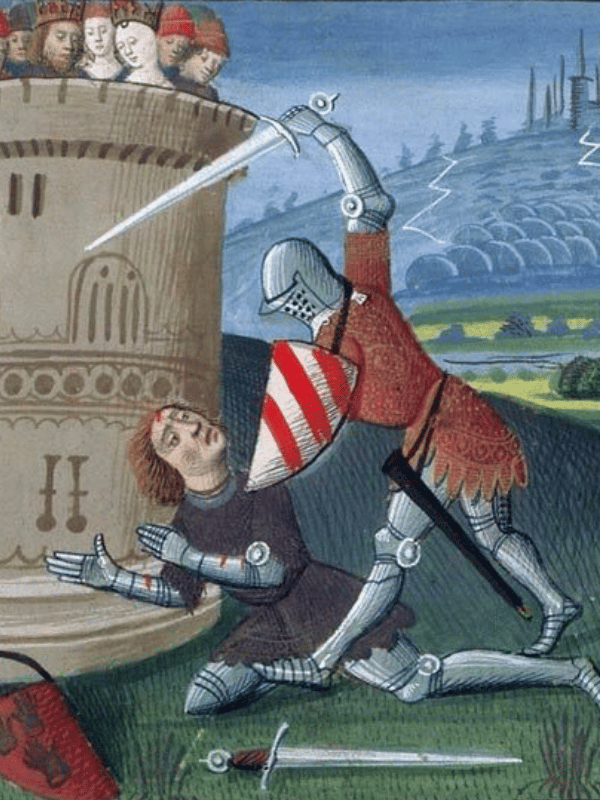
The prestige of Camelot reached its highest point with the sudden arrival of a mysterious young squire named Lancelot du Lac (Lancelot of the Lake). Raised in an enchanted underwater realm by the mystical Lady of the Lake after his father, King Ban of Benwick, lost his kingdom to invaders, Lancelot traveled to Arthur's court to seek knighthood. On his very first day, he proved his unmatched strength, easily besting the court's veteran champions—including Sir Gawain and Sir Kay—in the tournament fields. Arthur immediately knighted him and granted him a seat at the Round Table, where Lancelot quickly rose to become the King's primary champion, his closest personal friend, and the model of knightly perfection.
However, this arrival introduced a fatal flaw into the heart of Camelot. The moment Lancelot knelt before Queen Guinevere to swear his personal loyalty to her as her chosen champion, a secret, intense mutual infatuation began. This forbidden love affair introduced a profound moral tension into the court. While Lancelot performed miraculous deeds of bravery in Guinevere's name, rescuing her from kidnappers and defending her honor in judicial duels, his private sin actively undermined the spiritual purity of the Round Table, setting off a dangerous chain reaction that would eventually fracture the entire fellowship.
Further Information: The Round Table, Camelot, and the Arrival of Lancelot
The Seating of Galahad
(520 AD, Legendary Chronology)
The spiritual focus of Camelot was pushed into a sudden crisis during the festival of Pentecost, when the fellowship was forced to confront its deepest moral and religious flaws. For years, the knights had been measured by their physical strength in tournaments and frontier wars, but the arrival of the Holy Grail changed the rules of the court. The sacred chalice—the cup used by Jesus Christ at the Last Supper—demanded a level of spiritual purity that the worldly champions of Camelot did not possess.
The unlocking of this holy mystery was tied directly to the Siege Perilous, a vacant seat at the Round Table designed by the wizard Merlin. The chair was kept covered in a heavy black cloth, and a magical curse ensured that any knight who sat in it would be instantly destroyed unless he was the single, flawless hero destined to achieve the Grail.
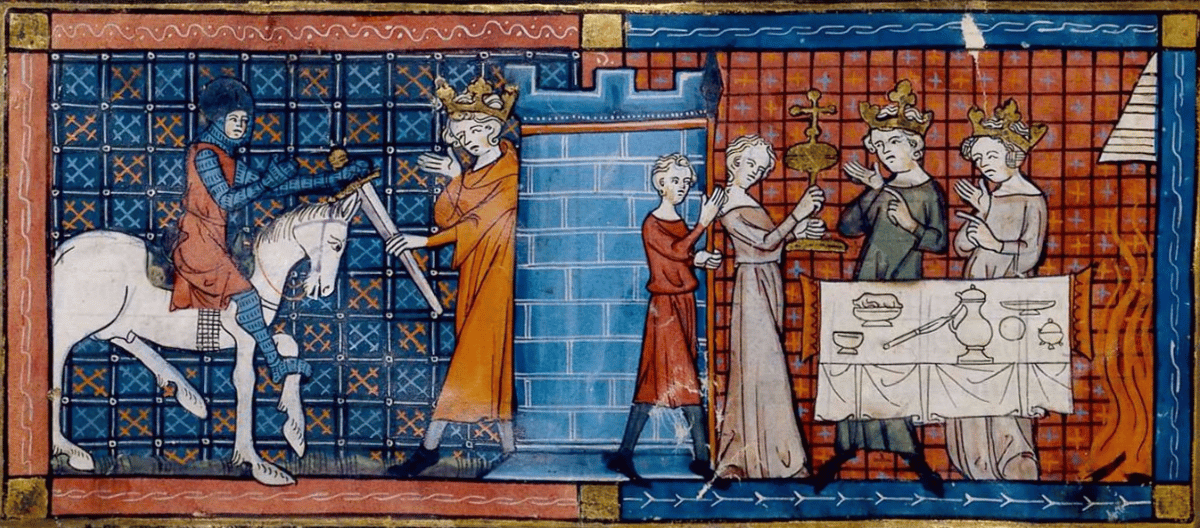
The deadlock over the vacant seat was broken when an old man dressed in white led a young, unproved knight named Sir Galahad into the royal hall. Galahad was the secret son of Sir Lancelot, born out of a magical deception where Lancelot was tricked into thinking Princess Elaine was Queen Guinevere. Though he possessed his father's unmatched martial skill, Galahad was entirely free from mortal sin. When the black cloth was pulled away from the Siege Perilous, the court discovered a new inscription written in letters of gold: "This is the seat of Sir Galahad, the good knight." To the absolute astonishment of the gathered barons, the young man sat safely in the chair without triggering the curse. Shortly after, King Arthur led the youth down to the banks of the River Thames, where Galahad easily drew a magnificent sword out of a floating block of red marble stone—a feat that both Lancelot and Gawain had failed to perform earlier that morning.
That evening, as the fellowship sat down to dinner, a sudden crack of thunder shook the palace walls, followed by a beam of light that filled the room. The Holy Grail entered the hall, completely covered in white silk, floating through the air on its own before vanishing as quickly as it had arrived. Stunned by the vision, Sir Gawain stood up and swore a sacred vow to leave Camelot the next morning to hunt for the vessel for a year and a day, refusing to return until he had seen it uncovered.
One by one, the remaining knights stood to join the quest, plunging King Arthur into deep grief. The King wept openly, recognizing that this spiritual journey would scatter his warriors across the wilderness and that the golden brotherhood of the Round Table would never be the same again.

The Quest for the Holy Grail
(520 - 524 AD, Legendary Chronology)
The departure of the knights from Camelot initiated a period of trial and isolation across the land. The fellowship scattered, with each warrior riding alone into the forests, crossroad tracks, and ruined chapels of the wilderness. Unlike conventional military campaigns against the Saxons, this journey could not be won through physical strength or swordsmanship. Instead, the wilderness functioned as a mirror for each knight's conscience, where encounters with hermits, weeping damsels, or phantom entities served as direct spiritual tests of the warrior's soul.
The majority of Arthur’s secular champions failed during the initial stages of the search. Sir Gawain grew weary of the lack of conventional battles, drifting into secular skirmishes that stained his honor, while Sir Hector de Maris was turned away from holy sanctuaries by prophetic dreams that exposed his spiritual blindness. The moral centre of the quest focused on the failure of Sir Lancelot. Tracking the vessel across the wilderness, Lancelot arrived at a ruined crossroads chapel where he fell into a trance-like sleep. While paralyzed, he watched a sick knight become healed by the passing shadow of the Grail, yet Lancelot could neither move nor speak; his horse and armor were taken by the stranger as a penalty for his mortal sin, leaving him to wake in disgrace.
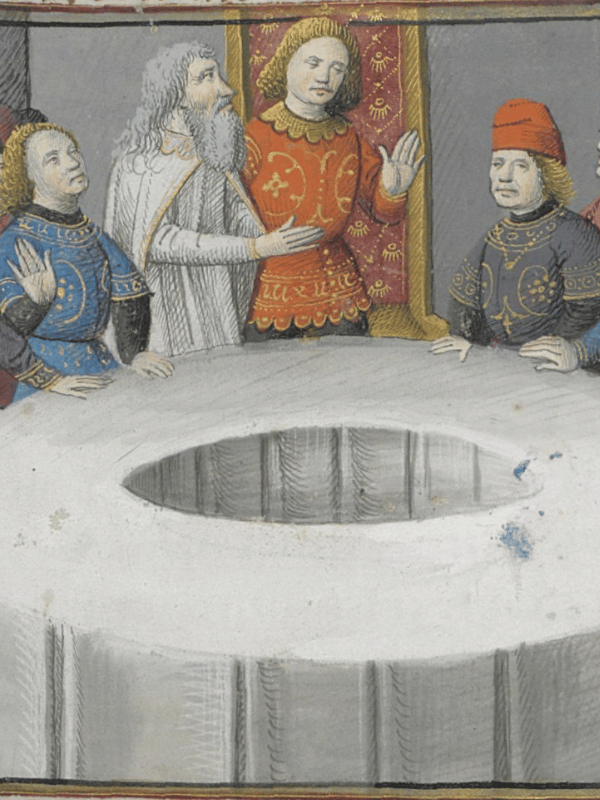
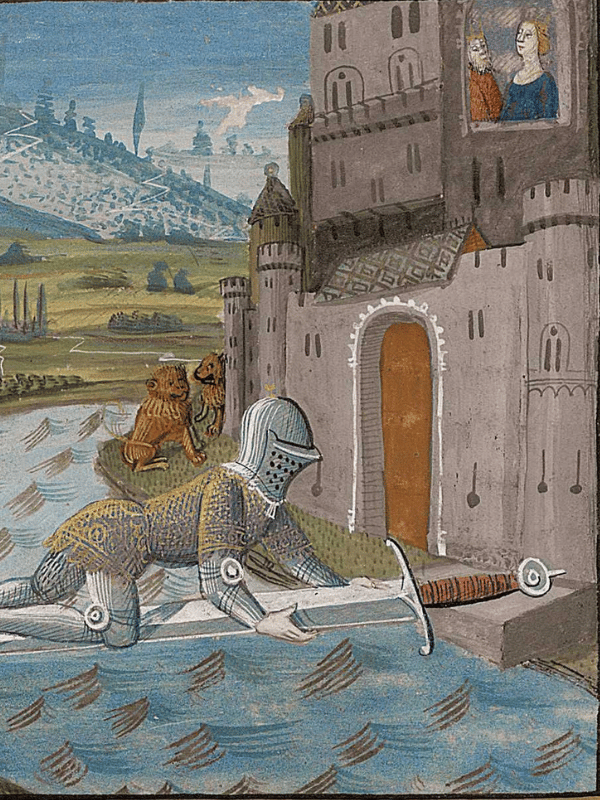
Driven by remorse, Lancelot eventually tracked the vessel to its hiding place: the crumbling Castle of Carbonek, where King Pelles guarded the sacred relics. Lancelot breached the outer walls, defended against two guarding lions, and fought his way up the stone stairs to the high chamber doors. The doors swung open to reveal the Holy Grail floating above a silver table.
Forgetting his spiritual unworthiness in a flash of reckless impulse, Lancelot stepped across the threshold to assist a priest who appeared to be struggling under the weight of the chalice. The moment his foot touched the floor, a wave of fire struck him in the chest, knocking him unconscious. Lancelot was left paralyzed and blind for twenty-four days—exactly one day for each year he had lived in sin with Queen Guinevere—before being sent away from Carbonek in despair.
Only three knights possessed the pure hearts needed to survive the terrifying spiritual trials of the journey: Sir Bors the Younger, Sir Perceval, and Sir Galahad. These three companions eventually reunited at the Castle of Carbonek, where they received the sacrament alongside nine foreign knights. Joined by Perceval's sister, who died after sacrificing her blood to heal a sick lady, the three chosen companions boarded a mystical ship that carried them across the sea to the holy eastern city of Sarras. Upon landing, the local pagan tyrant, King Escorant, threw the British knights into a dark dungeon. However, the Holy Grail followed them into the cell, filling the room with light and providing them with food for an entire year until Escorant died of disease and the citizens elevated Galahad to the throne as their new king.
The final culmination of the legendary cycle occurred at the end of Galahad's year-long reign. While kneeling before the silver table inside the spiritual palace of Sarras, a mass was conducted by a man who descended from heaven—the spirit of Joseph of Arimathea. Joseph called Galahad forward and lifted the white silk cloth, permitting the young king to look directly into the uncovered chalice.
Having viewed the divine secrets of the universe, Galahad fell into a state of ecstasy. He prayed for his soul to be released from his mortal flesh, said a brief goodbye to Bors and Perceval, and passed away on the spot. The two remaining knights watched as a group of angels carried Galahad's soul alongside the Holy Grail up into the clouds, removing the vessel from the world forever. While Sir Perceval entered a local hermitage to die in quiet prayer fourteen months later, Sir Bors boarded a ship and sailed back to Camelot, carrying the news back to King Arthur.
Lancelot, Guinevere, and the Shattering of the Table
(535 AD, Legendary Chronology)
The return of the surviving knights from the Grail quest did not bring a renewal of peace, but instead exposed the deep moral and political fractures that had been simmering beneath the surface of the court. With the spiritual quest concluded, Sir Lancelot fell straight back into his intense, forbidden love affair with Queen Guinevere, abandoning his brief period of religious purity. The open secret of their adultery became a dangerous weapon in the hands of Arthur’s enemies, most notably his treacherous illegitimate son, Sir Mordred, and the bitter Sir Agravain. Driven by a desire to dismantle Lancelot's immense influence and claim the throne for themselves, the two conspirators organized a high-stakes trap to catch the lovers in the act, forcing King Arthur to choose between his best friend and the strict execution of statutory law.
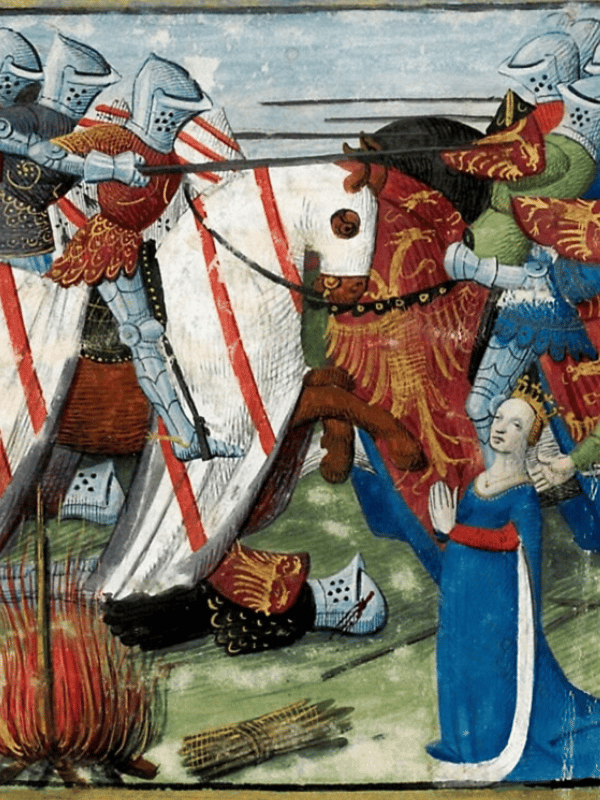
The trap was sprung when King Arthur departed Camelot for a hunting expedition, leaving the court exposed. Mordred, Agravain, and twelve armed knights from the Orkney clan surrounded Guinevere’s private chamber while Lancelot was inside. Armed only with a sword wrested from the first attacker he pulled through the door, Lancelot launched a furious counter-offensive, systematically slaying Agravain and all twelve knights, while a wounded Mordred fled into the night to report the betrayal directly to the King. Under the ancient common law of the land, the Queen’s adultery was judged as high treason against the crown, legally forcing a devastated King Arthur to sentence his own wife to be burned at the stake.
The execution was violently broken when Lancelot and his northern alliance charged the execution grounds at Camelot. In the chaotic, blind cavalry rush to rescue Guinevere from the flames, Lancelot hacked his way through the guards, accidentally striking down and killing two unarmed brothers of Sir Gawain—Sir Gareth and Sir Gaheris—who had attended the execution without armor to protest the Queen's sentence. Lancelot successfully carried Guinevere away to his northern fortress of Joyous Gard, but the dynamic of the court was permanently shattered.
The accidental slaughter of the two unarmed brothers turned Sir Gawain, who had previously defended Lancelot during the initial treason accusations, into an unyielding force of vengeance. Overcome with grief for Sir Gareth and Sir Gaheris, Gawain refused all offers of peace or financial compensation, demanding the execution of his former companion.
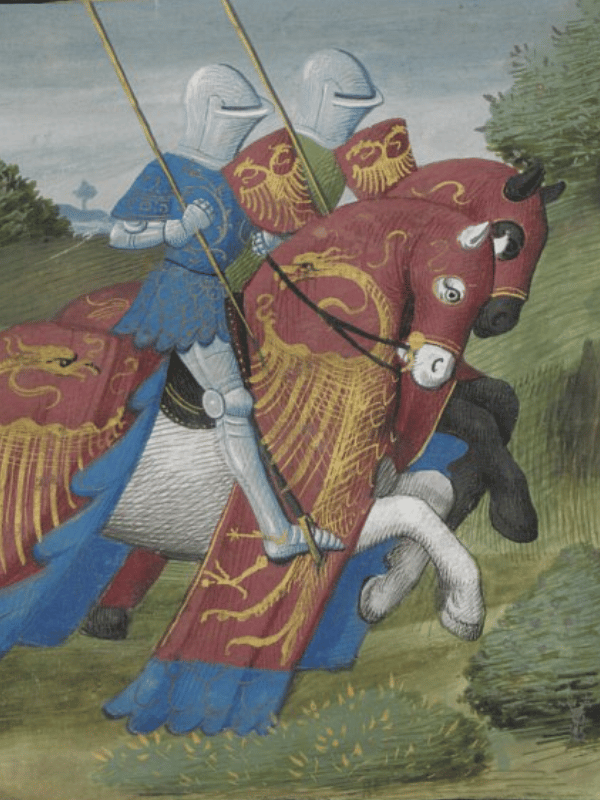
Gawain used his status as the King's senior nephew and chief advisor to compel a hesitant King Arthur into a total civil war, gathering a royal army of over thirty thousand troops to launch a multi-month siege against Lancelot's northern stronghold of Joyous Gard, identified by chroniclers as Bamburgh Castle or Alnwick. The conflict split the Round Table down the centre, dividing families and forcing lifelong brothers-in-arms like Sir Bors and Sir Lionel to align against their traditional sovereign.
During the daily skirmishes outside the castle gates, Lancelot ordered his knights to act on the defensive, explicitly forbidding them from striking King Arthur or Sir Gawain. The intensity of the conflict was demonstrated when Lancelot unhorsed Arthur in the field; rather than striking his sovereign lord, Lancelot dismounted, helped the King back onto his horse, and declared his continued loyalty to the crown. Despite this, the war of attrition could not be stopped.
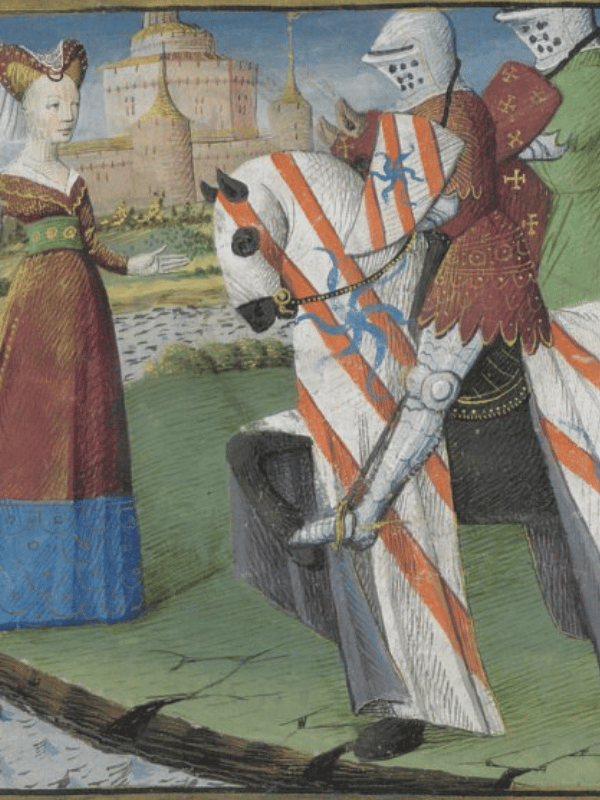
Even after the Bishop of Rochester secured an intervention from the Pope to negotiate a truce—which required Lancelot to return Guinevere to Arthur without penalty and enter permanent exile in Benwick (western France)—Gawain demanded further retribution. To prevent a baronial rebellion from his own family faction, King Arthur assembled an expeditionary force of fifteen thousand knights, left the domestic governance of Britain entirely in the hands of Sir Mordred as Prince Regent, and sailed from Cardiff to pursue Lancelot across the English Channel, leaving the kingdom vulnerable to usurpation.

The Treason of Mordred and Return of the King
(537 AD, Legendary Chronology)
The deployment of the royal army into France left Britain vulnerable to domestic rebellion. While King Arthur was occupied with the siege of Lancelot's continental strongholds in Benwick, Sir Mordred executed a coup d'état to seize the throne. He forged official letters claiming that Arthur had been killed in battle across the English Channel, using the documentation to deceive the national council. This allowed him to seize the crown, declare himself King at a council in Winchester, and claim Queen Guinevere as his bride. Guinevere managed to escape the palace under pretext of purchasing bridal materials, barricading herself inside the Tower of London with a small garrison of loyal knights.
To secure his throne, Mordred formed a military alliance with the pagan Saxon warlords, promising them lands in Kent and East Anglia in exchange for their support, assembling a force of 100,000 troops composed of rebels and foreign mercenaries. Hearing of the revolt, Arthur abandoned his French campaign and sailed his fleet back to the port of Dover. Mordred's forces lined the cliffs to oppose the landing, raining down arrows and stones on the transport boats as they entered the shallows. Arthur's veteran knights leapt into the surf to clear the defensive lines, winning the beachhead after an intense opening engagement.
During this opening clash at the shoreline, Sir Gawain was struck on an old head wound he had received during his previous duels against Lancelot in France. As the royal forces pushed Mordred's army back into the interior toward Canterbury, the wounded Gawain was carried to a tent.
Realising his desire for vengeance had fueled the civil war that fractured the fellowship, Gawain spent his final hours writing a letter of apology to Lancelot. He begged his former companion for forgiveness, requested that he visit his tomb, and pleaded with him to return to Britain with his knights to assist the King. Gawain passed away at noon and was buried in Dover Castle, leaving Arthur to mourn his nephew before marching his remaining forces west into Cornwall for a final confrontation.
The Battle of Camlann and Passing of Arthur
(537 AD, Legendary Chronology)
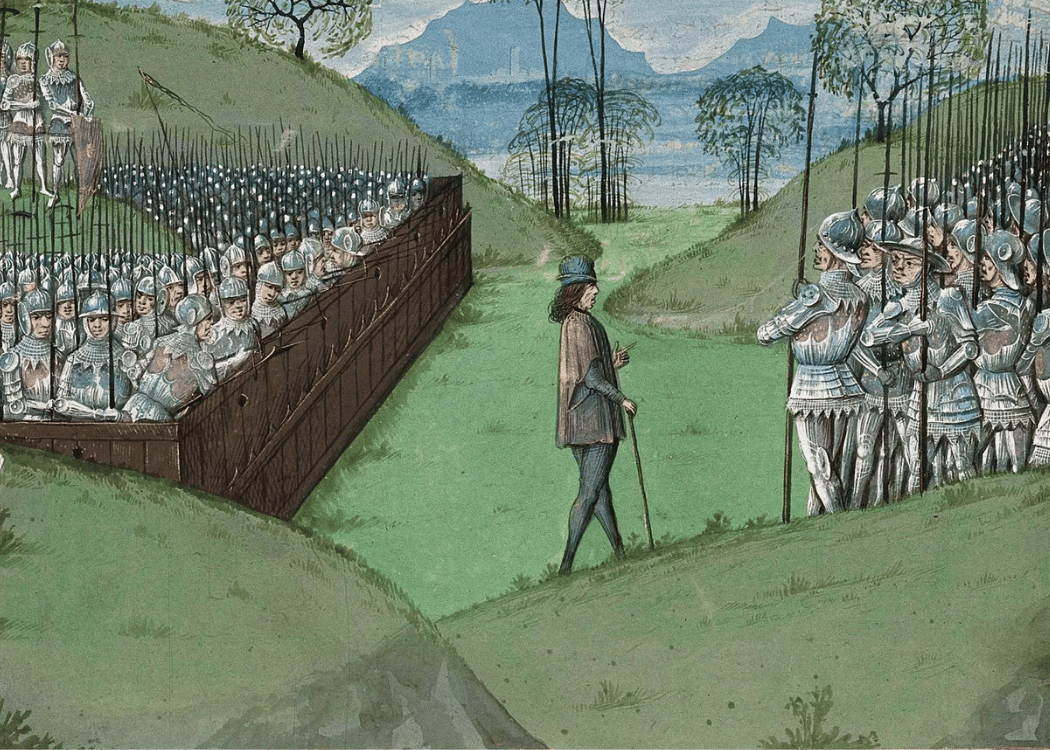
The two remaining armies marched into the rugged landscape of Cornwall for a final showdown at the Battle of Camlann. On the morning of the battle, King Arthur and the rebel leader Sir Mordred met between the frontlines for a tense peace conference, attempting to negotiate a settlement to avoid total mutual destruction. Because trust had completely broken down, both leaders gave strict orders to their forces to watch out for any sign of hostility, commanding them to immediately draw their swords and attack if a single blade was flashed in the open air.
The fragile truce was shattered by a freak accident: a stray adder crawled out of a bush and bit a knight on the foot. The warrior instinctively pulled his sword to kill the snake, and the moment the blade gleamed in the sunlight, the trumpets sounded on both sides. The two massive armies charged, turning the fields of Cornwall into a blind, day-long slaughter that systematically wiped out the last generation of British chivalry.
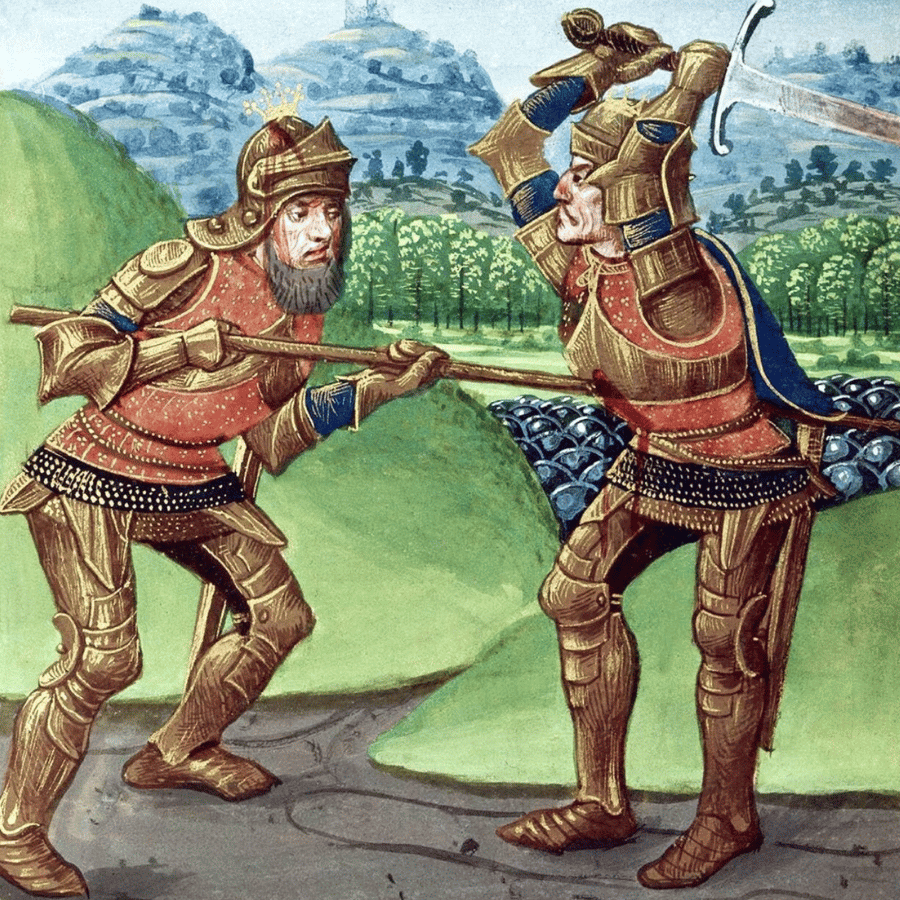
By nightfall, the golden world of Camelot lay in ruins, leaving only three men standing on the field: King Arthur, Sir Lucan, and Sir Bedivere. Spotting Mordred leaning on a heap of dead bodies, the King was consumed by rage, seized a heavy spear, and charged his son. Arthur drove the spear straight through Mordred’s body. However, as the dying traitor felt the weapon pierce his chest, he shoved himself forward along the shaft with immense force to deliver a final, two-handed blow with his sword that cracked the King's helmet deep into his skull. Mordred dropped dead on the grass, while the mortally wounded Arthur collapsed into the arms of Bedivere and Lucan. Sir Lucan tragically died shortly after from the strain of trying to lift the King, leaving Bedivere as the lone surviving witness to the end of the fellowship.
As his strength faded, Arthur commanded Bedivere to take his legendary sword, Excalibur, and throw it directly into a nearby lake. Bedivere twice hid the weapon behind a tree, reluctant to destroy such a beautiful symbol of royal power, but Arthur detected the lie and ordered him back. On the third attempt, Bedivere threw the blade into the water; a mysterious hand clad in white silk rose from the surface, caught the sword by the hilt, brandished it three times, and drew it down into the depths.
Shortly after, a dark barge filled with mourning queens, led by Arthur's sister Morgan le Fay, floated out of the mist along the shoreline. Bedivere carried the dying King onto the vessel, and as the barge drifted away toward the mystical island of Avalon to heal Arthur's wounds, the lone knight wept on the shore, marking the definitive, tragic close of the Matter of Britain.

Real-World Politics of the Arthurian Tales
1191 – 1301 AD
The stories of the Matter of Britain did not just live in storybooks; they were actively used by English kings as a powerful tool to rule the country and conquer new territories. Because medieval people treated Geoffrey of Monmouth's legends as absolute historical fact, whoever controlled the memory of King Arthur held immense political power. The Plantagenet kings quickly realized they could use these legends to make their own royal line look completely legitimate and to justify their wars against neighboring nations. This political strategy transformed the old myths into a driving force behind the expansion of the English crown.
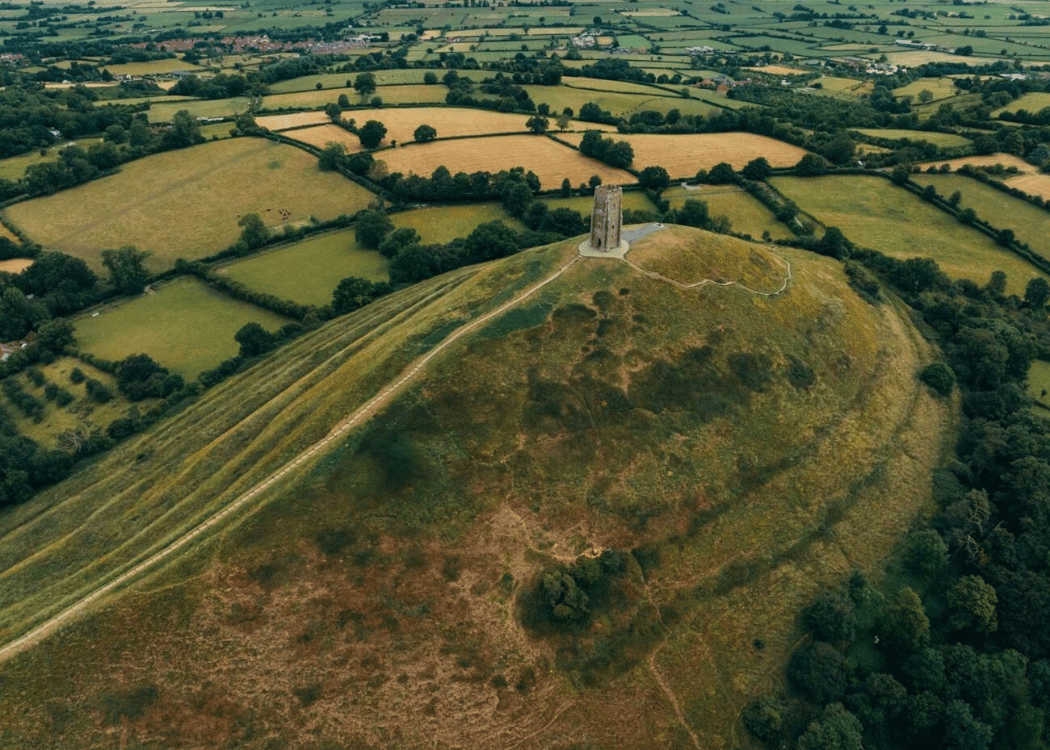
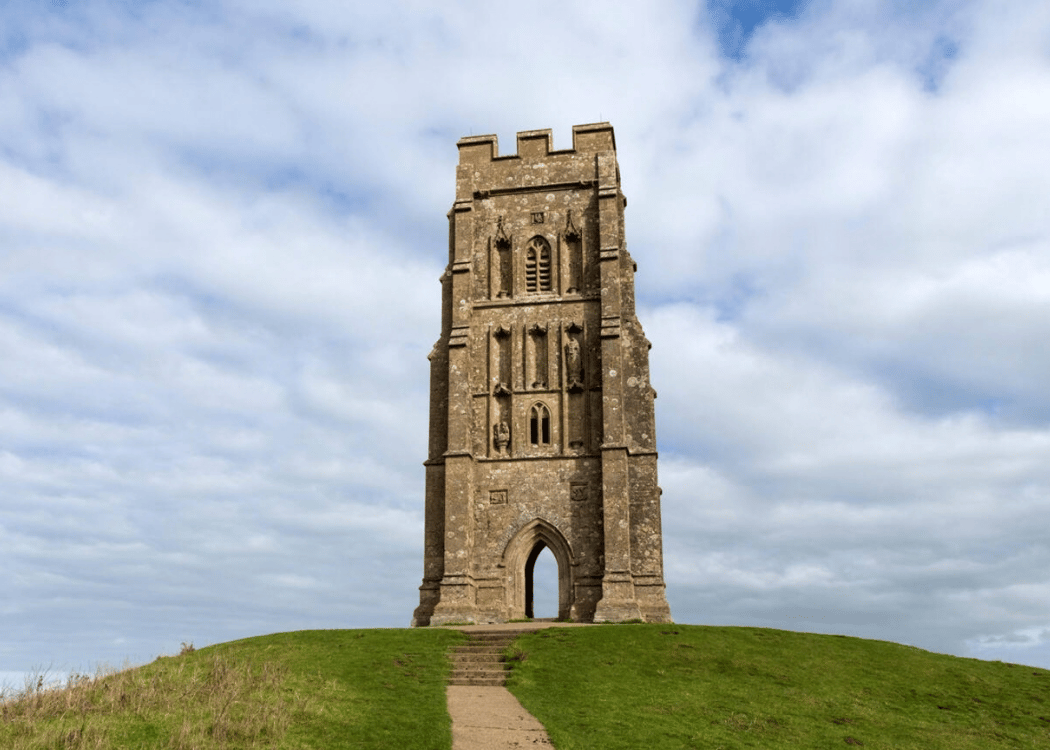
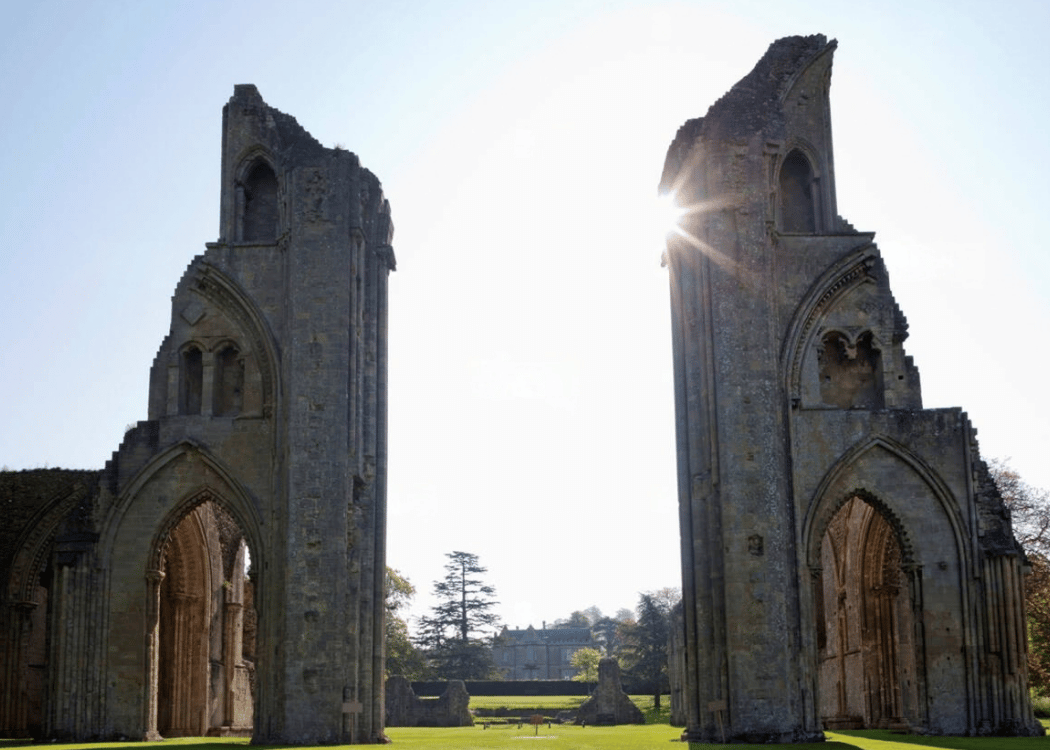
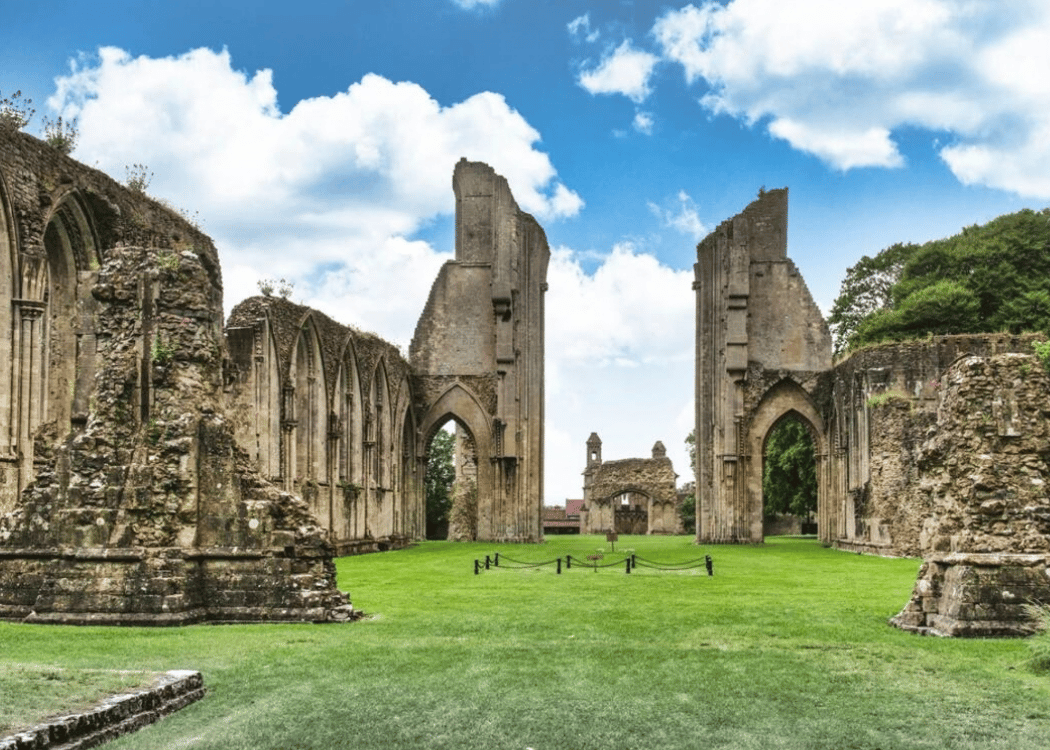
The most dramatic use of this mythic strategy occurred in 1191 at Glastonbury Abbey. During a time when the crown needed to boost public morale, the monks claimed to have discovered a massive, hollowed-out oak coffin buried sixteen feet deep in the churchyard. Inside were the bones of a giant man with a severely wounded skull, sitting alongside a lead cross inscribed with the Latin words: "Here lies buried the renowned King Arthur in the island of Avalon." This discovery was a political masterstroke for King Richard the Lionheart and the royal family. By proving that Arthur was dead and buried in English soil, the crown completely crushed the long-standing Welsh belief that Arthur would one day return from the dead to drive the English out of the land.
A century later, King Edward I turned the Arthurian myth into a literal weapon of conquest. After launching a brutal military campaign to destroy the independent principalities of Wales in 1282, Edward held a massive round table tournament at Nefyn to celebrate his triumph. He forced the defeated Welsh nobility to surrender their most sacred royal relic—historically believed to be the actual Crown of King Arthur—and brought it back to London to present at the altar of Westminster Abbey, proving that the legendary British empire was now unified under his own English crown.
Edward took the myth even further in 1301 during his fierce wars to conquer Scotland. When Pope Boniface VIII sent an official decree commanding the English army to pull back from Scottish soil, Edward sent a detailed letter back to the Vatican defending his invasion. Instead of citing modern treaties, the King used the ancient history of the Matter of Britain as his legal defense. He argued that because the Trojan founder Brutus had originally given the southern part of the island to his eldest son Locrinus and the northern part to his younger son Albanactus, the crown of England had a legal, historical right to rule over Scotland.
Thomas Malory and the Late Medieval Masterpiece
1485 AD
The vast, scattered network of Arthurian stories was finally gathered into a single, definitive book during the late fifteenth century. This monumental task was completed by Sir Thomas Malory, a knight who wrote the text while imprisoned in London's Newgate Prison during the violent final decades of the Wars of the Roses. Malory took centuries of complicated French prose romances and older British military epics, translating and streamlining them into a single, cohesive narrative. Published by England's first printer, William Caxton, in July 1485 under the title Le Morte d'Arthur (The Death of Arthur), this work established the definitive version of the legend that would shape global literature, art, and storytelling for centuries to come.
The tone of Malory's writing was deeply affected by the real-world political violence happening right outside his prison cell. As the houses of Lancaster and York systematically destroyed one another in bloody civil battles, Malory looked back at the legendary world of Camelot with a sense of deep, tragic nostalgia. He did not write the book as a simple fairy tale; instead, he framed it as a serious political lesson for the English nobility. By detailing how a magnificent kingdom was completely brought down from within by private lusts, family feuds, and political treason, Malory used the fall of the Round Table to mirror the ongoing destruction of England’s own ruling class, warning his readers about the necessity of unity and the rule of law.
Caxton’s printing press transformed the reach of the stories, moving them out of elite royal libraries straight into the hands of the growing middle class. Caxton organized Malory's massive text into twenty-one structured books, cleaning up the language to ensure high readability for ordinary readers while preserving the deep narrative depth of the knightly quests. This printed edition became the permanent gateway for the entire Arthurian tradition.
Centuries later, during the nineteenth century, the text sparked a massive cultural revival, inspiring the poetry of Alfred Tennyson, the artwork of the Pre-Raphaelites, and countless modern books and films. By capturing the complete lifecycle of Camelot—from the magical conception of Arthur at Tintagel down to the lone survival of Sir Bedivere at the edge of the lake—Malory's late medieval masterpiece permanently locked the Matter of Britain into the cultural heritage of the land.
Further Information: Thomas Malory and the Late Medieval Masterpiece