
Anglo-Saxon
England
Dawn of the Anglo-Saxon Kingdoms
Additional Information: The House of Wessex
The collapse of the Western Roman Empire did not leave a quiet vacuum, but instead opened the floodgates for a maritime migration that permanently altered the genetic and linguistic framework of the island. Beginning in the mid-fifth century, wave after wave of Germanic seafaring tribes—the Angles, Saxons, and Jutes—crossed the North Sea to push deep into the vulnerable lowlands, triggering a violent, multi-generational clash that drove the native British populations into the far western hills.
Within this era, the history traces the epic, multi-century journey of a nation defining itself. We explore the slow spiritual pivot from Germanic paganism to Roman Christianity, the fierce shield-wall resistance against relentless waves of Viking invaders, and the ultimate consolidation of separate tribal realms into a singular, unified Kingdom of England under the royal house of Wessex.
Page Contents:


Roman Withdrawal and Civilisational Collapse
407 - 446 AD
Additional Information: Roman Britain / Roman Withdrawal
The withdrawal of Roman governance from Britain resulted from a series of severe political and military crises across Italy and Gaul. For nearly four centuries, the province existed as an integrated component of a vast Mediterranean trading and defensive network, insulated by professional legions that were sustained by a centralized system of imperial taxation. By the late fourth century, however, ambitious regional commanders repeatedly withdrew these frontier garrisons across the Channel to fund civil wars for the imperial throne. This destabilizing military drain culminated between 406 and 410 AD following a large-scale invasion of Germanic tribes across the Rhine, a crisis that prompted the usurper Constantine III to strip the island of its remaining professional troops in 407, abandoning the territory permanently.
The consequences of this military desertion were immediate and severe. In 410, the British regional councils dispatched a desperate embassy to Emperor Honorius appealing for military assistance, only to receive a blunt directive historically recorded as the Rescript of Honorius. This decree instructed the British cities to organize their own defense, effectively bringing formal Roman rule on the island to a definitive close. The complex provincial tax system dissolved, causing the minting, import, and circulation of coinage to cease entirely. Within two decades, the economy dropped from a cash network to a system of basic bartering, and without currency to pay administrators or garrison forces, the civil service collapsed, the law courts ceased to function, and the structural foundations of the province vanished.
This institutional vacuum triggered a rapid decline across the lowlands as urban centers, which depended on complex trade routes and state subsidies, were quickly abandoned. Public baths, fora, and luxurious country villas fell into ruin as populations scattered into the countryside to practice subsistence farming, while maritime trade lines with the Mediterranean ruptured, completely halting the import of pottery, wine, oil, and iron tools. The departure of the imperial administration caused the territory to splinter into small, competitive regional lordships where native aristocrats scrambled for local power. Deprived of a unified defense, these fragmented territories became easy targets for multi-front incursions led by Irish raiders, northern Pictish clans, and North Sea Germanic pirates.
This unrelenting pressure eventually forced the surviving authorities to dispatch a final, desperate diplomatic plea to the Roman military commander Aetius in Gaul around 446. This appeal, known as the Groans of the Britons, detailed their total helplessness in the face of annihilation, famously recording that the barbarians "drove them into the sea, while the sea drove them right back to the barbarians".
Further Information: Roman Withdrawal and Civilisational Collapse

The Invocation of the Saxon Federates
449 - 455 AD
Additional Information: The Chronicles of Britain / Gildas and the Ruin of Britain, The Evolution of the English Language / The Saxon Mutiny and Germanic Settlement, The Genetic History of the English People / The Anglo-Saxon Migration and Continental Turnover
Faced with relentless raids following the collapse of western imperial governance, the remaining British leadership resorted to a traditional late-Roman military arrangement to preserve their territory. Around the middle of the fifth century, a dominant regional council leader traditionally identified as Vortigern hired Germanic mercenaries to serve as frontier guards, reviving the old imperial custom of foederati by offering them land, clothing, and regular monthly provisions in exchange for frontier defense.
According to the early records of Gildas in his De Excidio et Conquestu Britanniae and the later chronicles of Bede, Vortigern invited seafaring warriors from the North Sea coasts of Angeln, Jutland, and Lower Saxony to settle on the island. The initial contingent, led by two Jutish brothers named Hengist and Horsa, arrived around 449 in three longships at Ebbsfleet, stepping ashore on an island completely exposed to maritime devastation.
The arriving forces were granted the strategically isolated Isle of Thanet in east Kent as their primary base, an arrangement designed to quarantine the mercenaries while utilizing their maritime capabilities. The main mandate of these warriors was to repel the seaborne raids of the Picts from the north and the Scots from the western seas. While this tactical alignment checked the northern invaders in the short term, it created a severe crisis when the Germanic forces recognized the military vulnerability of their hosts.
Sending urgent word back across the sea describing the fertility of the British soil and the cowardice of the native leadership, they triggered a massive second wave of migration that crowded the southern harbours. These new arrivals fractured the initial treaty, complaining that their grain allocations were insufficient and demanding escalating supplies of food and territory under the threat of open warfare.
When the native British authorities failed to deliver the required provisions, the mercenaries rose up in a coordinated rebellion around 455, shattering the legal conventions of the province. This sudden betrayal is remembered in legends as the Treachery of the Long Knives, where Saxon warriors allegedly drew hidden seaxes to slaughter the unarmed British nobility during a peaceful assembly. Historically matched by a sequence of bloody clashes across the river crossings of Kent, the rebellion quickly claimed the life of Horsa at the Battle of Aylesford. The mercenary armies then swept westward with unyielding momentum, burning Romano-British villas, sacking fortified civitas centres, and dismantling the remaining institutional remnants of Roman-style life across southern Britain.
This violent rupture altered the demographic balance of the lowlands, transforming a local mutiny into a sweeping conquest that drove the native populations into the western hills and established the foundational territories of the Anglo-Saxon kingdoms.


The Early British Counter-Offensive
460 - 490 AD
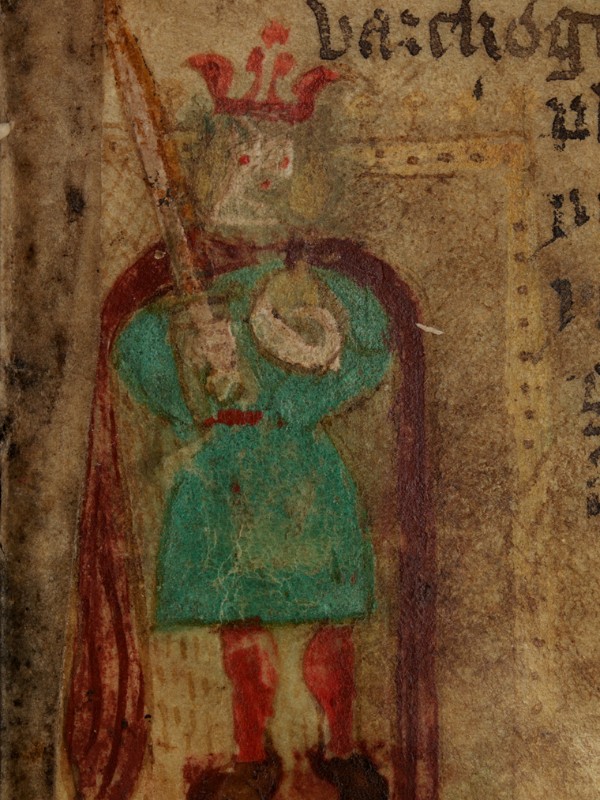
The sudden uprising of the Germanic mercenaries forced Britain into a multi-decade war for survival, inflicting severe territorial losses on the native population. Thousands were killed, enslaved, or forced into the rugged western uplands of Wales and Cornwall, while others migrated across the Channel to Armorica, establishing Brittany. Although the old Romano-British ruling class was dismantled across the south and east, the momentum of the Saxon advance slowed against the interior terrain.
The turning point came with the rise of Ambrosius Aurelianus, whom the contemporary monk Gildas described as the last surviving member of the Roman senatorial class on the island, whose parents had worn the imperial purple before perishing in the initial mercenary massacres. Unlike regional warlords who had spent years in fractious internal conflicts, Ambrosius understood traditional Roman military strategy, discipline, and logistics. Taking command of the shattered British forces around the 460s, he launched a coordinated counter-offensive against the expanding Saxon tribes.
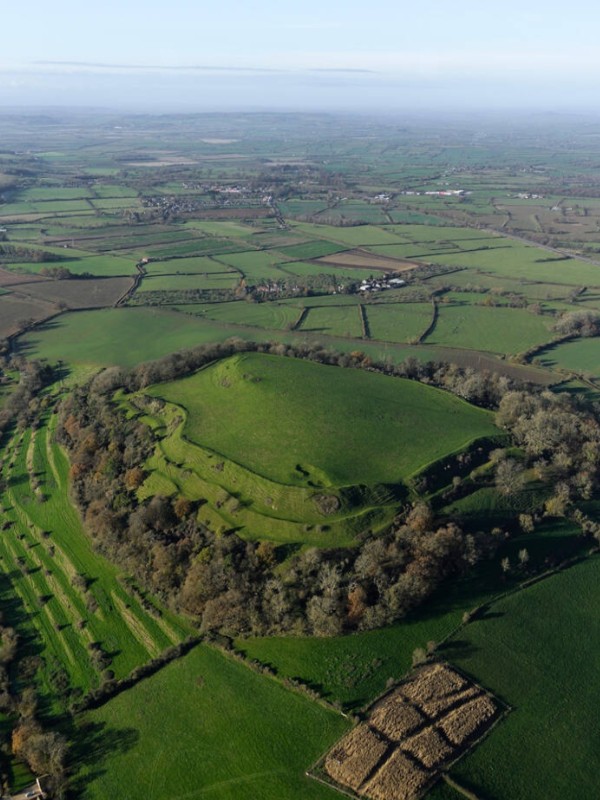
Under his direction, the British resistance stabilised a frontline across the centre of the country, re-occupying and refortifying strategic Iron Age hillforts—such as Cadbury Castle in Somerset and South Cadbury—to use as secure military bases, fortified supply depots, and troop assembly points. Crucially, Ambrosius employed remnants of late Roman cavalry tactics, utilizing mobile squadrons of armoured horsemen to rapidly intercept and smash infantry-heavy Saxon raiding parties across the open lowlands.
Defensive evidence from this era tracks this military stabilization through the construction of the Wansdyke, a massive, multi-kilometre linear earthwork ditch and bank system stretching across Wiltshire and Somerset. Built with its deep ditch facing north and east, this colossal frontier barrier was engineered by the Romanised British forces to block Saxon movement along the old Roman roads, control livestock corridors, and secure the rear of Ambrosius's tactical operations, successfully checking the Germanic advance for a generation before the final showdown at Mount Badon.


The Legend of King Arthur and Romano-British Resistance
460 – 490 AD
Additional Information: The Matter of Britain
While the legendary King Arthur belongs to later medieval folklore rather than strict history, his myth grew directly out of the real-world British resistance against the Anglo-Saxon migrations. Modern popular culture combines two separate eras: the romantic fairy tales written centuries later, and the gritty, dark-age military campaign that actually took place on the ground. Mentioning this legend is vital because later generations used it to interpret real archaeological sites, and because it reflects the genuine historical stalemate that altered the development of early England.
The stories of the Round Table, the Holy Grail, and the court of Camelot were invented during the twelfth and thirteenth centuries, converting a dark-age warlord into a high-medieval emperor. Writers like the Welsh cleric Geoffrey of Monmouth and French poet Chrétien de Troyes took the fragmented records of the post-Roman resistance and reimagined them as a glittering, chivalric golden age.
In this literary mythology, Arthur’s realm begins in a fractured Britain plagued by lawlessness, giant incursions, and unrelenting Saxon invasions following the collapse of Roman rule. The narrative opens with the mysterious wizard Merlin, who orchestrates Arthur’s hidden upbringing and eventual coronation after the boy miraculously draws the sword from the stone, proving his divine right to rule.
To govern his newly unified territory, Arthur establishes Camelot as a beacon of justice, anchoring his political court with the Round Table—a wedding gift from King Leodegrance designed to seat 150 of the world's premier knights in complete equality, eliminating all disputes over noble precedence. Under the banner of this fellowship, Arthur and his elite companions launch a series of campaigns that crush the Saxon war-bands under Hengist and Horsa, reclaim the northern frontiers, and expand British dominance across the sea into Gaul, establishing a short-lived pan-European empire. Sadly, the stability of this mythical kingdom is split from within by a bitter internal tragedy. Arthur’s premier warrior, Sir Lancelot, falls into an illicit, tragic love affair with Arthur's wife, Queen Guinevere, a betrayal that fractures the unity of the Round Table and creates deep rivalries among the court factions.
Seeking spiritual redemption and a cure for the moral decay spreading across the land, the knights abandon their worldly duties to launch the quest for the Holy Grail, the sacred vessel used by Jesus Christ at the Last Supper. This spiritual journey tests the moral purity of the knights, with flawed warriors like Lancelot and Sir Gawain failing the trial, while the pure Sir Galahad alone is deemed worthy to look directly into the vessel, achieving spiritual ascension and leaving Camelot depleted of its finest protectors.
The final collapse of the realm is engineered by Arthur’s illegitimate son and nemesis, Sir Modred, who seizes the throne during Arthur's absence on the continent, seducing Guinevere and allying with the remaining pagan Saxon factions to trigger a total civil war. The tragedy reaches its conclusion at the Battle of Camlann, a mutual slaughter that decimates the entire knightly class and culminates in a duel where Arthur slays Modred but is mortally wounded in the process.
The legend closes with the dying king ordering Sir Bedivere to cast his sword, Excalibur, back into the waters of a mystical lake, before Arthur is carried away on a black barge by three mourning queens to the island of Avalon, a paradise where his wounds are tended and where he rests to await his eventual resurrection as the "Once and Future King."
Stripping away the medieval romance reveals the real historical core: a coordinated British counter-offensive that successfully checked the Germanic advance for a generation. In the earliest Welsh records like the Historia Brittonum and the poem Y Gododdin, Arthur is not a king, but a war-chief (dux bellorum) commanding a mobile, Christian cavalry force. This native vanguard utilized surviving Roman cavalry tactics to achieve a mobility advantage over the infantry-based Anglo-Saxon shield walls. By holding the old Roman road junctions and river crossings, these British forces kept the early Anglo-Saxon settlements confined to the eastern coasts, protecting the farming valleys of the west and setting the stage for the massive Saxon defeat at Mount Badon.
Further Information: The Legend of King Arthur and Romano-British Resistance


The Battle of Badon and the Saxon Halt
490 - 510 AD
Decades of border warfare between the native British coalition and the Anglo-Saxon invaders culminated around the turn of the sixth century in a major military showdown. Known as the Obsidio Montis Badonici, or the Siege of Mount Badon, this engagement stands as the critical turning point of the migration era. While later medieval folklore credited this victory to King Arthur, realistic historical analysis places the event between 490 and 510, framing it as the climax of the Romanised military framework originally established by Ambrosius Aurelianus. This system preserved late-Roman defensive engineering, utilizing disciplined infantry training and strategic border surveillance networks to predict and intercept tribal troop movements before they could breach the lowlands.
The location of Mount Badon remains heavily debated among modern topographers and archaeologists, with the leading candidates being the massive Iron Age ramparts of Badbury Rings in Dorset, Solsbury Hill near Bath, or Liddington Castle in Wiltshire. The battle occurred when a unified Anglo-Saxon offensive—likely a massive coalition of southeastern Saxon war-bands combined with early southern Anglian settlers—attempted to breach British lines to push directly toward the Bristol Channel.
This sweeping movement was a high-stakes strategic maneuver designed to sever the British populations of the southwest peninsula from those in Wales, completely dividing native territory. The British army successfully intercepted the invaders, trapping them against a steeply fortified hill slope and launching a highly coordinated counter-encirclement. The ensuing engagement lasted for days, resulting in the total destruction of the Saxon offensive. The British infantry shield wall held its ground against waves of frontal attacks before coordinated, armored cavalry charges slammed down from the upper slopes to shatter the Germanic lines, killing the primary warlords of the migration cohort.
The victory at Badon halted the westward expansion of the Germanic tribes for nearly fifty years, creating a definitive geopolitical boundary that stabilized the island's interior. This half-century of containment is verified by the contemporary British monk Gildas, writing around 540 in his De Excidio et Conquestu Britanniae, who noted that this specific slaughter of the invaders brought a temporary end to foreign wars, allowing his entire generation to live in peace and civic order.
This fifty-year breathing room fundamentally altered the development of English society. It forced the early Anglo-Saxon coastal settlements to abandon their reliance on mobile raiding and the continuous extraction of plunder, transitioning instead into stable, localized farming communities. Deprived of new western lands to pillage, the tribal elites turned inward to consolidate their existing territories, initiating the intensive land clearance, agricultural organization, and political centralization that set the stage for the formal rise of the first true Germanic kingdoms of the Heptarchy.


Ælle and the Origins of the South Saxon Kingdom
477 – 514 AD
The foundation of the South Saxon kingdom began with the traditional maritime arrivals of Germanic warbands along the heavily defended coastline of southeastern Britain, initiating a brutal war of conquest against the remaining Romano-British authorities. According to early historical traditions, a prominent Saxon chieftain named Ælle arrived off the shores of Sussex in 477, landing three ships packed with veteran warrior retinues at a beachhead historically recorded as Cymenshore.
Bypassing the initial coastal defensive infrastructure, Ælle led his forces inland to systematically engage the local British defense units, routing their militias in a series of high-casualty skirmishes that drove the native populations back into the dense, swampy interior of the great forest of Andredsweald. Operating with immense strategic patience over the next decade, the Saxon host gradually consolidated its hold over the fertile coastal agricultural tracks, systematically taxing the local landscape to establish secure logistics for a permanent expansion.
The decisive moment of Ælle’s expansion occurred in 491, when his forces launched a total siege against Anderitum, a heavily fortified Roman Saxon Shore fort situated near modern Pevensey. Hemmed against the coast by the Saxon warbands and completely cut off from any realistic path of maritime rescue or reinforcements, the British garrison inside the massive stone walls faced imminent starvation. The encounter ended in a total, absolute slaughter; Ælle’s disciplined warriors successfully breached the fortifications and put the entire population to the sword, leaving the stone fortress an empty shell and permanently breaking British resistance across the southeastern shires. This complete victory allowed Ælle to proclaim himself the first king of the Suthseaxe, or South Saxons, a sovereign territory that was later Latinised as Sussex.
The unmatched military prestige generated by these unbroken conquests allowed Ælle to achieve a historic political milestone among the rival Germanic kingdoms of the island. He was recorded by early chroniclers as the inaugural ruler to hold the supreme title of Brytenwalda—or Britain-ruler—exercising a recognized, wide-ranging over-lordship over all the Anglo-Saxon settlements south of the Humber.
By establishing a secure, unified regional kingdom and forcing neighboring tribal chieftains to acknowledge his overarching authority, his long reign successfully cemented the Germanic presence in Britain, creating the template for the layout of the emerging Anglo-Saxon Heptarchy before his final death in approximately 514.
Further Information: Ælle and the Origins of the South Saxon Kingdom
Wider European Affairs: The Rise of the Merovingians
481 – 511 AD
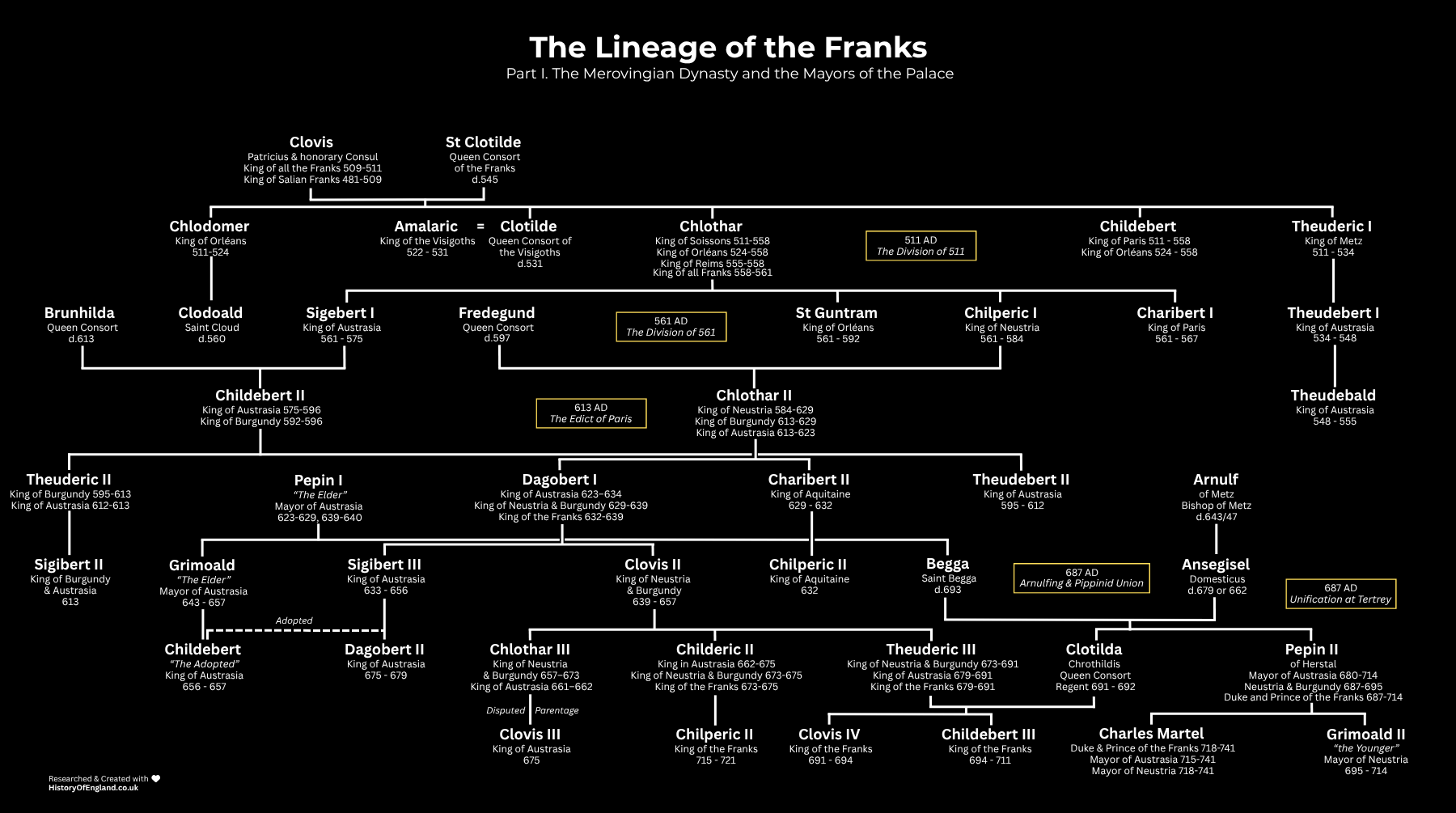
The early migrations into post-Roman Britain occurred precisely as a parallel military consolidation transformed continental Europe. The foundation of this new continental power was established by Clovis I, King of the Franks, who inherited command of the Salian Frankish tribes in 481 AD from his base at Tournai. Seeking to eliminate all competing warlords south of his borders, Clovis targeted the fertile river valleys of the Seine and the Somme, an expansion which culminated in 486 at the Battle of Soissons, where Frankish forces crushed the army of Syagrius, the last independent Roman commander in Gaul.
Cut off from potential reinforcements from Rome or Constantinople, the Gallo-Roman army was utterly broken. Syagrius fled south to seek refuge with the Visigoths, but Clovis threatened immediate war, forcing the Gothic court to hand over the fugitive for secret execution. By annexing this vast domain between the River Somme and the River Loire, Clovis instantly doubled the geographic size of his territory, absorbed prosperous administrative centres like Paris and Rouen, and secured recognition as the supreme successor to Roman rule in northern Gaul.
To secure his newly won conquests and win over the traditional Gallo-Roman landowning elites, Clovis made the strategic decision to convert to Catholic Christianity around 496. Abandoning his traditional Germanic paganism, he received baptism alongside three thousand of his veteran warriors at Reims from Bishop Remigius, winning the backing of the powerful local episcopate. This alliance provided the critical intelligence, financial resources, and political support needed to launch a holy war against the Arian Christian Visigoths, culminating in 507 at the Battle of Vouillé. Clovis personally killed the Visigothic King Alaric II in single combat during the melee, pushing the defeated Gothic forces across the Pyrenees mountains and securing the exceptionally wealthy province of Aquitaine for the expanding Franks.
Following the death of Clovis in 511, his descendants established the Merovingian Dynasty, locking western Europe into a system of direct royal rule. Though the empire frequently split into bloody, fratricidal civil wars between the rival sub-kingdoms of Austrasia, Neustria, and Burgundy, the Merovingians maintained absolute dominance over modern France, western Germany, and the Low Countries for over two centuries. This massive continental bloc functioned as the primary commercial trading partner and cultural anchor for the newly emergent Anglo-Saxon kingdoms across the English Channel, heavily influencing early English coin designs and cross-Channel royal marriages.
However, the internal stability of the Merovingian state collapsed during the late seventh century due to decades of lavish, permanent land grants that completely emptied the royal treasury. Stripped of their wealth, the later Merovingian monarchs lost their executive authority, becoming powerless figureheads derided by contemporary chroniclers as the rois fainéants, or "do-nothing kings." Real administrative control of the state was systematically hijacked by the Mayors of the Palace, the hereditary chief ministers of the royal households. The office became the exclusive property of two formidable, landowning Austrasian clans: the Arnulfings and the Pippinids.
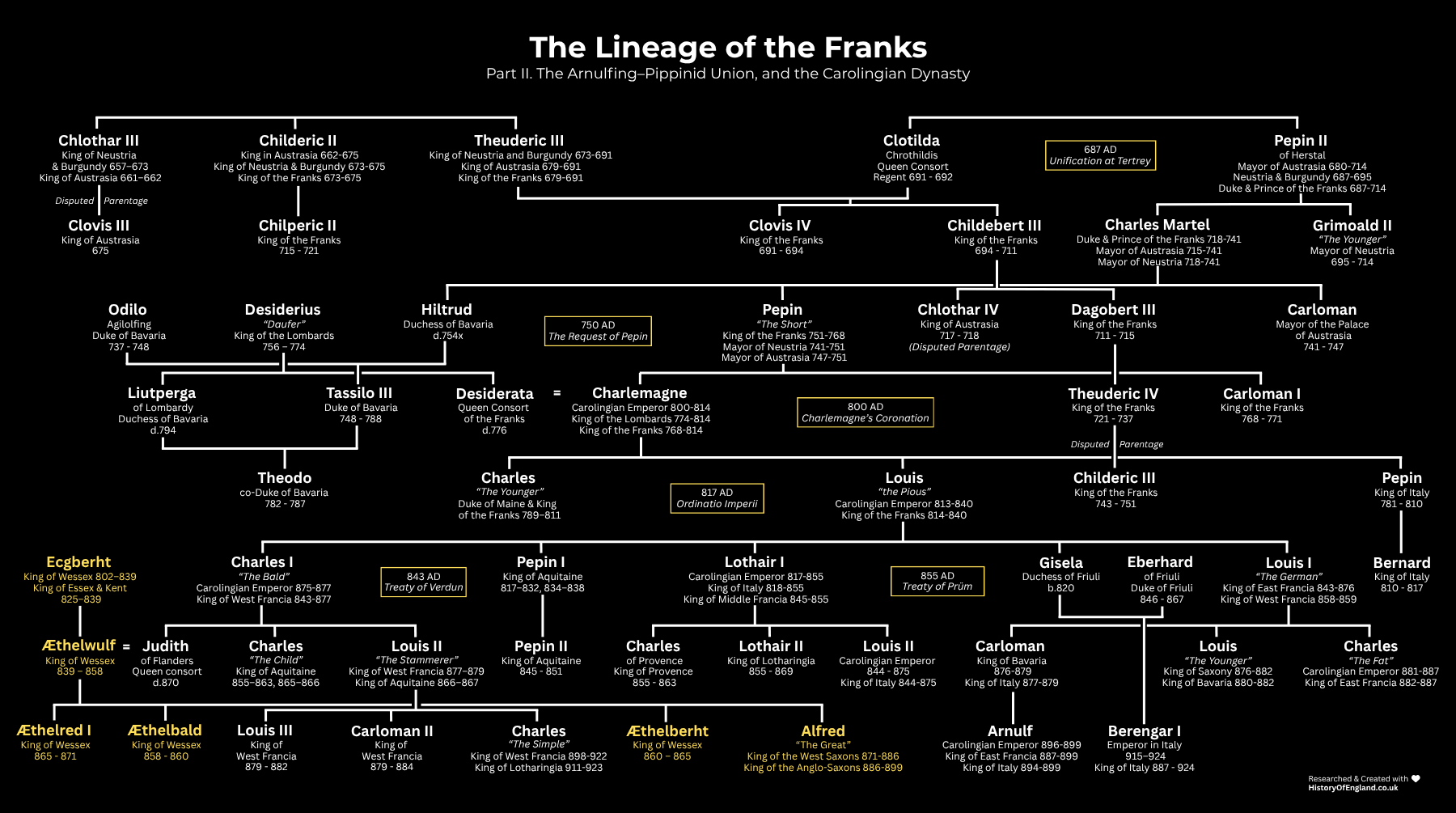
These two families engineered a permanent political union through the marriage of Ansegisel, son of Saint Arnulf of Metz, to Begga, daughter of Pepin I, Mayor of the Palace of Austrasia (Pepin the Elder). This powerful dynastic alliance concentrated vast agricultural wealth, military patronage, and administrative offices into a single family line, known to history as the Carolingians. The military supremacy of this new mayoral dynasty was consolidated by Ansegisel’s illegitimate son, Charles Martel, who unified the splintered Frankish kingdoms by force and famously crushed an Umayyad invasion army at the Battle of Tours in 732.
The final, inevitable de jure overthrow of the Merovingian line occurred in November 751 under Martel’s ambitious son, Pepin III (Pepin the Short). Serving as the final Mayor of the Palace, Pepin III secured an explicit papal mandate from Pope Zacharias stating that the individual who held the actual power of the state should legally bear the title of king.
Armed with this divine authority, Pepin convened an assembly of Frankish magnates at Soissons, where the final Merovingian king, Childeric III, was publicly deposed. Childeric’s long, flowing hair—the ancient, sacred symbol of Merovingian royal blood—was unceremoniously shaved off, and he was permanently confined to a monastery, ending the dynasty of Clovis and transferring the double-crown of western Europe to the Carolingians.
Germanic Settlement and Tribal Foundations
510 - 560 AD
The half-century of peace following the Battle of Badon did not halt Germanic arrivals; instead, it simply altered their settling patterns. With westward military expansion blocked, a steady influx of Angles, Saxons, and Jutes from northern Germany, Frisia, and Denmark transformed the eastern and southern lowlands. Arriving as entire families with farming equipment, seed grain, and livestock, these settlers gradually replaced the old sub-Roman networks with localized Germanic chiefdoms.
This profound demographic shift is visible in the ground, which shows a transition from Roman stone villas to timber-framed longhouses and small, semi-subterranean outbuildings known as sunken-featured buildings (Grubenhäuser). These Grubenhäuser, excavated extensively across lowland sites, featured dug-out soil pits beneath plank floors that provided ideal, damp-free workshops for weaving textile fibers, leatherworking, and grain storage. Concurrently, wheel-thrown, mass-produced sub-Roman British pottery completely vanished from the eastern shires. It was replaced by coarse, handmade Anglo-Saxon cremation urns decorated with stamped geometric lines, alongside metalwork personal dress fasteners like bronze square-headed and cruciform brooches.
During this stabilization phase, the Old English language established itself as the dominant tongue of the lowlands. Unlike other Western Roman provinces—such as Gaul or Hispania where incoming Germanic groups adopted Vulgar Latin—the sheer volume and family-based nature of the settlers in Britain entirely replaced local Brythonic Celtic dialects and official Latin idioms across the south and east.
As these agricultural communities grew, they erased old Roman administrative maps, imperial fiscal tax boundaries, and estate layouts, establishing organic folk-lands named after the specific tribal groups clearing the wilderness. Examples include the Gewisse in the upper Thames Valley, whose name translated as the "trustworthy" or "assured" ones, the Spalda who drained the marshy horizons of the Lincolnshire fens, and the Hwicce who settled the wooded valleys of the West Midlands.
These early folk-lands were deeply integrated with pre-Christian Germanic pagan religious practices, and sacred spaces were established across the landscape dedicated to deities like Woden and Thunor. This spiritual layout required the allocation of isolated hilltop sanctuaries (hearg) and sacred groves (wēoh) for sacrificial offerings and tribal assemblies. These religious connections remain permanently stamped on the landscape today through English place-names like Wednesbury (Woden's borough), Harrow (the sanctuary), and Thundersley (Thunor's grove), documenting how these early agricultural tribes bound their ancestral bloodlines to the physical shires immediately before the formal rise of the first true regional kingdoms.


The Rise of the West Saxons
495 - 577 AD
xThe foundational lineage of the West Saxon kingdom began at the close of the fifth century along the southern coast of Britain. According to the Anglo-Saxon Chronicle, a Saxon chieftain named Cerdic and his son Cynric landed in southern Hampshire in 495 with five longships, spending decades fighting local British populations to secure a coastal beachhead. Following a major victory at Cerdicesford (Charford-on-Avon) in 519, Cerdic established his ruling line, becoming the founding patriarch of the House of Wessex—the dynastic lineage that would centuries later unite the entire English nation.
Modern paleogenomic and onomastic audits have revealed an unexpected detail regarding this founding figure; despite being recorded as a Saxon leader, the name Cerdic is an anglicised borrowing of the native Brythonic Celtic name Ceretic. This linguistic overlap strongly indicates that the birth of Wessex was not a pure Germanic replacement, but a complex, inter-cultural alliance where an ambitious, partially Romanised British aristocratic family merged with an incoming Saxon mercenary fleet to carve out an independent provincial power base.
Initially recorded in early West Saxon tradition as the Gewisse—a name translating as the "trustworthy" or "assured" ones—this group launched a multi-generational northward expansion away from the coast, pushing through the Wiltshire downs and into the fertile upper Thames valley. They utilised the remaining Roman road networks, most notably Silchester's junction tracks, to rapidly move their armies, while systematically absorbing or conquering rival tribal factions to construct a powerful regional kingdom.
The decisive breakthrough for the dynasty occurred in 577 under King Ceawlin at the Battle of Dyrham in Gloucestershire. The West Saxon army defeated a coalition of regional British forces, killing three native kings—Conmail, Condidan, and Farinmail—and capturing the Roman walled cities of Glevum (Gloucester), Corinium (Cirencester), and Aquae Sulis (Bath). By seizing these three wealthy, highly urbanised civitas centres, Ceawlin successfully advanced the borders of Wessex to the line of the River Severn.
This strategic breakthrough permanently severed the land communication channels between the independent British populations of the southwest peninsula and those in Wales, and allowed the West Saxon kings to claim the title of Bretwalda, or wide-ruler of Britain.
Further Information: The Rise of the West Saxons


The Iclingas and the Birth of Mercia
520 - 625 AD
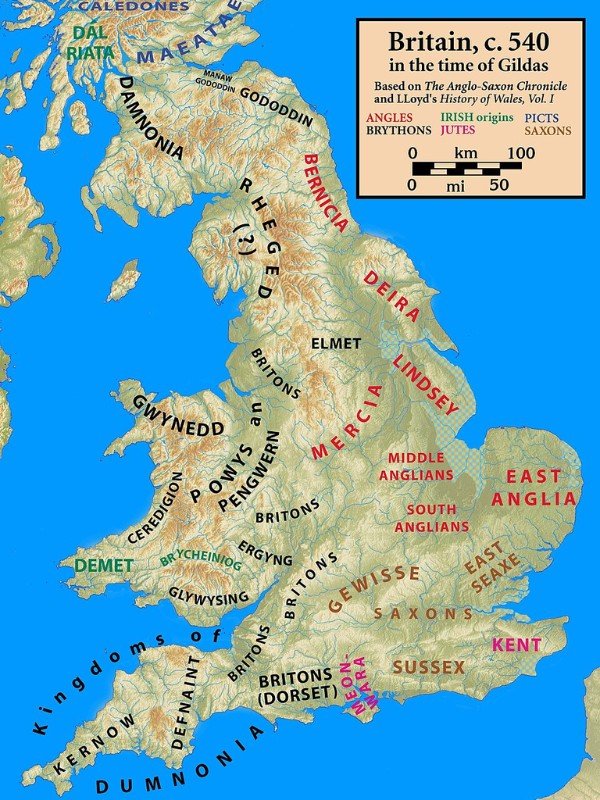
While the West Saxons consolidated the south, another powerful Germanic territory was developing across the central midlands. During the early sixth century, large tribal groups of Angles navigated into the interior of the island via the eastern wash and the river networks of the Trent and the Welland. These settlers pushed deep into the central landscape, establishing an expansive inland borderland kingdom that bordered the independent British kingdoms of Wales to the west. This strategic frontier location prompted them to be recorded in Old English as the Mierce, a name translating directly as the border people, which was later Latinised as Mercia.
The initial unification of these scattered midland tribes was achieved by an Anglian royal family known as the Iclingas. The dynasty traced its lineage back to Icel, a prominent continental ancestor whose descendants established their primary administrative and spiritual seats around Tamworth and Repton, positioning themselves to control trade and movements across the heart of the island.
Unlike the coastal kingdoms that relied on maritime access, early Mercia expanded its borders by systematically absorbing smaller neighbouring Anglian and Saxon tribes through marriage alliances and local subjugation. The Iclingas expanded their territory by absorbing independent frontier groups, including the Pecsæte of the Peak District, the Tomsaetan of the Tame valley, and the Hwicce of the Severn valley. By forcing these smaller, loose tribal identities to pay tribute and integrate into the main Anglian host, the early Mercian kings created a large consolidated territory that stretched from the Humber down to the Thames valley.
The core of this growing kingdom relied heavily on the fertile river valleys, using the Trent as a major transport corridor to move troops and secure internal communications. To enforce their authority, the Iclingas established a dual power center; they constructed a royal palace and administrative hub at Tamworth alongside an extensive dynastic burial site and religious sanctuary at Repton.
This geographic architecture allowed the early rulers to monitor the western trade tracks with the Celtic kingdoms and tax the vital salt extraction networks operating out of Droitwich. By forcing these smaller, loose tribal identities to pay tribute and integrate into the main Anglian host, the early Mercian kings created a large consolidated territory that stretched from the Humber down to the Thames valley. This internal consolidation of the midland shires established a large pool of manpower and secure logistics, clearing the path for a rapid military expansion that would soon transform this landlocked border country into the dominant military superpower of Anglo-Saxon Britain.
Further Information: The Iclingas and the Birth of Mercia


The Conversion of Kent
597 - 602 AD
Additional Information: The History of the Church in England / Saint Augustine and the Conversion of Kent
In 597, the cultural isolation of the migration era was broken when a mission led by the Benedictine monk Augustine arrived in Kent to convert the Anglo-Saxon kingdoms. The embassy landed on the Isle of Thanet, where King Æthelberht received them, a diplomatic reception facilitated by his Frankish queen, Bertha, who already practiced the Christian faith inside a surviving Roman chapel in Canterbury.
Æthelberht accepted baptism shortly after, triggering the conversion of his court and the wider population, while Augustine was consecrated as the first Archbishop of Canterbury, establishing the town as the primary seat of the Church and introducing continental literacy and legal traditions to the island. The king issued the Law of Æthelberht around 602, which stands as the earliest surviving text written in the Old English language.
This administrative shift altered the political climate, enabling monarchs to secure permanent land tenure through royal charters and accelerating the spread of the faith across neighbouring territories, binding early English governance directly to continental legal networks.
Further Information: The Conversion of Kent


Bernicia and Deira
603- 627 AD
In the far north of the island, a major power bloc emerged through the violent merger of two distinct frontier states that had previously spent generations fighting a back-and-forth dynastic war for control of the region. South of the River Tees and extending to the Humber estuary lay Deira, a kingdom heavily centered around the rich agrarian lands of the Yorkshire Wolds and the old Roman capital of Eboracum (York). Further north, stretching across the rugged coastline of Northumberland up to the Firth of Forth, lay Bernicia, a highly militarized territory ruled from the coastal clifftop fortress of Bebbanburg (Bamburgh Castle).
While early Deiran settlement developed through the gradual assimilation of Germanic mercenary families within an existing sub-Roman landscape, Bernicia began as an aggressive Anglian pirate beachhead established around 547 by King Ida, who seized the sheer volcanic rock of Bamburgh to launch a series of brutal, expanding campaigns against the independent British kingdoms of Bryneich and Rheged.
The synthesis of these two warring realms was achieved by the Bernician king, Æthelfrith, around 604, who, after conquering Deira and forcing its native heirs into immediate exile, combined both lands into a single frontier superpower called Northumbria.
To secure his vast new borders against external counter-offensives, Æthelfrith launched major military campaigns that shattered neighboring coalitions. He first crushed the combined Gaelic forces of Dál Riata under King Áedán mac Gabráin at the Battle of Degsastan in 603, before executing a brilliant strategic march westward to defeat the Welsh kingdoms at the Battle of Chester around AD 613. According to the early records of Bede, before the fighting at Chester commenced, Æthelfrith ordered his warriors to slaughter twelve hundred Christian British monks from Bangor Is-Coed who had gathered to pray for a Welsh victory.
Following Æthelfrith's death at the Battle of the Idle, his exiled rival, Edwin of Deira, seized the throne with East Anglian military backing, bringing a brief end to the initial Bernician dominance.
Edwin was a highly calculated administrator who used his new position to project an unprecedented level of overlordship across the island. He accepted Christian baptism on Easter Sunday in 627 from Paulinus, a Roman missionary sent north from Kent, establishing York as a northern bishopric and introducing the Christian faith to the Northumbrian elite.
Further Information: Bernicia and Deira
Linguistic, Artistic, and Material Heritage
600 - 750 AD
The regional integration of the lowland territories found expression not only in a shared material aesthetic but in the profound linguistic consolidation of the Old English tongue.
While Brittonic dialects remained entrenched within the western massifs, the language of the Anglo-Saxons emerged as the primary vehicle for the administrative, legal, and poetic life of the plains, sustaining a rich oral tradition where travelling scops preserved the historical trajectories of the ruling houses. Through intricate alliterative verse, these poets secured the social identity of the emerging kingdoms in a shared legendary past, ensuring that battlefield achievements were converted into lasting prestige.
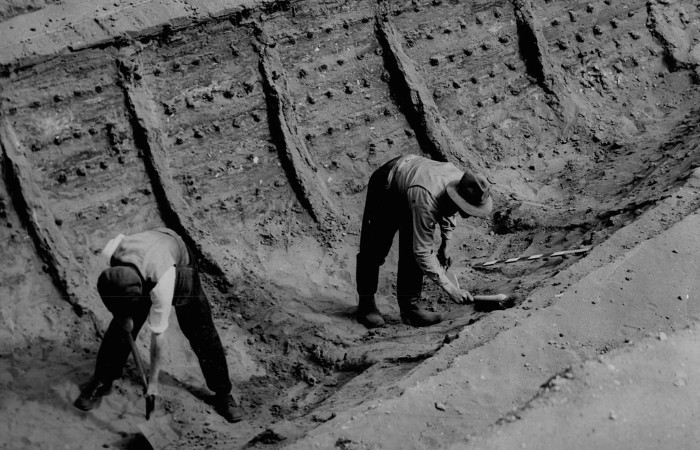
The structural wealth of this aristocratic society was vividly captured by the elite ship burials of the seventh century, most notably within the undisturbed funerary mound excavated at Sutton Hoo in Suffolk. Attributed to King Rædwald of East Anglia, the burial unmasked a sprawling matrix of international trade connections and dynastic treasure that reached far beyond the North Sea coast.
The grave goods included the iconic iron helmet with its defensive animal mask, imported Byzantine silver bowls, and gold coins from the Merovingian Frankish kingdoms, demonstrating that the insular elite operated within a broad continental marketplace. The associated gold filigree and garnet-inlaid metalwork display an extraordinary mastery of abstract animal art, engineered specifically to reflect the flickering hearth fire within the great timber feasting halls.
This sophisticated visual language ultimately bridged the transition from traditional Germanic polytheism to the Christian faith, as early missionaries chose to repurpose rather than dismantle the artistic heritage of the native nobility. Intricate, interlocking animal motifs were woven directly into the borders of sacred texts, such as the Lindisfarne Gospels, and carved onto public stone monuments to legitimize the new ecclesiastical authority.
This creative synthesis combined native metalworking traditions with the spiritual iconography of the Mediterranean world, establishing a durable, unified culture that defined the final consolidation of the Anglo-Saxon kingdoms.

The Reign of Penda and Mercian Hegemony
626 - 655 AD
The military rise of Mercia occurred under the command of King Penda, who transformed the landlocked border country into the dominant military superpower of Britain through raw military force. Succeeding to the throne in approximately 626, his unprecedented twenty-nine-year reign marked the beginning of a Mercian golden age. Penda was a traditional, pagan king who refused to abandon his ancestral deities for the expanding Christian faith. This stance allowed him to secure the unyielding loyalty of traditionalist Anglian nobles who resisted Northumbrian cultural dominance.
Recognizing that the survival of the Iclingas depended on breaking the northern kingdom's expansion, Penda forged a strategic, highly unconventional military alliance with the Christian Welsh ruler, King Cadwallon of Gwynedd. This multi-national coalition successfully intercepted the Northumbrian forces on 12 October 633 at the Battle of Hatfield Chase, completely routing the northern army and killing the powerful King Edwin, a tactical triumph that threw Northumbria into immediate chaos.
The early momentum of this victory allowed Penda to rapidly expand his borders southward and westward. In 628, he confronted the West Saxons at the Battle of Cirencester, decisively defeating their forces and annexing the vital territory of the Severn Valley to enrich the Mercian treasury. Somewhere between 635 and the early 640s, he marched his warrior retinues eastward into the forest terrains of East Anglia, completely shattering their domestic army and killing successive kings, Sigebert and Egric, to enforce Mercian over-lordship.
When the Northumbrian king Oswald attempted to reassert northern authority, Penda mobilized his veteran troops and met the threat on 5 August 642 at the Battle of Maserfield. The encounter ended in another complete tactical success for the Mercian king. Oswald was killed in the melee, and his body was dismembered as a sacrifice to the pagan god Woden, establishing Penda as the undisputed master of central Britain.
The closing decade of his long rule saw Penda maintain an iron grip on the southern kingdoms, routinely extracting heavy tribute and placing submissive puppet rulers on the thrones of Wessex and East Anglia. He frequently destabilized Northumbria, launching deep punitive raids that carried his armies straight to the walls of the northern stronghold at Bamburgh, where his forces attempted to burn down the royal citadel. To consolidate his sprawling hegemony, the aging king partitioned conquered lands among his sons, appointing his eldest son Peada as ruler over the Middle Angles to lock down dynastic continuity.
Penda's massive expansion came to a sudden, violent conclusion on 15 November 655 at the Battle of the Winwæd. Having assembled a massive host of thirty royal warbands and allied princes to launch a final invasion of Bernicia, Penda was completely betrayed by his regional allies and killed in the marshy, flooded terrain by King Oswiu. His death marked the conclusion of English paganism as a political force, but his long reign successfully elevated Mercia from a minor frontier state into the supreme master of the Anglo-Saxon Heptarchy.
Further Information: The Reign of Penda and Mercian Hegemony


The Heptarchy and Regional Rivalries
650 - 800 AD
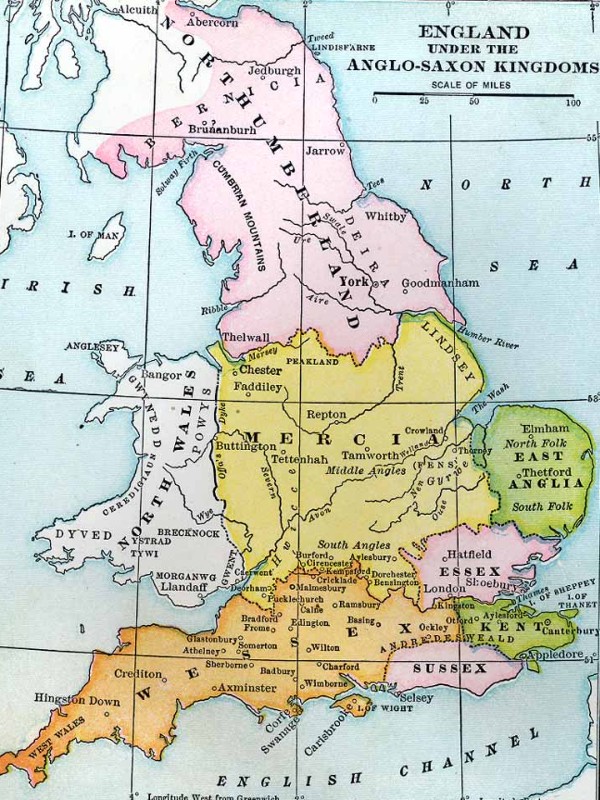
By around the middle of the seventh century, the small, shifting tribal territories of the early migration period had consolidated into seven major kingdoms. This multipolar arena is traditionally described as the Heptarchy—a term coined by later historians to describe the seven core realms consisting of Northumbria, Mercia, Wessex, Kent, East Anglia, Essex, and Sussex. Far from a stable or peaceful federation, this arrangement operated as a fluid, highly competitive system where boundaries fluctuated constantly and each royal house sought to dominate its neighbours through military pressure.
The primary geopolitical objective during this era was the achievement of the title Bretwalda, an Old English term translating as Britain-ruler or wide-ruler. First compiled as a historical list by the Venerable Bede and later recorded in the Anglo-Saxon Chronicle, the Bretwalda was a paramount king who succeeded in forcing rival monarchs to pay regular tribute and supply troops for military campaigns. This over-lordship was never hereditary, shifting dynamically based on military supremacy. Kent held the hegemony first under Æthelberht, before the political centre of gravity shifted north to the expansionist Northumbrian kings, eventually dropping down to the aggressive rulers of Mercia.
The internal power balance of the island was documented in administrative assessments like the Tribal Hidage, an early evaluation record compiled during this period that calculated the land wealth and military obligations of different regions in units known as hides. To enforce their authority and demand these high-volume food rents, or feorm, kings spent their entire reigns moving constantly from estate to estate with their armed retinues, traveling between royal vills known as villae regales to consume resources locally, hold judicial courts, and maintain the loyalty of their followers through gift-giving.
The daily reality of the countryside was marked by low-intensity resource warfare, primarily cattle raiding and border skirmishes, which served as the economic foundation for the warrior elite. Smaller, vulnerable kingdoms like Essex, Sussex, and Kent were gradually reduced to client status, their local dynasties stripped of independence and demoted to regional governors or ealdormen. This continuous internal friction prevented any single house from achieving lasting unification, keeping the island fractured into competing regional factions until the sudden shock of external invasions eventually forced a complete restructuring of the early English state.
Further Information: The Heptarchy and Regional Rivalries


The Synod of Whitby
664 AD
Additional Information: The History of the Church in England / The Synod of Whitby
As Christianity expanded across the Heptarchy, a internal conflict emerged between two rival ecclesiastical traditions that threatened the administrative unity of the English kingdoms. In the north, the Church followed the Irish-Scoto system, relying on autonomous monasteries like Lindisfarne that operated outside direct continental supervision. In the south, the Church followed the Roman model, which relied on a centralized hierarchy of bishops answering directly to the Pope.
The two traditions disagreed over Church administration, the style of the monastic haircut, and the calculations used to determine the calendar date of Easter. This divergence created practical difficulties at court, as King Oswiu of Northumbria celebrated Easter according to the northern monastic calendar while his southern-born queen, Eanflæd, observed the Roman fast on a different date.
To prevent a permanent religious fracture, King Oswiu convened a Church council at Whitby Abbey in 664. Chaired by Abbess Hilda, the council heard arguments from both sides regarding the true source of spiritual authority. Bishop Colmán of Lindisfarne defended the Celtic customs of Saint Columba, while the priest Wilfrid led the Roman position, arguing that the universal laws of Rome and Saint Peter carried authority over a single isolated island. The debate ended when King Oswiu asked if both sides agreed that Saint Peter held the keys to heaven. When both answered yes, Oswiu decreed he would obey the laws of Peter to ensure his entry through the celestial gates.
The Synod resulted in the formal rejection of Celtic customs in favour of Roman rules, permanently locking the legal and religious institutions of England to the centralized, literate frameworks of continental Europe.


Anglo-Saxon Daily Life
600 - 800 AD
Daily life across the early shires was bounded by a strict social hierarchy tied to the seasonal rhythms of the land, led by the majority population of free peasant farmers known as ceorls. These independent agriculturalists sat directly below the land-owning noble thegns and above the enslaved theows, who were captured in frontier warfare, born into bondage, or stripped of their freedom to settle a crippling debt.
This agrarian structure was systematically assessed and taxed through the hide, a measurement unit representing the productive territory required to sustain a single free family and its massive wooden plough team. The number of hides assigned to an estate dictated the volume of food rent, or feorm, that the community owed to the royal traveling court, while also setting the strict recruitment quotas for the seasonal infantry militia, the fyrd.
To meet these demanding administrative obligations, rural communities pooled their oxen and labor to cultivate shared, open fields using heavy wooden wheeled ploughs fitted with iron coulters to turn the dense lowland soils. The seasonal calendar dictated a rigorous, unbroken cycle of physical labor across the settlements:
Autumn: Oxen ploughed the earth, winter wheat and rye were sown, and livestock were slaughtered and salted for winter preservation.
Winter: Labor shifted indoors for tool repair, leatherworking, and spinning wood or flax on upright looms.
Spring: Fields were ploughed again to plant spring barley, oats, and peas, while newborn lambs and calves were integrated into the herds.
Summer: Hay and grain crops were harvested with iron scythes, milled into flour using heavy stone querns, and stored in timber granaries.
The domestic settlements of the era consisted of small, organic farmstead clusters composed of timber-framed rectangular halls built from upright oak posts and thick wattle-and-daub walls beneath steep, pitched thatched roofs. These longhouses featured a large, central open hearth that served as the primary source of light, heat, and cooking, venting smoke directly through the thatch. Families lived alongside smaller, semi-subterranean outbuildings known as sunken-featured buildings, which provided insulated, damp-free workshops for specialized weaving, bone-carving, and grain storage.
Domestic peace and personal safety within these tightly packed communities were maintained by the wergild system, a legal framework explicitly engineered to prevent volatile family blood feuds. This customary code compelled a perpetrator’s entire kin-group to pay a fixed monetary compensation to a victim's family to settle an injury or homicide without violence. Under Anglo-Saxon law, this compensation tariff was strictly scaled to an individual's social rank, valuing a noble thegn's life at 1,200 silver shillings and a free ceorl's life at 200 shillings, establishing a universal fiscal barrier that successfully deterred inter-clan violence across the rural settlements.
Further Information: Anglo-Saxon Daily Life


Northumbrian Golden Age
670 -735 AD
Additional Information: The Chronicles of Britain / Bede and the Ecclesiastical History of the English
During the late seventh and early eighth centuries, the northern frontier kingdom of Northumbria became the home of one of the greatest flowerings of learning, art, and literacy in early medieval Europe. This era was fuelled by the convergence of two powerful monastic traditions: the Irish-Celtic flowing from the holy island of Iona into Lindisfarne, and the Roman flowing into the twin monasteries of Monkwearmouth–Jarrow. The result was an explosion of scholarly and artistic productivity that repositioned Britain from a remote geopolitical periphery into the intellectual centre of the Western world.
The visual peak of this golden age is represented by illuminated manuscripts like the Lindisfarne Gospels, created around 700 AD by the monk Eadfrith, later Bishop of Lindisfarne. The text features complex "carpet pages" where thousands of interlocking birds and beasts form a geometric grid around the Christian cross, utilizing expensive pigments like Mediterranean lapis lazuli.
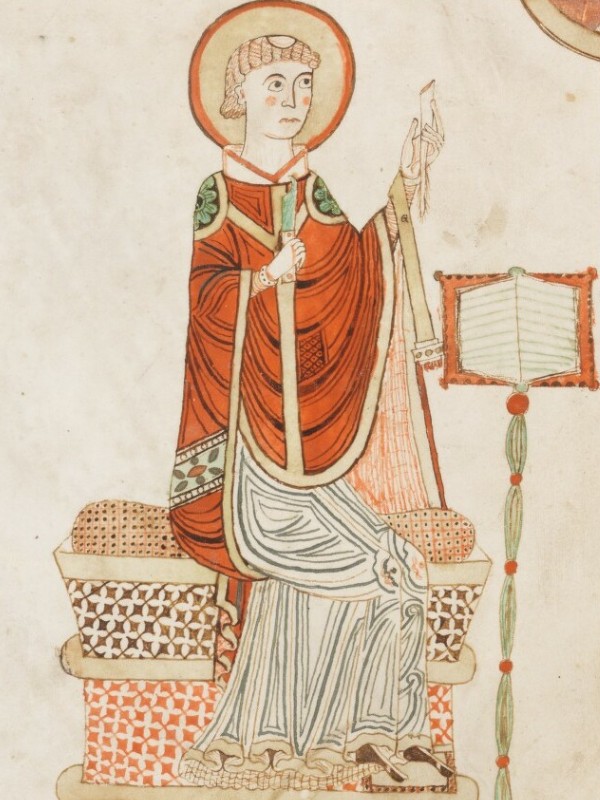
The intellectual leader of this era was the Venerable Bede, a monk who spent his entire life working in the scriptorium at Monkwearmouth–Jarrow. Writing in elegant Latin, Bede produced dozens of scientific, chronological, and theological works, culminating in his masterwork of 731: the Historia Ecclesiastica Gentis Anglorum (The Ecclesiastical History of the English People). Bede’s critical genius was his decision to view the warring, fractured kingdoms of the Angles, Saxons, and Jutes not as separate tribes, but as a single, unified ethnic and spiritual group: the Gens Anglorum.
Bede’s historical masterpiece provided an exhaustive ledger of how the Christian faith systematically reshaped the governance and boundaries of the island. Within his pages, he meticulously tracked the precise moments when pagan rulers cast aside their ancestral idols, documenting the pivotal 627 AD baptism of King Edwin of Northumbria at York and the fateful 664 AD theological showdown at the Synod of Whitby that bound the island to the legal machinery of Rome.
Beyond recording dynastic alliances and royal conversions, Bede acted as a rigorous investigator, gathering primary papal letters directly from Rome, interviewing traveling monks, and recording the miracles, plagues, and battlefield deaths that defined the everyday reality of the shires.
Further Information: Northumbrian Golden Age


The Hegemony of the Mercian Kings
757 - 796 AD
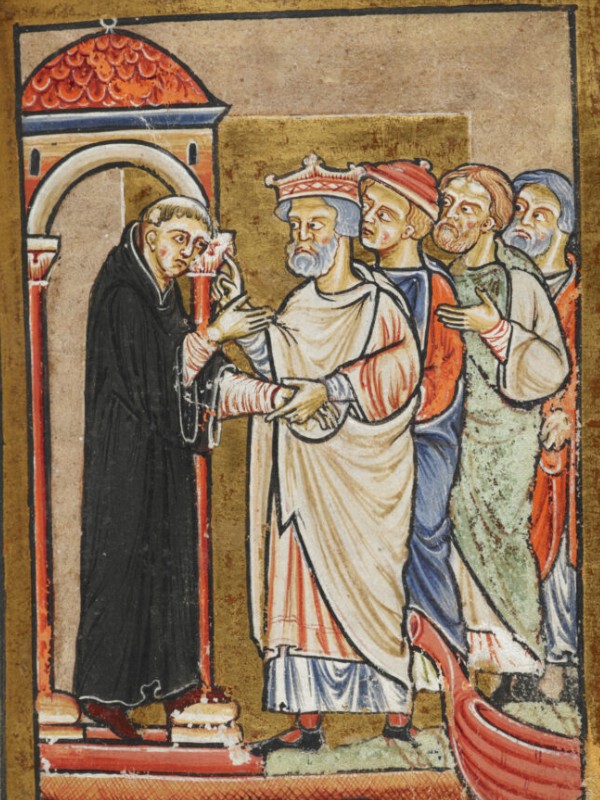
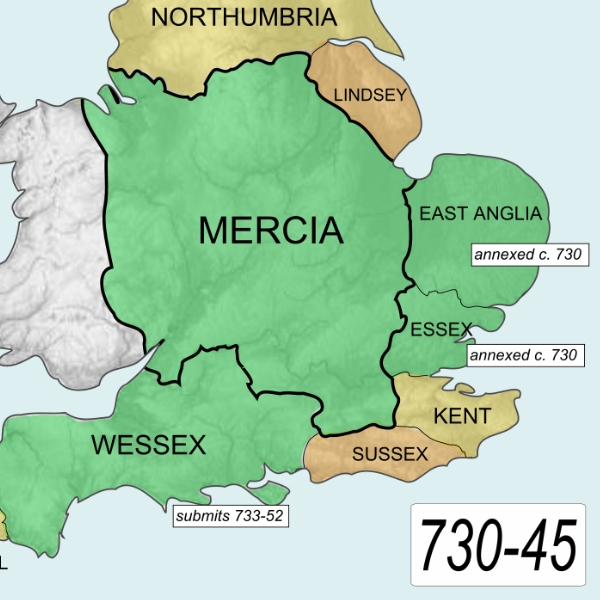
The eighth century brought the civic and economic eclipse of the northern kingdoms by the rising power of Mercia. This era, historically recorded as the Mercian Supremacy, saw the midland kingdom reduce the rest of southern England into subordinate client states, a hegemony driven by two long-lived, dominant monarchs: King Æthelbald, who ruled for forty-one years, and his cousin King Offa, who held the throne for thirty-nine years from 757 to 796 AD.
Offa implemented a highly centralized, authoritarian governance, treating the independent kingdoms of Kent, Sussex, and East Anglia as provinces of his expanding territory, confiscating land from local monasteries, and demoting native royal houses to regional governors or sub-kingly ealdormen. When the local nobility of Kent rose in a fierce rebellion to reclaim their independence, Offa marched his veteran warrior retinues south, crushing the Kentish host at the bloody Battle of Otford in 776 and placing the region under direct Mercian administrative rule.
To secure his western border against continuous, destructive border raiding from the independent British kingdoms of Wales, the king ordered the engineering of Offa’s Dyke. This monumental, linear earthwork barrier stretched across the landscape for nearly 150 miles from the estuary of the River Dee in the north down to the River Wye in the south, following the precise border terrain between Wales and Mercia. Constructed by mobilizing thousands of landed freemen under the compulsory burh-bot labor laws, the dyke featured a massive earthen bank standing up to eight metres high, backed by a deep western-facing ditch up to twenty-six feet wide. The alignment was carefully designed to grant the Mercian sentries a commanding view over the Welsh valleys, functioning as a hard line that strictly policed the frontier, regulated cross-border cattle trade, and blocked any uncoordinated military incursions.
Offa also fundamentally altered the economy of the island, taking direct control of the international trading ports, or wics, of London and Hamwic (Southampton) to tax the lucrative cross-Channel luxury trade. He introduced a standardized silver penny standard, replacing the older, degraded sceattas with a high-purity currency minted at London and Canterbury that featured his own name, royal titles, and realistic portrait styles. His currency infrastructure was so advanced that his mints produced a highly specialized gold dinar coin, copying the Arabic script of the Abbasid Caliphate to facilitate long-distance trade with Mediterranean merchants, while his queen, Cynethryth, became the only Anglo-Saxon female ruler to ever have her own portrait struck on official silver coinage.
Offa’s international prestige was so extensive that he corresponded directly with the Frankish Emperor Charlemagne as a sovereign equal, negotiating formal maritime trade treaties and mutual mercantile protections. By the time of his death in 796 AD, Offa routinely styled himself in his official royal charters as Rex Anglorum, or King of the English. This bold title demonstrated that the midland Iclingas dynasty had built the first real administrative framework for a unified southern kingdom, creating the model of over-lordship that would dominate the island immediately before the sudden shock of external maritime disasters broke the Mercian peace.
Further Information: The Hegemony of the Mercian Kings


The Lindisfarne Raid
793 AD
On 8 June 793 AD, the peace of the Anglo-Saxon kingdoms was shattered by a sudden maritime strike as a fleet of Scandinavian longships appeared off the coast of Northumbria, landing a force of Norse warriors on the holy island of Lindisfarne. The raiders stormed the completely undefended priory, slaughtered the monks, and plundered the monastery’s huge accumulation of gold, silver, and sacred treasures.
This event, tracked by the Anglo-Saxon Chronicle as a catastrophic omen preceded by immense sheets of pale lightning, whirlwinds, and fiery dragons flying across the sky, sent a shockwave across Latin Christendom. For centuries, monasteries had functioned as secure, unfortified centers of immense material wealth and spiritual authority; the Norsemen completely shattered this old sacred boundary. Alcuin of York, a prominent scholar at the court of Charlemagne, expressed the collective horror of the era, writing that the church of Saint Cuthbert was splattered with the blood of the priests and stripped of all its ornaments, exposing the total vulnerability of the island's coastal sanctuaries.
The physical plunder taken by the raiders was catastrophic, targeting the accumulated wealth of centuries of monastic patronage. While no exact historical manifest lists every stolen item, contemporary records and parallel hoard finds confirm that the Vikings seized gold-and-silver reliquaries containing the bones of saints, jewel-encrusted gospel book covers, silver liturgical chalices, ceremonial crosses, and fine continental textiles. They also systematically rounded up the surviving monks and monastery servants to be transported across the North Sea as valuable slaves or held for heavy ransom payouts. While the exact number of longships in this initial fleet was not recorded, typical raiding squadrons of the early Viking Age consisted of three to five vessels, carrying a combined force of roughly one hundred to one hundred and fifty highly mobile, veteran warriors.
Important physical evidence of this violent encounter has been recovered by archaeologists working across the holy island. Excavations have exposed the Lindisfarne Stone, a small, two-sided 9th-century sandstone marker known to history as the "Doomsday Stone." One side depicts a line of seven heavily armed, un-armored warriors raising heavy Viking battleaxes, swords, and round shields, capturing the immediate terror of the raid as witnessed by the local population. Furthermore, archaeological digs across the priory ruins have uncovered a rare 9th-century gaming piece carved from high-status blue glass, alongside mass graves showing signs of unhealed blade trauma, and charred timber beams that confirm localized burning during the assault.
The Lindisfarne raid was not an isolated incident, but the opening salvo of the Viking Age. The attackers were mobile, seafaring warriors originating from Norway and Denmark. They utilised advanced, shallow-draft longships that could cross open oceans and navigate miles inland up shallow English river channels, an advantage which allowed them to bypass static coastal defences and launch surprise strikes deep into the interior.
Over the next four decades, these attacks changed from small, seasonal hit-and-run coastal raids into a massive, organised targeting of the entire island, systematically draining the wealth of the Heptarchy, and using the threat of total destruction to extort massive payments of silver bullion, known as gafol, from the desperate Anglo-Saxon kingdoms.


The Battle of Ellandun and the Rise of Wessex
825 - 839 AD
The equilibrium of the ninth-century Anglo-Saxon heptarchy was permanently broken in AD 825 when the long-standing supremacy of Mercia collapsed on a Wiltshire battlefield. For over half a century, successive Mercian kings, most notably Offa, had maintained a heavy tributary hegemony over the southern lowlands, treating the surrounding realms as subordinate territories.
This overbearing dominance was directly challenged by King Egbert of Wessex, who had quietly consolidated his domestic resources and secured his borders during a twenty-year reign. Seeking to eliminate the growing West Saxon threat before it undermined his own over-lordship, the Mercian King Beornwulf mobilised a massive, veteran army and marched deep into West Saxon territory, forcing a decisive encounter at Ellandun, near modern Swindon.
The encounter was a brutal clash of infantry lines that tested the structural endurance of both kingdoms. The two sides locked their heavy timber shields together along the ridgeline, engaging in hours of exhausting hand-to-hand combat. Contemporary chronicles describe the engagement as a slaughter where the rivers ran thick with blood, but as the Mercian lines began to fracture under the continuous pressure of the West Saxon infantry, the army dissolved into a chaotic retreat. The West Saxon victory was complete, resulting in the destruction of the Mercian military and the flight of Beornwulf back across the frontier, an outright routing that shattered the administrative foundations of Mercian rule.
The immediate consequence of Ellandun was a rapid, permanent Restructuring of the English political map. Recognizing that Mercia no longer possessed the military strength to enforce its tributary demands, the sub-kingdoms of Kent, Surrey, Sussex, and Essex immediately abandoned their Mercian governors and submitted directly to the House of Cerdic. At the same time, the East Angles revolted against Mercian authority, slaying Beornwulf in a subsequent rebellion and seeking West Saxon protection.
The momentum generated by the victory at Ellandun sustained an aggressive expansion of West Saxon power through the closing decade of Egbert’s reign. In 829, Egbert launched a decisive northern campaign, marching his armies into the midlands to completely expel King Wiglaf of Mercia and assume direct, personal sovereignty over the Mercian realm, an achievement backed by the mass production of royal silver coins striking his name as King of the Mercians.
Pushing his vanguard further north that same year, Egbert reached the borders of Northumbria, halting his infantry at the Dore river crossing near modern Sheffield. Recognizing the futility of resistance against the unified southern host, King Eanred of Northumbria met the West Saxon king to offer his formal submission, an historic capitulation that led the Anglo-Saxon Chronicle to explicitly record Egbert as the eighth Bretwalda, or wide-ruler of the island.
Although Mercia successfully revolted in 830 to restore Wiglaf to his throne, Egbert permanently secured the southeastern kingdoms for his lineage, delegating the sub-kingship of Kent, Sussex, and Surrey to his eldest son, Æthelwulf. The final phase of his thirty-seven-year rule was marked by a new defensive crisis as early Scandinavian longboats began raiding the coastal estuaries, inflicting a bloody defeat on Egbert's forces at Carhampton in 836 AD. Resentful of recent West Saxon territorial growth, the native Britons of Cornwall— the West Welsh—seized upon this escalating Scandinavian threat to launch a major regional insurrection.
In 838 AD, a great Danish naval force arrived off the western coast, forging a strategic military alliance with the Cornish rebels to coordinate a combined strike designed to crush the power of Wessex. Proving his enduring military genius, Egbert rapidly mobilized his heavy infantry levies and marched west into the rugged borderlands, intercepting the joint rebel army on the windswept heights of Hingston Down near Callington. The ensuing battle was a violently contested clash of shield walls, but Egbert's veteran Saxon ranks systematically outmaneuvered the enemy, putting both the Cornish warriors and their Danish allies to total flight across the Tamar valley.
This decisive victory crushed the native uprising, subdued Cornwall into permanent political submission to the House of Cerdic, and stalled the Scandinavian advance, firmly stabilizing the western frontiers of his realm immediately before his death in 839.
Further Information: The Battle of Ellandun and the Rise of Wessex


The Early Reign of Æthelwulf
839 – 850 AD
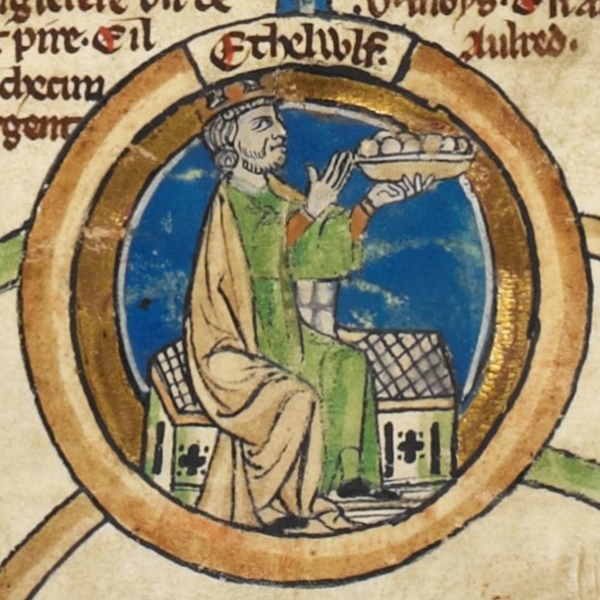
The administrative transition of the West Saxon crown in 839 AD thrust King Æthelwulf into a worsening national security crisis as Scandinavian sea-raiders transformed their sporadic coastal assaults into organized, multi-ship campaigns.
The first severe test of his lone authority erupted in 843 at the Second Battle of Carhampton on the Somerset coast. Confronting the crews of thirty-five Danish longships that had launched a sudden amphibious assault on the Bristol Channel estuaries, Æthelwulf rapidly marched his household troops to the coast to intercept the marauders. The resulting engagement was a chaotic, bloody beachhead battle where the Saxon shield wall fractured under the weight of the Scandinavian counter-attacks. The Danes successfully held the battlefield, dealing a severe blow to West Saxon military prestige and proving that the mobile maritime fleets could defeat a royal army on the open shore.
To counter this growing external threat and reinforce the core resources of his realm, Æthelwulf executed an aggressive territorial consolidation along his northern border. In 848 AD, West Saxon forces advanced into the mid-Thames Valley, a highly strategic, prosperous frontier zone that Wessex and Mercia had fiercely contested for over a century. Capitalizing on the growing internal fragmentation of the Mercian court under King Berhtwulf, Æthelwulf permanently annexed Berkshire and the surrounding upper Thames pasture lands directly into his sovereign domain, securing a vital geographic buffer zone that locked down the northern approaches to Winchester.
The strategic climax of this early defensive phase occurred in 848 at the Battle of the Parrett Mouth in Somerset. A massive Danish fleet attempted to repeat their earlier coastal successes by sailing deep into the waterlogged levels of Somerset via the River Parrett. However, the regional defenses held firm under a highly coordinated response from the local levies. Ealdorman Eanwulf of Somerset and Ealdorman Osric of Dorset combined their regional forces alongside Bishop Ealhstan of Sherborne, establishing a dense bottleneck along the marshy river banks to trap the Scandinavian longships.
The resulting encounter was a complete tactical triumph for Wessex. The joint Saxon levies systematically slaughtered the trapped raiders, recaptured their accumulated plunder, and thoroughly shattered the invading warband. This decisive victory permanently cleared the western shores of sea-pirates for a generation, establishing the baseline of internal stability and domestic confidence that enabled the House of Cerdic to reconstitute its forces immediately before the massive imperial armadas descended upon the Thames estuary in 851.
Further Information: The Early Reign of Æthelwulf

The Battle of Aclea
851 AD
The growing vulnerability of the Anglo-Saxon heptarchy under the escalating pressure of Scandinavian raiding reached a dangerous milestone in 851, when a massive Viking armada descended upon the southeastern coast. According to the Anglo-Saxon Chronicle, an unprecedented force of three hundred and fifty Danish ships sailed into the mouth of the Thames, unleashing thousands of battle-hardened warriors who stormed and sacked the prominent commercial and religious centres of Canterbury and London.
This overwhelming host encountered initial domestic resistance from King Beorhtwulf of Mercia, but the Mercian military core was rapidly routed and put to flight, leaving the entire southeastern lowlands exposed to unchecked plundering. Flush with victory, the Danish army turned south across the River Thames, advancing directly into the Surrey hills to strike at the heartlands of West Saxon territory.
The impending collapse of the southern shires was averted by King Æthelwulf of Wessex, who mobilised a massive, disciplined army alongside his eldest son, Æthelbald, to intercept the advancing host. The two forces collided south of the Thames at a location recorded by contemporaries as Aclea, an Old English name meaning Oak Field, historically identified with the village of Ockley along the ancient Roman road of Stane Street. Operating with defiant coordination, the West Saxon infantry established a dense shield wall across the wooded terrain, absorbing the initial shock of the Viking assault before executing a devastating counter-offensive. The engagement developed into a relentless slaughter that broke the Scandinavian lines, scattering the panicked raiding army across the downs and resulting in the deaths of their primary chieftains.
The Anglo-Saxon Chronicle explicitly celebrated the victory at Aclea as the greatest slaughter of a heathen host that had ever been heard of up to that day, a triumph that permanently altered the balance of the early Viking Age. By systematically destroying a force that had just humiliated Mercia and sacked London, Æthelwulf proved that Wessex possessed the resilience and administrative capacity to withstand large-scale invasions.
This victory provided the southern kingdom with decades of relative stability, safeguarding its agrarian wealth and ensuring that when the Great Heathen Army arrived a generation later, the House of Cerdic remained the sole surviving bulwark of Anglo-Saxon independence.

The Carolingian Connection
(814) - 856 AD
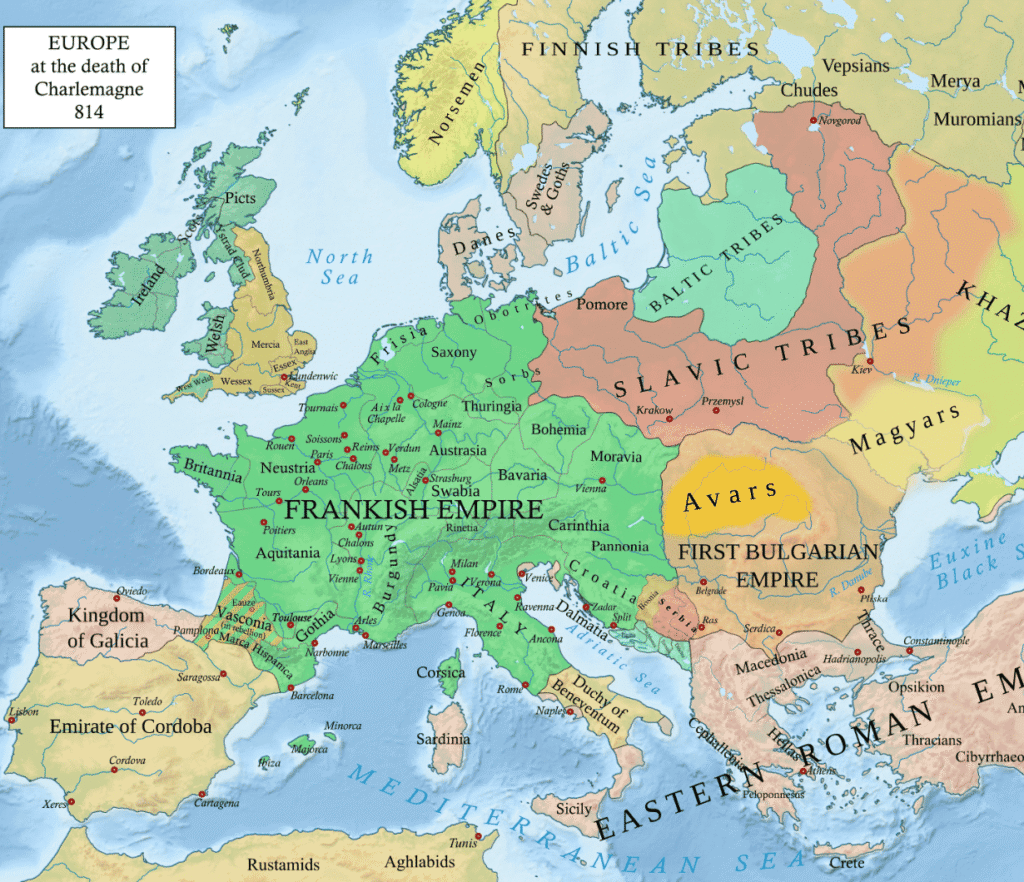
The rise of Wessex from a regional southern kingdom into the dominant military power of Britain was deeply intertwined with the shifting geopolitical landscape of continental Europe. For decades, the West Saxon royal house maintained a strategic and diplomatic dialogue with the Frankish Empire, which traced its supreme imperial authority directly back to Charlemagne. Under Charlemagne’s rule, the Frankish realm had united Western Europe into a sprawling Christian empire.
However, following his death in 814 and the turbulent, faction-ridden reign of his son and successor, Emperor Louis the Pious, this monolithic empire fractured. The underlying tensions erupted into a bloody three-year civil war among Charlemagne’s grandsons. This violent dynastic crisis was only temporarily resolved in August 843 by the Treaty of Verdun, which permanently carved the Carolingian Empire into three distinct realms: West Francia, East Francia, and Middle Francia.
Long before this formal partition, the West Saxon monarchy had utilized the Frankish court as a political sanctuary and a model for royal administration. King Ecgberht of Wessex had spent his formative years in extended political exile on the continent, finding refuge at Charlemagne’s court during the late eighth century while fleeing rival claimants to the West Saxon throne. During this continental exile, Ecgberht absorbed sophisticated Frankish methods of coin production, ecclesiastical organization, and centralized military mobilization, importing these administrative frameworks back to Britain when he seized power in 802.
This deep diplomatic nexus reached its historical and dynastic peak under Ecgberht’s son, King Æthelwulf. In 855, Æthelwulf departed Wessex to embark on a high-profile, year-long pilgrimage to Rome. On his return journey through continental Europe in 856 AD, the West Saxon king stayed extensively at the court of Charles the Bald, the King of West Francia. To cement a powerful mutual-defense and diplomatic alliance against the escalating wave of Viking raids plaguing both sides of the English Channel, Æthelwulf negotiated a stunning royal marriage. In October 856, at Verberie in northern France, the widowed West Saxon king married Charles the Bald's eldest daughter, Judith, who was merely twelve years old while Æthelwulf was in his fifties.
This Carolingian marriage alliance was a monumental geopolitical coup that elevated the international prestige of the House of Cerdic to an equal footing with the premier continental royal houses. In a significant break with West Saxon tradition—which historically denied royal wives the title of queen due to ancient fears of aristocratic factionalism—Judith was formally consecrated as a crowned queen at her wedding. However, this continental integration provoked immediate domestic instability upon Æthelwulf's return to England.
The marriage alienated the West Saxon nobility and triggered a violent rebellion led by Æthelwulf’s eldest surviving son, Æthelbald, who feared being disinherited by a potential new Carolingian lineage. The resulting crisis forced Æthelwulf to compromise, splitting the kingdom to preserve civil peace—setting a volatile stage for the succession battles that unfolded just as the Great Heathen Army prepared to land on English shores.
Further Information: Wessex and the Wider World: The Carolingian Connection


The Invasion of the Great Heathen Army
865 - 874 AD
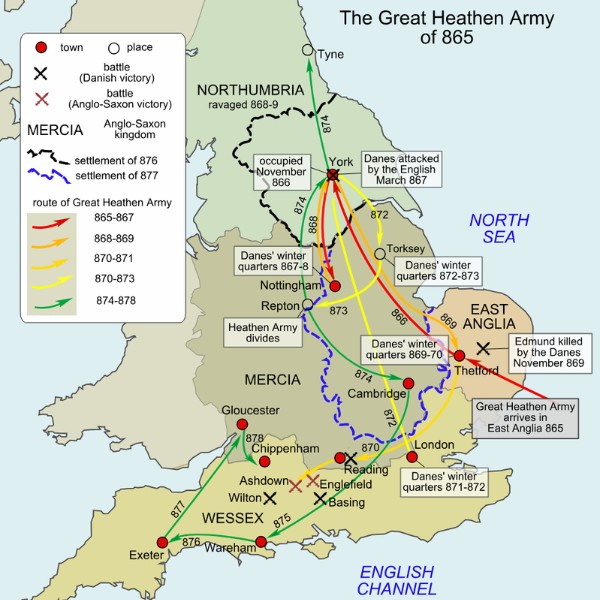
The nature of the Scandinavian threat shifted permanently in the autumn of 865 AD when the fleeting, opportunistic raiding fleets of the previous generation gave way to a cataclysmic invasion force that landed on the shores of East Anglia. Unlike the scattered seasonal crews looking for quick plunder, this massive coalition—historically branded by contemporaries as the Micel Here, or the Great Heathen Army—operated as an organised military campaign of permanent settlement and conquest. Guided by a unified command structure under the Viking chieftains Halfdan, Ivar the Boneless, and Ubba, the invading force bypassed the vulnerable coastal outposts to seize the agrarian heartlands of the eastern seaboard, launching a war of attrition that threatened the entire island with structural collapse.
The immediate momentum of the invasion relied on a swift takeover of local horses, as the Danish commanders used tactical intimidation to extort thousands of mounts from the East Anglian nobility in exchange for a temporary truce. Mounted upon this stolen cavalry, the army moved rapidly northward along the old Roman road networks, bypassing the fragmented defences of Mercia to strike directly at the fractured Kingdom of Northumbria.
Exploiting a bitter dynastic civil war between the rival Northumbrian kings Osberht and Ælla, the Viking force stormed the fortified walled city of York on 1 November 866 AD. When the rival English factions finally unified to launch a desperate counter-offensive in March 867, their infantry lines were broken inside the city walls, resulting in the slaughter of both Northumbrian kings and the permanent destruction of northern Anglo-Saxon independence.
The rapid liquidation of the north exposed the total vulnerability of the remaining eastern shires, allowing the Great Heathen Army to redirect its full military weight southward into East Anglia in 869 AD. Establishing a fortified winter base at Thetford, the Danish coalitions systematically overran the local forces and captured King Edmund, who was executed after refusing to renounce his Christian faith or hold his land as a pagan vassal. This martyrdom uncoupled the native population from their traditional ruling lines, allowing the invaders to seize the vast wealth of the ancient eastern monastic houses and convert the agrarian territories into secure supply bases.
Having successfully erased two of the major Anglo-Saxon kingdoms from the map and accumulated immense physical resources, the unified Nordic host turned its attention toward the Thames Valley, preparing an immediate offensive against the borders of Wessex.
Further Information: The Invasion of the Great Heathen Army


The Battle of Ashdown and the Year of Battles
871 AD
The containment of the West Saxon kingdom collapsed entirely in the winter of 871, when the Great Heathen Army redirected its full military weight across the Thames to establish a fortified winter base at Reading. This aggressive intrusion forced the West Saxon king, Æthelred I, and his younger brother, Alfred, into a grueling war of attrition that contemporaries recorded as the Year of Battles—a relentless sequence of nine major engagements fought across the southern downs within a single calendar year.
Having suffered an initial, bloody repulse outside the ramparts of Reading, the West Saxon leadership was forced to rapidly reconstitute its overstretched forces on the Berkshire Downs. They tracked the advancing Danish host as it moved westward along the prominent ridgelines, determined to block the Viking invaders before they could permanently sever the agricultural resources and livestock pastures of the Wessex heartland.
The critical turning point of this campaign occurred on the heights of Ashdown, traditionally located along the Berkshire ridgeway, where the West Saxon army intercepted the main Danish offensive. Discovering that the Viking commanders had divided their forces into two separate divisions—one led by the kings Bagsecg and Halfdan, and the other commanded by their senior earls—Æthelred and Alfred deployed their infantry into a parallel structure. While Æthelred remained inside his tent engaged in prolonged prayer to secure divine favour, Alfred recognized that the Danes were rapidly securing the high ground, prompting him to launch an immediate, independent offensive. Charging uphill like a wild boar at the head of his personal guard, Alfred’s infantry shield wall collided with the Scandinavian front around a single, stunted thorn tree, engaging in hours of hand-to-hand slaughter that tested the physical endurance of both armies.
The victory at Ashdown was a complete tactical success, permanently breaking the psychological invincibility of the Great Heathen Army. The West Saxon counter-offensive routed the Danish lines, resulting in the slaughter of King Bagsecg and five senior Viking earls whose bodies were scattered across the chalk downs. While this triumph restored West Saxon military prestige, the exhaustion of the campaign offered little breathing room.
Within weeks, subsequent Danish reinforcements, known historically as the Great Summer Army, arrived from the continent to win grinding victories against the depleted West Saxons at Basing and Meretun. This continuous, punishing attrition culminated in the premature death of King Æthelred I in April 871, shifting the entire weight of the fracturing kingdom onto the shoulders of his younger brother.
Further Information: The Battle of Ashdown and the Year of Battles

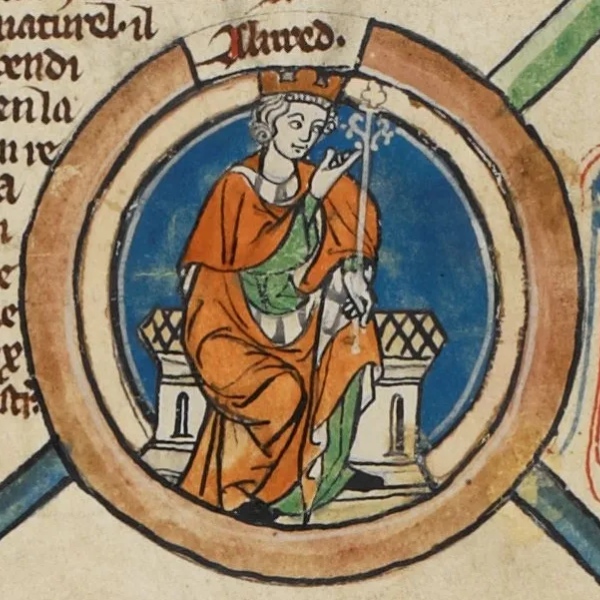

The Line of Cerdic and Defense of the South
871 - 878 AD
The collapse of the northern and eastern Anglo-Saxon kingdoms left the House of Wessex isolated as the sole defender of native English territory. Responsibility for the survival of the realm fell upon King Alfred, who inherited an embattled throne in April 871 during the lowest point of the initial invasion crisis.
Following the brief victory at Ashdown and the subsequent West Saxon military exhaustion, Alfred spent the early years of his reign engaged in a desperate struggle, utilizing a series of costly border skirmishes and heavy silver payouts, traditionally known as Danegeld, to buy temporary breathing room while he quietly initiated a total redesign of his domestic defenses. This fragile peace dissolved entirely in the winter of 874 when the Great Heathen Army split its forces, with one division under Halfdan permanently settling the north while a massive new reinforcement host under King Guthrum established a heavily fortified base at Cambridge to prepare the final encirclement of the West Saxon frontier.
The ultimate crisis of this campaign arrived in January 878, during the Twelfth Night celebrations, when Guthrum launched a surprise winter offensive across the frozen border to strike directly at the royal estate at Chippenham. Catching the West Saxon court completely off guard, the lightning assault scattered the local nobility, forcing Alfred to flee into the waterlogged marshes of Somerset with a small band of loyal retainers. Operating from a hidden, fortified island base at Athelney, the King launched a guerrilla war of attrition against the occupation forces, using the swamp terrain to launch sudden ambushes against Danish foraging parties while sending secret messengers out to the surrounding shires to organize a final, coordinated counter-offensive.
By May 878 AD, Alfred’s underground resistance reached its culmination when he emerged from the marshes to ride to Egbert's Stone on the eastern border of Selwood Forest, where the entire military force of Somerset, Wiltshire, and Hampshire assembled under his banner. The Anglo-Saxon Chronicle records that the local levies received their king with immense joy, viewing the House of Cerdic as their sole surviving hope against foreign domination. Mobilising this unified host, Alfred immediately marched his infantry out of the woodland cover to confront the main Viking occupation force on the open downs, setting up one of the most consequential confrontations of the era at the Battle of Edington.
The Battle of Edington
878 AD
In mid-May 878 AD, the entire fate of Anglo-Saxon society was decided on the chalk downs of Wiltshire at the Battle of Edington, recorded as Ethandun. King Alfred positioned his unified West Saxon army—a force composed of approximately 5-6,000 men drawn from the regional levies of Somerset, Wiltshire, and Hampshire—along the high ground of the ridge, facing the formidable, veteran shield wall of Guthrum's Viking army, which numbered around 4-5,000 seasoned warriors.
The ensuing engagement developed into a brutal, close-quarters infantry clash, with both forces locking shields in a test of physical endurance, and martial discipline. The battle raged for hours across the downs before Alfred’s disciplined lines successfully fractured the Scandinavians, launching a bloody pursuit that cut down the retreating warriors across the open plain and trapped Guthrum and his surviving followers inside their fortified stronghold at Chippenham. Alfred initiated a fourteen-day siege, cutting off all external supply lines and burning resources until the starving, demoralized Viking army was compelled to beg for terms of surrender.
The total capitulation at Edington forced a permanent shift in Scandinavian actions and boundaries on the island, breaking the momentum of the Great Heathen Army. Guthrum agreed to a complete unconditional surrender, pledged to evacuate the borders of Wessex permanently, and accepted Christian baptism at Aller—with King Alfred himself acting as his official godfather and naming him Athelstan—before celebrating his formal spiritual adoption during a multi-day feast at Wedmore. This victory shattered the perception of Viking invincibility, secured the immediate survival of the West Saxon state, and provided the critical military foundation upon which a unified English nation would eventually be built.
Shortly afterward, the two leaders concluded a formal boundary treaty that permanently divided the geography of the island. The accord established a hard frontier line running up the River Thames, continuing along the River Lea to its source, marching straight up to Bedford, and then following the old Roman paved highway of Watling Street to the western margins of England.
All territories north and east of this boundary line were surrendered to Scandinavian rule, creating the territory known as the Danelaw, where Guthrum's followers settled down to transition from mobile raiding warbands into stable farming communities.
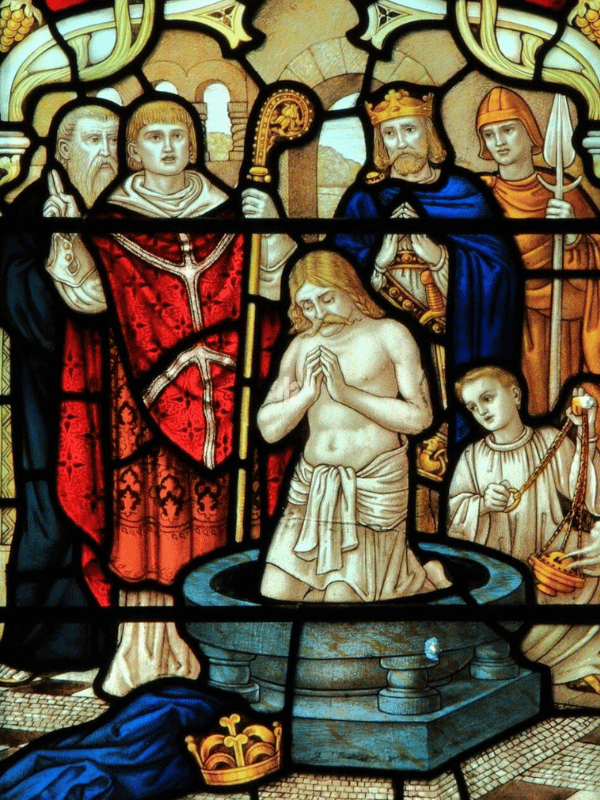
The Danelaw
878 - 886 AD
Additional Information: Genetic History of the English People / The Scandinavian Influx and Danelaw Settlement, The Evolution of the English Language / Viking Invasions and the Danelaw
The victory at Edington forced the Viking invaders to abandon their plans for an immediate conquest of the south. Guthrum withdrew his remaining forces out of Wessex to establish an independent Scandinavian kingdom in East Anglia. This peace agreement was formalised a few years later through the Treaty of Alfred and Guthrum, a document that officially partitioned the geography of the island into two distinct geopolitical spheres.
The accord established a clear, legal boundary line running up the River Thames, continuing along the River Lea to its source, marching straight up to Bedford, and then tracking the old Roman paved highway of Watling Street to the western margins of England. All land to the south and west of this line remained under the direct control of King Alfred and the House of Wessex, while all territory to the north and east was officially surrendered to Scandinavian rule, becoming known to history as the Danelaw—the region where Danish customary laws, taxes, and judicial assemblies held sovereign authority.
Inside the Danelaw, the veteran soldiers of the Viking armies permanently settled down, dividing the fertile agricultural lands among their warriors and establishing powerful, fortified garrison towns known as the Five Boroughs of the Danelaw: Derby, Leicester, Lincoln, Nottingham, and Stamford. Each borough was ruled as an independent military lordship by a Danish earl who commanded a local army, regulated regional markets, and minted independent silver coinage, while maintaining a shared defensive alliance to protect their collective borders from West Saxon counter-offensives. To manage their sprawling territories, the Danish authorities divided the countryside into a unique administrative layout of hundreds known as wapentakes, where local land-owning freemen gathered at outdoor assemblies to settle legal disputes, trade livestock, and clash their weapons together to vote on tribal laws.
While this territorial partition surrendered vast areas of English land, it successfully stabilised the frontier, providing decades of economic predictability across the shires. Over the next few generations, the close daily contact between the neighboring populations led to a rapid blending of Anglo-Saxon and Old Norse cultures, driven by intermarriage, trade, and the eventual conversion of the Scandinavian elite to Christianity. This intense linguistic contact permanently re-engineered the English language, introducing thousands of common Scandinavian loanwords—such as sky, take, law, knife, and window—directly into the local vocabulary, while fundamentally altering English grammar by introducing the third-person plural pronouns they, them, and their into daily speech.
Further Information: The Danelaw
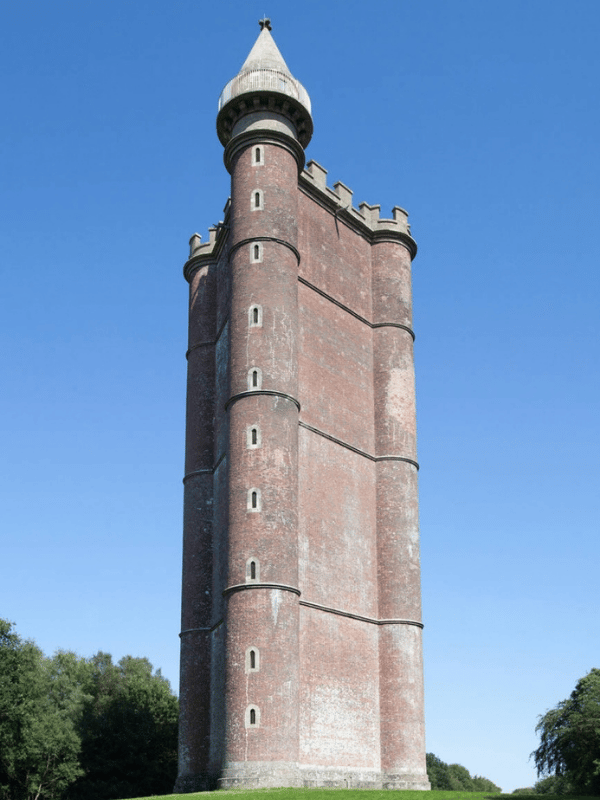
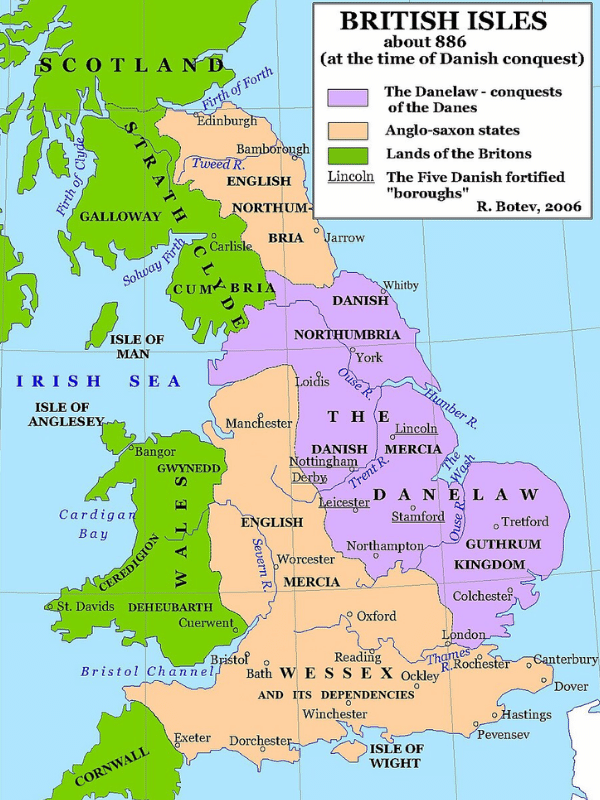
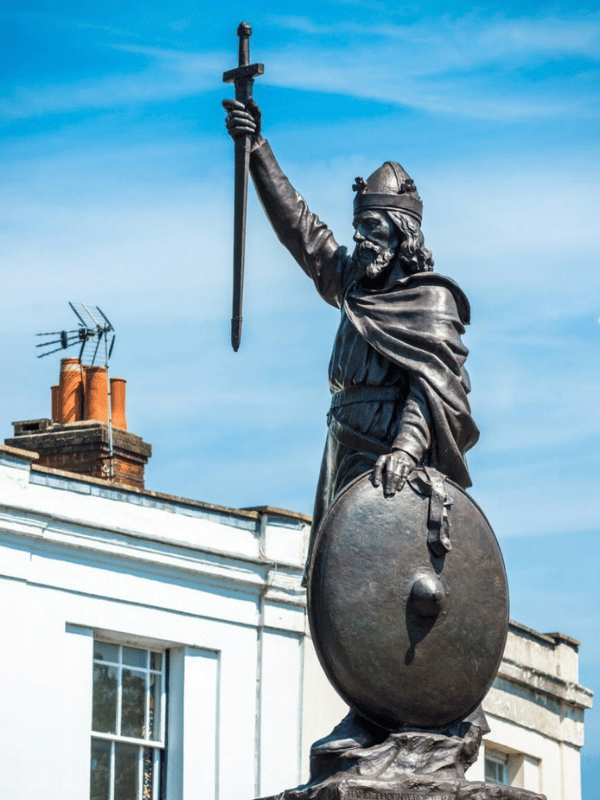
The Reforms of Alfred
878 - 899 AD
Additional Information: The Chronicles of Britain / Asser and the Life of King Alfred
Recognizing that the hard-won peace with the Danelaw was fragile and temporary, King Alfred used the immediate breathing room following his victory at the Battle of Edington to completely overhaul the defensive infrastructure of his realm. His most critical military reform was the creation of the Burh system, a highly organized strategy of defense-in-depth. Abandoning the outdated reliance on ad hoc fortifications, Alfred constructed or refortified a network of thirty-three fortified towns across Wessex, strategically positioned so that no village, monastery, or farm was more than twenty miles—a single day's march—away from a secure stronghold.
These strongholds were permanently maintained by a structural land tax recorded in the Burghal Hidage, a master administrative document that calculated resource allocations by assigning specific tracts of land, or hides, to support the garrisons. Under this mathematical system, every pole of fortification wall was assigned four defenders, requiring a staggering total of 27,671 men across the kingdom to provide continuous security against surprise raids.
Alongside these physical fortifications, Alfred systematically reorganized the fyrd, transforming the traditional tribal militia into a sustainable, rotating standing force. Historically, Anglo-Saxon armies dissolved rapidly during harvest seasons as common soldiers abandoned the field to prevent starvation at home. To eliminate this critical vulnerability, Alfred split the capable fighting men of Wessex into two rotating contingents: while one half remained at home to cultivate the fields and secure the harvest, the other half served on active military duty.
To match the rapid mobility of the Viking raiding armies, Alfred ensured that his active field forces were composed of mounted warriors capable of pursuing the elusive raiders across open country. To stop the Viking longships before they could even reach the coastal beaches, the King funded and designed a permanent navy, commissioning larger, swifter warships built to his own custom specifications that carried sixty oars or more, effectively establishing a maritime shield to block river estuaries and inland waterways.
Alfred understood that physical military defense was useless without cultural, legal, and spiritual strength, launching a sweeping national education program to unify his subjects against the pagan invaders. Observing that decades of warfare had decimated monastic libraries and left the general population illiterate, the King declared that all free young men of adequate means must learn to read their native tongue before advancing to Latin studies. He invited prominent European scholars to his court at Winchester—including the Welsh monk Asser—and personally translated several foundational Latin texts into Old English. This translation library included Gregory the Great's Pastoral Care, Bede’s Ecclesiastical History of the English People, Boethius's Consolidation of Philosophy, and the first fifty Psalms.
By anchoring the law codes and identity of the state to a shared vernacular literacy, Alfred transformed the West Saxon realm from a loose collection of vulnerable shires into a resilient, cohesive nation, laying the precise structural and intellectual foundations that allowed his successors to unify England.
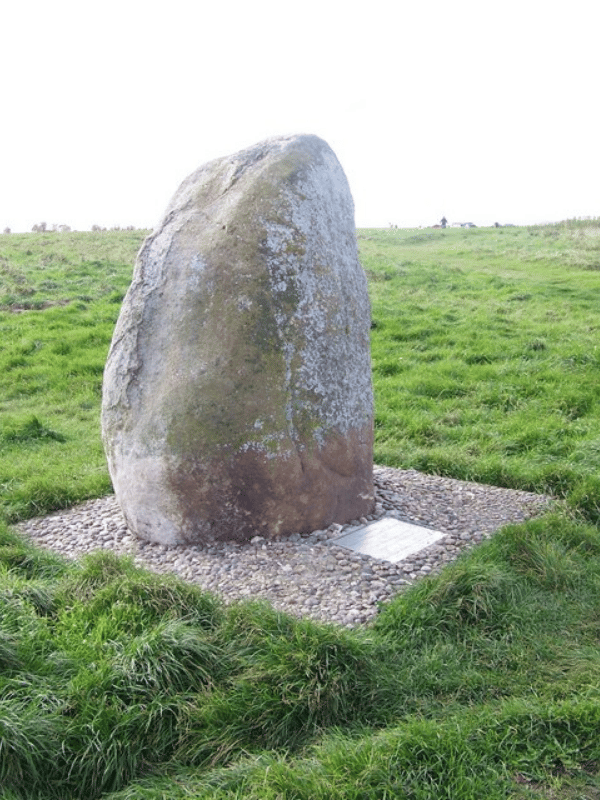
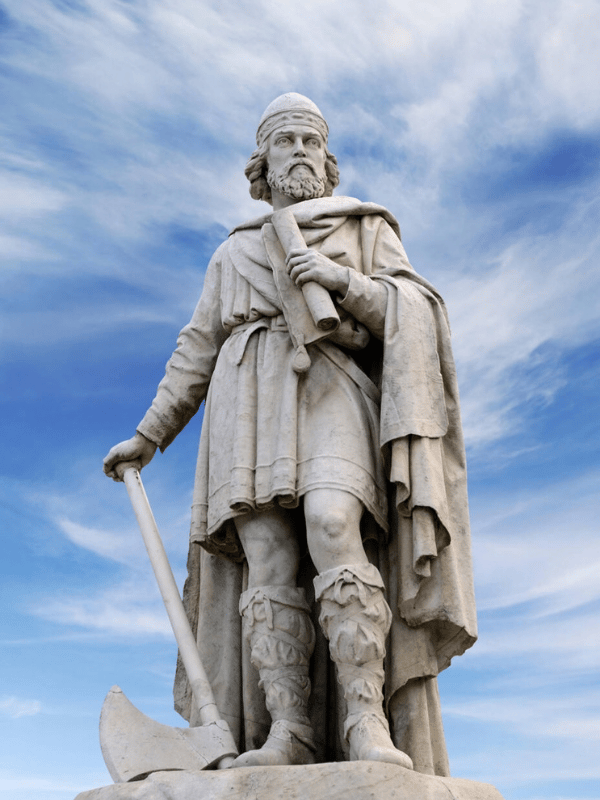
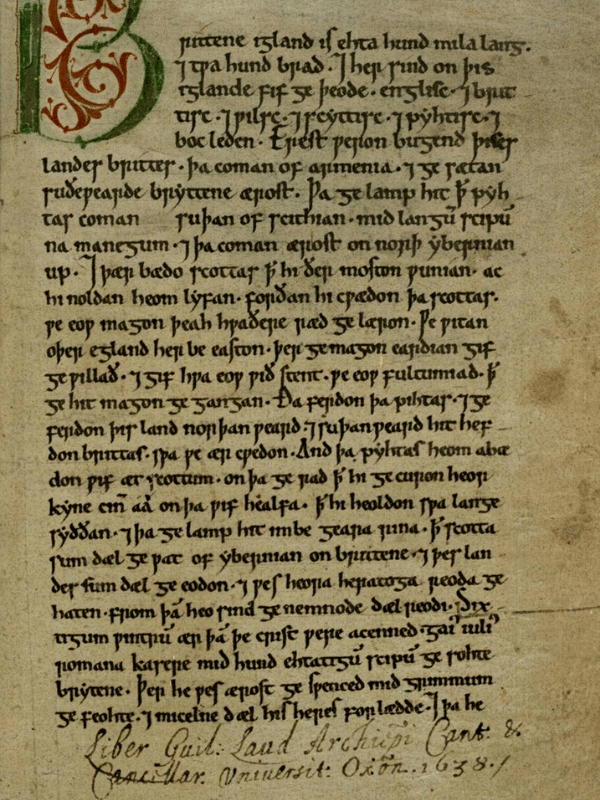
Compilation of the Anglo-Saxon Chronicle
890 AD
Additional Information: The Chronicles of Britain / The Scribes of the Anglo-Saxon Chronicle
Initiated around 890 AD under the direction of King Alfred the Great, this grand enterprise commanded court scholars and West Saxon clergy to gather every surviving monastic record, regional pedigree, and oral tradition to build a single account of the past. By choosing to record this narrative in the native Old English vernacular rather than classical Latin, Alfred ensured that the history of the nation belonged directly to the domestic ruling class. The text was structured as a strict year-by-year sequential record that tracked every Scandinavian raid, royal death, solar eclipse, and legislative milestone from the arrival of Julius Caesar and the earliest Germanic settlers down to the contemporary struggles against the Great Heathen Army.
To turn this centralized history into a nationwide network of shared memory, Alfred ordered identical master copies of the mother manuscript to be distributed to premier monastic scriptoriums across the shires, including the strongholds at Winchester, Canterbury, Peterborough, and Worcester. At these scattered sanctuaries, local scribes were charged with the permanent duty of maintaining the log. Scribes created an expanding body of parchment that preserved the unique perspectives of different regions while remaining bound to a single national timeline. Crucially, the Chronicle codified the concept of the Bretwalda—the ancient status of an over-king who held military dominance over the entire island—tracing that title from early warlords like Ælle of Sussex and Ceawlin of Wessex down to Egbert, Alfred’s own grandfather, explicitly framing the House of Cerdic as the rightful rulers of a unified English people.
Historians treat the Anglo-Saxon Chronicle as an invaluable but highly complex primary source. While it provides the foundational chronological spine for early English history, it was originally commissioned as a sophisticated piece of West Saxon propaganda designed to legitimize Alfred’s rule and rally the disparate Anglo-Saxon kingdoms under a unified Wessex banner.
As a result, its reliability varies. Events occurring centuries before 890 AD rely on heavily romanticized oral traditions or lost annals, while contemporary ninth-century entries provide eyewitness accounts. Scribes frequently manipulated or back-dated entries to exaggerate West Saxon military victories and downplay defeats, and because different monasteries updated their versions independently, individual copies began to display strong regional biases.
Further Information: Compilation of the Anglo-Saxon Chronicle

Edward the Elder: King of the Anglo-Saxons
899 - 924 AD
The fragile consolidation of the southern lowlands faced an immediate dynastic crisis in October 899 AD following the death of Alfred the Great. While the West Saxon witan acted to install Alfred’s eldest son, Edward, upon the throne, the succession was instantly contested by his cousin, Æthelwold.
As the son of Alfred’s elder brother, King Æthelred I, Æthelwold claimed a senior hereditary right to the crown, launching an insurrection to fracture the West Saxon ruling line. He seized the royal estates at Wimborne and Twinham, but when Edward mobilised an army to encircle his positions, Æthelwold fled the kingdom under cover of night. Seeking external military leverage, the rebel prince arrived in Northumbria, where the Scandinavian settlers welcomed him as a tool to disrupt West Saxon dominance, throwing their full military weight behind his cause and proclaiming him as an over-lord.
By 902, Æthelwold’s rebellion escalated into a major cross-border invasion when he arrived in Essex at the head of a massive Danish fleet, rallying the East Anglian Vikings to break the existing peace treaties. The combined rebel host launched a destructive raid deep into Mercia, crossing the Thames to ravage the northern shires of Wessex. Edward executed a rapid counter-offensive, marching his forces into East Anglia to systematically destroy the agricultural resources of the Danish settlers.
Although Edward ordered a retreat to preserve his core divisions, the Kentish infantry contingent explicitly disobeyed seven separate royal messengers and delayed their withdrawal, allowing the main Danish army to intercept them at the Battle of the Holme. The exact geography of the battlefield remains debated, though modern landscape analysis firmly places it near East Hatley in Cambridgeshire or the Holme in the peat fens of Huntingdonshire.
The ensuing encounter was a brutal, infantry-heavy clash of shields and short swords that resulted in a heavy slaughter on both sides, transforming the boggy terrain into a blood-slicked bottleneck. Operating under the command of their local ealdorman, Sigewulf, and his kinsman Sigehelm, the Kentish levies formed an unyielding, isolated shield wall that stubbornly held its ground against waves of Scandinavian cavalry and infantry charges. The attrition rate was catastrophic, claiming the lives of Sigewulf, Sigehelm, and numerous high-status Kentish thegns who chose to be cut down on the field rather than flee.
Despite inflicting a severe tactical defeat on the Kentish ranks, the engagement ended in a definitive success for the House of Cerdic due to the precise casualties suffered by the Scandinavian front. Both the rebel prince Æthelwold and the East Anglian Viking king, Eohric, were slain in the thick of the hand-to-hand melee, alongside senior Danish holdouts including Brihtsige, son of the prince Beornoth. The unexpected slaughter of the high executive command instantly dissolved the multi-front insurrection, stripping the East Anglian Danes of their primary anti-Wessex figurehead and permanently removing the gravest dynastic threat to Edward's sovereign authority.
With the destruction of the rebel coalition, Edward consolidated his grip on the southern lowlands, officially adopting the title Rex Angul-Saxonum, or King of the Anglo-Saxons. This administrative title, first developed under Alfred, represented a deliberate constitutional shift away from narrow West Saxon regionalism toward a unified Germanic realm encompassing both Wessex and English Mercia. To secure this loose union, Edward maintained a seamless defensive coordination with his sister, Æthelflæd, Lady of the Mercians, who governed the western midlands alongside her ailing husband, Ealdorman Æthelred.
Further Information: Edward the Elder: King of the Anglo-Saxons
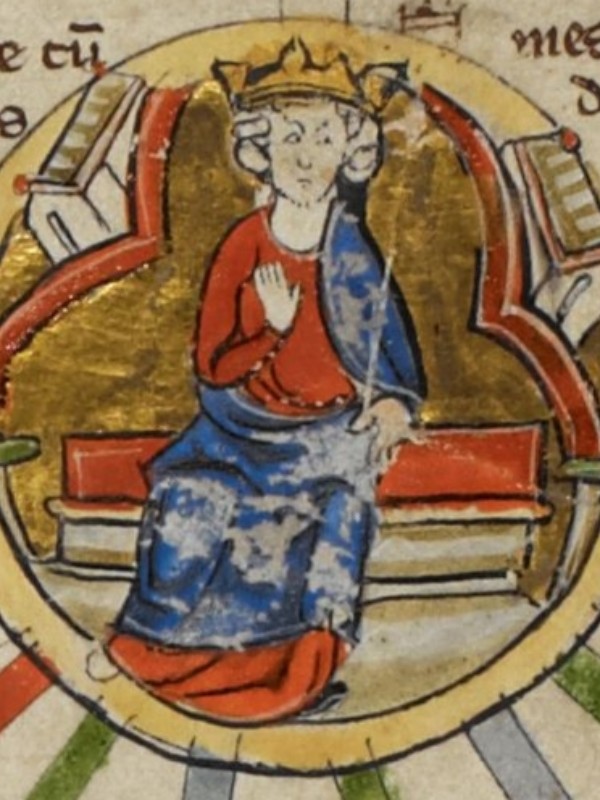
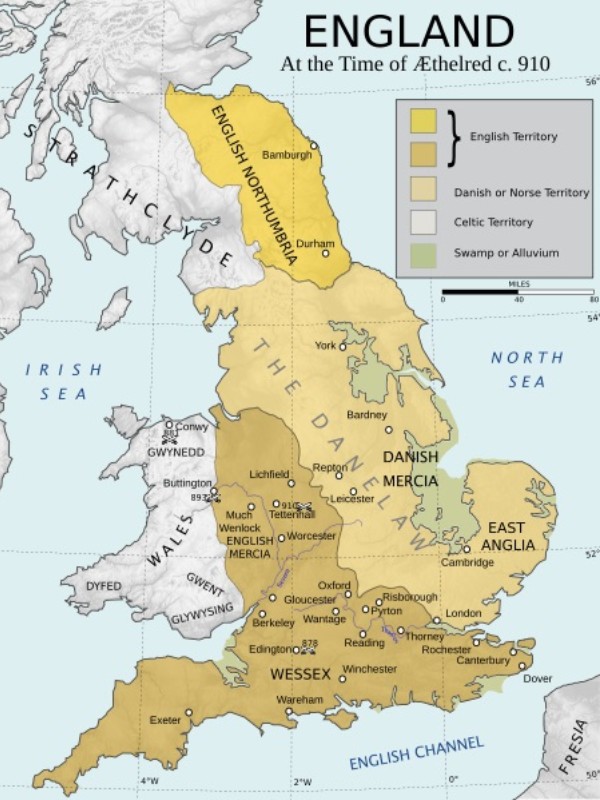

The Battle of Tettenhall
910 AD
The strategic alliance between Wessex and Mercia faced its most punishing test in the summer of 910 AD, culminating in an engagement that permanently broke the military capacity of the northern Danelaw. Following a successful joint Anglo-Saxon offensive into Northumbrian territory in 909 —which recovered the sacred relics of Saint Oswald—the Viking chieftains of York sought immediate retaliation.
In 910, while King Edward was stationed in Kent overseeing the assembly of a defensive naval fleet, a massive coalition of Northumbrian Danes launched a surprise, deep-penetration raid into the heart of Mercia. The raiders bypassed early defenses to plunder as far south as the Bristol Avon before turning north to ravage the Severn Valley around Bridgnorth, accumulating vast herds of livestock, captives, and portable wealth.
Burdened by heavy loot and moving cautiously on their return march, the Viking army was outmanoeuvred by a coordinated Anglo-Saxon response. Refusing to let the raiders escape back to the north, Æthelflæd, Lady of the Mercians, mobilized the regional Mercian levies while Edward rapidly marched the West Saxon field army northward to close the trap. The two forces converged on 5 August 910 near Tettenhall (historically associated with modern Wolverhampton and the adjacent fields of Wednesfield).
The resulting engagement was a catastrophic, one-sided slaughter that decimated the Scandinavian host. Caught in a decisive tactical pincer between the combined Mercian and West Saxon shield walls, the Viking formation fractured under unrelenting infantry assaults. The Anglo-Saxon Chronicle records that "many thousands" of Scandinavian warriors perished on the field, while the executive leadership of the Northumbrian Danelaw was completely wiped out. Three reigning Viking kings—Eowils, Halfdan, and Ingwær—were slain in the bitter hand-to-hand melee, alongside an unrecorded multitude of high-ranking Danish earls and war-band commanders.
The total annihilation of the northern host at Tettenhall stands as a definitive watershed in the Anglo-Saxon reconquest of Britain. It marked the final time a major, organized Scandinavian raiding army from across the North Sea or the northern kingdoms was able to launch a deep-territory invasion of the English interior.
By neutralizing the aggressive military threat from York, the victory granted Edward and Æthelflæd the strategic freedom to systematically construct their network of fortified burhs, push outward into the southern Danelaw, and lay the secure geographic foundations for a unified English kingdom.
Stay Connected
The Southern Danelaw and Annexation of the Five Boroughs
911 - 918 AD
The permanent crippling of the Northumbrian military elite at Tettenhall cleared the path for King Edward the Elder and his sister, Æthelflæd, Lady of the Mercians, to launch a systematic war of conquest against the southern Danelaw.
Moving away from the purely defensive postures of the previous century, the unified Anglo-Saxon forces executed a synchronised, multi-pronged offensive designed to absorb the independent Danish jarls of the midlands and East Anglia. This campaign relied on the aggressive forward deployment of fortified burhs. Each summer, Edward marched his West Saxon levies to construct twin fortresses at key river crossings—such as Hertford on the River Lea and Buckingham on the Great Ouse—instantly severing the communication lines of nearby Danish garrisons and choking their agricultural hinterlands.
While Edward secured the southeast, Æthelflæd directed the Mercian forces across the northwest, engineering a fortified barrier that pinned the Danish settlers against the Pennines. Operating with immense tactical independence, she built burhs at Cherbury, Scargeat, and Eddisbury, before launching a direct assault to capture the heavily fortified Danish stronghold at Derby in July 917, which fell after a brutal siege that claimed the lives of four of her chief thegns. This fortress-building approach provoked a desperate, multi-border counter-offensive from the Danish armies of Northampton, Leicester, and East Anglia.
The Viking jarls launched coordinated assaults against the newly built English strongholds at Bedford and Wigingamere, but the lines held firm, allowing local garrisons to repel the invaders with heavy slaughter. Realising that the Scandinavian offensive capability was spent, Edward launched a rapid counter-attack, overrunning the Danish base at Tempsford, slaying Toglos, the Danish Jarl of Huntingdon, alongside the last unnamed Danish King of East Anglia, and forcing the submission of the entire civilian population of Essex and East Anglia before the winter snows.
The final consolidation of the midlands was completed in 918 through the systematic liquidation of the independent frontier coalitions known as the Five Boroughs. Following the bloodless capture of Leicester by Mercian forces in early 918 —where the local Danish garrison voluntarily swore oaths of fealty to Æthelflæd to escape Edward's oncoming armies—the remaining Danish strongholds at Stamford and Nottingham surrendered to Edward, recognising that they no longer possessed the resources to resist his advance.
This sweeping conquest uncoupled the southern Danelaw from its traditional Scandinavian ruling lines, permanently shifting the Anglo-Danish borders up to the River Humber and placing both the English and Anglo-Danish populations of the midlands under a single, centralized administration.
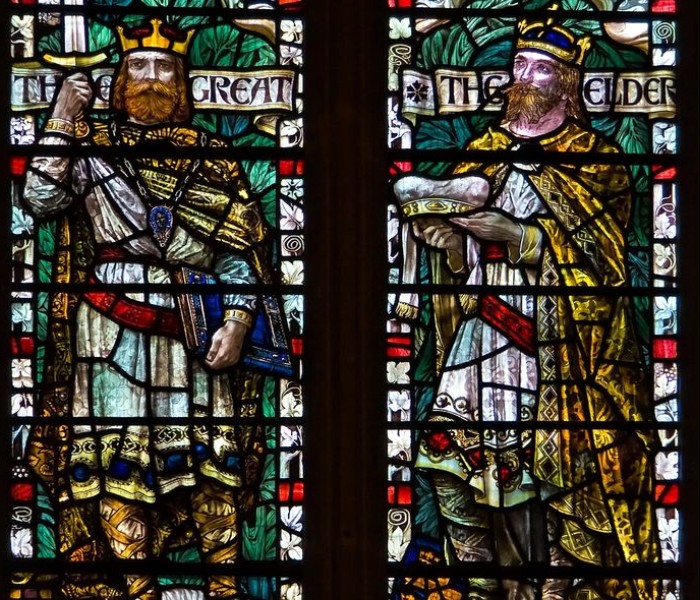

Submission at Bakewell and Hegemony of Wessex
920 AD
The systematic destruction of the southern Danelaw and the annexation of the Five Boroughs by the House of Cerdic completely reconfigured the balance of power across the northern frontiers of Britain. By the summer of 920, the rapid northward advance of the West Saxon military apparatus brought King Edward the Elder’s frontline forces directly to the borders of Northumbria, alarming the independent northern dynasties.
To lock down his newly acquired territories and visibly project his over-lordship, Edward ordered the immediate construction of a heavily fortified burh at Bakewell, deep within the Peak District of Derbyshire. This strategic forward base functioned as a logistical barrier, blocking the historic trans-Pennine raiding routes and trapping the remaining northern kingdoms against the upland wilderness.
Faced with this unyielding fortification campaign and recognizing that they no longer possessed the resources to resist a direct West Saxon invasion, the rulers of the northern realms chose diplomatic submission over a destructive war of attrition. In the late summer of 920, an unprecedented assembly of northern monarchs gathered at Bakewell to sue for peace, offering their formal submission directly to Edward.
The Anglo-Saxon Chronicle recorded that the King was formally chosen as father and lord by Constantine II, King of the Scots, and the entire Scottish nation, alongside Ragnall Guthfrithson, the Hiberno-Norse King of York, and the Anglo-Saxon ealdormen of Bamburgh, who governed the independent northern rump of Northumbria from their coastal stronghold. This collective capitulation was joined by the King of the Strathclyde Britons, Donald mac Custantín, uniting the disparate ethnic factions of the north beneath a single southern over-lordship.
The immediate consequence of the submission at Bakewell was a profound, permanent shift in the layout of the island. Although Edward did not deploy permanent military garrisons to occupy the Scottish highlands or the streets of York, this treaty established a binding tributary hegemony that turned the northern realms into client frontier buffers for the growing West Saxon realm. This administrative triumph uncoupled the independent kingdoms from their isolation, creating the formal legal precedent of pan-island submission to the House of Cerdic.
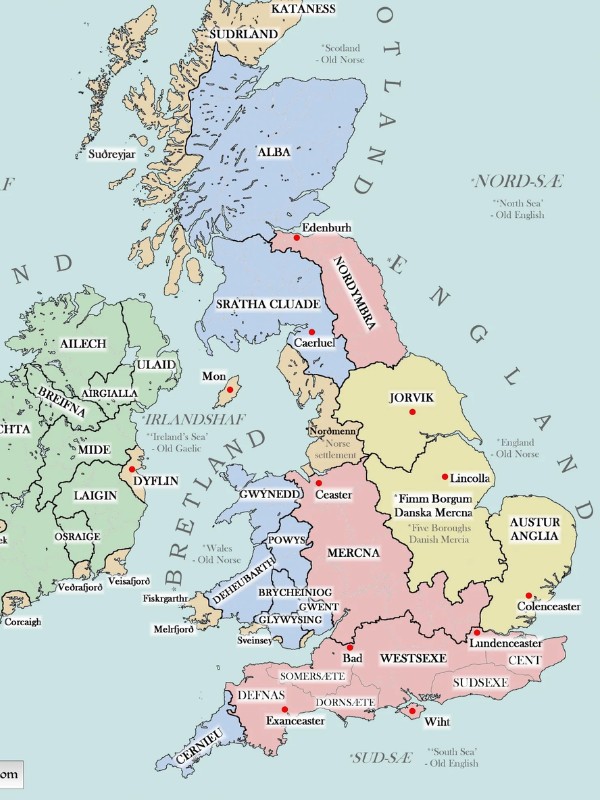


King Æthelstan and the Unification of England
924 - 927 AD
King Æthelstan united the separate kingdoms of Anglo-Saxon Britain into a single Kingdom of England on 12 July 927. Having inherited the dual crown of Wessex and Mercia from his father, Edward the Elder, in 924, Æthelstan moved quickly to secure his northern frontier by arranging a marriage alliance with Sihtric Cáech, the Hiberno-Norse King of York. This peace ended when Sihtric died suddenly in 926, provoking a succession crisis as his brother, Gofraid ua Ímair, crossed the Irish Sea from Dublin to seize the Northumbrian throne. Recognizing that this intrusion threatened the southern shires, Æthelstan launched an immediate offensive, marching his armies into Northumbria to expel Gofraid and bring York under West Saxon military rule.
The collapse of the Norse kingdom allowed Æthelstan to establish direct rule over the entire island. On 12 July 927, at an assembly gathered along the Eamont River near Penrith, the rulers of Britain met to offer their submission to the House of Cerdic. The contemporary records of the Anglo-Saxon Chronicle and the historical accounts of William of Malmesbury record that King Constantine II of the Scots, King Hywel Dda of Deheubarth, Ealdorman Eadwulf of Bamburgh, and King Owain of Strathclyde swore solemn oaths of allegiance to Æthelstan. This treaty required the northern monarchs to abandon all pagan Viking alliances, halt their border raids, and acknowledge the West Saxon king as their supreme lord.
The Treaty of Eamont marked the birth of a unified England, permanently ending the era of the divided kingdoms known as the heptarchy. To cement this victory, Æthelstan adopted the title Rex Totius Britanniae (King of All Britain). He backed up this new status by minting a single national currency across all regional mints and establishing a centralized royal council (witenagemot) that forced Scottish and Welsh princes to travel south and attend his court alongside the English nobility.
The political realities behind this submission required brutal military reinforcement and a calculated display of wealth. To ensure that the city of York could never again be used as a rebel stronghold by Hiberno-Norse claimants, Æthelstan ordered his troops to completely tear down the massive, old fortifications that the Vikings had built within the city. His armies methodically dismantled the defensive stockades, filled in the deep ditches, and leveled the earthen ramparts, rendering the urban core vulnerable to immediate English cavalry entry. At the same time, the King distributed the massive hoard of silver coin, gold arm-rings, and plundered treasures captured from Gofraid's treasury directly to his veteran frontline troops, ensuring the long-term loyalty of his Mercian and West Saxon veterans.
The submission at Eamont also introduced severe, unyielding legal conditions that forced the northern Celtic and Norse dynasties to adapt to English administrative rules. Æthelstan compelled King Constantine of the Scots and King Owain of Strathclyde to hand over high-status dynastic hostages—including Constantine's own son—to serve as human collateral at the West Saxon court against future border betrayals. Furthermore, the Welsh and Scottish princes were forced to pay a heavy annual tribute in the form of silver bullion, thousands of heads of prime cattle, hunting hawks, and trained hounds, transferring the agrarian wealth of the northern and western hills directly into the central English treasury to fund the expansion of fortified border towns (burhs).
To lock down his legislative grip on the newly created kingdom, Æthelstan transformed his mobile royal court into an extensive law-making machine. He issued a series of comprehensive legal codes at Grately and Exeter that standardized property laws, established harsh public executions for theft, and created a uniform judicial system across all shires.
To broadcast his dominance to the crowns of continental Europe, the King used his newly unified treasury to negotiate prestigious dynastic marriages for his half-sisters, linking the House of Cerdic directly to the imperial lines of the Holy Roman Emperor Otto I and Hugh the Great, Duke of the Franks, cementing England's arrival as a major geopolitical power.


Æthelstan: King of the English
927 – 937 AD
The administrative aftermath of the Treaty of Eamont transformed the House of Cerdic from a regional West Saxon dynasty into the supreme executive authority of a unified English state. Moving far beyond the loose over-lordship of the old Bretwaldas, King Æthelstan initiated a comprehensive program of legal, fiscal, and bureaucratic centralization across the newly created shires.
To manage this sprawling territory, the King established the first centralized royal scriptorium, utilizing a highly trained team of clerks to produce standardized, Latinate charters that were distributed uniformly to the provinces. He routinely summoned massive, multi-national royal councils—such as the great assemblies at Winchester and Whittlebury—that required the physical attendance and submission of Welsh kings like Hywel Dda and Scottish princes, who sat at Æthelstan’s feet as subordinate vassals. Through these councils, the King enacted a sweeping series of national legal codes, most notably the Grately laws, which fiercely criminalized currency counterfeiting, established strict guidelines for local judicial trials by ordeal, and expanded the responsibility of local tithing networks to crush endemic cattle theft and lawlessness across the shires.
The material engine funding this imperial administration was a total modernization of the national economy. Æthelstan enforced a strict currency monopoly across the country, dictating that no coin could be struck outside a royal borough. He established a network of centralized urban mints operating under tight royal control, mass-producing a standardized silver penny standard that bore his portrait alongside the unprecedented imperial title Rex Totius Britanniae, or King of All Britain. This high-purity national currency provided immense financial stability, attracting international merchant fleets to the trading ports of London, York, and Exeter, and transforming the unified kingdom into an economic superpower.
The prestige of the English court was so extensive that the island emerged as a primary center for Western European diplomacy. Æthelstan skillfully negotiated a series of high-status continental marriage alliances for his half-sisters, marrying them directly into the premier ruling lines of Europe, including the Holy Roman Emperor Otto the Great, Hugh the Great of France, and Louis, King of Lower Burgundy. The English court became a cosmopolitan sanctuary for exiled European royalty, where the King directly fostered and educated the future monarchs of Europe, including Alan II, Duke of Brittany, and Hakon the Good, the future King of Norway.
By gathering a staggering collection of sacred religious relics from across Christendom and demanding that Welsh and Scottish monarchs routinely travel south to pay heavy tribute in silver, oxen, and birds of prey, Æthelstan projected an aura of unmatched imperial sovereignty. This immense concentration of wealth, centralized bureaucracy, and aggressive English consolidation on their southern borders deeply alarmed the northern independent kingdoms, creating the exact climate of panic that drove them to forge their desperate military alliance in 937.
The Battle of Brunanburh
937 AD
The sudden unification of England under the House of Wessex caused
panic among the independent kingdoms of the north. Recognising that they could not match the wealth and military capacity of the new English state individually, a massive alliance was formed to smash Æthelstan’s realm.
This hostile coalition was led by Olaf Guthfrithson, the Hiberno-Norse King of Dublin, Constantine II, the King of Alba (Scotland), and Owain, the British King of Strathclyde. In 937 AD, this invasion force landed in the north, mobilizing an armada of over six hundred longships that sailed into the Humber estuary and the northwest coastlines, marching inland with the explicit intent to dismantle the unified kingdom.
King Æthelstan and his fourteen-year-old half-brother Edmund immediately mobilised the full military force of the West Saxon and Mercian shires, tracking the invading host down to the West Midlands or the borders of the Wirral. The armies clashed at a site known as Brunanburh—whose exact geography remains a subject of debate among historians, though Bromborough on the Wirral peninsula is widely considered the primary candidate due to its strategic position on the River Mersey.
The ensuing battle was an exceptionally bloody engagement that lasted an entire day, fracturing the open fields into a landscape of slaughter. The English infantry shield wall, locked tight with linden-wood bucklers, held firm against repeated, desperate charges from the combined Viking axes and Scottish spearmen.
As the sun began to set, Æthelstan unleashed his cavalry and fresh Mercian elite infantry cohorts to execute a devastating flank attack. This counter-offensive completely broke the allied lines, turning their retreat into a chaotic rout that stretched for miles to the shoreline. The victory at Brunanburh was complete.
The Anglo-Saxon Chronicle records the battle in a triumphant, contemporary heroic poem, detailing the immense slaughter of the enemy forces, which left five allied kings, seven of Olaf’s senior Norse earls, and Constantine’s own young son dead on the field. Olaf Guthfrithson fled with a small band of retainers back to his longships to escape across the Irish Sea to Dublin, permanently breaking the anti-English coalition and cementing the sovereign territorial borders of a unified England.

The Campaigns of Edmund I “The Deed Doer”
939 - 946 AD
King Edmund I recovered the lost midland shires and restored the unified Kingdom of England through a series of rapid counter-offensives between 942 and 944 AD. The unification of England collapsed in the autumn of 939 when the death of King Æthelstan left the new realm vulnerable to northern rebellion. Having fought alongside his brother at the victory of Brunanburh, the eighteen-year-old King Edmund I inherited a vast but fractured kingdom.
This transition prompted the Hiberno-Norse warlord Olaf Guthfrithson to depart Dublin, cross the Irish Sea, and seize the Kingdom of York. This invasion broke the peace treaties established by the House of Cerdic, launching a war as the Norse coalition marched south to reassert Scandinavian dominance across the lowlands.
The crisis of the campaign occurred in 940 when Olaf’s army bypassed the northern border outposts to strike into the Mercian heartlands. After an assault on the royal centre of Tamworth, which resulted in the killing of the town's inhabitants and the burning of the palace, the invading force plundered its way toward Northampton. Turning back toward the north, their retreat was blocked by Edmund’s mobilised infantry at Leicester. The two forces established a standoff across the urban Roman walls, a confrontation that threatened both kingdoms with an expensive battle. Desperate to prevent a collapse of the southern frontier, the English court accepted a territorial concession mediated by Archbishop Wulfstan of York and Archbishop Oda of Canterbury. Under this treaty, Edmund surrendered the entire region of the Five Boroughs—Derby, Leicester, Lincoln, Nottingham, and Stamford—alongside all lands north of Watling Street, shifting the Anglo-Scandinavian border down to the heart of England.
The humiliation at Leicester provoked a counter-offensive from the West Saxon leadership following the death of Olaf Guthfrithson in 941. Utilising the tactical breathing room offered by the succession struggles of Olaf’s cousins, Edmund launched an offensive in 942 to reclaim the midland shires. The West Saxon infantry overran the Scandinavian garrisons, liberating the Five Boroughs and restoring the northern boundary of Mercia. This triumph was celebrated in the Anglo-Saxon Chronicle as a deliverance that broke the chains of Norse oppression for the local Anglo-Danish populations. Pushing his advantage into the Northumbrian core, Edmund marched his forces into York in 944, expelling the rival Viking kings Ragnall Guthfrithson and Olaf Cuaran to restore the unified Kingdom of the English.
The final consolidation of this northern frontier occurred in 945 when Edmund directed his military weight into the Kingdom of Strathclyde to secure his northwestern borders. The West Saxon army ravaged the mountainous territory, blinding the sons of Dunmail, the last independent King of Strathclyde, and dismantling the strongholds that had anchored anti-English coalitions.
Recognizing that the treasury could not sustain the expenditures required to garrison the remote Cumbrian hills, Edmund executed a diplomatic compromise, handing control of Strathclyde to King Malcolm I of Scotland in exchange for a binding military alliance on land and sea. This arrangement established a buffer zone against further Viking incursions from Ireland, securing regional stability until Edmund's death.
On 26 May 946, while celebrating the feast of St Augustine at a royal vill in Pucklechurch, Gloucestershire, the King intervened to protect his seneschal from an outlaw named Leofa and was fatally stabbed in the brawl, shifting the crown to his younger brother Eadred.
Further Information: The Campaigns of Edmund I “The Deed Doer”
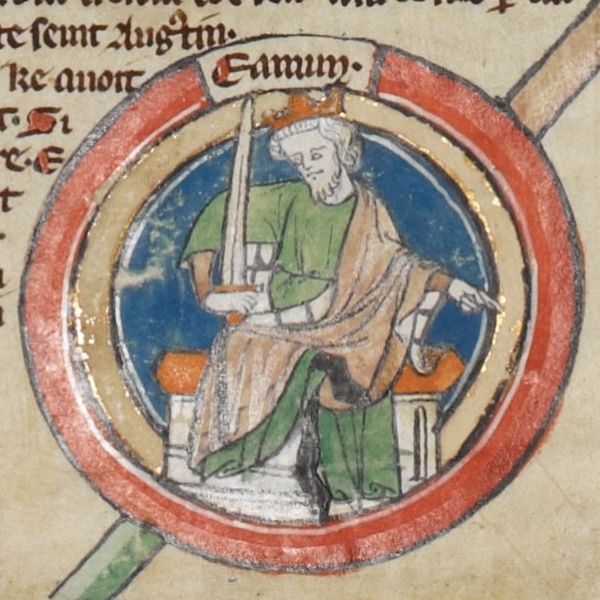


The Reign of Eadred and the Expulsion of Eric Bloodaxe
946 – 955 AD
King Eadred permanently dissolved the independent Kingdom of York in 954, bringing Northumbria under direct English rule and completing the unification of the state. The fragile cohesion of the newly formed Kingdom of England faced a severe northern security crisis in 946 when the sudden murder of King Edmund I exposed the vulnerabilities of the West Saxon frontier.
Because Edmund's sons were too young to inherit the throne, the crown passed directly to his younger brother, King Eadred, who was crowned at Kingston-upon-Thames on 16 August 946. The young monarch moved quickly to secure the loose allegiances of the northern nobility, marching into Northumbria in 947 to met with the northern witan at Tanshelf. There, he extracted formal oaths of submission and total loyalty from Wulfstan, Archbishop of York, and the local Scandinavian ealdormen.
This diplomatic settlement was rapidly broken before the year ended when the Northumbrian ruling class abandoned their southern allegiances, welcoming the notorious Norwegian exile Eric Bloodaxe to the throne of York. This intrusion broke the existing peace treaties, launching a war as Eadred launched a military offensive to reclaim the north and destroy the economic resources of the rebellious factions. The execution of this campaign relied on heavy territorial devastation to force the submission of the Northumbrian nobility. In 948, Eadred’s infantry advanced up the Roman road networks, burning settlements and sacking the historic minster at Ripon—originally built by St Wilfrid—to punish the rebels and deplete their food supplies.
While the English army executed a retreat toward the south, Eric’s garrison launched a swift ambush against the West Saxon rearguard at Castleford, inflicting heavy casualties. Infuriated by the repulse, the King Eadred threatened to return with his entire army to launch a campaign of total destruction across the north. This threat broke the resolve of the local nobility, who immediately deposed the King Eric Bloodaxe and offered a large financial payout to buy peace from the West Saxon crown.
Politics in the north fractured further in 949 when the rival Hiberno-Norse king, Olaf Cuaran, returned from Dublin to seize the vacant throne of York, plunging Northumbria into a three-sided dynastic civil war. Exploiting this fragmentation, the King Eric Bloodaxe returned with a force of Norwegian mercenaries in 952 to drive out Olaf and re-establish his independent realm. Eadred executed an aggressive counter-offensive, losing patience with the northern kingmakers. He ordered the immediate arrest and imprisonment of the Archbishop Wulfstan at the fortress of Judanburh and locked down the northern trade ports to choke the Scandinavian treasury.
Deprived of resources and facing the return of the West Saxon army, the local population revolted against the Norwegian garrison in 954, expelling the King Eric Bloodaxe, who was subsequently ambushed and killed along the bleak mountain pass of Stainmore by Maccus, an agent of the pro-English Oswulf, Earl of Bamburgh. The killing at Stainmore resulted in the permanent end of the independent Kingdom of York, a milestone that completed the consolidation initiated by Alfred the Great. By absorbing the wealthy Scandinavian trading port directly into the home treasury and appointing the Earl Oswulf as the first unified ruler of all Northumbria, Eadred established unchallenged rule across the entire island.
This victory closed the chapters of independent northern rule, integrating the Anglo-Danish populations into a centralized system under the House of Cerdic. When Eadred died in 955 after a lifelong struggle with a chronic digestive illness, he left behind a secure kingdom that possessed the financial base to sustain the golden age of his nephew, Edgar the Peaceful.

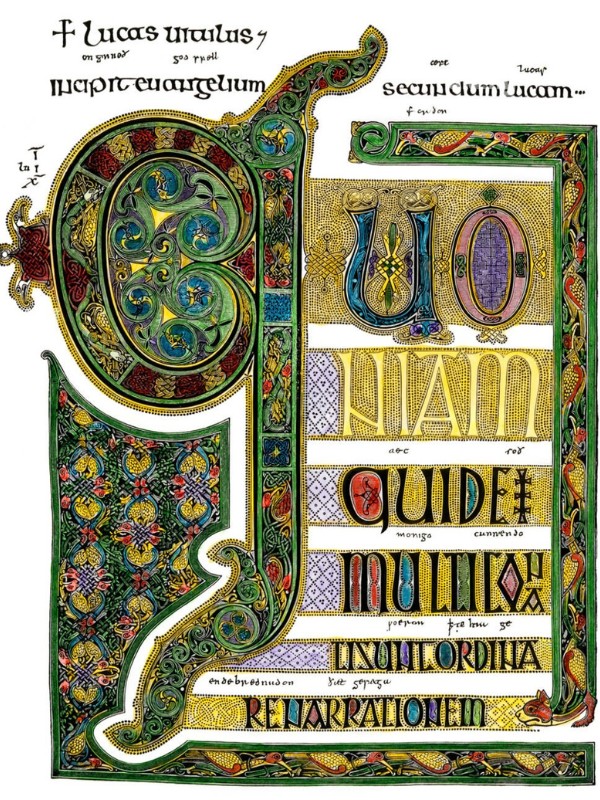

Eadwig the "all-fair"
955 – 959 AD
The peace and financial order left behind by King Eadred dissolved into immediate factional fighting in the winter of 955 AD following the accession of his fifteen-year-old nephew, King Eadwig. Eadwig was an ambitious but deeply reckless monarch whose brief administration was defined by a severe constitutional clash with the established noble and religious elite of the realm.
The domestic crisis erupted during his formal coronation feast at Kingston-upon-Thames, when the young king insulted his massed nobility by abruptly leaving the banqueting hall to engage in an illicit sexual encounter with a noblewoman named Ælfgifu and her mother, Æthelgifu. Dispatched by the outraged royal council to retrieve the monarch, Dunstan, the Abbot of Glastonbury, and Bishop Cynesige of Lichfield entered the private chambers, physically dragged the protesting king back to his throne, and forced him to rejoin the assembly. Infuriated by this public humiliation, Eadwig launched an immediate, aggressive counter-offensive against the monastic faction, confiscating Dunstan's extensive estates and driving the prominent prelate into exile in Flanders.
To protect his embattled throne and weaken the authority of his predecessor's inner circle, Eadwig initiated an unprecedented campaign of reckless fiscal patronage across the southern shires. In a desperate bid to buy the loyalty of the lesser gentry, the King bypassed the traditional oversight of the royal council to issue a staggering volume of land charters within a single calendar year, signing away vast crown lands and forfeited Northumbrian estates to a newly created faction of personal favorites.
This rapid squandering of the royal patrimony, combined with his aggressive hostility toward the Church, deeply alienated the traditionalist ealdormen of the midlands and the north. Recognizing that Eadwig's chaotic governance threatened to break the hard-won unity of the new English state, the regional nobility launched a coordinated rebellion in 957.
The resulting civil war split the political control of the island. The elite forces of Mercia and Northumbria formally threw off their allegiance to Eadwig, executing a bloodless coup to proclaim his younger brother, the fourteen-year-old Edgar, as king over all territories north of the River Thames. Outmanoeuvred and unable to mobilize the southern levies to suppress the northern insurrection, Eadwig was forced to accept a humiliating territorial compromise that partitioned the geography of England. He was demoted to ruling a truncated rump kingdom composed strictly of Wessex and Kent, while Edgar governed the north with the backing of the recalled Dunstan and the monastic reform movement.
This fragile, unstable partition lasted until October 959, when Eadwig died suddenly under mysterious circumstances at the age of nineteen. Because he left behind no direct heirs, the crown passed immediately to his brother, reuniting the fractured shires under a single monarch and clearing the path for the upcoming administrative golden age of Edgar the Peaceful.


Edgar the Peaceful and the Imperial Coronation
959 – 975 AD
The consolidations of the tenth century reached a definitive administrative golden age under King Edgar, who oversaw an era of internal tranquillity and deep domestic reform across the lowlands. Having inherited a unified country after the turbulent reign of his elder brother, King Eadwig, Edgar moved rapidly to secure the foundations of the realm by executing a comprehensive reform of the national currency in 973.
The government systematically suppressed the proliferation of localized regional coinages, establishing a network of tightly supervised royal mints that issued a single, uniform silver penny across every shire. This standardization removed chaotic bartering systems from the commercial marketplace, increasing the wealth of the home treasury and providing the physical resources required to sustain an advanced naval defense infrastructure. Under this system, vast regional fleets of longships patrolled the island’s coastlines each spring to deter Scandinavian raiders, maintaining a continuous maritime shield around the peninsula.
The internal stability achieved by this monetary and military framework enabled Edgar to foster a sweeping cultural renaissance, masterminded by his close alliance with the monastic reform movement. Working in close coordination with Dunstan, Archbishop of Canterbury, alongside Æthelwold, Bishop of Winchester, and Oswald, Bishop of Worcester, the King systematically rooted out corrupt secular clerics from the wealthy ancient abbeys, replacing them with celibate Benedictine monks who followed a strict continental discipline.
Through the promulgation of the Regularis Concordia—a uniform monastic blueprint issued at Winchester around 970—Edgar established the Crown as the supreme patron and protector of the Church. This alliance fundamentally reshaped the governance of the realm, converting the newly revitalised monasteries into powerful administrative hubs that disseminated royal decrees, managed expansive crown lands, and provided a highly educated civil bureaucracy loyal to the House of Cerdic.
The conclusion of this peaceful consolidation was realised on Whitsunday, 11 May 973, when the Archbishop Dunstan orchestrated a monumental imperial coronation inside the ancient Roman walled city of Bath. Designed to project an unprecedented level of sacred majesty, the ceremony moved away from traditional West Saxon inaugurations, introducing a specialized liturgical format that presented the king as the anointed vicar of Christ. Following this symbolic elevation, Edgar marched his court northwest to Chester, where he executed a historic demonstration of tributary over-lordship along the River Dee.
Contemporary chronicles record that eight sub-kings of Britain—including Kenneth II of Scotland, Malcolm of Strathclyde, Dufnal of western Wales, Iago of Gwynedd, and Maccus, the Hiberno-Norse King of the Isles—gathered to swear solemn oaths of allegiance, physically rowing Edgar in a royal longship across the water to demonstrate their submission to the supreme lord of the island.
To enforce this new imperial hegemony and secure the rural shires, Edgar turned his tributary dominance toward a unique ecological campaign explicitly designed to eradicate wolves from the country. According to the historical accounts of William of Malmesbury, the Emperor exploited his authority over the Welsh princes by ordering Idwal, Prince of Gwynedd, to pay a mandatory, annual tax composed strictly of three hundred wolf pelts. This aggressive bounty system was executed continuously for three years, mobilizing localized hunting networks to cull the apex predators across the mountain passes and wooded frontier valleys. The tribute was stopped in the fourth year only when Idwal proved that no more wolves could be found along the borderlands, an ecological eradication that permanently broke the wolf populations of Wales and southern England to protect domestic sheep-farming networks and secure the livestock economy of the shires.
The immediate consequence of the imperial coronation at Bath and the submissions at Chester was the formal recognition of Edgar’s title as Emperor of All Britain, a constitutional shift that permanently closed the fractured tribal chapters of the early heptarchy. By securing a binding diplomatic hegemony over the Celtic and Scandinavian fringes and integrating the domestic shires into a centralized administrative framework, Edgar successfully constructed the peaceful finale of the Anglo-Saxon unification campaign.
This consolidation held the entire country in an authoritative grip, providing a definitive standard of legal uniformity and fiscal strength that sustained the English population for generations. When Edgar died prematurely in July 975, his passing fractured the delicate balance of his court, ending the peaceful interlude and initiating the internal factional fighting that would later leave the country vulnerable to the second Viking wave.
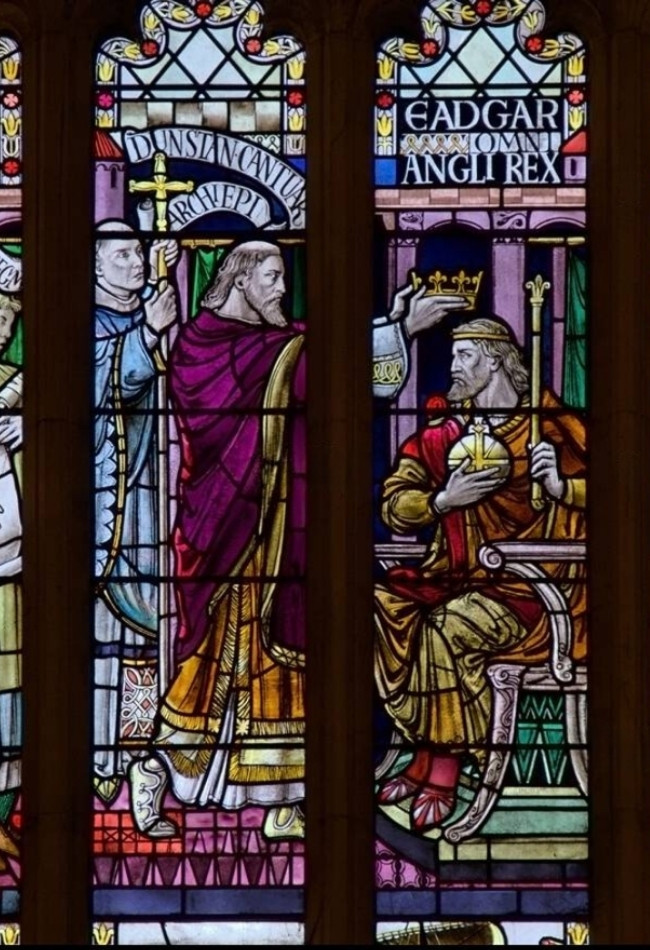

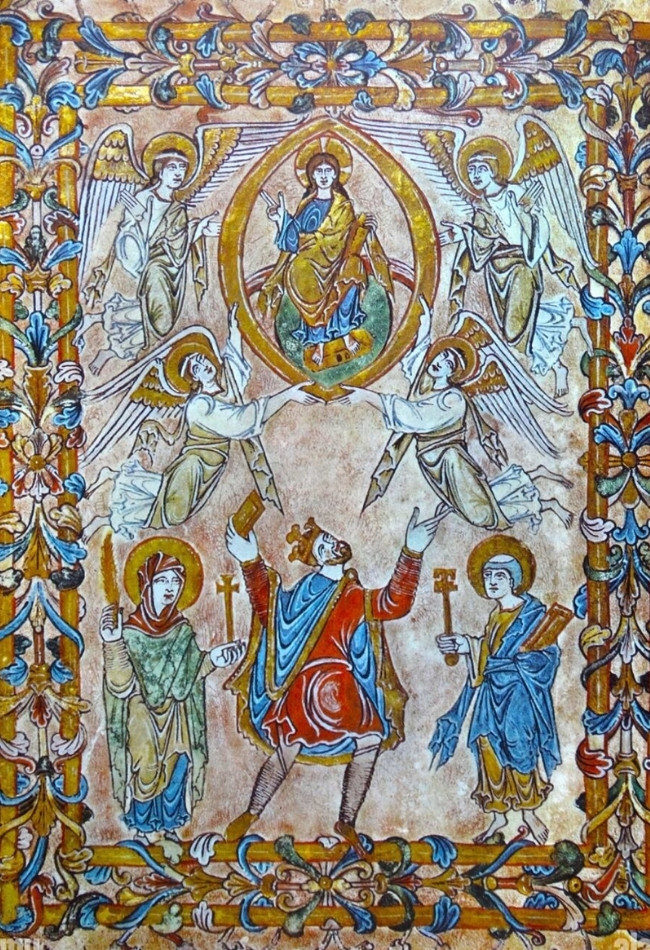
The Murder of Edward the Martyr
975 - 978 AD
The peace of the late Anglo-Saxon kingdom fractured abruptly in July 975 AD, when the premature death of King Edgar the Peaceful plunged the newly unified realm into a severe succession crisis. The lack of an undisputed heir split the senior nobility into two rival factions, with Archbishop Dunstan of Canterbury and Archbishop Oswald of York supporting Edgar’s eldest son, the twelve-year-old Edward, while a powerful southern faction rallied behind his seven-year-old half-brother, Æthelred. This parallel camp was masterminded by the dowager Queen Ælfthryth, who leveraged her vast personal dower lands and aristocratic networks to challenge the legitimacy of the older prince.
The dynastic rift ignited a violent regional backlash across the midlands known as the anti-monastic reaction, led by Ælfhere, Ealdorman of Mercia, who mobilised armed forces to expel Benedictine monks and reclaim ancestral lands previously confiscated by the Crown. This territorial conflict escalated into low-level civil warfare against the pro-monastic forces of East Anglia, led by Ealdorman Æthelwine, leaving the administrative coordination of the kingdom completely paralysed over land tenure.
Although Edward was eventually crowned, his brief reign was crippled by this internal factional fighting before reaching a treacherous zenith on 18 March 978 at the gates of Corfe Castle in Dorset. While traveling with a small, detached rearguard to visit his young half-brother, the young King was ambushed by members of Æthelred's household. As Edward sat on his horse, a royal retainer approached under the pretense of offering a ceremonial cup of wine, while another leaped forward to stab the King in the back. The bolting, panicked horse dragged the mortally wounded monarch by his stirrup down the rocky tracks into the surrounding marshlands, where his mutilated body was discovered by local peasants.
The immediate consequence of the assassination was a profound collapse of the moral authority of the Crown, which permanently fractured the domestic stability of the realm. While Æthelred II was hastily crowned at Kingston-upon-Thames by an outraged Archbishop Dunstan, the suspicious circumstances of the murder deeply alienated the populace, who elevated the slain monarch into a holy figure recorded as Saint Edward the Martyr.
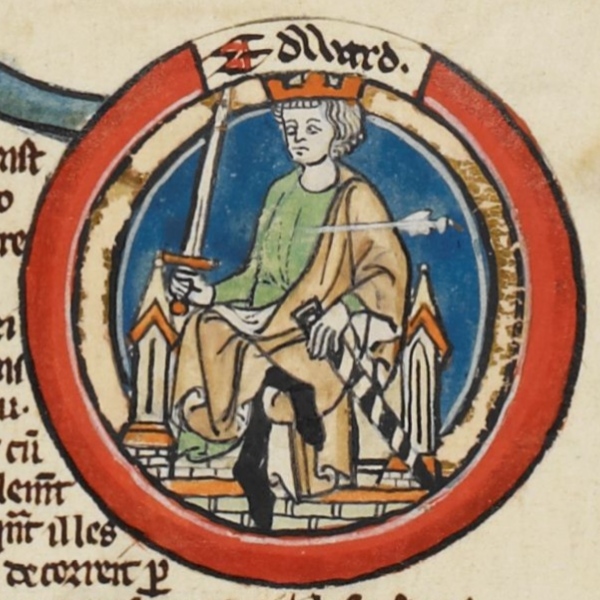
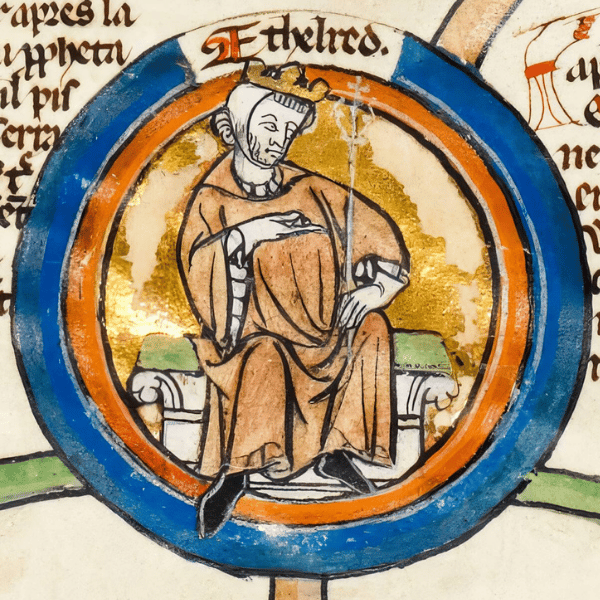
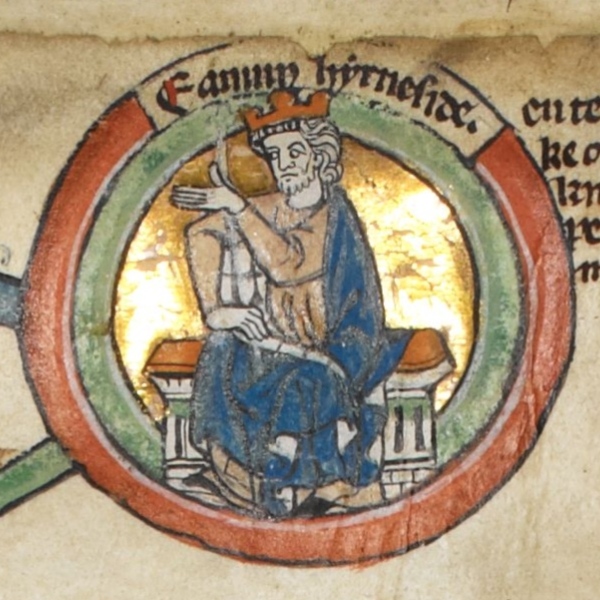
Æthelred II and the second Viking wave
978 - 1013 AD
The peace secured by the descendants of Alfred the Great collapsed completely toward the close of the tenth century. Following the traumatic assassination of his elder half-brother, Edward the Martyr, the crown was inherited in 978 AD by the ten-year-old Æthelred II.
Later recorded in history by the nickname Æthelred the Unready—derived from the Old English word Unræd, meaning "no counsel" or "bad advice"—his thirty-eight-year reign was defined by severe governance failures, internal instability, and bitter factional fighting among his noble families. This internal weakness was continually exploited by the treachery of regional ealdormen, most notably the infamously opportunistic Eadric Streona of Mercia, whose shifting loyalties and tactical desertions repeatedly compromised the military defense of the country. This internal fragmentation coincided with a dangerous resurgence of highly organized Scandinavian raids. Unlike the seasonal fleets of the early Viking Age, these new invaders operated as elite imperial armadas led by Scandinavian royals, including Sweyn Forkbeard of Denmark and Olaf Tryggvason of Norway, commanding large, battle-hardened professional warbands.
Lacking the strategic vision of his ancestors, Æthelred abandoned offensive military campaigns, choosing instead to pay vast fortunes in silver bullion to buy off the invaders. This policy of appeasement was institutionalized following the catastrophic English defeat at the Battle of Maldon in August 991, where the heroic Ealdorman Byrhtnoth was slain by a Viking fleet of ninety-three ships.
To raise the required bullion for these escalating payments, known as gafol, the government implemented a national land tax called the Danegeld. This mechanism converted the wealth of the country into thousands of pounds of high-purity silver coin minted at over seventy local mints across the shires. Far from stopping the raids, this approach drained the liquid resources of the country and actively encouraged the Danes to return every year demanding higher payouts. The scale of this financial exhaustion was immense; the Danegeld payments ballooned from ten thousand pounds of silver in 991 to a crushing twenty-four thousand pounds in 1002 AD, and eventually thirty-six thousand pounds in 1007 AD, breaking the economy of the shires.
As domestic resistance broke down under the weight of continuous extortion, Æthelred attempted a desperate act of state-sponsored violence to secure his borders. On 13 November 1002, the King issued a royal decree ordering the St Brice’s Day Massacre, instructing local authorities to round up and slaughter all Danish settlers living within English territories. This act of violence backfired catastrophically on the international stage.
During the outbreaks of slaughter inside the walled cities of Oxford and London, royal agents burned down St Frideswide’s Church, trapped fleeing civilians inside, and killed Gunhild, the sister of King Sweyn Forkbeard, along with her husband Pallig. This brutality transformed opportunistic Danish raids into a personal war of vengeance. Sweyn launched a multi-year campaign of systematic destruction, landing veteran armies that plundered Exeter, burnt Norwich, and drove the English kingdom into total bankruptcy and administrative collapse.
By 1013, the Danish fleet arrived in overwhelming numbers along the River Trent at Gainsborough, forcing the Northumbrian and Mercian nobility to abandon the House of Cerdic. This complete collapse of authority prompted the immediate flight of Æthelred into exile in Normandy, establishing Sweyn Forkbeard as the first Danish King of England.
Further Information: Æthelred II and the second Viking wave
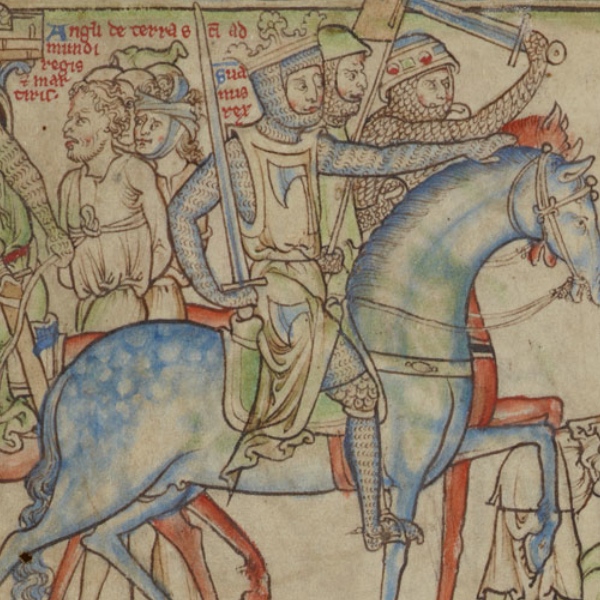


King Edmund I “Ironside” and the Danish Invasion
1016 AD
The governance of the English kingdom shifted profoundly following the sudden death of Sweyn Forkbeard in February 1014, an unexpected vacancy that prompted the exiled West Saxon king, Æthelred II, to briefly return from Normandy to reclaim the throne. However, Sweyn’s younger son, Cnut, immediately launched a massive naval campaign to complete the Danish conquest, mobilizing a veteran armada of two hundred longships carrying ten thousand professional warriors to strike the southern coastlines.
This invasion forced the country into a grueling war of attrition against Æthelred’s son, Edmund Ironside, who inherited an embattled throne following his father's death in April 1016 AD. Formally acclaimed as king by the citizens of London, Edmund Ironside displayed immense physical endurance and martial skill, earning his famous nickname through his unyielding defiance against the Scandinavian forces. Within a single summer, he raised five successive armies from the regional levies, fighting five major pitched battles—including dramatic engagements at Penselwood, Sherston, and Brentford—to repeatedly lift the Danish siege of London and preserve the integrity of the West Saxon frontline.
The decisive confrontation of this short, bloody reign occurred on 18 October 1016 at the Battle of Assandun in Essex. The English infantry shield wall stubbornly held its ground for hours until the treacherous Ealdorman Eadric Streona of Mercia deliberately withdrew his entire regional contingent from the field, causing immediate panic and triggering a catastrophic rout of the West Saxon levies.
The slaughter claimed the lives of the premier English nobility, including Ealdorman Ælfric of Hampshire and Ulfcytel Snillingr of East Anglia. Outmaneuvered, a severely wounded Edmund Ironside met Cnut at Deerhurst to sign the Treaty of Olney, which partitioned the geography of the country by granting Cnut all lands north of the River Thames while leaving Edmund to rule a truncated rump kingdom in Wessex. This fragile settlement lasted for only a few weeks. Following Edmund's sudden, suspicious death on 30 November 1016, the English Witenagemot officially elected Cnut as King of all England, a capitulation that permanently closed the resistance of the House of Cerdic.

The North Sea Empire
1013 - 1035 AD
The election of Cnut the Great integrated England into a massive maritime hegemony known as the North Sea Empire, a dynastic network that combined the three kingdoms of England, Denmark, and Norway under a single crown.
To secure his authority over the newly won territory, Cnut moved rapidly to eliminate domestic subversion. He executed several untrustworthy English nobles—including Eadric Streona, whose severed head was displayed on the walls of London—and introduced a permanent standing guard of 3,000 Scandinavian mercenaries known as the Housecarls, financed by a standardized national tax called the heregeld.
Despite these violent origins, his long reign brought two decades of tranquillity, external security, and international trade expansion across the North Sea corridors. Rather than attempting to replace traditional institutions with Danish formats, Cnut chose to rule within the conventions of an authentic English king, cultivating ties with the religious elite to stabilize his administration and traveling on a pilgrimage to Rome in 1027 to attend the coronation of the Holy Roman Emperor Conrad II.
The final consolidation of this empire relied on deep administrative continuity and the visible projection of Christian legitimacy. Cnut issued comprehensive legal codes based directly on the historical laws of Edgar and Alfred, respected the rights and properties of the Church, and married Æthelred’s widow, Emma of Normandy, to secure his dynastic alignment with continental Europe. Under his strong authority, the traditional administrative framework of the English shires was fully preserved.
He subdivided the country into four great earldoms—Wessex, Mercia, East Anglia, and Northumbria—utilizing native earls like Godwin of Wessex and Leofric of Mercia alongside Scandinavian governors like Thorkell the Tall and Eric of Hlathir to enforce royal decrees.
This vast maritime network maintained an authoritative grip on northwestern Europe, providing an era of fiscal strength and peace until the dynastic alignment fractured entirely following Cnut’s death in November 1035 AD, plunging the Anglo-Danish realm into immediate chaos under his competing successors.
The Reigns of Harold Harefoot and Harthacnut
1035 – 1042 AD
The death of Cnut the Great shattered the unity of the North Sea Empire, unleashing a bitter, multi-front dynastic succession crisis that destabilized the English kingdom. Cnut's chosen heir was Harthacnut, his son by Queen Emma of Normandy, who possessed the backing of the powerful Earl Godwin of Wessex. However, because Harthacnut was securely tied down in Scandinavia defending Denmark against Norwegian invasions, his elder half-brother, Harold Harefoot—Cnut's illegitimate son by Ælfgif of Northampton—exploited the vacancy. Backed by Earl Leofric of Mercia, the northern nobility, and the London merchant elite, Harold Harefoot executed a coup, seizing the royal treasury at Winchester and securing election as regent, before formally claiming the English crown as king in 1037, forcing Queen Emma into exile in Flanders.
The internal instability of Harold's reign reached its end in 1036 when Alfred Ætheling, the exiled son of Æthelred II, crossed the English Channel from Normandy in a desperate bid to reclaim his family's throne. Intercepted in Surrey by Earl Godwin—who had pragmatically switched his allegiance to Harold Harefoot—Alfred's Norman retinue was systematically slaughtered. Alfred himself was brutally blinded by royal agents, his eyes gouged out before he died of his wounds at the monastery of Ely, an act of violence that permanently embittered the relations between the House of Cerdic and the Anglo-Danish earls. Harold Harefoot's isolated reign came to an abrupt end when he died suddenly at Oxford in March 1040 AD, just as Harthacnut was assembling a massive invasion armada in Flanders to contest the throne.
Landing at Sandwich in June 1040 with a fleet of sixty-two longships, Harthacnut initiated a brief, deeply repressive administration. Driven by personal vengeance, the new king ordered his warriors to dig up Harold Harefoot's corpse, decapitate it, and cast the remains into the River Thames, before imposing a crushing tax of twenty-one thousand pounds of silver to pay for his mercenary fleet. This severe extraction provoked open riots, culminating in a brutal uprising in Worcester where the local population murdered two of the king's tax collectors, prompting Harthacnut to launch a punitive military campaign that burned Worcester to the ground and slaughtered its citizens.
Recognizing his own failing health and lacking direct heirs, Harthacnut executed a calculated dynastic compromise in 1041, recalling his surviving English half-brother, Edward, from his long exile in Normandy to adopt him into the court as co-ruler. When Harthacnut collapsed and died of a sudden stroke while drinking at a wedding feast in Lambeth on 8 June 1042, the Danish interlude on the island finished permanently, clearing the path for the immediate civilian restoration of the House of Cerdic under Edward the Confessor.


Edward the Confessor and the House of Godwin
1042 - 1066 AD
The sudden collapse of the Danish line following the deaths of Cnut's sons permanently broke the Scandinavian hegemony over northwestern Europe, paving the way for the return of the native West Saxon lineage in June 1042 AD.
After twenty-five years of foreign exile on the continent, Edward the Confessor, the surviving son of Æthelred II and Emma of Normandy, was recalled to England and officially crowned at Winchester Cathedral on Easter Sunday in 1043. His accession was greeted with widespread domestic celebration across the lowlands, representing a profound constitutional restoration that uncoupled the country from the North Sea axis and re-tied the Crown to the ancestral House of Cerdic. However, having spent his formative years at the ducal court of Normandy, the new King brought a distinct continental style to his administration. He surrounded himself with Norman advisors, knights, and clergymen, granting them wealthy estates and high positions in the Church to build a faction of personal loyalists who could act as a counterweight against the deeply entrenched Anglo-Danish nobility.
Beneath the peaceful surface of the West Saxon restoration, the daily reality of England was defined by the overbearing dominance of the House of Godwin. The family patriarch, Earl Godwin of Wessex, controlled the wealthiest agricultural shires of the south and possessed enough personal housecarls to match the military capacity of the crown. To secure a fragile peace with this titanic noble house, King Edward was forced into a dynastic marriage alliance with Godwin’s daughter, Edith, in 1045.
At the same time, the King sought to dilute this native monopoly by elevating Norman loyalists, culminating in 1051 with the appointment of Robert of Jumièges as Archbishop of Canterbury. This factional division exploded into an outright constitutional crisis in the autumn of 1051 during the Dover Fracas, a violent street brawl between the townspeople of Dover and the visiting Norman retinue of the King's brother-in-law, Count Eustace of Boulogne. When Edward ordered Earl Godwin to execute a punitive military raid against the English citizens of Dover as punishment, Godwin flatly refused the royal command, choosing to champion the rights of his own southern tenants over the direct authority of the monarch.
The King utilized this act of defiance to launch a swift political counter-offensive. Backed by the northern armies of Earl Leofric of Mercia and Earl Siward of Northumbria, Edward swallowed his pride, summoned a great council in London, outlawed the entire Godwin dynasty, and forced them into a rapid, bloodless exile, while temporarily locking down the Earldom of Wessex under royal control. During this brief window of liberation, the childless King used the vacant succession as diplomatic leverage, allegedly promising the English crown to his maternal kinsman, Duke William of Normandy, who visited the English court during the Godwins' absence.
This royal triumph was short-lived; in September 1052, Earl Godwin and his sons returned at the head of a massive rebel fleet recruited from the maritime ports of Kent and Sussex. Sailing up the River Thames to encircle the King's forces at Westminster, Godwin forced a bloodless capitulation. To prevent an all-out civil war, Edward was compelled to restore all the family's vast estates, reinstate their titles, and permanently expel his Norman advisors from the realm.
Despite being constantly caught in the crossfire of these noble rivalries, Edward’s twenty-four-year reign provided a vital era of domestic peace, agrarian expansion, and commercial stability. In 1051, Edward executed a sweeping fiscal reform by permanently abolishing the hated heregeld, the heavy national land tax originally established by Cnut to fund a standing mercenary navy. By disbanding the royal fleet and eliminating this crushing financial burden, Edward left vast wealth in the hands of the free peasant ceorls and agrarian gentry, stimulating an explosion in rural productivity and driving the rapid growth of urban market centers across the shires. Following the death of the old patriarch in 1053, the leadership of the Godwin family passed to his brilliant son, Harold Godwinson, who systematically expanded the family's footprint until his brothers controlled every major earldom on the island.
The volatile nature of this noble ascendancy reached an end point in the summer of 1064 during a diplomatic voyage across the English Channel. Harold Godwinson was shipwrecked on the coast of Ponthieu, captured by Count Guy, and delivered into the custody of Duke William of Normandy. Exploiting his captive's vulnerability, William compelled Harold to swear a sacred, binding oath of fealty upon a casket of holy relics, promising to support the Duke's future claim to the English throne upon King Edward's death. This fateful event, later immortalized on the Bayeux Tapestry, permanently bound the House of Godwin to a catastrophic continental collision course.
The supreme monument of Edward's final years was a massive architectural project explicitly engineered to project the sacred majesty of his dynastic line. Edward poured the wealth of the royal treasury into the construction of Westminster Abbey, a monumental stone basilica built on Thorney Island along the River Thames.
Constructed in the grand Norman Romanesque style using imported Caen stone, this massive church was the largest structure of its kind in northern Europe, designed to replace the traditional West Saxon timber minsters with an indestructible, centralized sanctuary for the English onslaught. Edward worked frantically to complete the project, but he was too physically weak to attend its formal consecration on 28 December 1065.
When the King died childless just days later on 5 January 1066, he was buried directly before the high altar of his newly built abbey. The Witenagemot immediately bypassed the distant royal claimant, Edgar Ætheling, to crown Harold Godwinson as king, leaving the newly unified Kingdom of England politically isolated and militarily exposed to the rival power blocs of northern Europe.


Harald Hardrada and the Battle of Stamford Bridge
1066 AD
King Harold Godwinson’s newly won sovereignty was immediately challenged from two fronts across the sea, and while he mobilised the southern fyrd to guard the coast against a looming Norman fleet, a catastrophic military threat materialized in the north. In early September 1066, Harald Hardrada—the King of Norway, a veteran commander of the Byzantine Varangian Guard, and the most feared Viking warrior in Europe—launched an invasion armada of roughly 300 longships that sailed down the Yorkshire coast.
Hardrada was joined by Harold’s exiled and vengeful brother, Tostig Godwinson, who provided local intelligence and political backing. Together, their combined Scandinavian host landed at Riccall and confronted the northern English defences on 20 September at the Battle of Fulford. Outnumbered and outmanoeuvred by Hardrada's veteran battle lines in the marshy terrain outside York, the northern earls Edwin and Morcar suffered a devastating defeat, forcing the city of York to surrender hostages and provisions.
When news of the northern catastrophe reached London, King Harold executed one of the most astonishing, high-velocity forced marches in medieval military history. Gathering his elite standing guard of heavily armed housecarls, Harold rode north at breakneck speed, covering nearly 200 miles in just five days. Marching day and night along ancient Roman routes, he gathered regional shire levies (fyrd) along the path, arriving in the vicinity of York completely undetected by the invading Scandinavian army, who believed the English king was still pinned down on the southern coast watching for William of Normandy.
On 25 September 1066, King Harold caught the Norwegian army completely by surprise at Stamford Bridge, where the River Derwent split the Viking host. A significant portion of Hardrada's army was left guarding the longship fleet miles away at Riccall, while the troops present at the bridge had stripped off their heavy chainmail hauberks to enjoy the warm autumn sunshine. Before the main English army could cross the river, a legendary solitary Norse berserker reportedly held the narrow timber bridge single-handedly, cutting down over forty English warriors with his double-handed battleaxe until an enterprising English soldier floated underneath in a barrel and thrust a spear up through the planking to kill him.
Once the English vanguard surged across the bottleneck, the battle devolved into a prolonged, brutal slaughter. Deprived of their protective chainmail, the Scandinavian shield wall was systematically hacked to pieces by the axes and swords of the English housecarls. Both of the primary rebel leaders perished in the carnage: Harald Hardrada was struck in the throat by an arrow, and Tostig Godwinson was cut down in the thick of the melee.
The victory at Stamford Bridge was absolute; out of the massive invasion fleet of 300 ships that had set sail from Scandinavia, only 24 ships were required to transport the broken remnants of the Norwegian army back across the North Sea under Hardrada’s surviving son, Olaf. While this triumph permanently extinguished the centuries-old Viking threat to England, the grueling march and heavy casualties left Harold's elite army physically exhausted, setting the stage for their catastrophic collision with the Normans at Hastings less than three weeks later.


Harold Godwinson and the Battle of Hastings
1066 AD
Additional Information: Norman England / Norman invasion and the death of Harold II
The triumph at Stamford Bridge was cut short by a brutal twist of strategic timing. Just three days after the battle, on 28 September 1066, the wind shifted in the English Channel, allowing William, Duke of Normandy, to cross the sea and land a massive invasion force of heavy cavalry and archers on the unguarded southern coast at Pevensey. King Harold was forced to immediately turn his exhausted army around and execute a second gruelling forced march down the entire length of England to defend the south, mobilizing what the limited forces he could gather along the way.
On the morning of 14 October 1066, the two armies deployed for a definitive confrontation at Senlac Hill, near Hastings, with Harold forming a dense, traditional Anglo-Saxon infantry shield wall across the top of the ridge, locking shields tightly together to create a solid wall of timber and iron. Duke William deployed his forces at the base of the hill, launching non-stop cavalry charges and heavy volleys of arrows against the English line, and for hours, the English shield wall held firm, brutally slaughtering the Norman horses with heavy, two-handed Danish battleaxes and driving William’s left flank into a chaotic retreat.
The turning point of the battle occurred when parts of the less-disciplined English shire militia broke formation to pursue the retreating Normans down the hill, falling victim to William's tactics of feigned retreats. William immediately rallied his armoured cavalry, turning on the exposed English infantry and cutting them down in the open. Duke William then ordered his archers to fire their volleys high into the air, raining arrows directly down onto the heads of the remaining defenders behind the crumbling shield wall. Late in the afternoon, King Harold was killed in the fighting, causing the defensive formation to fracture and dissolve.
The total defeat of the English army at Hastings brought a sudden, violent end to the Anglo-Saxon state and era, permanently altering the trajectory of the nation.
Further Information: Harold Godwinson and the Battle of Hastings
Stay Connected
Anglo-Saxon England FAQs