
The Genetic History of
the English People
The Evolution of the English Genome:
From Prehistory to the Modern Era
The genetic ancestry of the English people stands as a distinct biological heritage, shaped by major population movements spanning more than fourteen thousand years. Rather than a single unchanging line or a series of random replacements, the biological identity of the population emerged through specific eras of settlement, where incoming continental lineages combined with the existing populations of the island.
This ancestral framework began with the post-glacial hunter-gatherers who first inhabited the wilderness, before being transformed by the arrival of Neolithic farming communities and the metalworking cultures of the Bronze Age. By examining the lineages that cultivated the soil, this record traces how these ancient populations formed the primary biological layers that were later consolidated during the early Middle Ages by migrations from Northern Europe.
This timeline follows the threads of ancestry that crossed both the post-glacial land bridges and the ancient maritime channels, examines the continental migrations that brought regional variety to the shires, and details the long-term stabilization of the genetic framework that defines the traditional population of the country.
Page Contents:
Archaic Divergence and Levantine Admixture
700,000 – 55,000 BP (698,050 – 53,050 BC)
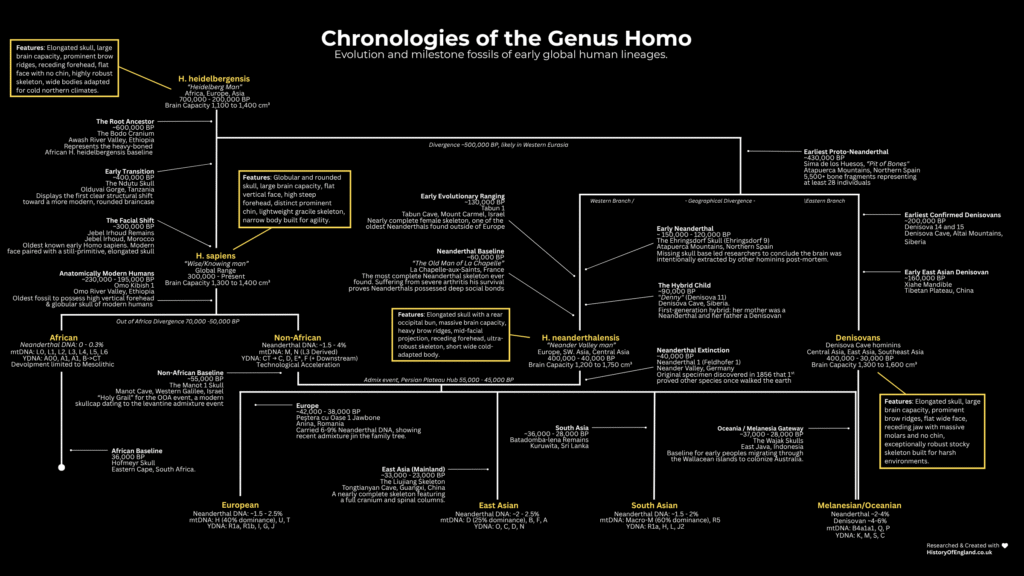
The foundations of human habitation in Europe began in the Middle Pleistocene, around 700,000 BC, with the spread of Homo heidelbergensis. This species is archaeologically tracked across the continent by key fossil discoveries, including the 500,000-year-old Mauer 1 mandible found in Germany and the extensive skeletal remains at the Sima de los Huesos site in Atapuerca, Spain. As the last common ancestor shared between modern humans and Neanderthals, this global population split into geographically isolated branches; the Afro-Arabian branch remained in warmer southern climates, laying the evolutionary groundwork for modern humans, while the northwestern branch migrated into the glacial environments of Europe, where freezing conditions and geographical isolation forced the group to adapt, slowly evolving into a distinct lineage.
By roughly 500,000 BC, this northwestern group had began transitioning into the Neanderthal lineage, a population better adapted to withstand extreme ice age climates. Their geographic range extended from the Atlantic fringes of Iberia and Wales eastward across central Europe into the Altai Mountains of Siberia, though they never successfully penetrated the sub-Saharan African landmass. Driven by harsh environmental selection across this European territory, Neanderthals developed a specialized anatomy, including elongated skull vaults, heavily arched brow ridges, and a short, stocky build designed to conserve body heat.
This robust, barrel-chested body plan featured a wide lower thorax that yielded approximately twenty percent greater lung capacity than a modern human of equivalent height, providing the oxygen intake required to hunt large ice age mammals across frozen terrains1. To maintain this high-mass muscle structure in sub-zero environments, individual Neanderthals required an intense caloric intake of up to 5,000 calories per day, locking their bands into a dietary dependency on tracking megafauna like woolly mammoth, woolly rhinoceros, and steppe bison.
While the European lineage adapted to the cold, the separate branch of Homo heidelbergensis that remained within the warmer climates of Africa followed a different evolutionary path. By 300,000 BC, this line led to the emergence of early Homo sapiens, a milestone marked by the fossil remains discovered at Jebel Irhoud in Morocco, which preserve the earliest known transition toward modern facial structures and a rounded braincase.2
High-resolution analysis of these Moroccan crania unmasked a distinct evolutionary mosaic: while their facial, jaw, and dental measurements are near-identical to present-day humans, they retained a long, low, and primitive endocranial braincase shape rather than the globular structure of late modern populations.² These early populations deployed advanced Middle Stone Age Levallois point technologies to systematically hunt gazelle and zebra across a green, hospitable Saharan landscape. For over two hundred thousand years, these early human populations expanded across the African continent, operating as an interconnected network of mobile foraging groups rather than settling in one single isolated region.
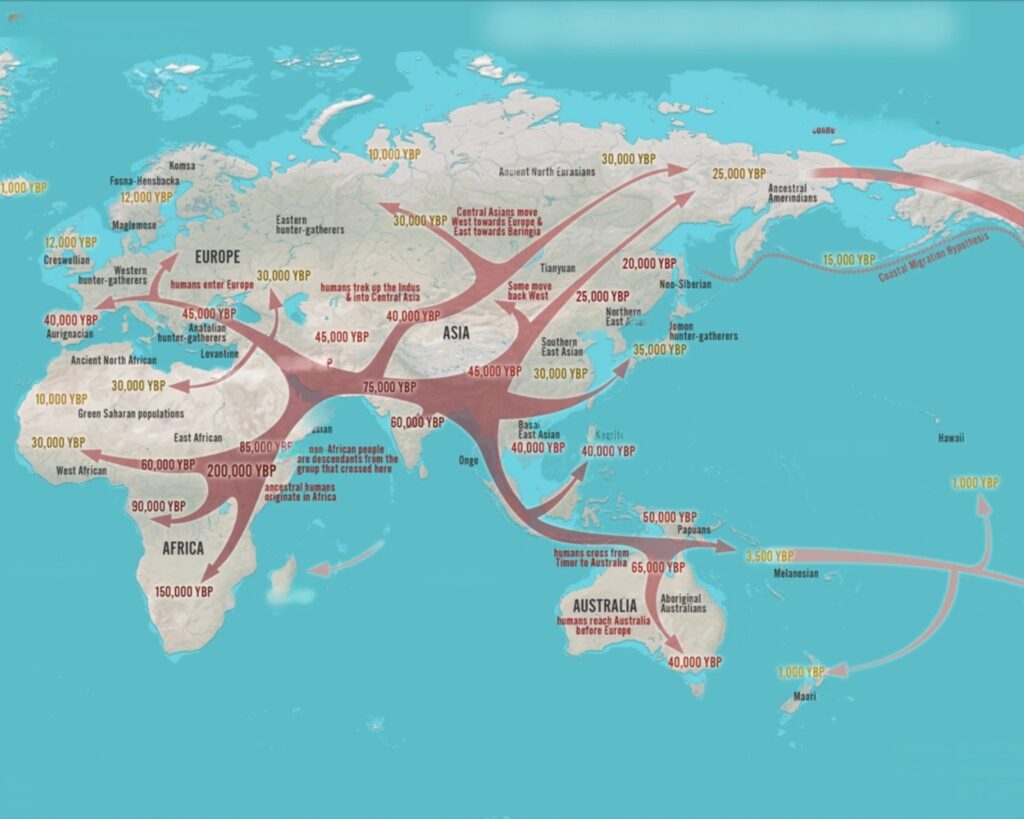
The evolutionary paths of these two long-separated species finally crossed between 68,000 and 58,000 BC, sparked by a major modern human migration out of Africa. This expansion was squeezed through a narrow demographic funnel, as a single ancestral band of fewer than ten thousand individuals successfully crossed the Bab-el-Mandeb strait or the Sinai peninsula. This small group of modern humans—carrying the direct paternal lineage that fathered all future Eurasian men, alongside two primary maternal lines—departed the continent and entered the Middle East.
As this migrating line pushed through the Levant around 53,000 BC, they encountered and interbred with the resident Neanderthal populations³. This physical overlap is archaeologically tracked across the Levantine corridor, where caves like Manot, Skhul, and Qafzeh demonstrate alternating or shared territorial occupations over millennia. Because this interbreeding event occurred inside the Middle East just before the ancestral population split and fanned out across the globe, it embedded a uniform 1.5% to 2% Neanderthal genetic signature into the DNA of all future non-African populations.4 5
In contrast, the native African populations who stayed south of the Sahara remained outside this migratory pathway. They were unaffected by this initial Middle Eastern mixture, preserving their original genetic makeup free of Neanderthal DNA. This genetic divide between the continental lines remained intact until a group of mixed West Eurasian migrants returned to North and East Africa around 22,000 to 18,000 BC.
This genetic back-flow indirectly introduced a minor 0.3% Neanderthal ancestry baseline into modern sub-Saharan African genomes4. This small genetic exchange marked the final biological touchpoint between the two human lines before the Neanderthals vanished from the fossil record, leaving modern humans as the sole surviving human species.
Further Information: Archaic Divergence and Levantine Admixture
The Persian Plateau Hub and European Colonisation
55,000 – 33,000 BP (53,050 – 31,050 BC)
Following the interbreeding event in the Middle East, the modern human population did not immediately expand across the globe. Instead, they remained within the region of the Persian Plateau for nearly twenty thousand years, inhabiting a geographic hub that spanned modern-day Iran, southeast Iraq, and northeast Saudi Arabia. Isolated by harsh ecological barriers—including the arid hyper-deserts of the Arabian peninsula to the south and the frozen mountain ranges of the Caucasus and Zagros to the north—this group consolidated its genetic profile, locking in the shared mutations that would define all future non-African populations3. It was only after this long isolation phase that changing environmental conditions allowed the first human groups to leave the Persian Plateau and venture into the vacant European landmass.
The first modern humans pushed into Europe around 43,000 BC as an initial expansion wave (wave 1), carrying a new stone technology known as the Initial Upper Palaeolithic (IUP). Marked by the production of specialized stone blades and bone ornaments, this first wave of explorers left a distinct footprint at Bacho Kiro cave in Bulgaria and is represented by the female Zlatý kůň specimen in the Czech Republic.
Genomic sequencing of the Zlatý kůň skull revealed exceptionally long, unbroken segments of Neanderthal DNA, proving these early pioneers lived just a few generations after the original Middle Eastern interbreeding event. However, this initial wave failed to permanently settle the continent. Around 39,000 BC, the super-eruption of the Campanian Ignimbrite volcano in Italy triggered a catastrophic volcanic winter that completely wiped out these early lines, leaving them with no living descendants in later European populations14.
The permanent settlement of Europe was achieved by a second group of colonisers who departed the Persian Plateau around 36,050 BC. Known to genomics as the West Eurasian Core, this second wave comprised early modern humans—often called Cro-Magnons—who entered Europe practicing the Aurignacian culture. Unlike the extinct first wave, these colonisers possessed fully modern physical traits, featuring a high, vertical forehead, a defined chin, and a completely globular braincase shape. They deployed an advanced material toolkit marked by the production of split-base bone projectile points, flint scrapers, and the world's earliest figurative art and musical flutes. Because the first wave of settlers had been entirely destroyed by the volcanic winter centuries prior, these new colonisers entered a vacant landscape, experiencing no genetic mixture with any previous human inhabitants of the continent.15
This West Eurasian Core line is represented by the oldest specialized toolmakers found across Europe, and skeletons discovered at the Goyet caves in Belgium (dating to around 33,000 BC) preserve the western lineage that laid the groundwork for Europe's future populations16. Meanwhile, a parallel eastern branch expanded across the Russian plains, represented by remains at Kostenki15. Rather than a single group, these migrations established a widespread biological foundation across Europe. They formed the parent lines that would navigate the changing ice age climate, split into the distinct cultures of the Gravettian era, and ultimately become the genetic basis for the Western Hunter-Gatherers who first claimed the British landscape.15


The Last Glacial Maximum and Ice Age Refugia
24,000 – 14,700 BP (22,050 – 12,750 BC)
The climate collapse of the late Pleistocene rearranged the human map of Europe long before the first post-glacial hunters set foot on British soil. Following the expansion of early modern human populations during the Gravettian era, the continental climate deteriorated rapidly around 22,050 BC with the onset of the Last Glacial Maximum.
This deep freeze caused massive ice sheets to advance southward across the North Sea, burying northern Europe under ice and rendering the British peninsula entirely uninhabitable. The polar desert pushed permafrost lines down to the Loire and Danube valleys. To survive the cold and the loss of migratory animal herds, the human population abandoned the northern plains, retreating southward into separate geographic shelters called ice age refugia.17
This forced migration split the population of Europe behind environmental barriers. The western population retreated into the Franco-Cantabrian refuge, a sheltered zone stretching across southwestern France and Iberia 15. Within this area, the population carried the Fournol genetic cluster, using the limestone caves of the Dordogne and Cantabria to escape the weather. To hunt the remaining reindeer, they developed the Solutrean toolkit—marked by thin, leaf-shaped, heat-treated flint projectile points—before evolving into the Magdalenian culture. Concurrently, the cold triggered a major population collapse across the rest of the continent. The Věstonice genetic cluster, which had dominated the central European plains and the Italian peninsula at sites like Paglicci, failed to survive the climate crisis and went extinct.15
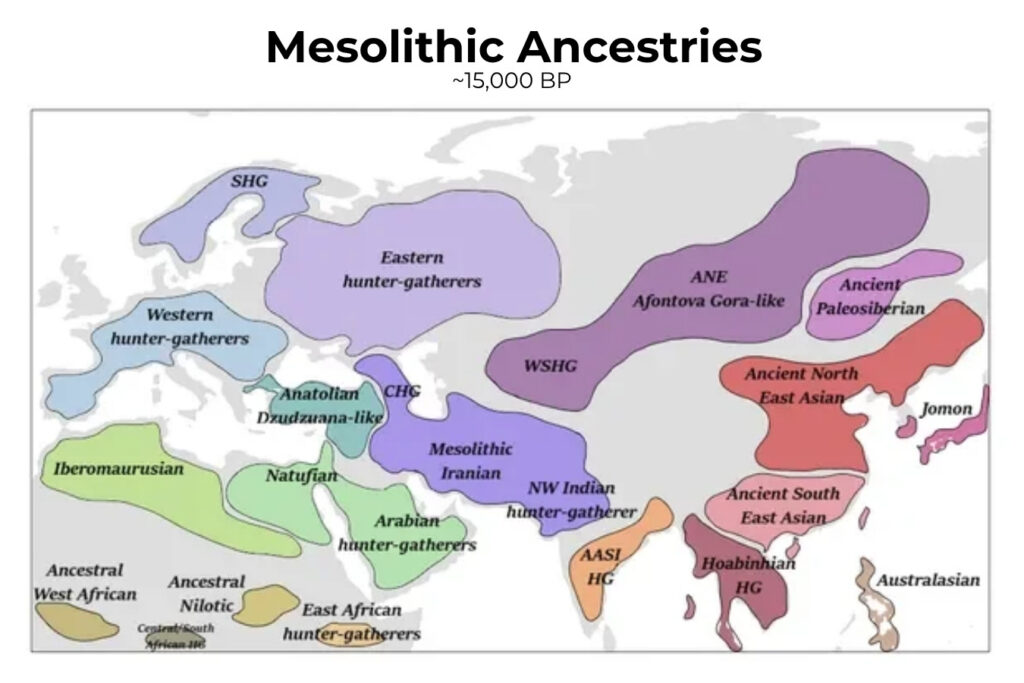
Following this extinction event, a major genetic shift occurred as the climate began to warm. A new population expanding out of a separate Balkan or Near Eastern refugium moved into the vacated Italian peninsula, introducing the Epigravettian tool culture. This incoming group carried the Villabruna genetic signature, marked by the paternal Y-chromosome haplogroup I2 and maternal mitochondrial markers like U5b. Meanwhile, the surviving western Franco-Cantabrian branch preserved the maternal line U8a alongside a resurgence of the ancient Goyet early modern human ancestry.15 16
For nearly ten thousand years, these distinct western and southeastern branches evolved in isolation from one another, establishing the ancestral lines and specialized toolkits that would remain dormant until a shift in the climate allowed groups to move north toward the opening British valleys.15

The First Britons: Ice Age WHGs
14,700 – 6,000 BP, (12,750 – 4,000 BC)
Additional Information: Stone Age Britain / Permanent Repopulation of the British Peninsula
The permanent resettlement of Britain began around 12,750 BC when rapid warming melted the late Pleistocene glaciers, an environmental shift which allowed two distinct pioneer lineages to push north out of their continental ice age shelters to reclaim the vacant valleys.
The first pioneers arrived from the western Franco-Cantabrian zone during this warm period, carrying the Goyet Q2 genetic profile and practicing the horse-hunting Magdalenian culture. They left a distinct archaeological footprint and the specialized, angle-backed flint blades of the Creswellian toolkit in the limestone chambers of Gough’s Cave in Somerset. Shortly thereafter, a separate group carrying the southeastern Villabruna genetic signature pushed onto the peninsula from the Epigravettian zone, establishing a coastal hunting and seal-harpooning economy at Kendrick’s Cave in North Wales.
For over a millennium, these pioneer bands tracked migratory game across the expanding birch woodlands until a sudden climate collapse shattered their initial settlement. Around 10,950 BC, the onset of the Younger Dryas cold snap plunged northern Europe back into near-glacial winters. This freeze erased the forests, restored a freezing tundra landscape, and effectively depopulated the British peninsula as human groups retreated back to the continental mainland. During the closing centuries of this thousand-year freeze, mobile hunting groups deployed the lightweight bows and tanged arrowheads of the Ahrensburgian complex, crossing the North Sea plains to intercept the final migratory reindeer herds and pave the way for permanent recolonisation.18
This intense freeze finally broke around 9,750 BC with a warming pulse (the Holocene Warming) that collapsed the Pleistocene ice sheets and marked the opening of the Holocene epoch. This climate shift triggered a multi-directional northward migration dominated by the expanding southeastern Villabruna lineage.15
As these hunting families reclaimed the continent, they absorbed the surviving western Magdalenian lines, forging a highly resilient, admixed genetic profile composed of roughly 82% Villabruna-like and 18% Goyet Q2-like ancestry15. This specific genetic blend established the definitive Western Hunter-Gatherer (WHG) profile, creating the dark-skinned, blue-eyed post-glacial population that formed the unbroken human bedrock of Mesolithic Britain.18

EEF Migration and the Neolithic Turnover
6,000 – 4,500 BP, (4,000 – 2,500 BC)
Additional Information: Stone Age Britain / Migrations of the Anatolian Neolithic Farmers
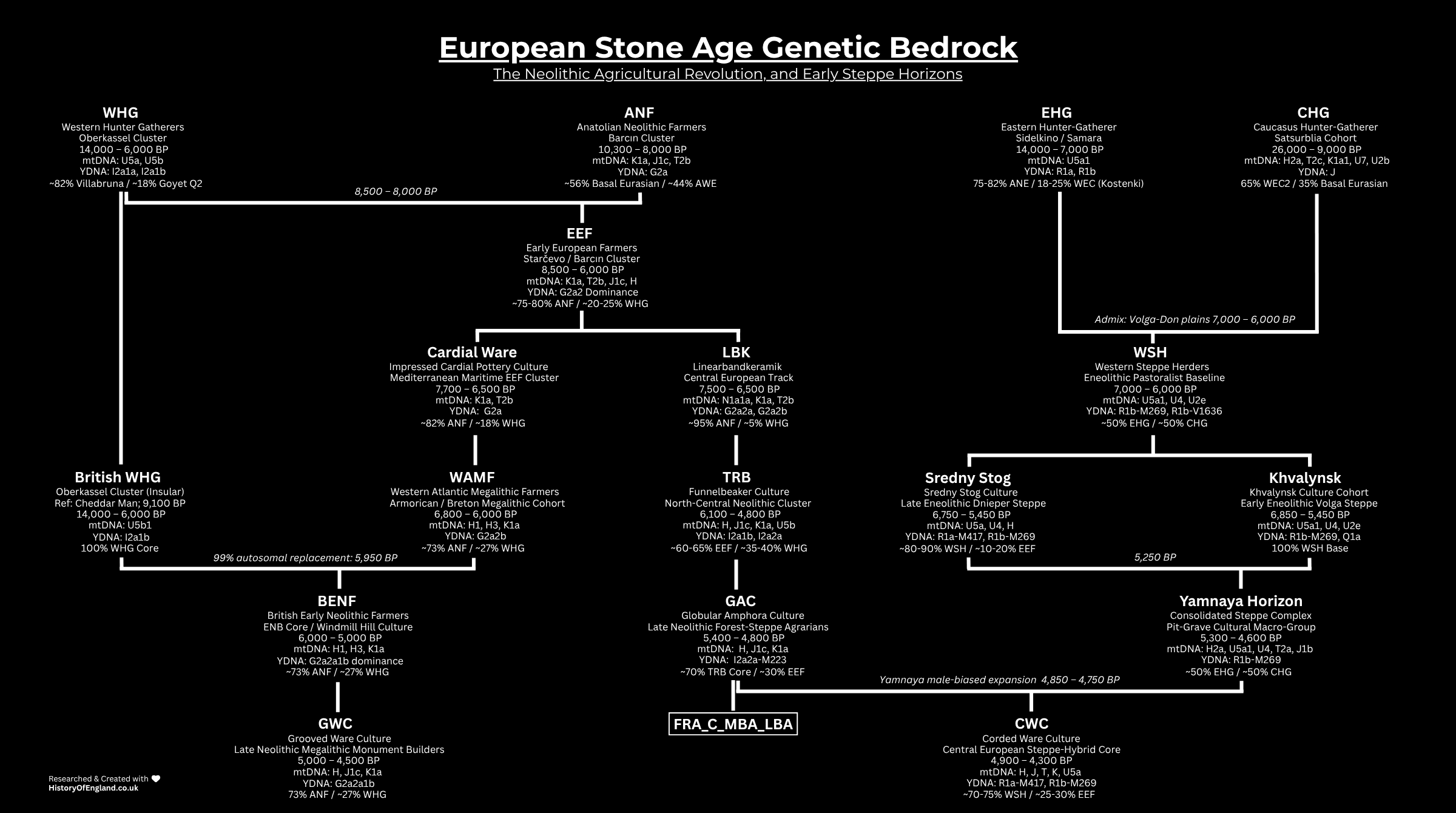
In approximately 4,000 BC, the genetic foundation of the British population was transformed by the arrival of continental communities known as Western Atlantic Megalithic Farmers, who descended from the broader Early European Farmer (EEF) lineage19. This maritime migration brought the Neolithic Revolution to the island, replacing the indigenous foraging lifestyle with an agricultural society based on permanent fields, cereal cultivation, and domesticated livestock. Genetic records confirm that these incoming populations descended primarily from Anatolian Neolithic Farmers (ANF) who originally expanded out of the Near East, entering the European continent through Mediterranean coastal and Danubian river routes.6
The specific groups that crossed the English Channel followed the Atlantic maritime route, moving along the Mediterranean coast through Iberia and northward into western France19. Before traveling to Britain using skin-bound boats and dugout canoes, these expanding communities encountered and absorbed local continental hunter-gatherers over many generations6. By the time they departed northwest mainland Europe, their genetic makeup carried an ancestry ratio of roughly 73% Anatolian farmer (ANF) and 27% continental Western Hunter-Gatherer (WHG).19
This migration led to a major population turnover across the British landmass, establishing the British Early Neolithic Farmer core. DNA tracking extracted from long barrows, chambered cairns, and communal burial sites demonstrates that the incoming farmers achieved a ~99% autosomal turnover, near-totally replacing the native British hunter-gatherer population19. The darker-skinned Mesolithic lineages were displaced across the island. Crucially, unlike continental Europe—which experienced a late-stage resurgence of hunter-gatherer genetics centuries after the initial farming wave—evidence from early British farming communities detects no post-migration resurgence of indigenous hunter-gatherer ancestry at any point during the British Neolithic. The incoming lines dominated the island's gene pool, fixing a paternal monopoly on the Anatolian-derived Y-chromosome haplogroup G2a and various maternal mitochondrial lines, such as H, J, K, and T, as the primary genetic profile of the island.19
This population movement altered the physical traits of the human population inside Britain. In contrast to the dark-skinned, blue-eyed populations they replaced, the incoming farmers carried the mutations responsible for pale skin pigmentation. They introduced specific markers at the SLC24A5 and SLC45A2 genes into the British population at high frequencies, allowing synthetic Vitamin D production to counter a new grain-heavy diet that lacked the Vitamin D found in wild meat. Conversely, they retained the ancestral markers at the HERC2/OCA2 genes, pairing their pale skin with brown eyes and dark blonde to dark brown hair.20
Archaeologically, this population maps across a succession of material cultures over fifteen centuries, beginning with the Windmill Hill culture around 4,000 BC. This early phase is defined by fine carinated pottery, fixed fields, and the construction of causewayed enclosures and earthen long barrows. Over generations, this tradition transitioned into the Grooved Ware culture around 3,000 BC, representing a late Neolithic shift toward a livestock-heavy pastoral economy.
This descendant population abandoned long barrow burials, redirecting collective labor to construct extensive monumental architecture, including timber henges, Avebury, and the early phases of Stonehenge. This agricultural network functioned as a stable genetic profile across the island, remaining uninterrupted until the final centuries of the third millennium BC, when a secondary population replacement transformed the island.


The Yamnaya Horizon: Indo-European Steppe Pastoralists
5,300 – 4,600 BP, (3,300 – 2,600 BC)
Additional Information: Bronze Age Britain / The Bell Beaker Expansion and Yamnaya Ancestry, The Evolution of the English Language / Proto-Indo-European and the Ancient Roots
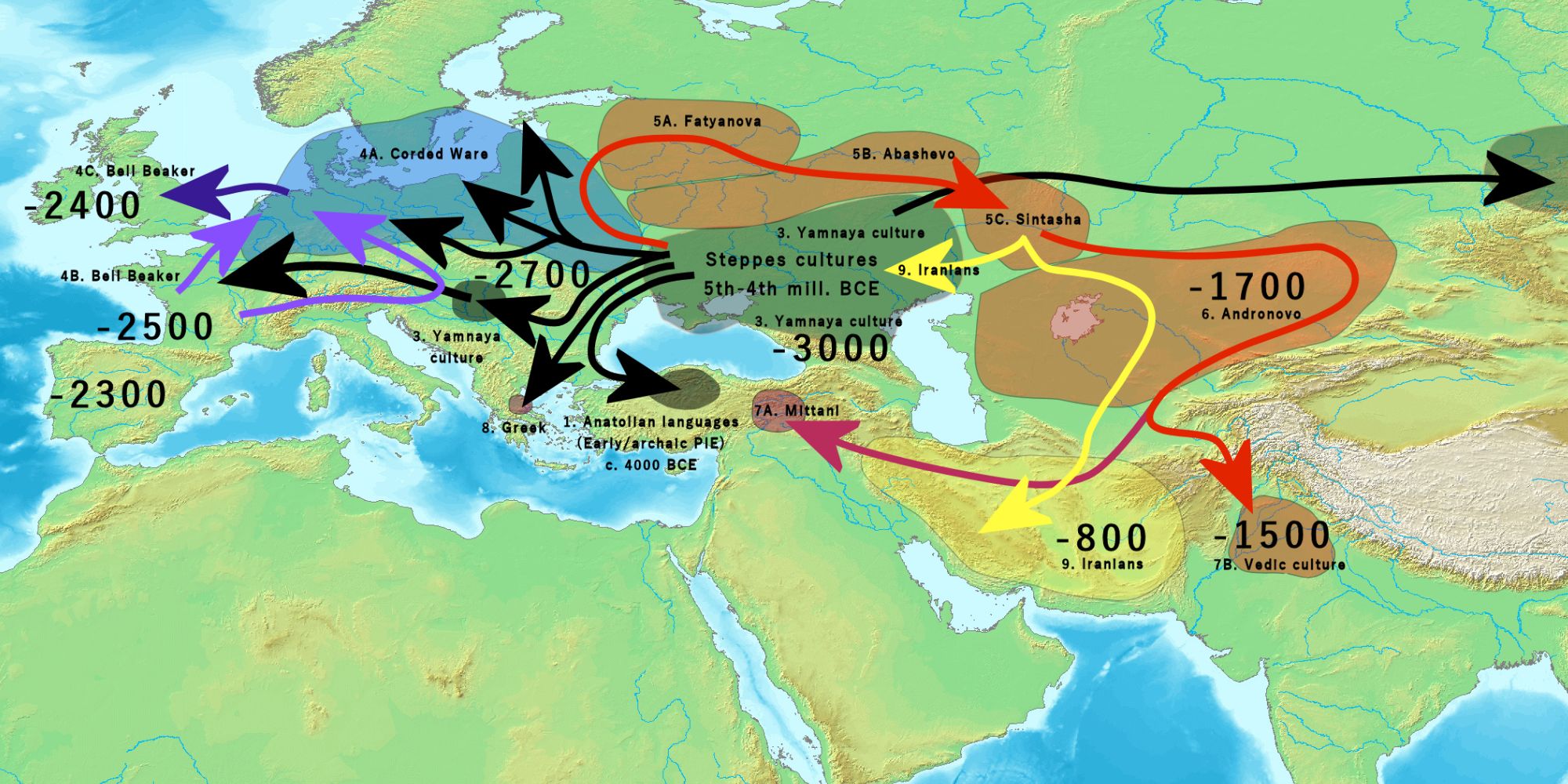
The emergence of the Yamnaya Horizon on the Pontic-Caspian steppe between 3,300 and 2,600 BC triggered a massive migration that reshaped the genetic, linguistic, and cultural landscape of Europe. This Early Bronze Age society was formed by nomadic pastoralists who transformed livestock management by deploying four-wheeled wagons, animal traction, and early domesticated horses to herd cattle and sheep across the grassland plains. Paleogenomic research demonstrates that this ancestry developed from a foundational Copper Age ancestral group recorded across the Caucasus-Lower Volga area, spanning from the Caucasus mountains to the lower Volga River in current-day Russia.
The Yamnaya population derived approximately 80% of their total ancestral profile directly from this Caucasus-Lower Volga group. This signature stabilized when these pastoralists moved westward, mixing with northern hunter-gatherers and farming communities along the Dnipro and Don rivers. Moving deep into the European forest-steppe zones, the incoming pastoralists intersected with native Globular Amphora Culture communities. They integrated local farming women into their mobile clans to form the Corded Ware culture by approximately 2,950 BC. This population carried up to 75% steppe-derived ancestry, marked by the introduction of maternal mitochondrial DNA lineages T1a, K1b, W, and H alongside the complete dominance of the paternal Y-chromosome haplogroup R1a.21
Subsequent southwestward movements across the Danubian corridors laid down the ancestral layers for the early Bell Beaker horizons around 2,550 BC, which gradually absorbed local European populations to create a blended steppe profile21. Physically, this Western Steppe Herder population carried a high frequency of genetic variants for tall stature, dark hair, brown eyes, and sun-tolerant skin tones. Notably, while these ancient herders spread pastoral dairying economies widely across Europe, they lacked the genetic mutation for lactose tolerance; the selection sweep that spread the actual lactase persistence mutation widely into adulthood did not occur until millennia later during the Iron Age and medieval periods20. This pastoralist radiation served as the primary biological vehicle for the spread of Proto-Indo-European languages, replacing older non-Indo-European languages across the landmass with the ancestral dialects of the Celtic, Germanic, Italic, Balto-Slavic, and Tocharian language families.21
Organized around a patriarchal social structure, these expanding lineages fixed specific branches of paternal Y-chromosome haplogroup R1b—anchored by the R1b-M269-Z2103 sub-clade within the core Yamnaya pit-graves—into dominance across Eurasia21. Concurrently, paleogenomic health mapping reveals that this pastoralist expansion altered the European immune landscape. The migration served as the biological vector for spreading the early strains of Yersinia pestis (the prehistoric plague), which devastated high-density Neolithic farming towns. It also introduced specific variants, such as the HLA-DRB1*15:01 allele, which significantly increases modern genetic susceptibility to multiple sclerosis.
While these immune variants initially provided the nomadic herders with protection against animal-borne infectious pathogens encountered during their migrations, their spread through northern Europe permanently shaped the region's modern disease vulnerabilities.22
The Bell Beaker Influx and Genetic Turnover
4,500 – 4,000 BP, (2,450 – 2,050 BC)
The arrival of Bell Beaker groups around 2,450 BC triggered a massive migration that reconnected Great Britain to continental Europe and replaced 90% of the island's native Neolithic population within a few centuries. Descended from the steppe-admixed Corded Ware communities of the European interior, these Early Bronze Age migrants introduced a wave of Yamnaya-related ancestry that rapidly reshaped the island's genetic landscape. This influx drove a near-total autosomal replacement of the native farming population, forming an Early Bronze Age insular pool composed of roughly 75% to 80% continental Beaker-like steppe ancestry and 20% to 25% native Neolithic British farmer ancestry.23
Rather than gradually integrating into indigenous societies, the incoming continental groups triggered a swift biological turnover, replacing the ancestral signature of the earlier monument builders with a northwestern European profile rich in steppe-derived ancestry23. This deep migration horizon is visibly anchored by high-status burials like the Amesbury Archer near Stonehenge, whose chemical isotope signatures reveal an elite traveler who journeyed from the alpine regions of central Europe.
The incoming continental groups dismantled the communal, ancestor-focused lifestyle of the Neolithic, establishing an individualized funerary tradition where elite males were buried under round barrows alongside copper daggers, stone archers' wrist-guards, barbed-and-tanged flint arrowheads, and distinct geometric, cord-imprinted ceramic vessels.23
Rather than a simple transition in pottery style, these pioneers introduced a suite of advanced continental innovations that transformed the island's economic landscape. They established the earliest true metallurgical infrastructure in Britain, processing copper from newly opened mines like Ross Island in Kerry and utilizing stone tanged-daggers to signal personal military prestige. Concurrently, they introduced early gold-working technologies—such as decorative hair ornaments—and revolutionized textile production by introducing specialized woven wool garments, bone buttons, and V-perforated belt fasteners that replaced the hide clothing of the Neolithic farming era. This material package and its matching individualistic social hierarchy allowed the expanding lineages to secure control over the island's resources within generations of their initial landing.
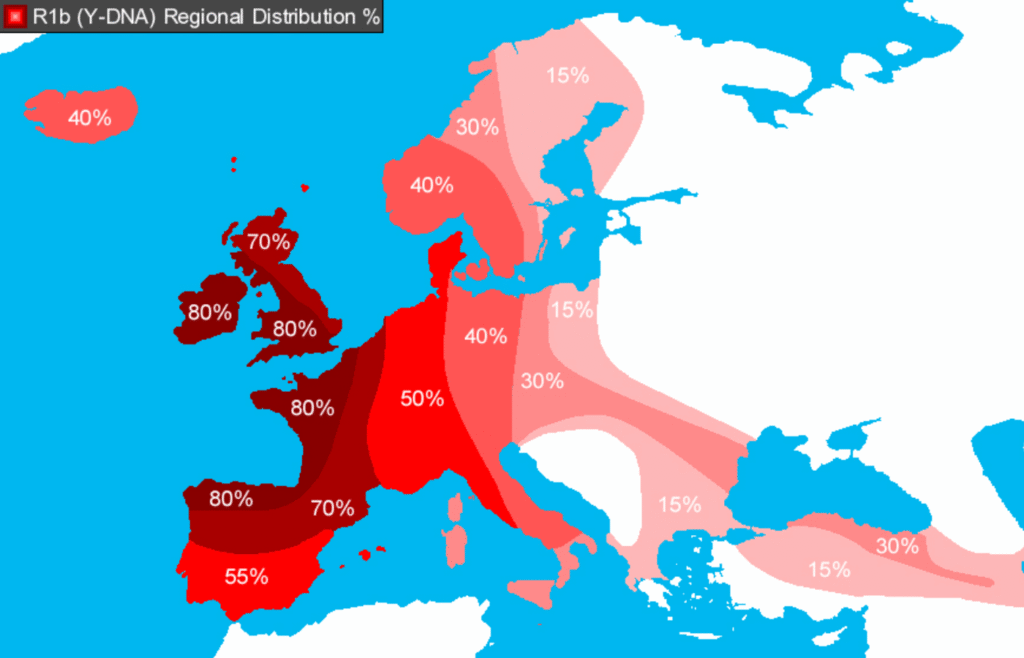
As these communities expanded, the native male lineages belonging to the Neolithic haplogroup subclade G2a2a1b vanished from the local gene pool. They were replaced by a singular continental lineage belonging to Y-chromosome haplogroup R1b-M269, specifically its dominant maritime-Atlantic branch R1b-P312 and its direct downstream subclade, R1b-L21. Within generations of the initial beachheads, this single line achieved a near-total monopoly over the male population, establishing the foundational lineage that remains the primary component of the modern British population.
Conversely, the small fraction of native Neolithic ancestry that survived this turnover was preserved almost entirely through maternal female lines. This genetic imbalance indicates that while indigenous farming men were largely excluded from reproduction, native women were absorbed into the expanding households of the incoming groups.23
This population movement altered the biological makeup of the island, serving as the primary vehicle for the introduction of a hereditary iron-retention mutation (the C282Y mutation of the HFE gene, responsible for hereditary hemochromatosis)28. This variant multiplied rapidly alongside the new lineages because it provided a survival advantage during eras reliant on iron-deficient agricultural crops. Furthermore, while these incoming populations introduced a heavily dairy-reliant pastoralist economy, they lacked the genetic mutation responsible for the ability to digest fresh animal milk into adulthood; they remained functionally lactose intolerant for centuries, continuing to process milk into cheese and yoghurt to lower the lactose content and make it safe to consume.20
The LBA Continental Influx
3,300 – 2,800 BP, (1,300–800 BC)
Additional Information: Bronze Age Britain / The Late Bronze Age Migration and the Celtic Vector
The large-scale migration between 1300 and 800 BC brought families from northwest continental Europe to southern Britain, altering the regional ancestry map and forming the biological foundation of the Insular Celtic profile. While the Early Bronze Age was dominated by the steppe-heavy Bell Beaker signature, the population of southern England experienced a secondary wave of movement during the Middle-to-Late Bronze Age.
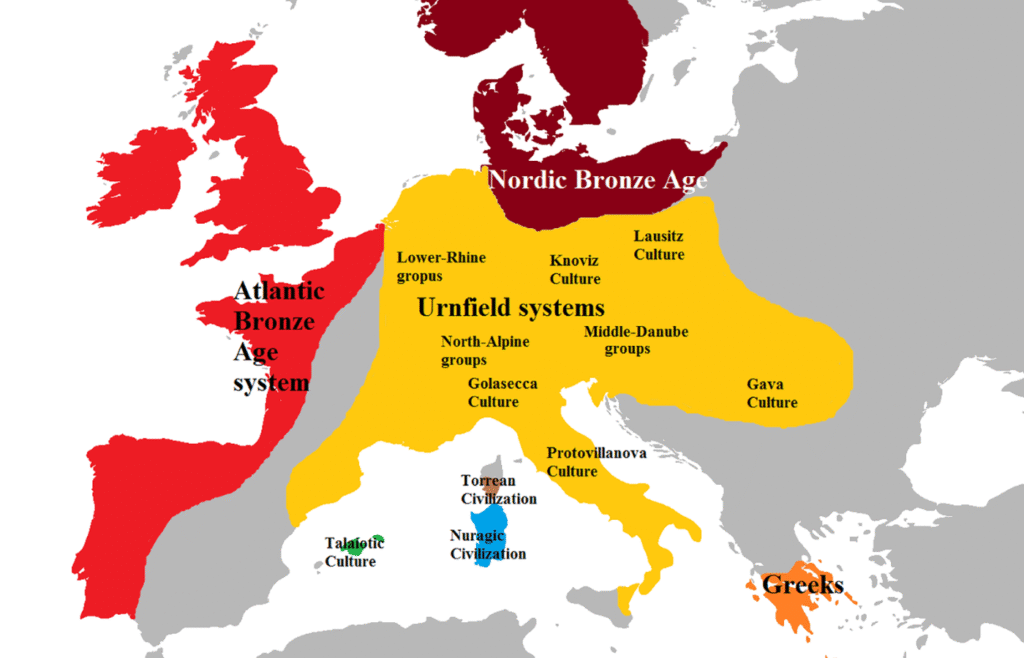
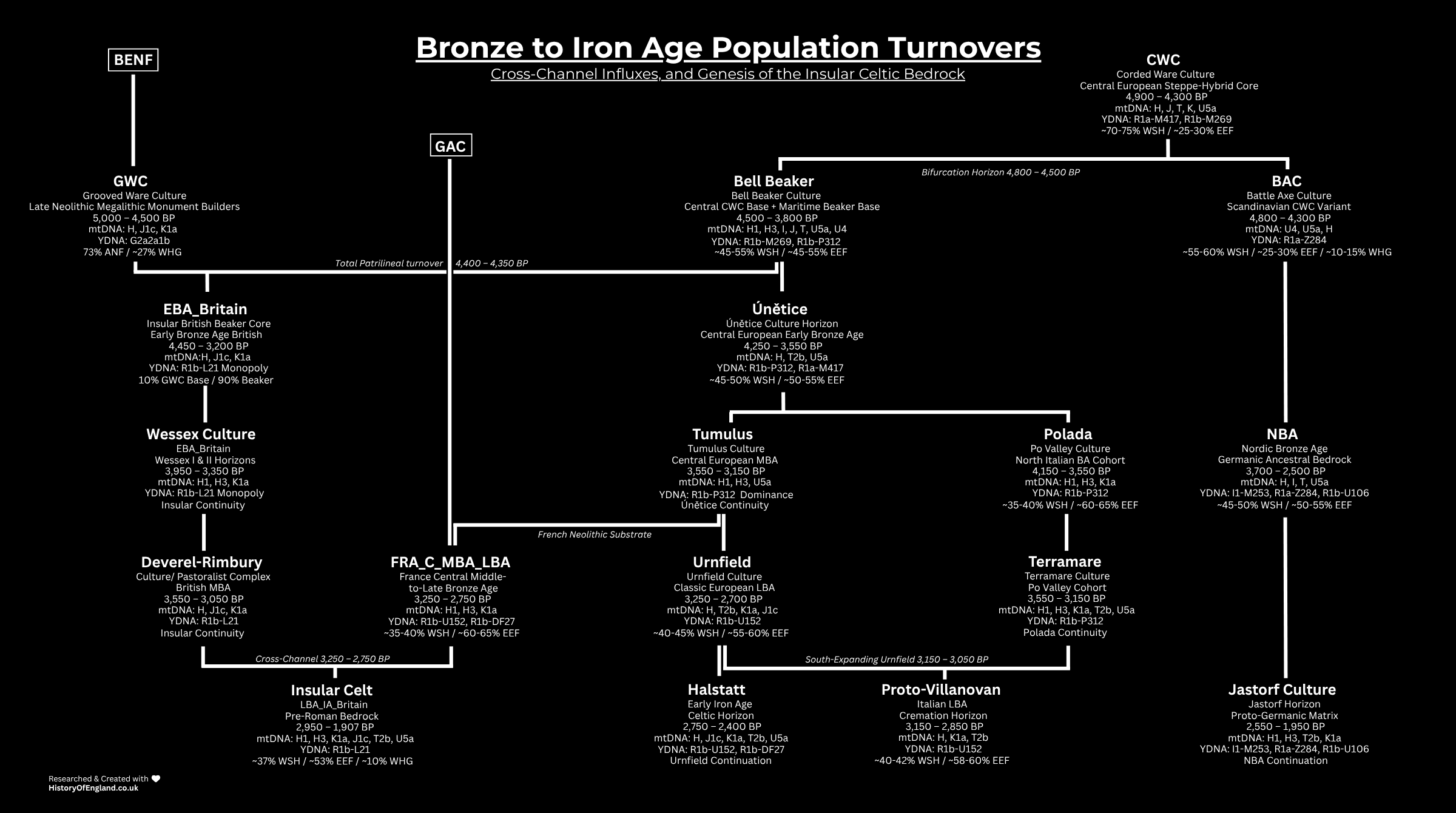
This multi-century migration was driven by the steady crossing of extended families from northern France and the Atlantic coast, closely matching the expanding FRA_C_MBA_LBA (France Central Middle-to-Late Bronze Age) culture horizons. Archaeologically, this genomic profile directly tracks the expansion of the Duffaits culture of west-central France and the broader Atlantic Bronze Age complex—a maritime trading network that linked southern England to Brittany and Normandy through the exchange of distinctive bronze axes, swords, and gold ornaments.24
The genetic composition of these incoming continental groups differed from the earlier Beaker pioneers. Rather than bringing additional steppe elements, these streams carried a higher concentration of early farmer ancestry. This migration caused a steady increase in early farmer ancestry across southern Britain, with the incoming continentals accounting for approximately 50% of the total ancestry of subsequent Iron Age populations in England—a genetic signal that fades as sampling moves north into Scotland and west into Wales.24
Crucially, this continuous influx did not disrupt the established paternal monopoly belonging to the Y-chromosome haplogroup R1b-L21 that had been fixed in the island by the Beaker transition. This genetic preservation indicates that the migration operated through the peaceful economic and marital integration of extended families rather than violent conflict. By balancing the ratio of steppe and early farmer components, this Late Bronze Age migration built the definitive biological baseline of the British Iron Age, locking in a country-wide ratio composed of 53% Early European Farmer (EEF), 37% Western Steppe Herder (WSH), and 10% Western Hunter-Gatherer (WHG) ancestry.24
Concurrently, this era marked the final resolution of the lactase persistence lag. High evolutionary pressure during the Late Bronze Age and early Iron Age locked the genetic mutation allowing adult milk digestion into near-total fixation across the population, turning the Insular Celts into great consumers of raw dairy. This specific ancestral profile and its matching language branch served as the biological foundation for the historical tribal networks of the island, creating an enduring bedrock that would run uninterrupted through the Iron Age down to the arrival of the Roman legions.
Formation of the Insular Celtic Profile
2,800 – 2,050 BP, (800 – 43 BC)
Additional Information: Iron Age Britain / Insular Celt Genetics: Bloodlines, and Identity, The Evolution of the English Language / The Brythonic Celtic Dialect
By the onset of the British Iron Age in approximately 850 BC, the blending between the older Beaker lineages and the Late Bronze Age continental migrations had settled into a distinct, highly uniform genetic signature (the Insular Celtic profile).Extensive sampling demonstrates that this genetic signature was characterized by a resilient ancestry balance that fixed a country-wide ratio composed of approximately 37% Western Steppe Herder, 53% Early European Farmer, and 10% Western Hunter-Gatherer ancestry24. This specific biological profile was closely correlated with the consolidation of Insular Celtic languages—most notably Brythonic across the south—advanced iron metallurgy, and trade networks that mirrored developments in northwest mainland Europe.
The genetic mapping of Iron Age remains excavated from communal cemeteries, elite chariot burials, and hillfort ditch systems across England demonstrates a state of multi-century ancestry stability27. Throughout this entire era, the local population remained homogeneous, showing negligible external gene flow or migratory disruptions. Tracking from major Iron Age sites proves that while the island was characterized by tribal fragmentation and shifting regional borders, the population remained uninterrupted, preserving the 37% steppe and 53% early farmer ratio intact24 27. Even during the widespread cultural adoption of the continental Hallstatt and La Tène traditions, physical artifacts moved via commercial trade lines rather than through disruptive population movements.
This stable, homogenous Insular Celtic matrix is evident in regional burial traditions, such as the Arras culture square-barrow and chariot burials of East Yorkshire. Despite their continental-style elite burial rites, genetic analysis of these individuals reveals they carried the exact 37% steppe and 53% early farmer signature and were genetically indistinguishable from the surrounding population, confirming a deep indigenous continuity.²⁴ Furthermore, the parental markers remained fixed, with the paternal R1b-L21 Y-chromosome lineages maintaining their overwhelming dominance.
This genetic matrix naturally transitioned into the Late Pre-Roman Iron Age (LPRIA) around 200 BC, a critical phase marked by the arrival of the Belgic tribal configurations crossing from Belgic Gaul into southeastern Britain. Archaeologically, this LPRIA transition transformed the island's landscape through the introduction of massive, low-lying proto-urban centers known as oppida, advanced wheel-turned pottery styles, and the localized minting of tribal gold coinage.
Paleogenomically, however, this Belgic influx caused zero autosomal disruption to the countrywide matrix. Because these incoming Belgic clans descended from the exact same northern French and Atlantic-façade ancestral source (FRA_C_MBA_LBA) that had already re-weighted southern Britain centuries prior, their integration left the existing genetic equilibrium completely unaltered.24
During the final centuries of this late pre-Roman Iron Age, this biological and linguistic framework expanded and solidified into the distinct regional tribal coalitions encountered during the campaigns of Julius Caesar and the subsequent Claudian invasion. Genomic mapping of late Iron Age remains demonstrates that despite fierce political rivalries, localized minting of tribal coinage, and shifting territorial borders, there was an absolute genetic uniformity spanning the major tribal confederations of the south and east24 27. The powerful Trinovantes and Catuvellauni controlling the agricultural heartlands of the southeast, the maritime Cantiaci commanding the cross-Channel trade networks of Kent, the chariot-driving Parisii of Yorkshire, and the vast Iceni confederation of East Anglia all shared the identical 37% WSH / 53% EEF / 10% WHG ancestry.
Further north and west, this enduring Insular Celtic bedrock anchored the massive territorial networks of the Brigantes spanning the Pennines and the weapon-oriented Silures occupying the rugged terrain of South Wales. While minor regional gradients existed—with northern and western groups retaining slightly lower concentrations of the Middle-to-Late Bronze Age continental farmer influx—the maternal and paternal lines remained resolutely fixed.34
Beyond the borders of southern and eastern Britannia, this deep-time biological matrix extended northward and westward to encompass the distinct non-Brythonic linguistic networks of the archipelago. In Ireland, the tribal groups that forged the Gaelic language branch developed an exceptionally close genetic relationship to the British Iron Age template, operating as a western extension of the same Early European Farmer and Western Steppe Herder ancestral ratio. Concurrently, across the rugged highlands and eastern coastal lowlands of northern Britain, the historical Pictish coalitions established a parallel state of indigenous continuity.15
High-resolution paleogenomic sequencing of Pictish remains from sites like Lundin Links and Balintore explicitly dismantles historical myths of an exotic or Scythian migration horizon, proving instead that the Picts descended directly from local, long-settled British Iron Age populations. This definitive research reveals a profound genetic closeness with their southern Brythonic neighbors, sharing the exact same paternal monopoly of the R1b-L21 Y-chromosome lineage and a highly conserved autosomal architecture.
Crucially, the data also uncovers a distinct pattern of genetic continuity through female lines, suggesting that Pictish society was organized around localized, matrilocal social structures that preserved maternal lineages within communities over generations.¹⁵ While the Picts and Gaels lacked the intense concentration of the secondary Middle-to-Late Bronze Age continental farmer influx that re-weighted the southern English counties, this overarching genetic affinity bound the entire Insular Celtic landscape together into a resilient, cross-channel biological network, ensuring that from the northernmost tips of Caledonia down to the Atlantic fringes of Ireland, the pre-Roman population shared a common, deep-seated indigenous ancestry.15
The Jastorf Horizon and North European Genome
2,550 – 1,950 BP, (600 – 1 BC)
The emergence of the Jastorf culture across Northern Germany and Denmark during the Pre-Roman Iron Age standardized the Continental Northern European (CNE) ancestral core, the pristine genetic baseline of the early Germanic peoples. Developing out of the Nordic Bronze Age, this population lived outside the Mediterranean Roman Empire. The CNE genetic pool was marked by the accumulation of the genetic variants for lactase persistence—which later underwent selection allowing widespread adult milk digestion—and an exceptionally high concentration of specific markers for pale skin pigmentation, blond or light hair variations, and blue eyes.
Autosomally, this CNE ancestral core represented a conserved, northern mix of Western Steppe Herder (WSH) and Early European Farmer (EEF) ancestries.²⁵ Because the Jastorf populations remained isolated from the cosmopolitan gene flow that reshaped Southern Europe, the CNE genome functioned as a biological foundation for the West Germanic lineages. This specific population makeup was anchored to two paternal Y-chromosome lines that experienced localized founder effects during the preceding Nordic Bronze Age: the paternal haplogroup I1-M253—an indigenous European lineage that underwent an intense Late Neolithic bottleneck before exploding into prominence as a signature North Germanic marker—and haplogroup R1b-U106, the localized West Germanic branch of the Indo-European steppe lineage.25
Over centuries of expansion, these Jastorf-derived groups migrated southwestward into the lowlands of Germany and eastward across the Baltic coast, creating the West Germanic tribal networks—including the Angles, Saxons, Jutes, and Frisians—that occupied the North Sea littoral.
This concentrated CNE genetic pool remained unmixed with Roman, Mediterranean, or continental Celtic lines throughout the entire Iron Age. By preserving an ancestral continuity from its Nordic Bronze Age foundation, this Germanic genetic profile formed the exact population pool that would later launch maritime migrations across the North Sea to the shores of Britain, triggering the major turnovers of the early Middle Ages.25

Admixture in the Roman Imperial Era
43 – 410 AD
Additional Information: Roman Britain
The integration of Britannia into the Roman Empire between 43 and 410 AD introduced soldiers, traders, and officials from across Europe and North Africa, but their genetic impact was confined to urban hubs, leaving ninety-nine percent of the rural British population untouched26. For nearly four centuries, the Roman administration deployed tens of thousands of legionaries, auxiliary troops, administrators, and merchant networks drawn from across the empire. This movement established multi-ethnic garrison settlements, veteran colonies, and trading ports at major regional hubs like Londinium (London), Eboracum (York), and Camulodunum (Colchester), linking the island to an imperial infrastructure spanning from the Atlantic to the Near East.
Genetic tracking paired with strontium and oxygen isotope analysis of Roman-era burial sites reveals a clear demographic distinction between urban military zones and the rural countryside. Biological analysis of urban cemeteries—most notably the late-Roman decapitated male skeletons excavated at Driffield Terrace in York—confirms that while the overwhelming majority of these individuals were local Britons showing continuity with the local Iron Age, specific outlier specimens preserve the footprint of first-generation immigrants carrying distinct North African, Levantine, and Southwestern European ancestral signatures. Analyses from these urban hubs reveal the introduction of new lineages, including various subclades of maternal mitochondrial DNA haplogroups L and M, alongside paternal Y-chromosome lineages like E-M215 and J-M172, which had been absent from the pre-Roman population.26
However, the ancestry data demonstrates that this cosmopolitan imperial mixture was strictly confined to major urban administrative hubs, trading ports, and frontline military barracks along Hadrian's Wall.The overall Roman genetic input to the British population was negligible, averaging less than one percent across the wider population. The vast majority of the island's population, living in rural agricultural settings and traditional farmsteads, remained entirely untouched by imperial gene flow.
The native Insular Celtic genetic profile continued throughout the four centuries of Roman occupation. Skeletons excavated from rural villa estates and native farmsteads show uncompromised ancestral continuity, maintaining the exact same 53% EEF, 37% WSH, and 10% WHG ancestral balance. This rural isolation ensured that when the western imperial administration collapsed and withdrew its legions around 410 AD, the underlying biological landscape of Britannia remained identical to its pre-Roman ancestors, preserving the indigenous genetic template that would face the subsequent Germanic migrations.26 27

The Anglo-Saxon Migration and Continental Turnover
450 – 700 AD
Additional Information: Anglo-Saxon England, The Evolution of the English Language / The Saxon Mutiny and Germanic Settlement
The migration of Germanic tribes from Northern Germany, Frisia, and Denmark between 410 and 650 AD triggered a massive genetic shift that permanently ended the Insular Celtic monopoly and laid the foundations of the English people. Following the collapse of Roman authority and the departure of the legions, tribal coalitions of Angles, Saxons, and Jutes crossed the North Sea to settle and establish control across eastern and southern Britain.This population movement stands as the primary biological and linguistic origin of the English ethnicity, establishing the Old English language and the genetic baseline of the lowlands.25
A landmark paleogenomic study analyzed early medieval skeletons to outline the scale of this migration, tracking the generation-spanning confluence of two distinct population packages: the incoming Continental Northern European (CNE) ancestral core and the indigenous Western British-Like (WBI) substrate. Individuals excavated from early medieval eastern cemeteries derived up to 76% of their total ancestry directly from the continental CNE North Sea zone. This data confirms that the migration was a multi-generational family movement consisting of balanced numbers of men and women rather than a minor military takeover25. The incoming groups brought high frequencies of continental markers, specifically the paternal West Germanic Y-chromosome lines R1b-U106 and I1, alongside the North Germanic signature marker R1a-Z284.
These continental lineages mixed with the surviving local Insular Celtic WBI population, which carried the paternal R1b-L21 marker. This tracking reveals a clear regional gradient across Britain, resulting in a nationwide early English ancestry share that averaged an even 50% core continental CNE ancestry and 50% native WBI Celtic ancestry. The highest continental Germanic impact was concentrated across East Anglia, Yorkshire, and the southeastern counties, where some early cemeteries exhibited nearly unmixed continental profiles. This is contrasted against a lower genetic signature across Cornwall and Cumbria, where the local Celtic profile remained dominant, and Wales, where the native profile retained only a 15% to 25% Germanic share.25 34
This early medieval ethnogenesis transformed the biological landscape, creating a stabilized signature designated as the Early Medieval English profile. When broken down into prehistoric components, this 50/50 CNE-WBI confluence shifted national balances into a prehistoric ancestry profile composed of roughly 37% to 40% WSH and 60% to 63% EEF ancestry.²⁵ Concurrently, early English cemeteries reveal a social layout where elite weapon-burials were initially dominated by unmixed North Sea Germanic individuals, while lower-status graves belonged to unmixed Insular Celts.27
Within several generations, social absorption into Germanic households blended these lines, creating a homogeneous genetic profile that laid down the permanent biological and cultural foundations for the English nation.25


The Scandinavian Influx and Danelaw Settlement
865 – 1066 AD
Additional Information: Anglo-Saxon England / The Danelaw, The Evolution of the English Language / Viking Invasions and the Danelaw
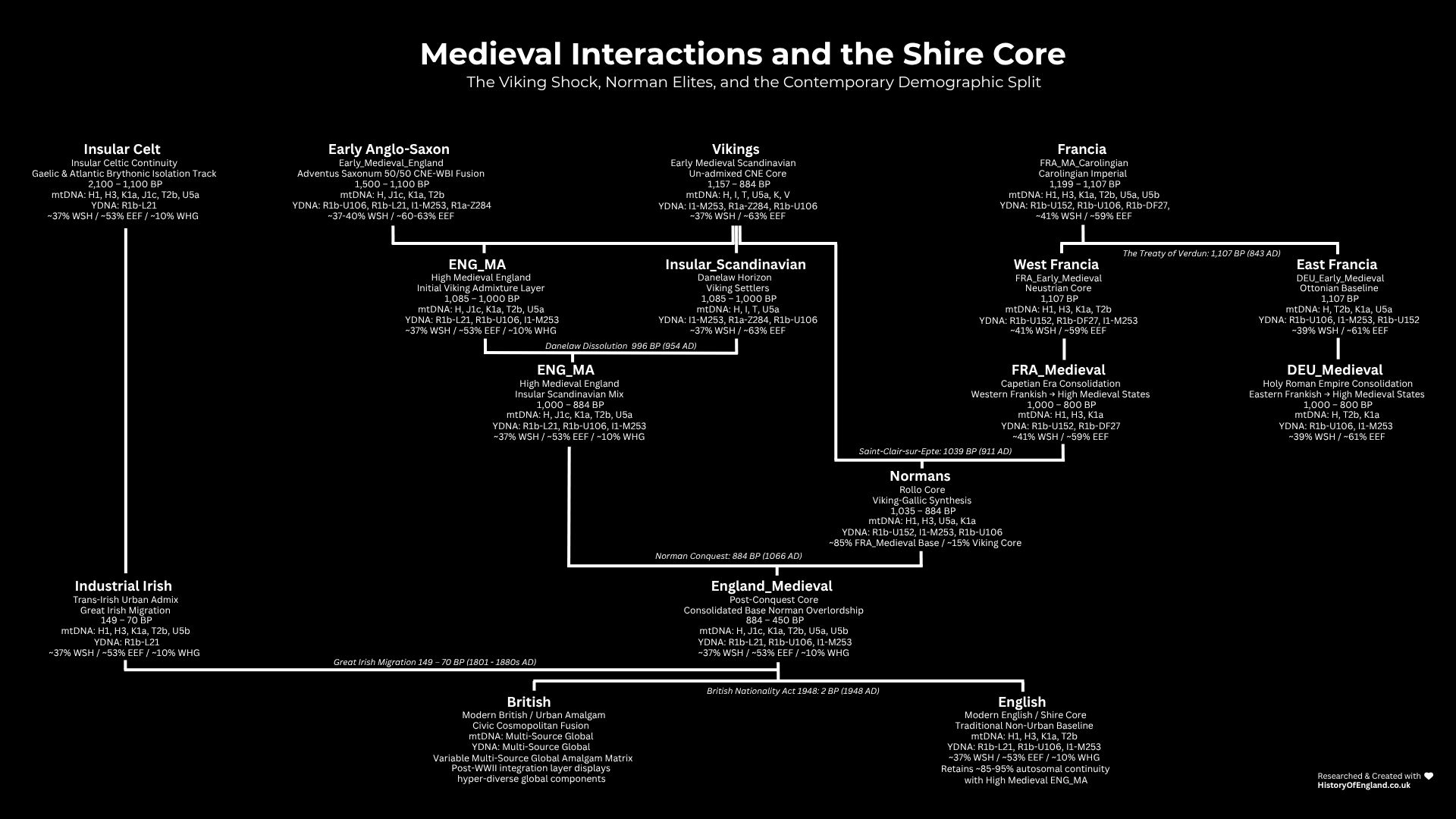
The invasion and settlement of Scandinavian Vikings between 865 and 954 AD introduced a distinct Nordic genetic layer into northern and eastern England, leaving a lasting regional ancestry share of ten to twenty-five percent within the Danelaw counties25. Initiated by the landing of the Great Heathen Army in 865 AD, this migration targeted the northern and eastern shires, dismantling the Anglo-Saxon kingdoms of Northumbria, East Anglia, and eastern Mercia to create an autonomous zone known as the Danelaw.
Excavations of Viking-era burial sites—such as the winter camp mass graves at St Wystan’s Church in Repton, Derbyshire—unmasked the literal biological composition of this population. A landmark global Viking genomics study sequenced these medieval skeletons, confirming that many individuals interred in the Repton charnel carried clear Scandinavian profiles25. The study also identified a father-and-son relationship in an elite double-warrior burial, while strontium isotope data shows that the influx included significant numbers of Scandinavan women, indicating a rapid transition from raiding to domestic family settlement.
Fine-scale population mapping shows that this Scandinavian influx left a permanent genetic footprint concentrated across Yorkshire, East Anglia, the East Midlands, and the Orkney and Shetland islands25 34. The incoming Danish and Norwegian settlers introduced tracks of Scandinavian ancestry into the regional population pool, matching the distribution of paternal Y-chromosome lineages like haplogroup R1a—specifically its Norse sub-clades—and Nordic branches of haplogroup I1. Today, this legacy continues, with approximately six percent of the modern British gene pool carrying clear tracks of Viking-specific genetic markers.
Because these historical Viking populations were derived from the same ancestral Jastorf-related source as the earlier Anglo-Saxons, they carried a Continental Northern European (CNE) ancestral core. Consequently, this movement did not introduce a novel ancestral profile to the island; instead, it reinforced the pre-existing CNE-WBI profile of the early English population. This fusion stabilized the national gene pool into a late medieval English profile.25
When broken down into prehistoric components, this regional shift re-weighted the deep bedrock proportions of the eastern counties into a conserved northern European profile averaging roughly 37% WSH, 51% ANF, and 12% WHG, embedding thousands of Scandinavian place-names into the landscape while cementing a Nordic genetic layer into the north and east that remains visible in modern genetic maps.25
The Anglo-Norman Aristocracy
1066 – 1350 AD
Additional Information: Norman England / Norman invasion and the death of Harold II, The Evolution of the English Language / The Norman Conquest and French Court Vocabulary
The Norman Conquest of 1066 replaced the English political elite with a French-speaking aristocracy, but its long-term genetic impact on the general population was negligible, leaving the underlying Anglo-Saxon and Scandinavian biological fabric unchanged25. On 14 October 1066, Duke William of Normandy defeated King Harold Godwinson at the Battle of Hastings. This turning point introduced an Anglo-Norman aristocracy to the island, who built stone castles to enforce their rule, executed the land redistributions recorded in the Domesday Book of 1086, and confiscated the estates of the native Anglo-Saxon nobility.
Despite the scale of this political and architectural transition, genetic data shows that the Norman Conquest had a minor impact on the ancestry of the English population. A large-scale study tracking rural English communities across this period—including the cemetery at the Priory Orchard site in Godalming, Surrey—detected no population replacement across the 1066 boundary25. The incoming Norman-French settlers comprised an elite group of several thousand landholders, knights, and administrators who married within their own continental networks.
Furthermore, paleogenomic profiling reveals that even if this aristocratic influx had been larger, it would have caused minimal disruption to the ancestral components of the English gene pool. This is because the Normans were a hybrid population, formed when a minor Scandinavian Viking ruling elite (~15%) dissolved into a local northwest French baseline. Because the Anglo-Saxon-Danish profile of England and the incoming Norman-French barons pulled from closely related combinations of Western Steppe Herder and Early European Farmer ancestries, their integration left the regional proportions identical. This autosomal symmetry ensured that the 0.5% to 2% elite Norman baronage overlay sat on top of the established baseline without shifting the overall metrics of the population.25
While early medieval genomic studies detect a gradual, long-term shift toward ancestry related to Iron Age France, this signal represents a steady trickle of regional mobility rather than a sudden biological turnover. The vast majority of the country—the everyday agricultural and urban English population—remained stable25 34. This biological continuity demonstrates that the Norman Conquest functioned primarily as a dynastic transition, altering the laws, language, and power structures of the country while leaving the underlying English ancestry secure.

The Black Death and High Medieval Genetic Stasis
1348 – 1350 AD
Additional Information: The Plantagenet Era / The Black Death
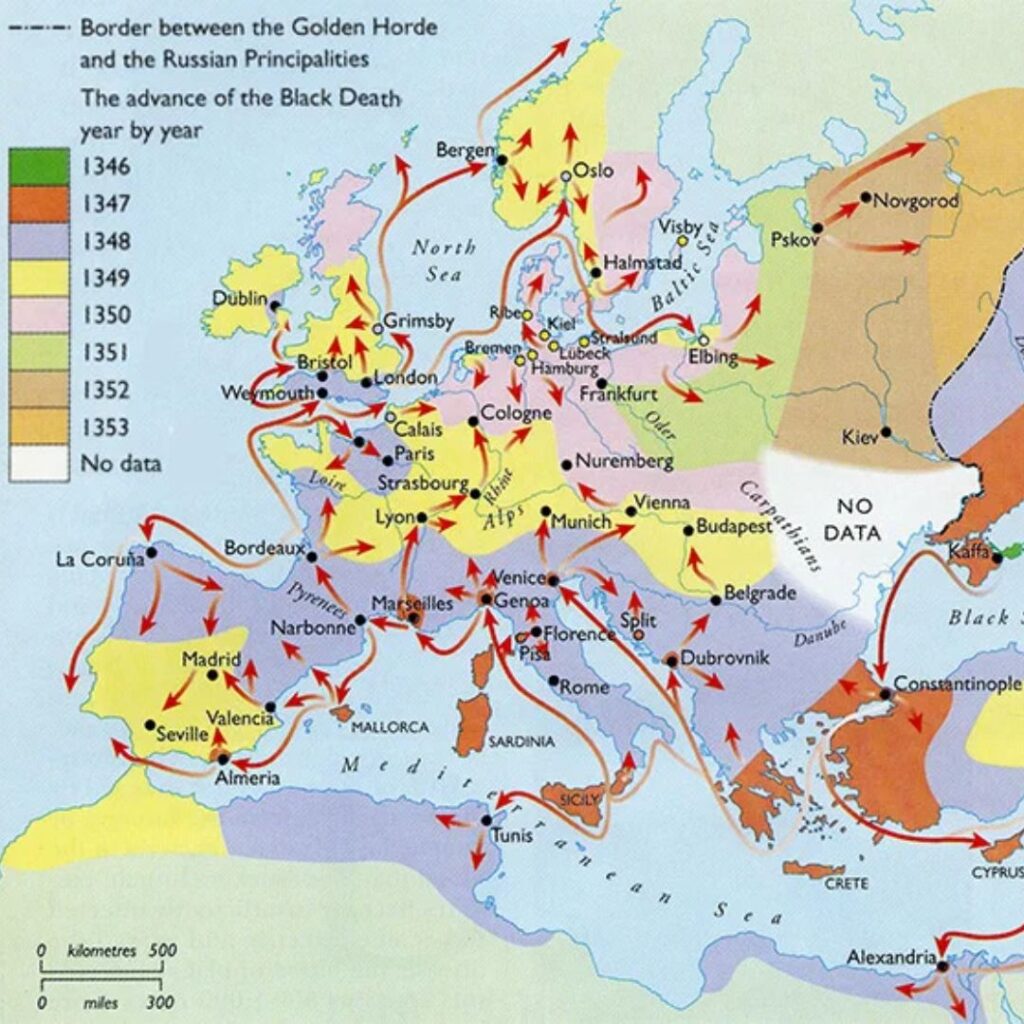
The Black Death pandemic of 1348 killed between thirty-five and fifty percent of the English population but caused zero regional ancestry replacement, acting as a uniform genetic bottleneck that locked the country into a centuries-long state of biological stasis25. In 1348, the arrival of the Black Death—a pandemic caused by the flea-borne bacterium Yersinia pestis—swept through the ports and shires, resulting in catastrophic mortality within an intensive eighteen-month window. This demographic shock collapsed the available labor force, caused the abandonment of thousands of farming villages, and altered the socioeconomic layout of the late medieval state.
Despite losing nearly half of the total population, paleogenomic tracking reveals that England experienced no ancestry replacement across this pandemic boundary. The plague killed across all social hierarchies, geographic counties, and regional ancestral profiles. Because it did not target any specific sub-population or open the borders to an external migration wave, the pandemic functioned as a uniform, nationwide genetic bottleneck.
Skeletal data extracted from dedicated high-density plague pits—such as the East Smithfield emergency burial ground in London—confirms that the post-pandemic survivors carried an identical ancestral profile to the pre-plague population. The underlying ratio of 37% WSH, 53% EEF, and 10% WHG ancestry remained undisturbed24 25. The surviving families simply expanded back into the vacated agricultural holdings over subsequent generations, locking the existing late medieval English genetic profile into place.
While the Black Death reconfigured the economic layout of England, it left the underlying genetic fabric of the shires intact, ensuring that high-medieval biological continuity ran securely down to the industrial era.25 34

The Great Famine and the Influx of Irish Labour
1845 – 1901 AD
Additional Information: The Victorian Era / The Great Irish Famine
The influx of over half a million Irish immigrants fleeing the Great Famine between 1845 and 1852 introduced a permanent layer of Atlantic Celtic ancestry into the urban English population pool, particularly across major industrial and port cities.
The destruction of Ireland's potato crop by blight in 1845 resulted in approximately one million deaths from starvation and disease, forcing an estimated two million more to emigrate. While many traveled to North America, hundreds of thousands of families took the shorter maritime route across the Irish Sea, moving toward the expanding manufacturing centres, railway projects, and shipping ports of Great Britain.
The population of Ireland carried a distinct branch of the Insular Celtic genetic profile, marked by a concentration of ancient Western Hunter-Gatherer (WHG) markers and the complete dominance of the paternal Y-chromosome line R1b-L21. When these families arrived in Victorian England, they brought about a lasting ancestry shift in urban areas.28
The incoming families settled within specific industrial districts, most notably across the docks of Liverpool—where the vast majority of Irish arrivals landed during the peak famine years—alongside the textile mills of Lancashire, the metal foundries of the West Midlands, and the working-class quarters of London. Over subsequent decades, these migrant families intermarried with the local English populations.
Because the Irish ancestry pool carried little of the Continental Northern European (CNE) elements that had migrated to the English lowlands during the early medieval period, this influx did not introduce novel continental variants. Instead, it re-introduced a deep-history Atlantic ancestry mix into urban settings, locking a permanent western Celtic layer into the regional geography of England's major cities.28 34
The British Nationality Act 1948 and Post-Colonial Influx
1948 – 1962 AD
Additional Information: Post War Britain / The British Nationality Act 1948
The passing of the British Nationality Act 1948 granted 800 million citizens across the British Empire the legal right to enter and reside in the United Kingdom, initiating the first major wave of non-European migration that introduced diverse global lineages into England's urban centers29. Faced with severe post-war labour shortages in public transport, heavy manufacturing, and the newly formed National Health Service, the state used this legal framework to draw in New Commonwealth workforce streams.²⁹
This post-war migration wave began on 22 June 1948 when the HMT Empire Windrush docked at Tilbury, carrying 492 West Indian passengers from the Caribbean. Over the next fourteen years, this migration corridor facilitated the entry of an estimated 500,000 New Commonwealth citizens into the country before the passage of the restrictive Commonwealth Immigrants Act 1962 ended the open-door policy. This influx introduced ancestral lines that had not previously interacted with the local population on a large scale, including sub-Saharan African and South Asian lineages marked by global haplogroups.
Ancestry tracking shows that this post-colonial migration brought diverse parental markers into urban areas across England. The Caribbean migration stream introduced sub-Saharan African maternal mitochondrial DNA lineages, such as haplogroup L, and paternal Y-chromosome markers, including subclades of haplogroup E. Concurrently, subsequent migration streams from the Punjab, Gujarat, and Mirpur regions of the Indian subcontinent introduced distinct South Asian ancestry profiles, marked by Ancestral North Indian components paired with maternal mitochondrial haplogroups like M and R, alongside paternal lines including lineages of R1a and J2.
These lineages remained concentrated within major metropolitan manufacturing hubs, forming diaspora communities in London, Birmingham, Manchester, Leeds, and Nottingham. Over subsequent decades, this post-colonial migration shifted the demographic profile of England's cities. While the rural regions of the country largely maintained their Anglo-Saxon and Insular Celtic ancestry, the urban landscape transformed into a mix of global genetic lineages.

Hyper-Globalization and Demographic Turnover
1990 AD - Present
Additional Information: The Age of Migration / Demographic Change and Social Cohesion
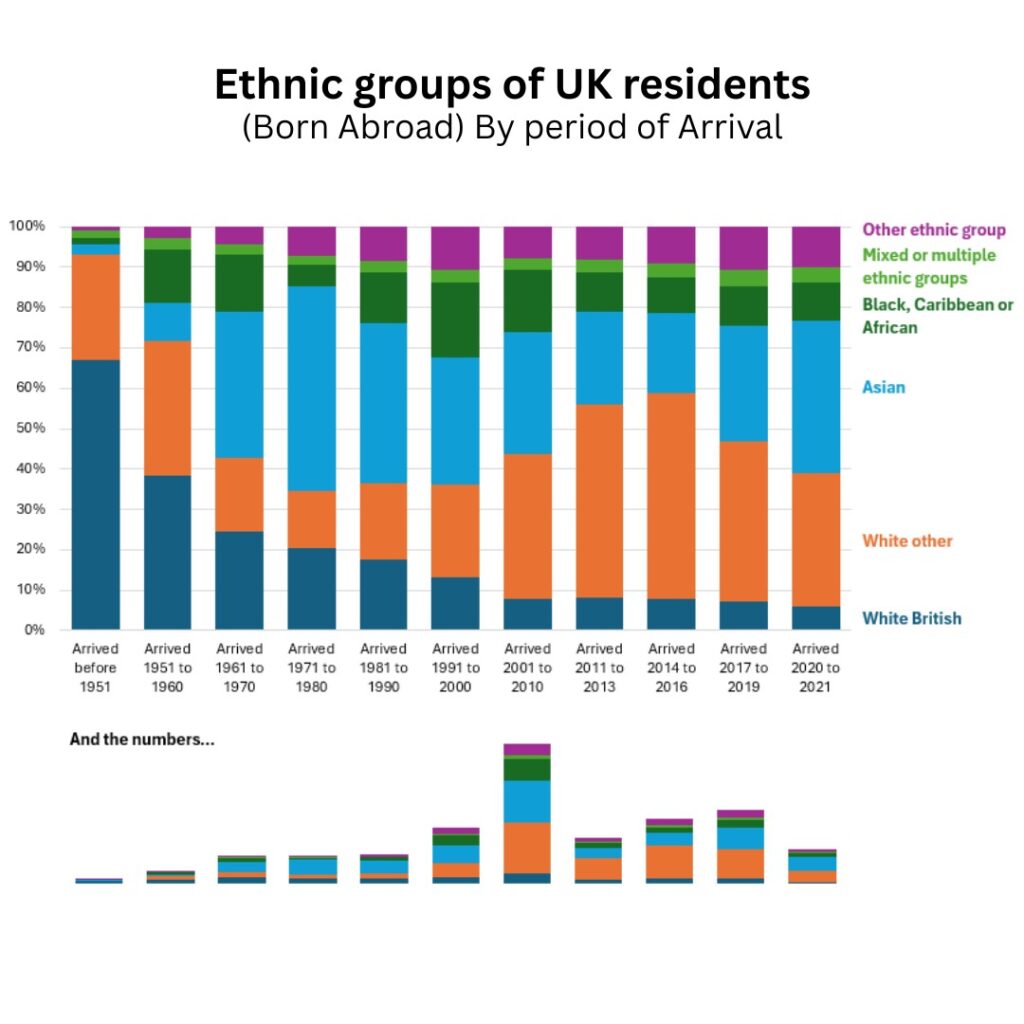
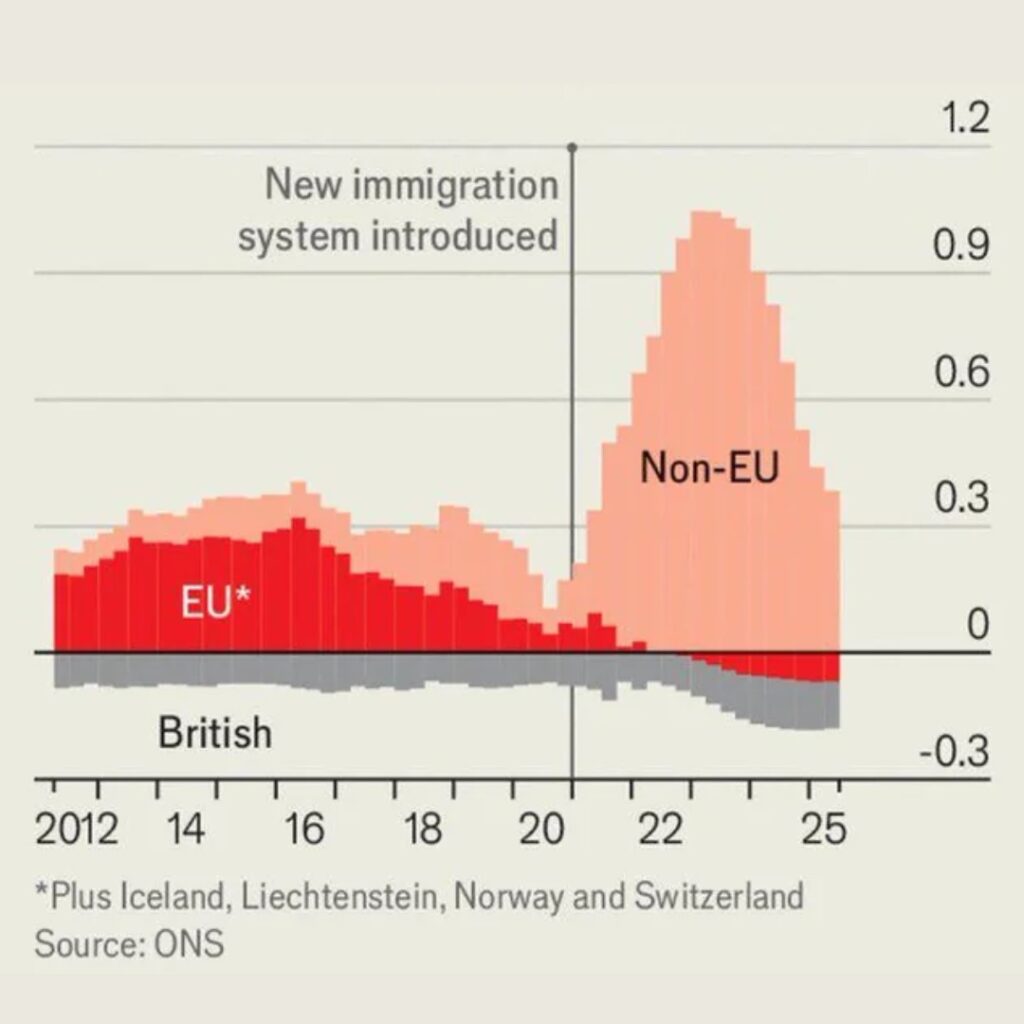
The transition of the United Kingdom into an international trade and population hub during the 1990s launched a wave of migration that increased the foreign-born population from 3.6 million in 1991 to over 13 million by 2026, representing nearly twenty percent of the total population. Successive administrations implemented points-based immigration policies and utilized the 2004 European Union enlargement—which granted freedom of movement to eight Eastern European nations—to integrate international labour streams into the service and manufacturing economies.30
Data from the Office for National Statistics (ONS) unmasked an unprecedented shift in the country's population profile. According to census records and annual datasets, international migration over successive decades has altered the demographic makeup of multiple urban areas. In London, the population identifying as White British declined to 36.8% of the city’s residents, down from 44.9% in 2011. Similar regional shifts occurred across other major manufacturing and trading hubs, with the White British proportion falling to 42.9% in Birmingham and 33.2% in Leicester31. This changing mosaic is reinforced by annual birth records, which track how continuous migration patterns steadily shift regional ancestry balances over successive generations.32
Annual estimates indicate that with record net migration adding approximately 2.4 million people to the population between 2021 and 2024, the broader population landscape experienced an accelerated change. This intake included humanitarian pathways between 2021 and 2023, which brought approximately 347,000 arrivals via bespoke Ukrainian, Hong Kong, and Afghan resettlement schemes.
This accelerated intake has created distinct regional differences across the geography of the country, driving a divergence in population profiles between the major metropolitan areas and the surrounding provincial regions. By altering the national uniformity, this layout concentrated global ancestral lineages across the urban centers while leaving the traditional population profile in continuity across the rural areas.
Further Information: Hyper-Globalization and Demographic Turnover


The Modern British Genome
Contemporary Era
The contemporary population genetics of England forms a layered and regional biological gradient, showing distinct variations between traditional rural shires and metropolitan centres. For over one thousand years following the post-Roman and Viking settlement eras, the English genome remained structurally insulated from external global gene flow due to the geographic barrier of the British Channel.
This long-term national genetic stasis, which preserved the late medieval signature intact across the shires, was fundamentally altered by the migration events initiated after the mid-twentieth century and accelerated by post-1990 economic shifts. This development brought about a permanent split in population mapping models, creating two distinct genetic profiles across the country.
The first genetic reality is located within major metropolitan areas, industrial cities, and international transport hubs, analyzed through the urban admixed model. These urban spaces function as open population zones where international migration has introduced an array of global lineages alongside the historic British profile. In these environments, the old ancestral blocks are altered, replaced by a diverse gene pool that integrates Sub-Saharan African, South Asian, and East Asian components, introducing non-European maternal mitochondrial lineages alongside paternal Y-chromosome markers.
Forensically, as used by the United Kingdom National DNA Database, these diverse urban environments cannot be evaluated using a single historical database. Instead, forensic scientists analyze distinct markers on the DNA chain using the DNA-17 profiling system, applying a mathematical correction factor known as Theta to account for random blending and population sub-structuring within these metropolitan settings. Crucially, this database profile represents a statistical average rather than a single human archetype, averaging out the distinct DNA markers of different individuals living within the same urban boundaries to serve as a legal safety buffer that prevents probability equations from overstating the rarity of a genetic match in court.33
Conversely, the second genetic reality remains intact within the rural shires, coastal areas, and traditional towns across the southwest, East Anglia, and the northern counties, recorded through the shire profile model. Across these rural zones, genomic sampling demonstrates that the local population maintains a high degree of direct ancestral continuity with the populations that established the early medieval state25 34. When this conserved English genome is broken down into its deep prehistoric components, it preserves an ancient ancestry composed of roughly 37% to 40% Western Steppe Herder (WSH), 51% to 53% Early European Farmer (EEF), and 10% to 12% Western Hunter-Gatherer (WHG) ancestry.24
On top of this prehistoric base sits the Layer 2 historic ancestry architecture, which models the explicit three-way genetic confluence that forged the modern English people:
Continental Northern European (CNE):
The North Sea Germanic ancestral core introduced during the early medieval migration wave from northern Germany, Denmark, and the Netherlands.
Western British-Like (WBI):
The indigenous Insular Celtic genetic substrate that formed the pre-Roman bedrock of the island.
Iron Age France (France_IA):
A massive, post-Saxon continental western European influx that entered the country through the south and east, steadily diluting the original early medieval CNE fractions over subsequent centuries
To isolate this profile, studies like the landmark People of the British Isles project utilized strict sampling criteria, choosing individuals whose four grandparents were all born within a thirty-mile radius of each other in a rural area34. This fine-scale mapping reveals that modern English regional ancestry shifts along a clear geographic gradient, with the highest concentrations of CNE and France_IA ancestry remaining heavily clustered in southeastern and eastern England, while dropping significantly as sampling moves north toward Cumbria and west toward Cornwall and the Welsh borders.25 34
Furthermore, the data outlines the clear genetic boundaries that separate the historical territories of the British Isles. Scotland, Northern Ireland, Wales, and Cornwall form distinct regional clusters on the map. The population of Cornwall, for example, is genetically closer to neighboring English groups than to the Welsh or Scots34. Within these western groups, the Welsh population appears genetically closest to the earliest post-glacial hunter-gatherer settlers of the island, carrying high WBI fractions entirely devoid of the post-Saxon France_IA influx.
While the Danish Viking occupations left no clear, widespread genetic signature across the historical Danelaw counties, the far northern Orkney Islands emerged as a distinct outlier on the map, deriving 25% of their DNA from Norwegian ancestors without replacing the indigenous population, a minor regional shift that slightly re-weights their deep-time components by increasing the overall WSH signature compared to the southern shires.34
Further Information: The Modern British Genome


English Genetics FAQs
Sourcing
1 Neanderthal Thoracic Morphology and Lung Capacity
García-Martínez, D., Bastir, M., et al. (2018). Ribcage measurements indicate greater lung capacity in Neanderthals and Lower Pleistocene hominins compared to modern humans. Nature. [Source Link]
2 The Chronological Origin of Anatomically Modern Humans
Hublin, J. J., Ben-Ncer, A., et al. (2017). New fossils from Jebel Irhoud, Morocco and the pan-African origin of Homo sapiens. Nature. [Source Link]
3 The Persian Plateau Hub Population Bottleneck
Vallini, L., Zampieri, C., et al. (2024). The Persian plateau served as hub for Homo sapiens after the main out of Africa dispersal. Nature Communications. [Source Link]
4 Identifying and Interpreting Apparent Neanderthal Ancestry in African Individuals
Chen, L., Wolf, A. B., et al. (2020). Identifying and Interpreting Apparent Neanderthal Ancestry in African Individuals. Cell. [Source Link]
5 The genomic landscape of Neanderthal ancestry in present-day humans
Sankararaman, S., Mallick, S., et al. (2014). The genomic landscape of Neanderthal ancestry in present-day humans. Nature. [Source Link]
6 Neolithic Farmer Expansions and Dilution of Archaic Footprints in Europe
Lazaridis, I., Patterson, N., et al. (2014). Ancient human genomes suggest three ancestral populations for present-day Europeans. Nature. [Source Link]
7 Mapping Multiple Waves of Denisovan and Neanderthal Admixture in Oceania
Browning, S. R., Browning, B. L., et al. (2018). Analysis of Human Sequence Data Reveals Two Pulses of Archaic Denisovan Admixture. Cell. [Source Link]
8 Quantifying Secondary Pulses of Neanderthal Introgression in East Asia
Vernot, B., and Akey, J. M. (2015). Complex history of admixture between modern humans and Neandertals. Science. [Source Link]
9 Endocranial Globularity and Archaic Neurogenesis Tracking
Gunz, P., Tilot, A. K., et al. (2019). Neandertal Introgression Sheds Light on Modern Human Endocranial Globularity. Current Biology. [Source Link]
10 Archaic Introgression and Adaptive Variation in Innate Immunity Genes
Dannemann, M., Andrés, A. M., and Kelso, J. (2016). Introgression of Neandertal- and Denisovan-like Haplotypes Contributes to Adaptive Variation in Human Toll-like Receptors. The American Journal of Human Genetics. [Source Link]
11 The Genomic Landscape and Selection of Archaic Epidermal Genes
Sankararaman, S., Mallick, S., et al. (2014). The genomic landscape of Neanderthal ancestry in present-day humans. Nature. [Source Link]
12 Archaic Contribution to Circadian Pacing and Sleep Patterns
Dannemann, M., and Kelso, J. (2017). The Contribution of Neanderthals to Phenotypic Variation in Present-Day Europeans. [Source Link]
13 Evolutionary Selection of Archaic Metabolic and Lipid Pathways
Khrameeva, E. E., Bozek, K., et al. (2014). Neanderthal ancestry drives evolution of lipid catabolism in contemporary Europeans. Genome Biology and Evolution. [Source Link]
14 Initial Upper Palaeolithic Extinctions and the Campanian Eruption
Hajdinjak, M., Mafessoni, F., et al. (2021). Initial Upper Palaeolithic humans in Europe had recent Neanderthal ancestry. Nature. [Source Link]
15 West Eurasian Genomes and Upper Palaeolithic Demographics
Posth, C., Yu, H., et al. (2023). Palaeogenomics of Upper Palaeolithic to Neolithic European hunter-gatherers. Nature. [Source Link]
16 Defining the Early Ancestral Strata of Western Eurasia
Fu, Q., Posth, C., et al. (2016). The genetic history of Ice Age Europe. Nature. [Source Link]
17 Last Glacial Maximum Climate Boundaries and Permafrost Mapping
Clark, P. U., Dyke, A. S., et al. (2009). The Last Glacial Maximum. Science. [Source Link]
18 Late Glacial British Population Genomics and Ecologies
Brace, S., Diekmann, Y., Booth, T. J., et al. (2022). Dual ancestries and ecologies of the Late Glacial Palaeolithic in Britain. Nature, Ecology & Evolution. [Source Link]
19 The Population Genomics of the British Neolithic Turnover
Brace, S., Diekmann, Y., Booth, T. J., et al. (2019). Ancient genomes indicate population replacement in Early Neolithic Britain. Nature Ecology & Evolution. [Source Link]
20 Genomic Selection for Pigmentation Variants in West Eurasians
Mathieson, I., Lazaridis, I., et al. (2015). Genome-wide patterns of selection in 230 ancient Eurasians. Nature. [Source Link]
21 The Genetic Origin and Linguistic Expansion of the Indo-Europeans
Lazaridis, I., Patterson, N., Anthony, D., Vyazov, L., et al. (2025). The genetic origin of the Indo-Europeans. Science. [Source Link]
22 Origins of Autoimmune Disease Vulnerabilities in Steppe Pastoralists
Barrie, W., Yang, Y., Irving-Pease, E. K., et al. (2024). Elevated genetic risk for multiple sclerosis emerged in steppe pastoralist populations. Nature. [Source Link]
23 The Beaker Phenomenon and Genomic Turnover in Britain
Olalde, I., Brace, S., Allentoft, M. E., et al. (2018). The Beaker phenomenon and the genomic transformation of northwest Europe. Nature. [Source Link]
24 Large-Scale Middle-to-Late Bronze Age Migrations into Britain
Patterson, N., Isakov, M., Booth, T., et al. (2021). Large-scale migration into Britain during the Middle to Late Bronze Age. Nature. [Source Link]
25 The Population Genomics of the Maritime Germanic Migration Origins
Gretzinger, J., Sayer, D., Justeau, P., et al. (2022). The Anglo-Saxon migration and the formation of the early English gene pool. Nature. [Source Link]
26 Genomic Signatures of Mobility and Cosmopolitanism in Roman York
Martiniano, R., Caffell, A., Holst, M., et al. (2016). Genomic signals of migration and continuity in Britain before the Anglo-Saxons. Nature Communications. [Source Link]
27 Iron Age and Early Medieval Ancestry Shifts in England
Schiffels, S., Haak, W., Paajanen, P., et al. (2016). Iron Age and Anglo-Saxon genomes from East England reveal British and continental ancestry. [Source Link]
28 The Landscape of Insular Celtic Ancestry and Regional Iron-Overload Dispersals
O'Brien, M., Byrne, R. P., et al. (2024). The landscape of hereditary haemochromatosis risk and fine-scale population structure across Ireland and the United Kingdom. [Source Link]
29 Legal Frameworks and Post-War Commonwealth Demographics
National Archives of the United Kingdom. (1948). British Nationality Act 1948 (11 & 12 Geo. 6 c. 56). UK Statute Law Database. [Source Link]
30 Legal Statutory Frameworks for the 2004 European Union Enlargement
Government of the United Kingdom. (2004). The Accession (Immigration and Worker Registration) Regulations 2004 (SI 2004/1219). UK Statutory Instruments. [Source Link]
31 Decennial Census Outputs and Regional Ethnic Group Allocations for England and Wales
Office for National Statistics. (2022). Ethnic group, England and Wales: Census 2021. ONS Statistical Bulletin. [Source Link]
32 Long-Term International Migration and Annual Live Birth Registrations
Office for National Statistics. (2024). Live Birth indicators in England and Wales 2023. ONS Statistical Releases. [Source Link]
33 Forensic DNA Profiling Systems and Population Substructure Corrections
The Royal Society and the Royal Society of Edinburgh. (2017). Forensic DNA analysis: a primer for courts. The Royal Society. [Source Link]
34 The Fine-Scale Genetic Architecture of the British Population
Leslie, S., Winney, B., Hellenthal, G., et al. (2015). The fine-scale genetic structure of the British population. [Source Link]