
Bronze Age
Britain
Metallurgy and Migration: Bronze Age Britain
The Neolithic world drew to a close not through a sudden shift in geography, but with the arrival of a new material that completely changed daily life. Around 4,500 years ago, a major cultural and technological shift swept across the British peninsula as early metalworking practices crossed over from continental Europe. This change rapidly replaced the old landscape of stone-cleared forest plots and communal earthen enclosures with an era defined by smelting furnaces and the appearance of copper, gold, and bronze objects.
This new technology altered the entire structure of prehistoric society, shifting the focus of human activity away from collective monuments toward individual prestige and elite trade networks. Through this narrative we follow the development of these advanced metalworking techniques alongside the mastery of fire and mineral extraction. The chapters ahead trace the expansion of long-distance maritime trade—fueled by Cornwall's rich tin deposits—and explore the eventual emergence of defined tribal territories and field systems across the island.
Page Contents:

The Bell Beaker Expansion and Yamnaya Ancestry
~5,300 - 4,600 BP (3,350 BC – 2,650 BC)
Additional Information: The Genetic History of the English People / The Yamnaya Horizon: Indo-European Steppe Pastoralists
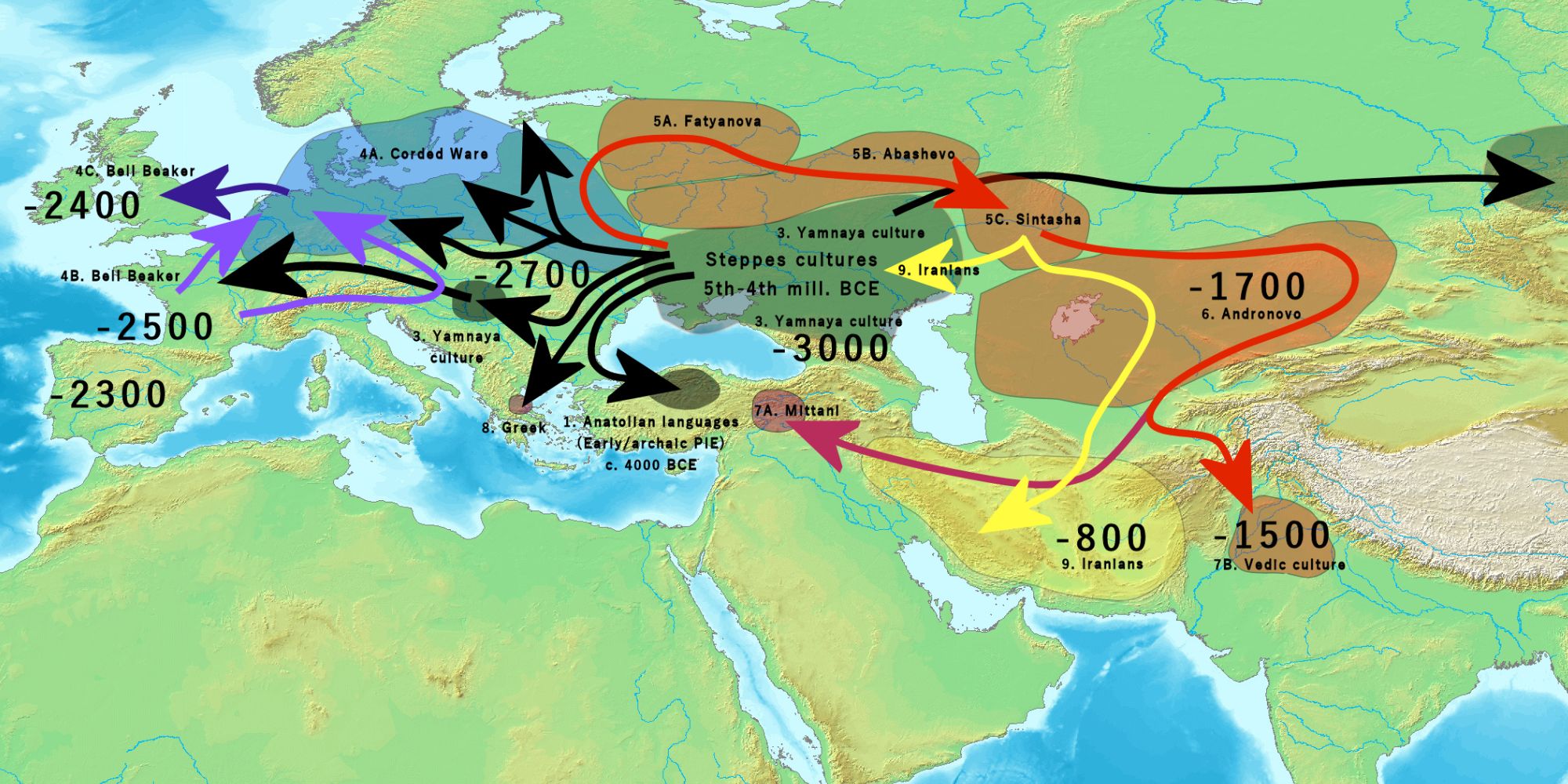
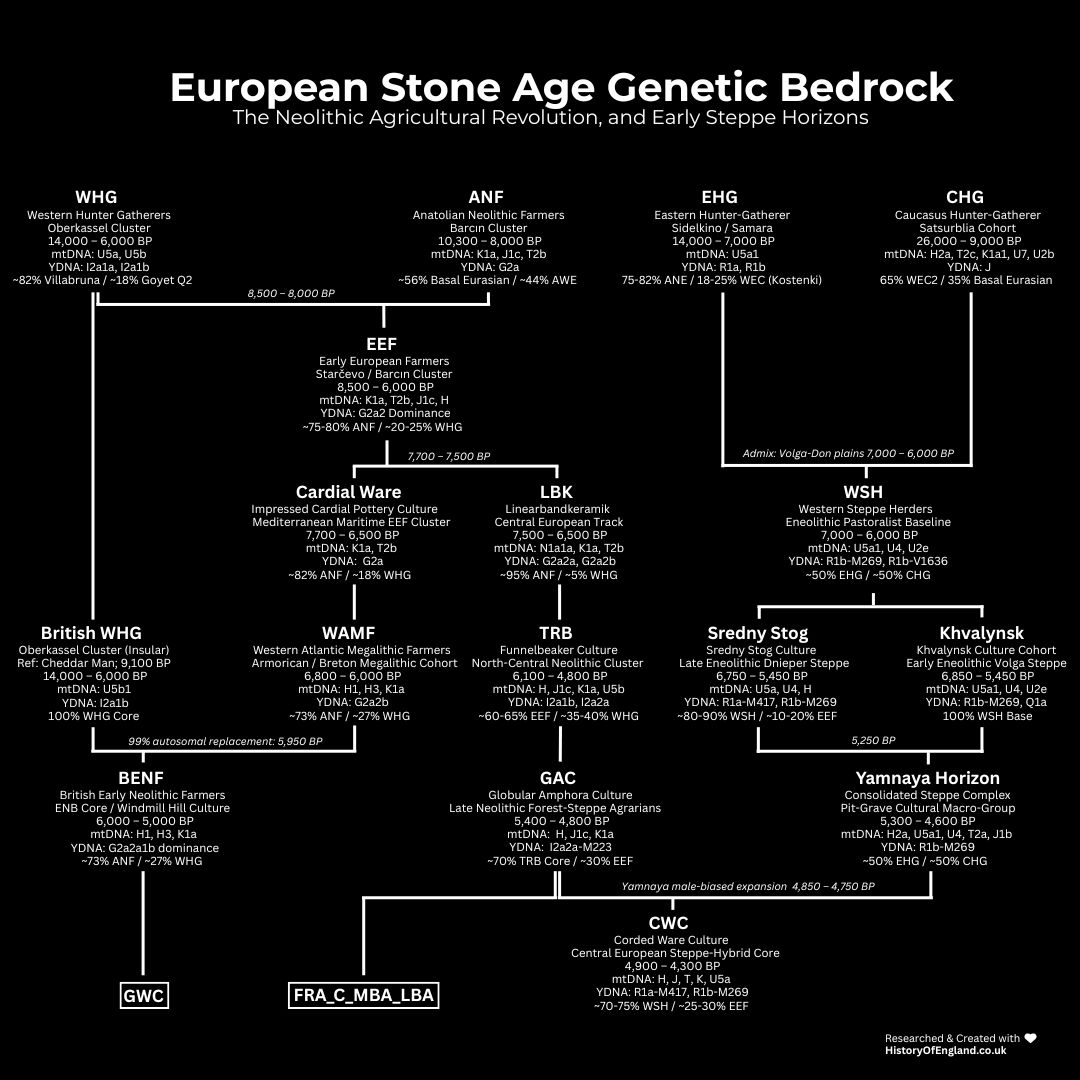
The initial drivers behind Britain’s metal-using revolution were forged across the Pontic-Caspian steppe between 3,350 and 2,650 BC, where the rise of the Yamnaya culture created a highly mobile society of nomadic pastoralists. By mastering heavy four-wheeled wagons, animal traction, and early horse domestication, these herders successfully managed vast cattle and sheep aggregates across the open grasslands of the European interior.
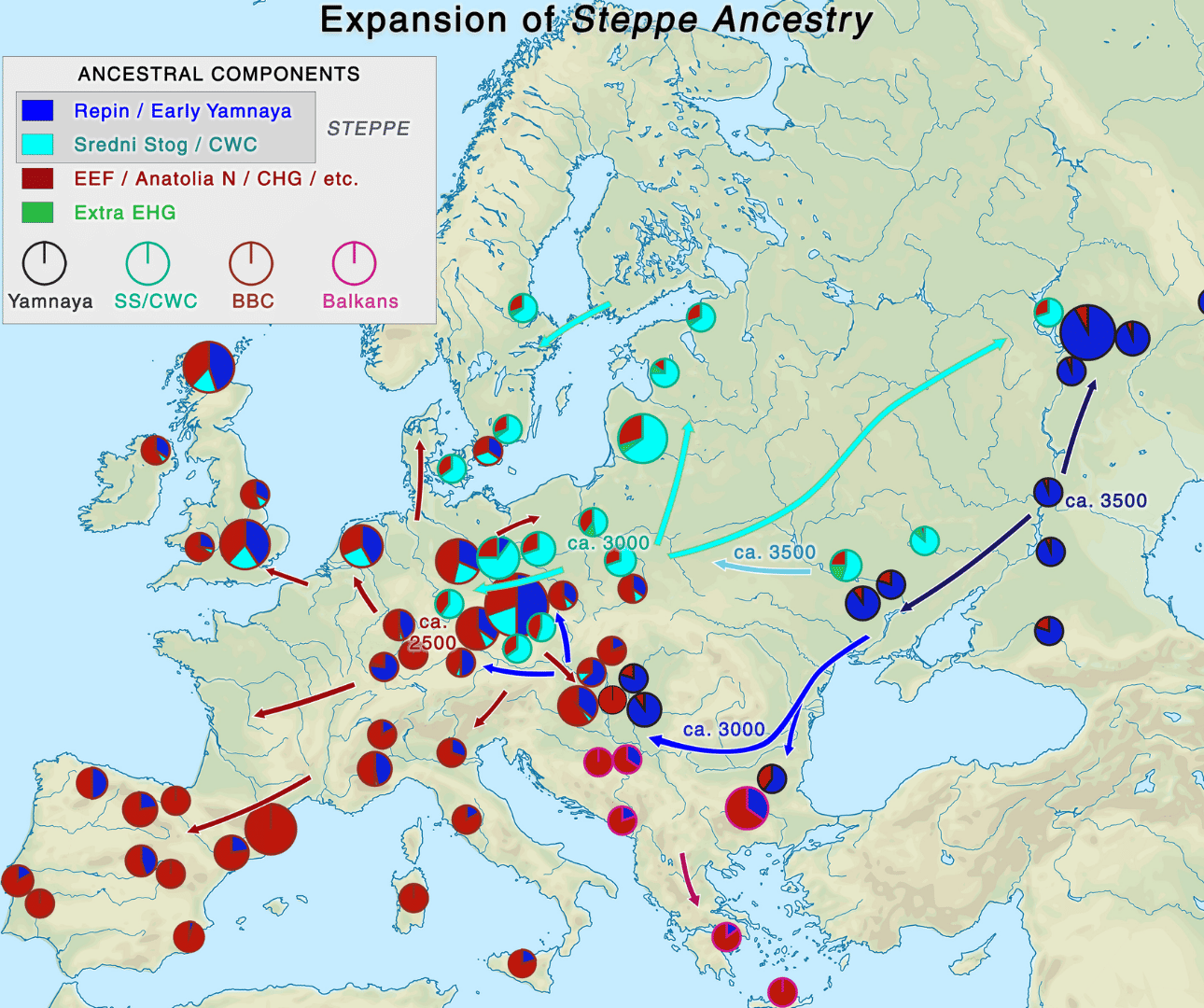
High-resolution paleogenomic tracking from ancient skeletal remains confirms that the Yamnaya possessed a distinct genetic profile that blended Eastern, Caucasus, and Western hunter-gatherer lineages into a robust, sun-tolerant population phenotypically characterised by dark hair, brown eyes, and tall stature. Driven by an aggressive, multi-directional expansion after 3,800 BC, this steppe population migrated rapidly across the continent, pushing eastward past the Ural Mountains to plant the Afanasievo culture in southern Siberia and advancing northwestward to form the monumental Corded Ware complex by approximately 2900 BC.
This continental expansion reached the British mainland in approximately 4,450 BP (2500 BC) through the arrival of the Bell Beaker people. Named after their iconic, inverted bell-shaped pottery, this group represented a continent-wide network of early copper metalsmiths, maritime traders, and individual warriors. Derived directly from the heavily steppe-admixed Corded Ware lineages of northern Europe, these incoming communities brought an overwhelming influx of Yamnaya-related ancestry onto the island, travelling as organised, multi-generational families rather than smaller groups of explorers. They transported a complete technological and social package that included single-grave burial traditions, stone wrist-guards, and copper daggers, bringing an end to the country's Stone Age isolation.
Within just a few generations, this population movement executed an astonishing 90% total genetic replacement of the indigenous Neolithic Early European Farmer population that had built Stonehenge, permanently dismantling the old communal structures that had flourished on the island. Archaeological and paleogenomic data reveals that this demographic turnover was driven by a total, complete patrilineal replacement, anchored by a deeply hierarchical warrior ethos.
Tracking of ancient Y-DNA proves that native Neolithic male lineages were systematically eliminated from the English gene pool, entirely replaced by a singular, continental Indo-European paternal lineage: R1b-M269, and specifically the downstream R1b-L21 subclade. Conversely, the remaining 10% of surviving Neolithic ancestry was preserved strictly through maternal mtDNA lines, tracking a complete genetic asymmetry where indigenous farming women were absorbed into expanding patriarchal Beaker households.
This sweeping biological transition successfully introduced early Indo-European speech and advanced metallurgy across Britain, locking down the dominant patrilineal signature that heavily defines the modern British male population today.
---------------------------------------------------------------------------
Ancient Forager Core (Pre-5000 BC):
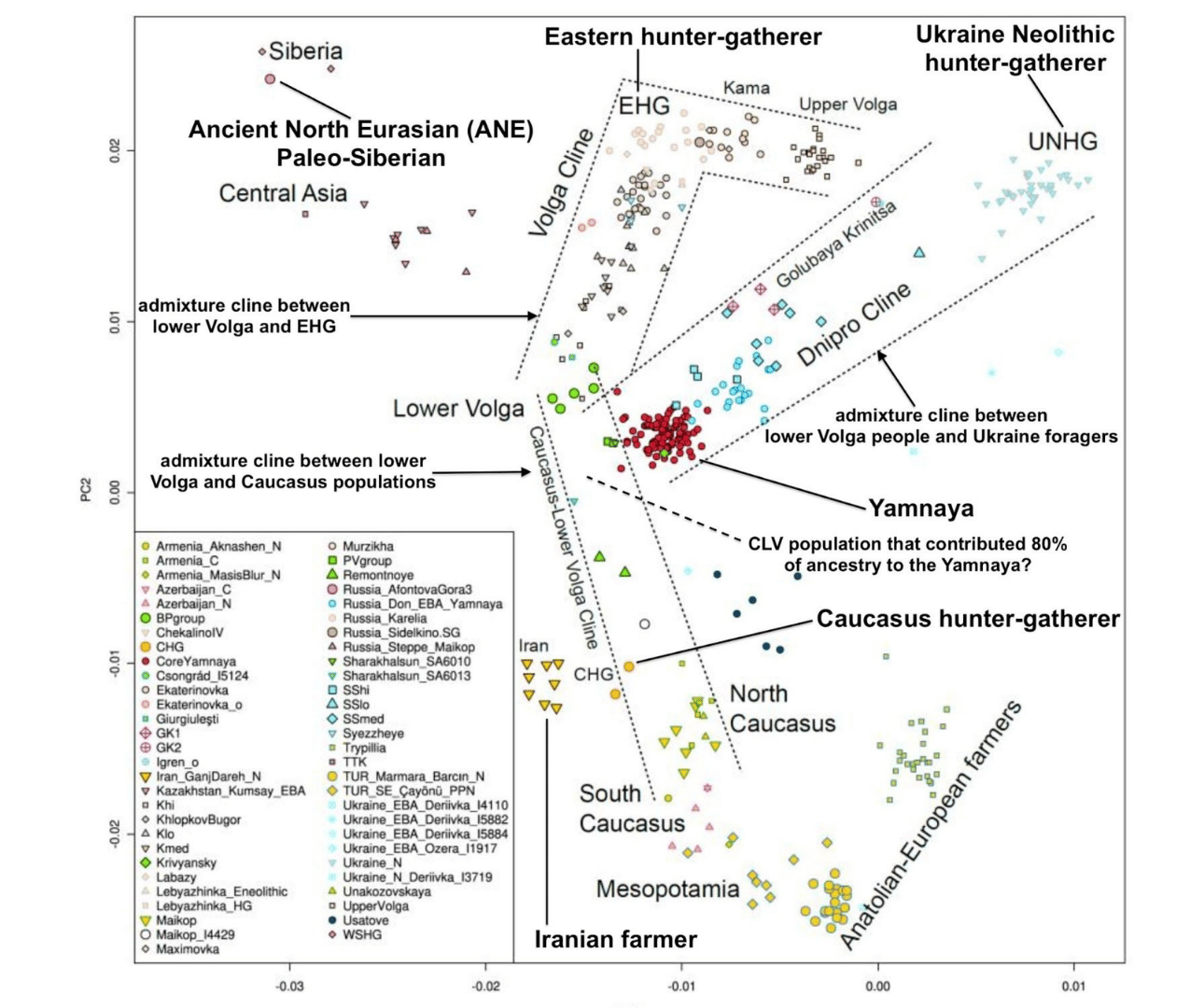
The foundational genetic substrate of the western steppe forms through the slow meeting of two deeply divergent ice-age survivor populations. Indigenous Eastern Hunter-Gatherers (EHG), who dominated the river valleys of modern Russia, gradually mix with Caucasus Hunter-Gatherers (CHG) expanding northward from the mountain shelters of Georgia.
Eneolithic Admixture (5000 – 4300 BC):
This deep blending reaches a critical mass during the Sredni Stog and Khvalynsk cultural horizons across the Dnieper and Volga river basins. This interaction creates the distinctive Western Steppe Herder genetic profile, an equal combination of Eastern and Caucasus hunter-gatherer ancestries that carries the earliest genetic variants for high stature and light skin.
Steppe Pastoralist Foundations (3350 – 2650 BC):
The classic Yamnaya culture develops directly from these Eneolithic lineages, building a highly mobile society based on four-wheeled wagons, animal traction, and early horse domestication. Paleogenomic tracking confirms they carried a robust Western Steppe Herder profile, phenotypically characterised by dark hair and brown eyes, optimized for managing vast livestock aggregates.
Corded Ware Expansion (2900 BC):
Driven by an aggressive, multi-directional movement out of the grasslands, steppe herders migrate rapidly across the European interior. They advance northwestward to establish the monumental Corded Ware complex, mixing with local Neolithic populations and altering the genetic baseline of northern Europe. Later (2500-2400 BC) the Beaker communities launch their large-scale migration across the channel, bringing an end to the isolation of the island population, and executing their near-total genetic replacement.
The Late Neolithic Plague and Decline
5,000 – 4,500 BP (3050 – 2550 BC)
Before the first continental Bell Beaker families ever landed on the eastern shores, the social fabric of Late Neolithic Britain was already buckling under a severe demographic collapse. For over a millennium, the descendants of the early Anatolian Neolithic Farmers (ANF) had thrived across the lowlands, constructing massive communal monuments, dense mega-henges, and sprawling timber complexes. However, high-resolution paleogenomic tracking from skeletal remains reveals that by approximately 5,000 BP (3050 BC), a catastrophic biological crisis swept through these agricultural communities. This population collapse was driven by the infiltration of the island's earliest recorded pandemic, caused by an ancestral lineage of the Yersinia pestis bacterium—the deadly pathogen responsible for the bubonic plague.
This prehistoric strain of the plague lacked the specific (ymt) gene mutation that allowed later medieval strains to flea-hop rapidly between rodents and humans, meaning it spread primarily through direct respiratory droplets and contaminated food supplies. In the dense, heavily populated ceremonial centers of southern England and Yorkshire, where hundreds of farming clans regularly gathered for seasonal assemblies, the respiratory pathogen found an ideal environment for rapid transmission.
Mass grave horizons excavated across the plains show multi-individual burials dug hastily without traditional grave offerings, where paleogenomic screening has successfully extracted the DNA of this ancient plague lineage directly from the dental pulp of the deceased. This continuous biological onslaught systematically devastated the native workforce, triggering a rapid abandonment of ancestral farming territories and causing rural agricultural output to plummet across the shires.
This widespread biological decay effectively shattered the collective social structures that had sustained the island for generations. With their populations severely depleted, the surviving Neolithic communities could no longer command the massive, coordinated labor forces required to build or maintain colossal earthworks like the giant cursus pathways and early henge rings. This severe population decline created a massive demographic and agricultural void across the fertile lowlands.
Consequently, when the heavily steppe-admixed Bell Beaker migrants arrived on the island around 4,450 BP (2500 BC), they did not encounter a dense, militarized indigenous empire, but rather a fractured but heavily depopulated landscape. This pre-existing biological collapse explains how the incoming Beaker families were able to execute their rapid, genetic replacement with almost no resistance, permanently closing the Neolithic chapter of British prehistory.
Bell Beaker Britain
4400 – 4050 BP (2450 – 2100 BC)
The arrival of the Bell Beaker population on the British mainland around 4,400 BP (2,450 BC) triggered an immediate reordering of the island's landscape, material culture, and social hierarchies. Moving inland from initial coastal beachheads along the eastern counties, these communities rapidly established a farming and
pastoralist lifestyle that completely replaced the ancestral traditions of the native Neolithic monument builders.
Rather than constructing massive, communal stone circles and earthworks for corporate ritual use, the incoming Beaker groups introduced a deeply individualistic social structure focused on personal status and lineage. This ideological transition is physically mapped across Britain by thousands of barrows—individual earth mounds housing single inhumation burials where the deceased was laid to rest in a crouched position, facing a specific orientation according to local tribal custom.
The graves of this early metal-using aristocracy reveal an extensive, standardised prestige package that was systematically buried with high-status individuals to broadcast their political and military authority. This distinctive burial configuration included fine, cord-imprinted ceramic beakers packed with imported mead or beer, polished stone wrist-guards designed to protect the arm from the snap of a heavy longbow string, and barbed-and-tangled flint arrowheads.
More importantly, these graves contain the earliest gold ornaments and tanged copper daggers found on the island, illustrating how the incoming lineages completely monopolised the earliest metalworking technologies to secure their dominance over local territory. This technological shift altered the daily existence of the farming communities, as the adoption of bronze tools allowed more efficient woodland clearing and the cultivation of heavy clay soils.
To secure their expanding agricultural territories and manage livestock wealth, these patriarchal households established permanent, sedentary farming settlements across southern England and Yorkshire, heavily cultivating emmer wheat and barley while herding vast numbers of cattle. The complete transformation of the country's social fabric was accompanied by the introduction of early Indo-European speech, which swept away pre-existing languages to establish the ancestral linguistic branches of the island.
By taking possession of the country’s main river networks and pasturage within just a few generations, these family units permanently pulled Great Britain out of its Stone Age isolation, locking down the genetic lineages and technological practices that would form the core foundations of the British Bronze Age until the network shifted around 4,050 BP (2,100 BC).

The Amesbury Archer and the First European Metallurgy
4,300 BP (2,300 BC)
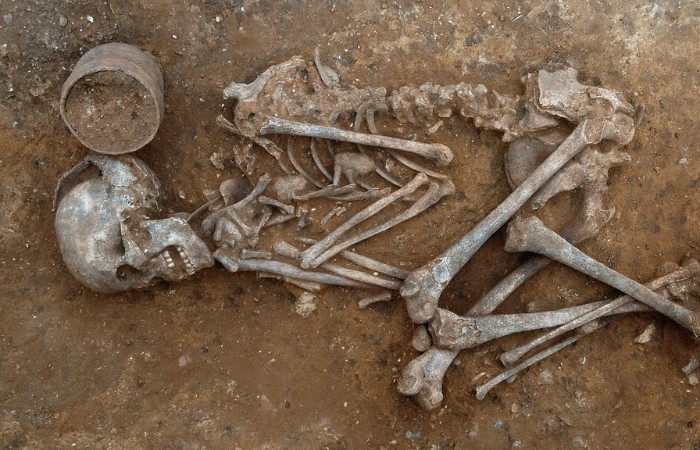
The physical proof of this continental migration wave and the arrival of advanced metalworking was discovered in 2002 near Amesbury, Wiltshire, where researchers uncovered the undisturbed grave of a male skeleton dated precisely to 4,250 BP (2,300 BC), known as the Amesbury Archer. Rather than carrying the native Western Hunter-Gatherer (WHG) or Early European Farmer (EEF) profiles of the old monument builders, the Archer belonged to the newly arrived, steppe-derived Bell Beaker population.
Forensic testing of the Archer’s teeth provided an explicit profile of his continental origins, where by analyzing oxygen and strontium isotope ratios preserved within tooth enamel, scientists proved that the Archer was not actually born in Britain. Instead, his biological signatures matched the cold, Alpine regions of central Europe, likely modern-day Switzerland, Germany, or Austria. He was a first-generation immigrant who traveled across the sea to settle in southern England, bringing the invaluable technical skills required to work newly introduced metals.
The grave goods buried with the Amesbury Archer reveal his elite status as both a master craftsman and a relatively wealthy warrior. His burial contained over 100 individual items, including three decorated beaker pots, eighteen flint arrowheads, bone clothing pins, a stone wrist-guard, and a collection of hunting daggers. Most importantly, the grave contained the oldest gold and copper artifacts ever found in Britain, alongside a small sandstone anvil used for metalworking. The Archer was a pioneering settler, and one who drove the rapid transition into the metal age, fundamentally proving that individual masters from the Alps were physically steering the technological shift.
---------------------------------------------------------------------------
Paternal Y-DNA Lineage:
Belongs to haplogroup R1b-M269, the definitive marker of the incoming Western Steppe Herder populations that replaced Britain's Neolithic lineages.
Maternal mtDNA Haplogroup:
Carries the U5b2 origin profile, an ancient European maternal line common among post-glacial hunter-gatherers and the early European metalworkers.
The Introduction of Bronze
4,200 BP (2,200 BC)
The earliest phase of British metallurgy relied entirely on soft, unalloyed copper and gold, however, by 4,150 BP (2,200 BC) metalworkers discovered that adding a small amount of tin to molten copper created a vastly superior alloy: bronze.
This breakthrough marked a massive realignment of human industry, tool production, and warfare across the island. Bronze was harder and significantly more durable than copper, allowing it to be melted and cast into complex, reusable moulds to create standardised, mass-produced tools.
The foundational tool of this new era was the bronze axe head, evolving over centuries from a simple flat blade into a flanged axe, and eventually into a pocketed, socketed axe. These metal tools allowed populations to clear forests, split larger logs, and till fields with an efficiency that was completely impossible with previous tools. The need to produce bronze completely re-engineered the economy of the island, creating the world's first complex mining networks and long-distance supply lines.
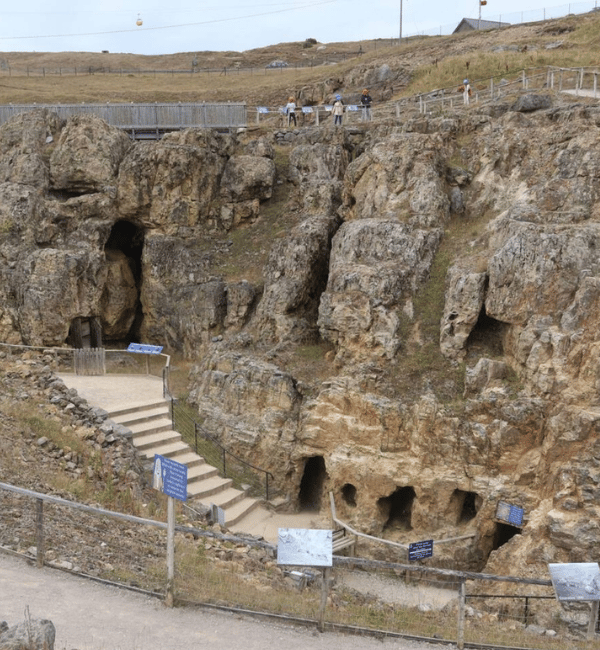
Because copper and tin are rarely found in the same geographic locations, communities were forced to establish deep-time trade routes, Copper being mined on an industrial scale from massive underground complexes like the Great Orme in North Wales, while tin was extracted from the river gravels of Cornwall and Devon.
The pairing of these two raw materials also required a level of regional organisation and even political stability, turning Britain into a primary manufacturing hub for the rest of Western Europe.
Wealth, Chiefdoms, and the Rise of the Elites
4,000 BP (2,000 BC)
The widespread adoption of bronze working permanently dismantled the communal, collective lifestyle that had anchored the British stone age for more than a millennium. Because the natural resources required to alloy bronze—copper and tin—were unevenly distributed across the European continent, direct control over mining hubs, smelting centers, and long-distance maritime trade corridors emerged as the premier source of political and military leverage. This economic reality sparked the rise of a heavily stratified class system dominated by localized chieftains and an elite warrior aristocracy. Warlords effectively replaced the old egalitarian frameworks, establishing a hereditary political hierarchy that would run through the rest of the Bronze Age.
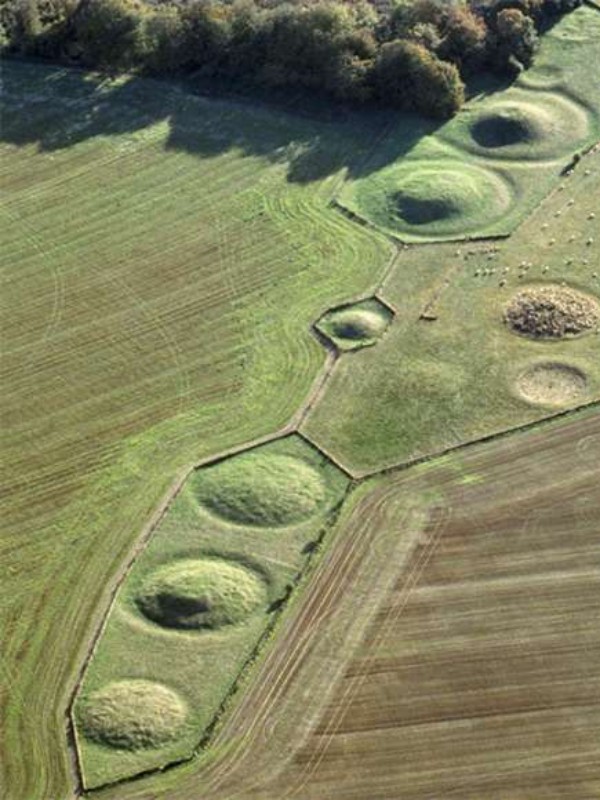
This transition from corporate tribal identity to individualised wealth is recorded across the physical layout of the landscape. The construction of massive, communal henges and collective long barrows was entirely abandoned, replaced by the excavation of thousands of individual round barrows positioned along prominent ridgelines and prehistoric tracks. These barrows functioned as highly visible, permanent landscape markers of dynastic lineage ownership over the surrounding agricultural land and livestock pastures.
Excavations of these early Bronze Age graves reveal a dramatic accumulation of international luxury items, unprecedented in their scale. High-status single-inhumation burials have yielded vast material assets, including solid Baltic amber beads imported via North Sea maritime networks, jet ornaments from Yorkshire, and exotic trade weapons like bronze daggers and halberds. Power was no longer administered by a collective tribal priesthood through shared ritual spaces; instead, it was held by individual warlords and merchant chieftains who directly controlled the smelting and distribution of metal.
Isotopic analysis of dental enamel from these individual burials confirms high geographic mobility among this ruling elite, verifying that power was directly maintained by highly connected networks of merchant-warriors. By establishing a rigid monopoly over the prime extraction centers of Cornwall and the Great Orme copper mine in North Wales, these dominant lineages locked down a permanent, hereditary political hierarchy. They transformed the old open Neolithic landscape into a series of strictly bounded territories, ensuring that wealth and weapon production remained concentrated inside a small, dynastic ruling class.
---------------------------------------------------------------------------
The emergence of a highly stratified Bronze Age society is documented through elite burials, regional trading ports, and massive weapon hoards:
Bush Barrow (Wiltshire):
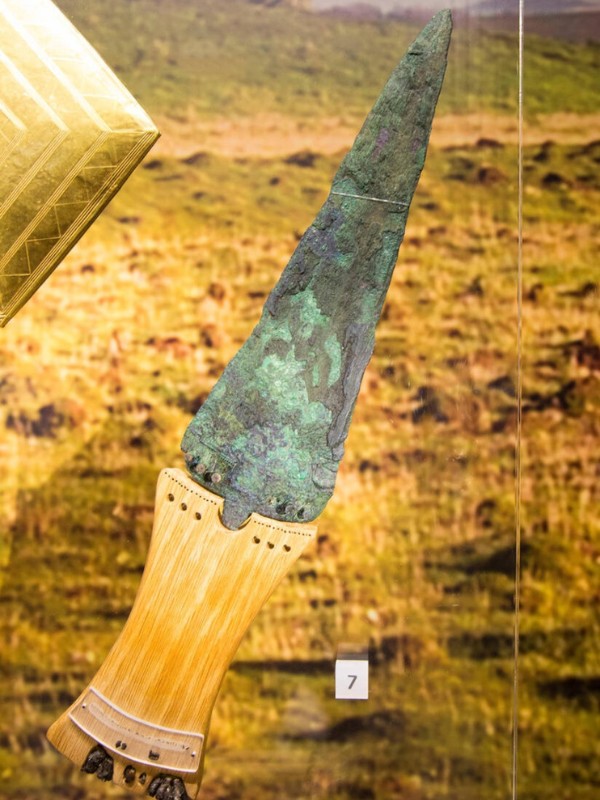
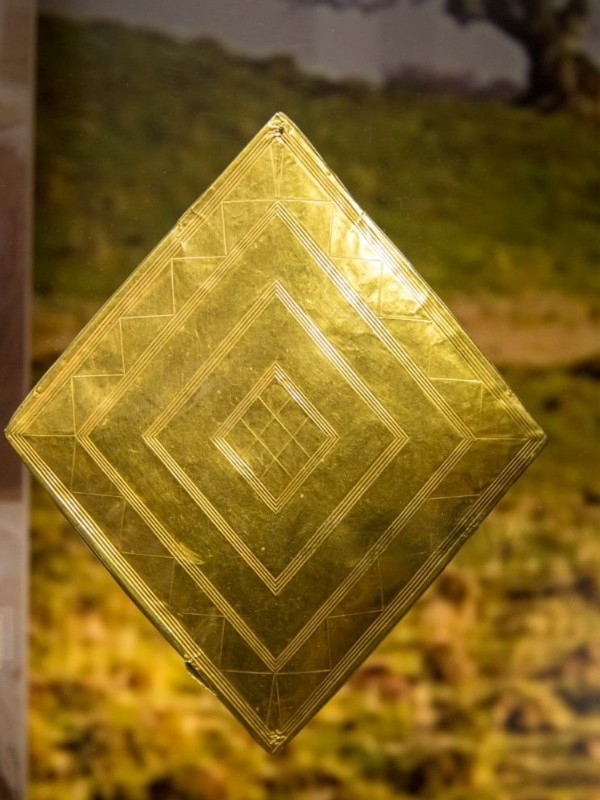
Located near Stonehenge, this elite Wessex Culture burial contained a male chieftain buried with a massive sheet-gold lozenge, a gold-belt hook, and three bronze daggers, demonstrating the supreme concentration of wealth in the hands of regional solar elites.
Ferriby (East Yorkshire):
Excavations along the Humber Estuary revealed the remains of three massive, sewn-plank wooden boats designed for cross-Channel navigation, proving the existence of a highly organized, elite-controlled maritime trading network that imported continental bronze.
Salcombe Hoard (Devon):
An underwater marine find containing hundreds of raw copper ingots, tin pieces, and bronze swords from the European continent, documenting a high-volume prehistoric shipping pipeline controlled by coastal chiefdoms.
Gwennap Mining Complex (Cornwall):
Archaeological tracking of early open-cast pit mines documents the systematic extraction of high-purity cassiterite tin, the primary strategic mineral used by British elites to leverage trade dominance over continental Europe.
The Wessex Culture
4,000 – 3,500 BP (2,000 BC – 1,500 BC)
Between roughly four thousand and three thousand five hundred years ago, regional trade monopolies peaked across southern England, forming a heavily stratified, prestige-goods-driven society known to archaeology as the Wessex Culture. Centred on the expansive chalk downlands of Wiltshire and Dorset, this powerful aristocracy controlled the busy crossroads of cross-Channel maritime trade and domestic metallurgical networks. They maintained a symbiotic relationship with the Armorican elite of northern Brittany, importing raw copper, exotic finished items, and unparalleled continental craftsmanship.
To assert their political strength, these dominant chieftains completely repurposed the ancient, sacred landscapes inherited from the Neolithic era. Around 3,500 BP, they masterminded the final major architectural phase of Stonehenge, raising the iconic central horseshoe of massive sarsen trilithons and the great outer stone circle. This colossal engineering operation was driven by a warrior elite who commanded the coordinated labor, logistical machinery, and food resources of the entire region.
The physical graves dug within this landscape provide a clear record of this era's supreme wealth, marked by a shift from collective burials to elite, individual interments under prominent round barrows. The primary burial site, Bush Barrow, situated within the Normanton Down barrow group, contained a prominent male chieftain interred alongside a polished fossil sponge-stone mace head with a bone-grommeted shaft, a bronze axe, and heavy bronze daggers. His principal weapon featured a bone hilt inlaid with over fourteen thousand microscopic gold pins, each thinner than a human hair, arranged in a dense chevron pattern. Across his chest, the leader wore a large, finely engraved geometric gold lozenge featuring incised parallel lines executed with geometric precision, alongside a matching sheet-gold belt hook and two smaller gold lozenges.
These items prove that authority was directly tied to the possession, control, and ostentatious display of precious metals, capturing the final twilight of the early Bronze Age immediately before trade lines shifted toward the wider, mass-production networks of the Atlantic Bronze Age.
---------------------------------------------------------------------------
The development of these different bronze-using societies followed a clear timeline as early metalworking groups settled the landscape and changed their tribal customs:
The Beaker Culture (~2400 – 1800 BC):
The foundational pioneering phase of the Bronze Age, characterized by individual crouched burials under round barrows, the first use of copper daggers and gold ornaments, and the introduction of distinct, maritime-style bell pottery vessels.
The Food Vessel Culture (c~2200 – 1500 BC):
A regional Early Bronze Age culture prominent across northern Britain and Scotland, identified by rich single burials containing highly decorated, thick-rimmed ceramic bowls used to hold offerings for the dead.
The Wessex Culture (~2000 – 1400 BC):
The aristocratic peak of the southern shires, defined by a powerful warrior elite who controlled cross-Channel trade networks, wore microscopic gold ornaments, and masterminded the final stone phases of Stonehenge.
The Urnfield / Deverel-Rimbury Culture (~1500 – 1100 BC):
A Middle Bronze Age transformation where communities abandoned elite barrows in favor of flat, communal urnfield cemeteries, packing cremated remains into large, bucket-shaped pots while shifting daily life toward stable, enclosed field systems.
The Ewart Park / Atlantic Culture (~1000 – 700 BC):
The Late Bronze Age climax of mass industrial production, famous for vast metalwork hoards, the widespread manufacture of socketed bronze axes and slashing swords, and the creation of heavily fortified hilltop enclosures.
Stonehenge in Phases
5,000 – 3,500 BP (3,000 – 1,500 BC)
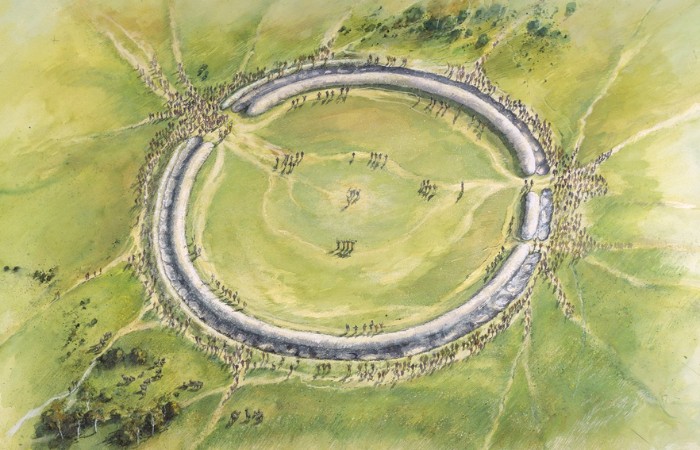
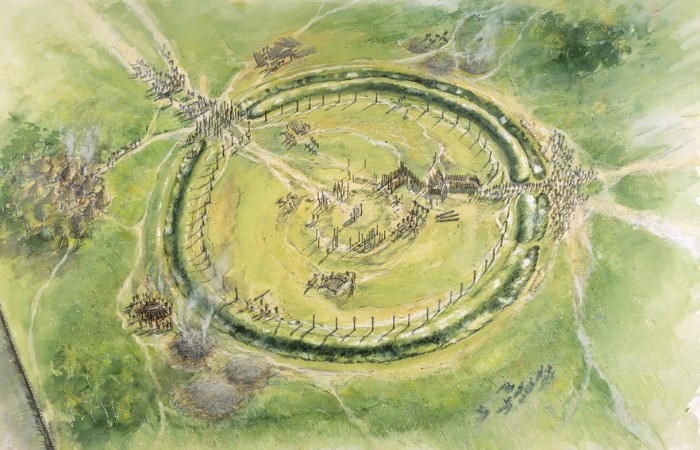
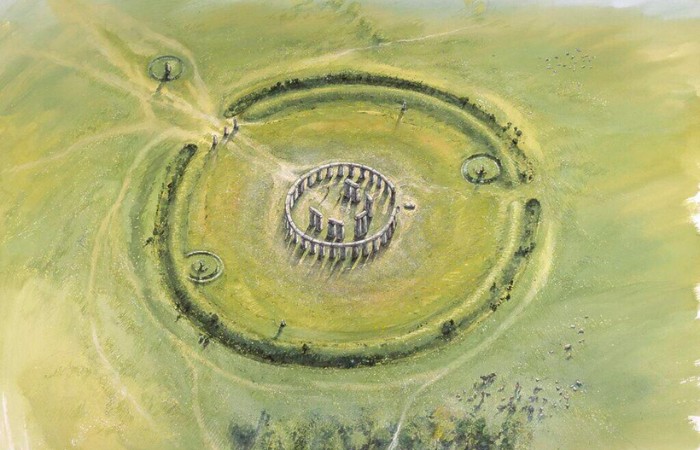
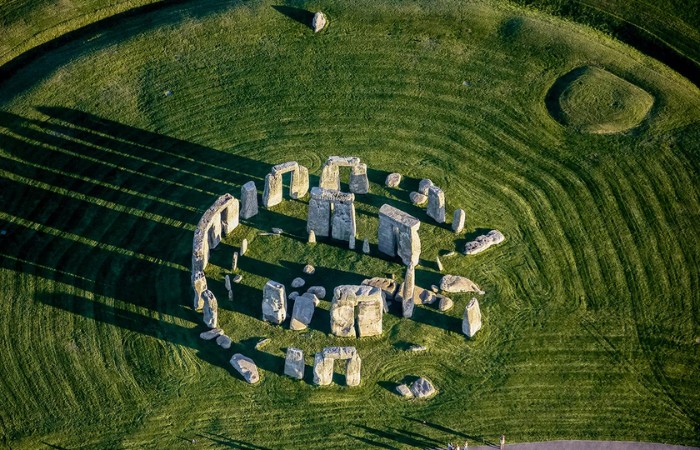
Situated on the vast chalk expanses of Salisbury Plain in Wiltshire, Stonehenge stands as the premier prehistoric ceremonial complex in Britain, functioning as a multi-phased sacred sanctuary, a dynastic cremation cemetery, and an enduring cosmic observatory. Rather than a single construction event, the monument was engineered over a span of fifteen hundred years by successive generations of Neolithic and Bronze Age societies, tracking the ideological transition of the island from a collective ancestral culture into a stratified warrior elite. Throughout its entire history, the primary function of the complex was to physically map the architecture of the cosmos onto the landscape, utilizing highly sophisticated spatial alignments to track key solar and lunar cycles.
The geographic positioning of the monument was carefully selected to exploit a natural post-glacial feature known as the Avenue, where ridges in the chalk bedrock naturally aligned with the solstitial axis, making the site an inherently sacred landscape to the initial builder communities. It sat within a highly integrated, sacred micro-region crowded with parallel ritual features, including the massive Salisbury Plain Cursus monument, extensive round barrow cemeteries, and nearby timber enclosures.
By anchoring the physical center of this monumental zone, Stonehenge functioned as a macro-regional temple where disparate populations from across the British mainland traveled along well-established overland pathways to construct alliances, resolve territorial disputes, and bury their tribal leaders. The enormous expenditure of human labor required to extract, transport, and hand-dress the stones confirms that the complex operated as the primary ideological and political engine of prehistoric Britain, transforming shifting religious worldviews into a permanent architecture of stone.
---------------------------------------------------------------------------
The development of the sanctuary progressed through three primary structural phases:
Phase 1 (~5,000 BP / 3,000 BC):
The monument began as a large circular earthwork enclosure measuring roughly 110 metres in diameter, consisting of a deep ditch and an internal bank hacked out of the white chalk bedrock using red deer antler picks. Inside the perimeter, builders dug a precise ring of fifty-six deep pits known as the Aubrey Holes, which held vertical timber posts or an early arrangement of unworked Welsh bluestones. This phase functioned as a massive, high-status communal cremation cemetery for a restricted dynastic elite.
Phase 2 (~4,500 BP / 2,500 BC):
During the late Neolithic Grooved Ware horizon, the timber posts were fully replaced as builders transported eighty unworked volcanic bluestones from the Preseli Hills in Pembrokeshire, Wales—a staggering logistical journey covering over two hundred miles across land and water. The main axis of the monument was permanently aligned with the solstitial alignment, tracking the summer solstice sunrise and the winter solstice sunset to anchor the agrarian calendar.
Phase 3 (~3,500 BP / 1,500 BC):
At the peak of the early Bronze Age, the dominant chieftains of the Wessex Culture executed the final, iconic architectural overhaul. They hauled massive sarsen stones weighing up to thirty tonnes from the Marlborough Downs, dressing the stone blocks with sophisticated woodworking joints like mortise-and-tenon and tongue-and-groove. They raised these stones into the iconic central horseshoe of five massive trilithons surrounded by the outer sarsen lintel circle, transforming the older ancestral cemetery into a monumental temple of solar prestige and individualized political authority.
Cornish Tin Mining and the Atlantic Network
3,500 – 2,800 BP (1,500 BC – 800 BC)
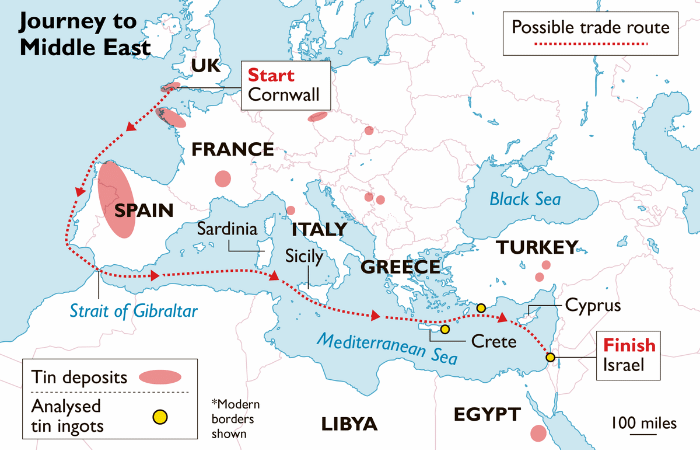
By the Middle to Late Bronze Age, the southwest peninsula of Britain had transformed into an essential hub of international commerce, due mainly to Cornwall's exceptionally rich deposits of alluvial tin, concentrated along river valleys and gravel beds. Because tin is a requirement to harden copper into durable bronze, Cornish miners held a near-monopoly over the single most critical raw material in Western Europe—launching a massive mineral rush across the region.
Miners used a process called streamworks to extract the metal, diverting the local river channels to wash away topsoil and expose heavy grains of cassiterite ore, once collected, it was then smelted into standardised, high-purity ingots. This booming industry fueled the expansion of the Atlantic Bronze Age, a maritime cultural and commercial alliance that flourished between 3,300 and 2,700 BP (1,300–700 BC). This complex was not a singular empire, but a sprawling network of seafaring peoples that linked the British mainland and Ireland directly to Brittany, western France, and the Iberian Peninsula—including modern-day Galicia, Portugal, and Andalusia.
This vast trade axis operated as a multi-directional economic pipeline. Rather than just trading raw ore, the coastal communities of Britain exchanged tin and bronze weapon types for high-value continental prestige goods, establishing a continuous flow of wealth onto the island. The network was defined by a shared maritime elite culture, where distinct populations communicated via a prehistoric Atlantic lingua franca and interchanged highly standardised metalwork, such as carp's-tongue swords and leaf-shaped spearheads.
The discovery of Mediterranean glass beads and Baltic amber alongside Cornish tin ingots confirms the vast geographic reach of this deep-time supply line. By dominating this prehistoric market, the tribal lineages of the southwest built a resilient economy, permanently embedding the British mainland into the wider political and economic networks of the European continent.
The physical proof of the maritime engineering driving this network was discovered in 1992 in Dover, Kent. Preserved within waterlogged silt, archaeologists uncovered a vessel dated to 3,500 BP (1,550 BC). Known as the Dover Bronze Age Boat, it stands as the oldest known seagoing boat in the world, proving that Middle Bronze Age societies maintained a permanent shipping bridge across the Channel. The engineering of the vessel reveals an astonishing level of woodcraft too, constructed entirely without metal rivets, the hull was built from oak timbers carved into interlocking planks and then stitched together with twisted yew branches. To ensure it was completely watertight, the builders packed the joints with a compound of animal fat and beeswax.
Measuring over nine metres long, the boat was designed for rough open waters, powered by up to sixteen paddlers, and possessed a cargo capacity capable of transporting tonnes of livestock, grain, and metal ingots between Britain and continental Europe.
The Deverel-Rimbury Culture
3,500 – 3,100 BP (1,500 BC – 1,100 BC)
Around 3,500 BP, a major economic transition occurred across the lowlands of southern England, shifting society from mobile, nomadic pastoralism to highly intensive, organised farming. Developed as an insular, indigenous achievement by the island's established native population—emerging alongside a steady, multi-generational influx of continental Urnfield-derived migrants—this structural shift is known to archaeology as the Deverel-Rimbury agricultural revolution. It was defined by the creation of the world's first permanent, managed field systems, laying out vast, regular networks of geometric land boundaries traditionally designated as "Celtic fields". Native communities cut deep drainage trenches, threw up massive earth and stone lynchets, built thick timber fences, and dug permanent, clay-lined waterholes to create distinct, private farming estates, completely dividing the old open landscape of the shires.
The daily reality of this agrarian shift required an intense level of coordinated, multi-generational labour. Native farming families lived in small clusters of circular roundhouses constructed from timber posts, wattle-and-daub, and conical thatched roofs, positioned directly alongside their fields and working the land on a strict seasonal rotation. They used heavy bronze palstave axes to fell timber and sophisticated wooden ards to till the soil, rotating crops between emmer wheat and six-row barley while utilising specialised, ditched enclosure pens to tightly manage their herds of shorthorn dairy cattle. Animal bone and pottery lipid analysis confirms a major economic dependency on intensive milk and cheese production, transforming the dietary habits of the Middle Bronze Age population.
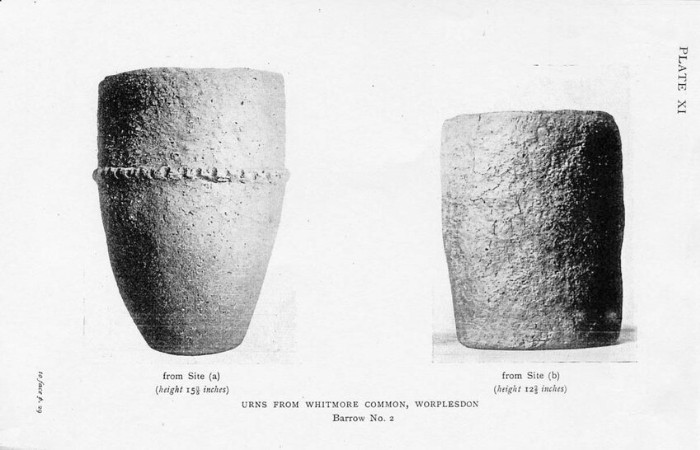
This agricultural regime also completely reshaped prehistoric religious and mortuary practices, where, mirroring the new focus on domestic boundaries and private land tenure, communal monument building was fully abandoned in favour of extensive local urnfields. The dead were cremated and placed inside distinctive, mass-produced Deverel-Rimbury coarseware ceramic vessel types—including heavy, cord-marked barrel, bucket, and globular urns—which were buried in large, dedicated flat cemeteries bordering the farmsteads.
This shift from monumentality to localized ancestor burial functioned as a primary legal anchor to the soil, utilizing the physical presence of the family urnfields to firmly assert hereditary ownership over the surrounding agricultural land and livestock pastures.
---------------------------------------------------------------------------
South Lodge Camp (Dorset):
A premier excavated settlement layout featuring an earthen enclosure that protected a cluster of circular timber roundhouses, proving the transition to sedentary, enclosed family homesteads.
Shearplace Hill (Dorset):
Revealed a highly organized agricultural grid system, featuring deep cattle droveways, fenced animal pens, and small, square fields designed for intensive crop cultivation.
The Ceramic Typology Standard:
Characterised by large, coarse, bucket-shaped urns decorated with simple finger-impressed plastic bands, designed primarily for large-scale grain storage and collective cremation burials.
Simons Ground (Dorset):
A massive urnfield cemetery containing hundreds of individual cremation urns buried in tight clusters, documenting a highly standardized, communal approach to ancestral burial outside traditional elite barrows.
The Late Bronze Age Migration and the Celtic Vector
3,300 – 2,800 BP (1,300 BC – 800 BC)
Additional Information: The Genetic History of the English People / The LBA Continental Influx
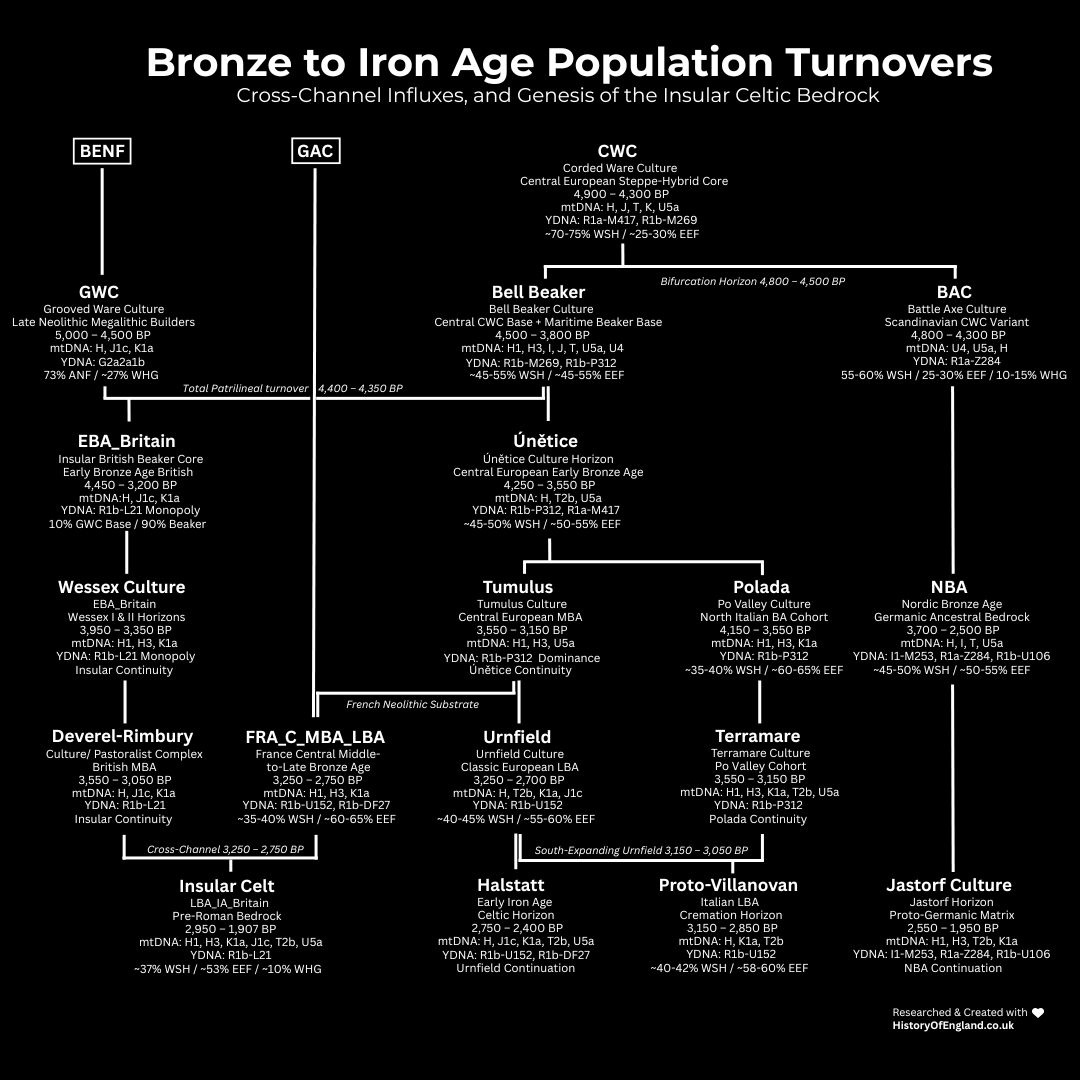
While the earlier Bell Beaker expansion established the fundamental genetic baseline of the island, high-resolution whole-genome ancient DNA (aDNA) audits have exposed a second massive prehistoric migration sweeping across southern Britain during the Middle to Late Bronze Age.
Between roughly 3,300 and 2,800 BP (1,300–800 BC), a multi-generational inflow of continental populations transformed the demographics of England and Wales, while leaving northern, non-Indo-European-speaking populations in Scotland largely untouched. Rather than a sudden, violent military invasion, this demographic shift operated through centuries of intense cross-Channel trade networks, familial alliances, and steady, small-scale migrations of family groups. Genomically, these incoming migrants carried a significantly higher ratio of Early European Farmer (EEF) ancestry, driven by the expansion of agricultural communities in continental Europe. This influx ultimately contributed up to half of the total genetic makeup of the subsequent Iron Age populations of southern Britain, indicating a profound population replacement that reshaped the island's ancestry.
This massive population movement provides the definitive, scientifically verified genetic vector for the spread of early Celtic languages into Britain. Paleogenomic tracking has confirmed that these continental migrants were directly related to the contemporary populations of present-day France and communities connected to the Central European Urnfield Culture. The Urnfield complex—named after their defining rite of cremating the dead and burying the ashes in expansive, flat ceramic cemeteries—is recognized by modern scholars as the primary ancestral crucible of the Proto-Celtic language and the direct source for the subsequent continental Gauls.
As these Urnfield-adjacent family groups, traders, and elite metalsmiths steadily integrated into the native British population, they did not merely alter the gene pool; they imported new ritual traditions, introduced standardized weapon types like the leaf-shaped Ewart Park bronze sword, and consolidated the Brythonic branch of the Celtic language family across the southern shires. This massive genetic and linguistic shift permanently bound the island to the cultural and linguistic destiny of Western Europe immediately before the transition into the British Iron Age.
The Warrior Class and Specialized Weaponry
3,300 – 2,800 BP (1,300 – 800 BC)
The accumulation of agricultural surplus and regional trade wealth during the Middle and Late Bronze Age created a systemic security crisis across the British peninsula.
As material wealth concentrated within specific hereditary lineages, defending agricultural pastures, farmsteads, and long-distance maritime trade corridors became a vital necessity. This socio-economic pressure sparked a major societal transition: the emergence of a distinct, professional warrior class and the intentional invention of specialized weaponry designed exclusively for human conflict.
Before this era, tools like flint arrowheads and stone axes had served a dual purpose for both hunting and fighting. However, by around 3,200 BP, elite metalsmiths began manufacturing specialized weapon systems built solely for inter-human warfare.
The primary status symbol of this rising military elite was the bronze sword, a technology that evolved from narrow, Middle Bronze Age thrusting rapiers into heavy, leaf-shaped slashing weapons—ultimately culminating in the pan-British Ewart Park type. These swords featured sophisticated hilt flanges, slot-threaded rivets, and weighted pommels engineered precisely for high-impact cutting and slashing blows in intense, close-quarters hand-to-hand combat.
Alongside the leaf-shaped sword, this warrior elite adopted a highly standardized combat kit. It comprised heavy, socketed leaf-shaped spears with peg-fastened shafts and large, circular wooden shields covered with a meticulously beaten sheet of bronze, as evidenced by the diagnostic Yetholm-type shields. Forensic traceology on these shields reveals genuine combat damage, indicating a profound shift toward highly disciplined, face-to-face infantry combat and structured tribal warfare.
The warrior elite permanently secured their aristocratic positions by maintaining a rigid monopoly over these expensive, resource-intensive weapons, establishing a dominant martial culture where political power was defended by military force.

The Hekla 3 Eruption and Environmental Disruption
~3,110 BP (~1,159 BC)
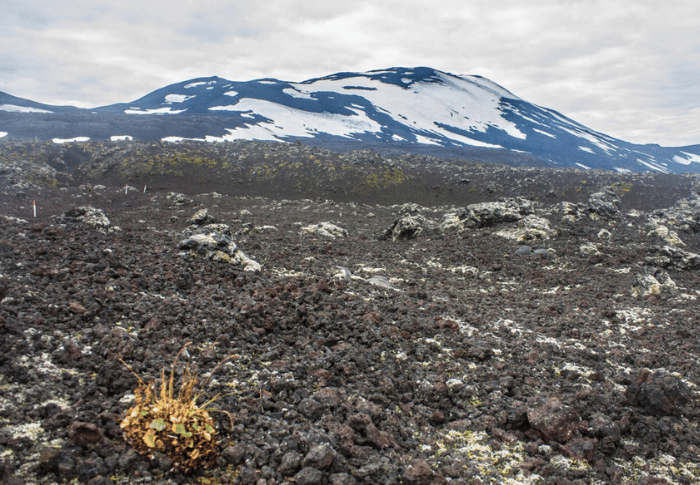
The transition into the final phase of the British Bronze Age was destabilized by a catastrophic volcanic event in the North Atlantic that triggered severe, multi-decade environmental disruption across northwestern Europe. Around 1159 BC, the Hekla volcano in southern Iceland experienced its most violent Holocene eruption, ejecting over seven cubic kilometres of tephra and volcanic ash straight into the stratosphere.
This massive volcanic cloud created a severe volcanic winter effect, blocking solar radiation and causing global temperatures to plummet. Dendrochronological testing—the analysis of ancient tree rings in Irish bog oaks and Scottish pines—documents a sudden, extreme growth stunting that commenced immediately in 1159 BC, recording a multi-decade block of frost-damaged rings, truncated summers, and a massive increase in baseline precipitation that turned fertile soils into waterlogged bogs.
This sudden environmental deterioration shattered the delicate balance of prehistoric farming communities across Britain, driving an immediate collapse of upland agricultural systems. For centuries, Middle Bronze Age populations had successfully farmed the high, fertile hillsides of regions like Dartmoor, Northumberland, and the Scottish Borders. As the Hekla 3 fallout turned these uplands into cold, acidic, and saturated wasteland environments, communities were forced into a sudden, chaotic abandonment of their hilltop roundhouse settlements and stonewalled field enclosures.
This mass displacement triggered an intense demographic migration downward into already crowded river valleys and low-lying wetland zones. The sudden pressure on remaining arable land broke long-standing tribal boundaries, turning the late-century landscape into a highly competitive theater of resource scarcity that permanently ended centuries of peaceful agrarian expansion.
---------------------------------------------------------------------------
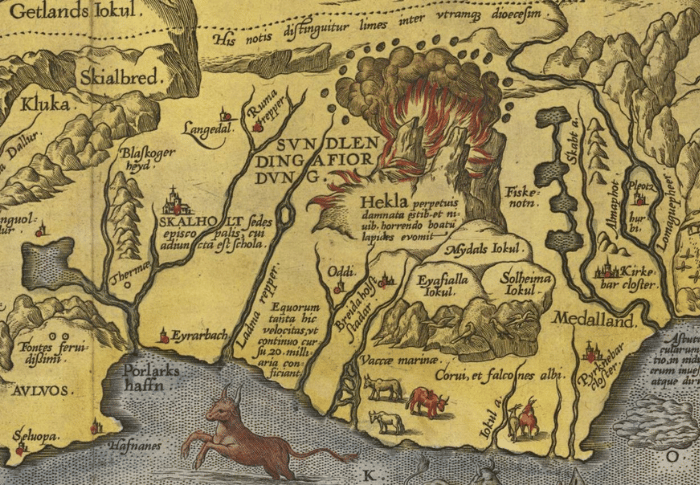
Mount Hekla is one of the most volatile volcanic systems in northwestern Europe. While we have identified its massive prehistoric blasts (labeled H5 down to H1) and a continuous log of written historic eruptions, we do not know every single minor eruption in its early history due to overlapping ash layers erosion.
~7,100 BP (~5,150 BC) — Hekla 5 (H5) Eruption:
The oldest confirmed massive Holocene event, ejecting vast quantities of acid tephra that blanketed northern and western Iceland, leaving an essential marker layer for geological dating.
~4,350 BP (~2,400 BC) — Hekla 4 (H4) Eruption:
A colossal explosive eruption that distributed roughly nine cubic kilometers of tephra across the North Atlantic, severely impacting early agricultural vegetation as far away as the Scottish islands.
~3,110 BP (~1,159 BC) — Hekla 3 (H3) Eruption:
The specific environmental disaster that triggered severe, multi-decade climate cooling across Britain, forcing the total abandonment of upland farming settlements.
~1,050 BP (~900 AD) — Hekla 1 (H1) Eruption:
The final massive prehistoric eruption, occurring shortly after the human settlement of Iceland, depositing an extensive layer of dark tephra over the island.
1104 AD — The First Historic Eruption:
The earliest written, eyewitness account of Hekla's fury. This massive explosive blast caught medieval farming settlements completely by surprise, destroying the thriving valley community of Þjórsárdalur.
1158, 1206, and 1222 AD — 12th and 13th Century Cycles:
A series of heavy, high-volume basaltic lava flows and ash cycles that repeatedly blanketed surrounding pastures, causing regional livestock starvations.
1300 and 1341 AD — 14th Century Volcanic Peaks:
Massive multi-month eruptions that darkened the northern skies for weeks, destroying fertile farmlands and generating severe famine conditions.
1510 and 1597 AD — 16th Century Blasts:
Aggressive explosive events that launched heavy blocks of volcanic rock for miles, destroying coastal fishing structures and coating northern landscapes in toxic fluoride ash.
1693 and 1766 AD — The Little Ice Age Eruptions:
The 1766 event ranks as one of Hekla's longest recorded eruptions, spewing lava and ash continuously for over two years, creating severe respiratory crises across northern Europe.
1845 and 1947 AD — The Modern Industrial Eruptions:
The 1947 blast sent a massive volcanic plume twenty-seven kilometers straight into the stratosphere, with its drifting tephra dust tracked by weather stations across Finland.
1970, 1980, 1991, and 2000 AD — The Late-20th Century Pulse:
A highly predictable sequence of minor, low-altitude basaltic eruptions that occurred almost exactly every ten years, providing modern geologists with immense amounts of real-time seismic tracking data.
The River Hoards
~3,000 - 2,800 BP (~1,050 BC – 850 BC)
During the final centuries of the Bronze Age, a radical transformation occurred in how the ruling elite displayed wealth and engaged with the sacred, shifting focus away from individual burial mounds toward collective acts of ritual destruction. Rather than burying high-status weapons inside individual graves, the warrior class began depositing their finest bronze swords, spearheads, and shields directly into rivers, bogs, and watery boundaries.
This practice of votive deposition was a highly structured religious tradition where pristine metalwork was intentionally broken, bent, or thrown into deep waters as offerings to local deities. The scale of this watery cult consumed a massive portion of the island's metal wealth, with regional river networks, most notably the River Thames and the marshlands surrounding Flag Fen in Cambridgeshire, yielding hundreds of leaf-shaped swords, specialized shields, and cauldrons that had been carefully placed into the water during complex communal ceremonies.
Microscopic analysis of these river hoards reveals that many weapons were brand new and had never been used in combat, demonstrating that the highest expressions of metallurgy were manufactured explicitly to be sacrificed, permanently removing high-value assets from circulation to secure spiritual favor, demonstrate wealth, and reinforce the social status of the regional chieftains.
---------------------------------------------------------------------------
The biggest metalwork finds from these watery sites highlight the massive wealth that early communities intentionally sacrificed to their local deities:
The Wilburton River Hoard (~1000 – 900 BC):
A premier collection of over one hundred high-status bronze artifacts recovered from waterlogged fenlands, featuring heavy indented spearheads, specialized horse harness fittings, and the earliest lead-alloyed slashing swords produced on the island.
The Havering Thames Hoard (~900 – 800 BC):
A monumental assembly of 453 bronze items weighing forty-five kilograms, buried in distinct groups along the edge of the River Thames marshes, containing continental French bracelets, Alps-mined copper ingots, and socketed axe heads.
The Wallington Complex Find (~1000 – 850 BC):
A significant northern river network discovery featuring specialized decorative bronze pins, heavy cast socketed axes, and early transitional leaf-shaped swords engineered specifically for slashing combat.
The Eggleston River Deposit (~1000 – 800 BC):
A vital river-bed find consisting of pristine bronze spearheads, leaf-shaped utility knives, and exotic imported amber and jet beads that were deliberately dropped into the water during communal ceremonies.
Stay Connected
The Must Farm Settlement and Daily Life
~2,800 BP (850 BC)
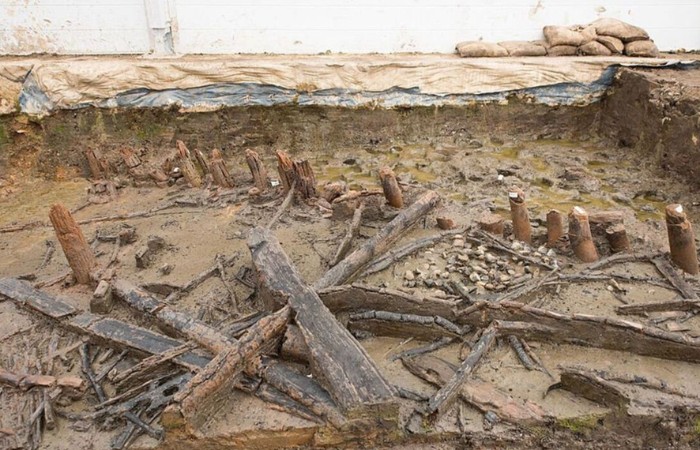
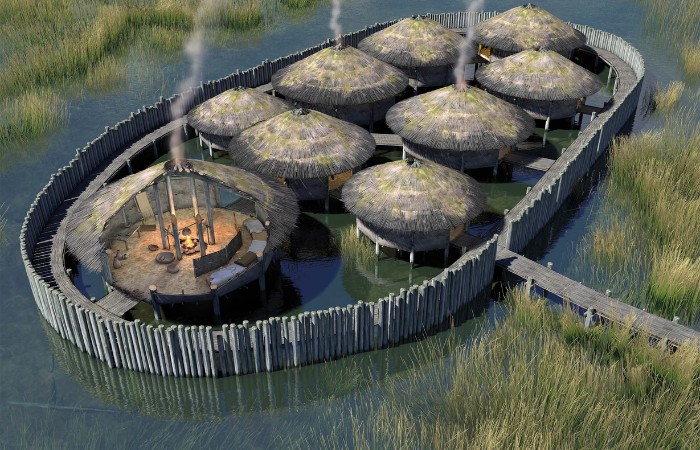
Uncovered between 2015 and 2016 in Cambridgeshire, the Must Farm settlement serves as the definitive archaeological record of domestic life and material wealth in late prehistory. Tree-ring dating confirms this Late Bronze Age stilt village was constructed precisely around 2,800 BP (850 BC) and destroyed by a catastrophic fire just months later. The entire contents of the circular roundhouses collapsed into the slow-moving river channel below, where the oxygen-free silt perfectly preserved the site, earning it recognition as "The British Pompeii".
The architecture reveals a high degree of planning and collective security. Supported by thick oak piles and enclosed by a massive wooden palisade wall, the settlement was built to defend against marshland raiders while dominating the local waterways. Inside the homes, the fire froze daily life in time, preserving complete sets of matching pottery, decorative wooden platters, nested bowls, and specialized bronze toolkits containing pristine axes, sickles, and gouges still sitting where they had fallen when the floors burned through.
The material luxury at Must Farm also demonstrates the immense reach of Late Bronze Age trade networks, with households possessing ultra-thin, highly sophisticated textiles woven from flax, alongside colorful glass beads traced directly to the Mediterranean and the Balkans. The storage jars were still packed with complete food supplies, including butchered lambs, wild boar, red deer, and cultivated wheat and barley porridge mixed with honey. The discovery of nine massive oak dugout canoes logged directly along the river edge confirms this prosperous community operated a busy river shipping network, using the Fenland waterways to move goods across the region.
---------------------------------------------------------------------------
The Enclosure Design: Comprised a tight grouping of five large roundhouses and multiple associated walkway frameworks covering a river channel expanse. The main structures were enclosed by a continuous wall formed by driving thousands of sharpened ash poles into the riverbed to establish a perimeter. Pristine metal tools were logged in clusters, indicating separate household tool racks.
Nested Ceramic Sets: Uncovered intact sets of pottery, categorized into small delicate cups, medium bowls, and large storage jars. The jars contained scorched crusts of food, including a multi-grain porridge composed of cultivated emmer wheat and barley mixed with animal fats.
Canoe Flotilla: A total of nine separate dugout canoes, carved out of single massive oak trunks, were found logged along the riverbanks. The largest vessel measured over eight metres in length and featured carved slots for steering paddles, proving this community managed a cargo system across the waterways.
The late Bronze Age Collapse
~2,800 - 2,700 BP (~850 BC – 750 BC)
Additional Information: Iron Age Britain / The Bronze Age Collapse and Industrialization of Iron
This long-standing economic and religious framework came to an abrupt end around 2,800 BP due to a systemic collapse that fractured the entire Atlantic trade network. The economy of the Bronze Age was entirely dependent on long-distance maritime corridors that transported Cornish tin across Europe to be alloyed with continental copper.
This interconnected network broke down as changing trade lines and a shifting climate disrupted maritime travel, an economic shock that coincided with the democratization of ironworking techniques. Unlike copper and tin, which were rare and required complex trade pipelines to acquire, iron ore was abundant within local British clay and bog deposits and could be harvested and smelted locally without relying on international partners.
The breakdown of the British metal economy was inextricably bound to a wider geopolitical and environmental collapse across western Europe and the Mediterranean. Around 3,200 to 2,800 BP, a period of severe global cooling and increased rainfall—known as the Subatlantic climate transition—disrupted agricultural yields across Northern and Western Europe, causing widespread resource scarcity and placing immense strain on sedentary populations. Concurrently, the cataclysmic collapse of major palatial empires in the Eastern Mediterranean shattered the long-distance trade routes that moved Mediterranean copper and continental materials north, isolating the Atlantic network. As international supply lines frayed, local communities could no longer sustain the elite prestige networks that relied on imported bronze to maintain their political authority.
The consequences within Britain were culturally disruptive, re-engineering the sociopolitical landscape. As the international bronze supply collapsed, the island witnessed a dramatic hoarding phenomenon, where elite families frantically buried thousands of swords, axes, and scrap metal in massive caches—such as the Isleham Hoard—as the exchange value of bronze plummeted. The discovery that iron could be forged from local bog ores using basic charcoal furnaces completely reoriented the geopolitical landscape.
Because iron weapons and agricultural tools could be manufactured independently within individual valleys, the old, centralized bronze monopolies became obsolete. This economic decentralization triggered a fragmented era of local self-reliance. Tribal communities completely abandoned the open river valleys, retreating to high ground to construct heavily fortified hilltop settlements and early hillforts to protect their localized resources, texturing the landscape for the incoming Iron Age.
Bronze Age Britain FAQs