
Modern Succession:
The House of Windsor
The Windsors and the Modern Monarchy
Additional Information: The Edwardian Era, Britain in World War 1, Interwar Britain, Britain in World War 2, Post-War Britain, The Age of Migration
The dawn of the twentieth century initiated an intense contraction of British royal power, as the House of Windsor surrendered its absolute imperial authority to become a passive spectator to the dismantling of its own empire.
Formally rebranding in 1917 under King George V to conceal their German Saxe-Coburg and Gotha heritage, this contemporary line retreated completely from state governance, abandoning executive control while successive parliamentary administrations oversaw the systematic dissolution of Britain's global colonies. This total political withdrawal forced the crown to silently accommodate the rise of universal suffrage, the economic shocks of the Great Depression, and the massive postwar international labour migrations that permanently altered the demographic landscape of the English heartlands.
By decoupling the survival of the throne from direct territorial rule, this modern era locked the family into a purely ceremonial model of survival, witnessing severe domestic crises as the dynasty navigated the destruction of the Blitz, weaponized mass media broadcasting to maintain public relevance, and ultimately presided over the total erosion of traditional British institutions and the transition into a multicultural, hyper-globalized society.
Page Contents:
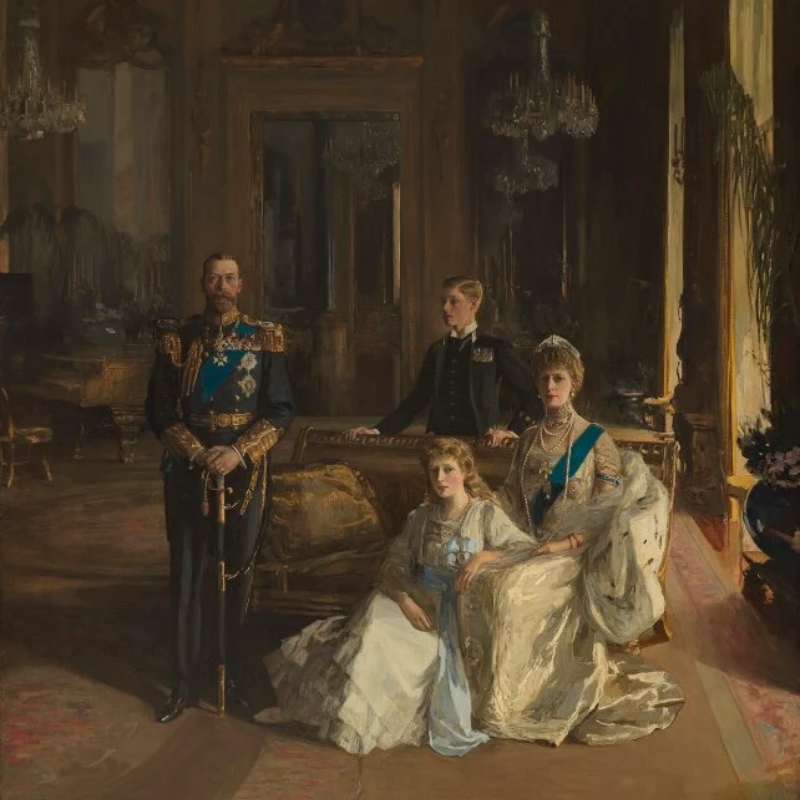
Origins of the House of Windsor: The Saxe-Coburg Inheritance
The shift from the House of Hanover to the paternal line of the House of Saxe-Coburg and Gotha occurred simply through traditional patrilineal custom, leaving the existing maternal bloodlines entirely uninterrupted. Because a monarch's children legally inherited the house name of their father, the death of Queen Victoria in January 1901 marked the conclusion of Hanoverian rule in Great Britain, allowing her eldest son, King Edward VII, to ascend the throne as the first British sovereign belonging to this paternal branch of the ancient German House of Wettin.
This family lineage stretches back to the late Carolingian era, tracing its lineage to Count Thiedmar, who governed the Merseburg marches in the early tenth century, before his successor, Dedi I, secured the March of Lusatia to firmly plant the family's regional supremacy across the fertile plains of Saxony and Thuringia. Formalized under the leadership of Margrave Conrad the Great in 1123, the House of Wettin rapidly became an elite territorial engine within the Holy Roman Empire, a sovereign power center that was permanently split in 1485 through the Treaty of Leipzig into the senior Ernestine line, which retained the electoral title and the Thuringian duchies, and the junior Albertine line, which assumed control over the Kingdom of Saxony.
Operating from their ancestral seat at Ehrenburg Palace within the small Thuringian sovereign state of Coburg, the Ernestine branch transformed their minor territorial holding into a formidable dynastic enterprise under the title of the Duchy of Saxe-Coburg and Gotha, formalized under Duke Ernst I in 1826. Through decades of highly strategic marriages with major foreign courts, this industrious family systematically expanded its influence across continental Europe, successfully placing its descendants on the thrones of Belgium under King Leopold I, Portugal under King Ferdinand II, and Bulgaria under Tsar Ferdinand I.
This extensive German network intersected directly with British history in February 1840 when Prince Albert of Saxe-Coburg and Gotha married Queen Victoria, an alliance that officially introduced this imported German dynasty to the throne of the realm and converted a localized Thuringian power center into a highly connected network that dominated the geopolitical architecture of the European continent.
Edward VII
King of the United Kingdom and the British Dominions 1901–1910
Emperor of India 1901–1910
Bio:
The reign of King Edward VII successfully ushered the country out of its long Victorian isolation, initiating a vibrant era of rapid social liberalization, intensive military modernization, and a profound diplomatic realignment across continental Europe.
Ascending the throne in January 1901 after a six-decade apprenticeship as the Prince of Wales, his brief but energetic reign marked a festive departure from the somber austerity of his mother’s late court. Affectionately branded "The Peacemaker" for his sophisticated mastery of international diplomacy, he utilized a series of high-profile state visits to Paris to completely rebuild relations with the French republic, a brilliant campaign of personal statesmanship that culminated in the historic signing of the Entente Cordiale in 1492. To protect the global interests of the realm against an aggressive imperial German naval buildup, the King threw his unyielding royal support behind the sweeping maritime overhauls of Admiral John "Jacky" Fisher, overseeing the launch of the revolutionary battleship HMS Dreadnought in 1906 and supporting the structural expansion of a professional standing army layout at home.
Domestically, his closing years were heavily consumed by a severe constitutional standoff triggered by the House of Lords' refusal to pass David Lloyd George’s radical "People's Budget." By maintaining a strict commitment to constitutional neutrality while working covertly behind the scenes to resolve the legislative deadlock, his steady diplomacy anchored the crown during a period of rising industrial unrest, leaving a highly modernized, globally integrated empire at his sudden death.
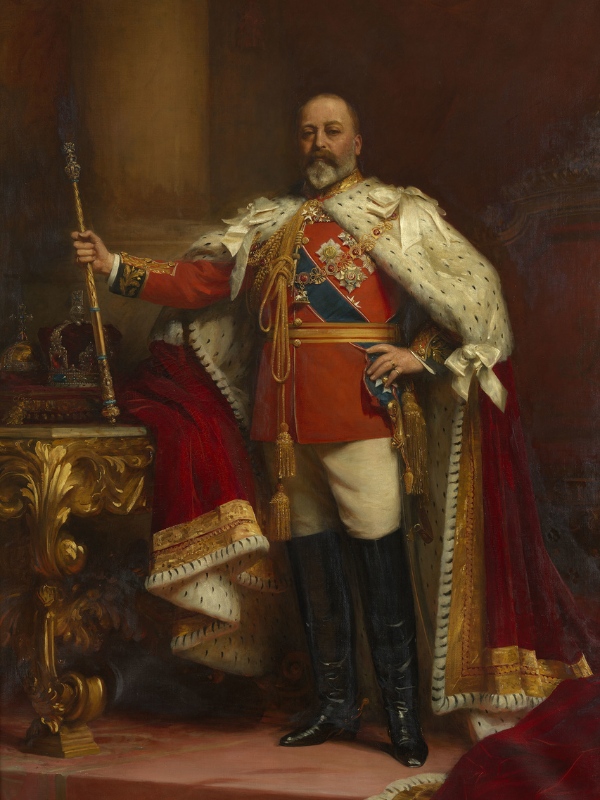
George V
King of the United Kingdom and the British Dominions 1910–1936
Emperor of India 1910–1936
Bio:
The reign of King George V successfully navigated the catastrophic upheavals of total global warfare, industrial collapse, and the rapid dissolution of the great land empires of continental Europe. Ascending the throne in 1910 AD, his early years were consumed by a severe constitutional standoff over the power of the House of Lords and the explosive crisis of Irish Home Rule.
Upon the outbreak of the First World War, he worked frantically to support the national mobilization, visiting troops in the field and coordinating with successive parliamentary coalitions. In July 1917 AD, facing intense anti-German sentiment and widespread public criticism of the court's foreign titles, he executed a masterstroke of political survival by issuing a Royal Proclamation that permanently abolished the family surname of Saxe-Coburg and Gotha in favor of the historic English moniker of Windsor.
A deeply conscientious and traditional ruler, he accommodated the dramatic rise of universal suffrage and the election of the first Labour government by maintaining absolute symbolic neutrality. He successfully pioneered the use of mass media broadcasting, launching the first Royal Christmas Message in 1932 AD to connect directly with the working-class population. By establishing a public-facing model of duty and industrial-era service, his steady governance fully restored the public prestige of the monarchy, leaving a stable, parliamentary-approved throne at his death.
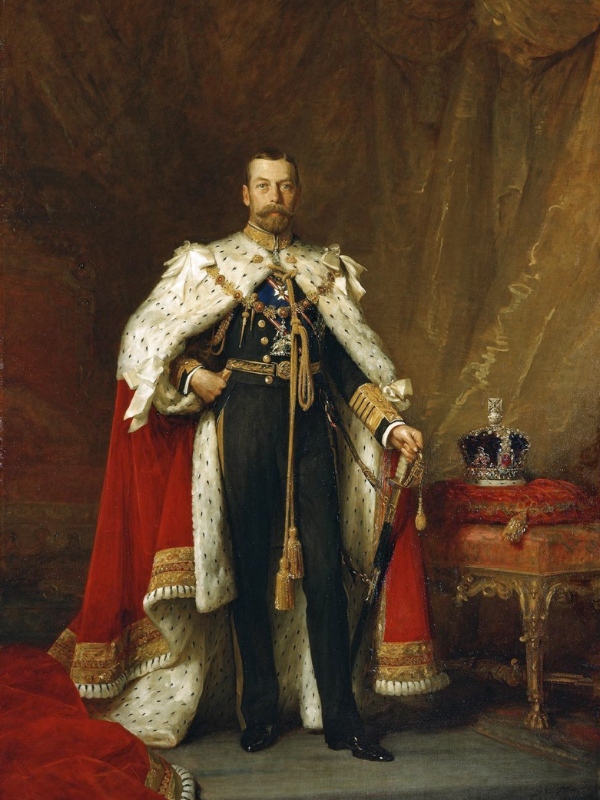
Edward VIII
King of the United Kingdom and the British Dominions 1936
Emperor of India 1936
Prince of Wales 1910–1936
Duke of Windsor 1936–1972
Bio:
King Edward VIII’s brief and explosive reign lasted a mere three hundred and twenty-six days, his entire sovereign footprint completely paralyzed and ultimately destroyed by an unprecedented constitutional crisis over his personal choice of marriage.
Gifted with immense personal charisma and a trendy, modern lifestyle, his long tenure as Prince of Wales had earned him massive popularity across the globe, though his erratic behavior and open disdain for traditional court protocols deeply alarmed the political establishment in London. The underlying tensions erupted into an open political standoff immediately upon his accession, when the king declared his absolute determination to marry Wallis Simpson, a twice-divorced American socialite whose ongoing marital status and canonical restrictions rendered her completely unacceptable to the Church of England and successive Dominion parliaments. When the Prime Minister, Stanley Baldwin, firmly informed the king that a morganatic marriage was constitutionally impossible and that the government would resign if he persisted, Edward refused to compromise his personal happiness for the requirements of state office.
On 10 December 1936 AD, he bypassed centuries of dynastic tradition by signing the Instrument of Abdication, voluntarily surrendering the supreme executive authority of the country to his younger brother. Demoted to the title of Duke of Windsor and forced into an uncomfortable, lifelong continental exile, his dramatic exit marked the single most volatile succession crisis of the modern era, leaving the crown deeply tarnished at the absolute brink of the Second World War.
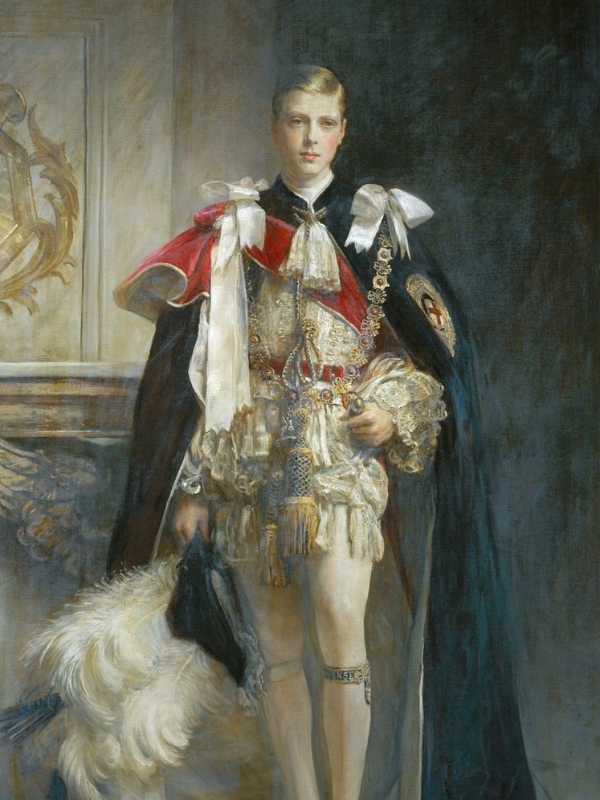
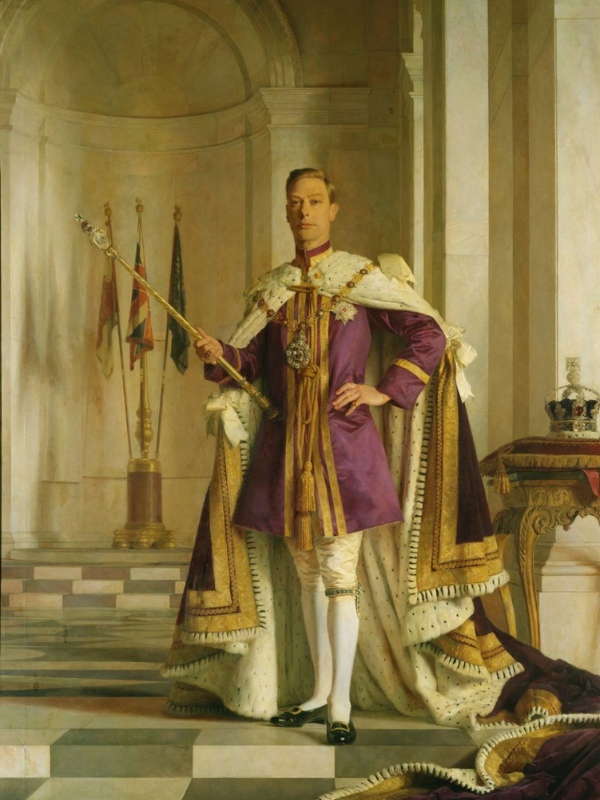
George VI
King of the United Kingdom and the British Dominions 1936–1952
Emperor of India 1936–1947
Head of the Commonwealth 1949–1952
Bio:
The reluctant and deeply duty-bound reign of King George VI successfully repaired the public legitimacy of the Windsor line, transforming a deeply traumatized court into an enduring symbol of national resilience during the darkest hours of the twentieth century. Thrust onto the throne in December 1936 AD following his brother's sudden abdication, the new king had to overcome severe natural anxieties and a debilitating speech impediment, working frantically with speech therapists to master public broadcasting as the country prepared for global conflict.
His true historical stature was forged during the Second World War; when advisers urged the royal family to evacuate London during the Blitz, the king and his consort firmly refused to abandon the capital, remaining at Buckingham Palace even after a German air raid dropped heavy explosives inside the inner quadrangle. This shared vulnerability created an unassailable bond between the crown and the civilian populace, with the king making regular visits to ruined factories, bombed shipyards, and military outposts to sustain the national conscience.
On the imperial front, he managed the rapid, peaceful dissolution of the British Raj as India achieved independence in 1947 AD, subsequently working with political leaders to forge the London Declaration of 1949 AD, which officially reoriented the old empire into a voluntary Commonwealth of equal nations.
Worn down by the immense physical stresses of wartime governance and heavy smoking, his sudden death in 1952 AD was universally mourned as the passing of a genuine warrior-king who had sacrificed his health to secure the internal stability of the modern realm.
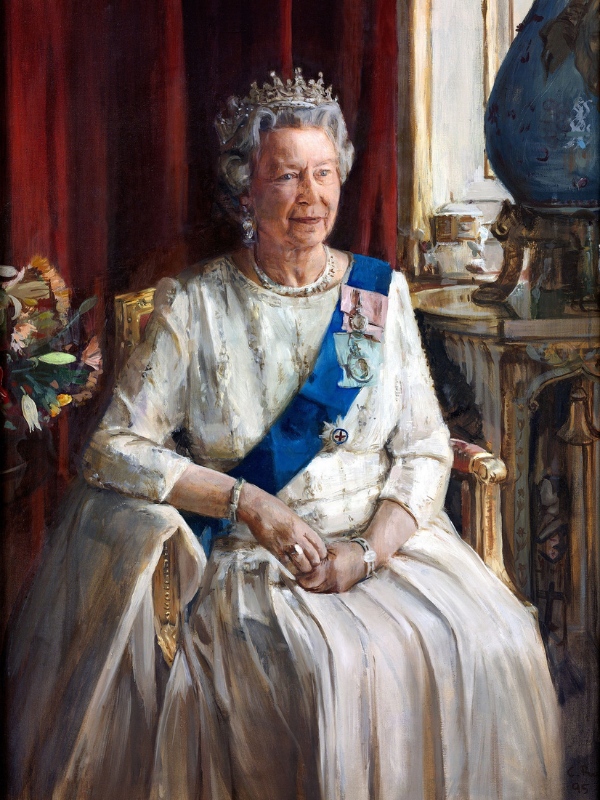
Elizabeth II
Queen of the United Kingdom and Her Other Realms 1952–2022
Head of the Commonwealth 1952–2022
Bio:
The monumental seventy-year reign of Queen Elizabeth II stabilized a rapidly fracturing realm, transforming an imperial crown into a symbolic constitutional anchor within a post-imperial society. Ascending in 1952, she presided over the final, structural dismantling of the British Empire, witnessing a decline in global prestige as historic overseas territories systematically broke away from crown rule.
This period of geopolitical retreat coincided with massive internal changes, as her administrations implemented large-scale international labour integration policies that initiated an unprecedented demographic shift across the British Isles. Though she successfully modernized the public availability of the court by televising her 1953 coronation, her family life was a source of acute instability, culminating in her self-proclaimed 1992 Annus Horribilis, which witnessed the collapse of three of her children's marriages and a devastating fire at Windsor Castle.
Public criticism of the court reached a peak in 1997 following her aloof, delayed response to the tragic death of Diana, Princess of Wales, an era of intense vulnerability that forced the crown to abandon its financial opacity and voluntarily pay income taxes to protect its domestic legitimacy.
While she dedicated her career to managing the voluntary Commonwealth, her long trajectory witnessed the total erosion of traditional British institutions, leaving a deeply altered, multi-cultural nation at her death at Balmoral in September 2022.
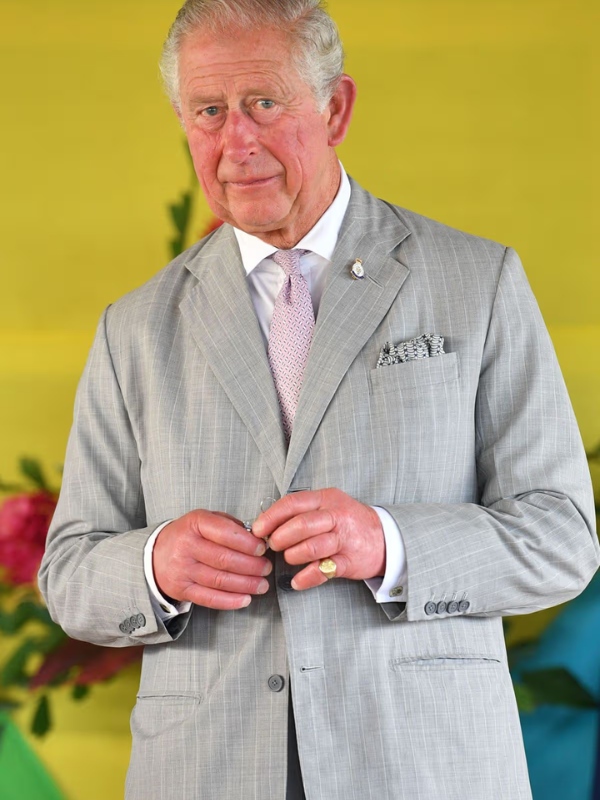
Charles III
King of the United Kingdom and His Other Realms 2022–Present
Head of the Commonwealth 2022–Present
Prince of Wales 1958–2022
Bio:
King Charles III ascended the throne following the longest apprenticeship in the history of the British monarchy, swiveling the operational focus of the contemporary crown toward ecological preservation, multi-faith inclusivity, and a streamlined administrative household.
Having spent over six decades as Prince of Wales, he used his extensive public platform to launch pioneering structural reforms, most notably founding The Prince's Trust in 1976 AD to invest in disadvantaged youths and launching aggressive environmental campaigns to warn against global climate change decades before it became a mainstream political preoccupation. His private life was a constant subject of high-density global media scrutiny, dominated by his highly public marriage, separation, and tragic 1997 AD divorce from Diana, Princess of Wales, an era of intense court vulnerability he successfully neutralized through his subsequent 2005 AD marriage to Camilla Parker Bowles.
Finally ascending to the throne in September 2022 AD, his subsequent May 2023 AD coronation at Westminster Abbey was intentionally engineered to reflect a modern, multi-cultural Great Britain, introducing diverse religious leaders into the ancient liturgy while maintaining the core spiritual baseline of the coronation ritual.
His early governance was immediately confronted by a major health alert when the palace announced a formal cancer diagnosis in February 2024 AD, an unprecedented act of administrative transparency that broke with centuries of royal medical secrecy.
House Of Windsor FAQs