
The House of
Plantagenet
The House of Plantagenet and Expansion of Imperial Law
Additional Information: The Plantagenet Era
The constitutional, legal, and territorial architecture of the medieval English Kingdom was profoundly reshaped by the House of Plantagenet, an exceptionally ambitious and fiercely combative French-Angevins dynasty that converted a fractured post-civil-war kingdom into a dominant European empire. Ascending the throne in 1154 out of the smoking ruins of the Anarchy, this sweeping dynastic line dismantled the volatile privileges of local barons, replacing erratic feudal customs with a permanent, nationwide apparatus of royal courts, traveling justices, and professional jury trials.
This administrative expansion anchored the development of English common law and birthed landmark constitutional benchmarks like Magna Carta, permanently defining the legal boundaries between sovereign authority and parliamentary representation while projecting raw military power across Wales, Scotland, Ireland, and the wealthy duchies of France.
Page Contents:
Origins of the House of Plantagenet: Counts of Anjou and the Angevin Empire
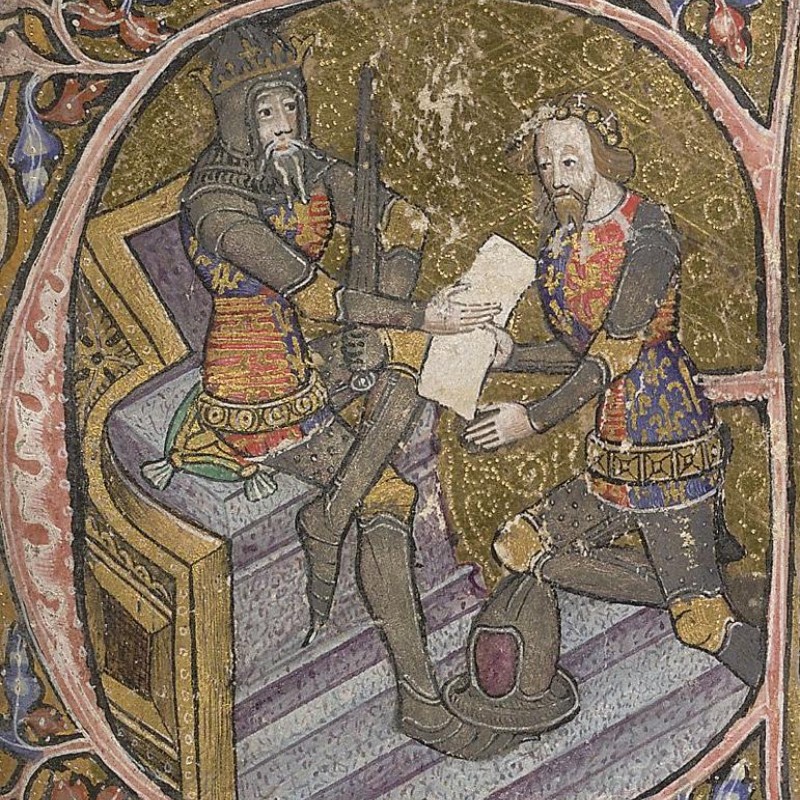
The origins of the Plantagenet line lay in the County of Anjou in western France, where for generations the local counts had expanded their power along the Loire Valley through warfare against Normandy, Brittany, and Blois. This border rivalry shifted in June 1128 when Count Fulk V arranged the marriage of his fifteen-year-old heir, Geoffrey, to the twenty-six-year-old Empress Matilda, the widowed daughter and surviving heir of King Henry I of England. Geoffrey’s habit of wearing a sprig of yellow broom blossom, Planta genista, in his cap provided the name for a lineage destined to unite these principalities under a single house.
This cross-Channel alliance was intended to guarantee a peaceful succession to the English throne, but it instead triggered a collapse into civil war when Henry I died in 1135 AD. Breaking their solemn oaths to the Empress Matilda, the Anglo-Norman barons accepted her cousin, Stephen of Blois, as king, plunging England into the conflict known as the Anarchy.
While Matilda landed on the southern coast of England to wage war against Stephen's forces, Geoffrey Plantagenet remained on the continent, launching a campaign across Normandy until he captured Rouen in 1144 to claim the ducal title by right of his wife. This continental victory secured a massive territorial power base in northern France, positioned to support the hereditary claims of their eldest son, Henry.
The young Henry Plantagenet combined the drive of his Angevin forefathers with the administrative ambition of his Norman ancestors, consolidating an enormous inheritance before he reached his twenty-first year. Upon his father's death in 1151 AD, Henry assumed direct control of Anjou, Maine, and Touraine, pairing these lands with the Duchy of Normandy to become the master of western France. He achieved a diplomatic coup in May 1152 by marrying the wealthiest heiress in Europe, Eleanor of Aquitaine, just weeks after her marriage to King Louis VII of France was annulled, a union that added the vast duchies of Aquitaine and Gascony to his personal domain and stretched his lands from the English Channel to the Pyrenees.
Armed with these continental resources, Henry launched an invasion of England in 1153, forcing the exhausted King Stephen to sign the Treaty of Wallingford, a legal settlement that bypassed Stephen's own children to name Henry as the rightful heir to the crown.
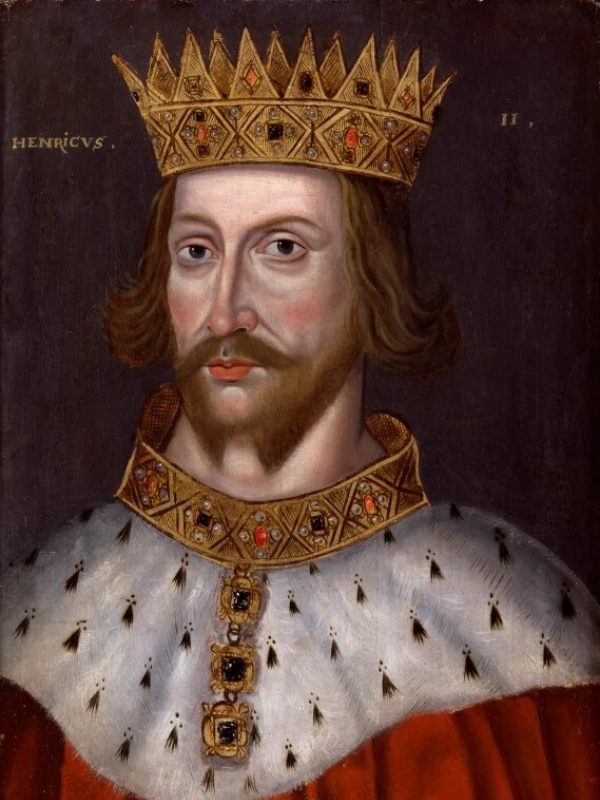
Henry II
King of the English 1154–1189
Duke of Normandy 1150–1189
Count of Anjou 1151–1189
Duke of Aquitaine 1152–1189
Lord of Ireland 1177–1189
Bio:
King Henry II inaugurated the Plantagenet era by executing a comprehensive, sweeping legal revolution that laid down the permanent foundations of English common law. Inheriting a kingdom deeply fractured by twenty years of civil war, his initial domestic policy focused on the systematic destruction of unauthorized adulterine castles and the forceful restoration of central crown authority.
Through the Assize of Clarendon in 1166 AD, he fundamentally altered the judicial landscape of the country, introducing the system of traveling circuit judges who answered directly to the royal court and implementing the grand jury system to identify local criminals, effectively stripping power away from corrupt baronial jurisdictions.
His fierce determination to subject the Catholic Church to royal law led to a bitter constitutional standoff with his former chancellor, Archbishop Thomas Becket, culminating in Becket's brutal assassination inside Canterbury Cathedral by four royal knights, a political disaster that forced the king to perform public penance.
On the global stage, Henry consolidated a sprawling multi-continental domain historically recognized as the Angevin Empire, extracting oaths of submission from the princes of Wales, the king of Scotland, and launching a successful military expedition to establish the lordship of Ireland.
Despite his immense administrative genius, his final years were completely consumed by toxic family rivalries, as his volatile sons, backed by Eleanor of Aquitaine and the French crown, launched continuous armed rebellions that ultimately broke his health and forced him into a bitter, isolated retreat at Chinon.
Further Information: King Henry II
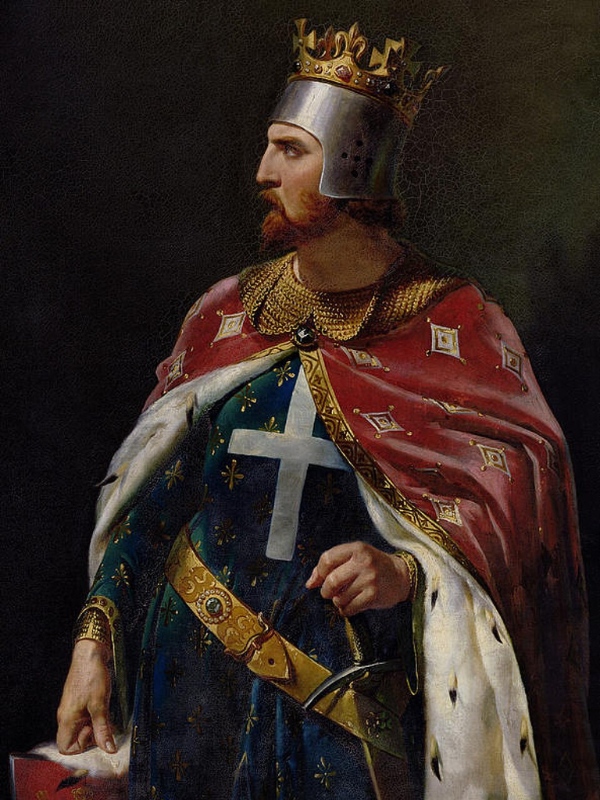
Richard I
King of the English 1189–1199
Duke of Normandy 1189–1199
Count of Anjou 1189–1199
Duke of Aquitaine 1189–1199
Bio:
The legendary reign of King Richard I was entirely dominated by his status as one of the premier military commanders of the medieval Western world, turning his domestic kingdom into a massive fiscal extraction machine to fund global crusading warfare. Spending less than ten months of his ten-year reign physically inside England, he viewed the island primarily as a repository of treasure, famously declaring he would sell London itself if he could find a suitable buyer to finance the Third Crusade.
Joining forces with King Philip II of France, he led an elite expeditionary force to the Levant, where his tactical brilliance was spectacularly demonstrated during the protracted Siege of Acre and his crushing victory over Saladin's forces at the Battle of Arsuf.
Though he successfully stabilized the Christian coastal strongholds and guaranteed pilgrimage access to Jerusalem, his failure to recapture the holy city forced a tactical retreat. His journey home turned into a diplomatic nightmare when he was captured by Leopold V of Austria, resulting in an astronomical ransom demand of one hundred and fifty thousand marks of silver.
This massive debt forced the English state to levy crushing taxes on the population and surrender church treasures to secure his release, subsequent to which Richard spent his final years locked in a fierce war of attrition in France, building the architectural marvel of Château Gaillard to secure the borders of Normandy until a random crossbow bolt during a minor siege cut short his military career.
Further Information: King Richard I
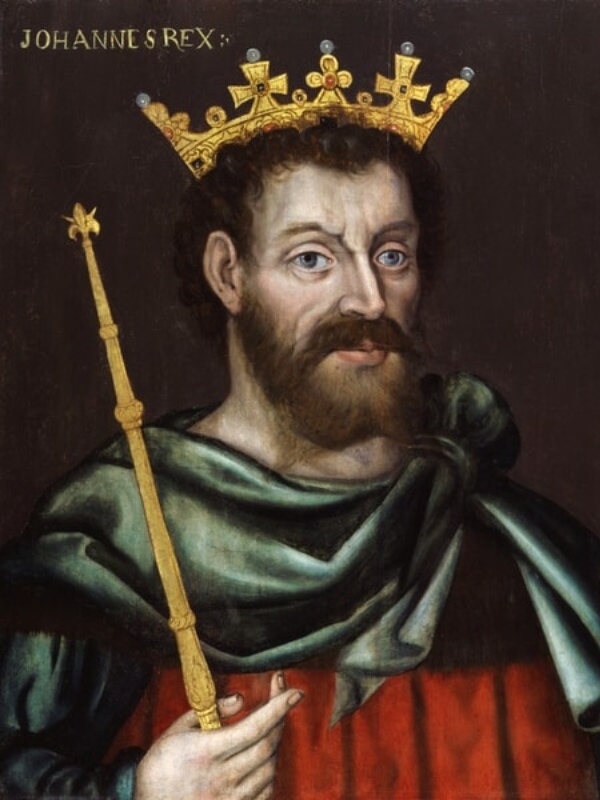
John
King of the English 1199–1216
Lord of Ireland 1177–1216
Duke of Normandy 1199–1204
Count of Anjou 1199–1204
Duke of Aquitaine 1199–1216
Bio:
King John’s disastrous and deeply controversial reign witnessed the total collapse of the continental Angevin Empire and a violent breakdown of internal constitutional authority that permanently altered the boundaries of royal power. Lacking the military prestige of his brother Richard, his initial campaigns against the French crown resulted in a series of catastrophic defeats, culminating in the 1204 AD loss of Normandy, Anjou, and Maine to Philip Augustus.
To raise the massive financial capital required to launch a counter-offensive, John implemented an unprecedentedly predatory domestic fiscal policy, exploiting his feudal prerogatives to extract exorbitant relief fines, wardship fees, and scutage taxes from his deeply alienated nobility.
This aggressive extraction, combined with a bitter five-year papal interdict that closed every church in England, pushed the country to the brink of absolute rebellion. Following the total annihilation of his international coalition at the Battle of Bouvines in 114, the furious baronial class marched on London, forcing John to sign Magna Carta at Runnymede on 15 June 1215.
This historic peace treaty marked the first time an English monarch was legally bound to accept statutory limits on his sovereign authority. John immediately violated the treaty by securing a papal annulment, plunging the country into the First Barons' War and inviting a full-scale French invasion that left the kingdom deeply divided and bleeding at the moment of his sudden death from dysentery.
Further Information: King John I
Henry III
King of the English 1216–1272
Duke of Aquitaine 1216–1272
Lord of Ireland 1216–1272
Bio:
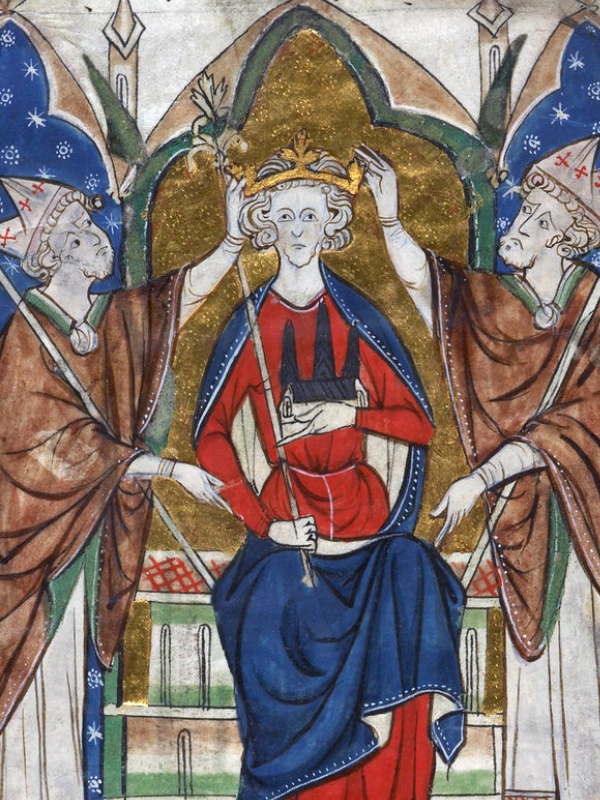
Ascending to the throne as a nine-year-old child at the height of a civil war, King Henry III governed England through a turbulent, multi-decade reign defined by intense constitutional struggles and a flourishing of Gothic architecture. His minority was successfully stabilized by the brilliant generalship of William Marshal, who defeated the French forces at Lincoln to secure the peaceful re-issue of Magna Carta as the permanent baseline of royal law.
Upon assuming personal rule, Henry's intense preference for foreign favorites from Poitou and Provence deeply alienated the domestic baronial class, who viewed their own political influence as being systematically undermined.
This simmering resentment exploded into a major constitutional crisis in 1258 AD when the barons, led by the charismatic Simon de Montfort, forced the king to accept the Provisions of Oxford, a radical document that placed the executive government of the country under the control of an elected council of nobles.
Henry's immediate refusal to submit to this council triggered the Second Barons' War, resulting in the king's humiliating defeat and capture at the Battle of Lewes in 1264. During this captivity, Montfort summoned the historic 1265 Parliament, introducing the legal precedent of inviting elected knights and burgesses to participate alongside the high nobility.
Although Henry's eldest son, Prince Edward, eventually crushed the baronial armies at Evesham to restore the crown to absolute power, the old king spent his final years retreating from active governance, dedicating his personal treasury to the reconstruction of Westminster Abbey to establish his enduring historical legacy.
Further Information: King Henry III
Edward I
King of England 1272–1307
Lord of Ireland 1272–1307
Duke of Aquitaine 1272–1307
Bio:
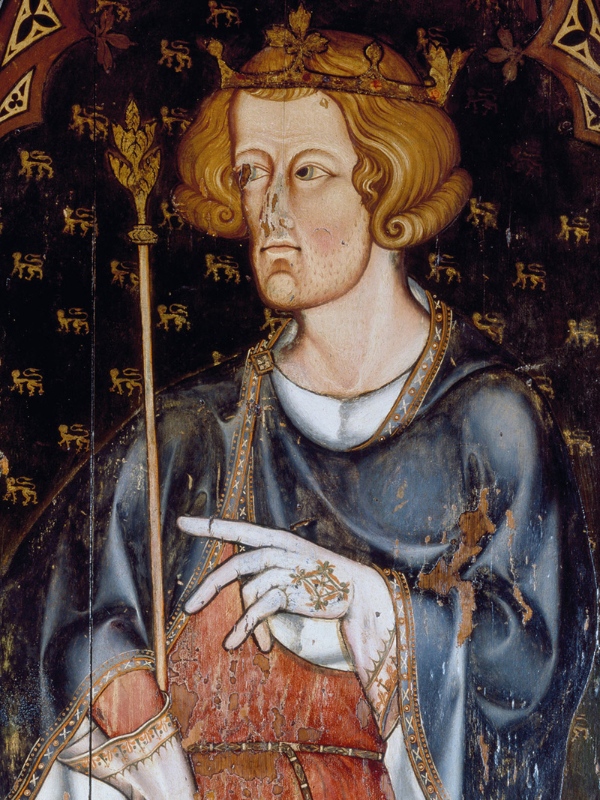
The assertive and highly effective reign of King Edward I fundamentally altered the territorial boundaries and legislative framework of the nation, transforming the crown into a formidable vehicle for conquest and administrative modernization. Returning from the Crusades to claim his inheritance, he immediately launched a massive legislative campaign, passing the Statutes of Westminster and Gloucester to rigorously audit and codify the legal privileges of local barons under royal law.
In 1290 AD, facing severe fiscal constraints, he issued the Edict of Expulsion, permanently banishing the entire Jewish population from England to seize their assets and curry favor with Parliament.
His primary geopolitical ambition focused on the total subjugation of the Celtic fringe. Between 1277 and 1283 AD, he launched a relentless, high-velocity military conquest of Wales, executing the last native prince, Llywelyn ap Gruffudd, and constructing the Iron Ring of massive stone fortresses—including Caernarfon, Conwy, and Harlech—to physically lock down the territory.
To fund these astronomical military costs, he formalized the composition of Parliament through the 1295 Model Parliament, establishing the permanent right of the Commons to approve national taxation. He swiveled his aggressive military focus northward in 1296 AD, exploiting the succession crisis known as the Great Cause to launch a brutal, scorched-earth war for the total subjugation of Scotland, an endless campaign of attrition that earned him his historical moniker and occupied his final hours as he died on horseback en route to confront Robert the Bruce.
Further Information: King Edward I
Edward II
King of England 1307–1327
Lord of Ireland 1307–1327
Duke of Aquitaine 1307–1325
Prince of Wales 1301–1307
Bio:
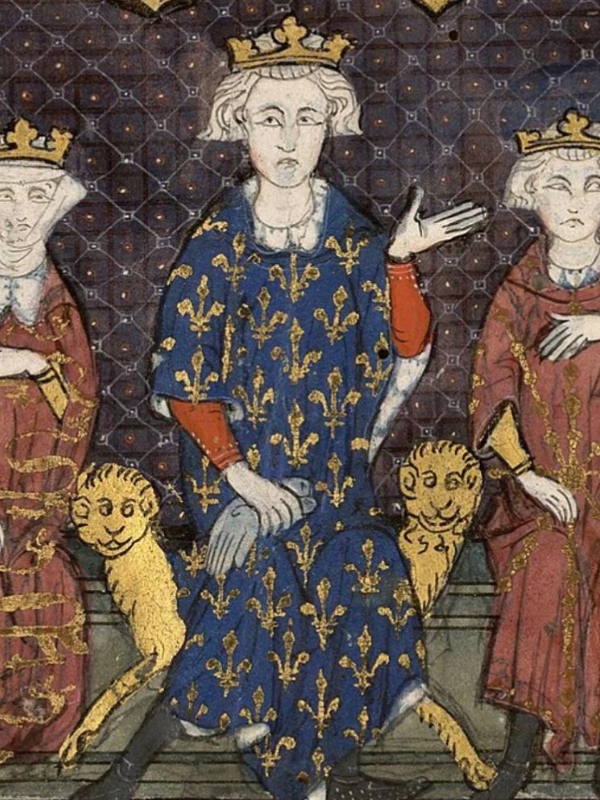
King Edward II’s disastrous and erratic reign represented a complete collapse of royal authority, his chronic political instability and absolute reliance on low-born favorites alienating the entire political establishment of the country.
Inheriting a bankrupt treasury and an unresolved war in Scotland from his father, he immediately abandoned active military operations to elevate his intimate favorite, Piers Gaveston, to the highest ranks of the peerage, an insult so profound that it provoked a severe backbench revolt by the Earl of Lancaster and the Lords Ordainers. The barons forced the king to accept the Ordinances of 1311, which restricted his executive control over appointments and spending, culminating in the extrajudicial execution of Gaveston by a noble coalition in 1312 AD.
Edward's military incompetence was spectacularly unmasked in June 1314 at the Battle of Bannockburn, where his massive, disorganized army was completely routed by Robert the Bruce, a tactical catastrophe that secured Scottish independence and shattered the prestige of the English crown.
The king subsequently formed an equally toxic alliance with Hugh Despenser the Younger, running an authoritarian regime of financial confiscation and political executions that deeply alienated his own queen, Isabella of France. In 1326 AD, Isabella partnered with her lover, the exiled baron Roger Mortimer, to launch a swift naval invasion of England, successfully catching the king completely off guard.
Captured while fleeing into Wales, Edward was forced by Parliament to undergo a humiliating, unprecedented deposition, renouncing his crown in favor of his teenage son before being systematically murdered inside his prison cell at Berkeley Castle.
Further Information: King Edward II
Edward III
King of England 1327–1377
Lord of Ireland 1327–1377
Duke of Aquitaine 1325–1360
Lord of Aquitaine 1360–1362
Bio:
The long and spectacular reign of King Edward III represents the absolute peak of Plantagenet chivalric prestige and imperial power, transforming England into the premier
military superpower of Western Europe.
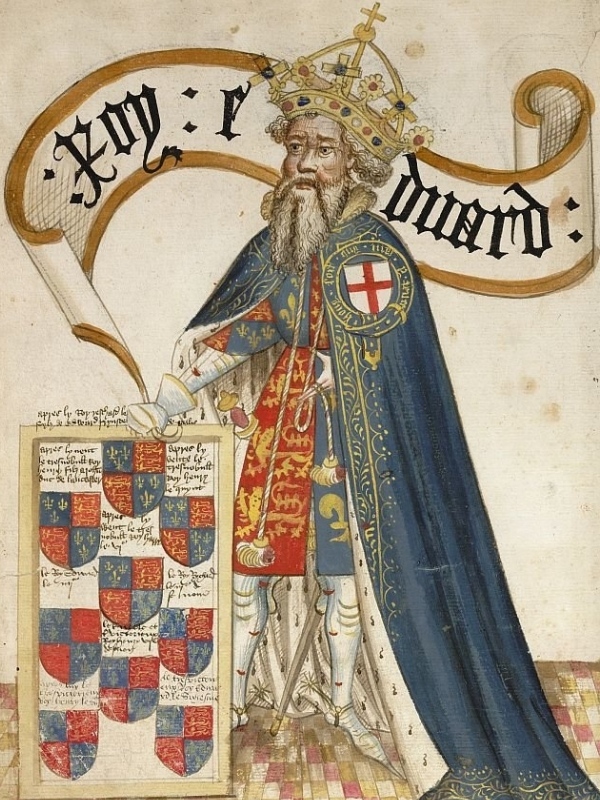
Seizing direct executive control at the age of seventeen by launching a daring midnight coup to arrest and execute Roger Mortimer, he rapidly restored internal dynastic cohesion by engaging his nobility in aggressive overseas warfare. In 1337 AD, following the confiscation of Gascony by Philip VI, Edward advanced a formal claim to the direct throne of France through his mother's lineage, initiating the multi-generational conflict historically recognized as the Hundred Years' War.
Utilizing the devastating tactical power of the English longbow, his armies achieved monumental victories over the massed French chivalry at the Battle of Crécy in 1346 and the Battle of Poitiers in 1356, where his brilliant son, Edward the Black Prince, successfully captured King John II of France. His external triumphs were temporarily paralyzed in 1348 by the catastrophic arrival of the Black Death, a bubonic plague epidemic that wiped out nearly half of the domestic population, causing an acute labor shortage that forced the king to pass the landmark Statute of Laborers to fix wages.
He formalized his global success through the 1360 Treaty of Brétigny, securing absolute sovereign control over a third of France without paying homage to the French Valois kings, while founding the Order of the Garter to lock his senior nobility into a permanent, highly loyal cult of chivalric brotherhood.
Further Information: King Edward III
Richard II
King of England 1377–1399
Lord of Ireland 1377–1399
Prince of Wales 1376–1377
Bio:
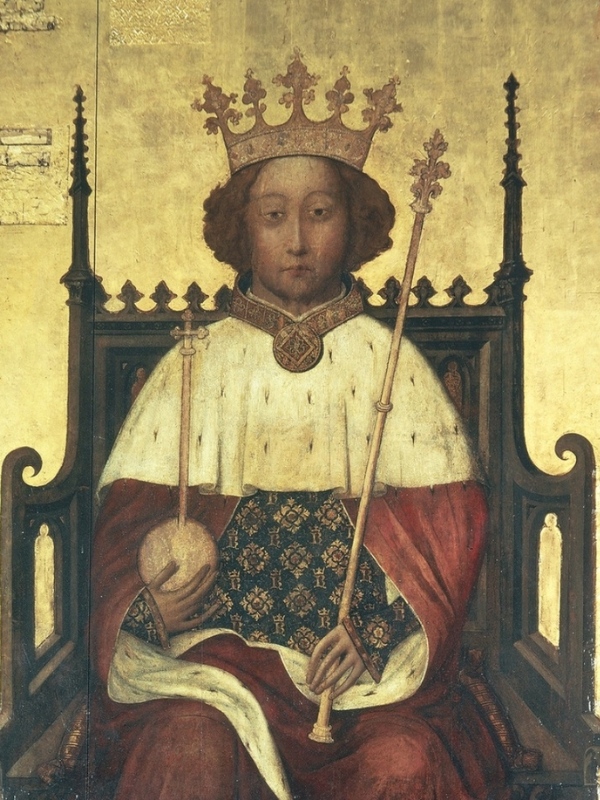
King Richard II’s erratic and intensely authoritarian reign brought a definitive, violent end to the primary Plantagenet line, his obsession with the absolute divine right of kings alienating the entire political fabric of the country. Accessing the throne as a ten-year-old child, his early popularity peaked during the Peasants' Rebellion of 1381, when the teenage king demonstrated immense personal courage by riding directly into an armed mob at Smithfield to pacify the rebels following the killing of Wat Tyler.
However, upon assuming personal rule, his aloof behavior and his reliance on a highly insular circle of court favorites provoked an immediate constitutional counter-offensive led by the Lords Appellant. This noble coalition launched the Merciless Parliament of 1388, executing the king's closest advisers and placing his executive spending under strict oversight. Richard spent the subsequent decade executing a slow, highly calculated plot of political vengeance, culminating in the 1397 execution of the Earl of Arundel and the exile of his cousin, Henry Bolingbroke.
Following the death of John of Gaunt in 1399, Richard made the fatal error of confiscating the vast Lancastrian inheritance, pushing Bolingbroke to launch a swift naval invasion of Yorkshire while the king was campaign-trapped in Ireland.
Rallied by the furious domestic nobility, Bolingbroke captured the king, forced him to undergo a formal abdication before Parliament, and claimed the throne as Henry IV, locking Richard away inside Pontefract Castle where he was systematically starved to death to prevent future legitimist counter-coups.
Further Information: King Richard II
The House of Lancaster Cadet Branch
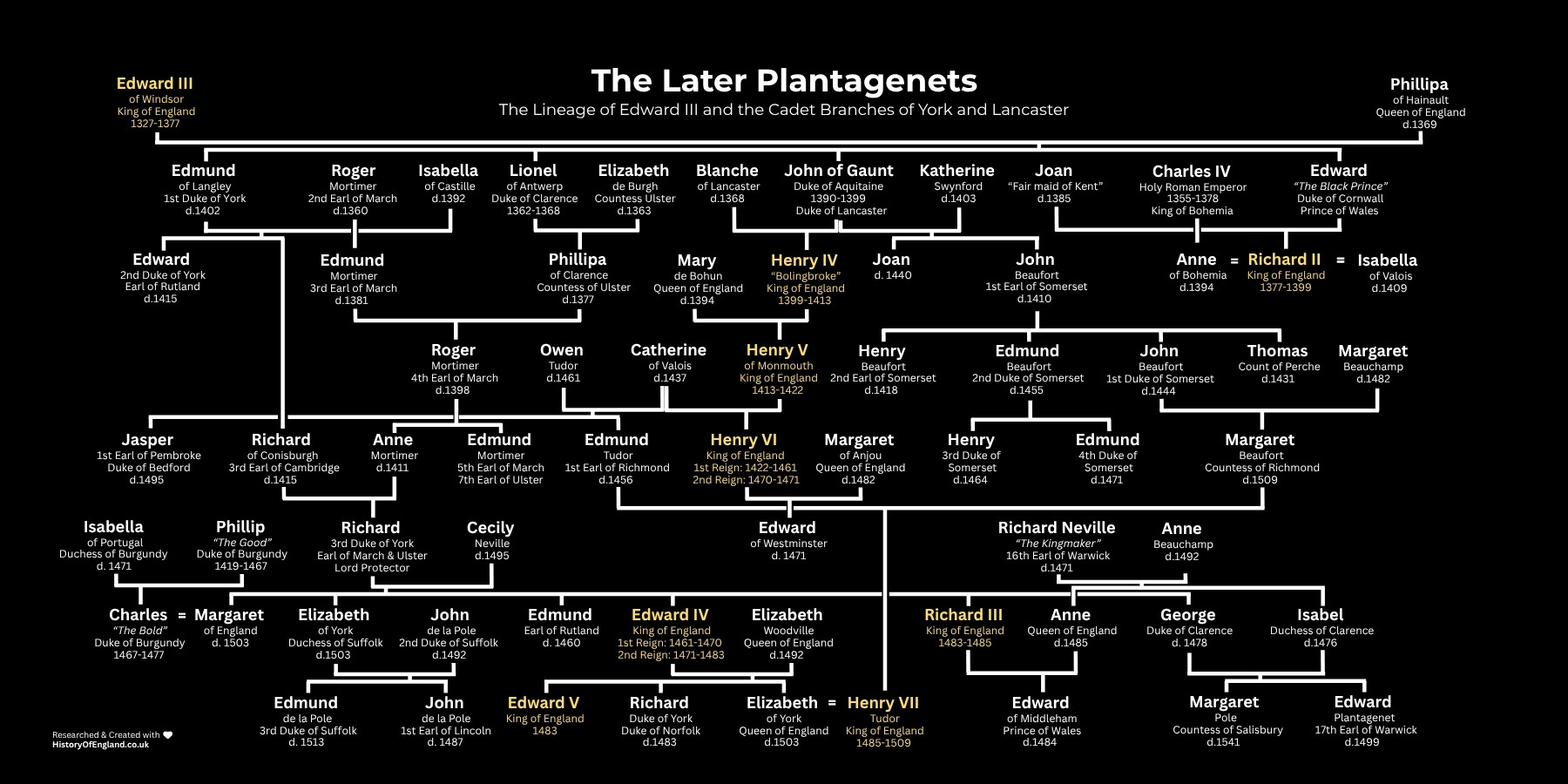
The internal breakdown of the Plantagenet dynasty during the late fourteenth century was driven by the rise of the House of Lancaster, a princely branch whose immense private wealth and territorial influence eventually eclipsed the power of the crown. The foundations of this noble household were established in 1362 when King Edward III granted his third surviving son, John of Gaunt, the title of Duke of Lancaster following Gaunt's marriage to Blanche of Lancaster, the sole heiress to the country's wealthiest estate. This single union consolidated a vast network of castles, agricultural lands, and private retinues across nearly every county, turning the duchy into a virtually independent domain within the kingdom.
As the leading landowner in England, Gaunt used the immense revenues of his estates to build a massive affinity of loyal knights and squires, binding the regional gentry directly to his household through lifelong financial retaining contracts. Serving as the primary political power broker during the minority of his nephew, King Richard II, Gaunt deployed his personal fortunes and private armies of sworn retainers to defend the borders of the realm against French and Scottish raids, while maintaining an armed, deeply influential princely faction ready to protect its inheritance by force.
This overwhelming concentration of local military and financial power created a dangerous imbalance, rendering the Lancastrian line a constant source of anxiety for the court and ensuring that any direct threat to their estates would instantly risk a full-scale dynastic war for the possession of the crown.
Henry IV
King of England 1399–1413
Lord of Ireland 1399–1413
Duke of Aquitaine 1399–1400
Duke of Lancaster 1399
Bio:
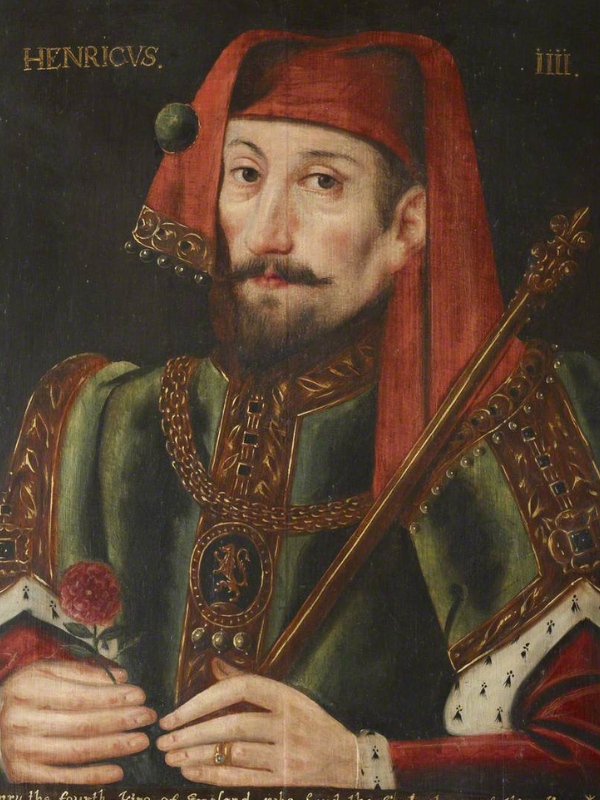
King Henry IV’s turbulent and exhausted reign was entirely dominated by a desperate, continuous struggle to defend his crown from immediate fragmentation and consolidate his fragile title of usurper against widespread local rebellions.
Having seized the throne through the deposition of Richard II, he spent his initial years locked in a multi-front domestic security crisis, frantically marching his royal armies to confront the massive Welsh national uprising led by Owain Glyndŵr. This internal instability was severely compounded by a catastrophic backbench revolt launched by his former allies, the powerful northern Percy family, a treasonous coup that he firmly suppressed in 1403 by leading a cavalry charge to kill Henry "Hotspur" Percy at the bloody Battle of Shrewsbury.
To deter future internal coups and project absolute sovereign authority, he broke with centuries of constitutional tradition by ordering the public execution of the treasonous Archbishop Richard Scrope of York, an unprecedented move that deeply shocked the national conscience.
Worn down by the immense financial costs of maintaining constant martial law and suffering from a debilitating, disfiguring skin and neurological illness that his critics widely proclaimed to be a divine curse for the murder of Richard II, he spent his final years physically incapacitated, gradually surrendering the executive governance of the country to his ambitious eldest son.
Further Information: King Henry IV
Henry V
King of England 1413–1422
Lord of Ireland 1413–1422
Duke of Aquitaine 1413–1422
Regent of France 1420–1422
Bio:
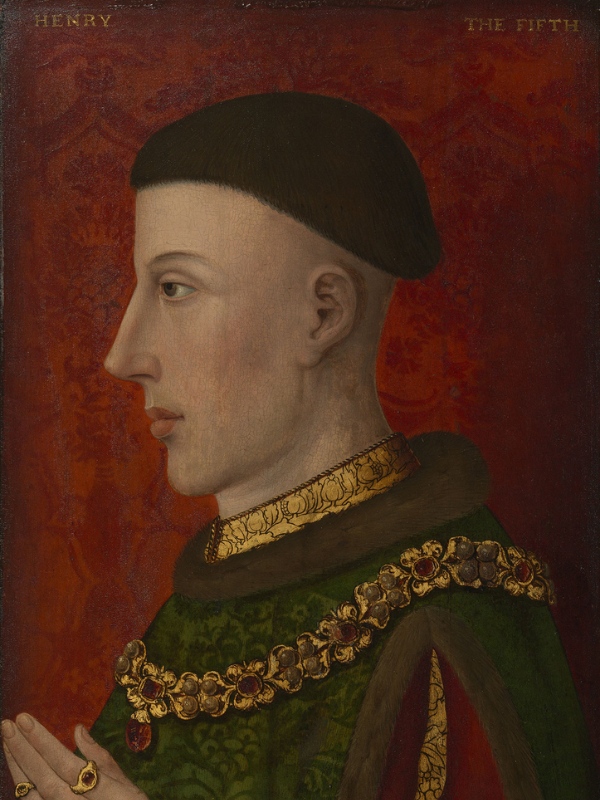
The spectacular and high-velocity reign of King Henry V transformed the fragile Lancastrian regime into the premier military superpower of Western Europe, successfully capitalizing on the civil madness of the French Valois court to revive the Hundred Years' War. Firmly locking down his domestic borders by suppressing the early Lollard rebellions and the Southampton Plot, he launched a massive amphibious land invasion of Normandy in 1415, capturing the fortified port of Harfleur before his high-attrition campaign faced total encirclement.
On 25 October 1415, his exhausted, disease-ridden infantry met the massed chivalry of the French army at the landmark Battle of Agincourt, where his tactical deployment of defensive stakes and the devastating firepower of the English longbow achieved an overwhelming victory that slaughtered thousands of the French aristocracy. He capitalized on this triumph by launching a methodical, multi-year conquest of Normandy, engineering a brutal six-month siege of Rouen that starved the city into submission.
His ultimate diplomatic triumph occurred in 1420 with the signing of the Treaty of Troyes, an international settlement that disinherited the French Dauphin, named Henry as the sole Regent and heir to the French throne, and sealed the alliance through his marriage to Catherine of Valois, an imperial union cut short when he was struck down by dysentery in the field just months before he could wear the double crown of both nations.
Further Information: Henry V
Henry VI
King of England 1422–1461 (First reign)
King of England 1470–1471 (Second reign)
Lord of Ireland 1216–1272
King of France 1422–1453
Bio:
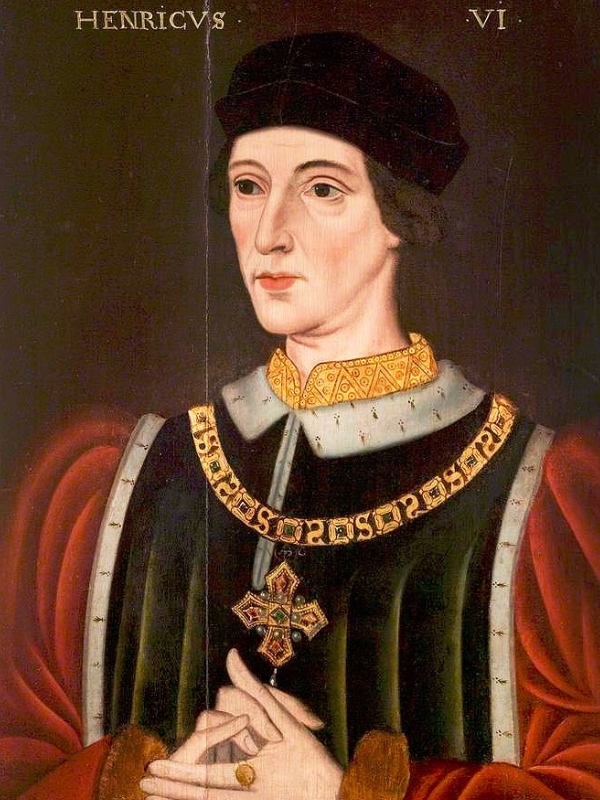
King Henry VI’s long and disastrous dual reign witnessed the total collapse of England's continental empire and a violent descent into absolute domestic lawlessness that permanently shattered the authority of the Lancastrian line. Accessing the throne as a nine-month-old infant, his long minority was managed by a fractured regency council that was completely paralyzed by the sudden resurgence of French nationalism under Joan of Arc, resulting in the steady loss of Paris, Normandy, and ultimately the ancient duchy of Gascony by 1453.
Deeply pious, passive, and completely unsuited to medieval governance, Henry's intense reliance on a highly insular circle of court favorites provoked widespread popular fury, exploding in 1450 into Jack Cade's Rebellion, which saw an armed mob storm London to demand fiscal and legal reforms.
The sudden news of the loss of Bordeaux triggered a total mental collapse in August 1453, leaving the king in a condition of absolute catatonia for over a year and forcing Parliament to appoint his wealthy cousin, Richard, Duke of York, as Protector of the Realm. This political transition ignited the Wars of the Roses, a brutal multi-decade civil war that erupted in 1455 at the Battle of St Albans.
Under the aggressive direction of his queen, Margaret of Anjou, the Lancastrian forces fought a sequence of bloody engagements across the shires, until their total tactical annihilation at the catastrophic Battle of Towton in March 1461 forced Henry into flight, enabling the rival Yorkist branch to claim the crown.
After nine years of northern exile and captivity in the Tower, he was briefly restored to power in October 1470 during the brief political maneuver known as the Readeption, a fragile puppet regime engineered by the turncoat Earl of Warwick that collapsed completely within six months when Edward IV returned to crush the remaining Lancastrian forces at Barnet and Tewkesbury, subsequent to which Henry was systematically murdered in his prison cell to permanently extinguish the Lancastrian claim.
Further Information: King Henry VI
The House of York Cadet Branch
The collapse of the Lancastrian state during the mid-fifteenth century was driven by the emergence of the House of York, a rival branch of the Plantagenet line that held a stronger genealogical claim to the English throne. While the ruling House of Lancaster descended from King Edward III's third son, John of Gaunt, the House of York combined the lineages of both his second surviving son, Lionel of Antwerp, and his fourth son, Edmund of Langley, inheriting a senior hereditary legitimacy through the wealthy Mortimer family line.
This threat became an active political movement under Richard, 3rd Duke of York, who used his immense private wealth, extensive midland estates, and his position as the leader of the dissatisfied nobility to openly challenge the incompetent, favor-driven administration of the ailing King Henry VI. When the Lancastrian court repeatedly tried to strip the 3rd Duke of York of his political influence, he took up arms, initiating a war of survival that transformed from a local attempt to clear the king's council into a total dynastic conflict for the crown itself.
The blood feud reached a critical turning point in December 1460 at the Battle of Wakefield, where the Duke of York was ambushed and killed by Lancastrian forces, his severed head mockingly displayed on the gates of York wearing a paper crown. However, this military disaster failed to break the Yorkist cause, as Richard’s eighteen-year-old heir, Edward, Earl of March, immediately assumed leadership of the faction. The young Earl crushed the western Lancastrian forces at Mortimer's Cross before marching his army directly into London, where the enthusiastic citizenry and the southern nobility formally declared him king.
To secure his title, Edward pursued the fleeing Lancastrian court into a blinding snowstorm in Yorkshire, launching the fierce Battle of Towton on 29 March 1461. Involving over fifty thousand combatants, this engagement became the bloodiest single day of combat on British soil, resulting in a total Yorkist victory that destroyed the core manpower of the Lancastrian army, forced Queen Margaret into exile, and placed the House of York at the head of the realm.
Edward IV
King of England 1461–1470 (First reign)
King of England 1471–1483 (Second reign)
Lord of Ireland 1461–1483
Earl of March 1460–1461
Duke of York 1460–1461
Bio:
The spectacular reign of King Edward IV represented a dynamic shift toward aggressive dynastic consolidation and fiscal modernization, bridging the gap between medieval feudalism and the early modern state.
Ascending the throne at the age of nineteen through his crushing victory at Towton, the young king spent his initial years stabilizing the country, using his immense personal charisma and a series of high-velocity border campaigns to suppress lingering Lancastrian resistance in the far north. However, he provoked an immediate political crisis in 1464 AD by secretly marrying Elizabeth Woodville, a relatively low-born Lancastrian widow, completely undermining the complex international marriage negotiations being conducted by his premier kingmaker and cousin, Richard Neville, Earl of Warwick.
This personal choice, combined with the king's subsequent promotion of the Woodville family to the highest ranks of the peerage, deeply alienated Warwick and the king's own brother, the Duke of Clarence, who launched a sudden domestic coup that forced Edward into a temporary, brief exile in Flanders in 1470. Demonstrating spectacular military drive, Edward returned in 1471 with an elite mercenary force, achieving total tactical triumphs at the Battle of Barnet, where Warwick was killed, and the Battle of Tewkesbury, where the Lancastrian heir was slain.
His second reign was characterized by an extraordinary financial recovery; he negotiated the highly lucrative 1475 Treaty of Picquigny with Louis XI of France to extract an annual pension for the treasury, while aggressively auditing customs extractions and streamlining crown land revenues to become entirely self-funding, leaving a wealthy, secure, and undisputed Yorkist throne at his sudden death.
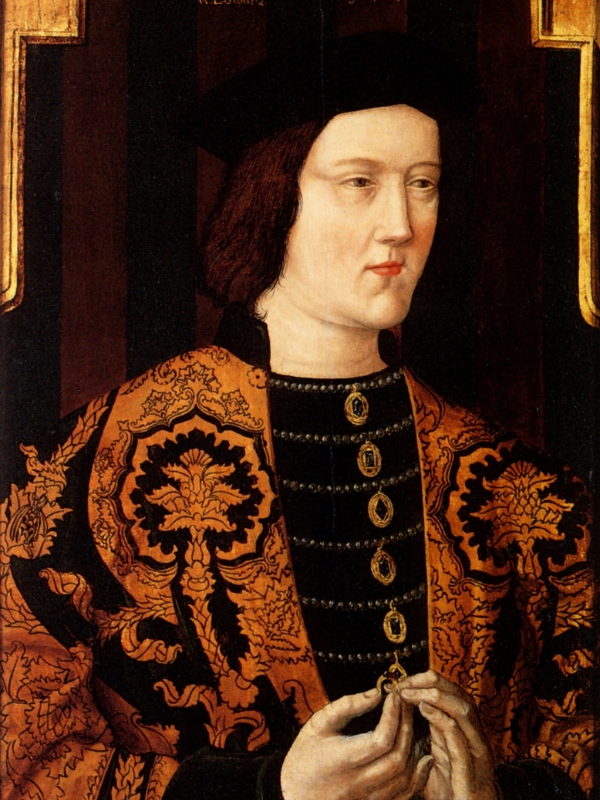
Further Information: King Edward IV
Edward V
King of England April–June 1483
Lord of Ireland 1483
Prince of Wales 1471–1483
Bio:
The tragic and exceptionally brief reign of the boy king Edward V lasted a mere eighty-six days, his entire sovereign footprint completely paralyzed and ultimately destroyed by a swift, ruthless coup d'état engineered from within his own family. Born inside the sanctuary of Westminster Abbey while his father was temporarily exiled in Flanders, Edward spent his youth being meticulously educated at Ludlow Castle under the direct guardianship of his maternal uncle, Anthony Woodville, Earl Rivers.
Upon the sudden death of Edward IV in April 1483, the twelve-year-old prince began his royal progress toward London for his scheduled coronation, but his entou-rage was abruptly ambushed at Stony Stratford by his paternal uncle, Richard, Duke of Gloucester. Gloucester arrested the Woodville loyalists and assumed direct executive control as Protector of the Realm, escorting the young king to the Tower of London under the pretense of preparing for his upcoming ceremonies.
The coronation was repeatedly postponed until June 1483, when a calculated sermon was preached at Paul's Cross declaring that Edward IV's secret marriage to Elizabeth Woodville was bigamous and legally invalid due to a pre-contract with another noblewoman.
Parliament rapidly passed the Titulus Regius decree, declaring Edward V illegitimate and transferring the crown to his uncle, subsequent to which the young prince and his younger brother, Richard of Shrewsbury, vanished completely from the inner chambers of the fortress, generating a multi-generational historical mystery regarding their ultimate assassination in captivity.
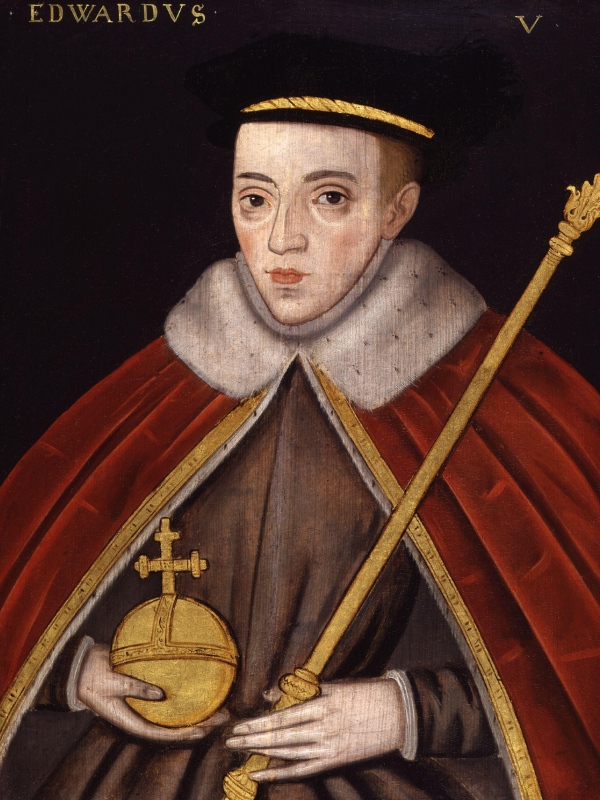
Further Information: King Edward V
Richard III
King of England 1483–1485
Lord of Ireland 1483–1485,
Duke of Gloucester 1461–1483
Bio:
King Richard III’s turbulent and short reign marked the definitive, violent end of the Plantagenet dynasty, his brief grip on power completely consumed by the deep shadow of his usurpation and a continuous state of domestic security alerts.
Having cleared his path to the throne by invalidating his brother's lineage and locking his nephews in the Tower, he instantly faced a severe internal crisis in October 1483 when his key ally, Henry Stafford, 2nd Duke of Buckingham, launched a sudden, failed rebellion in coordination with Lancastrian exiles.
To stabilize his fragile position, Richard implemented an energetic legal program, establishing the Court of Requests to allow impoverished citizens to seek judicial remedies directly from the crown and setting up the Council of the North to streamline administrative security across the turbulent Yorkshire shires. However, his domestic popularity completely evaporated following the sudden death of his sole legitimate son and heir at Middleham Castle, a biological catastrophe compounded by widespread rumors regarding his direct involvement in the murder of the Princes in the Tower.
When the last Lancastrian claimant, Henry Tudor, landed a mercenary fleet in Wales in August 1485, Richard marched his royal forces south to meet the rebels at the Battle of Bosworth Field. Demonstrating immense personal bravery, Richard launched a desperate cavalry charge directly toward Henry's personal banner, killing the enemy standard-bearer before being betrayed by the desertion of the Stanley family and surrounded by hostile infantry, a brutal battlefield death that finalized the total destruction of the Yorkist ruling class and paved the way for the rise of the House of Tudor.
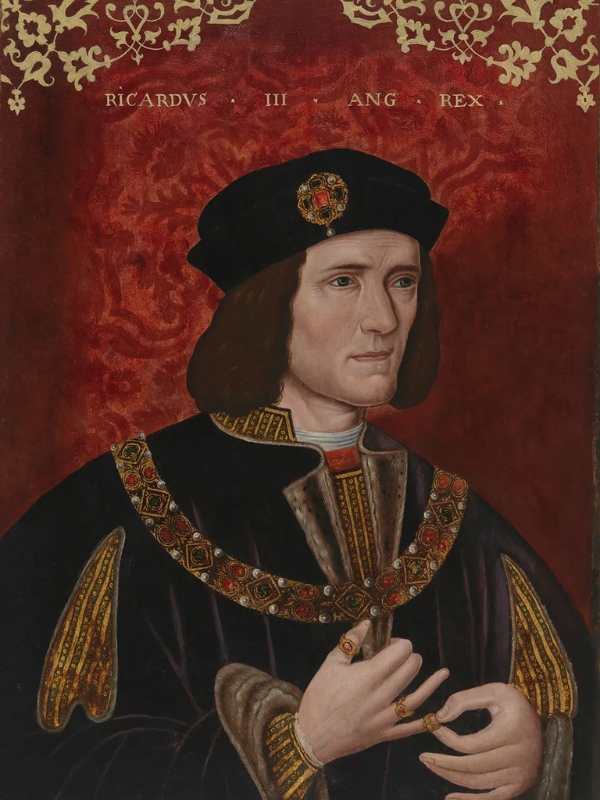
Further Information: King Richard III
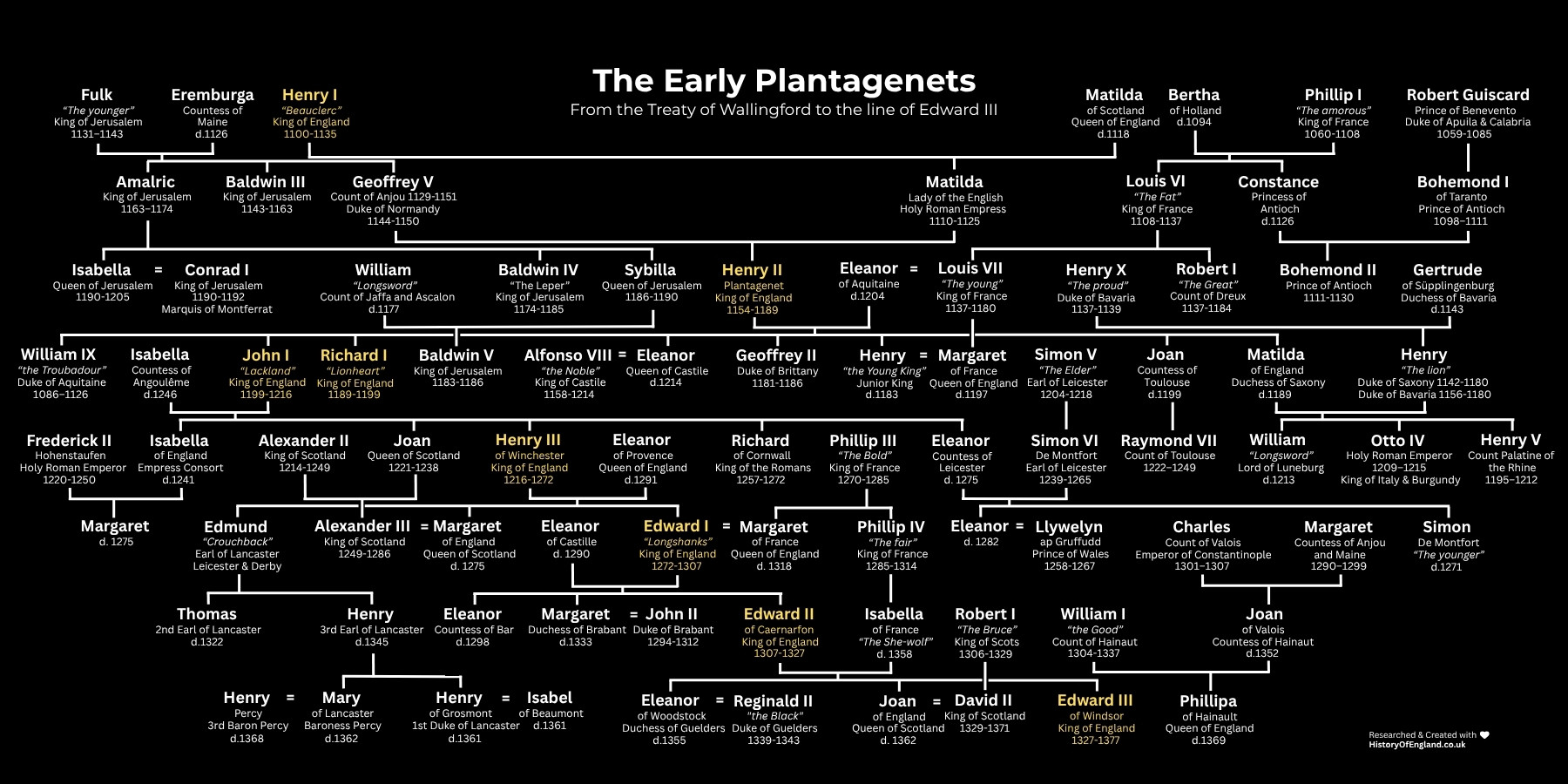
House Of Plantagenet FAQs