
Total Global Conflict:
Britain in WWII
Blood, Toil, Tears and Sweat
Additional Information: The House of Windsor
The declaration of war on 3 September 1939 plunged Great Britain into a six-year global conflict that tested the absolute physical and material survival of the British state. Forced to confront the rapid expansion of the Axis powers across Europe, Asia, and the global seas, the country executed the most complete mobilization of human and industrial capital in the history of the realm, transforming daily life across every town and shire.
While exploring this Second World War era, we track the state’s transition from the early isolation of the Dunkirk evacuation and the Blitz into a total command economy, examine how technological breakthroughs like Bletchley Park codebreaking turned the global tide, and witness how the immense financial and material price of total victory triggered a radical political shift on the home front.
Page Contents:
The Phoney War and the Early Maritime Blockade
September 1939 – April 1940
Additional Information: The Second British Empire / The Empire at War, again
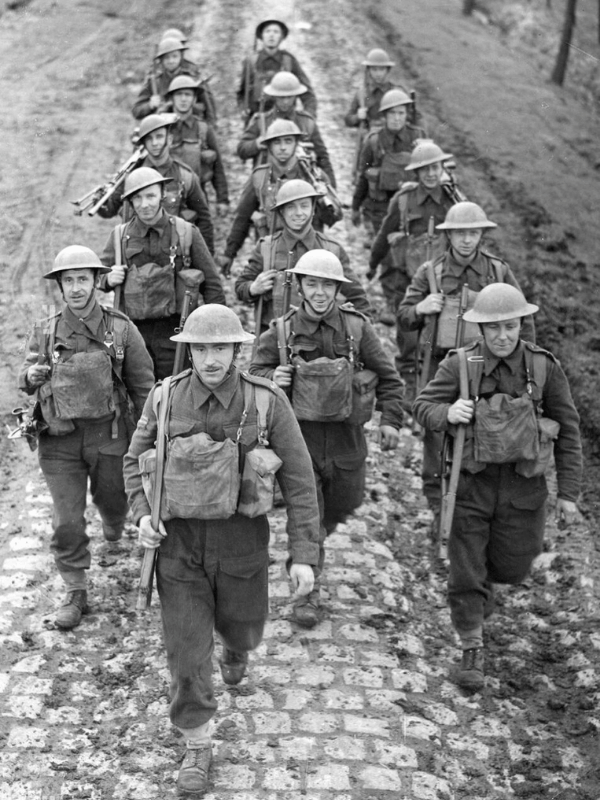
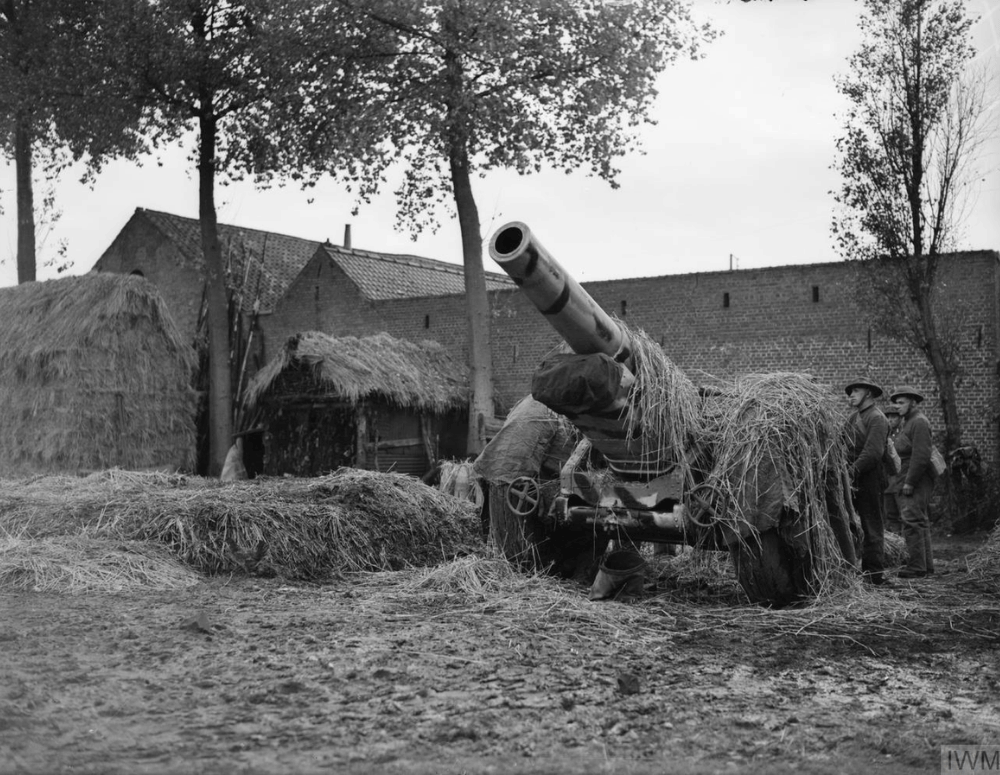
Following the declaration of war, the British Expeditionary Force crossed the English Channel without a single casualty, taking up static positions alongside the French army along the Belgian frontier. As both sides dug into fortified concrete borders like the Maginot Line and the German Siegfried Line, a mutual hesitation locked the continental land front into a static stalemate that lasted for nearly eight months. This stillness on land stood in sharp contrast to the immediate eruption of conflict across the oceans, where the Royal Navy enforced a maritime blockade to choke off the raw materials, oil, and food imports sustaining Germany.
The opening months of the Second World War unfolded as a deceptive lull on land known as the Phoney War, while the Royal Navy immediately enforced an Atlantic blockade to intercept German imports against a counter-offensive by German U-boats. The German high command countered the naval encirclement by launching an aggressive submarine offensive, deploying packs of ocean-going U-boats to hunt down the merchant shipping lines feeding the British Isles.
The vulnerability of home waters was exposed on 14 October 1939 when the German submarine U-47, commanded by Günther Prien, slipped past the defenses of the Scapa Flow naval base. The U-boat torpedoed the battleship HMS Royal Oak at anchor, killing 835 British sailors in a single night.
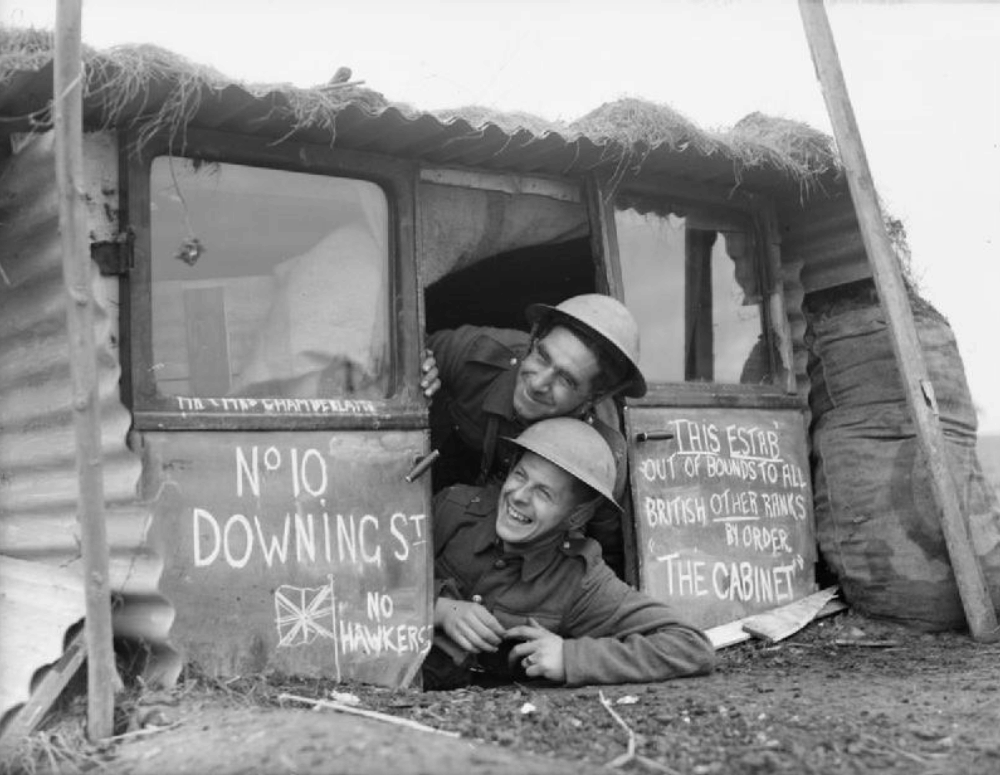
While the land armies waited, this period forced a wave of civil defense mobilization across the home front. Using the wide powers granted under the Emergency Powers Defence Act 1939, the government enforced a nighttime blackout across every city, turning off streetlights and masking windows to blind incoming enemy bombers. Local authorities distributed 38 million gas masks to the civilian population and oversaw the assembly of thousands of corrugated-steel Anderson shelters inside suburban gardens. This civil engineering was paired with a state-directed internal migration under Operation Pied Piper, as millions of schoolchildren were evacuated from urban targets and settled into rural shires to sustain the nation through the transition to total war.
The Zionist Movement in WW2
September 1939 – September 1945
Additional Information: Britain in the First World War / The Balfour Declaration, Interwar Britain / Jewish Terrorism in the Interwar Years, Decline and Decolonisation / The Palestine Mandate Crisis, Post-War Britain / The British Mandate of Palestine and the Creation of Israel
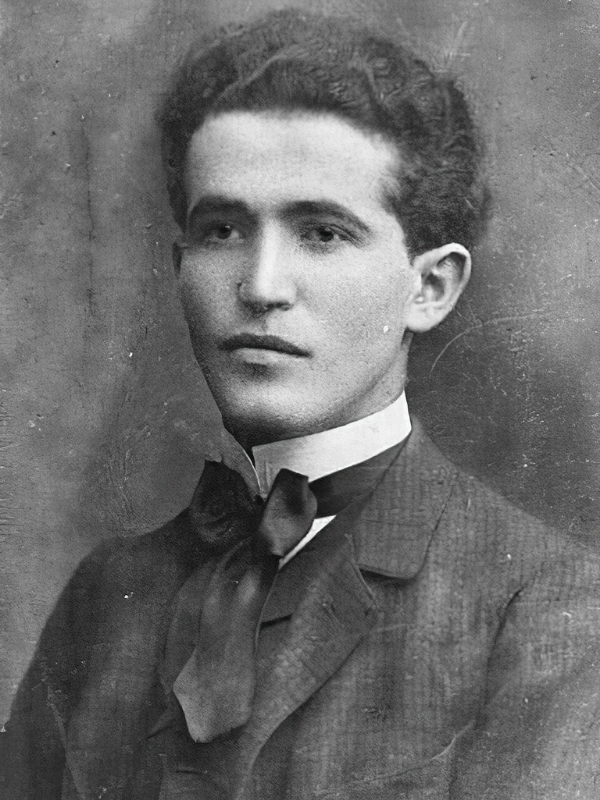
In September 1939, David Ben-Gurion and the Jewish Agency coordinated the mainstream majority of the Jewish population in Mandatory Palestine to align with Great Britain, declaring they would “fight the war as if there were no White Paper, and fight the White Paper as if there were no war.” This policy led to over 30,000 Palestinian Jews volunteering to serve inside the British armed forces. They fought in British uniforms across North Africa, Greece, and Italy, a mobilization that culminated in the formal creation of the Jewish Brigade Group within the British Army in September 1944.
The outbreak of World War II split the Zionist movement in Mandatory Palestine into a mainstream majority that formed a military alliance with Great Britain, and a radical splinter faction that rejected any truce and sought contact with Fascist Italy and Nazi Germany. In August 1940, Avraham Stern led a militant breakaway group from the Irgun to found Lehi, an organization branded by British authorities as the Stern Gang.
Stern operated under the calculation that Great Britain remained the primary enemy because it held physical power over Palestine and blocked immigration under the restrictions of the MacDonald White Paper of 1939. In late 1940 and January 1941, Lehi dispatched an envoy, Naftali Lubenchik, to Vichy-controlled Beirut to establish contact with Nazi Germany's representative, Otto von Hentig. The group offered to enter the war as an active military ally.
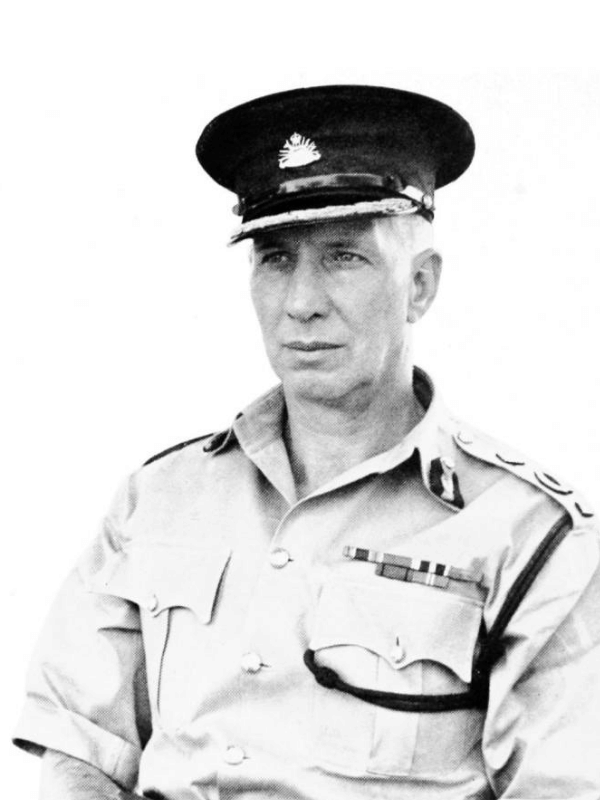
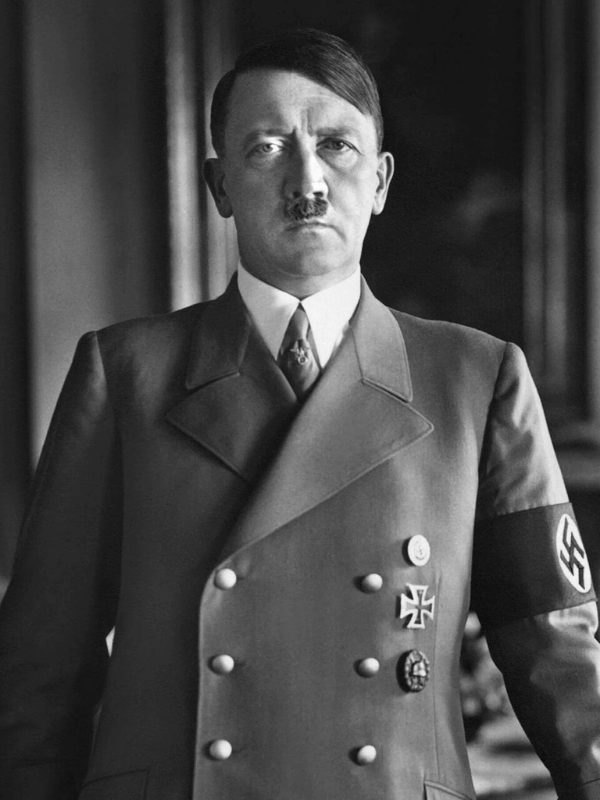
In exchange for launching a guerrilla war to sabotage British military logistics in Palestine, the group demanded that Adolf Hitler guarantee the establishment of a Jewish state and facilitate the evacuation of European Jews. The German Foreign Ministry ignored the proposal, viewing Lehi as too minor to risk disrupting alignments with Arab nationalists. Mainstream Jewish leaders launched the "Saison" (The Hunting Season), actively cooperating with the British Palestine Police Force and the Criminal Investigation Department to hunt down the group. Stern was shot and killed by British police officer Geoffrey Morton in Tel Aviv in February 1942.
Lehi reformed in late 1943 under a triumvirate including Yitzhak Shamir to launch a campaign of assassinations against British officials, culminating in the killing of Lord Moyne, the British Minister Resident in the Middle East, in Cairo in November 1944.
Further Information: The Zionist Movement in WW2
The Norway Campaign
April – May 1940
In late 1939, First Lord of the Admiralty Winston Churchill pushed the British Cabinet to launch Operation Wilfred, a high-stakes maritime plan to lay naval mines inside Norwegian territorial waters. The strategy aimed to break international legal conventions to block the export of high-grade Swedish iron ore, which travelled from the Kiruna mines via the ice-free port of Narvik to supply the German war machine.
Before the British plans were executed, the German military preempted the move by launching Operation Weserübung on 9 April 1940. Commanded by General Nikolaus von Falkenhorst, the Germans deployed simultaneous amphibious landings and paratroopers to capture every major Norwegian port, including Oslo, Bergen, Trondheim, and Narvik, while launching a parallel invasion of Denmark to secure their logistics lines.
The transition from the Phoney War occurred along the Scandinavian frontier due to these raw materials. The British High Command responded to the invasion by deploying an ill-equipped force of infantry, including territorial units and French alpine troops under General Antoine Béthouart, to launch a counter-invasion at Namsos, Åndalsnes, and Narvik. The naval war reached a climax at the Battles of Narvik on 10 and 13 April 1940. In the first clash, Captain Bernard Warburton-Lee led the 2nd Destroyer Flotilla into the fjord under cover of a snowstorm to surprise the enemy. In the subsequent action, the battleship HMS Warspite and an escorting destroyer task force trapped and annihilated an entire flotilla of ten German destroyers, securing a vital maritime victory.
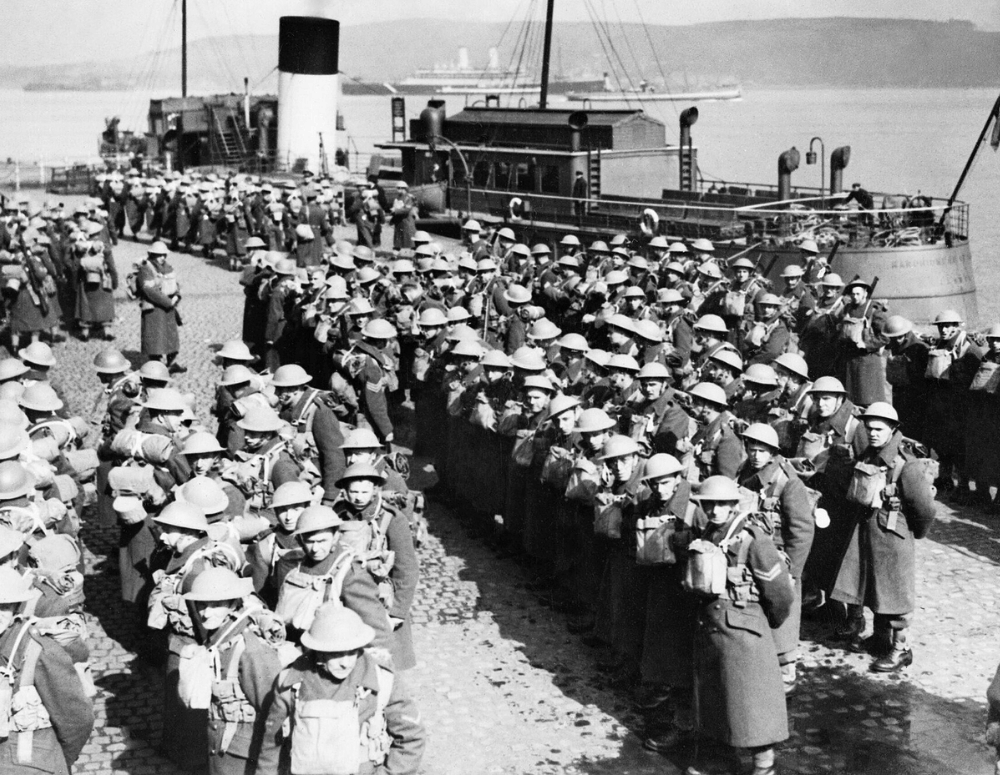
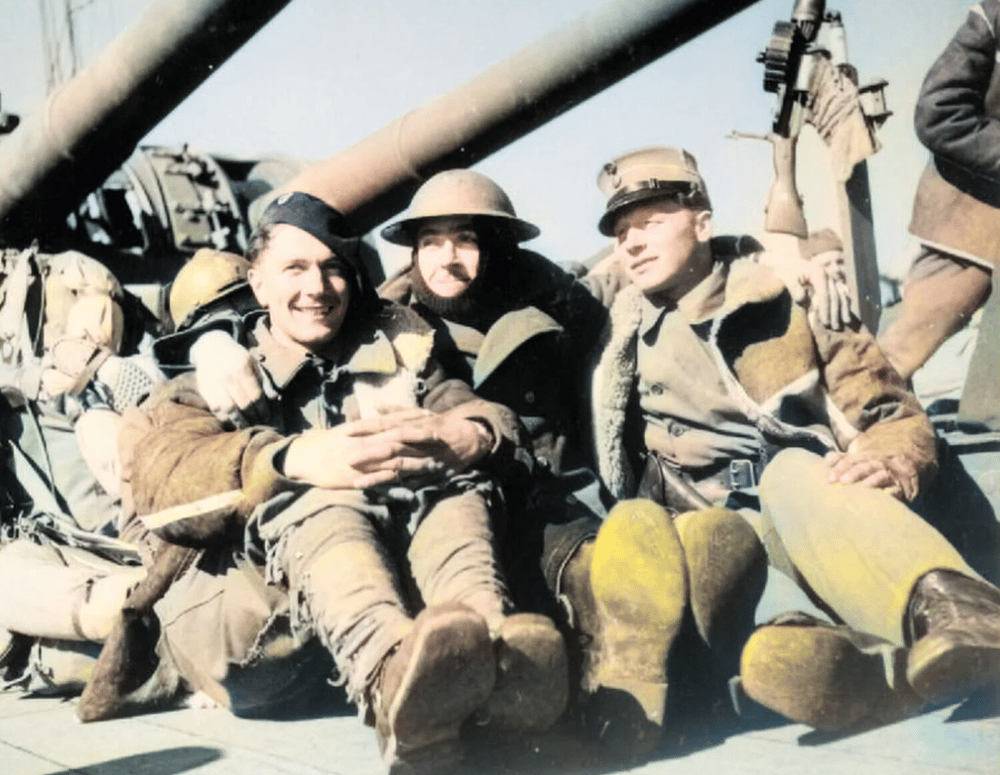
Despite these naval victories, the land campaign devolved into a disaster for the Allied forces. The British infantry, commanded on land by leaders like Major-General Adrian Carton de Wiart at Namsos, lacked air cover, anti-aircraft weaponry, and heavy transport equipment, leaving them pinned to exposed beachheads and driven back by the Luftwaffe. By June 1940, the catastrophic collapse of the French front forced a total withdrawal from Scandinavia under Operation Alphabet, evacuating 24,000 Allied troops.
The campaign cost Britain thousands of casualties, multiple destroyers, and the aircraft carrier HMS Glorious, which was caught and sunk alongside its escorting destroyers HMS Ardent and HMS Acasta by the German battleships Scharnhorst and Gneisenau on 8 June 1940, leading directly to the dramatic collapse of Neville Chamberlain's government in the Norway Debate.
Further Information: The Norway Campaign
Winston Churchill and the Coalition War Cabinet
May 1940
In May 1940, the military collapse in Scandinavia triggered a two-day debate in the House of Commons that altered the leadership of the nation. Confronted by an alliance of opposition Labour members and his own backbench Conservative critics—most notably Leo Amery, who echoed Oliver Cromwell by shouting, "You have sat too long for any good you have been doing lately... In the name of God, go!"—Prime Minister Neville Chamberlain saw his parliamentary majority drop from over 200 to just 81 during a high-stakes division vote. Recognizing that he had lost the political authority to lead a nation at war, Chamberlain resigned his office.
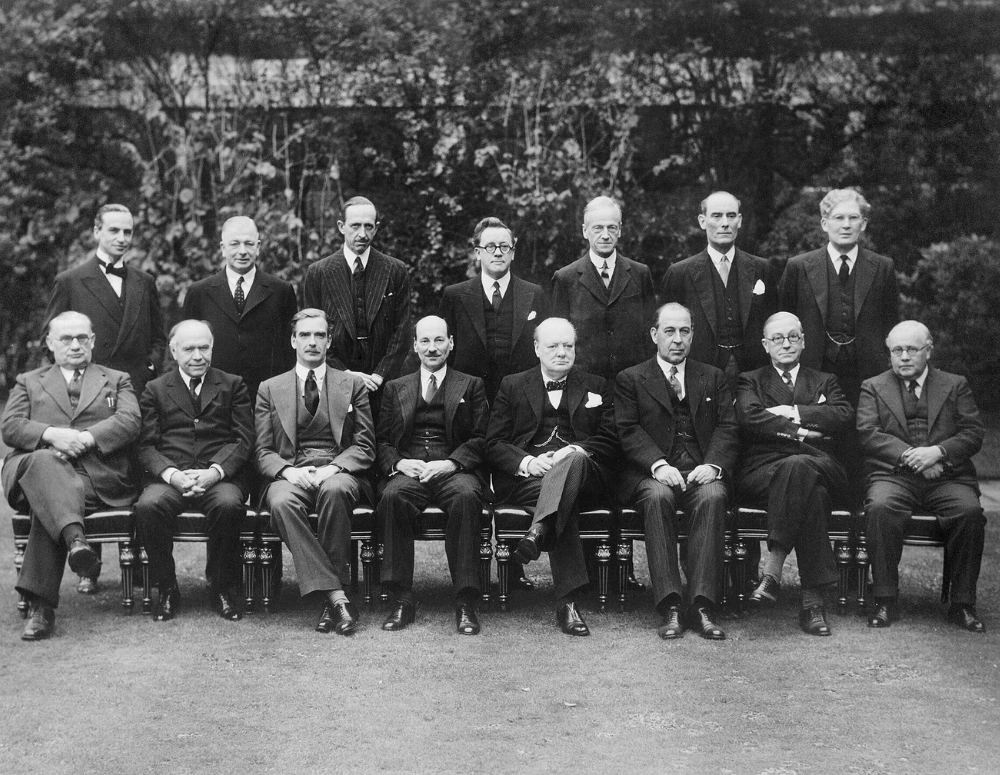
The Norway Debate in May 1940 resulted in the resignation of Neville Chamberlain and the appointment of Winston Churchill as Prime Minister, who formed an all-party Coalition Government and a five-member War Cabinet to manage the total war effort. On the evening of 10 May 1940—the morning the German army launched its invasion of France and the Low Countries—Winston Churchill was summoned to Buckingham Palace by King George VI to form a government. Churchill bypassed partisan rivalries to construct a national Coalition Government, establishing a small, five-member War Cabinet to manage the military crisis.
Churchill centralized control over the military apparatus by appointing himself as Minister of Defence, a bureaucratic maneuver that placed the army, navy, and air force chiefs under a single authority. Operating from the subterranean Cabinet War Rooms buried beneath the streets of Whitehall, he transformed the administration into a command engine for total war. Delivering a sequence of speeches to Parliament and the nation, Churchill rejected any possibility of a negotiated peace with Adolf Hitler, framing the conflict not as a standard European dispute, but as an existential struggle for the survival of Western civilization.
Further Information: Winston Churchill and the Coalition War Cabinet
The Fall of France and Dunkirk Evacuation
May - June 1940
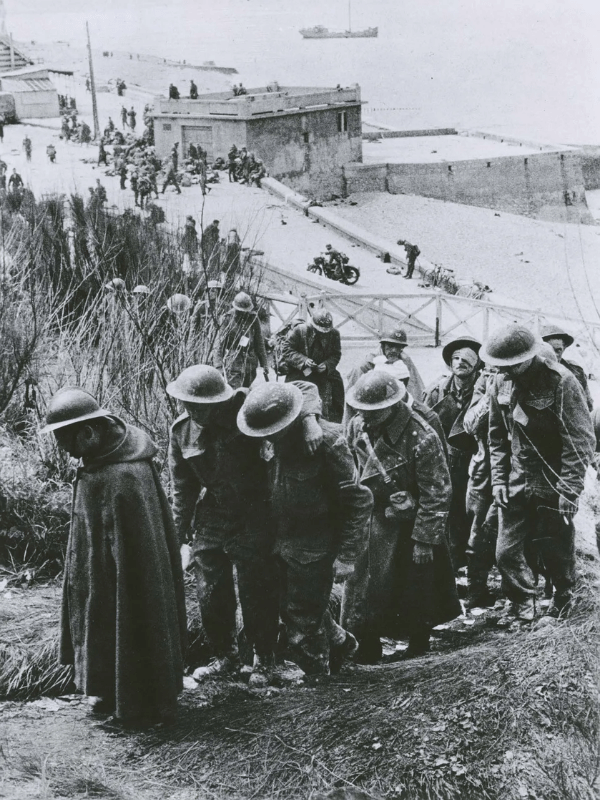
In May 1940, German forces utilized flexible armoured divisions closely coordinated with dive-bombers to cut through the Ardennes forest and bypass the Maginot Line. This flanking maneuver sliced straight to the coast at Abbeville, trapping the British Expeditionary Force and the French First Army against the English Channel. By late May, the surviving elements of the British Expeditionary Force were compressed into a tight defensive pocket around the port of Dunkirk, facing annihilation or mass capture by the advancing German army.
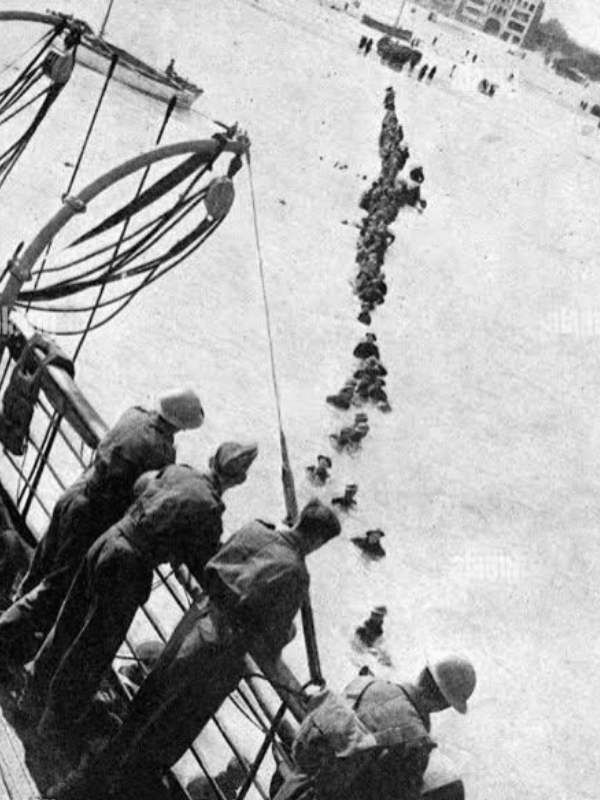
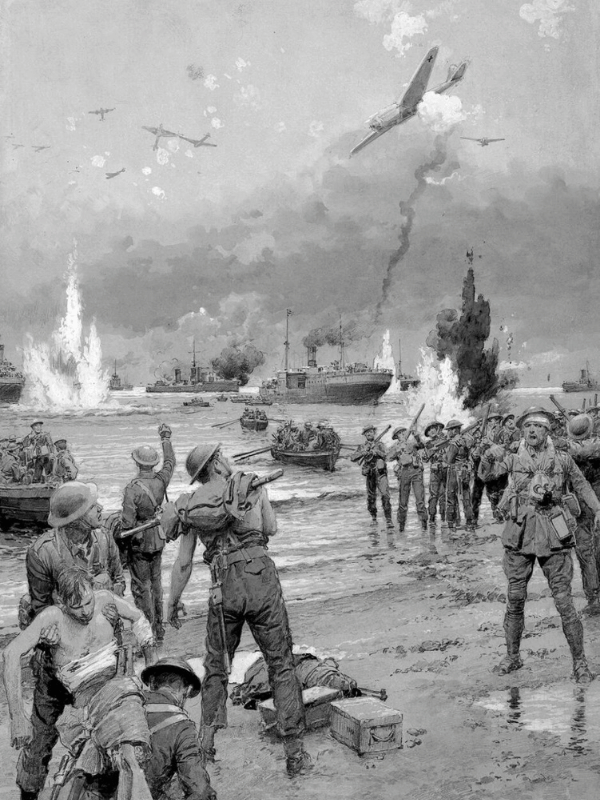
The German blitzkrieg breakthrough at Sedan trapped the Allied armies against the sea, forcing the evacuation of 338,226 troops from Dunkirk under Operation Dynamo and leaving Great Britain militarily isolated after the subsequent Fall of France. Winston Churchill’s War Cabinet responded by launching Operation Dynamo, a maritime evacuation commanded by Vice-Admiral Bertram Ramsay from the naval headquarters beneath Dover Castle. The Admiralty mobilised the available naval network, deploying 222 professional destroyers and minesweepers alongside a fleet of over 700 civilian "Little Ships"—including merchant trawlers, pleasure cruisers, and lifeboats—to cross the Channel under relentless Luftwaffe bombardment.
The Dunkirk evacuation proved to be a major logistical triumph, extracting 338,226 Allied soldiers, including over 220,000 British troops and 120,000 French and Belgian troops, from the burning beaches and harbor moles between 26 May and 4 June 1940. While the extraction saved the professional core of the British Army from destruction, the campaign remained a military disaster.
The retreating forces were forced to abandon their entire heavy equipment inventory, leaving behind 64,000 vehicles, 2,472 heavy artillery pieces, and 90,000 tonnes of vital ammunition in the sand. With France formally surrendering weeks later on 22 June 1940, Great Britain emerged from the campaign facing a lone defense against the forces of Axis Europe.
The Battle of Britain and the Defense of the Skies
July – October 1940
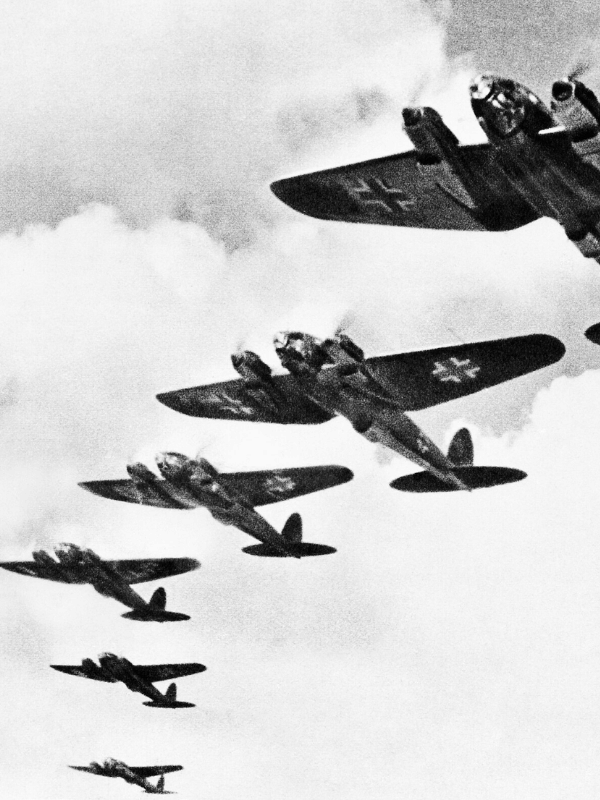
In July 1940, the German Luftwaffe launched a systematic aerial offensive against Great Britain to secure air supremacy over the English Channel, an operational prerequisite for Adolf Hitler’s planned seaborne invasion, Operation Sea Lion. Reichsmarschall Hermann Göring directed his air fleets to destroy the infrastructure of the Royal Air Force, initiating the Battle of Britain.
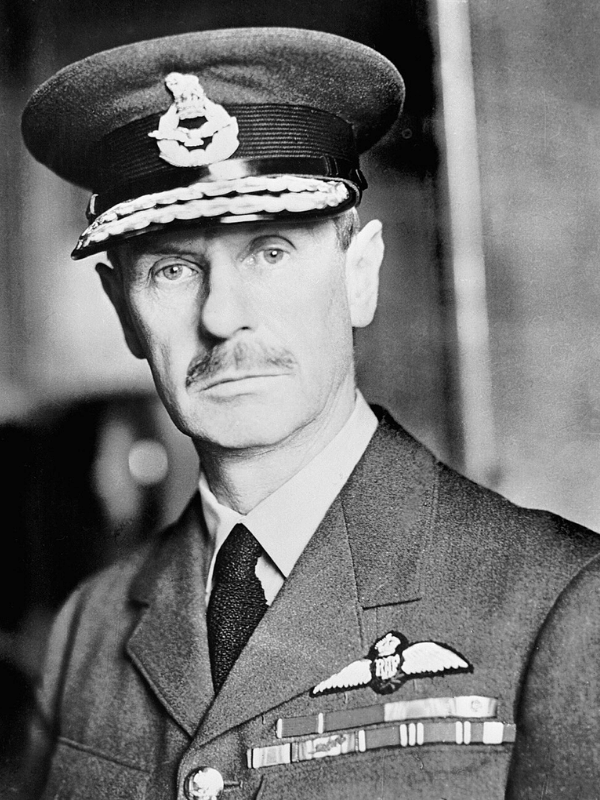
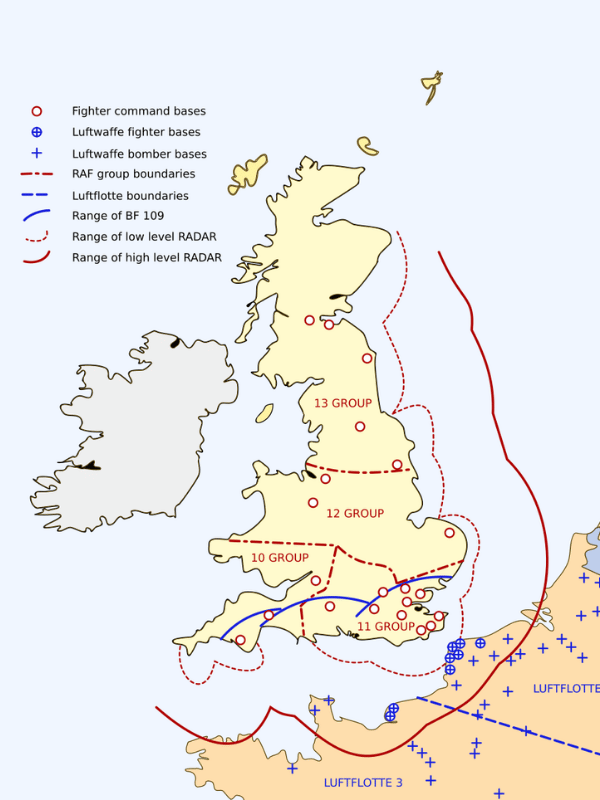
The defensive strategy of the state relied on the Dowding System, a command network engineered by Air Chief Marshal Sir Hugh Dowding that integrated the Chain Home radar stations with ground observers, telephone networks, and the fighter squadrons of Group 11 under Air Vice-Marshal Keith Park.
The defense of the skies depended on the production of high-speed fighter aircraft and the tactical mobilization of radar tracking technology. Throughout August 1940, German bombers and fighter escorts focused their assaults on frontline airfields and sector stations in the south-east of England, targeting locations like Biggin Hill, Kenley, and Hornchurch to ground RAF Fighter Command. The Treasury under Lord Beaverbrook accelerated factory production line operations to replace destroyed fighters, maintaining a steady output of Supermarine Spitfires and Hawker Hurricanes to match German Messerschmitt Bf 109 fighters. This industrial mobilization allowed the RAF to maintain its defensive operations despite damage to its ground operations.
The focus of the battle shifted on 7 September 1940 when the Luftwaffe diverted its bombers away from the battered RAF airfields to launch mass retaliatory raids against London. This tactical shift gave the sector stations a crucial operational window to repair their infrastructure and refit their squadrons. On 15 September 1940, a date subsequently designated as Battle of Britain Day, Göring launched two massed waves of aircraft across the coast, expecting a collapsed defense. RAF Fighter Command deployed its entire operational strength, intercepting the formations and destroying fifty-six German aircraft.
This decisive aerial engagement forced Hitler to indefinitely postpone Operation Sea Lion, marking the first major setback for the German military expansion and ensuring Great Britain remained an uninvaded base for the global conflict.
Further Information: The Battle of Britain and the Defense of the Skies
The Blitz and Urban Bombardment
September 1940 – May 1941
On 7 September 1940, the Luftwaffe launched an offensive against London, deploying hundreds of bombers to drop high-explosives and incendiary canisters across the capital. This assault initiated a campaign of nighttime aerial bombardments known as the Blitz, which targeted major population centres for fifty-seven consecutive nights. The German air fleets expanded their destruction across industrial hubs, using radio-navigation beams like Knickebein to find targets in the dark and execute night raids against manufacturing nodes like Birmingham, Sheffield, Manchester, Liverpool, and Glasgow.
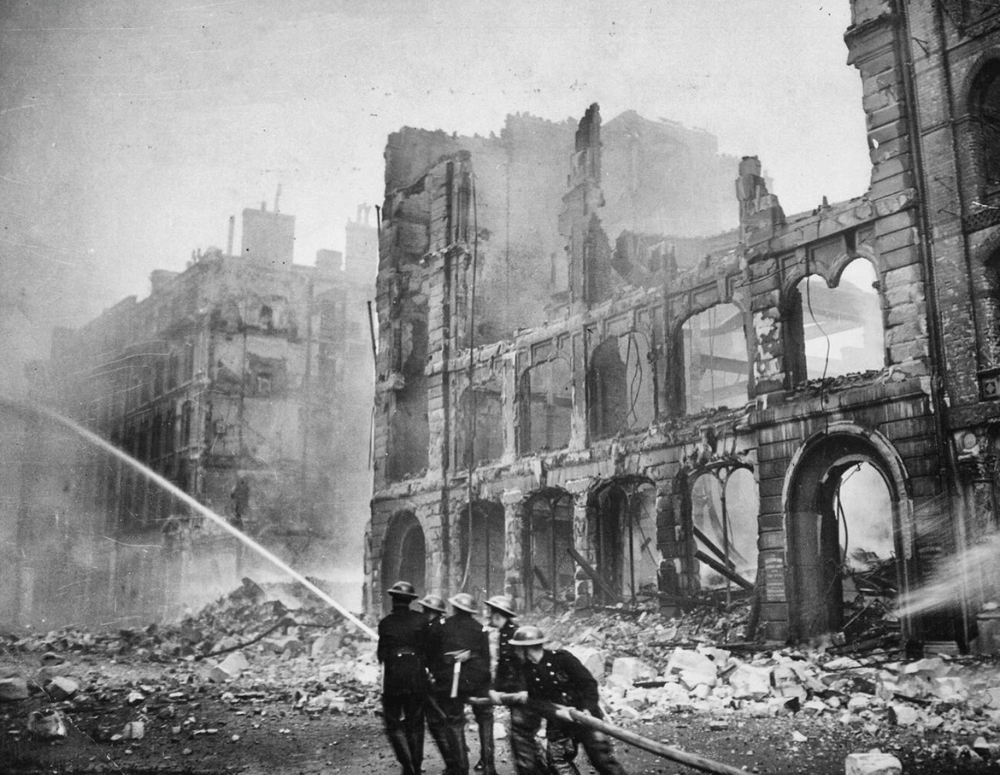
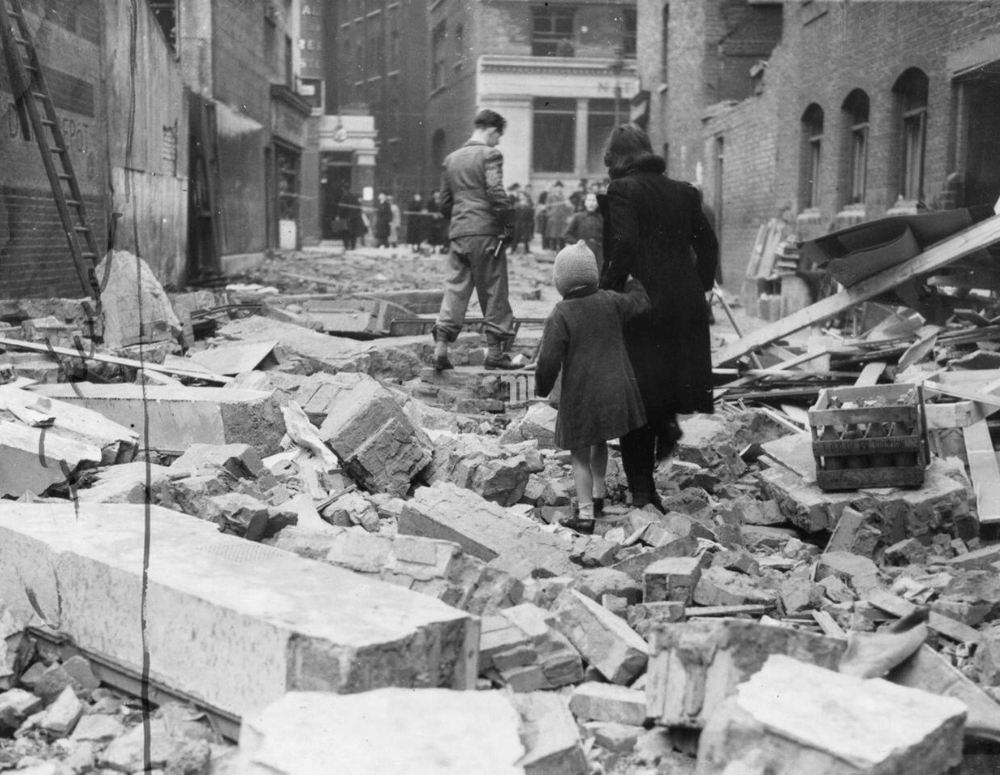
The failure of the Luftwaffe to secure air supremacy forced a shift in German strategy, launching an eight-month campaign of nighttime aerial bombardments that killed over 40,000 civilians but failed to break wartime manufacturing output. The peak of this urban devastation occurred on the night of 14 November 1940 during the Coventry Blitz, when German bombers dropped 500 tonnes of high-explosives and 30,000 incendiary canisters, leveling the city centre and temporarily disrupting local aero-engine foundries. Daily life turned into a routine of social discipline and civil defense, with communities organizing Air Raid Precautions wardens, fire-watchers, and the volunteer Auxiliary Fire Service to rescue survivors from collapsed buildings.
Over 150,000 citizens sought protection inside the deep underground tube stations of London, while millions packed into corrugated-steel Anderson shelters in their gardens or indoor Morrison shelters. The Blitz killed 43,500 civilians, wounded 50,000 more, and destroyed or damaged one million homes across the country. However, it failed to disrupt national industrial output or break civilian morale. Instead of fracturing the population, the shared danger turned the home front into a resilient workforce determined to sustain the conflict. The campaign drew to a close after a heavy raid on London on 10 May 1941, as Hitler shifted the Luftwaffe eastwards to prepare for the invasion of the Soviet Union.
Further Information: The Blitz and Urban Bombardment
Bletchley Park and the Ultra Intelligence Network
September 1939 – May 1945
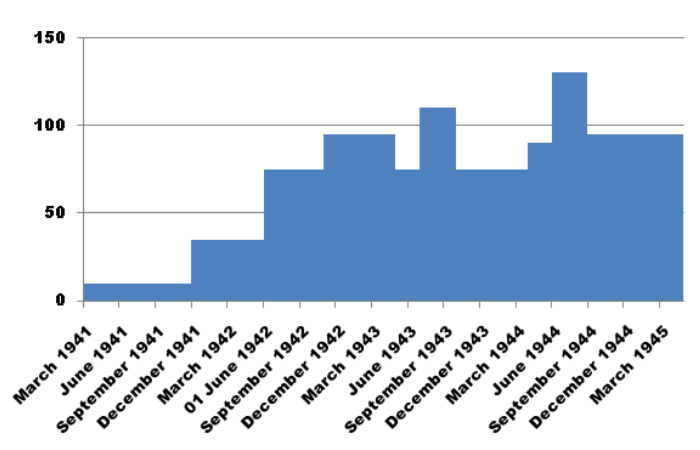
In August 1939, the Government Code and Cypher School relocated from London to a Victorian estate in Buckinghamshire under the cover name of Station X. This facility assembled a specialized workforce of mathematicians, linguists, and chess champions to break the military encryption codes utilized by the Axis powers. This facility turned codebreaking into an organized intelligence industry that operated around the clock to strip away German operational secrecy.
The establishment of the Government Code and Cypher School at Bletchley Park provided Great Britain with a decisive intelligence advantage, using automated codebreaking systems to intercept German communications and generate the top-secret Ultra intelligence that protected the Atlantic convoy routes. The core of this system was designed by mathematician Alan Turing and his colleague Gordon Welchman. Together, they developed the Bombe—an electromechanical computing device built to test thousands of mathematical combinations to decrypt the variable daily wheel settings of the German Enigma cipher machines.
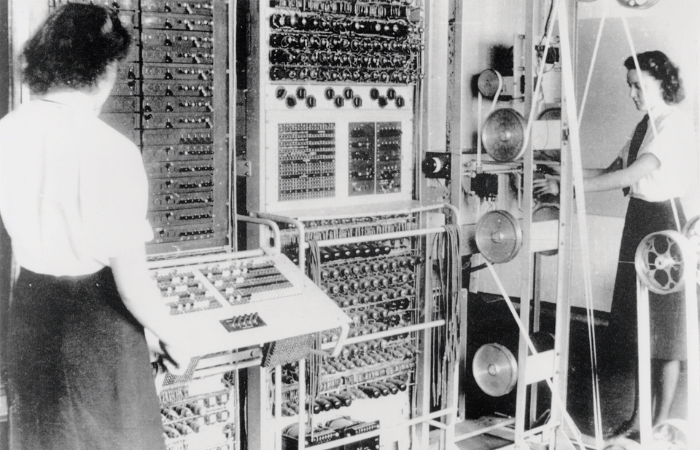
By late 1941, Bletchley Park automated this system, generating a continuous stream of high-grade intelligence codenamed Ultra. To decode the more complex Lorenz ciphers used by the German High Command, the team constructed Colossus in 1943, designed by engineer Tommy Flowers as the world's first programmable digital electronic computer.
Ultra intelligence provided the Allied high command with a clear view of German military plans across every front. It allowed the Admiralty’s Operational Intelligence Centre to track the locations and patrol grids of German U-boat wolfpacks in the Atlantic. This configuration enabled merchant convoys to be re-routed around danger zones, saving millions of tonnes of food, oil, and ammunition. Ultra also exposed Erwin Rommel's supply lines in North Africa and revealed the technical specifications of German radar and V-weapon projects.
The Atlantic Charter and Re-alignment of Global Power
August 1941
In August 1941, while Great Britain faced strategic isolation and the Soviet Union retreated under the weight of the German invasion, Prime Minister Winston Churchill conducted a secret diplomatic mission to secure a formal alliance with the United States. Traveling across the North Atlantic aboard the battleship HMS Prince of Wales, Churchill arrived at Placentia Bay off the coast of Newfoundland to conduct face-to-face negotiations with President Franklin D. Roosevelt aboard the USS Augusta. This high-level summit resulted in a joint declaration issued to the global press on 14 August 1941.
The drafting of the Atlantic Charter on 14 August 1941 established a joint post-war blueprint between Winston Churchill and Franklin D. Roosevelt that bound American economic power to the defense of Great Britain while legally undermining the future trade monopolies of the British Empire. The core of this eight-point document pledged that neither nation would seek territorial expansion, affirmed the right of all peoples to choose their own form of government, and demanded equal access to global trade and raw materials. For Roosevelt, the charter served as a vehicle to prepare the isolationist American public for eventual entry into the conflict, framing the war as a moral crusade for democracy, open markets, and national self-determination.
For the British government, the signing of the Atlantic Charter was a bittersweet compromise that carried a heavy long-term price for the empire. While the declaration bound the economic weight of the United States directly to the preservation of the British realm, its explicit clauses regarding self-determination and free trade directly challenged the cohesion of the British Empire.
Churchill attempted to safeguard the empire by inserting the phrase "with due respect for their existing obligations" into the free-trade clause to protect the Imperial Preference tariff system established at the 1932 Ottawa Conference. However, the language of the charter ultimately forced London to agree to the eventual dismantling of its colonial trade monopolies in exchange for immediate American military supply and the Lend-Lease Act lifelines.
American Aid: Cash and Carry, and Lend-Lease
September 1939 – August 1945
In November 1939, the United States Congress revised the Neutrality Act to establish the "Cash and Carry" framework. This system required Great Britain to pay for all weapons, ammunition, and steel purchased from American foundries upfront in gold bullion and transport them on British vessels.
This drain emptied the United Kingdom's global gold reserves, threatening to freeze the transatlantic supply chain completely once liquid assets ran out by the end of 1940. Facing sudden financial insolvency, Prime Minister Winston Churchill sent a detailed letter to President Franklin D. Roosevelt in December 1940 to warn that Britain could no longer pay for vital war supplies.
The passage of the United States Lend-Lease Act in March 1941 solved Great Britain's impending financial bankruptcy by bypassing cash transactions and shipping billions of dollars in military and economic aid directly to the United Kingdom. This legislative change allowed the American government to manufacture and ship warships, fighter aircraft, tanks, oil, and food directly to the United Kingdom as a state loan. This arrangement transformed the United States into what Roosevelt termed the "Arsenal of Democracy."
The influx of American aid reinforced the logistics of the British home front, keeping the domestic economy moving. Thousands of mass-produced trucks, locomotives, and Liberty ships flooded the transport routes, while millions of tonnes of American tinned meat and powdered milk stabilized the domestic rationing system. Although this aid kept Britain in the war, it carried a heavy long-term cost.
To qualify for Lend-Lease, the British government was forced to liquidate its corporate holdings in America—such as the American Viscose Corporation—and hand over its secret military technology secrets, including the Cavity Magnetron, directly to Washington.
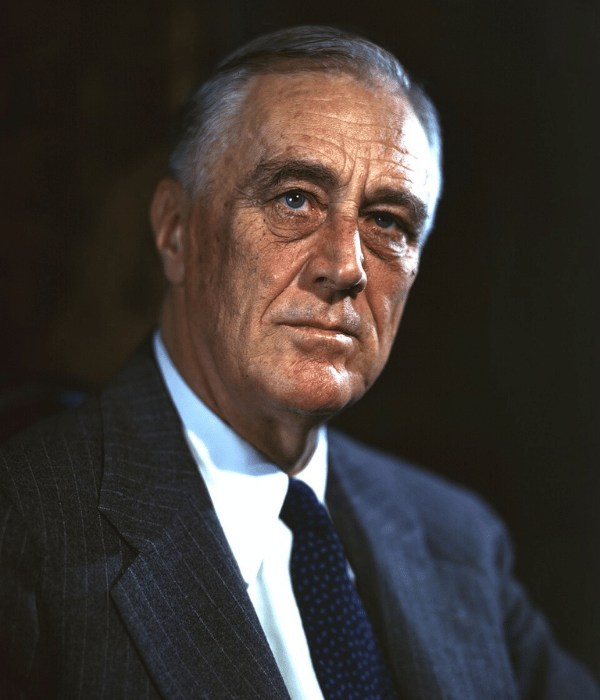
Conscription, Rationing, and the Factory Network
1939 - 1945
In May 1940, Parliament passed the Emergency Powers (Defence) Act 1940, granting the state sweeping executive authority to direct the personal services and property of all citizens.
Under the uncompromising direction of Ernest Bevin, the Minister of Labour and National Service, the government used this system to enforce compulsory military and industrial call-ups. This administration aggressively directed the movement of adult citizens, shifting the human resources of the nation into wartime logistics to match the industrial output of Axis Europe. The total expansion of the home front under the National Service Acts effectively conscripted the civilian population into vast military and manufacturing networks, while a highly regulated domestic economy countered the lethal threat of the German submarine blockade.
In December 1941, an updated National Service Act expanded conscription to include single women and childless widows aged between 18 and 30, a legislative milestone that marked the first female military draft in British history. Millions were systematically directed into ammunition factories, ordnance laboratories, and aircraft foundries, or deployed across the countryside within the Women's Land Army—popularly known as "Land Girls"—to secure domestic food production. Bevin expanded this industrial draft through the "Bevin Boys" scheme in December 1943. To prevent political favoritism, the Ministry used a strict lottery ballot based on the final digits of conscripts' National Service registration numbers to direct 10% of all young men—roughly 48,000 conscripts, including future prominent figures like Eric Morecambe—directly into the coal mines instead of the armed forces to address a critical national fuel shortage.
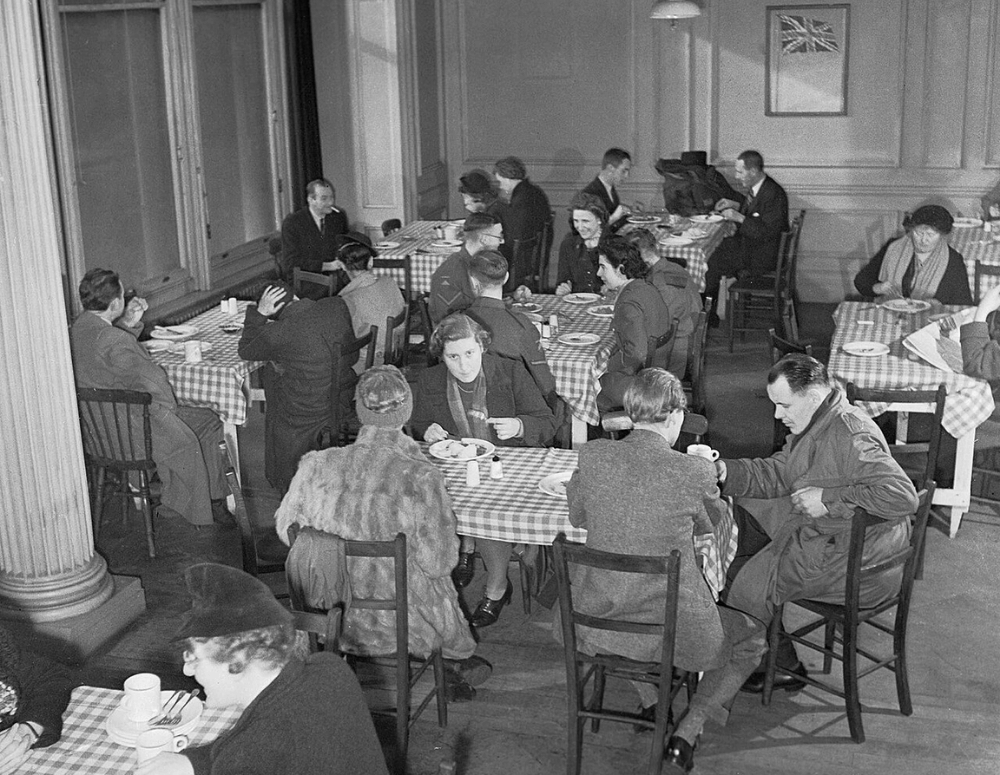
Concurrently, civilian life was completely standardized through a strict regulatory framework overseen by the Ministry of Food, led by Lord Woolton. Every household was placed on a national register and issued Ration Books, which restricted weekly consumption to fixed ounce metrics: an average adult ration allowed for just 2 ounces of butter, 2 ounces of cheese, 4 ounces of margarine, 8 ounces of sugar, and 2 ounces of tea.
To conserve critical shipping space and raw materials, the government banned the manufacture of luxury consumer goods, nationalized civilian scrap metal collection, and introduced the civilian "Utility" clothing and furniture scheme in 1941. Marked by the distinctive "CC41" utility logo, this program forced domestic industries to adopt simplified, material-saving designs that stripped away pockets, pleats, and excessive buttons to preserve raw timber, steel, and cotton cloth for the military.
Further Information: Conscription, Rationing, and the Factory Network
The Imperial Contribution
1939 - 1945
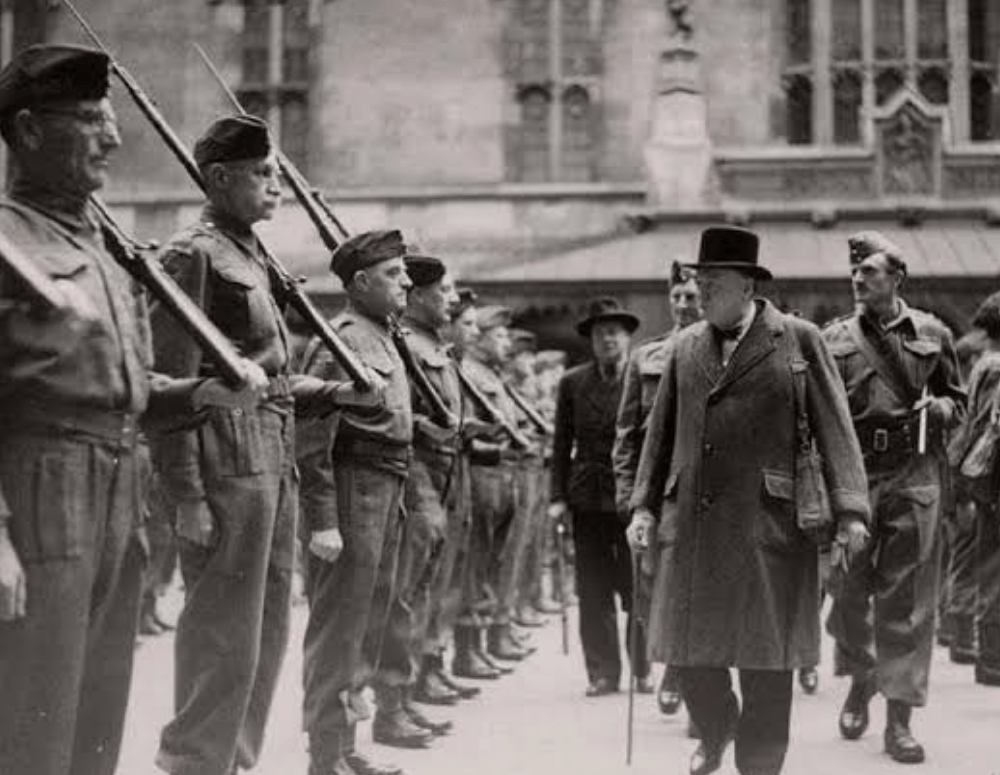
In September 1939, the declarations of war issued by Canada, Australia, and New Zealand, alongside the unilateral entry of the British Raj, integrated the global network of the British Empire directly into the conflict. By directing their demographic and material resources into the war effort, these territories supported the survival of the British Isles during the period of strategic isolation. The scale of this mobilization exceeded all historical precedents, with the British Raj in India assembling a volunteer army that grew to 2.5 million personnel by the end of hostilities.
The defense of the United Kingdom and its multi-theater strategy relied on the mobilization of the British Empire, integrating over five million troops from India, Canada, Australia, New Zealand, and the African colonies into the Allied war effort. This Asian mobilization was maintained despite domestic political volatility and civil unrest. The Indian National Congress opposed fighting for the Crown while being denied immediate self-determination, culminating in the launch of the Quit India Movement in August 1942 under Mahatma Gandhi. To prevent an administrative collapse, the British government dispatched the Cripps Mission in March 1942, promising post-war dominion status and the right to secede from the Empire. Backed by these guarantees, Indian divisions fought across East Africa, North Africa, Italy, and Burma, suffering 87,000 fatalities.
Concurrently, the self-governing Dominions executed an industrial and demographic mobilization. Canada deployed 1.1 million citizens across its armed forces, with the Canadian First Army functioning as an armored and infantry spearhead during the invasions of Sicily, Italy, and Normandy. The Royal Canadian Navy grew from 13 warships to nearly 400 vessels, allowing Ottawa to protect the northwestern Atlantic convoy sectors. Australia and New Zealand mobilized 993,000 and 194,000 troops respectively, providing infantry for the Mediterranean theater and spearheading operations at the Battles of El Alamein before the entry of Japan forced Australia to recall its core divisions to defend the Pacific frontier.
To sustain this effort, the Dominions turned their economies into specialized industrial hubs. Under the British Commonwealth Air Training Plan, Canada became the flight school of the alliance, training 131,500 Allied aircrew while mass-producing Lancaster bombers and Hawker Hurricanes.
African colonies like Nigeria, Kenya, and the Gold Coast supplied 374,000 troops to the Royal West African Frontier Force and the King's African Rifles to fight the Japanese in the Burma Campaign. While this pooling of wealth secured victory, it permanently altered the power balance between London and its satellites, accelerating post-war decolonization.
Further Information: The Imperial Contribution
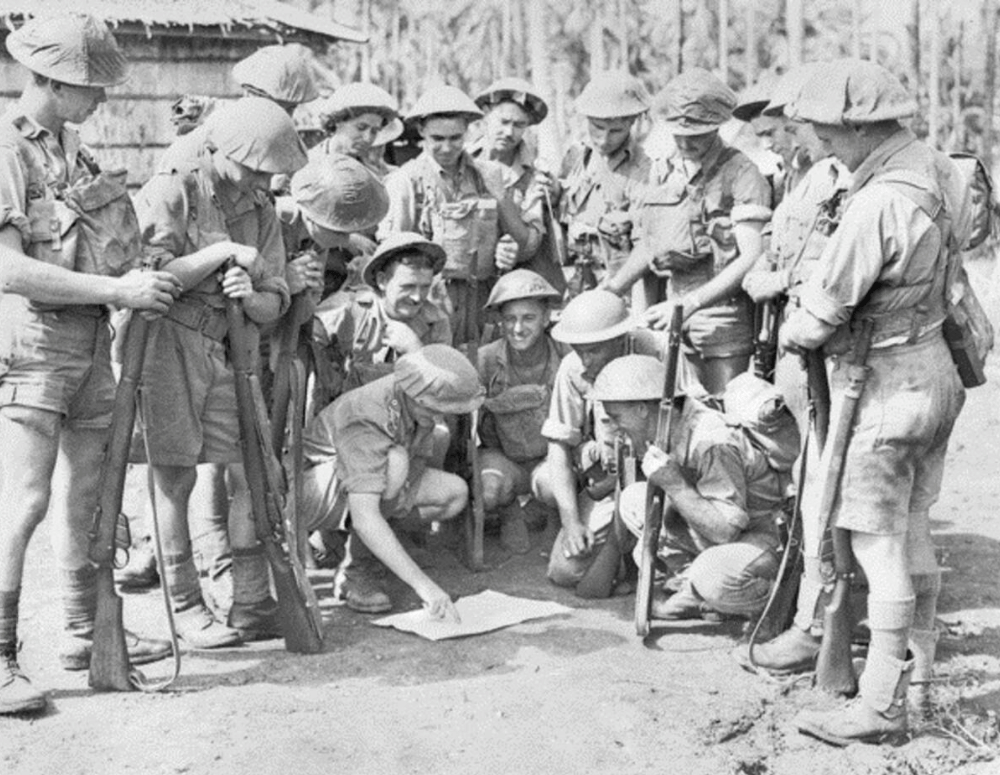
The North Africa Campaign and the Western Desert Force
September 1940 – June 1942
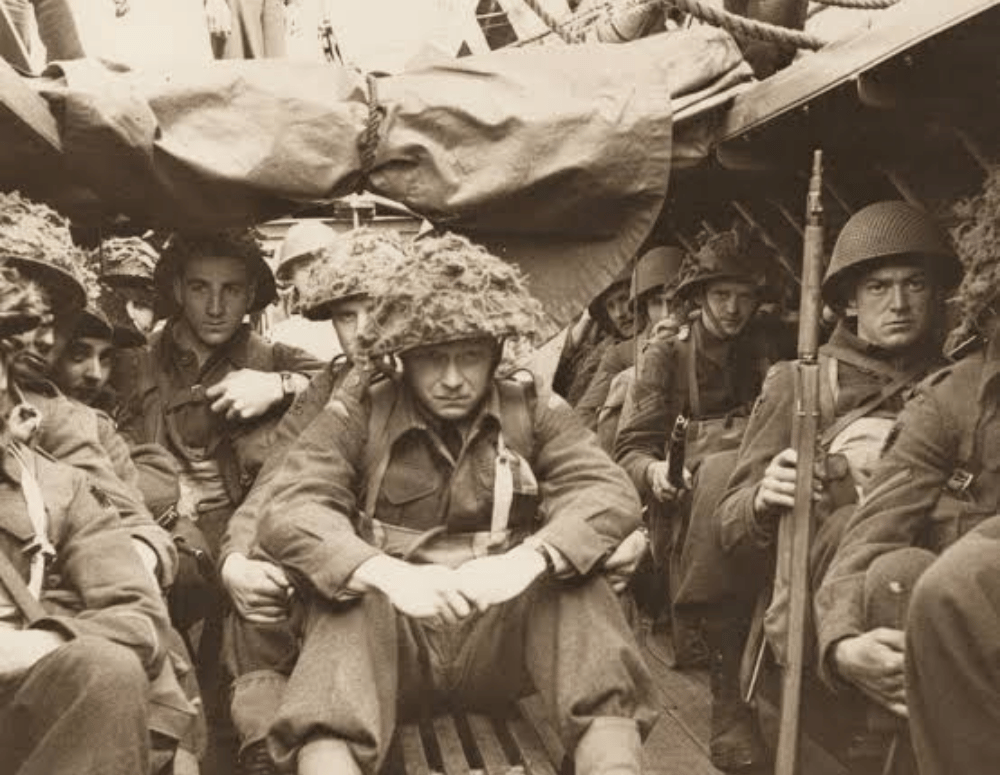
In September 1940, Benito Mussolini ordered the Italian Tenth Army to cross the Libyan border into Egypt, establishing a series of fortified camps along the Mediterranean coast. The strategic focus of this desert war was the defense of the Suez Canal—the maritime artery linking the United Kingdom to the resources of the British Raj—and the preservation of the oil fields in the Middle East. If Axis forces broke through the Egyptian frontier, they would sever the British state from its global imperial resources and secure a land bridge to the oil wells of Persia and Iraq.
The entry of Italian forces into Egypt in September 1940 opened the North Africa Campaign, a conflict fought to defend the Suez Canal and Middle Eastern oil fields that culminated in the destruction of the Italian Tenth Army during Operation Compass before the arrival of Erwin Rommel's Afrika Korps. The Western Desert Force—consisting of 36,000 men under General Sir Archibald Wavell and commanded on the field by Major-General Richard O'Connor—countered by launching Operation Compass on 9 December 1940.
This operation utilized the heavy Matilda tanks of the 7th Armoured Division alongside the 4th Indian Division and the 6th Australian Division to bypass and encircle the static Italian lines. Over the next ten weeks, the British column advanced 500 miles, annihilating ten Italian divisions, destroying 400 tanks, and capturing 130,000 prisoners for the loss of fewer than 2,000 Allied casualties.
This Italian collapse forced Adolf Hitler to intervene by dispatching the Deutsches Afrika Korps under the command of Lieutenant-General Erwin Rommel to Tripoli in February 1941. The arrival of Rommel transformed the Western Desert into a war of rapid movement and severe supply logistics across the trackless sand. Utilizing 88mm anti-tank artillery and panzer tactics, Rommel launched a counter-offensive that drove the British forces out of Libya and back to the Egyptian border by April, bypassing the coastal fortress of Tobruk.
The ensuing conflict turned into a war of attrition, highlighted by the eight-month siege of Tobruk, where the 9th Australian Division under Major-General Leslie Morshead dug in to deny Rommel the port logistics he required to fuel a push into Alexandria. The waterless desert environment tested the mechanical limits of both states, choking vehicle engines with fine sand and leaving transport columns dependent on coastal shipping lines harassed by Malta-based British submarines and the Royal Air Force.
Further Information: The North Africa Campaign and the Western Desert Force
The Battle of El Alamein and the Defeat of the Afrika Korps
July - November 1942
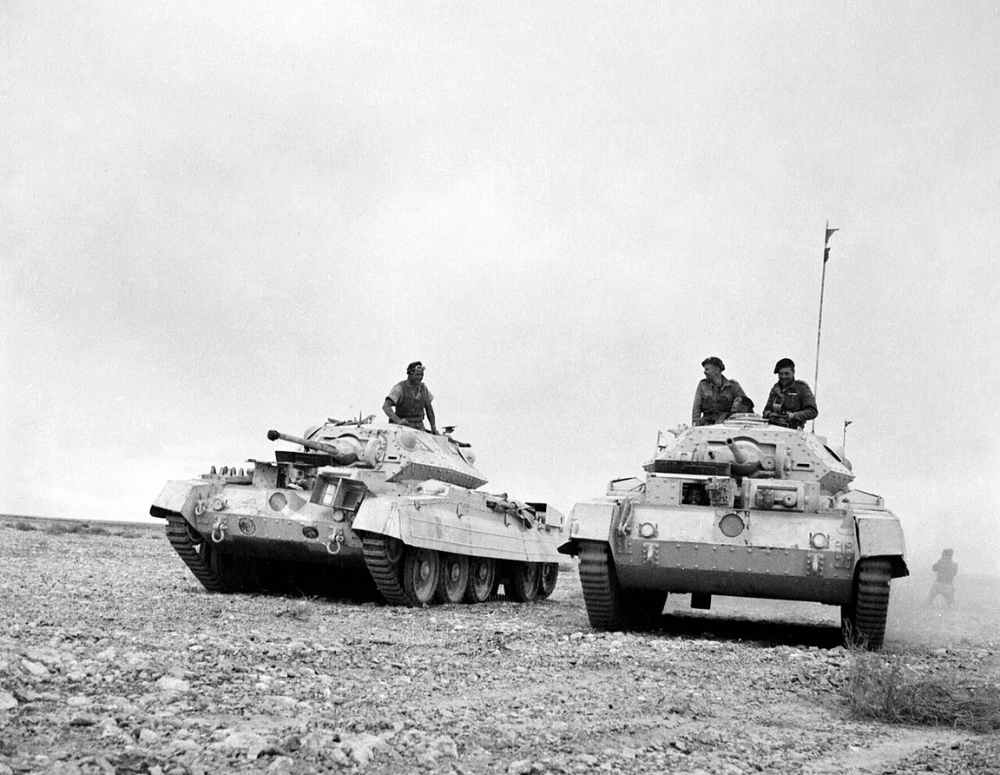
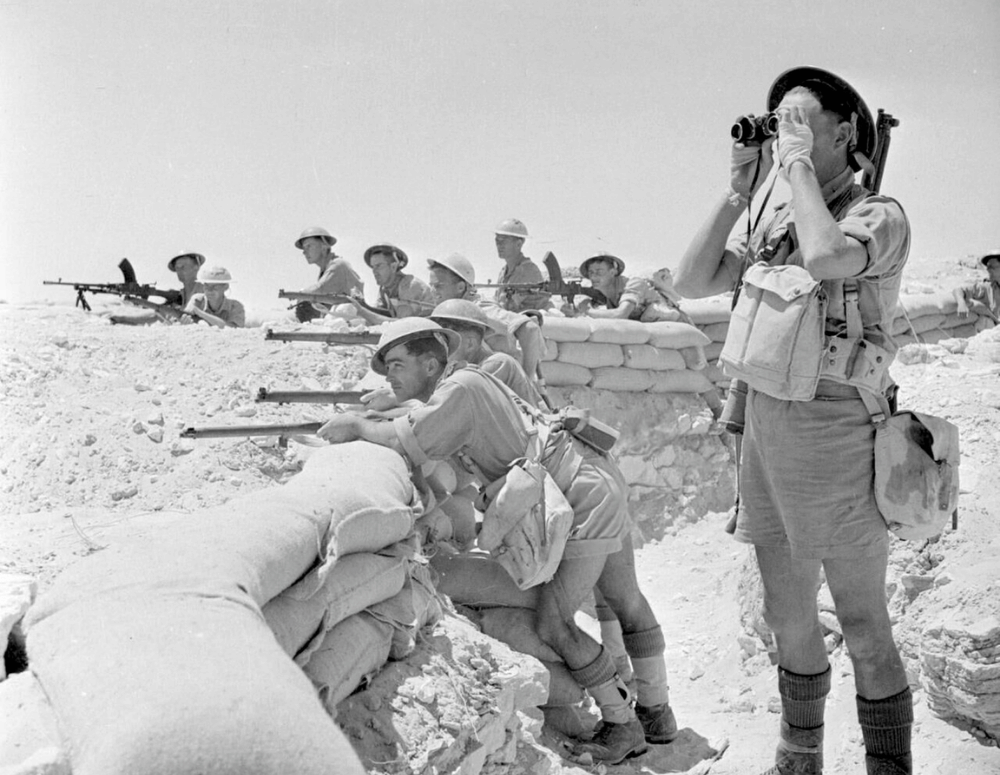
In the summer of 1942, Erwin Rommel’s forces advanced deep into Egypt, stopping just sixty miles from Alexandria at a narrow, thirty-mile bottleneck gap. This terrain was bounded by the Mediterranean Sea to the north and the salt marshes of the Qattara Depression to the south, a defensive geography that eliminated flanking maneuvers and forced a direct frontal confrontation.
Following the defensive exhaustion of the First Battle of El Alamein in July, Prime Minister Winston Churchill changed the Middle East Command, placing the British Eighth Army under General Bernard Montgomery in August 1942. Montgomery spent over two months utilizing an influx of American M4 Sherman tanks and Lend-Lease heavy artillery to build material superiority, while launching a deception plan, Operation Bertram, to mislead German intelligence.
The Second Battle of El Alamein, launched on 23 October 1942, resulted in the defeat of Erwin Rommel's Afrika Korps, breaking the Axis lines in Egypt and securing the Suez Canal in the first major British land victory of the war. The offensive opened with a synchronized bombardment from 882 heavy artillery pieces that saturated the Axis front-line minefields. The engagement developed into an intense, twelve-day war of industrial attrition, as the Eighth Army's infantry—including the 9th Australian Division, 2nd New Zealand Division, 1st South African Division, and 4th Indian Infantry Division—breached the dense Axis defensive layouts, named the "Devil's Gardens", which were packed with over 500,000 mines.
Operating under air superiority secured by the Desert Air Force, British armored brigades launched Operation Supercharge on 2 November to punch through the remaining anti-tank screens. By 4 November 1942, the Axis lines were broken. Starved of fuel due to the Royal Navy interception of his Mediterranean tankers, Rommel defied Hitler’s "victory or death" order, directing his battered Panzer divisions into a retreat across Libya.
The breakthrough resulted in the capture of 30,000 prisoners and the destruction of 500 enemy tanks. El Alamein secured the Suez Canal, eliminated the threat to Middle Eastern oil fields, and marked the first major land victory over the German army in the war, prompting Winston Churchill to declare that the achievement was "perhaps, the end of the beginning."
Further Information: The Battle of El Alamein and the Defeat of the Afrika Korps
The Fall of Singapore and the Outbreak of War with Japan
December 1941 – February 1942
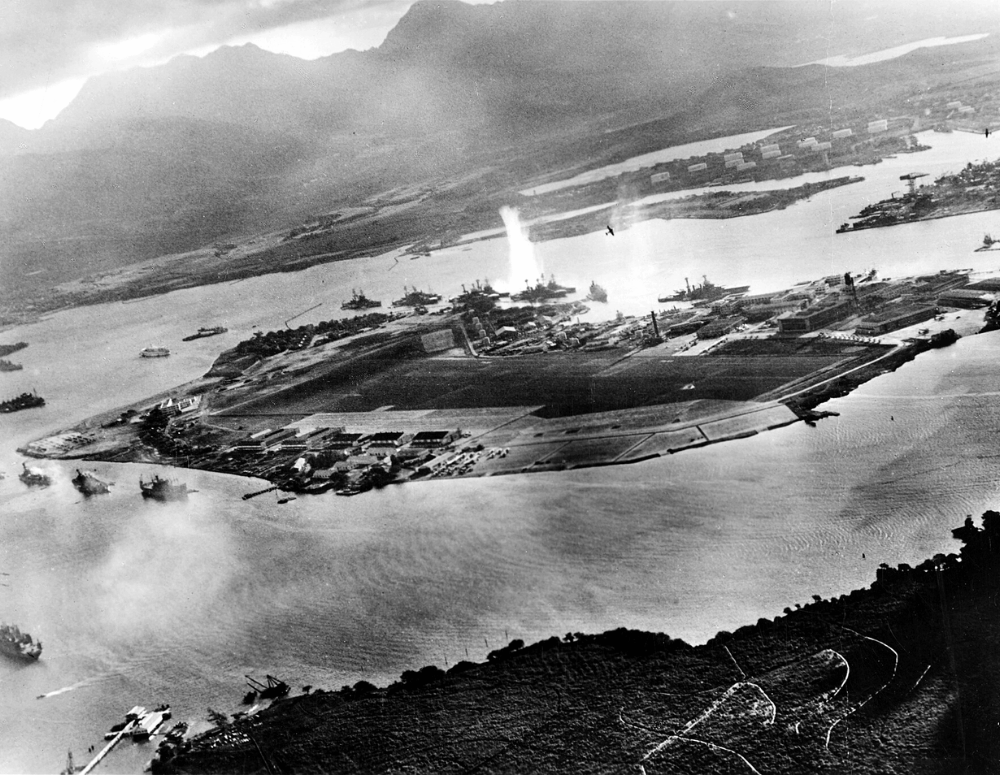
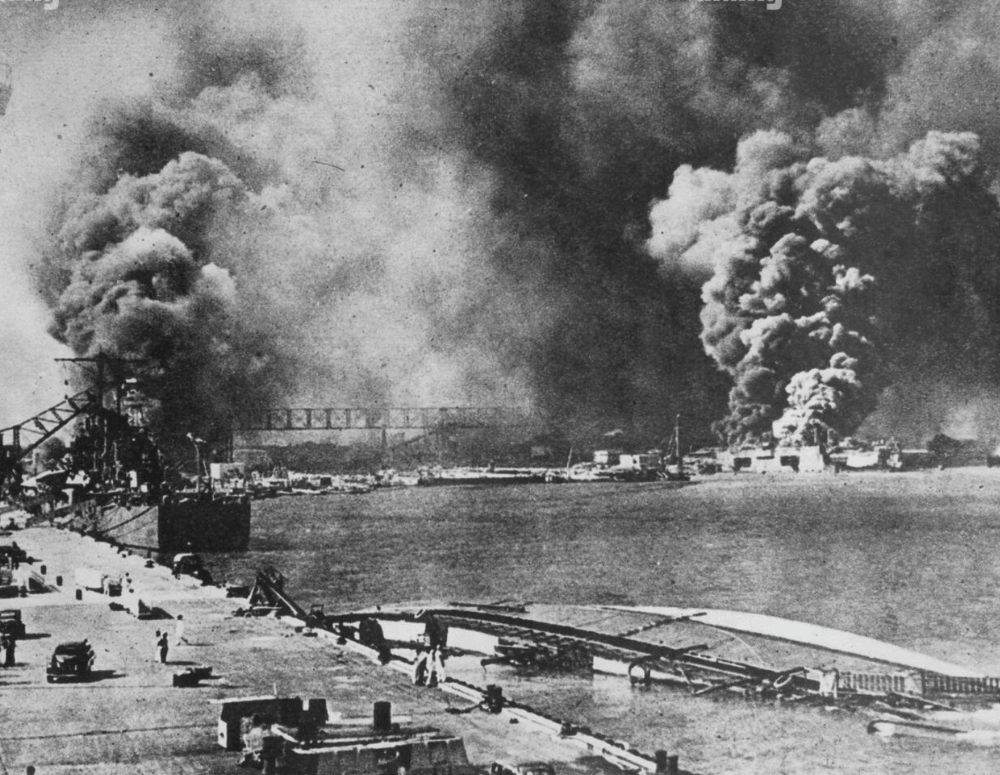
On 7 December 1941, the Japanese military launched synchronized attacks on Pearl Harbor and British Malaya, dragging Great Britain into a multi-front war with the Empire of Japan across Southeast Asia. The British high command had relied on the "Singapore Strategy", which treated the island naval base as a fortified bastion. However, this strategy collapsed within days. On 10 December 1941, Japanese land-based torpedo-bombers attacked and sank the battleship HMS Prince of Wales and the battlecruiser HMS Repulse off the coast of Kuantan, destroying the British capital ship presence in the Pacific.
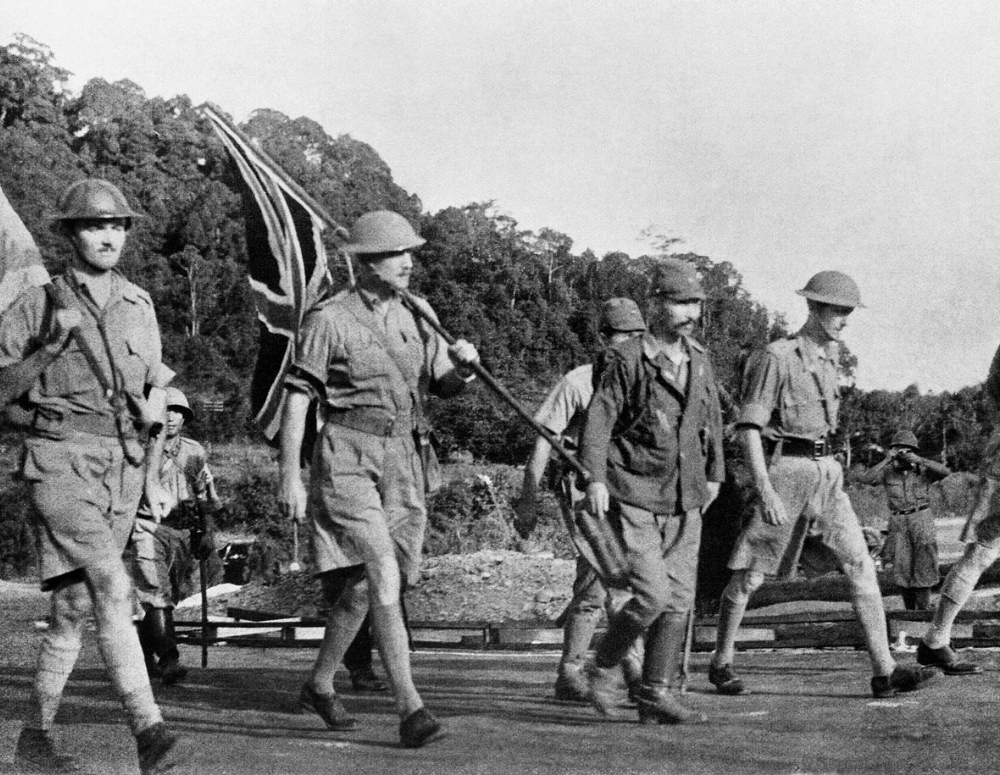
The surrender of Singapore on 15 February 1942 marked the single largest military capitulation in British history, handing 85,000 Commonwealth troops into captivity and shattering the imperial defense network in the Far East. Following the naval losses, the Japanese Twenty-Second Army under General Tomoyuki Yamashita executed a rapid advance down the Malayan peninsula. Japanese infantry used bicycles to navigate jungle tracks, outflanking static defensive positions along the main road networks.
The campaign reached its climax on 15 February 1942 with the Fall of Singapore. Cut off from fresh water reservoirs and low on ammunition, Lieutenant-General Arthur Percival signed the surrender at the Ford Motor Factory in Bukit Timah. The capitulation handed 85,000 British, Indian, and Australian soldiers into captivity, joining 50,000 captured during the Malayan retreat. The loss of Singapore dismantled the myth of European military invincibility across Asia, stripped the empire of its rubber and tin supplies, and left the frontiers of India and Australia exposed to invasion, permanently altering the balance of global power.
Further Information: The Fall of Singapore and the Outbreak of War with Japan
Barbarossa, the Anglo-Soviet Alliance, and Arctic Convoys
June 1941 – May 1945
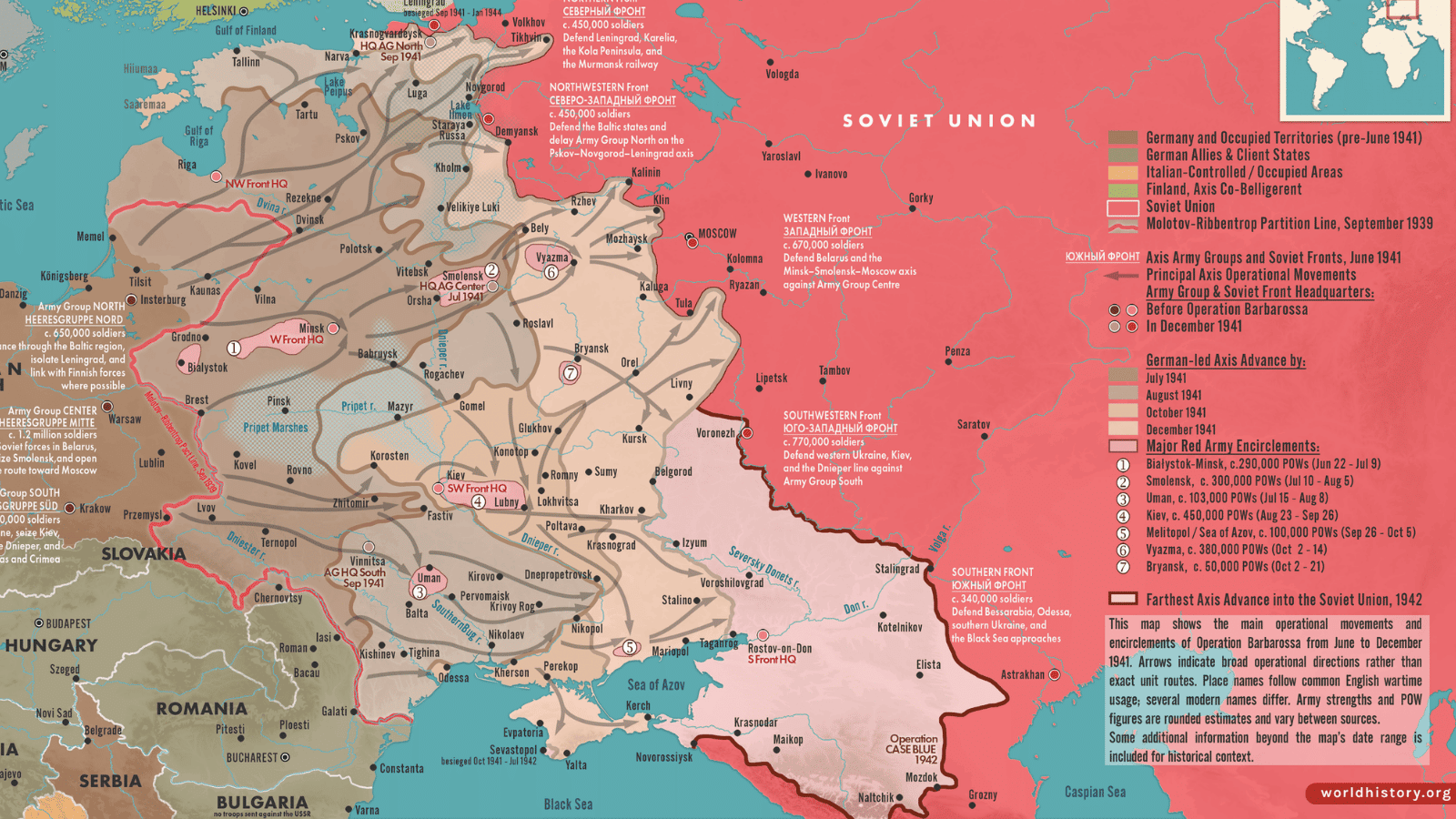
On 22 June 1941, over three million Axis troops crossed the frontier to launch Operation Barbarossa, a massive, three-pronged invasion of the Soviet Union. Delivering a national radio broadcast on the evening of the invasion, Prime Minister Winston Churchill declared that the defence of Russia was bound directly to the survival of Great Britain, setting aside his lifelong anti-communism to establish a pragmatic alliance with Joseph Stalin.
Churchill recognized that keeping the Red Army operational in the East was vital to pinning down the bulk of the German Wehrmacht, preventing Adolf Hitler from concentrating his full military weight back across the English Channel. This diplomatic pivot was formalised on 12 July 1941 with the signing of the Anglo-Soviet Agreement in Moscow, binding both nations to mutual military assistance and forbidding the negotiation of a separate peace with Germany.
The launch of the invasion permanently ended Great Britain's isolation, prompting a massive maritime commitment to sustain the Soviet war effort. To deliver critical supplies, the Royal Navy launched the Arctic Convoys, a series of merchant supply runs originating from the naval anchorages of Loch Ewe in Scotland and Hvalfjörður in Iceland, heading straight for the northern Soviet ports of Murmansk and Archangel.
Sailing through the treacherous waters of the Arctic Ocean, these merchant fleets navigated a lethal gauntlet of German U-boats, Luftwaffe torpedo bombers based in occupied Norway, and heavy Kriegsmarine surface raiders, most notably the battleship Tirpitz and the battleship Scharnhorst. The environmental conditions were brutal, marked by sub-zero temperatures that coated warship superstructures in tons of unstable ice, and the perpetual daylight of the Arctic summer, which left the convoys permanently visible to enemy tracking networks.
The campaign suffered its most severe disaster during the voyage of Convoy PQ 17 in July 1942. Misinformed by intelligence that the Tirpitz had put to sea to intercept the fleet, First Sea Lord Admiral Sir Dudley Pound made the panicked, controversial decision to order the naval escort to withdraw and the merchant vessels to scatter. Left completely defenceless in the open ocean, the isolated merchantmen were systematically hunted down by German submarines and aircraft, resulting in the loss of 24 out of 35 merchant ships. The catastrophe sent 430 tanks, 210 aircraft, 3,350 vehicles, and nearly 100,000 tonnes of general cargo straight to the bottom of the Barents Sea, forcing the high command to temporarily suspend the route during the summer months.
Despite this disaster, the Royal Navy successfully maintained these shipping bridges. Over the course of the war, the seventy-eight convoys dispatched between 1941 and 1945 delivered over four million tonnes of military cargo to the Soviet Union under the Lend-Lease framework. This massive logistical lifeline included exactly 7,411 aircraft—principally Hawker Hurricanes and Supermarine Spitfires—5,218 tanks, over 5,000 anti-tank guns, and 15,000 specialized transport vehicles, alongside vast stocks of industrial rubber, raw aluminum, fuel, and high-grade ammunition.
This immense reinforcement provided the crucial logistical resources needed by Soviet factories and field armies to stabilize the front at Moscow and Stalingrad, directly fueling the massive counter-offensives that systematically broke the spine of the German army.
Further Information: Barbarossa, the Anglo-Soviet Alliance, and Arctic Convoys
The Arcadia Conference and the Germany First Strategy
December 1941 – January 1942
On 22 December 1941, Prime Minister Winston Churchill arrived in Washington aboard the battleship HMS Duke of York to begin face-to-face negotiations with President Franklin D. Roosevelt following the Japanese attack on Pearl Harbor. This high-level summit, designated the Arcadia Conference, created the Anglo-American Combined Chiefs of Staff, a unified high command established to manage global war logistics from a single administrative center. Planners used these meetings to coordinate operations across multiple global theaters, ensuring that resources were allocated according to shared strategic priorities.
The Arcadia Conference in Washington established the "Germany First" grand strategy, directing that the primary weight of Allied military and industrial power must focus on defeating Nazi Germany before subduing Imperial Japan.
The core of this agreement dictated that despite British losses in Malaya and American defeats in the Philippines, the defeat of Germany remained the primary Allied objective. Planners justified this priority through economic calculations, tracking that Germany possessed a highly developed manufacturing base across occupied Europe that could become unassailable if given time to consolidate. In contrast, Japan was industrially weaker and lacked the factory infrastructure to rapidly convert newly conquered raw materials into military output.
The execution of this strategy required patience from the British government, as it forced commanders to temporarily limit the defense of colonial assets in the Far East to safeguard the European theater. While the decision initially frustrated American naval commanders who wanted immediate retaliation against Tokyo, it locked the industrial capacity of the United States directly into the liberation of Europe. This prioritization secured a unified logistics pipeline for the subsequent invasions of North Africa and Italy.


The Birth of Stephen Hawking and the Modern Cosmos
1942–2018
The unrelenting violence of the Second World War on the British home front directly shaped the geographical setting of a monumental birth in the history of science. In early 1942, as German Luftwaffe bombing raids continued to threaten the capital city, Isobel Hawking was evacuated from her home in north London to the relative safety of Oxford. On 8 January 1942—a date marking exactly three hundred years since the death of the astronomer Galileo Galilei—she gave birth to Stephen William Hawking.
Raised in an eccentric, highly intellectual household, the young Hawking returned to London after the Blitz before attending University College, Oxford, in 1959 to study physics. After graduating with first-class honours, he transitioned to Trinity Hall, Cambridge, in 1962 to begin research in cosmology and general relativity, just as the first physical signs of a catastrophic health crisis began to manifest.
At the age of twenty-one, Hawking was diagnosed with amyotrophic lateral sclerosis (ALS), a debilitating motor neurone disease. Doctors calculated he had only two years to live, a prognosis that threw him into a severe depression. However, his impending marriage to Jane Wilde and his academic work provided a profound sense of purpose, pushing him to complete his doctorate in 1966. Collaborating with the mathematician Roger Penrose, Hawking applied the mathematics of cosmic singularities to the entire universe. The pair proved that if Albert Einstein's general theory of relativity was correct, the universe must have originated from a single, infinitely dense point in space-time, providing the first definitive mathematical backing for the Big Bang theory.
Hawking subsequently turned his attention to the physics of black holes, triggering a revolution in theoretical science. In 1974, he stunned the scientific establishment by demonstrating that black holes were not completely black, but actually leaked energy. By combining quantum mechanics with general relativity, he calculated that subatomic particles could escape the immense gravitational pull through quantum fluctuations, an emission of thermal energy now known as Hawking radiation. The calculations revealed that black holes possess thermodynamic properties, losing mass over time until they eventually explode. In recognition of these monumental achievements, the University of Cambridge appointed him Lucasian Professor of Mathematics in 1979—the prestigious academic chair once held by Sir Isaac Newton—a post he occupied for thirty years.
As his physical condition deteriorated, forcing him into a wheelchair and requiring a tracheotomy in 1985 that left him dependent on an electronic voice synthesizer, Hawking focused on bringing complex physics to the general public. In 1988, he published his popular science masterpiece, A Brief History of Time, which sold over ten million copies and spent a record-breaking 237 weeks on the Sunday Times bestseller list.
The book transformed him into a global cultural icon, bridging the gap between elite academia and public imagination. Despite near-total paralysis, he continued to publish advanced papers on the "no-boundary proposal" and the black hole information paradox until his death at his home in Cambridge on 14 March 2018. His long life, which began amidst the chaos of a world war, fundamentally reconfigured the human understanding of time, space, and the origins of the cosmos.
Further Information: The Birth of Stephen Hawking and the Modern Cosmos
The Beveridge Report
December 1942
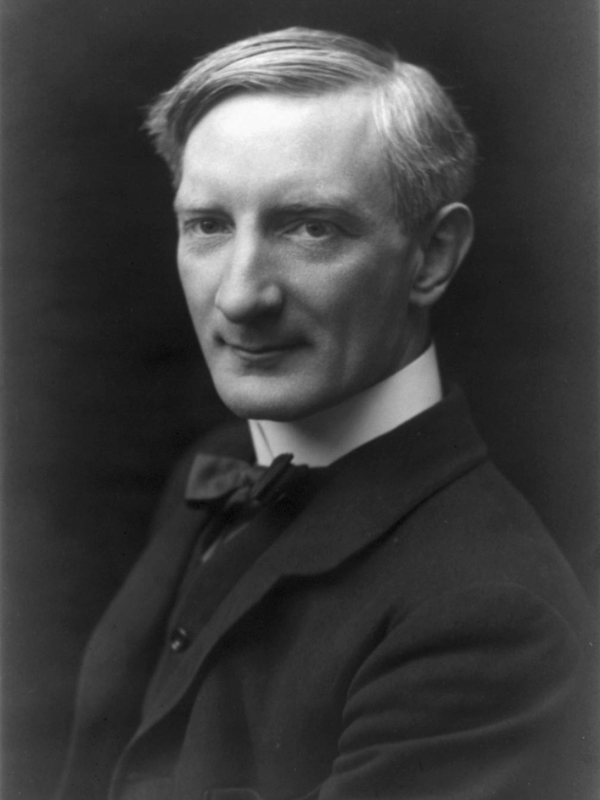
In June 1941, Arthur Greenwood, the Minister without Portfolio in the coalition government, appointed an inter-departmental committee to carry out a comprehensive survey of British social insurance and allied services.
Social economist Sir William Beveridge chaired the inquiry, spending over a year auditing the existing network of fragmented public assistance programs and municipal charities. He framed his findings as a direct attack on five distinct social deficiencies, which he defined as the Five Giants obstructing post-war progress: Want, Disease, Ignorance, Squalor, and Idleness.
The publication of the Beveridge Report on 1 December 1942 established a blueprint for the post-war welfare state, proposing a system of social insurance to eliminate these five societal evils.
Formally titled Social Insurance and Allied Services, the document sold 635,000 copies within weeks of its release, transforming from a standard government white paper into a national phenomenon that captured the attention of the wartime workforce. The report called for a change in the relationship between the citizen and the state, planning a universal social insurance system stretching "from the cradle to the grave."
The framework required the post-war creation of a taxpayer-funded National Health Service, weekly family allowances, a flat-rate national insurance contribution to secure sick pay and retirement pensions, and a commitment to maintaining full employment through active economic management.
The reception of the Beveridge Report altered the political landscape of the United Kingdom, setting a path toward a post-war electoral shift. While Winston Churchill and senior Conservative members of the coalition cabinet sought to delay implementation until the defeat of the Axis powers—concerned about the fiscal burden on an exhausted treasury—the public and the Labour Party, led by Clement Attlee, supported the proposals.
For millions of citizens enduring the constraints of rationing, the report provided a moral justification for their sacrifices, transforming the war effort into a campaign to build a fairer post-war society.
The Burma Campaign and Battles of Kohima and Imphal
1942 - 1945
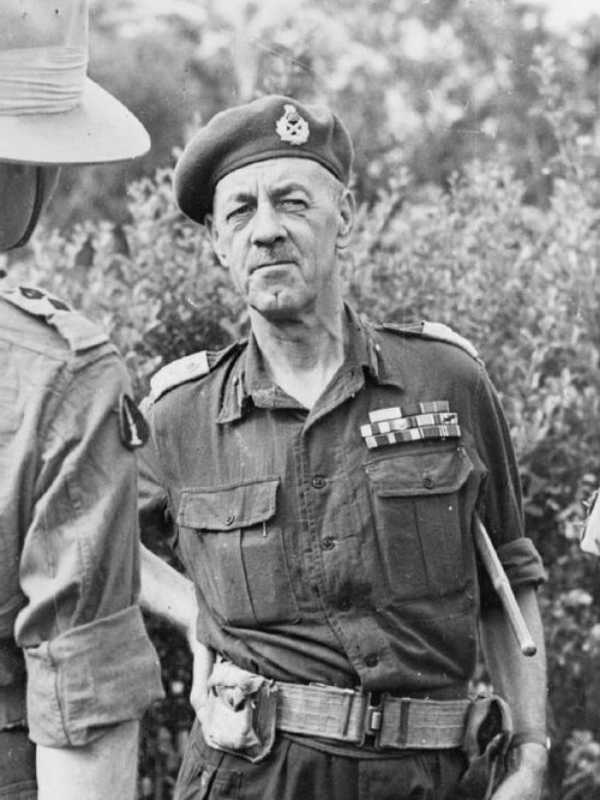
In May 1942, British imperial forces completed a grueling 1,000-mile fighting retreat out of Burma, establishing a defensive frontline along the jungle-covered mountains of the Indo-Burmese border to protect the Indian Raj from total conquest. General William Slim took command of the shattered British Fourteenth Army, transforming it into a highly effective multi-national fighting force comprised of 67% Indian, African, and Gurkha troops.
Slim completely re-engineered the army’s training, medical logistics, and tactical doctrines, turning it into a specialized jungle fighting unit. Crucially, he taught his men to hold their ground when cut off, relying on the Royal Air Force and the US Army Air Forces to execute continuous aerial supply drops to isolated "box" formations, a tactical revolution that completely neutralized traditional Japanese infiltration and encirclement methods.
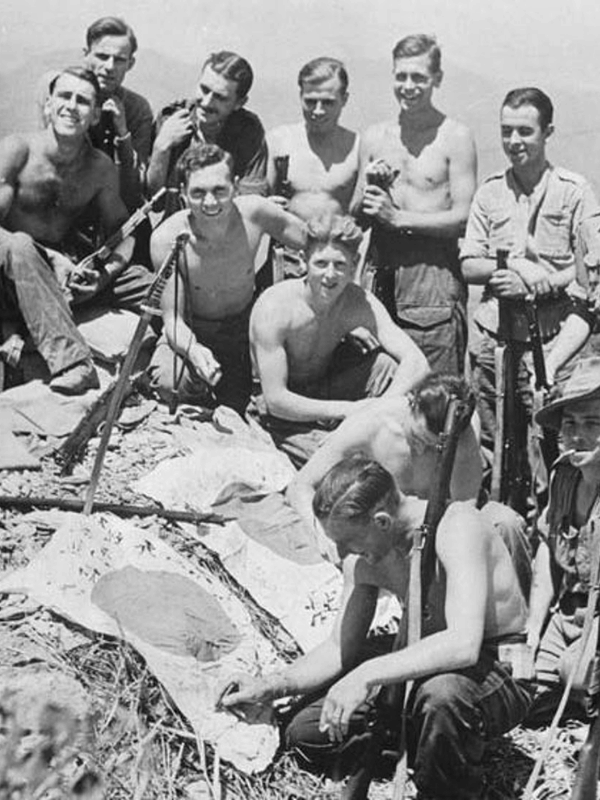
The Battles of Kohima and Imphal in the spring of 1944 halted the Japanese invasion of India, resulting in the structural destruction of the Japanese Fifteenth Army and allowing the British Fourteenth Army to launch a decisive counter-offensive to recapture Burma. The campaign reached its turning point in March 1944 when the Japanese military, under the aggressive command of Lieutenant General Renya Mutaguchi, launched Operation U-Go to capture the strategic border hubs of Kohima and Imphal to sever Allied supply lines into China. The ensuing battles turned into ferocious, close-quarter infantry engagements that were later dubbed the "Stalingrad of the East." At Kohima, a small garrison of British and Indian troops held a tight defensive perimeter centred on the local Deputy Commissioner's tennis court, fighting hand-to-hand across the clay lines against relentless waves of Japanese infantry charges.
Backed by synchronized air drops and heavy artillery, the Fourteenth Army broke the Japanese offensive, killing over 53,000 enemy soldiers through defensive tenacity. This victory shattered the offensive capacity of the Japanese army in Asia, allowing Slim to launch a rapid offensive through the monsoon mud to recapture Rangoon by May 1945, permanently cementing the reputation of the "Forgotten Army." The multi-national contingent proved to be the decisive factor in breaking the Japanese land empire in Southeast Asia.
Further Information: The Burma Campaign and Battles of Kohima and Imphal
The Italian Campaign and the Battle of Monte Cassino
September 1943 – May 1945
In July 1943, Allied forces launched the invasion of Sicily, an operation that destabilised Rome and forced the political collapse of Benito Mussolini's fascist regime. Driven by Winston Churchill’s determination to strike Axis Europe through what he labeled the "soft underbelly," British and Allied forces followed this success by launching Operation Baytown and Operation Avalanche on the Italian mainland in September 1943. However, the campaign quickly became a slow, costly mountain war as German Field Marshal Albert Kesselring took control of the landscape, utilizing the steep terrain and deep river valleys to construct a series of fortified defensive belts across the peninsula, most notably the Gustav Line.
The invasion of the Italian mainland in September 1943 launched the Italian Campaign, which devolved into a war of attrition against Albert Kesselring's fortified Gustav Line at Monte Cassino. The apex of this campaign centered on the mountain-top monastery of Monte Cassino, which dominated the Liri Valley and the highway leading to Rome.
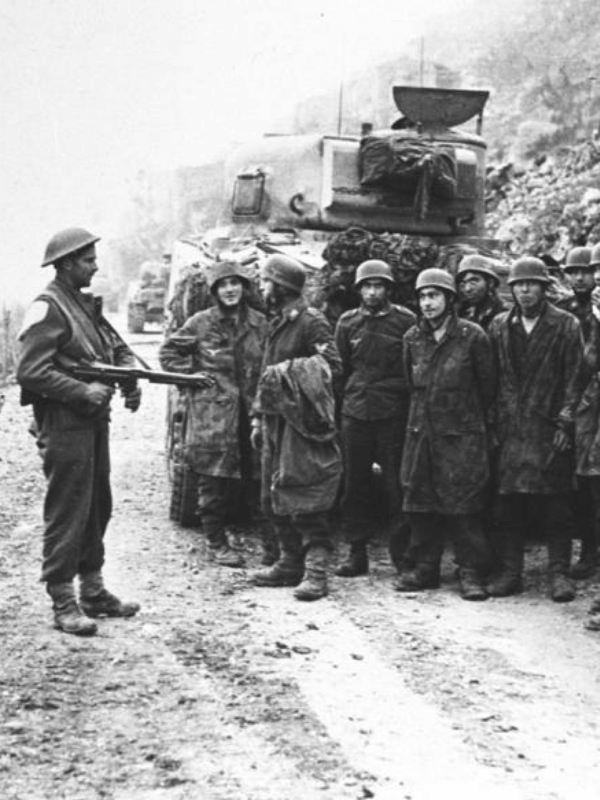
Between January and May 1944, the Allied Fifth Army and Eighth Army—including the British 4th and 46th Infantry Divisions, the 2nd New Zealand Division, the 4th Indian Infantry Division, and the II Polish Corps—launched four successive frontal assaults to breach the Gustav Line. To break the deadlock, British Royal Artillery medium regiments deployed 5.5-inch guns alongside 7.2-inch heavy howitzers to engage in continuous counter-battery fire against entrenched German positions. Following a controversial Allied bombing campaign on 15 February 1944 that dropped 1,150 tonnes of high-explosives and leveled the ancient monastery, German 1st Parachute Division veterans utilized the stone rubble to construct a network of machine-gun nests.
The Gustav Line was finally forced on 18 May 1944 following a final assault by the II Polish Corps and the British Eighth Army, opening the road to Rome but costing over 55,000 Allied casualties at Cassino alone. The capital was liberated on 4 June 1944, just two days before the Normandy landings. Following the fall of Rome, Kesselring executed a methodical withdrawal to the Gothic Line, a 200-mile defensive system stretching across the northern Apennine summits from the Tyrrhenian Sea to the Adriatic. Built using over 15,000 slave labourers, this network comprised over 2,000 fortified concrete machine-gun emplacements, bunkers, artillery casemates, and observation posts, reinforced with 70,000 Teller anti-tank mines and miles of wire obstacles.
In August 1944, General Oliver Leese's Eighth Army launched Operation Olive to breach this final mountain barrier. The V Corps and the 1st Canadian Corps advanced rapidly across the Metauro River, catching German forces off guard and driving the LXXVI Panzer Corps back into the fortifications. Concurrently, Lieutenant-General Richard McCreery's forces and units like the 1st Battalion, Duke of Wellington's Regiment engaged in brutal infantry assaults up steep slopes and through thick woods to capture key hill positions including Monte Cece.
Despite breaking through sectors of the line during the Battle of Rimini, the Allied offensive ground to a halt by December 1944 due to stiffening German resistance, acute logistical shortages, and the return of torrential autumn rains, forcing the troops to endure a static winter in the mountains before the final April 1945 breakthroughs.
Further Information: The Italian Campaign and the Battle of Monte Cassino
The Strategic Bombing Campaign
September 1939 – May 1945
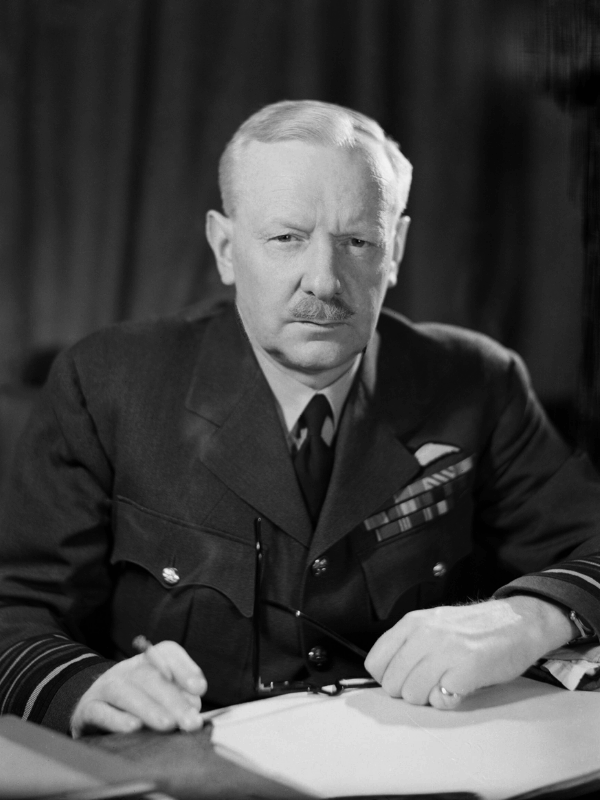
In early 1942, British air planners realized that daylight precision bombing caused unsustainable aircraft losses and routinely missed target centers. To alter the air strategy, the British state shifted its focus toward systematic nighttime operations. Air Chief Marshal Arthur Harris took command of RAF Bomber Command in February 1942, directing a campaign of area attacks to dismantle the industrial capacity of Germany.
To implement this strategy, domestic factories mass-produced thousands of four-engine heavy bombers, including the Avro Lancaster and Handley Page Halifax, designed to carry payloads of high-explosive blockbuster bombs and magnesium incendiary canisters.
The appointment of Air Chief Marshal Arthur Harris to RAF Bomber Command in February 1942 initiated a nighttime Area Bombardment campaign against German cities that tied down millions of Axis defensive resources and cost the lives of 55,573 Allied aircrew.
The technical execution of the raids was led by the Pathfinder Force, specialized crews who dropped marker flares to guide the main bomber streams. These units used electronic navigation assets like Gee, Oboe, and ground-scanning H2S radar to locate urban infrastructure through darkness and cloud cover. In July 1943, during Operation Gomorrah, the RAF collaborated with the US Army Air Forces to unleash a firestorm over Hamburg, destroying port infrastructure and killing over 40,000 people. This was followed in February 1945 by the bombardment of Dresden, which destroyed regional rail lines on the eve of the Soviet advance.
The strategic bombing campaign forced Germany to divert defensive resources from its frontline positions to protect its home airspace. The Wehrmacht withdrew 10,000 anti-aircraft artillery guns, consisting of 88mm batteries, and 70% of its Luftwaffe day-fighter force from the Eastern and Western fronts for homeland protection.
This defensive shift drew millions of workers into civil repair duties and away from standard industrial manufacturing. While the offensive cost the lives of 55,573 RAF Bomber Command aircrew—who suffered a 44.4% mortality rate—it disrupted the transport infrastructure and industrial logistics of the Axis war machine.
Operation Neptune and the D-Day Landings
6 June 1944
The liberation of Western Europe required a massive build-up across the south coast of England, turning the entire region into a huge, camouflaged military camp. Throughout the spring of 1944, under the strict secrecy of Operation Fortitude—a deception plan using rubber dummy tanks, fake radio messages, and double agents to convince the German high command that the main attack would land at the Pas-de-Calais—over two million Allied troops, fifty thousand vehicles, and millions of tonnes of supplies were brought together in secure base areas.
The supreme land command was held by General Sir Bernard Montgomery, who altered the initial blueprints to expand the front line from three divisions to five. By late May, the troops were completely sealed inside camps wrapped in barbed wire, forbidden from speaking with the public, and taught their routes using maps with fake town names to ensure total secrecy.
The cross-Channel attack, code-named Operation Overlord, was originally scheduled to begin on 5 June 1944, a date chosen because it offered a late moon for night paratrooper drops and a low tide at dawn to expose German beach traps. However, on 2 June, the weather across the English Channel broke into a severe summer gale, bringing low clouds, heavy rain, and rough waves that made launching flat-bottomed landing craft impossible.
Locked inside crowded, rolling ships across the southern ports, tens of thousands of soldiers suffered severe seasickness during a miserable two-day delay. Facing the risk that a further postponement would delay the invasion by a month until the tides realigned, General Dwight D. Eisenhower held a midnight meeting on 4 June at Southwick House. The chief British weather officer, Group Captain James Martin Stagg, spotted a brief, narrow window of clear weather moving in from the Atlantic. Seizing this short break in the storm, the command ordered the fleet to sail.
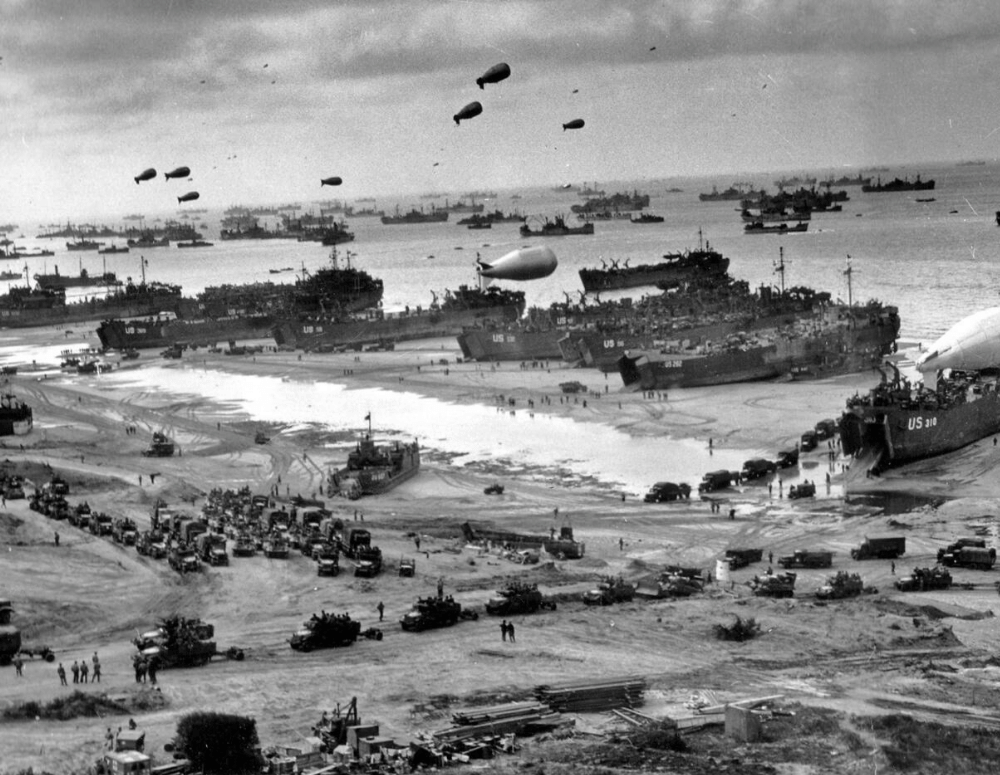
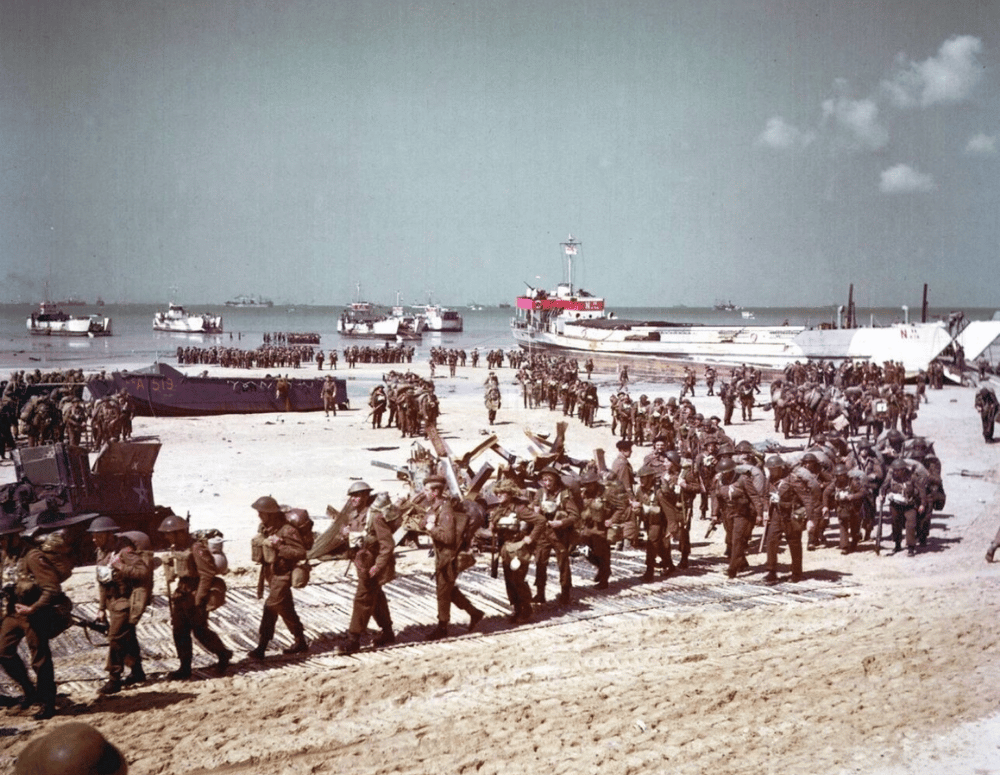
The invasion began at dawn on 6 June 1944 with Operation Neptune, the naval phase of the attack, which used a fleet of 6,939 vessels—including 1,213 warships, 4,126 landing craft, and 736 support vessels—to ferry 156,000 Allied troops across the Channel under complete air cover. The British Second Army, commanded by Lieutenant-General Sir Miles Dempsey, was responsible for the eastern sector of the beaches.
Moving through rough surf, the British 50th (Northumbrian) Infantry Division stormed Gold Beach, the 3rd Canadian Infantry Division attacked Juno Beach, and the British 3rd Infantry Division landed at Sword Beach. Supported by heavy gunfire from battleships offshore, the infantry cut through thick belts of barbed wire, cleared minefields, and secured the coastline by nightfall despite facing fierce machine-gun fire and large underwater steel obstacles.
The landings were heavily supported by a group of specialized tanks designed by Major-General Sir Percy Hobart to break through the beach defenses. Known as "Hobart’s Funnies," these modified vehicles were operated by the 79th Armoured Division and kept casualties low. The vehicles included Sherman Crab tanks that used spinning chains to explode hidden mines in the sand, Churchill AVRE tanks fitted with heavy mortars to smash concrete bunkers at close range, and armored ramp carriers that allowed following trucks to drive over high stone seawalls.
To solve the problem of landing supplies without capturing a deep-water port, British engineers built two prefabricated concrete artificial harbors, code-named Mulberry Harbours. Tugs towed these massive blocks across the Channel right behind the troops, anchoring Mulberry B to the seabed at Arromanches by 9 June to create a calm harbor that landed over 9,000 tonnes of food and ammunition every day throughout the summer.
Further Information: Operation Neptune and the D-Day Landings
The Battle for Caen and the War of Attrition
June – July 1944
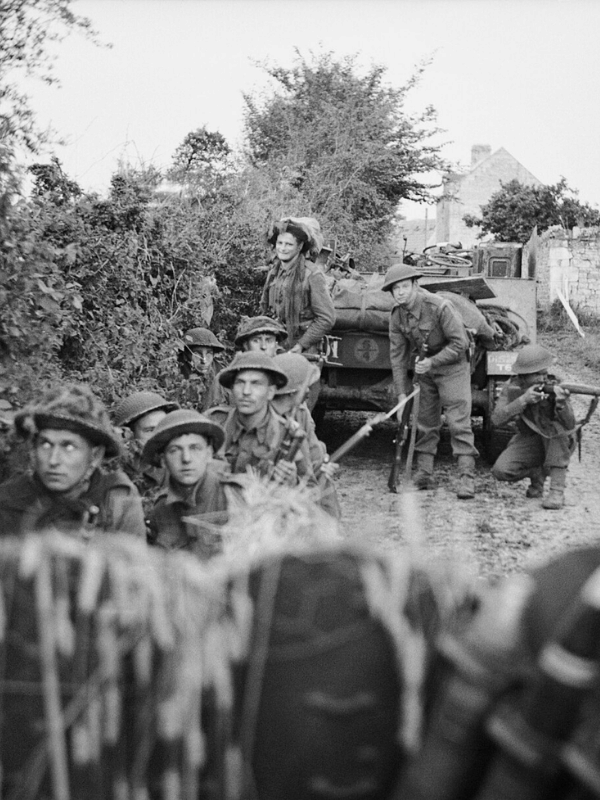
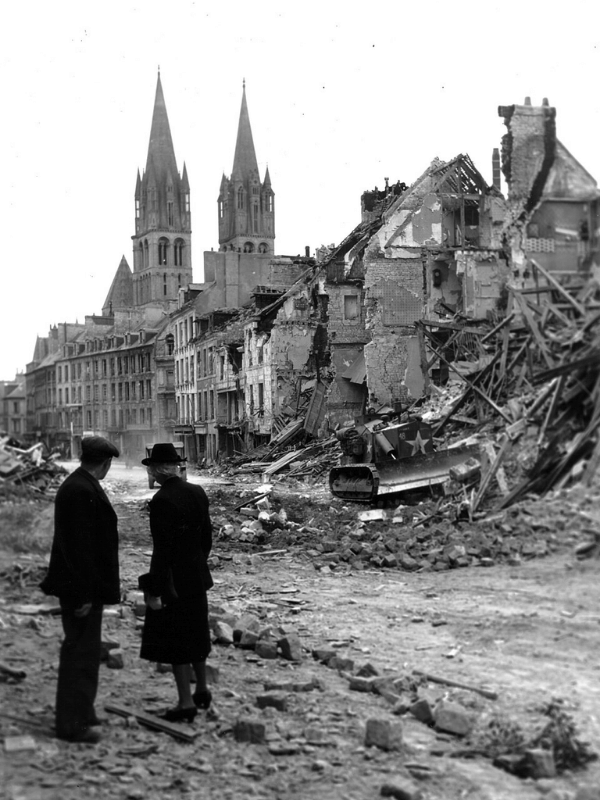
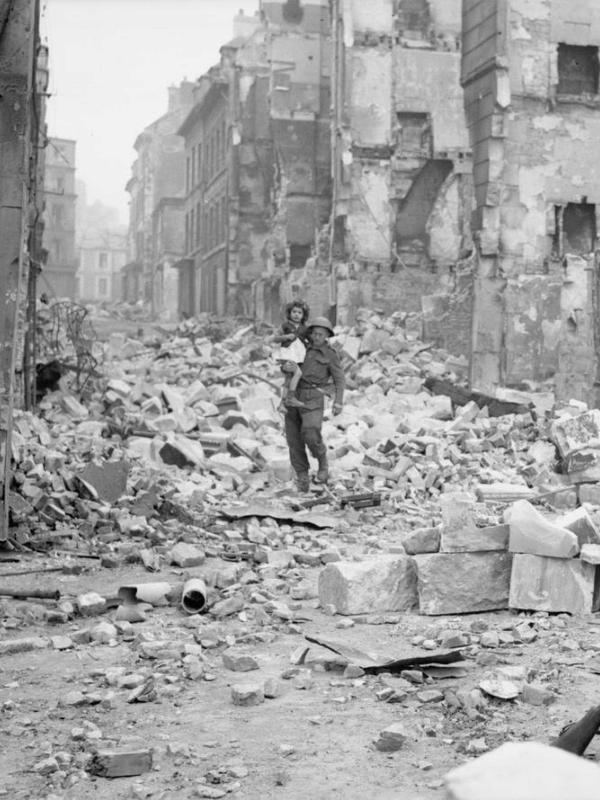
Following the successful consolidation of the beachheads, the Normandy campaign rapidly degenerated into a brutal, grinding war of attrition across the bocage—a landscape defined by centuries-old, stone-hard earth banks and dense farming hedges that provided perfect defensive cover for the occupying forces. General Sir Bernard Montgomery’s overarching strategic plan required the British Second Army and the First Canadian Army on the eastern flank to launch continuous thrusts against the historic city of Caen. This crossroads city was originally a primary D-Day objective for the British 3rd Infantry Division, but it had been rapidly reinforced by elite German units.
Montgomery's strategy was deliberately designed to act as a powerful magnet; by threatening a direct British breakout toward the open plains of Paris, he forced the German high command to concentrate the absolute bulk of their premier armored reserves—including the 1st SS Panzer Division Leibstandarte Adolf Hitler and the 12th SS Panzer Division Hitlerjugend—in the eastern sector. This relentless pressure successfully pinned down the enemy’s heavy armor, keeping them locked in a desperate defensive battle and preventing them from launching a coordinated, decisive counter-offensive against the vulnerable American forces rebuilding their strength in the western marshlands.
To break the stubborn German lines, the British high command launched a sequence of massive armored offensives to bypass and encircle the city. Between 26 and 30 June, Lieutenant-General Sir Richard O'Connor’s VIII Corps executed Operation Epsom, deploying 60,000 men and 600 tanks across the River Odon in a bloody assault that successfully drew in and ground down the defending panzer units. Following the capture of the northern half of the ruined city during Operation Charnwood, the British executed Operation Goodwood on 18 July, marking the largest armored clash in the history of the British Army.
The assault opened with a devastating preliminary bombardment from 4,500 Allied aircraft that dropped over 7,000 tonnes of high explosives directly onto German field positions. Three full British armored divisions—the Guards, 7th, and 11th Armoured Divisions—then charged the heavily fortified German defensive lines on the Bourguébus Ridge. The advancing columns ran directly into an elastic defense built around concealed 88mm anti-tank guns, suffering heavy material losses that resulted in over 300 British tanks being knocked out in forty-eight hours.
Despite these severe losses, the operation successfully achieved its strategic purpose. By completely exhausting the remaining German armored capacity, consuming their fuel reserves, and keeping their key divisions locked in place, the British attrition directly enabled the American First Army to launch Operation Cobra on 25 July. The Americans executed a clean breakout through the unpinned German infantry lines to the west, unhinging the entire Axis defensive front in France and shifting the campaign into a rapid war of movement.
Further Information: The Battle for Caen and the War of Attrition
The V-Weapons Blitz and Supersonic Ballistic Missiles
June 1944 – March 1945
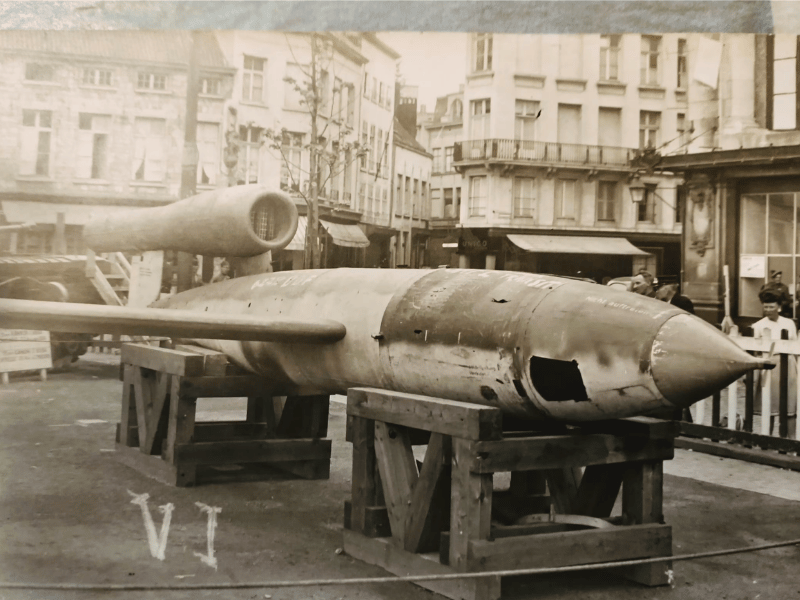
On 13 June 1944, just one week after the D-Day landings, the German military launched the first V-1 flying bombs from launch pads in northern France against London and the southeastern counties. Looking to counter his retreating military position through retaliatory strikes, Adolf Hitler unleashed his Retaliation Weapons, introducing mass-produced operational cruise missiles and ballistic rockets to target civilian populations.
The V-1 flying bomb, a pulsejet-powered pilotless aircraft branded by the British public as the "Doodlebug," flew at low altitudes and emitted a mechanical buzzing sound. The moment the engine cut out, the missile dropped to detonate its 850-kilogramme explosive warhead over residential parishes, turning neighborhoods into rubble.
The launch of the V-1 flying bomb on 13 June 1944 initiated Germany's retaliation campaign against the British home front, which escalated in September 1944 with the deployment of the V-2 supersonic ballistic missile and killed over 9,000 civilians before Allied ground forces captured the launch sites. The government responded to the initial threat by launching Operation Diver, deploying a defensive network of fast fighter aircraft—including the Hawker Tempest and the newly introduced jet-propelled Gloster Meteor—alongside searchlights and 2,800 radar-directed anti-aircraft guns along the coast to shoot down the incoming missiles.
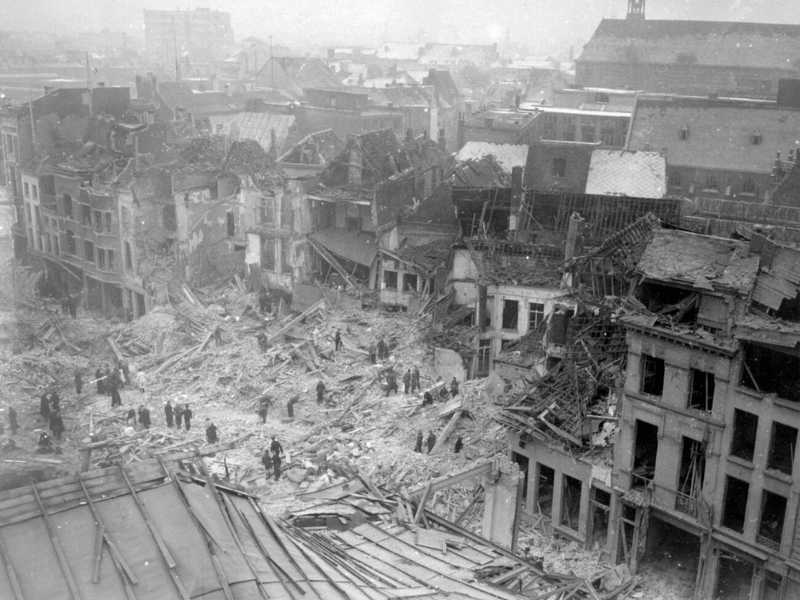
The security crisis escalated on 8 September 1944 with the arrival of the V-2 rocket, the world's first long-range supersonic ballistic missile. Designed by Wernher von Braun's team at Peenemünde, the V-2 travelled at over 3,000 miles per hour through the upper atmosphere, plunging down onto targets without visual or audio warning, making physical interception impossible. The explosions occurred without sirens, obliterating entire blocks of townhouses and prompting the government to execute secondary civilian evacuations to protect families from the missile strikes.
The V-weapons campaign killed 9,000 British civilians, wounded 24,000 more, and damaged or destroyed thousands of homes across London, Kent, and Essex. The campaign drew to a close on 27 March 1945 after Allied ground advances during the Liberation of the Low Countries overran the mobile launch sites in western Holland, ending the final home front crisis of the conflict.
Further Information: The V-Weapons Blitz and Supersonic Ballistic Missiles
The Falaise Pocket and the Axis Collapse
August 1944
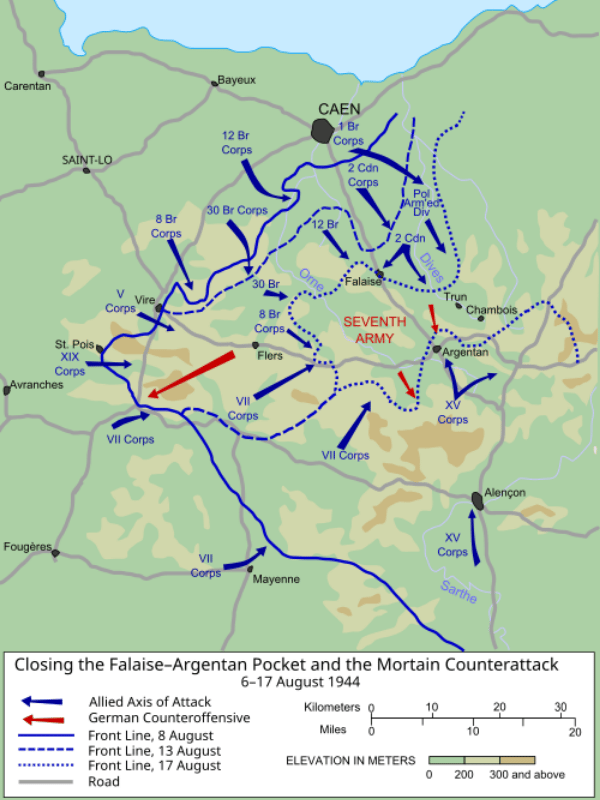
The rapid American advance to the south and east, combined with a disastrous, failed German counter-attack ordered by Adolf Hitler at Mortain, left the entire German frontline infrastructure in Western Europe vulnerable to total destruction. By mid-August 1944, the Fifth Panzer Army and the Seventh Army—comprising twenty-eight surviving Axis divisions—were being systematically pushed into a shrinking, horseshoe-shaped pocket centered around the town of Falaise.
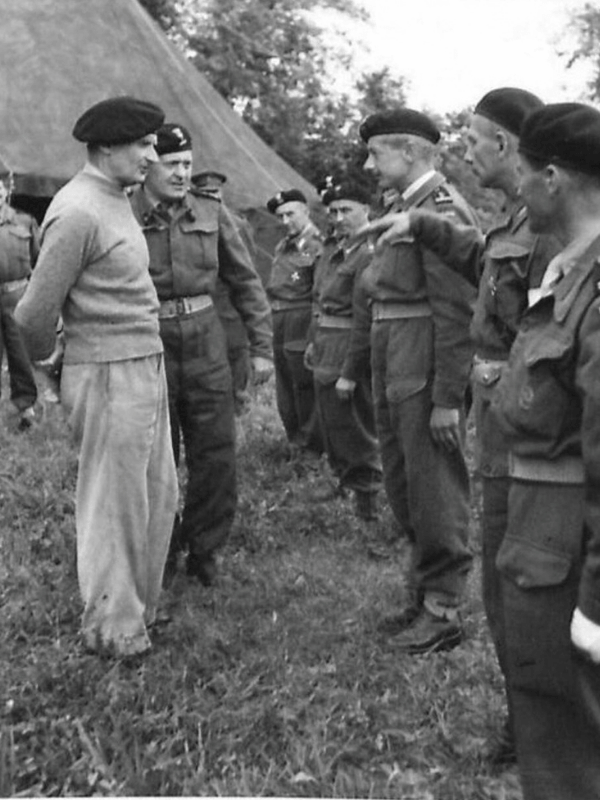
Recognizing the historic opportunity to trap the enemy, General Sir Bernard Montgomery ordered a rapid double-envelopment to close the trap. While American and French armored divisions drove north from the southern branch of the thrust, the First Canadian Army—spearheaded by the elite 1st Polish Armoured Division under Major-General Stanisław Maczek—launched Operation Tractable from the north to seal the remaining escape route.
The final, desperate closing of the gap occurred between 19 and 21 August at the village of Chambois and the strategic high ground of Mount Ormel, a double-peaked hill measuring 262 metres high that the Polish troops dubbed "The Mace." The Major-General Maczek recognized that this high ground completely dominated the local roads, deploying 1,500 infantrymen and 80 tanks of his division to block the German escape corridor.
Heavily outnumbered, running completely out of ammunition, and cut off from water supplies, the Polish troopers established an unyielding blocking position on the hill. For three days, they absorbed relentless, frantic attacks from retreating German columns trying to break out, alongside simultaneous counter-attacks from the II SS Panzer Corps striking their rear from outside the pocket.
Supported by the continuous visual spotting of the artillery, Allied fighter-bombers and heavy guns subjected the trapped, congested German columns inside the valley below to a complete slaughter. Roads were packed four abreast with retreating staff cars, ammunition trucks, and thousands of horse-drawn carts that were systematically torn to pieces by rocket-firing Hawker Typhoons. When the gap was officially sealed on 21 August, the interior of the pocket was revealed to be a graveyard of burning vehicles and rotting horses, creating an environmental hazard so severe that Allied pilots reported smelling the stench of decay thousands of feet in the air.
The envelopment resulted in the capture of 50,000 German prisoners, the deaths of 10,000 German soldiers, and the near-total destruction of the Axis defensive forces in the West. The campaign ended on 30 August as the surviving remnants retreated across the River Seine, completely unsealing the frontiers of France and opening a clear path for the rapid Allied advance toward the borders of the German Reich.
Operation Market Garden
17–25 September 1944
The swift liberation of France and Belgium following the Normandy breakout brought the Allied armies to a grinding halt along the borders of the Netherlands, facing a critical logistical supply bottleneck that threatened to delay the invasion of Germany into the winter. To bypass the heavily fortified Siegfried Line, Field Marshal Bernard Law Montgomery, 1st Viscount Montgomery of Alamein, engineered a bold, high-stakes airborne and armored offensive code-named Operation Operation Market Garden.
Officially launched on 17 September 1944, the ambitious strategy aimed to seize a sequence of eight major bridges spanning the extensive river networks of the German-occupied Netherlands, allowing a rapid armored thrust to cross the River Rhine and encircle the industrial heartland of the Ruhr Valley to end the war by Christmas.
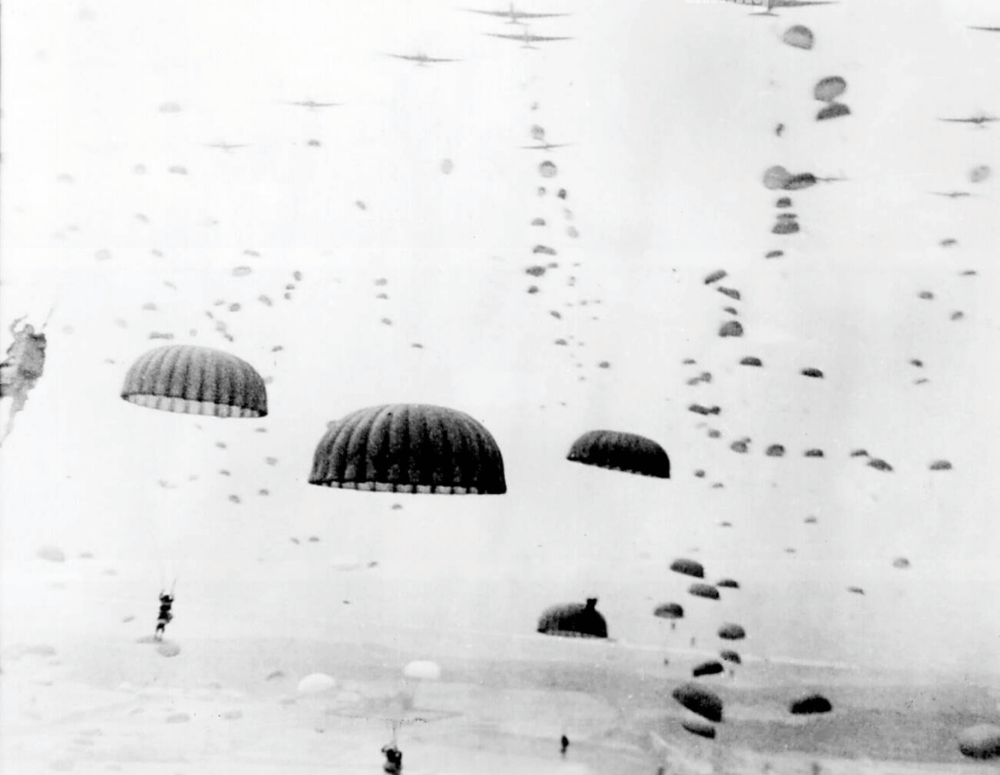
The operational design was strictly divided into two synchronized tactical components: "Market", the largest airborne operation in history, and "Garden", the ground advance. The Market assault deployed over thirty-five thousand paratroopers from the Allied 1st Airborne Army. The US 101st and 82nd Airborne Divisions were dropped to secure vital river crossings between Eindhoven and Nijmegen, while the British 1st Airborne Division, reinforced by the Polish 1st Independent Parachute Brigade under Major-General Stanisław Sosabowski, was dropped at the absolute limit of the operational chain to capture the final road bridge spanning the Lower Rhine at Arnhem. Concurrently, the Garden component required the heavy tanks of Lieutenant-General Brian Horrocks’s British XXX Corps to launch a rapid breakout along a single, narrow two-lane highway, charging sixty-four miles north within forty-eight hours to relieve the isolated paratroopers before they could be overwhelmed.
The offensive collapsed into a costly tactical disaster due to critical intelligence failures and catastrophic logistical delays. Allied high command stubbornly dismissed aerial reconnaissance photographs showing that two veteran German armored divisions, the 9th and 10th SS Panzer Divisions, were actively refitting directly inside the Arnhem drop zones. Dropped too far from their primary objective, the British paratroopers lost the element of surprise. A single, under-strength battalion of roughly 740 men under Lieutenant-Colonel John Frost successfully fought through to capture the northern ramp of the Arnhem bridge, holding the position for three days and nights without heavy weapons or armor against continuous Tiger tank assaults.
Meanwhile, the XXX Corps ground advance fell hours behind schedule as German anti-tank teams systematically ambushed the leading columns, turning the narrow highway into a choked graveyard of burning armor that contemporary soldiers dubbed "Hell's Highway." Bad weather and radio equipment failures severely hampered air resupply drops, leaving the main British force surrounded inside a shrinking pocket at Oosterbeek.
Realizing that the position was entirely untenable, the high command ordered a desperate evacuation across the Rhine on the night of 25 September. Out of the ten thousand British troops who dropped at Arnhem, over 1,400 were killed and 6,500 were captured, practically destroying the 1st Airborne Division and permanently halting the Allied advance into northern Europe.
Further Information: Operation Market Garden
Operation Plunder and the Rhine Crossing
23 – 24 March 1945
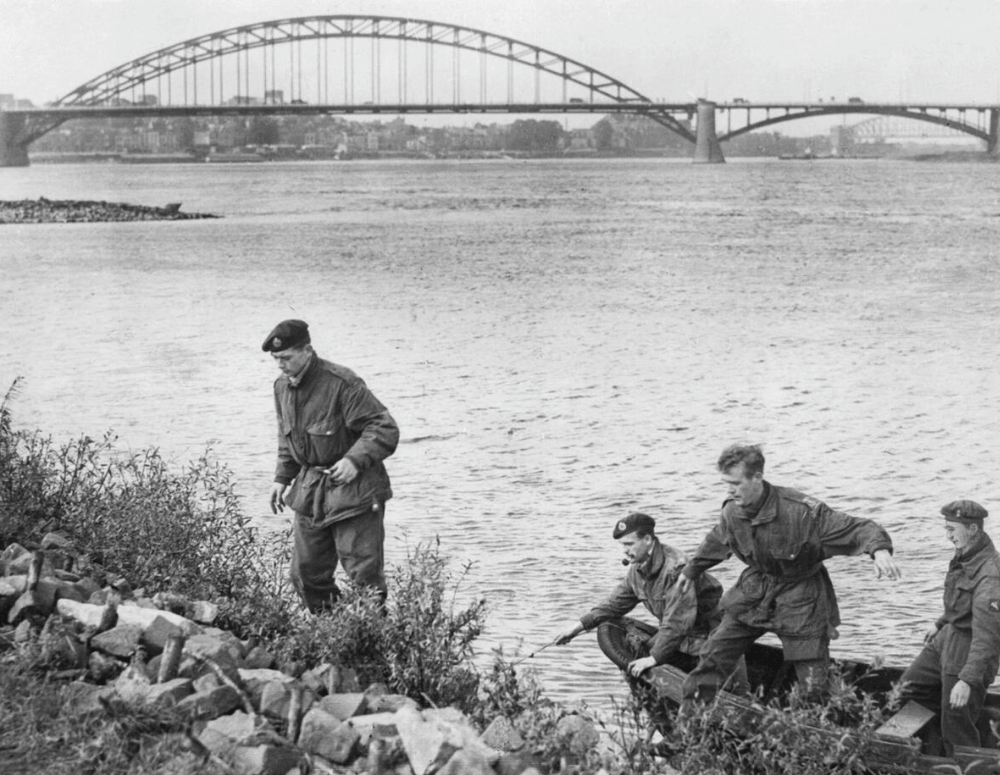
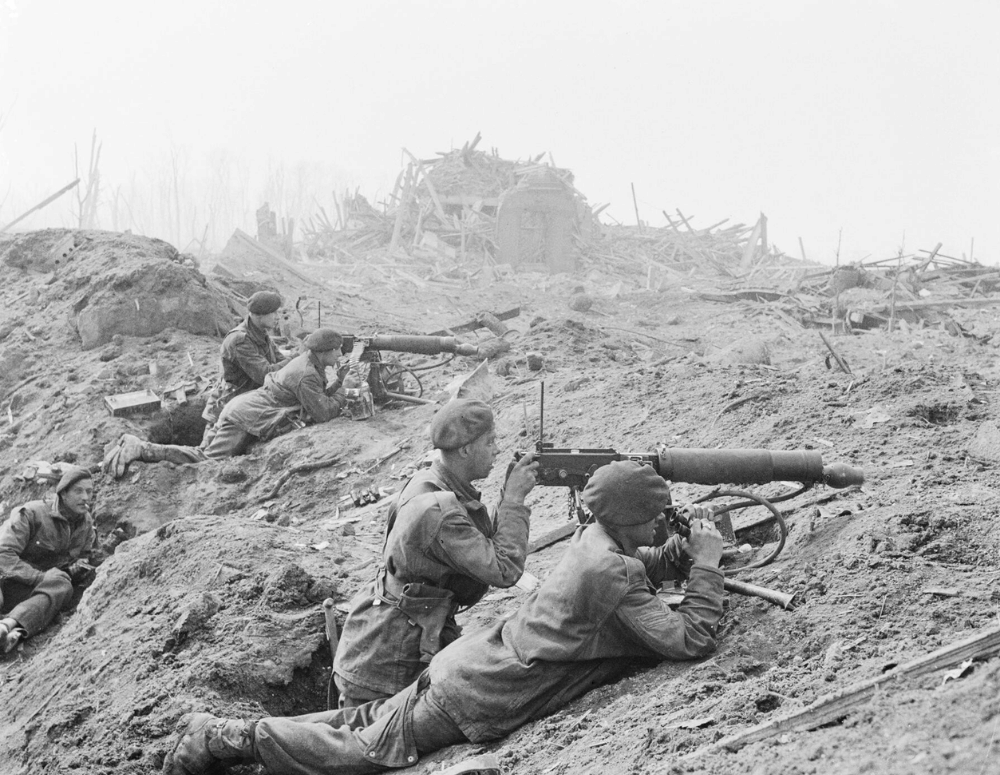
The final natural barrier protecting the industrial heartland of the German Reich was breached on the night of 23 March 1945, when the British 21st Army Group reached the banks of the River Rhine. To unhinge the northern flank of the German defenses and clear a path into the open plains of Westphalia, Field Marshal Sir Bernard Montgomery launched Operation Plunder, a massive, meticulously planned amphibious assault centered on the town of Wesel. Montgomery concentrated a formidable striking force of thirty divisions along a thirty-mile front stretching from Rees to Rheinberg.
The operation opened at 9:00 p.m. with a preliminary bombardment from 3,411 heavy artillery pieces, which fired over six hundred thousand shells in a single night to systematically crush the positions of the defending German 1st Parachute Army. Simultaneously, RAF Bomber Command deployed 200 heavy bombers to drop over 1,100 tonnes of high explosives directly onto the urban strongholds of Wesel, reducing the town to complete rubble and knocking out the primary German command centers before the troops crossed the water.
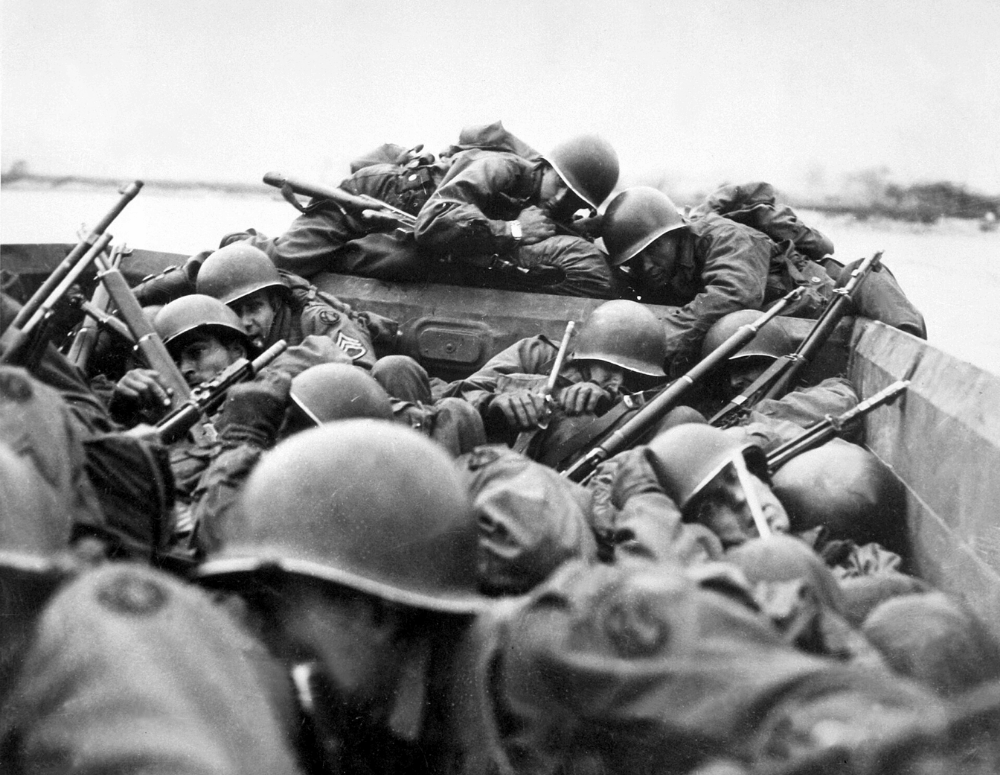
The amphibious crossing commenced at 10:00 p.m. as the veteran infantry of the British 51st (Highland) Division scrambled into specialized Buffalo amphibious tracked vehicles and storm boats to navigate the fast-flowing, five-hundred-yard-wide river. Supported by the Royal Navy's Landem Force—a unique detachment of 450 naval ratings operating LCM and LCVP landing craft that had been transported hundreds of miles overland across France and Belgium—British and Canadian troops established secure footholds on the eastern bank. The infantry bypassed isolated machine-gun positions under the cover of a massive artificial smoke screen generated by specialized chemical units along the western shore. By dawn, the British 1st Commando Brigade had successfully infiltrated the northern outskirts of Wesel, capturing 3,500 German prisoners and securing the initial crossing points with minimal casualties.
The amphibious assault was reinforced the following morning, 24 March, by Operation Varsity, the largest airborne operation ever executed in a single day. Operating under the command of the Allied 1st Airborne Army, a massive fleet of 1,589 transport aircraft and 1,347 gliders dropped more than 16,000 British and American paratroopers directly behind enemy lines within a tight, four-hour window.
The British 6th Airborne Division, landing alongside the US 17th Airborne Division, utilized 440 specialized Horsa and Hamilcar gliders to land heavy equipment, including Bren carriers and airborne artillery pieces. Despite facing fierce anti-aircraft fire that shot down or damaged dozens of transport planes, the paratroopers successfully captured the key bridges over the River Issel, seized the heavily fortified Diersfordter Forest, and silenced the German artillery batteries that overlooked the river crossing points.
By nightfall, the airborne forces had linked up with the advancing infantry of the British Second Army, securing a firm, deep bridgehead across the Rhine that effectively broke the final organized defensive infrastructure of the German state on the Western Front.
The Liberation of Bergen-Belsen
March – April 1945
The successful crossing of the Rhine triggered a total operational collapse across the German lines, allowing British armored columns to break out into the northern plains of Germany. Advancing at high speed to secure strategic gateways before Soviet forces could push westward, the British Second Army, commanded by Lieutenant-General Sir Miles Dempsey, launched a rapid multi-pronged offensive across a three-hundred-mile front.
Leading the thrust, the tanks of the 11th Armoured Division and the 7th Armoured Division bypassed pockets of fanatical resistance, forcing crossings over the River Weser and the River Elbe. Moving through shattered industrial infrastructure, British divisions captured the major port city of Bremen on 26 April and entered Hamburg on 3 May after the local garrison declared it an open city to prevent further destruction. To secure the Baltic flank, the 6th Airborne Division was rushed forward on trucks, successfully seizing the vital port of Wismar on 2 May. Arriving just hours before the lead tanks of the Soviet 70th Army, this critical advance successfully sealed off the Jutland Peninsula, blocking the path of the advancing Red Army and preventing Soviet forces from moving into Denmark.
During this high-velocity advance, the vanguard of the British Second Army encountered the full horror of the Nazi regime's camp system. On 12 April 1945, two German officers arrived at the forward lines of the British 8th King's Royal Irish Hussars to negotiate a localized, micro-truce. The German high command feared that if the advancing armor ruptured the perimeter of the nearby Bergen-Belsen concentration camp outside Celle, over 60,000 typhus-ridden inmates would escape and trigger a catastrophic pandemic across northwest Germany.
When the specialized units of the 11th Armoured Division officially entered the camp on the afternoon of 15 April 1945, soldiers and medical teams were confronted by an unprecedented humanitarian disaster. The compound was surrounded by rows of barbed wire and guarded by Hungarian soldiers and remaining SS guards under the command of Josef Kramer, the camp commandant. Inside, the British found over 10,000 unburied corpses strewn across the ground, stacked in massive open pits, or rotting inside the barracks alongside the living. Over 60,000 inmates were in advanced states of starvation, suffering from acute typhus, tuberculosis, and chronic dysentery, having been left without food or clean water for five days following the destruction of the local pumping station by Allied air raids.
The British Army immediately converted its entire regional logistics network into an emergency relief operation under the direction of Brigadier Hugh Llewellyn Glyn Hughes, the chief medical officer of the Second Army. The 32nd Casualty Clearing Station and the 11th Light Field Ambulance rushed into the compound to administer emergency triage. Laborers cleared the area using bulldozers to bury the thousands of decomposing bodies in mass graves before the heat could accelerate the spread of disease. To feed the starving population, cooks prepared specialized, light nutrition mixtures—known as the "Belsen Diet"—comprising skimmed milk, compound vitamins, and sugar, as rich army rations would instantly kill the bodies of the starved inmates.
Concurrently, engineers brought in water trucks, set up mobile decontamination centers dubbed the "human laundry" inside nearby military barracks, and systematically burned down the contaminated wooden huts with flamethrowers to destroy the typhus-carrying lice. Despite these monumental efforts, the extreme severity of the starvation and disease claimed the lives of 14,000 additional inmates within the first month of liberation.
The physical reality of Bergen-Belsen—captured in graphic film reels and photographs by the British Army Film and Photographic Unit—was broadcast across the home islands, leaving a profound psychological trauma on the British public and providing the first definitive proof of the industrial scale of the Holocaust.
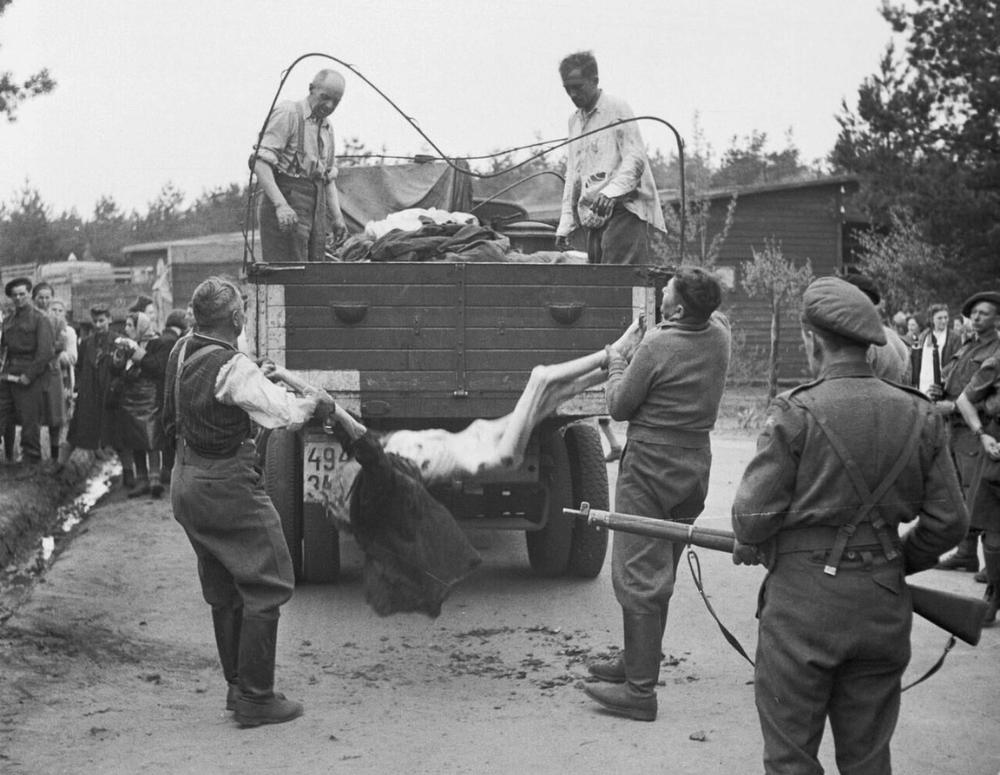
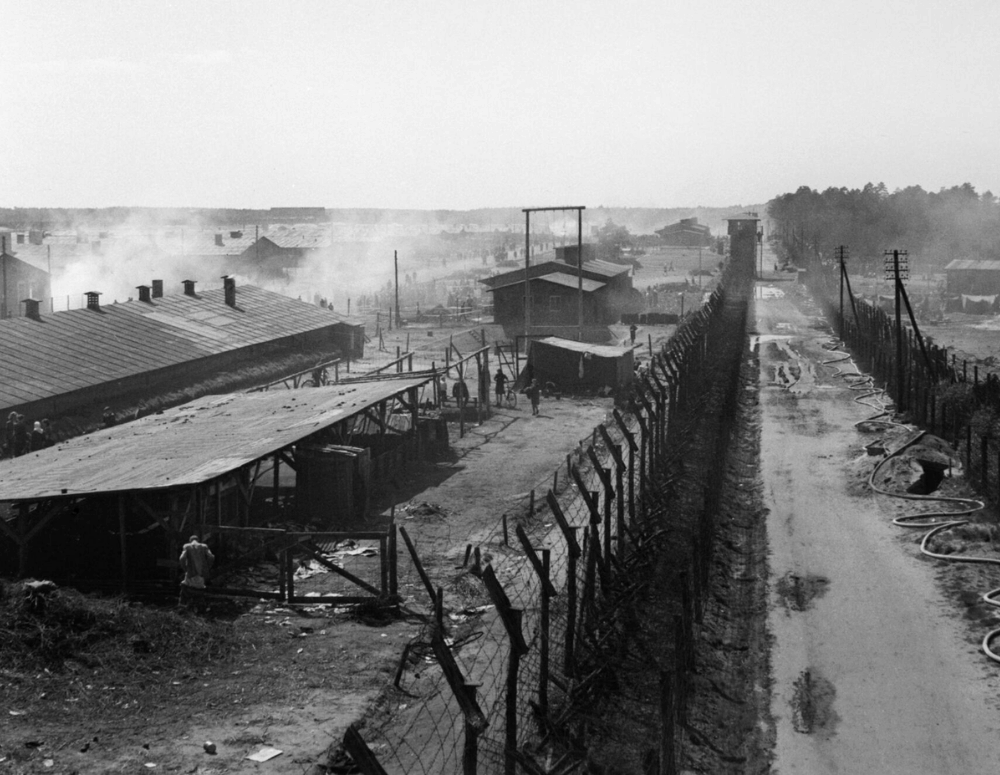
The Surrender at Lüneburg Heath
4 May 1945
The systematic encirclement of the remaining German field armies, combined with the fall of Berlin and the suicide of Adolf Hitler, brought the military campaigns in Europe to a swift, inescapable conclusion. The definitive capitulation occurred on the afternoon of 4 May 1945 at Field Marshal Sir Bernard Montgomery’s tactical headquarters on Lüneburg Heath, a barren plateau south of Hamburg. Faced with total strategic destruction, a high-level German delegation led by Admiral Hans-Georg von Friedeburg—acting under the direct authority of Grand Admiral Karl Dönitz, the newly designated head of the collapsing German state—arrived at the British lines under a flag of truce. The delegation also included General Eberhard Kinzel, chief of staff to the German army group in the north.
The Field Marshal Montgomery maintained a cold, unyielding stance throughout the negotiations, originally refusing to host the German officers until they accepted that an unconditional surrender was the only possible outcome. After verifying the credentials of the delegation, Montgomery conducted the formal ceremony inside a grey army briefing tent pitched on a remote hillside at Timeloberg. He sat at a simple wooden table covered with an army blanket, unrolled the document, and read the terms of absolute submission aloud in English to the German officers.
The signing took place at 6:30 p.m. and officially disarmed over one million Axis troops overnight. The strict terms mandated the immediate, unconditional surrender of all remaining German forces in the Netherlands, northwest Germany, Heligoland, and Denmark, ordering all ships, aircraft, and land weapons to be handed over intact to the British 21st Army Group. This text focused strictly on tactical field operations, leaving the final political capitulation of the broken German state to be executed by supreme command. Armed with this victory, British forces moved quickly to secure the ports, establish military government zones across their assigned sectors, and prepare for the final political consolidation of the Allied victory.
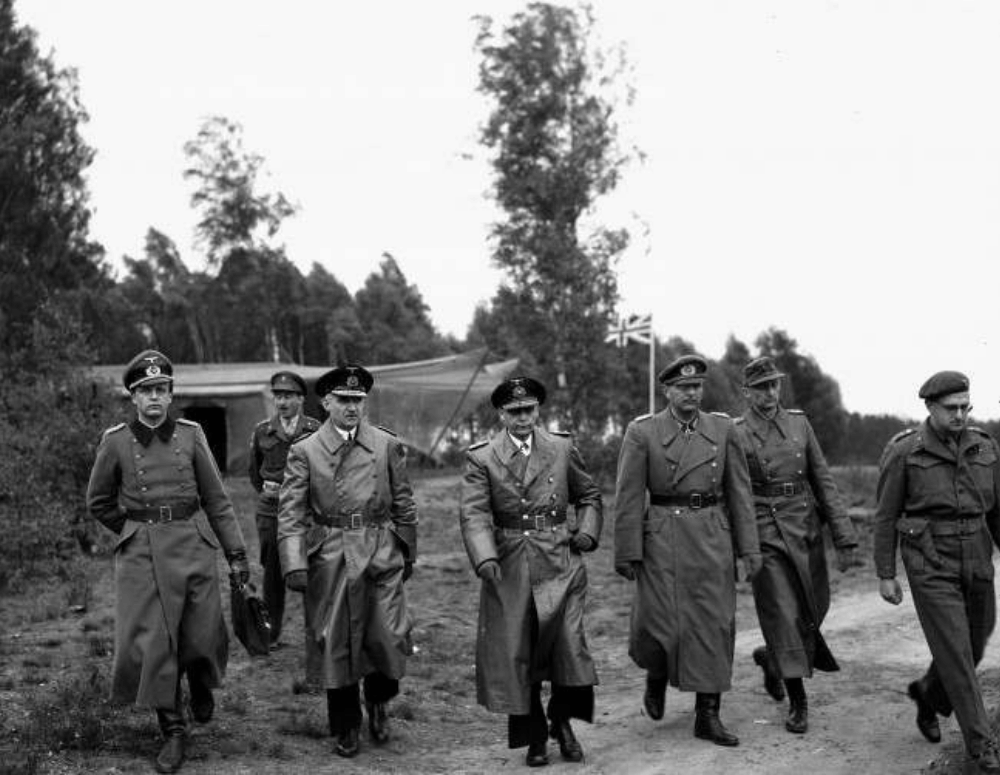
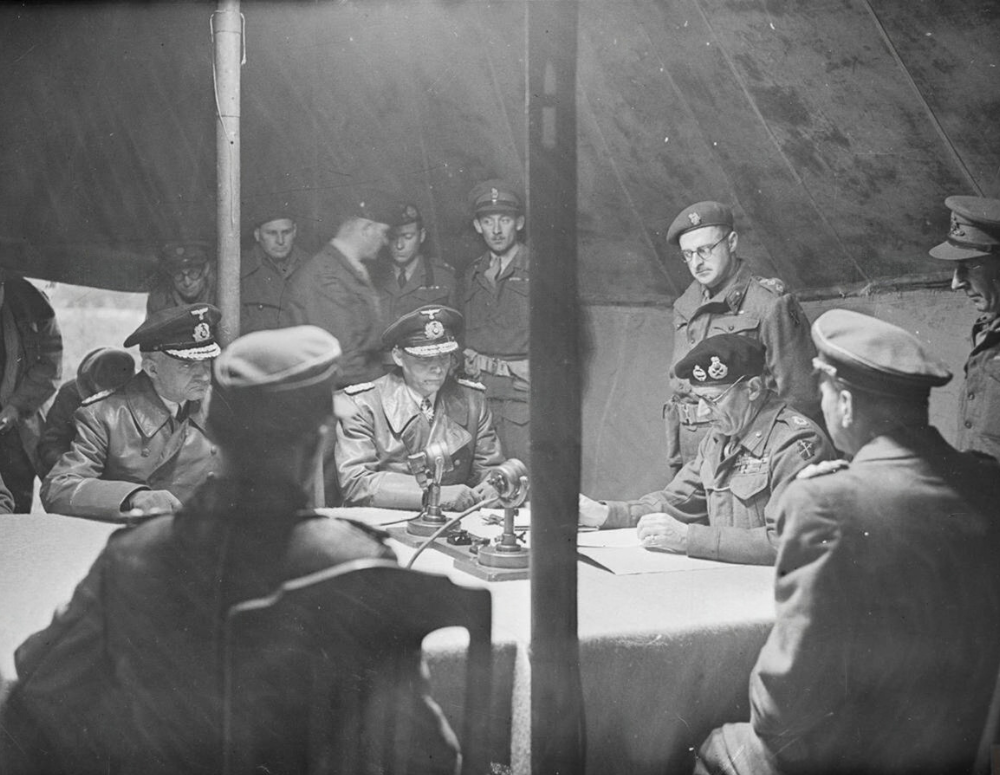
Victory in Europe Day and the Dissolution of the Axis
May 1945
On 7 May 1945, German military delegates signed the unconditional surrender of all land, sea, and air forces at the Supreme Headquarters Allied Expeditionary Force in Reims. Formal ceasefire protocols took legal effect at 11:01 p.m. Central European Time on 8 May 1945, marking the total military defeat of Nazi Germany. Prime Minister Winston Churchill delivered a national radio broadcast at 3:00 p.m. directly from the Cabinet Room at 10 Downing Street, announcing that the war in Europe was at an end. He then joined King George VI, Queen Elizabeth, Princess Elizabeth, and Princess Margaret on the balcony of Buckingham Palace, before walking out to address a massive, cheering crowd along the Mall.
The ratification of the unconditional surrender established Victory in Europe Day (VE Day) on 8 May 1945, concluding the war in Europe and ending nearly six years of national conflict. The news triggered immediate celebrations across every shire, with local communities organizing thousands of street parties, lighting bonfires, and hanging Union Jacks from windows, while vast crowds danced through the night in central London. The strict nighttime blackout regulations that had darkened the country since September 1939 were permanently lifted. For the first time in over five years, public landmarks like the Houses of Parliament, Big Ben, and Trafalgar Square were illuminated with brilliant floodlights.
Beneath this public relief, the government remained focused on global operations, as the wider war was far from over. In his victory address, the Prime Minister Churchill explicitly reminded the public that the conflict was only half-finished, warning that the full resources of the realm must remain mobilized to defeat the Empire of Japan. The War Cabinet maintained heavy shipping allocations for the Far East, keeping the British Pacific Fleet and the Fourteenth Army under General Sir William Slim actively engaged on the Asian mainland and at sea.
The end of European hostilities also triggered the immediate collapse of the four-year-old national coalition government. The Labour Party, led by Clement Attlee, and the Liberal Party withdrew their ministers to contest the upcoming post-war general election. Parliament was dissolved, throwing the country into an intense domestic political campaign just as tens of thousands of British troops were being prepared for a massive invasion of the Japanese home islands.
Further Information: Victory in Europe Day and the Dissolution of the Axis
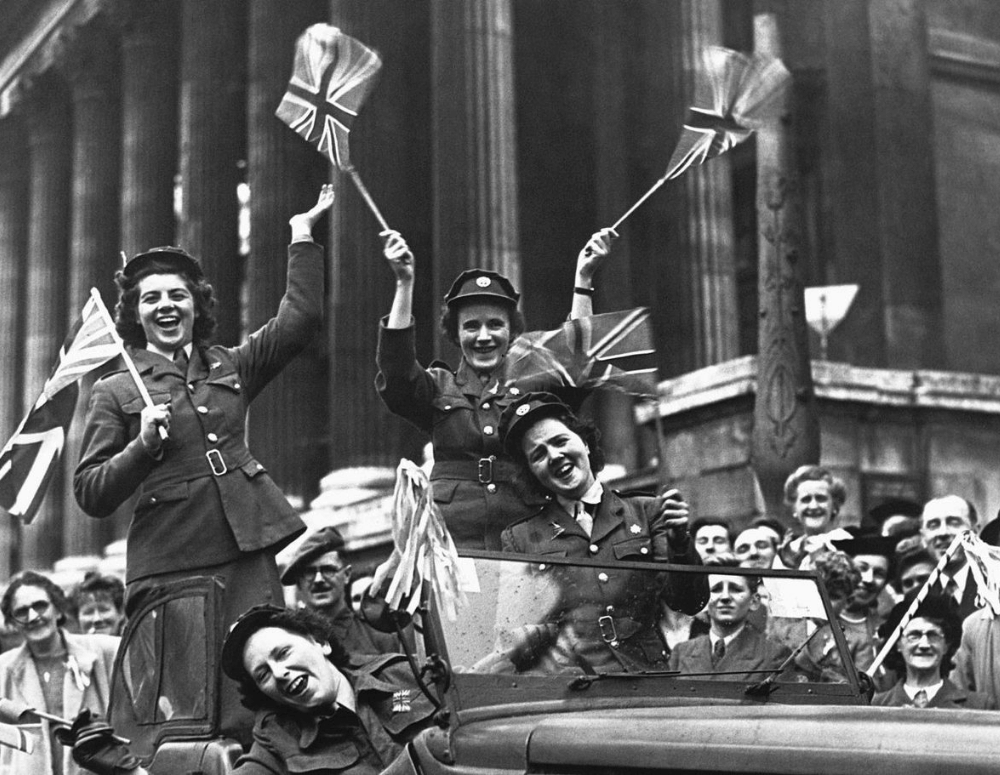
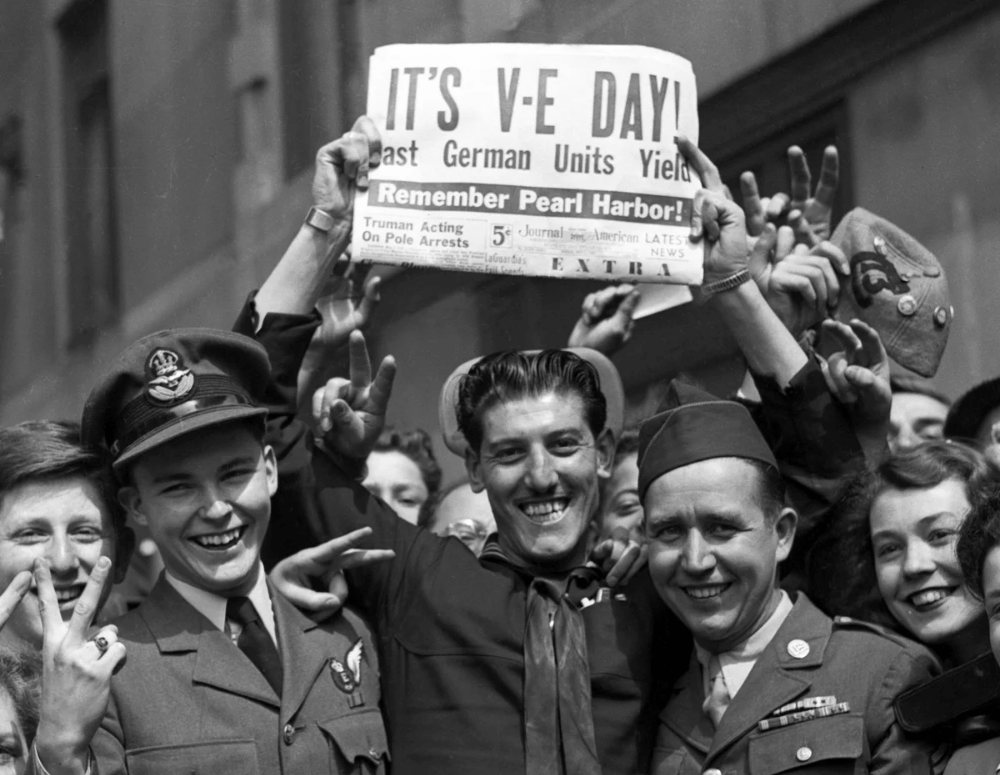
VJ Day and the Liberation of South-East Asia
August – September 1945
The strategic prediction that the war against Japan would drag on into 1946—requiring a massive, bloody amphibious invasion of the Japanese home islands known as Operation Downfall—was completely undone by a rapid sequence of cataclysmic events in the Pacific. Following the deployment of American atomic bombs on Hiroshima and Nagasaki, combined with the sudden entry of the Soviet Union into Manchuria, the Japanese imperial government collapsed.
At midnight on 14 August 1945, Prime Minister Clement Attlee—who had just achieved a landslide victory in the British general election—broadcast a radio address announcing Tokyo's capitulation, officially establishing 15 August 1945 as Victory over Japan Day (VJ Day). This triggered a second wave of massive public celebrations across Great Britain, bringing a definitive end to the Second World War.
The final months leading to this capitulation were marked by some of the most savage and unforgiving combat of the entire global war, driven by the absolute refusal of the Imperial Japanese Army to surrender. Operating under the unyielding code of Bushido, Japanese forces viewed capture as a permanent dishonor, opting instead to fight to the absolute last man. This fanatical mindset was vividly demonstrated in the dense jungles of Burma during the Battle of the Sittang Bend in July 1945. Attempting a desperate breakout across the flooded river, the remnants of the Japanese Twenty-Eighth Army launched suicidal, wave-like frontal assaults against the positions of General Sir William Slim's Fourteenth Army. Cut off by monsoon rains and decimated by artillery, over ten thousand Japanese soldiers were killed in less than a month, with whole units choosing to starve or drown rather than raise a white flag.
Concurrently, at sea, the British Pacific Fleet—a massive task force comprising four battleships and six fleet aircraft carriers—operated alongside American forces to assault the heavily fortified small islands guarding the approach to the Japanese mainland. During the titanic Battle of Okinawa between April and June 1945, British sailors faced the terrifying reality of the Kamikaze suicide air campaign. Specialized Japanese pilots intentionally crashed explosive-laden aircraft directly into the decks of Allied warships.
While American carriers suffered devastating structural damage from these hits, the British carriers—most notably HMS Indefatigable and HMS Victorious—utilized highly innovative armoured flight decks that successfully absorbed the direct impacts, allowing crews to clear the burning wreckage and resume flight operations within hours. This desperate island-hopping campaign extracted an immense toll; during the final assault on the rocky beaches and cave networks of Okinawa alone, the Allies suffered over twelve thousand fatalities, while over one hundred thousand Japanese defenders fought to the death.
The sheer savagery of this island resistance, combined with the systematic execution of Allied prisoners of war working on projects like the Burma Railway, directly drove the Allied high command's decision to deploy atomic weapons to force an immediate end to the conflict.
While the home islands celebrated the final peace, the British military apparatus faced the complex task of reoccupying vast imperial territories across South-East Asia. Supreme Allied Commander South East Asia, Admiral Lord Louis Mountbatten, oversaw the surrender of over three hundred thousand Japanese troops across the region. On 12 September 1945, during a formal ceremony at the Municipal Building in Singapore, Lord Louis Mountbatten accepted the official instrument of surrender from General Seishirō Itagaki, formally liberating the colony after three and a half years of brutal occupation. Concurrently, the Fourteenth Army secured the remaining sectors of Burma, while British naval forces re-established administrative control over Hong Kong and Malaya.
The global conflict left the state facing a bankrupt treasury and a completely restructured global landscape, bringing a formal end to the wartime era and forcing the newly elected Labour government to pivot toward post-war reconstruction.
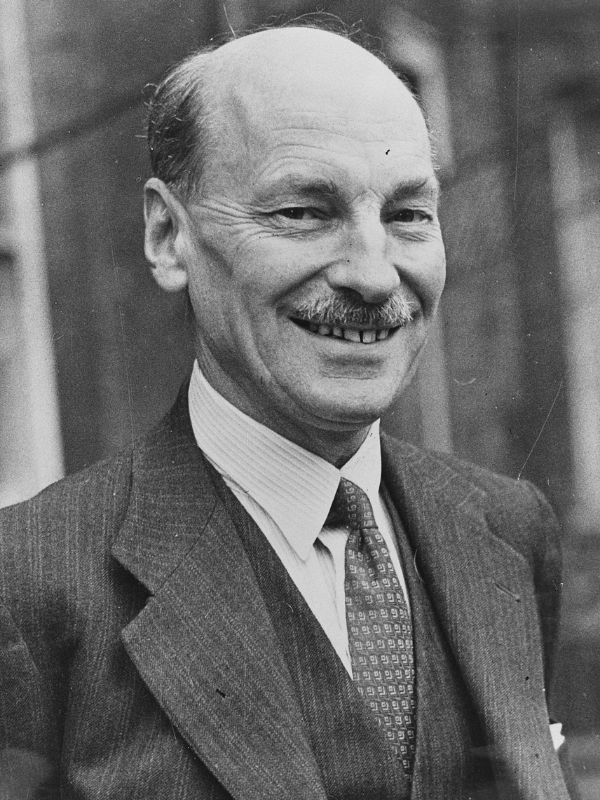
The 1945 General Election
1945
In May 1945, the dissolution of the wartime coalition government prompted the country to organize its first general election in ten years. Polling took place on 5 July 1945, but the counting of votes was delayed until 26 July 1945 to allow postal and proxy ballots from service personnel stationed in Europe, North Africa, and Burma to be collected and processed.
Winston Churchill expected his status as wartime leader to translate into victory for the Conservative Party. However, the electorate separated Churchill’s prestige from his party’s free-market platform, rejecting a return to the unemployment, means-testing, and industrial neglect of the interwar 1930s.
The general election of July 1945 resulted in a landslide victory for Clement Attlee’s Labour Party, which secured a 146-seat majority in the House of Commons and removed Winston Churchill from office to launch the post-war welfare state.
The Labour Party ran a campaign built around their manifesto, Let Us Face the Future, which promised to use the administrative machinery of the state to guarantee full employment, nationalise key heavy industries, and construct the National Health Service based on the 1942 Beveridge Report. The election resulted in a major political shift, with Labour winning 393 seats to establish its first majority government.
The victory installed Clement Attlee as Prime Minister, providing a mandate for the immediate nationalisation of the coal, rail, and steel industries, and initiating the post-war social and economic transformation of the United Kingdom.
Financial Exhaustion and a Fractured Imperial State
1945
Additional Information: Post War Britain
In December 1945, economist John Maynard Keynes arrived in Washington to negotiate the Anglo-American loan agreement, attempting to secure a $3.75 billion line of credit to prevent the immediate bankruptcy of the United Kingdom. The material cost of the war had broken the financial foundations of the nation, forcing the liquidation of £1.1 billion in overseas investments and accumulating a massive external debt that shifted the financial capital of the world from London to Washington. Great Britain emerged from the conflict as a debtor nation, carrying a £3.5 billion global debt alongside a human toll of 384,000 military fatalities and 67,000 civilian deaths.
The conclusion of the conflict left Great Britain in a state of economic exhaustion that ended its status as a global imperial superpower. This financial crisis challenged the stability of the British Empire, as the treasury could no longer afford the cash expenditures required to maintain overseas military garrisons and administrative networks. The economic strain forced a rapid reduction in global commitments, leading directly to the withdrawal of British troops from Greece and Turkey in 1947 and accelerating the Partition of India.
Daily civilian life across the shires remained under wartime rationing codes for food and fuel, which became harsher during the post-war reconstruction years due to global resource shortages and a desperate export drive. To manage the dollar shortage, the Ministry of Food kept strict controls on the domestic economy, introducing bread rationing for the first time in July 1946 and potato rationing in November 1947. This domestic austerity framework remained in place for years, proving that the price of victory over the Axis powers was the permanent reduction of Great Britain’s global military and economic reach.
Further Information: Financial Exhaustion and a Fractured Imperial State
Stay Connected
World War 2 Britain FAQs