
A Feudal Influx:
The House of Normandy
Normans and the Imposition of Continental Sovereignty
Additional Information: Norman England
The conquest of 1066 overthrew the native Anglo-Saxon aristocracy, placing a French-speaking military elite at the head of English society and binding the island to continental Europe. By replacing decentralized Saxon customs with an absolute feudal land system, the Norman dynasty established an authoritarian rule that demanded military service in exchange for land tenure.
This transition consolidated the wealth of the country under a single trans-Channel duchy, utilizing a network of stone castles to physically dominate the local populace while deploying detailed land surveys to secure direct taxation for the crown. By systematically replacing native landholders with Norman lords, this sudden conquest permanently reoriented the political focus of the realm, pulling England out of the Scandinavian orbit and plunging it into the regional conflicts of western France.
Page Contents:
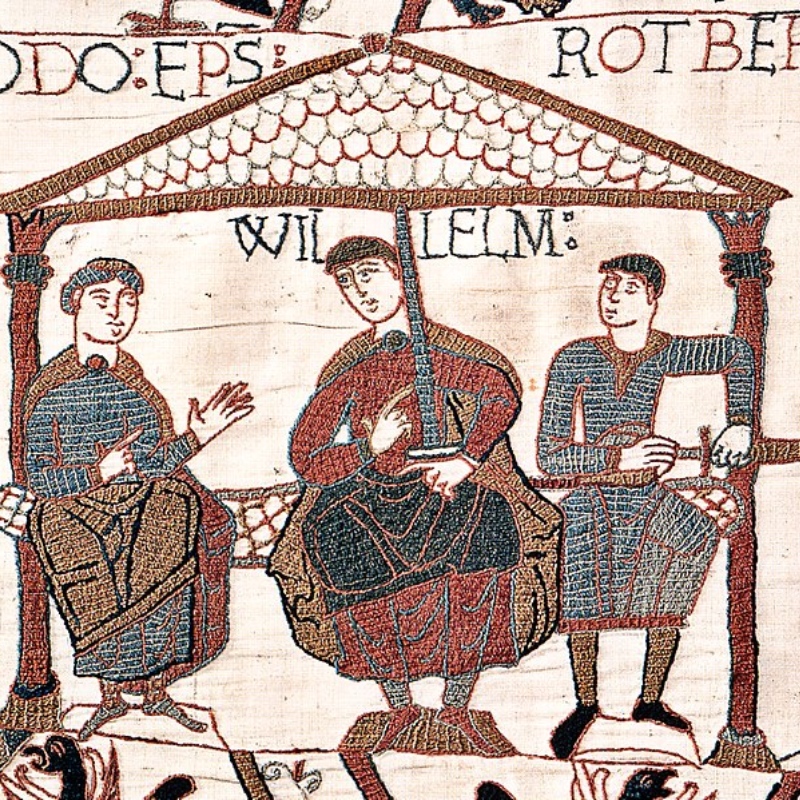
Origins of the House of Normandy: Rollo and the Viking Foundations
The Duchy of Normandy began as a border lordship created to protect the northern coastlines of France from Scandinavian maritime raids. In 911 AD, the French king Charles the Simple signed the Treaty of Saint-Clair-sur-Epte with the Viking chieftain Rollo, ceding the coastal lands around the mouth of the River Seine in exchange for Rollo's baptism and a military pledge to block future pagan fleets. Settling across this new frontier, the Norse raiders rapidly intermarried with the local population, adopted the Old French language, and took over the existing Frankish land systems.
Within a few generations, this blending of Norse maritime mobility and Frankish cavalry warfare created a distinct, fiercely aggressive warrior class known as the Normans.
The direct descendants of Rollo established a secure succession of rulers who built Normandy into the most unified and heavily armed territory in northern France. Over five generations, counts and dukes like William Longsword and Richard the Fearless expanded their borders, forced local lords to submit directly to the palace at Rouen, and organized reliable tax revenues. This multi-generational stability collapsed in 1035 AD when Duke Robert the Magnificent died suddenly while returning from a pilgrimage to Jerusalem, leaving his illegitimate eight-year-old son, William, as his only heir. Branded as William the Bastard because his mother was a tanner's daughter named Herleva, the young boy’s minority instantly plunged the duchy into a decade of private feuds, lawlessness, and open noble rebellion.
The violent chaos of William’s youth shaped his later career, turning him into a ruthless and highly suspicious commander. Powerful barons openly defied his guardians, launching assassinations that claimed the lives of his tutors, with his personal servants frequently murdered in the very rooms where the child duke slept. William survived by fleeing into hiding among loyal peasants, learning how to fight a guerrilla war of surprise raids and siegecraft.
He finally crushed the insurgent nobility in 1047 AD at the Battle of Val-ès-Dunes, securing cavalry reinforcements from King Henry I of France to smash the rebel armies. William spent the next decade subduing his borders, capturing the territory of Maine, and locking down his authority by building massive stone fortresses at Caen. By the early 1060s, William had fully mastered his duchy, creating a wealthy, secure military state that stood ready to launch a cross-Channel invasion the moment the English throne became vacant.
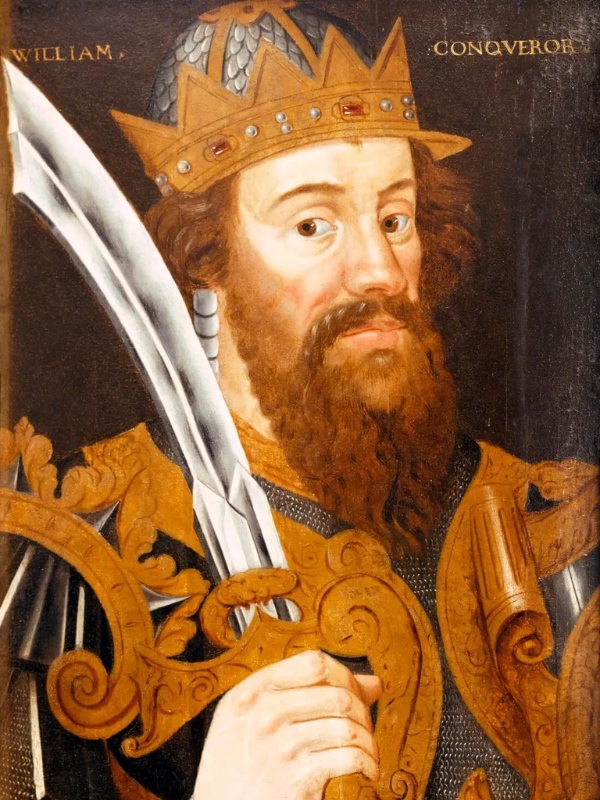
William I
King of the English 1066–1087
Duke of Normandy 1035–1087
Bio:
The monumental reign of King William I completely dismantled the ancient native framework of Anglo-Saxon society, substituting it with a highly centralized, continental system of absolute feudal subjugation.
Securing the crown through his decisive victory at the Battle of Hastings on 14 October 1066, he spent his initial years ruthlessly extinguishing a sequence of widespread domestic rebellions. His physical suppression of northern separatist movements reached a horrific peak during the winter of 1069–1070 AD, when he launched the Harrying of the North, a scorched-earth campaign that systematically burned crops, slaughtered livestock, and salted fields to intentionally starve out the regional populace, resulting in over one hundred thousand civilian deaths.
To lock down his armed occupation, he introduced the motte-and-bailey design across the landscape, constructing massive stone strongholds like the White Tower in London to visually dominate major urban zones. His structural consolidation reached its logistical climax in 1086 AD with the compilation of the Domesday Book, a comprehensive, country-wide survey that audited every hide of land, mill, and livestock asset to guarantee accurate tax extraction for the treasury.
By enforcing the Salisbury Oath to demand absolute personal allegiance from every sub-tenant in the country, he permanently uncoupled local noble power from independent landholding, creating an airtight, authoritarian military state that completely redirected the geopolitical focus of England toward the European continent.
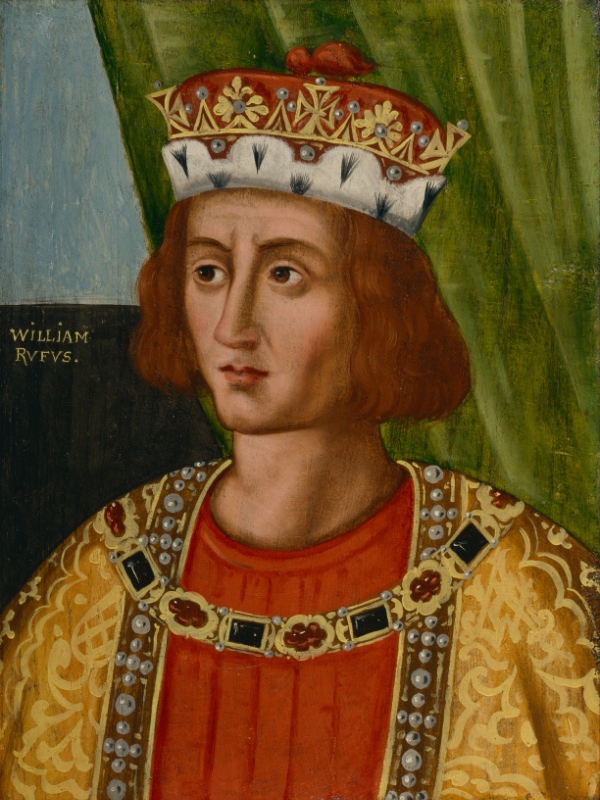
William II
King of the English 1087–1100
Bio:
King William II governed England with immense military capability and an aggressive, predatory financial policy that frequently brought him into violent conflict with both his own nobility and the western Christian church.
Inheriting the English crown while his eldest brother, Robert Curthose, assumed control of Normandy, he instantly faced a severe internal coup in 1088 AD led by Bishop Odo of Bayeux, who sought to reunify the family lands under a single ruler. Showing impressive tactical determination, Rufus rallied the native English populace by promising tax reliefs and legal reforms, successfully crushing the rebel strongholds at Rochester and Pevensey to isolate the Norman barons. He used this total internal dominance to launch a counter-offensive across the Channel, using extensive English tax silver to fund wars against his brother until the 1091 Treaty of Caen established his supremacy over northeastern Normandy.
A fierce warrior, William II successfully expanded his borders northward by annexing Cumbria and constructing a major fortress at Carlisle, while maintaining an iron grip over Church revenues by intentionally keeping rich bishoprics vacant—most notably the see of Canterbury following the exile of Anselm—to siphon their massive incomes directly into his personal war treasury, an erratic and flamboyant reign cut short when he was shot through the lungs by a hunting arrow in the New Forest.
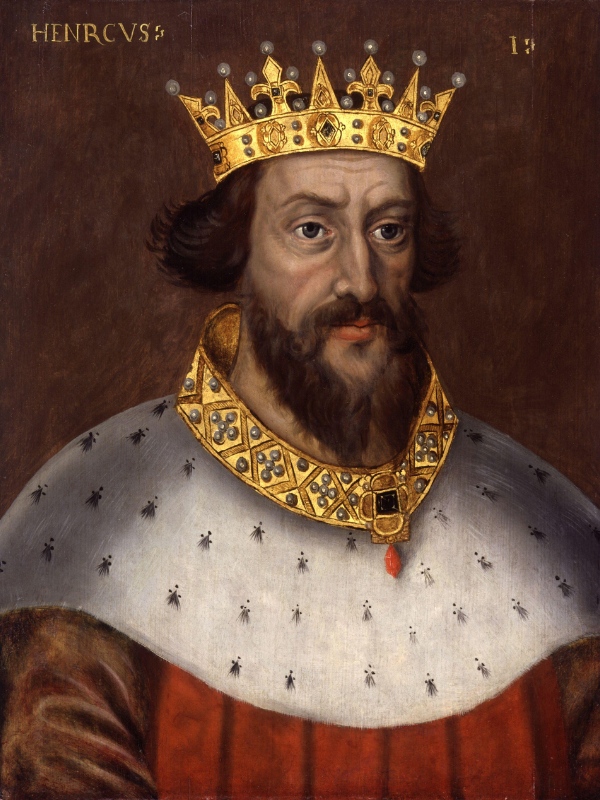
Henry I
King of the English 1100–1135
Duke of Normandy 1106–1135
Bio:
King Henry I was a brilliant administrative reformer who transformed the informal, personal governance of the early conquest era into a highly audited, bureaucratic state apparatus.
Seizing the throne in a high-velocity political maneuver within hours of his brother’s death in the New Forest, he secured the immediate backing of his subjects by issuing the landmark Charter of Liberties, a binding coronation decree that promised to end the financial extortions of the Rufus regime. He neutralized the hostility of the native Anglo-Saxon population by marrying Matilda of Scotland, a direct descendant of the ancient West Saxon royal line. He permanently resolved the multi-generational division of his family's inheritance in 1106 AD by launching an amphibious land invasion of Normandy, completely crushing his brother Robert at the Battle of Tinchebray to lock the duchy and the kingdom into a single, unified trans-Channel empire. His internal reforms re-engineered the treasury through the creation of the Exchequer, utilizing a distinctive checkered cloth as a primitive calculating grid to audit the accounts of sheriff tax collections twice a year.
His final years were clouded by an absolute dynastic crisis following the 1120 AD White Ship Disaster, which claimed the life of his sole legitimate son, forcing him to spend his twilight years extracting fragile oaths from a deeply resistant Norman nobility to accept his daughter, the Empress Matilda, as the sole heir to the throne.
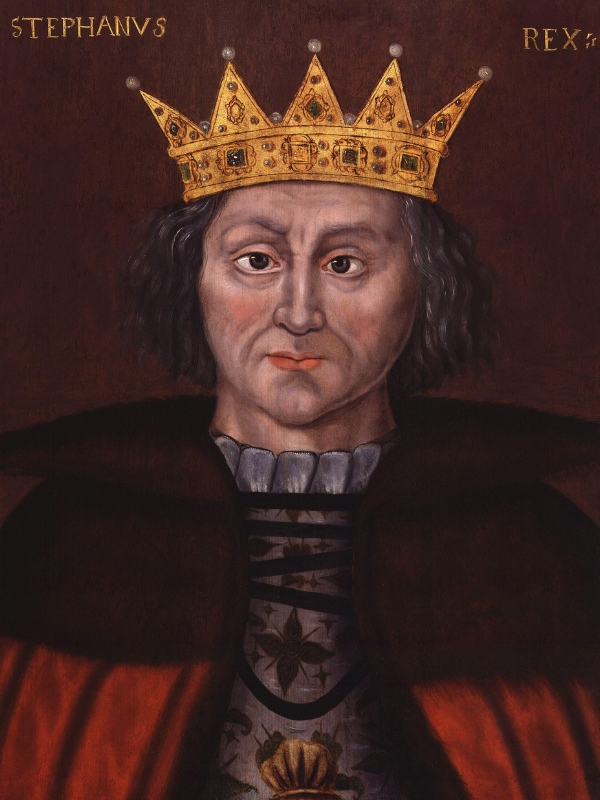
Stephen
King of the English 1135–1154
Count of Boulogne 1125–1151
Duke of Normandy 1135–1144
Bio:
The long and disastrous reign of King Stephen was completely consumed by the Anarchy, a multi-decade civil war that shattered the administrative cohesion of the country and caused a total collapse of central crown authority. Bypassing his solemn oaths to Henry I, Stephen executed a rapid political shortcut upon the old king's death, sailing from France to seize the royal treasury at Winchester and secure an immediate coronation through the backing of the London citizenry and his brother, the Bishop of Winchester. However, his initial popularity evaporated when the Empress Matilda launched a powerful counter-offensive in 1139 AD, invading the southern coastlines to plunge the country into a brutal war of attrition.
Stephen’s lack of political firmness allowed prominent regional barons to exploit the crisis, constructing unauthorized adulterine castles across the shires to terrorize local populations and run independent minting operations that bypassed the crown. Captured by enemy forces at the Battle of Lincoln in 1141 AD, he was briefly deposed before his brilliant queen, Matilda of Boulogne, organized a devastating cavalry counter-attack at Winchester to secure his release.
Exhausted by fifteen years of grinding trench warfare and facing absolute financial ruin, Stephen signed the Treaty of Wallingford in 1153 AD, agreeing to bypass his own children to declare Matilda's son, Henry Plantagenet, as his legal successor, a compromise that brought a formal end to the civil war and marked the absolute termination of the direct Norman dynasty.
Matilda
Lady of the English (Disputed) 1141
Bio:
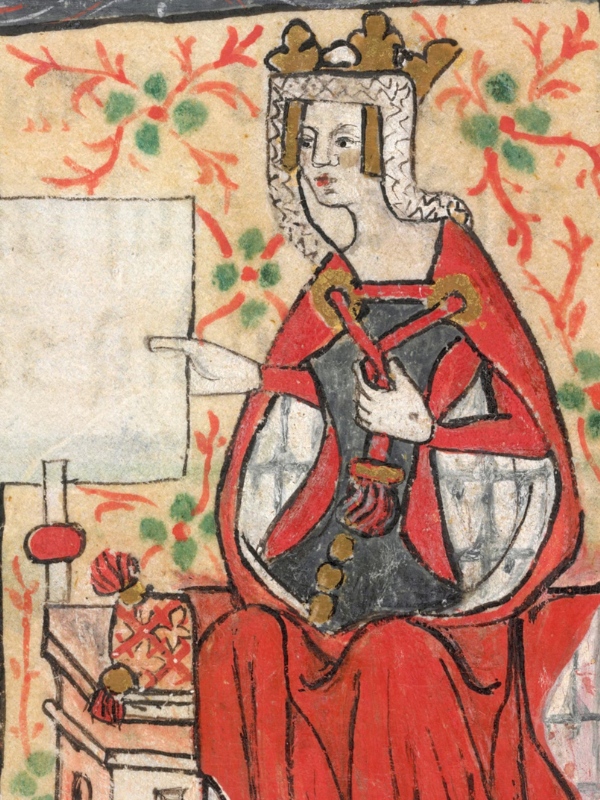
The contested rule of Empress Matilda stood as a volatile, high-stakes struggle for dynastic legitimacy that plunged the Norman realm into nearly two decades of civil war known as The Anarchy.
Following the tragic drowning of her brother William Adelin in the White Ship disaster of 1120, she was formally declared by her father, Henry I, as the sole rightful heir to the English crown, forcing the Anglo-Norman barons to swear multiple sacred oaths of allegiance to her succession. However, upon Henry’s death in 1135, her cousin Stephen of Blois executed a rapid coup, seizing the royal treasury at Winchester and securing a swift coronation with the backing of the English Church.
Matilda launched a determined military counter-offensive in 1139, invading the southern counties to exploit rising baronial discontent and scoring a spectacular tactical success at the Battle of Lincoln in February 1141, where her forces captured King Stephen on the field. This triumph allowed her to assume de facto control of the administration as Lady of the English, but her political authority collapsed within months when her uncompromising fiscal demands sparked a violent popular uprising in London, forcing her to flee the capital before an official coronation could be solemnised.
Although her direct campaign for the crown ended in a military stalemate, her strategic persistence successfully forced the signing of the Treaty of Westminster in 1153, a political settlement that allowed Stephen to retain the throne for life on the strict condition that he adopt Matilda’s eldest son, the future Henry II, as his sole legal successor, permanently terminating the Norman line in favour of the Plantagenet dynasty.
House Of Normandy FAQs