History of England

The House of
Plantagenet

A dynastic lineage defined by territorial expansion,
French land wars, and internal structural consolidation.

The House of Plantagenet and Expansion of Imperial Law

Additional Information: The Plantagenet Era

The constitutional, legal, and territorial architecture of the medieval English Kingdom was profoundly reshaped by the House of Plantagenet, an exceptionally ambitious and fiercely combative French-Angevins dynasty that converted a fractured post-civil-war kingdom into a dominant European empire. Ascending the throne in 1154 out of the smoking ruins of the Anarchy, this sweeping dynastic line dismantled the volatile privileges of local barons, replacing erratic feudal customs with a permanent, nationwide apparatus of royal courts, traveling justices, and professional jury trials.

This administrative expansion anchored the development of English common law and birthed landmark constitutional benchmarks like Magna Carta, permanently defining the legal boundaries between sovereign authority and parliamentary representation while projecting raw military power across Wales, Scotland, Ireland, and the wealthy duchies of France.

Origins of the House of Plantagenet: Counts of Anjou and the Angevin Empire

The origins of the Plantagenet line lay in the County of Anjou in western France, where for generations the local counts had expanded their power along the Loire Valley through warfare against Normandy, Brittany, and Blois. This border rivalry shifted in June 1128 when Count Fulk V arranged the marriage of his fifteen-year-old heir, Geoffrey, to the twenty-six-year-old Empress Matilda, the widowed daughter and surviving heir of King Henry I of England. Geoffrey’s habit of wearing a sprig of yellow broom blossom, Planta genista, in his cap provided the name for a lineage destined to unite these principalities under a single house.

This cross-Channel alliance was intended to guarantee a peaceful succession to the English throne, but it instead triggered a collapse into civil war when Henry I died in 1135 AD. Breaking their solemn oaths to the Empress Matilda, the Anglo-Norman barons accepted her cousin, Stephen of Blois, as king, plunging England into the conflict known as the Anarchy.

While Matilda landed on the southern coast of England to wage war against Stephen's forces, Geoffrey Plantagenet remained on the continent, launching a campaign across Normandy until he captured Rouen in 1144 to claim the ducal title by right of his wife. This continental victory secured a massive territorial power base in northern France, positioned to support the hereditary claims of their eldest son, Henry.

The young Henry Plantagenet combined the drive of his Angevin forefathers with the administrative ambition of his Norman ancestors, consolidating an enormous inheritance before he reached his twenty-first year. Upon his father's death in 1151 AD, Henry assumed direct control of Anjou, Maine, and Touraine, pairing these lands with the Duchy of Normandy to become the master of western France. He achieved a diplomatic coup in May 1152 by marrying the wealthiest heiress in Europe, Eleanor of Aquitaine, just weeks after her marriage to King Louis VII of France was annulled, a union that added the vast duchies of Aquitaine and Gascony to his personal domain and stretched his lands from the English Channel to the Pyrenees.

Armed with these continental resources, Henry launched an invasion of England in 1153, forcing the exhausted King Stephen to sign the Treaty of Wallingford, a legal settlement that bypassed Stephen's own children to name Henry as the rightful heir to the crown.

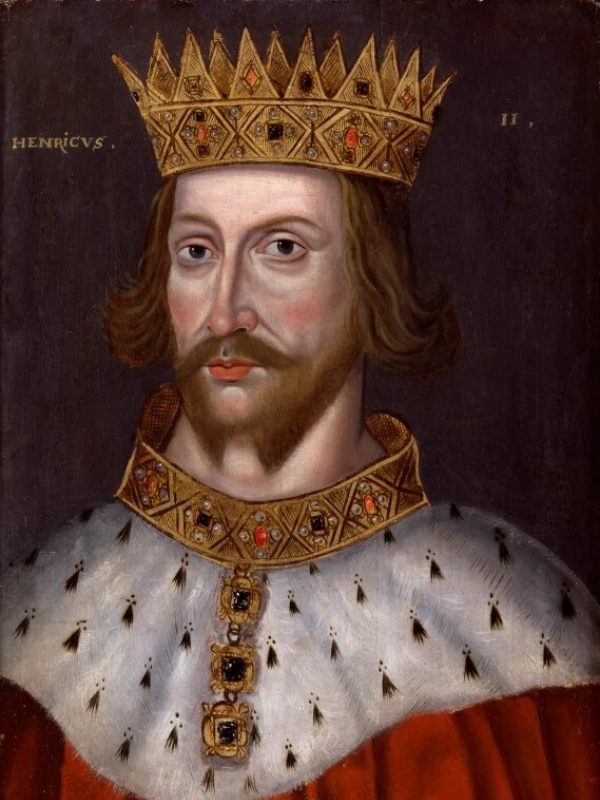
Henry II

King of the English 1154–1189
Duke of Normandy 1150–1189
Count of Anjou 1151–1189
Duke of Aquitaine 1152–1189
Lord of Ireland 1177–1189

Bio:
King Henry II inaugurated the Plantagenet era by executing a comprehensive, sweeping legal revolution that laid down the permanent foundations of English common law. Inheriting a kingdom deeply fractured by twenty years of civil war, his initial domestic policy focused on the systematic destruction of unauthorized adulterine castles and the forceful restoration of central crown authority.

Through the Assize of Clarendon in 1166 AD, he fundamentally altered the judicial landscape of the country, introducing the system of traveling circuit judges who answered directly to the royal court and implementing the grand jury system to identify local criminals, effectively stripping power away from corrupt baronial jurisdictions.

His fierce determination to subject the Catholic Church to royal law led to a bitter constitutional standoff with his former chancellor, Archbishop Thomas Becket, culminating in Becket's brutal assassination inside Canterbury Cathedral by four royal knights, a political disaster that forced the king to perform public penance.

On the global stage, Henry consolidated a sprawling multi-continental domain historically recognized as the Angevin Empire, extracting oaths of submission from the princes of Wales, the king of Scotland, and launching a successful military expedition to establish the lordship of Ireland.

Despite his immense administrative genius, his final years were completely consumed by toxic family rivalries, as his volatile sons, backed by Eleanor of Aquitaine and the French crown, launched continuous armed rebellions that ultimately broke his health and forced him into a bitter, isolated retreat at Chinon.
Further Information: King Henry II

The Reign of King Henry II Plantagenet

Accession and Pacification (December 1154)
Following the death of King Stephen, twenty-one-year-old Henry II Plantagenet took the throne completely unopposed under the terms of the Treaty of Winchester. He moved with high speed to restore public order after the Anarchy, ordering the immediate physical demolition of over a thousand unauthorized adulterine castles constructed by lawless barons during the civil war and immediately centralizing royal justice under his expanding court bureaucracy.

The Constitutions of Clarendon (January 1164)
The monarch issued the Constitutions of Clarendon, a comprehensive legislative code explicitly designed to curb the separate power of the church courts and reassert royal supremacy. The code sparked a fierce constitutional clash with his former friend, Thomas Becket, Archbishop of Canterbury, over the right of the royal exchequer to punish criminous clerks—clerics who committed secular crimes like robbery or murder but used ecclesiastical sanctuary to evade physical punishment.

The Flight of Becket (November 1164)
Following a high-profile showdown at the Council of Northampton, where the monarch targeted his rival with heavy financial corruption charges dating from his time as Chancellor, the archbishop fled the country in disguise. The prelate crossed the channel to secure political asylum from King Louis VII of France, plunging the English state into a six-year international diplomatic crisis that saw the Pope threaten the realm with an interdict.

The Murder of Thomas Becket (29 December 1170)
The long-running standoff ended in sudden, sacrilegious violence inside the mother church of the realm on 29 December 1170. Four of the monarch’s knights—Reginald FitzUrse, Hugh de Morville, William de Tracy, and Richard le Breton—misinterpreted the king’s frustrated outburst, “Will no one rid me of this turbulent priest?”, and rode straight to Kent. They cornered the Archbishop beside the altar of Canterbury Cathedral and brutally assassinated him, striking off the top of his skull with their swords during the evening vespers.

The Great Revolt (1173–1174)
The monarch faced the greatest challenge to his absolute authority when his own eldest son, Henry the Young King, launched a massive multi-front rebellion to seize power. Backed by the King of France, William the Lion, King of Scotland, and his own mother, Eleanor of Aquitaine, the young prince rallied the disgruntled Anglo-Norman barons to try to forcefully carve up the Angevin Empire, igniting open warfare across England, Normandy, and Aquitaine.

Public Scourging at Canterbury (July 1174)
Faced with the imminent collapse of his realm, the monarch executed a dramatic act of public penance to win divine favor and pacify public fury over the murder of the Archbishop. He walked barefoot through the cobblestone streets of Canterbury to the martyr’s tomb, kneeling before the monks to endure a public scourging of eighty lashes. This intervention coincided exactly with his loyalist forces capturing the King of Scots at the Battle of Alnwick, completely breaking the spine of the rebellion.

The Final Rebellion and Death (6 July 1189)
The monarch’s thirty-five-year imperial rule ended in total heartbreak and physical sickness. His remaining sons, Richard the Lionheart and Prince John, partnered with King Philip II of France to launch a final offensive against the aging sovereign. Hounded from his birthplace at Le Mans, the broken king collapsed from a severe bleeding stomach ulcer at Chinon Castle, dying days after learning his favorite son John had also joined the traitors. The court buried his remains at Fontevraud Abbey in Anjou.

The Angevin Empire

The Construction of the Empire (1150–1154)
Through an extraordinary combination of inheritance and strategic conquest, Henry II Plantagenet constructed the largest European empire since the reign of Charlemagne. He inherited the wealthy Duchy of Normandy from his mother, Empress Matilda, and the strategic counties of Anjou and Maine from his father, Geoffrey Plantagenet.

By subsequently acquiring the massive southwestern duchy of Aquitaine through his marriage, the monarch created a vast geopolitical block known historically as the Angevin Empire. This immense territory stretched continuously from the Scottish border down to the Pyrenees, successfully squeezing the royal domains of the King of France between his western borders.


Submission of the Irish Kings (1171–1172)
The monarch expanded his borders beyond the British mainland by launching a direct military expedition to Ireland between 1171 and 1172, partly to escape the immediate papal fallout of Thomas Becket’s assassination. He landed a powerful fleet of four hundred ships at Waterford, forcing the native Irish provincial kings and the independent Anglo-Norman marcher lords to offer their absolute submission to his court. This intervention allowed him to formally establish the Lordship of Ireland, introducing English administrative machinery and binding the island directly to the sovereignty of the English crown.

The Royal Household of Henry II

Marriage to Eleanor of Aquitaine (May 1152)
Just eight weeks after her marriage to King Louis VII of France was officially annulled, the powerful Eleanor of Aquitaine married the nineteen-year-old Henry II. This calculated union instantly transferred control over one-third of modern France straight to Henry’s exchequer, shifting the balance of power in Western Europe, creating the sprawling Angevin Empire, and deeply infuriating the French crown.

The Sixteen-Year Imprisonment of the Queen (1174–1189)
Following her active role masterminding the Great Revolt of 1173, the monarch turned his fury directly on his wife. He placed Eleanor under strict house arrest, keeping her a permanent prisoner inside the secure towers of Winchester Castle and Old Sarum for sixteen years until his death, effectively neutralizing her immense political influence over her ancestral duchy of Aquitaine.


The Lineage and Marriages of the Angevin Successors
The marriage produced eight children, establishing an exceptional household of heirs who frequently turned on their father and one another in their relentless hunger for land and independent authority:

Henry the Young King (Associate King of England)
Born on 28 February 1155, he was crowned co-ruler in 1170 to secure the succession but held zero actual executive power. He married Margaret of France, the daughter of King Louis VII, but died childless of dysentery in 1183 while leading an armed rebellion against his father.

King Richard I (King of England, Lord of Ireland, and Duke of Aquitaine)
Born on 8 September 1157, he operated as Eleanor’s favorite son, successfully seizing the crown in 1189 after hounding his father to death and going on to lead the Third Crusade. He married Berengaria of Navarre, dying without legitimate issue from a gangrenous crossbow wound.

Geoffrey II, Duke of Brittany (Duke of Brittany)
Born on 23 September 1158, he successfully secured the independent duchy of Brittany through a strategic marriage to the heiress Constance, Duchess of Brittany. He frequently partnered with the French court against his father, before being trampled to death during a grand tournament in Paris in 1186.

King John (King of England, Lord of Ireland, and Duke of Aquitaine)
Born on 24 December 1166, he operated as his father’s favorite youngest son, whose ultimate betrayal at Ballans finally broke the old king’s spirit. He married first Isabel, Countess of Gloucester, and second Isabella of Angoulême, later losing Normandy and the northern continental empire to France.

William IX, Count of Poitiers
Born on 17 August 1153, he operated as the absolute eldest son of the union, receiving oaths of fealty for the county of Poitiers before dying in infancy at Wallingford Castle.

Matilda of England (Duchess Consort of Saxony and Bavaria)
Born in 1156, her hand was deployed to secure a powerful northern alliance with the Welf dynasty. She married Henry the Lion, Duke of Saxony and Bavaria, heavily financing cultural patronage and managing her husband’s extensive estates during his prolonged continental exiles.

Eleanor of England (Queen Consort of Castile)
Born on 13 October 1162, she was utilized to lock down strategic southwestern borders near Aquitaine. She married King Alfonso VIII of Castile, exercising immense political and administrative influence over the Castilian court and co-founding the famous Abbey of Santa María la Real de Las Huelgas.

Joan of England (Queen Consort of Sicily)
Born in October 1165, her hand was utilized to anchor Angevin maritime and Mediterranean trade partnerships. She married first King William II of Sicily, and second Raymond VI, Count of Toulouse, later accompanying her brother King Richard I on the Third Crusade.

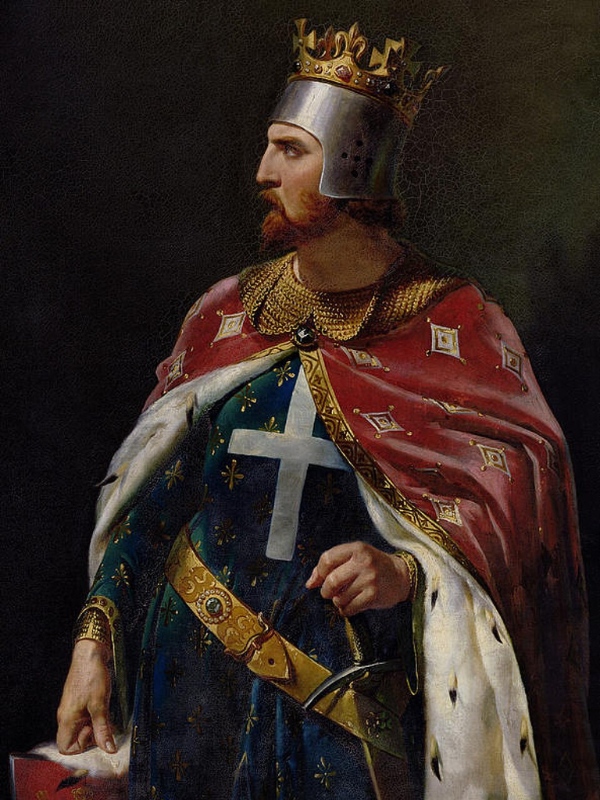
Richard I

King of the English 1189–1199
Duke of Normandy 1189–1199
Count of Anjou 1189–1199
Duke of Aquitaine 1189–1199

Bio:
The legendary reign of King Richard I was entirely dominated by his status as one of the premier military commanders of the medieval Western world, turning his domestic kingdom into a massive fiscal extraction machine to fund global crusading warfare. Spending less than ten months of his ten-year reign physically inside England, he viewed the island primarily as a repository of treasure, famously declaring he would sell London itself if he could find a suitable buyer to finance the Third Crusade.

Joining forces with King Philip II of France, he led an elite expeditionary force to the Levant, where his tactical brilliance was spectacularly demonstrated during the protracted Siege of Acre and his crushing victory over Saladin's forces at the Battle of Arsuf.

Though he successfully stabilized the Christian coastal strongholds and guaranteed pilgrimage access to Jerusalem, his failure to recapture the holy city forced a tactical retreat. His journey home turned into a diplomatic nightmare when he was captured by Leopold V of Austria, resulting in an astronomical ransom demand of one hundred and fifty thousand marks of silver.

This massive debt forced the English state to levy crushing taxes on the population and surrender church treasures to secure his release, subsequent to which Richard spent his final years locked in a fierce war of attrition in France, building the architectural marvel of Château Gaillard to secure the borders of Normandy until a random crossbow bolt during a minor siege cut short his military career.
Further Information: King Richard I

The Reign of King Richard I

Accession and Release of the Queen Mother (July 1189)
Following his successful rebellion against his father King Henry II, Richard I took supreme power over the sprawling Angevin Empire. His very first executive act was to issue a royal command releasing his mother, Eleanor of Aquitaine, from her sixteen-year house arrest in Winchester. He immediately established her as his trusted regent and lead administrator in England, authorizing her to travel the shires, release political prisoners, and secure oaths of fealty to ensure a stable transition of power.

The Coronation Riots and Anti-Jewish Violence (3 September 1189)
Baldwin of Forde, Archbishop of Canterbury, anointed the new monarch King of England inside Westminster Abbey on 3 September 1189. The celebrations turned to horror when a group of prominent Jewish citizens presenting coronation gifts was attacked by the court crowd. This spark ignited a wave of anti-Semitic rioting that destroyed Jewish quarters across London, later expanding into a nationwide wave of pogroms that culminated in the tragic mass suicides and slaughter of over one hundred and fifty Jews trapped inside York Castle in March 1190.

Liquidation of State Assets (Winter 1189)
The monarch treated England exclusively as a financial extraction engine to fund his upcoming expedition to the Holy Land. He systematically put up for sale every high office, strategic castle, and crown land holding in the realm, stripping the state of its permanent revenues. The king famously boasted to his inner court circle that he would have sold London itself if he could have located a rich enough buyer to meet his exorbitant price, showing a total disregard for domestic governance in pursuit of his crusading ambitions.

The Release of Scotland and the Quitclaim of Canterbury (December 1189)
To maximize his liquid cash reserves before departing for the Mediterranean, the monarch executed a major diplomatic concession by signing the Quitclaim of Canterbury in December 1189. He formally released William the Lion, King of Scotland, from the strict subordinating oaths of feudal submission that had been forcefully extracted by Henry II following the Great Revolt. In exchange for this release and the return of the strategic border castles at Roxburgh and Berwick, the Scottish crown paid the massive sum of 10,000 marks directly into the English treasury, permanently altering the balance of power along the northern frontier.

The Annexation of Cyprus (May 1191)
While sailing toward the Levant, a fierce storm scattered the monarch’s transport fleet, causing several ships carrying his sister and his fiancée, Berengaria of Navarre, to be captured by Isaac Komnenos, the independent Greek ruler of Cyprus. The monarch launched an immediate amphibious counter-offensive, overrunning the island’s defenses in weeks. He captured the Greek ruler, binding him in specially forged silver chains to satisfy a promise not to place him in irons, and sold the strategic island to the Knights Templar to secure a vital Mediterranean supply base and naval staging point.

The Massacre at Ayyadieh (20 August 1191)
Following the capitulation of the strategic city of Acre in July 1191, the monarch grew increasingly frustrated by what he viewed as deliberate delaying tactics from the Muslim leader Saladin regarding an agreed prisoner exchange and the return of the True Cross. On 20 August 1191, the monarch ordered his housecarls and knights to march over 2,700 Muslim prisoners out to the hills of Ayyadieh. The English forces systematically executed every single captive in full view of the nearby Muslim outposts, an act of calculated psychological warfare that permanently hardened the nature of the campaign.

Acre and Jaffa (1191–1192)
The monarch assumed supreme tactical command of the Crusader armies in the Levant, breaking the grueling two-year Siege of Acre. He broke with traditional frontal charge customs, executing spectacular tactical maneuvers to defeat Saladin’s main host in open combat at the Battle of Arsuf in September 1191. He followed this victory by repelling a massive counter-attack at the Battle of Jaffa in August 1192, where he personally fought on foot with a spear alongside his crossbowmen, permanently re-establishing the Crusader kingdom along the coast and forcing Saladin to sign a three-year truce.

Captivity (December 1192)
Attempting to cross Europe in disguise as a merchant on his return journey after his ships were wrecked in the Adriatic, the monarch was identified and captured outside Vienna by his bitter enemy, Leopold V, Duke of Austria, in December 1192. The Duke handed the anointed king over to the Holy Roman Emperor, Henry VI, who imprisoned him inside the secure mountain towers of Dürnstein Castle. This captivity plunged the Angevin Empire into a severe constitutional crisis, as his younger brother plotted with the French crown to partition his lands.

Ransom and Restoration (March 1194)
Following the extraction of a colossal tax payout from his shires—a crushing levy that extracted one hundred thousand pounds of silver, or one-fourth of all moveable goods and incomes across England—the monarch was released. He returned to England in March 1194 to crush an armed rebellion launched by Prince John. He rapidly recaptured the final rebel stronghold at Nottingham Castle and staged a secondary coronation at Winchester to restore his fractured royal majesty and demonstrate his absolute recovery of executive power.

The War of Attrition against Philip II (1194–1199)
Immediately after stabilizing his English administration, the monarch departed for Normandy, never to return to Britain. He spent the final five years of his life locked in a brutal, multi-front war of attrition against King Philip II of France, who had aggressively seized border keeps during the king’s captivity. The monarch deployed his vast financial resources to construct the massive stone fortress of Château Gaillard atop the cliffs of the Seine in less than two years, using it as an unassailable operational base to systematically roll back French advances and secure the borders of Normandy.

The Fatal Crossbow Strike (26 March 1199)
The monarch’s ten-year imperial rule ended during a minor siege against a rebellious vassal, Aimar V, Viscount of Limoges, at the castle of Châlus-Chabrol in the Limousin on 26 March 1199. While walking the perimeter without his heavy chainmail armor, a lone defender on the walls fired a crossbow bolt that struck the king cleanly in the shoulder. The wound rapidly turned gangrenous under the care of incompetent court doctors, causing his death on 6 April 1199. The court buried his heart at Rouen Cathedral and his body at Fontevraud Abbey.

Pre-Reign Years of Richard the Lionheart

Birth at Oxford (8 September 1157)
Richard I was born at Beaumont Palace in Oxford on 8 September 1157, operating as the third legitimate son of King Henry II and Eleanor of Aquitaine. From his early childhood, the young prince was heavily favored by his mother, who ensured he was thoroughly educated within the elite troubadour culture, courtly literature, and advanced martial codes of southwestern France, preparing him to inherit her ancestral domains rather than the Anglo-Norman heartland.

Investiture as Duke of Aquitaine (1172)
At the age of fourteen, the prince was formally invested as the Duke of Aquitaine during twin sacral ceremonies at Poitiers and Limoges in 1172. The historic investiture required him to take on the direct administrative and military governance of his mother’s massive southwestern duchy, matching the teenage warlord against the most volatile, treacherous, and independent-minded baronage in Western Europe.

Outbreak of the Great Revolt (1173–1174)
The prince joined his brothers, Henry the Young King and Geoffrey, Count of Brittany, in a massive, coordinated armed rebellion designed to forcefully strip their father of his executive command. Backed by the French crown, the teenage Duke led rebel forces across the rugged terrain of Aquitaine, executing high-speed siege maneuvers and fortifying rebel strongholds until King Henry II crushed the northern fronts, forced the capitulation of the allies, and compelled his sons to submit at the Treaty of Montlouis.

Taming of the Aquitaine Barons (1175–1178)
Following his submission to the crown, the king dispatched the young Duke back to southwestern France to systematically punish the local lords who had supported the insurrection. The prince proved his formidable military competence by launching a sequence of brutal, seasonal pacification campaigns. He systematically stormed supposedly impregnable castles, leveled the defensive networks of rebellious vassals, and enforced absolute ducal authority over the fractured province.

The Siege of Taillebourg (May 1179)
The prince achieved international military fame by launching an assault against the massive fortress of Taillebourg in May 1179, a stronghold previously considered entirely un-takeable due to its steep rock faces and dense garrison. He systematically destroyed the surrounding farms and vine-lands to cut off supplies, drew the defenders out into an open skirmish, and shattered their lines in a brutal counter-charge. His knights forced their way through the closing gates in less than two days, establishing his reputation as the premier general of Western Europe.

The War of the Brothers (1183)
Dynastic family infighting paralyzed the administrative core of the Angevin Empire when the Young King and the Count of Brittany invaded Aquitaine to break the prince’s growing power. The Duke masterfully defended his territories against his siblings, outmaneuvering their larger mercenary armies and holding his strategic lines until the sudden death of the Young King from dysentery brought an abrupt end to the civil war.

Alliance with Philip Augustus and the Final Rebellion (1187–1189)
Fearing that his aging father intended to alter the succession line to pass the English crown to his younger brother, Prince John, the prince formed a powerful political and military alliance with King Philip II of France. They launched a relentless, high-velocity offensive against the old king between 1187 and 1189. The allied forces hounded the broken monarch from his birthplace at Le Mans, systematically captured his border keeps, and forced him into a humiliating capitulation at Ballans just days before his death.

The Third Crusade: 1189 – 1192

Taking of the Cross (Winter 1189)
Following his coronation, Richard I finalized his crusade logistics by enforcing the Saladin Tithe, a crushing 10% tax on all movable property and incomes across the shires. The national exchequer used the massive silver influx to construct customized war transports, stockpile heavy siege engines, and hire thousands of elite mercenaries, transforming the English state into a highly efficient military extraction machine for the holy enterprise.

Occupation of Messina (October 1190)
The monarch landed his armada at Messina in Sicily later that year, joining King Philip II of France to winter their forces. When local riots broke out, the king launched a rapid amphibious assault, captured Messina in less than an hour, and constructed a massive prefabricated wooden fortress named Mategriffon to dominate the city. This tactical display allowed him to extort a massive gold payout of 40,000 ounces from King Tancred of Sicily, enriching his military treasury.

The Conquest of Cyprus (May 1191)
After a severe storm scattered his fleet in the Mediterranean, the independent Greek ruler of Cyprus, Isaac Komnenos, took several shipwrecked crusader transport crews hostage. The monarch launched an immediate amphibious counter-offensive, overrunning the island’s defenses in weeks. He captured the Greek ruler, binding him in specially forged silver chains, and secured a vital, unassailable Mediterranean supply baseline for the upcoming Levant campaigns.

Breaking of the Siege of Acre (8 June 1191)
The monarch’s fleet arrived at the strategic city of Acre, where Christian forces had been locked in a grueling, two-year siege by Saladin’s external armies. Despite suffering from an agonizing bone-wasting illness called arnaldia—a severe disease that caused his hair and teeth to loosen—the king was carried to the frontlines on a silk pallet. He personally operated a massive cross-bow and directed the trebuchets that breached the city walls, forcing the Muslim garrison to surrender on 12 July 1191.

Execution of the Captives (20 August 1191)
When Saladin delayed providing the agreed ransom payouts, the prisoners, and the True Cross, the monarch faced a severe logistical bottleneck. Planning his immediate march toward Jerusalem and refusing to split his army to guard thousands of hostile captives, he ordered 2,700 Muslim soldiers to be dragged outside the lines and systematically executed at the hills of Ayyadieh, an act of calculated psychological warfare that hardened the nature of the campaign.

Victory at the Battle of Arsuf (7 September 1191)
The monarch commenced a methodical march down the Mediterranean coast toward Jaffa. He organized his knights and foot soldiers into a dense, locked phalanx shield-wall, forcing them to absorb a continuous rain of arrows from Saladin’s horse archers for hours without breaking ranks. Once the enemy cavalry exhausted their momentum, a perfectly timed heavy cavalry charge shattered the Muslim lines in less than thirty minutes, securing a total tactical victory.

Restorations at Jaffa and Ascalon (Winter 1191)
The monarch occupied the ruined port of Jaffa and pushed south to seize the fortress of Ascalon later that winter. Recognizing that his logistical pipeline required continuous maritime connection to the fleet, he ordered his knights and ealdormen to trade their swords for trowels. The army physically rebuilt the stone ramparts and towers to block Saladin from cutting off the coastal transport grid, securing a heavily fortified defensive line.

The First Advance on Jerusalem (January 1192)
The monarch marched his victorious army through thick mud and torrential winter rain to within twelve miles of the Holy City. However, his keen understanding of military logistics forced him to halt; his scouts confirmed that even if his forces successfully stormed Jerusalem, they lacked the manpower to hold it once the European knights returned home. This assessment prompted him to order an agonizing tactical retreat back to the coast to preserve his army.

The Second Advance (June 1192)
During the summer campaign, the crusader columns pushed back toward Jerusalem, reaching the hill of Beit Nuba. When a knight offered to show him the holy city from a distance, the monarch cast his shield over his face and burst into tears, declaring that a true soldier could not look upon the prize of God if he lacked the immediate capability to completely liberate it from the occupier, ordering a final withdrawal.

The Relief of Jaffa (August 1192)
Learning that Saladin had launched a surprise counter-attack that breached Jaffa, the monarch executed a high-speed naval extraction from Acre. He ran his longships straight onto the beach, waded through the surf with his crossbowmen, and completely routed the Muslim troops inside the town. Days later, he repelled a massive cavalry counter-attack by pinning his spearmen into the sand to protect his archers, breaking Saladin’s offensive capabilities for good.

The Treaty of Jaffa (2 September 1192)
Exhausted by illness and receiving intelligence that his brother John was plotting a coup in London alongside the King of France, the monarch finalized a three-year truce with Saladin on 2 September 1192. The Treaty of Jaffa dismantled the fortifications of Ascalon but secured Christian control over the entire coastline while guaranteeing unarmed Christian pilgrims free, untaxed access to the holy sites of Jerusalem, concluding the Third Crusade

The Austrian Captivity

The catalyst for the monarch’s future capture occurred during the fall of Acre in 1191. When Leopold V, Duke of Austria, hoisted his ducal banner on the ramparts alongside the royal standards of England and France, Richard I’s soldiers tore the Austrian flag down and cast it directly into the city ditch. This act of public disrespect was an absolute insult to Leopold’s dynastic honor that the Duke vowed to avenge at the earliest tactical opportunity.

The Three-Quarter Tax (1193)
To meet the crushing ransom demand of 150,000 marks—amounting to approximately one hundred thousand pounds of pure silver—imposed by the Holy Roman Emperor Henry VI, the English exchequer executed an unprecedented financial extraction across the realm in 1193. The state imposed a flat 25% tax on all movable property and income across the shires, confiscated a full year’s wool harvest from the Cistercian monks, and melted down the gold and silver chalices of every cathedral in the country to compile the liquid capital required to secure the king’s release.

John

King of the English 1199–1216
Lord of Ireland 1177–1216
Duke of Normandy 1199–1204
Count of Anjou 1199–1204
Duke of Aquitaine 1199–1216

Bio:
King John’s disastrous and deeply controversial reign witnessed the total collapse of the continental Angevin Empire and a violent breakdown of internal constitutional authority that permanently altered the boundaries of royal power. Lacking the military prestige of his brother Richard, his initial campaigns against the French crown resulted in a series of catastrophic defeats, culminating in the 1204 AD loss of Normandy, Anjou, and Maine to Philip Augustus.

To raise the massive financial capital required to launch a counter-offensive, John implemented an unprecedentedly predatory domestic fiscal policy, exploiting his feudal prerogatives to extract exorbitant relief fines, wardship fees, and scutage taxes from his deeply alienated nobility.

This aggressive extraction, combined with a bitter five-year papal interdict that closed every church in England, pushed the country to the brink of absolute rebellion. Following the total annihilation of his international coalition at the Battle of Bouvines in 114, the furious baronial class marched on London, forcing John to sign Magna Carta at Runnymede on 15 June 1215.

This historic peace treaty marked the first time an English monarch was legally bound to accept statutory limits on his sovereign authority. John immediately violated the treaty by securing a papal annulment, plunging the country into the First Barons' War and inviting a full-scale French invasion that left the kingdom deeply divided and bleeding at the moment of his sudden death from dysentery.
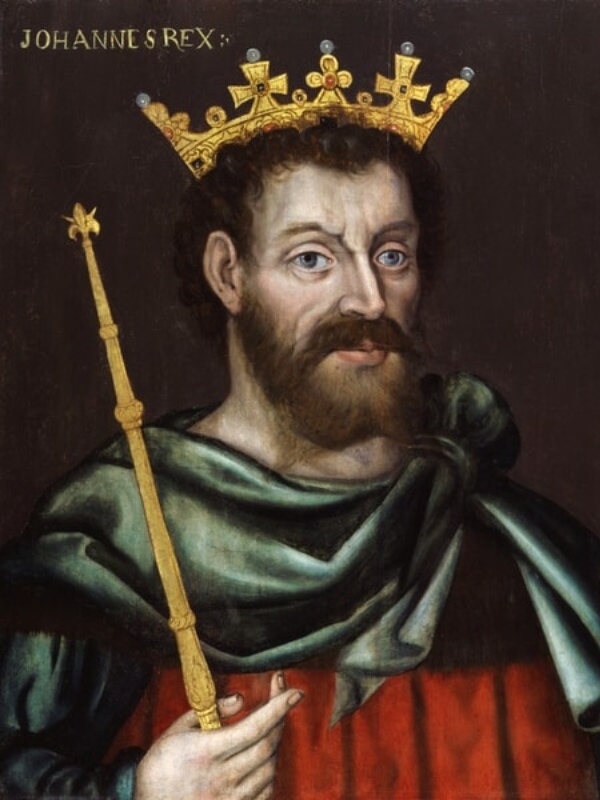
Further Information: King John I

The Reign of John I Lackland

Accession and Dynastic Feuding (April 1199)
Following the death of King Richard the Lionheart, John I claimed the throne ahead of his twelve-year-old nephew, Arthur of Brittany, who held the ancestral backing of the French court. The prince acted with high speed, securing the royal treasury at Chinon and getting himself crowned king at Westminster Abbey on 27 May 1199, triggering a multi-year war for succession that instantly fractured the borders of the continental empire.

The Capture at Mirebeau (1 August 1202)
The monarch achieved his greatest independent military triumph when he launched a rapid, eighty-mile cavalry march to relieve his mother, Eleanor of Aquitaine, who was blockaded at Mirebeau Castle. He caught the rebel forces completely by surprise, capturing his rival nephew Arthur alongside over two hundred heavily armored knights in less than an hour, a stunning battlefield victory that briefly shattered the Franco-Breton alliance.

The Murder of Prince Arthur and Loss of Normandy (1203–1204)
The monarch completely destroyed his political credibility in April 1203 when his teenage nephew, the captive Prince Arthur, disappeared under deeply mysterious circumstances while imprisoned inside the secure keeps of Rouen Castle, with widespread reports accusing the king of murdering the youth in a drunken rage. The scandal provoked an immediate nationalist rebellion across the continental provinces. King Philip II of France capitalized on the public fury, launching a relentless offensive that captured the unassailable fortress of Château Gaillard in March 1204 and systematically overran Rouen by June 1204, permanently ending three centuries of direct ducal Anglo-Norman rule on the mainland.

The Papal Interdict (1208–1209)
The monarch entered into an open, bitter confrontation with the church when he flatly refused to recognize Pope Innocent III’s choice of Stephen Langton for Archbishop of Canterbury. The Pope responded by placing England under a severe Interdict in March 1208, locking church doors, silencing church bells, and completely banning Christian burials across the shires. The constitutional deadlock culminated in the king’s personal excommunication in 1209, forcing him to extract massive financial penalties from church lands to fund his state finances.

The Naval Victory at Damme (30 May 1213)
Faced with the imminent threat of a French invasion fleet massing along the Flemish coast, the monarch authorized a pre-emptive naval strike to preserve his realm. An English fleet of five hundred ships, commanded by the king’s half-brother, William Longespée, 3rd Earl of Salisbury, surprised the French armada at the harbor of Damme on 30 May 1213.

The English forces successfully boarded, plundered, and burned over three hundred French supply vessels, completely destroying King Philip’s immediate offensive capabilities and securing the safety of the English Channel for several years.

The Battle of Bouvines (27 July 1214)
To reclaim his lost continental lands, the monarch engineered a massive international coalition with the Holy Roman Emperor Otto IV to launch a coordinated assault on France. While the king fought a secondary, unsuccessful front in Anjou, the main French royal host smashed his allied armies at the Battle of Bouvines on 27 July 1214. The catastrophic battlefield defeat destroyed the monarch’s military credibility, bankrupted his exchequer, and permanently confirmed French possession of Normandy, Anjou, and Maine.

Standoff at Runnymede and the Charter (June 1215)
The monarch returned to England to face a massive armed rebellion launched by the northern nobility, who took advantage of his military weakness to capture London. Outmaneuvered and facing the total collapse of his state administration, the king was forced to capitulate. He met the insurgent lords at Runnymede near Windsor, applying his great royal seal to the foundational contract historically branded as Magna Carta on 15 June 1215, which established early limits on royal tyranny.

The French Invasion of England (May 1216)
The monarch’s immediate refusal to abide by the peace charter triggered the First Barons’ War. The rebel nobility formally renounced their fealty and invited Prince Louis of France to take the English crown. The French prince landed a powerful invasion army in Kent in May 1216, rapidly capturing London and Winchester. The defensive infrastructure of the realm faced total fragmentation as the monarch pulled his remaining mercenary forces back to the midlands, abandoning the southeast coast to the invaders.


The Lost Treasure and Death (19 October 1216)
The monarch’s disastrous seventeen-year rule ended in sudden chaos during a tactical retreat through East Anglia. While attempting to cross the tidal estuary of the Wash on 12 October 1216, a sudden rising tide caught his slow-moving baggage train, completely swallowing the entire royal treasury, his accumulated gold bullion, and the ancient crown jewels.

The monarch contracted severe dysentery days later, dying in agony at Newark Castle on 19 October 1216. The court buried his remains before the high altar of Worcester Cathedral, passing the broken, war-torn state to his nine-year-old son, King Henry III.

The Royal Household of King John I

Abduction and Marriage to Isabella of Angoulême (August 1200)
John I triggered a catastrophic continental crisis by marrying the twelve-year-old Isabella of Angoulême in August 1200, having brushed aside his first wife, Isabel, Countess of Gloucester, on grounds of consanguinity. Because the young bride was already officially betrothed to his powerful French vassal, Hugh IX le Brun, Count of Lusignan, the public insult prompted the Lusignan family to appeal directly to King Philip II of France for feudal justice.

This appeal provided the French crown with the perfect legal justification to declare the monarch’s continental lands forfeit, launching the devastating invasions that eventually stripped the House of Plantagenet of Normandy, Anjou, and Maine.


The Murder of Arthur of Brittany (1203)
Following his high-speed victory at Mirebeau, the monarch imprisoned his teenage nephew and rival claimant, Prince Arthur, Duke of Brittany, inside the secure keeps of Rouen Castle. The captive prince disappeared completely from public view in April 1203. Contemporary monastic annals recorded that the monarch, fueled by wine and paranoia, murdered the boy with his own hands, weighted the mutilated corpse with heavy stones, and cast it directly into the River Seine. This crime permanently alienated the northern French nobility, who rapidly abandoned their fealty to the English crown to back the advancing French armies.


The Lineage and Marriages of the Royal Successors
The marriage to the Queen Isabella produced five legitimate children who secured the long-term durability of the sovereign line and formed high-status dynastic connections across Europe:

King Henry III (King of England, Lord of Ireland, and Duke of Aquitaine)
Born on 1 October 1207, he inherited the crown as a nine-year-old child in 1216 during the First Barons’ War, ruling for fifty-six years to systematically rebuild the administrative authority of the state. He married Eleanor of Provence.

Richard, 1st Earl of Cornwall (King of the Romans)
Born on 5 January 1209, he built an extraordinary personal fortune through southwest tin-mining monopolies, serving as High Sheriff of Berkshire and eventually being elected King of the Romans in 1256 to project Plantagenet power deep into the Holy Roman Empire. He married first Isabel Marshal, second Sanchia of Provence, and third Beatrice of Falkenburg.

Joan of England (Queen Consort of Scotland)
Born on 22 July 1210, her hand was used as a primary diplomatic tool to secure cross-border peace and stabilize the volatile northern frontier lines. She married Alexander II, King of Scots, at York Minster, dying childless.

Isabella of England (Holy Roman Empress, Queen Consort of Germany and Sicily)
Born in 1214, she connected the English line directly to the core of continental imperial power. She married Frederick II, Holy Roman Emperor, in a magnificent ceremony at Worms, navigating complex Mediterranean and German politics until her death in childbirth.

Eleanor of England (Countess of Pembroke and Leicester)
Born in 1215, she became one of the most politically active and controversial women of the thirteenth century. She married first William Marshal, 2nd Earl of Pembroke, and second Simon de Montfort, 6th Earl of Leicester, actively supporting his rebel campaigns to limit the absolute power of her brother.

The Loss of Normandy

The Fall of Château Gaillard (March 1204)
John I’s continental empire faced a definitive blow when King Philip II of France laid siege to Château Gaillard, the supposedly impregnable stone fortress constructed by Richard the Lionheart on a cliff overlooking the River Seine. The monarch completely failed to launch an effective land or naval relief expedition to break the blockade, leaving his isolated garrison to exhaust their rations. After an eight-month engineering siege, French forces penetrated the outer baileys and breached the inner keeps, breaking the primary defensive shield of the province and exposing the heartland to immediate occupation.

Loss of the Ancestral Duchy (June 1204)
Following the fall of Château Gaillard, the remaining Norman resistance collapsed with high speed across the administrative districts. The French King marched his victorious columns straight into Rouen, permanently annexing the Duchy of Normandy into the French royal domain. This capitulation stripped the monarch of his ancestral birthright, collapsing three centuries of direct ducal rule and earning him the mocking nicknames John Softsword and John Lackland across the European courts, which severely damaged his domestic authority among the English barons.

The Siege of Rochester Castle (October–December 1215)
During the peak of the First Barons’ War, a rebel noble garrison fortified themselves inside Rochester Castle to block the monarch’s planned march on London. John I led a brutal, methodical siege operation to reclaim the gateway to Kent, deploying five massive trebuchets to batter the stone walls. His engineers dug a massive mine deep beneath the southern tower of the great stone keep, using the rendered fat of forty pigs to set a catastrophic fire that burnt out the wooden pit-props. The resulting collapse brought down the massive corner masonry, allowing royal mercenaries to storm the breach and forcing the starving, exhausted barons to capitulate after a seven-week standoff.

The Great Charter

The Tyranny of John I
The catalyst for Magna Carta derived from John’s aggressive misuse of his feudal rights to extract money from his barons to fund his failed French wars. He routinely charged exorbitant inheritance taxes, forced noble widows to pay massive fines to avoid forced remarriages, and used his private forest courts to impose non-negotiable financial penalties on his political rivals, bankrupting the shires.

Forced Negotiations at Runnymede: June 1215
When the rebellious barons formed the “Army of God” and successfully captured London, John lost control of his capital. He was forced to agree to open negotiations, meeting the baronial leadership on neutral ground at the marshy meadows of Runnymede. Rather than a document of abstract liberties, the resulting charter functioned as a practical peace treaty designed to limit the arbitrary power of the crown.

The Core Statutory Enactments
The 1215 charter established groundbreaking structural limitations on royal authority across sixty-three distinct clauses:
Clause 12 & 14: Banned the king from extracting arbitrary taxes (scutage or aid) without the common counsel of the national assembly of nobles.
Clause 39: Established the foundational principle of due process: “No free man shall be seized or imprisoned… except by the lawful judgment of his equals or by the law of the land.”
Clause 40: Promised absolute judicial accountability: “To no one will we sell, to no one deny or delay right or justice.”

Papal Annulment
The original 1215 document failed completely as a peace treaty. John applied his seal under absolute duress and had no intention of honoring the terms; he secretly dispatched a letter to Pope Innocent III begging for intervention. In August 1215, the Pope issued a papal bull officially annulling Magna Carta, declaring it shameful, illegal, and void for all time because it restricted an anointed king’s rights, plunging England straight back into a total civil war within ten weeks.

Henry III

King of the English 1216–1272
Duke of Aquitaine 1216–1272
Lord of Ireland 1216–1272

Bio:
Ascending to the throne as a nine-year-old child at the height of a civil war, King Henry III governed England through a turbulent, multi-decade reign defined by intense constitutional struggles and a flourishing of Gothic architecture. His minority was successfully stabilized by the brilliant generalship of William Marshal, who defeated the French forces at Lincoln to secure the peaceful re-issue of Magna Carta as the permanent baseline of royal law.

Upon assuming personal rule, Henry's intense preference for foreign favorites from Poitou and Provence deeply alienated the domestic baronial class, who viewed their own political influence as being systematically undermined.

This simmering resentment exploded into a major constitutional crisis in 1258 AD when the barons, led by the charismatic Simon de Montfort, forced the king to accept the Provisions of Oxford, a radical document that placed the executive government of the country under the control of an elected council of nobles.

Henry's immediate refusal to submit to this council triggered the Second Barons' War, resulting in the king's humiliating defeat and capture at the Battle of Lewes in 1264. During this captivity, Montfort summoned the historic 1265 Parliament, introducing the legal precedent of inviting elected knights and burgesses to participate alongside the high nobility.

Although Henry's eldest son, Prince Edward, eventually crushed the baronial armies at Evesham to restore the crown to absolute power, the old king spent his final years retreating from active governance, dedicating his personal treasury to the reconstruction of Westminster Abbey to establish his enduring historical legacy.
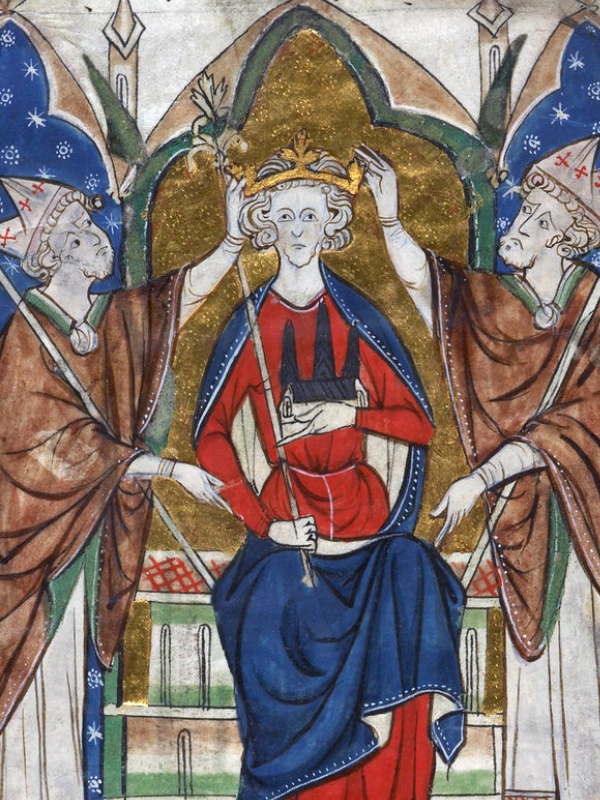
Further Information: King Henry III

The Reign of Henry III

Coronation and Regency (28 October 1216)
Following the sudden death of King John amid the First Barons’ War, Henry III was crowned at Gloucester Cathedral at just nine years old on 28 October 1216. Lacking the actual crown jewels—which had been lost in the Wash—the young prince was anointed using a simple golden collar belonging to his mother, Queen Isabella. The legendary knight William Marshal, 1st Earl of Pembroke, took charge of the shattered realm as Regent, moving with high speed to stabilize the borders and organize the defense of the kingdom against the occupying French forces.

Re-issuing of the Great Charter (1217)
To break the momentum of the French invasion and win over the rebellious barons, the regency government formally re-issued an updated version of Magna Carta alongside the new Charter of the Forest in 1217. This calculated political concession successfully convinced the native nobility to abandon Prince Louis of France, isolating the foreign invaders and allowing the royalist forces under the Regent to isolate the rebel garrisons and reclaim the administrative machinery of the shires.

Sole Power (January 1227)
At the age of nineteen, the monarch declared himself of age during a grand national council at Oxford in January 1227. He assumed full independent authority over the exchequer and the royal seal, moving quickly to launch expensive military expeditions to reclaim the lost Plantagenet lands in France. His independent rule increasingly alienated the old Anglo-Norman aristocracy, as the king systematically packed his court and administrative offices with foreign favorites, principally his Poitevin half-brothers and the Savoyard kinsmen of his new queen.

The Provisions of Oxford (June 1258)
The monarch’s continuous military failures in Gascony, combined with his massive debts to the Papacy over a failed scheme to buy the crown of Sicily for his younger son, triggered a severe political collapse. An armed faction of barons cornered the king at Westminster, forcing him to accept the Provisions of Oxford in June 1258. This radical constitutional document stripped the king of his absolute power, placing the state under a representative council of fifteen nobles led by his brother-in-law, Simon de Montfort, 6th Earl of Leicester, effectively creating the first elected baronial bureaucracy in English history.

Defeat and Capture at Lewes (14 May 1264)
When the monarch attempted to reassert his royal supremacy by securing a papal bull to annul his constitutional oaths, the country plunged into the Second Barons’ War. The monarch led his professional forces into Sussex, but the rebel barons outmaneuvered the royalist host at the Battle of Lewes on 14 October 1264. The engagement resulted in a decisive rout that forced the surrender and capture of both the king and his eldest son, Prince Edward, leaving the Earl of Leicester in absolute executive command of the realm.

Restoration and the Slaughter at Evesham (4 August 1265)
The monarch’s captivity ended when the Prince Edward executed a daring horse-running escape to organize a royalist counter-offensive. The re-formed royalist army cornered the rebel leader Simon de Montfort at the Battle of Evesham on 4 August 1265, launching a relentless assault that degenerated into a targeted slaughter of the baronial leadership. The Earl of Leicester was killed and mutilated on the field, successfully returning Henry III to his throne, though he remained a nominal figurehead while his eldest son took direct control of the state’s military architecture.

Death at Westminster (16 November 1272)
The monarch’s fifty-six-year independent reign—the fourth-longest in British history—ended in physical sickness and mental decline at Westminster on 16 November 1272. The court buried his remains inside the magnificent, newly rebuilt Romanesque Westminster Abbey, which the king had spent decades personally financing, placing his body right next to the historic shrine of his favorite saint, King Edward the Confessor. The hand-over passed the unified crown completely unopposed to his son, King Edward I, who was still returning from the Crusades.

The Royal Household of King Henry III

Henry III married Eleanor of Provence, a highly educated and ambitious princess from southern France, inside Canterbury Cathedral. The calculated union triggered a massive influx of the queen’s foreign relatives—historically branded as the Savoyards and the Poitevins—who rapidly secured the richest earldoms, lucrative castle commands, and premier bishoprics in the realm, deeply insulting the native English nobility and fracturing the administrative baseline of the court.

The Stoning of the Queen at London Bridge (July 1263)
Public fury against the foreign-dominated court targeted the queen directly during the tense military buildup to the Second Barons’ War. While Eleanor attempted to navigate a royal barge down the River Thames to escape the hostile city, an angry mob of London citizens cornered her boat at London Bridge, pelting her with mud, stones, and rotten eggs while shouting for her public execution, an insult that Prince Edward vowed to avenge on the battlefield.


Lineage and Marriages of the Plantagenet Successors
The marriage produced five surviving children who secured the international influence of the Plantagenet line and anchored high-status dynastic connections across Europe:

King Edward I (King of England, Lord of Ireland, and Duke of Aquitaine)
Born on 17 June 1239, he operated as the formidable eldest son who rescued his father’s throne, slaughtered the baronial leadership at Evesham, and went on to conquer Wales. He married first Eleanor of Castile, and second Margaret of France.

Edmund Crouchback, 1st Earl of Lancaster (Earl of Leicester, Lancaster, and Derby)
Born on 16 January 1245, he was appointed Earl of Lancaster and Earl of Leicester, building a massive territorial power base that laid the permanent foundations for the future House of Lancaster. He married first Aveline de Forz, and second Blanche of Artois, a high-status French match that made him a central figure in continental diplomacy.

Margaret of England (Queen Consort of Scotland)
Born on 29 September 1240, her hand was deployed to secure cross-border stability along the volatile northern frontier lines. She married King Alexander III of Scotland at York Minster, maintaining the peace despite experiencing intense political isolation at the Scottish court during her minority.

Beatrice of England (Countess Consort of Richmond)
Born on 25 June 1242, she was utilized to anchor English continental influence along the vulnerable French coast. She married John II, Duke of Brittany, connecting the English crown directly to the complex political geometry of the French duchies.

Katherine of England
Born on 25 November 1253, she was a deaf daughter who died as a young child in 1257. Her early passing prompted the king to stage a lavish, exceptionally expensive funeral project at Westminster Abbey, highlighting his deep personal attachment to his immediate household.

The Barons' War

The Battle of Lewes (14 May 1264)
At the Battle of Lewes, King Henry III positioned his army at the bottom of the downs, a weak defensive posture that surrendered the high ground. Although Prince Edward launched a successful cavalry charge that completely shattered the London levies on the rebel left flank, he abandoned the main field to pursue the fleeing townspeople for miles. This tactical break allowed the rebel leader Simon de Montfort to launch his main host down the slopes, trapping the king’s remaining center, forcing the surrender of the royalist command, and leaving the Earl of Leicester in absolute executive control of the state.

The First Representative Parliament (January 1265)
While holding the king a political prisoner, the Earl of Leicester ran the country under a groundbreaking administrative model to secure popular legitimacy for his regime. He summoned a historic national assembly to London, ordering regional sheriffs to send not just knights of the shires, but also two wealthy citizens (burgesses) from every major borough to sit alongside the barons. This structural expansion of the assembly established the early constitutional framework for the British House of Commons, permanently altering the legislative layout of the realm.

The Slaughter at Evesham (4 August 1265)
The war concluded in a savage, pre-planned slaughter at Evesham in Worcestershire on 4 August 1265. The Prince Edward trapped the rebel army inside a tight loop of the River Avon during a severe summer thunderstorm. Breaking with traditional knightly customs—which prioritized capturing noble prisoners for financial ransom—the Prince ordered his specialized death squads to systematically hack down the rebel leaders on the field. The royalist forces decapitated Simon de Montfort, cut off his limbs to display as warnings across the shires, and slaughtered his senior knights, violently ending the baronial dictatorship and restoring the crown.

Edward I

King of England 1272–1307
Lord of Ireland 1272–1307
Duke of Aquitaine 1272–1307

Bio:
The assertive and highly effective reign of King Edward I fundamentally altered the territorial boundaries and legislative framework of the nation, transforming the crown into a formidable vehicle for conquest and administrative modernization. Returning from the Crusades to claim his inheritance, he immediately launched a massive legislative campaign, passing the Statutes of Westminster and Gloucester to rigorously audit and codify the legal privileges of local barons under royal law.

In 1290 AD, facing severe fiscal constraints, he issued the Edict of Expulsion, permanently banishing the entire Jewish population from England to seize their assets and curry favor with Parliament.

His primary geopolitical ambition focused on the total subjugation of the Celtic fringe. Between 1277 and 1283 AD, he launched a relentless, high-velocity military conquest of Wales, executing the last native prince, Llywelyn ap Gruffudd, and constructing the Iron Ring of massive stone fortresses—including Caernarfon, Conwy, and Harlech—to physically lock down the territory.

To fund these astronomical military costs, he formalized the composition of Parliament through the 1295 Model Parliament, establishing the permanent right of the Commons to approve national taxation. He swiveled his aggressive military focus northward in 1296 AD, exploiting the succession crisis known as the Great Cause to launch a brutal, scorched-earth war for the total subjugation of Scotland, an endless campaign of attrition that earned him his historical moniker and occupied his final hours as he died on horseback en route to confront Robert the Bruce.
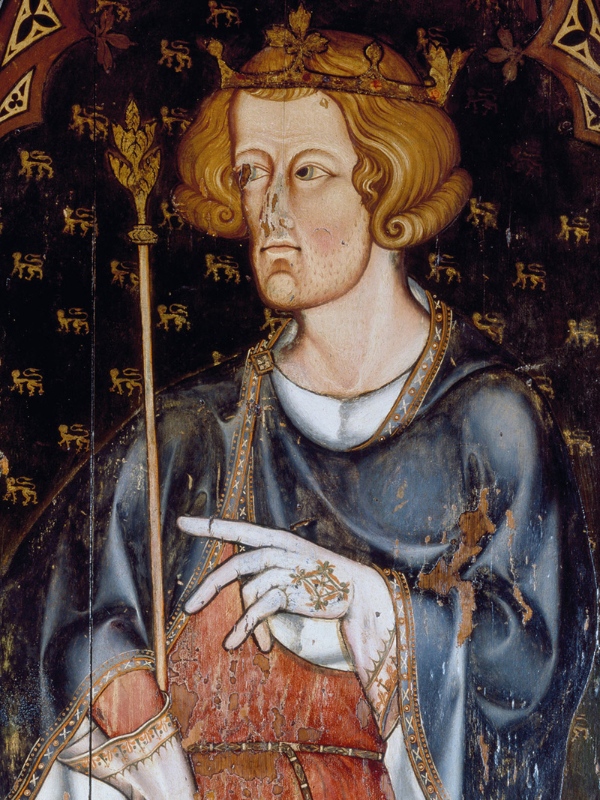
Further Information: King Edward I

The Reign of Edward I Longshanks

The Crusade Accession (November 1272)
Edward I was away on the Eighth Crusade in Sicily when his father, King Henry III, died. Because the regency government kept the realm entirely stable, the prince spent nearly two years traveling home through Europe, checking border security in Gascony and consolidating his continental alliances before arriving in London to be crowned King of England at Westminster Abbey on 19 August 1274, establishing a formidable, warrior-led court from the outset.

Invasion and Subjection of Wales (1277)
Following Prince Llywelyn ap Gruffudd’s repeated refusal to attend his court or swear a binding oath of loyalty, the monarch mobilized a massive army of 15,000 men to crush Welsh independence. He launched a methodical land and sea invasion, cutting off Llywelyn’s primary grain supply lanes in Anglesey and forcing him to capitulate under the humiliating terms of the Treaty of Aberconwy, which stripped the Welsh prince of his lands and titles south of Conwy.

The War of Pacification and the Death of Llywelyn (1282–1283)
When a secondary nationalist rebellion erupted across Wales, the monarch launched a final, total war of pacification. Royalist forces intercepted and killed Prince Llywelyn ap Gruffudd in a chance skirmish at the Battle of Orewin Bridge in December 1282, sending his severed head to be displayed on the Tower of London. The king’s forces subsequently captured his brother, Dafydd ap Gruffudd, executing him at Shrewsbury in October 1283 as the first prominent noble tried for high treason under a formal parliamentary process, completely destroying the independent Welsh princely lines.

The Iron Ring of Castles and the Statute of Rhuddlan (1284)
To permanently secure his conquests, the monarch initiated the most expensive military engineering project in medieval British history, constructing an Iron Ring of massive stone castles—including Conwy, Caernarfon, Harlech, and Beaumaris—to encircle the Welsh mountains with unassailable garrison hubs. Concurrently, he promulgated the Statute of Rhuddlan in 1284, which officially annexed Wales into the English realm, dismantled traditional Welsh legal codes, and divided the territory into English-style shires governed by royal sheriffs answerable directly to the Westminster exchequer.

The Statute of Winchester and Domestic Police Reforms (October 1285)
To suppress rampant highway robbery and restore public order across the shires following years of foreign warfare, the monarch enacted the Statute of Winchester in October 1285. This sweeping legislative code thoroughly updated the defensive and police architecture of the realm. It legally mandated that every free man must maintain weapons according to his wealth to serve in the local militia, introduced a uniform system of night watches in all walled towns, and ordered that all brushwood and trees be cleared for two hundred feet on either side of major highway roads to eliminate hiding places for outlaws and bandits.

Mass Expulsion of the Jews (18 July 1290)
To secure a massive tax payout from the Westminster Parliament to fund his escalating continental and domestic wars, the monarch issued the Edict of Expulsion on 18 July 1290. The statute completely outlawed the Jewish faith inside the country, forcing over 16,000 Jewish citizens to pack up their belongings and flee the realm under threat of immediate execution. The crown systematically confiscated all outstanding Jewish debts, properties, and synagogues, completely destroying the medieval Anglo-Jewish community to enrich the royal treasury.

The Model Parliament (November 1295)
Faced with a dual-front war against France and Scotland that pushed the state to the brink of financial collapse, the monarch summoned a historic national assembly historically branded as the Model Parliament in November 1295. Adopting the constitutional principle that “what touches all should be approved by all,” the king expanded the assembly to include not just the high clergy and earls, but also two elected knights from every shire and two burgesses from every borough, establishing the permanent composition of the English parliament to regularize the extraction of wartime taxation.

The Conquest of Scotland and the Theft of the Stone of Destiny (1296)
The monarch turned his heavy military machinery north to settle the Scottish succession dispute by force. He systematically stormed the vital border town of Berwick, slaughtered its civilian garrison, and routed the Scottish host at the Battle of Dunbar in April 1296. This battlefield triumph forced King John Balliol into a humiliating abdication, where his royal surcoat was stripped from his chest. The monarch physically seized the sacred Stone of Scone (the Stone of Destiny) from Scone Abbey, transporting the ancient coronation relic back to Westminster to be built into his own royal throne, while moving the entire English exchequer and courts to York to run Scotland as a conquered province.

The Battle of Falkirk (22 July 1298)
Faced with a widespread nationalist uprising led by the Guardian William Wallace, the monarch marched his heavy cavalry into Scotland in the summer of 1298. At the Battle of Falkirk on 22 July 1298, he broke with traditional cavalry customs, using his newly integrated Cheshire and Welsh longbowmen to rain continuous armor-piercing arrows onto the dense Scottish spear rings, known as schiltrons. This tactical deployment shattered their defensive walls, allowing his heavy knights to launch a devastating cavalry charge that slaughtered thousands of Scots and broke the backbone of the initial rebellion.

The Capture of William Wallace (August 1305)
Following years of tracking and intelligence operations across the lowlands, English forces captured the outlaw William Wallace near Glasgow. The monarch brought him to London under armed guard, where a royal court at Westminster Hall convicted him of high treason against a crown he had never sworn allegiance to. Executioners dragged Wallace through the streets to Smithfield, hanging, drawing, and quartering him before displaying his severed limbs as warnings across the shires, attempting to erase the memory of the resistance.

Sickness and Death (7 July 1307)
The monarch’s thirty-five-year imperial rule ended during a final march to crush the newly crowned King Robert the Bruce. Suffering from severe dysentery, the sixty-eight-year-old king collapsed and died at Burgh by Sands on the Solway Firth on 7 July 1307. The court buried his remains inside a plain black marble tomb at Westminster Abbey, bearing the famous Latin inscription Edwardus Primus Scottorum Malleus Hic Est (Here is Edward I, Hammer of the Scots). His passing handed the unified, heavily indebted state completely unopposed to his son, King Edward II.

The Royal Household of King Edward I

Marriage to Eleanor of Castile (October 1254)
Edward I married the highly intelligent Eleanor of Castile in October 1254, a strategic union that successfully secured English sovereign control over the volatile duchy of Gascony against Spanish claims. Unlike typical medieval political matches, the couple developed a deep personal devotion; the Queen accompanied her husband on the Eighth Crusade and during his relentless, multi-season military campaigns across Britain, actively counseling the king and birthing sixteen children to secure the long-term durability of the Plantagenet line.

Following her death in 1290, the devastated monarch ordered the construction of the famous twelve Eleanor Crosses at every night-stop of her funeral procession from Lincoln to Westminster to memorialize his grief.


The Lineage and Marriages of the Royal Successors
The first marriage produced several children who survived a brutal pattern of infant mortality to inherit extensive estates and shape the dynastic layout of Western Europe, alongside children from his subsequent marriage to Margaret of France in 1299:

King Edward II (King of England, Lord of Ireland, Duke of Aquitaine, and Prince of Wales)
Born on 25 April 1284 at Caernarfon Castle, he operated as the eldest surviving son of the first marriage. He was officially named the first English Prince of Wales in 1301 to legitimize the conquest of the territory, later inheriting a heavily indebted state and facing total political collapse. He married Isabella of France, the daughter of King Philip IV, a match intended to pacify the French crown that later engineered his violent deposition.

Joan of Acre (Countess of Gloucester and Hertford)
Born in 1272 inside the Crusader stronghold of Acre, she became one of the most independent-minded princesses of the era. She married first Gilbert de Clare, 7th Earl of Gloucester, a high-stakes union that bound the premier, most heavily armed English magnate directly to the Westminster court. Following his death, she defied her father’s royal command by clandestinely marrying a simple squire, Ralph de Monthermer, forcing the king to temporarily confiscate her vast ancestral estates before relenting to her independent streak.

Margaret of England (Duchess of Brabant)
Born on 15 March 1275, her hand was utilized as a primary diplomatic tool to secure commercial and woolen trade alliances for the exchequer across the Low Countries. She married John II, Duke of Brabant, maintaining an expensive, high-status court at Brussels that served as a strategic operational base for English diplomats during the king’s recurrent trade blockades against France.

Mary of Woodstock (Nun of Amesbury)
Born on 11 March 1279, she was dedicated to the church at a young age despite her personal resistance. She entered the wealthy Benedictine priory of Amesbury Abbey in Wiltshire, though she consistently bypassed strict monastic discipline. She traveled the shires on a massive royal stipend, maintained an extensive personal retinue of servants, and accumulated heavy gambling debts at dice, which were regularly paid off by the royal exchequer.

Elizabeth of Rhuddlan (Countess of Holland and Hereford)
Born on 7 August 1282 at Rhuddlan Castle during the Welsh pacification campaigns, she was deployed to secure vital maritime and military alliances. She married first John I, Count of Holland, to lock down shipping lanes along the Rhine estuary. Following his early death, she married the primary marcher lord Humphrey de Bohun, 4th Earl of Hereford, binding the military manpower of the Welsh Marches directly to her father’s upcoming Scottish wars.

Thomas of Brotherton (1st Earl of Norfolk)
Born on 1 June 1300, he operated as the eldest son of the king’s secondary marriage to Queen Margaret of France. He was invested as Earl of Norfolk and Marshal of England by his half-brother, King Edward II, inheriting the vast estates of the Bigod family and leading field commands during the Scottish border campaigns. He married first Alice Hales and second Mary Braose.

Edmund of Woodstock (1st Earl of Kent)
Born on 5 August 1301, he was the youngest son of the king’s secondary marriage. He was heavily integrated into the high aristocracy, being created Earl of Kent by Edward II and serving as an international diplomat in Gascony. He married Margaret Wake, but his political career ended in sudden disaster when he was executed for high treason during the minority of Edward III after launching a naive plot to rescue his deposed brother from captivity.

Edward II

King of England 1307–1327
Lord of Ireland 1307–1327
Duke of Aquitaine 1307–1325
Prince of Wales 1301–1307

Bio:
King Edward II’s disastrous and erratic reign represented a complete collapse of royal authority, his chronic political instability and absolute reliance on low-born favorites alienating the entire political establishment of the country.

Inheriting a bankrupt treasury and an unresolved war in Scotland from his father, he immediately abandoned active military operations to elevate his intimate favorite, Piers Gaveston, to the highest ranks of the peerage, an insult so profound that it provoked a severe backbench revolt by the Earl of Lancaster and the Lords Ordainers. The barons forced the king to accept the Ordinances of 1311, which restricted his executive control over appointments and spending, culminating in the extrajudicial execution of Gaveston by a noble coalition in 1312 AD.

Edward's military incompetence was spectacularly unmasked in June 1314 at the Battle of Bannockburn, where his massive, disorganized army was completely routed by Robert the Bruce, a tactical catastrophe that secured Scottish independence and shattered the prestige of the English crown.

The king subsequently formed an equally toxic alliance with Hugh Despenser the Younger, running an authoritarian regime of financial confiscation and political executions that deeply alienated his own queen, Isabella of France. In 1326 AD, Isabella partnered with her lover, the exiled baron Roger Mortimer, to launch a swift naval invasion of England, successfully catching the king completely off guard.

Captured while fleeing into Wales, Edward was forced by Parliament to undergo a humiliating, unprecedented deposition, renouncing his crown in favor of his teenage son before being systematically murdered inside his prison cell at Berkeley Castle.
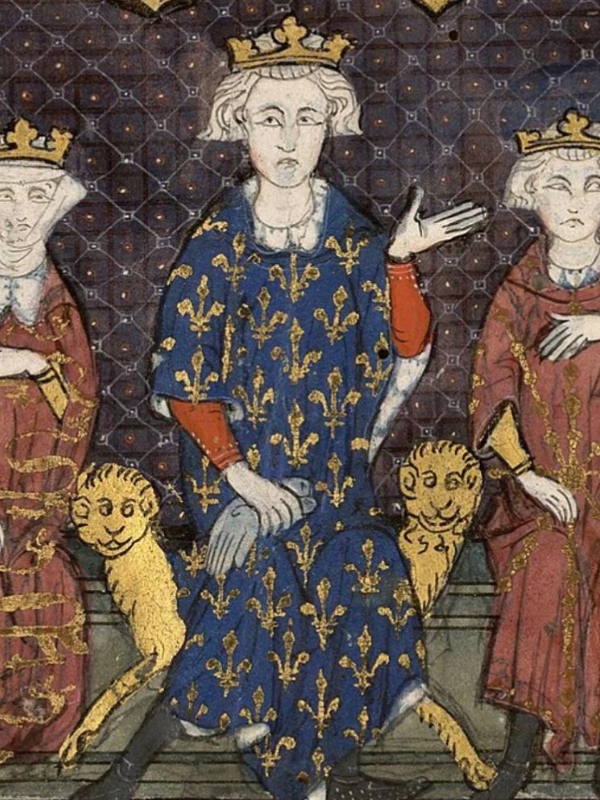
Further Information: King Edward II

The Reign of King Edward II

The Accession of Piers Gaveston (July 1307)
Following the death of his father King Edward I, the twenty-three-year-old Edward II took the throne. His very first executive act was to recall his intimate favorite, Piers Gaveston, from his continental exile, immediately appointing him Earl of Cornwall and granting him unprecedented royal patronage. This abrupt elevation triggered a severe political fracture with the veteran baronial leadership, who viewed the sudden enrichment of a low-born Gascon knight as an absolute insult to the established peerage.

Coronation at Westminster Abbey (February 1308)
The monarch crossed the channel to marry the twelve-year-old French princess Isabella of France at Boulogne to pacify relations with the Capetian court. Upon their return, Robert Winchelsey, Archbishop of Canterbury, anointed the monarch King of England inside Westminster Abbey. The sacral ceremony was heavily marred by the king giving Gaveston precedence over the native earls during the procession, dressing his favorite in royal purple and alienating both the English magnates and the newly arrived French royal delegation.

The Ordinances (August 1311)
The monarch’s systematic economic mismanagement, arbitrary extraction of customs duties, and continued reliance on his favorite triggered a severe constitutional crisis. A powerful baronial faction known historically as the Lords Ordainers cornered the king and forced him to sign the Ordinances in August 1311. This radical legislative code stripped the crown of its absolute power, placing the royal exchequer, the appointment of high officers, and the collection of taxes under direct parliamentary monitoring while demanding the permanent banishment of Gaveston.

Humiliation at Bannockburn (24 June 1314)
The monarch marched a massive army of 15,000 men north to relieve the blockaded English garrison at Stirling Castle and break the Scottish resurgence. King Robert the Bruce masterfully outmaneuvered the English host at the Battle of Bannockburn on 24 June 1314. The Scottish pikes successfully trapped Edward’s heavy cavalry inside the marshy river ditches, executing a total slaughter that broke the English military reputation and forced the king into a humiliating, high-speed flight from the field.

The Great Famine and Economic Collapse (1315–1317)
The realm faced absolute domestic misery when torrents of continuous summer rain destroyed crops and caused widespread livestock murrain across Britain. The resulting Great Famine caused the deaths of up to 10% of the population through starvation and disease. The catastrophe rendered the king’s cash-strapped administration entirely incapable of collecting tax extractions, maintaining public order, or defending the northern border from devastating Scottish retaliatory raids.

The Despenser Tyranny (1322–1326)
Following the execution of his cousin Thomas, 2nd Earl of Lancaster, at Pontefract, the monarch temporarily broke the baronial opposition and established a brutal period of autocratic rule. He placed the state under the corrupt administration of his new favorites, Hugh Despenser the Elder and his son Hugh Despenser the Younger. The Despensers used their royal influence to systematically seize land holdings, blackmail wealthy widows, and extort the nobility, driving the cash-strapped realm into a state of profound political alienation and terror.

The Invasion of Queen Isabella (September 1326)
Sent to Paris to negotiate a territorial dispute over Gascony, Queen Isabella flatly refused to return to her husband’s court, publicly allying with her lover, the exiled marcher baron Roger Mortimer. They raised a mercenary fleet in Flanders and launched a rapid invasion of England in September 1326. The state’s nobility, the high bishops, and the citizens of London rapidly abandoned the king, completely dissolving his administration and forcing the monarch to flee into Wales under the protection of the Despensers.

Forced Abdication and Death at Berkeley Castle (1327)
Captured by Mortimer’s horsemen in Glamorgan, the monarch was stripped of his favorites and imprisoned inside Kenilworth Castle. In January 1327, a grand parliament met at Westminster to formally charge the king with incompetence, tyranny, and losing Scotland, forcing him to abdicate his throne in favor of his young son. He was subsequently transferred to the secure keeps of Berkeley Castle, where he died under highly suspicious circumstances in September 1327, passing the crown to King Edward III.

The Royal Household of King Edward II

The Alienation of the “She-Wolf of France”
Edward II’s emotional and political obsession with his court favorites completely isolated his wife, Queen Isabella. When the king allowed Hugh Despenser the Younger to control all access to the palace, dictate royal patronage, and confiscate her private dower estates during a war with France, Isabella resolved to destroy the regime. Her subsequent retributive violence and high-velocity invasion earned her the historical moniker The She-Wolf of France.

The Capture of the Young Prince (1325)
During her diplomatic mission to Paris in 1325, the Queen successfully convinced the king to send their twelve-year-old eldest son, Prince Edward, across the English Channel to perform feudal homage for the duchy of Gascony. Armed with physical possession of the heir apparent, Isabella secured the absolute legal legitimacy required to launch her 1326 amphibious invasion, casting herself as the protector of her son’s birthright to alienate the remaining royalist officers.


The Lineage and Marriages of the Plantagenet Successors
Despite the severe domestic fractures of the marriage, the union produced four children who successfully secured the long-term survival of the Plantagenet line:

King Edward III (King of England, Lord of Ireland, and Duke of Aquitaine)
Born on 13 November 1312, he operated as the brilliant eldest son who executed a midnight coup at Nottingham Castle to overthrow his mother’s lover, claim absolute power, and launch the Hundred Years’ War. He married Philippa of Hainault.

John of Eltham, 1st Earl of Cornwall (Earl of Cornwall)
Born on 15 August 1316, he served as a frontline general and nominal regent of the realm during his brother’s early French campaigns, leading brutal border commands in the north before dying unmarried at the age of twenty at Perth.

Eleanor of Woodstock (Duchess Consort of Guelders)
Born on 18 June 1318, her hand was utilized to connect the English exchequer to the wealthy mercantile and woolen trade networks of the Low Countries. She married Reginald II, Duke of Guelders, active in continental diplomacy until her political isolation.

Joan of the Tower (Queen Consort of Scotland)
Born on 5 July 1321 inside the Tower of London, her hand was deployed as a primary diplomatic tool to buy a temporary cross-border peace treaty under the terms of the Treaty of Edinburgh-Northampton. She married King David II of Scotland, maintaining her royal dignity through decades of political upheaval and childless exile.

Court Favourites of King Edward II

Piers Gaveston, Earl of Cornwall
The son of a Gascon knight, Gaveston entered the royal household during Edward’s youth and rapidly became his closest emotional and political intimate. Upon ascending the throne, Edward recalled him from exile and elevated him to the wealthy Earldom of Cornwall. Gaveston deeply insulted the veteran nobility by mocking them with crude nicknames, leading a baronial faction to ambush and illegally behead him at Blacklow Hill in June 1312.

Hugh Despenser the Younger
Initially placed in the royal household by the barons to monitor the king, Despenser instead manipulated his position to become Edward’s premier favorite and advisor. He used his supreme influence to orchestrate the execution of his political rivals, seize vast territories across the Welsh Marches, and control all access to the palace. His tyranny provoked Queen Isabella’s 1326 coup, which concluded with Despenser being captured, castrated, eviscerated, and quartered in November 1326.

Hugh Despenser the Elder, Earl of Winchester
The father of the younger Hugh, he aligned himself completely with the king’s court faction to protect his family’s ballooning wealth. He provided the administrative and political backing required to sustain the Despenser regime’s financial extractions across the shires. Following the collapse of the government, he was captured by the Queen’s forces at Bristol and immediately hanged, drawn, and quartered at the age of sixty-five in October 1326.

Roger Damory, Lord Damory
A prominent court knight who filled the emotional vacuum following Gaveston’s execution. Edward showered him with land grants, married him to his wealthy niece Elizabeth de Clare, and elevated him to the peerage. Damory eventually turned against the king when the rising power of the Despensers threatened his properties, joining the Marcher rebellion and dying of his battle wounds at Tutbury in March 1222.

Hugh Audley, Earl of Gloucester
Another ambitious court knight who secured the king’s intense favor alongside Damory. Edward married him to another de Clare heiress, granting him extensive estates across the south. Like Damory, Audley was later pushed out of the inner palace circle by the rise of the Despensers, prompting him to join the baronial opposition before being pardoned and eventually restored to his titles under Edward III.

William de Melton, Archbishop of York
A highly capable administrative favorite who served as the Keeper of the King’s Wardrobe and Comptroller of the household before Edward elevated him to the Archbishopric of York. Unlike the secular favorites, Melton focused his energy on running the civil service and managing northern border defenses, remaining fiercely loyal to Edward even during the 1326 abdication crisis.

Walter de Stapledon, Bishop of Exeter
Appointed by Edward to serve as the Lord High Treasurer of England, Stapledon functioned as the financial mastermind of the late regime. He executed strict tax extractions to fill the royal coffers, making him deeply hated by the public. During the 1026 invasion, a furious mob of Londoners dragged the bishop into the street, beat him, and violently beheaded him with a bread knife at Cheapside in October 1326.

Total Defeat at Bannockburn

A humiliating Defeat
Edward II led 2,000 heavy knights and 13,000 infantrymen to relieve Stirling Castle. King Robert the Bruce blocked them with an outnumbered force of 6,000 Scottish spearmen.

Edward II packed his massive army into the “Carse,” a narrow, waterlogged bottleneck of marshy land, completely neutralizing the speed of his heavy cavalry and locking his knights into a tight space where they could not deploy into open battle formations.

At dawn, Bruce launched his dense hedgehog spear rings (schiltrons) down the slope. The wall of pikes pushed the English vanguard backward into their own advancing horsemen, while the English longbowmen were trapped behind their own cavalry and unable to fire.


Major Noble Casualties
The crush resulted in the deaths of over 700 knights and barons, including:
Gilbert de Clare, Earl of Gloucester: The king’s nephew, killed charging the pikes.
Sir Robert de Clifford: A veteran marcher lord, overwhelmed in the central melee.
Sir Edmund de Mauley: Grand seneschal of the royal household, drowned during retreat.
Sir Giles d’Argentan: A famous knight who refused to flee, charged alone, and died.

The Scots captured over 500 noble prisoners for ransom, including Humphrey de Bohun, Earl of Hereford, using the massive payouts to fund their war machine.

The Total Losses and Flight
Between 4,000 and 7,000 English soldiers were killed, trampled, or drowned in the tidal loops of the river. Edward II fled the field under armed guard, launching a sixty-mile escape to Dunbar to board a ship, leaving his royal treasury and great seal to be captured by the Scots.

Edward III

King of England 1327–1377
Lord of Ireland 1327–1377
Duke of Aquitaine 1325–1360
Lord of Aquitaine 1360–1362

Bio:
The long and spectacular reign of King Edward III represents the absolute peak of Plantagenet chivalric prestige and imperial power, transforming England into the premier
military superpower of Western Europe.

Seizing direct executive control at the age of seventeen by launching a daring midnight coup to arrest and execute Roger Mortimer, he rapidly restored internal dynastic cohesion by engaging his nobility in aggressive overseas warfare. In 1337 AD, following the confiscation of Gascony by Philip VI, Edward advanced a formal claim to the direct throne of France through his mother's lineage, initiating the multi-generational conflict historically recognized as the Hundred Years' War.

Utilizing the devastating tactical power of the English longbow, his armies achieved monumental victories over the massed French chivalry at the Battle of Crécy in 1346 and the Battle of Poitiers in 1356, where his brilliant son, Edward the Black Prince, successfully captured King John II of France. His external triumphs were temporarily paralyzed in 1348 by the catastrophic arrival of the Black Death, a bubonic plague epidemic that wiped out nearly half of the domestic population, causing an acute labor shortage that forced the king to pass the landmark Statute of Laborers to fix wages.

He formalized his global success through the 1360 Treaty of Brétigny, securing absolute sovereign control over a third of France without paying homage to the French Valois kings, while founding the Order of the Garter to lock his senior nobility into a permanent, highly loyal cult of chivalric brotherhood. 
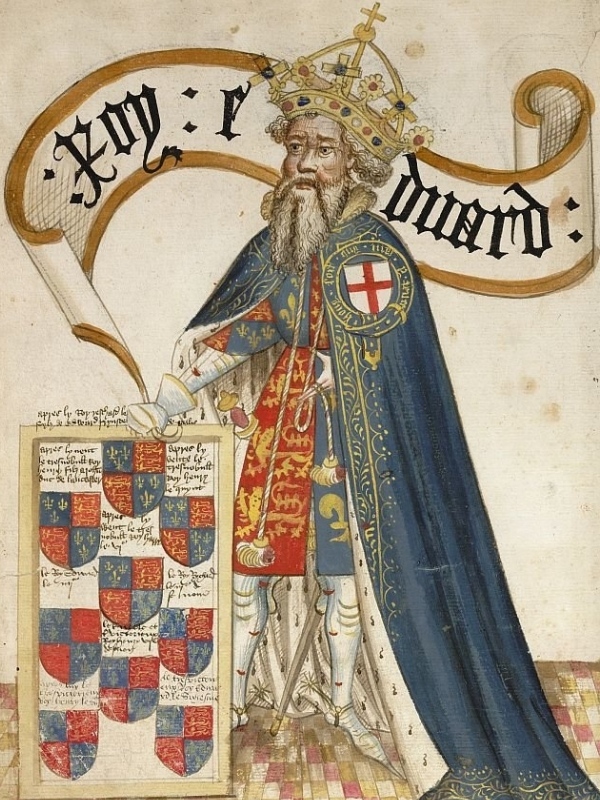
Further Information: King Edward III

The Ascension and Reign of King Edward III

The Forced Coronation (1 February 1327)
Following the violent deposition of his father, the fourteen-year-old Edward III was crowned King of England at Westminster Abbey on 1 February 1327. The young prince held zero actual executive power, as the state machinery remained under the absolute control of his mother, Queen Isabella, and her lover, the marcher baron Roger Mortimer, who used the minority administration to enrich their private estates.

Marriage to Philippa of Hainault (24 January 1328)
The monarch married Philippa of Hainault at York Minster on 24 January 1328. This match secured a powerful dynastic and commercial alliance with the Low Countries, providing the young king with vital financial credit lines and Flemish naval support that proved essential for his future continental military operations.

Birth of the Heir (15 June 1330)
The Queen gave birth to the king’s eldest son, Edward of Woodstock—later known to history as the Black Prince—at Woodstock Palace on 15 June 1330. This birth successfully secured the immediate succession pipeline for the House of Plantagenet and boosted the political standing of the young monarch against his regents.

The Coup at Nottingham Castle (19 October 1330)
Tired of the humiliating regency regime, the seventeen-year-old king coordinated a daring midnight palace raid on 19 October 1330. A band of loyal young knights entered Nottingham Castle via a secret underground tunnel, penetrated the inner fortress, and captured Roger Mortimer inside the Queen’s private chambers. The king ordered Mortimer hanged at Tyburn as a traitor, effectively launching his independent sole reign.

Victory at the Battle of Halidon Hill (19 July 1333)
The monarch launched a military campaign into Scotland to back his client candidate, Edward Balliol. At the Battle of Halidon Hill on 19 July 1333, he broke with traditional frontal charges, positioning his dismounted knights alongside massed longbowmen on the slopes. This tactical layout inflicted a total slaughter on the attacking Scottish host, successfully avenging the humilation of Bannockburn.

The Claim to the French Crown (26 January 1340)
Following King Philip VI of France’s attempt to seize the English duchy of Gascony, the monarch formally claimed the title of King of France at Ghent on 26 January 1340. Invoking his mother’s direct Capetian lineage as the grandson of Philip IV, he initiated the multi-generational conflict historically branded as the Hundred Years’ War.

Total Naval Victory at Sluys (24 June 1340)
The monarch took direct personal command of an English armada to break a massive French naval blockade off the coast of Flanders on 24 June 1340. At the Battle of Sluys, his crews destroyed over 190 enemy warships in a brutal, close-quarters boarding action, successfully securing absolute English command over the English Channel and preventing a French invasion of Britain.

Victory at Crécy (26 August 1346)
The monarch achieved a spectacular tactical triumph over the French royal host at the Battle of Crécy on 26 August 1346. His massed longbow formations unleashed a relentless arrow storm that completely broke fifteen heavy cavalry charges, killing over 1,500 French lords and establishing the English longbow as the dominant weapon on the European continent.

The Capture of Calais (September 1346 – August 1347)
Following his victory at Crécy, the monarch launched a grueling eleven-month land and sea blockade against the strategic port town of Calais. He starved the garrison into a bloodless submission, expelled the native French population, and repopulated the town with wealthy English merchants, creating a permanent continental trading hub and military gateway for the crown.

The Black Death Pandemic (1348–1349)
The long-term stability of the realm faced an absolute catastrophic shock when the bubonic plague entered the southwestern ports from Europe. The Black Death swept across the shires, killing up to 50% of the population and triggering a severe agricultural collapse. This labor shortage forced the monarch to issue the Statute of Laborers to stabilize wages and bind peasants to their traditional holdings by royal decree.

Founding of the Order of the Garter (August 1348)
To bind his premier military generals in a sacred bond of chivalric brotherhood, the monarch established the Most Noble Order of the Garter at Windsor Castle in August 1348. Restricting membership to himself, the Prince of Wales, and twenty-four companion knights, he used the cult of King Arthur to anchor the political loyalty of his most heavily armed magnates.

The Battle of Poitiers (19 September 1356)
While the monarch managed domestic affairs, his eldest son, the Black Prince, achieved a total military victory in western France at the Battle of Poitiers on 19 September 1356. The Prince routed the French host and captured King John II of France alongside dozens of top Capetian nobles, throwing the French state into total political chaos.

The Treaty of Brétigny (8 May 1360)
With the French king held a political prisoner in London, the monarch signed a historic peace treaty on 8 May 1360. In exchange for temporarily dropping his direct claim to the French crown, Edward III secured absolute, sovereign territorial ownership over Aquitaine, Gascony, Calais, and Ponthieu completely free from French vassalage or tribute.

Sickness and Death of Queen Philippa (15 August 1369)
The monarch’s household faced deep emotional ruin when his devoted wife of forty years died at Windsor Castle from a dropsical illness on 15 August 1369. Her death threw the aging king into severe depression, causing him to withdraw from public governance and allowing his controversial mistress, Alice Perrers, to dominate the court patronage network.

Death of the Black Prince and the Good Parliament (1376)
The political structure of the late regime collapsed when the premier warrior heir, the Black Prince, died of chronic dysentery on 8 June 1376. Faced with the king’s mental decline, the Good Parliament rose in open protest, using the new legislative mechanism of impeachment to remove corrupt court ministers and forcibly banish Alice Perrers from the palace.

Death at Sheen Palace (21 June 1377)
The monarch’s spectacular fifty-year imperial reign ended in absolute loneliness following a severe stroke at Sheen Palace in Surrey on 21 June 1377. Chroniclers recorded that Alice Perrers stripped the gold rings from the dying monarch’s fingers before abandoning his bedside. The court buried his remains inside a magnificent tomb at Westminster Abbey, passing the crown directly to his ten-year-old grandson, King Richard II.

The Royal Household of King Edward III

Marriage to Philippa of Hainault (January 1328)
Edward III entered into a highly successful and personally devoted marriage with Philippa of Hainault, which secured the immediate financial credit lines and vital naval backing of the Low Countries for his continental wars. Philippa became a deeply popular queen, famously intervening on her knees to save the lives of the citizens of Calais in 1347, while birthing a massive household of children to secure the long-term durability of the Plantagenet line.

The Roots of the Wars of the Roses
The multi-decade civil wars derived directly from the layout of the king’s massive family tree. When John of Gaunt’s son launched a palace coup in 1399—deposing the legitimate king Richard II to crown himself King Henry IV—he established the rule of the House of Lancaster. This usurpation deeply alienated the descendants of Lionel of Antwerp and Edmund of Langley, who eventually unified their territorial claims to form the hostile House of York, arguing that their senior descent from Edward III gave them a superior legal right to the crown, sparking the Wars of the Roses.


The Lineage and Marriages of the Plantagenet Successors
The marriage produced a massive, hyper-powerful network of noble branches that ultimately fractured the administrative stability of the state:

Edward of Woodstock, Prince of Wales (The Black Prince)
Born on 15 June 1330, he operated as the premier warrior heir of the realm, winning legendary victories at Crécy and Poitiers before dying of chronic disease in 1376. He married Joan, 4th Countess of Kent, passing the crown directly to his infant son, King Richard II.

Lionel of Antwerp, 1st Duke of Clarence (Duke of Clarence)
Born on 29 November 1338, he served as Governor of Ireland and commanded extensive campaigns across the shires. He married first Elizabeth de Burgh, 4th Countess of Ulster, whose vast maternal bloodline was later absorbed into the House of York, creating their legal claim to the throne, and second Violante Visconti.

John of Gaunt, 1st Duke of Lancaster (Duke of Lancaster)
Born on 6 March 1340, he built an extraordinary personal fortune through southwest tin-mining and northern land monopolies, serving as the powerful patriarch of the House of Lancaster. He married first Blanche of Lancaster, second Infanta Constance of Castile, and third Katherine Swynford.

Edmund of Langley, 1st Duke of York (Duke of York)
Born on 5 June 1341, he established the primary territorial power base for the House of York, serving competently as Keeper of the Realm during his nephew’s absences. He married first Infanta Isabella of Castile, and second Joan Holland.

Thomas of Woodstock, 1st Duke of Gloucester (Duke of Gloucester)
Born on 7 January 1355, he operated as a powerful noble rebel and leader of the Lords Appellant who paralyzed the Westminster administration before being murdered inside a prison cell at Calais during internal dynastic purges. He married Eleanor de Bohun.

Isabella of England (Countess Consort of Soissons)
Born on 16 June 1332, she was one of the most independent-minded princesses of the era, frequently bypassing strict royal restrictions. She married Enguerrand VII de Coucy, 1st Earl of Bedford, maintaining an expensive, high-status court circle in London and Paris.

Joan of England
Born in February 1335, her hand was utilized as a primary tool of continental diplomacy to secure an alliance with Castile. She died unmarried from the Black Death pandemic at Bordeaux while traveling to marry King Peter of Castile.

Mary of Waltham (Duchess Consort of Brittany)
Born on 10 October 1344, she was deployed to secure vital maritime partnerships across the English Channel. She married John IV, Duke of Brittany, but died childless within months of her wedding due to a sudden illness.

Margaret of Windsor (Countess Consort of Pembroke)
Born on 20 July 1346 at Windsor Castle, her hand was used to bind the native nobility directly to the court. She married John Hastings, 2nd Earl of Pembroke, but died childless during her youth before the political alliance could bear fruit.

The Overthrow of Mortimer

The Regency Custody
Following the forced abdication of his father in 1327, the fourteen-year-old Edward was crowned king but held zero actual executive power. The state remained under the absolute dictatorial control of his mother, Queen Isabella, and her lover, Roger Mortimer, who systematically pocketed crown revenues, executed rival nobles, and signed a humiliating peace treaty with Scotland that alienated the young king.

Nottingham Castle: 19 October 1330
Determined to smash the regency regime, the seventeen-year-old Edward coordinated a daring palace coup during a national council assembly at Nottingham Castle. Under cover of darkness, a small band of loyal young knights led by William Montagu entered the fortress via a secret underground tunnel, completely bypassing the main castle guards to burst into the royal apartments.

A brief, violent melee erupted inside the queen’s chambers. Edward’s knights cut down Mortimer’s bodyguards and pinned the dictator to the floor, ignoring Queen Isabella’s frantic pleas to “Have mercy on gentle Mortimer!” Edward ordered Mortimer to be bound and transported to London, where a parliament convicted him of treason; executioners hanged Mortimer at Tyburn, allowing Edward to launch his independent sole reign with absolute sovereign authority.

Campaigns of the Hundred Years' War

Beginning of the Great Struggle: 1337
Following King Philip VI of France’s attempt to confiscate the English duchy of Gascony, Edward launched an unprecedented geopolitical offensive. He formally claimed the crown of France by right of his maternal lineage, initiating the multi-generational conflict historically branded as the Hundred Years’ War.

Sluys: 24 June 1340
Edward took direct personal command of the English fleet to break a massive French naval blockade off the coast of Flanders. He maneuvered his ships to attack with the sun and wind behind them, launching an aggressive boarding action that completely annihilated the French armada, destroying over 190 enemy vessels and securing English control over the channel.

The Battle of Crécy: 26 August 1346
Edward coordinated his army into a defensive layout on a ridge at Crécy, ordering his knights to dismount and fight on foot alongside massed formations of longbowmen. This tactical blueprint completely broken the proud French heavy cavalry; the high-velocity arrow storms slaughtered fifteen French charges, killing the King of Bohemia and over 1,500 French lords in a single afternoon.

Poitiers and Neville’s Cross: 1346 – 1356
Edward’s military machine achieved total dominance on two fronts. While Edward besieged and captured Calais, his forces in England routed a Scottish invasion at Neville’s Cross, capturing King David II. The crowning triumph occurred in September 1356, when Edward’s eldest son, the Black Prince, routed the French host at the Battle of Poitiers, capturing King John II of France to force the signing of the Treaty of Brétigny.

Justices of the Peace (1361)
Edward III completely updated the local judicial architecture of England by passing the Justices of the Peace Act in 1361. He decentralized immediate police and legal authority away from mobile royal judges, placing permanent judicial powers directly into the hands of the local gentry. This reform authorized trusted knights of the shire to try felonies, enforce emergency labor statutes, and maintain public order within their home counties, creating an efficient, un-salaried provincial judicial network that consolidated local stability on behalf of the Westminster court.

The Definition of High Treason (1352)
To protect the nobility from arbitrary crown overreach and sudden financial land seizures, the monarch issued the landmark Treason Act in 1352. The statute explicitly restricted the definition of high treason to seven specific acts—including plotting the death of the sovereign, violating the Queen or the King’s eldest daughter, levying war against the realm, or forging the Great Seal. This legislation stripped the crown of its historical ability to invent vague political charges to arbitrarily execute aristocratic rivals, establishing a legal benchmark that remains a baseline for British constitutional law today.

The English Language in Parliament (1362)
The monarch executed a major shift in national identity and administrative practice by passing the Statute of Pleading in 1362. The act legally mandated that all oral arguments in the royal law courts and debates inside the Westminster Parliament take place in common English rather than the traditional Anglo-Norman French used by the ruling class since the 1066 Conquest. This statutory shift reflected the growing anti-French sentiment across the shires during the Hundred Years’ War, transforming English into the official language of domestic government business and record-keeping.

Richard II 

King of England 1377–1399
Lord of Ireland 1377–1399
Prince of Wales 1376–1377

Bio:
King Richard II’s erratic and intensely authoritarian reign brought a definitive, violent end to the primary Plantagenet line, his obsession with the absolute divine right of kings alienating the entire political fabric of the country. Accessing the throne as a ten-year-old child, his early popularity peaked during the Peasants' Rebellion of 1381, when the teenage king demonstrated immense personal courage by riding directly into an armed mob at Smithfield to pacify the rebels following the killing of Wat Tyler.

However, upon assuming personal rule, his aloof behavior and his reliance on a highly insular circle of court favorites provoked an immediate constitutional counter-offensive led by the Lords Appellant. This noble coalition launched the Merciless Parliament of 1388, executing the king's closest advisers and placing his executive spending under strict oversight. Richard spent the subsequent decade executing a slow, highly calculated plot of political vengeance, culminating in the 1397 execution of the Earl of Arundel and the exile of his cousin, Henry Bolingbroke.

Following the death of John of Gaunt in 1399, Richard made the fatal error of confiscating the vast Lancastrian inheritance, pushing Bolingbroke to launch a swift naval invasion of Yorkshire while the king was campaign-trapped in Ireland.

Rallied by the furious domestic nobility, Bolingbroke captured the king, forced him to undergo a formal abdication before Parliament, and claimed the throne as Henry IV, locking Richard away inside Pontefract Castle where he was systematically starved to death to prevent future legitimist counter-coups.
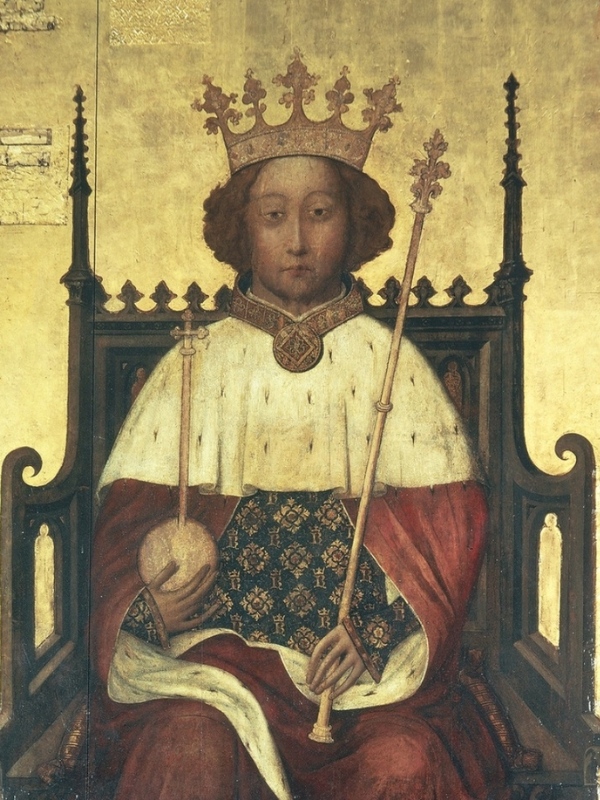
Further Information: King Richard II

The Reign of King Richard II

Infant Accession (16 July 1377)
Following the death of his grandfather King Edward III, the ten-year-old Richard II took the throne as the sole surviving son of the Black Prince. Simon Sudbury, Archbishop of Canterbury, anointed the boy-king inside Westminster Abbey during an exhausting, highly theatrical ceremony. The prolonged rituals completely drained the young monarch, who had to be carried from the church to his private palace rooms on his knights’ shoulders from absolute physical exhaustion, opening a fragile minority reign dominated by competing royal uncles.

The Peasants’ Rebellion (June 1381)
The imposition of consecutive, flat-rate poll taxes to fund the struggling Hundred Years’ War triggered a massive social explosion across the southern shires in 1381. Armed rebel columns led by Wat Tyler marched on London, burning the wealthy Savon Palace, opening the city prisons, and brutally executing the Archbishop of Canterbury and the King’s Treasurer at Tower Hill. The fourteen-year-old king made a historic political gamble, personally riding out to meet the armed mobs at Mile End and Smithfield, where he masterfully defused the crisis by offering false promises of manumission after Tyler was struck down by the Mayor of London.

The Merciless Parliament and Execution of Favourites (February 1388)
Furious at the monarch’s reliance on low-born court favorites and his refusal to consult the traditional peerage, an armed baronial faction known as the Lords Appellant launched a palace coup. They successfully mobilized their private retinues to defeat the king’s forces at the Battle of Radcot Bridge in December 1387, blockaded the Tower of London, and convened the Merciless Parliament in February 1388. The Appellants systematically executed or permanently banished Richard’s closest friends, including Sir Simon de Burley and Robert de Vere, Duke of Ireland, reducing the humiliated monarch to a nominal figurehead.

The Declaration of Sole Executive Power (May 1389)
The monarch successfully broke his political captivity during a grand council assembly at Westminster in May 1389. He stood up before his assembled barons, announced that he had reached the age of twenty-two, and declared that he was taking full, independent authority over his own administration and the appointment of high officers. He launched a decade of tense domestic peace, feigning conciliation with his former captors while secretly reorganizing his finances and raising a private army of Cheshire archers to plan his long-term revenge against the Appellants.

The Death of Queen Anne (June 1394)
The monarch’s household faced total emotional ruin when his beloved wife, Anne of Bohemia, died suddenly from plague at Sheen Palace in June 1394. Driven mad by intense personal grief, the king ordered the immediate physical demolition of the entire palace structure. He vented his rage directly onto the masonry, commanding that the buildings be leveled to the ground so that no future court could ever use the rooms where she passed away, a display of erratic emotional volatility that deeply alarmed his advisors.

Outlawing of the Lords Appellant (July 1397)
The monarch unleashed his long-delayed retributive violence against the baronial opposition in July 1397, launching an era of autocracy historically branded as his tyranny. He arrested his leading rivals by surprise, ordering the immediate public execution of Richard FitzAlan, 11th Earl of Arundel, and the permanent exile of Thomas de Beauchamp, 12th Earl of Warwick. He concurrently arranged the secret assassination of his senior uncle, Thomas of Woodstock, Duke of Gloucester, who was suffocated inside a prison cell at Calais before he could stand trial.

Confiscation of the Lancaster Inheritance (February 1399)
Following the death of his wealthy uncle John of Gaunt, Duke of Lancaster, the monarch committed his most fatal political misstep in February 1399. He issued a sweeping royal decree extending the banishment of Gaunt’s exiled son, Henry Bolingbroke, to life. The king completely confiscated the massive Lancastrian territorial estates straight into his private crown coffers, an arbitrary violation of property law that alienated every major landowner in the country and united the peerage against the throne in defense of their own inheritances.

Betrayal and Complete Collapse (August 1399)
While the monarch was away on a poorly timed military expedition in Ireland to suppress Gaelic chieftains, Henry Bolingbroke landed a powerful invasion force at Ravenspur in Yorkshire. The English nobility and the royal officers rapidly abandoned the crown, refusing to raise the shire levies. The monarch returned to find his army scattered, was cornered by Bolingbroke’s horsemen at Flint Castle, and was transported back to London under armed guard to face a formal parliamentary deposition.

Forced Abdication and Death at Pontefract (1400)
Imprisoned inside the Tower of London, the monarch was forced to sign a formal legal abdication document on 29 September 1399. This document allowed the Westminster Parliament to crown Henry Bolingbroke as King Henry IV, establishing the senior Lancastrian line. The deposed king was transferred to the remote vaults of Pontefract Castle in Yorkshire, where he was quietly starved to death in early 1400 to prevent future royalist counter-coups and counter-insurgencies following the Epiphany Rising, closing the direct Plantagenet line.

The Peasants' Rebellion

Mile End Proposals (14 June 1381)
With London burning around his inner court, the fourteen-year-old Richard II rode out to meet a massive rebel column at Mile End. Showing absolute bravery, the boy-king listened to the peasants’ radical demands, agreeing to issue formal royal charters that promised to permanently abolish serfdom, end forced labor customs, and fix low agricultural rents across the shires, temporarily pacifying the crowd to buy critical time for his garrison.

The Killing of Wat Tyler at Smithfield (15 June 1381)
The social crisis reached a bloody turning point the next day at Smithfield. During a tense parley, the rebel leader Wat Tyler insulted the king’s retinue, demanded the confiscation of all church lands, and drew a dagger. The Mayor of London, William Walworth, retaliated by striking Tyler off his horse with a cutlass, and a royal squire ran him through with a sword during the melee, mortally wounding the rebel commander in front of his lines.

Deception of the Mob (June 1381)
Seeing their leader fall, the thousands of assembled peasants drew their bows to unleash an arrow storm onto the royal party. The monarch spurred his horse forward alone directly into the center of the armed mob, shouting the legendary command: “Sirs, will you shoot your king? I am your captain, follow me!” He successfully led the star-struck crowd away from the city into the open fields of Clerkenwell. While the mob followed his horse, royal guards massed to encircle and disarm them, subsequently allowing the king to revoke all his signed charters and hang over five hundred rebel ringleaders across the shires.

The Lancastrian Usurpation

Following Henry Bolingbroke’s successful landing, Richard fortified himself inside Conway Castle in Wales. Bolingbroke dispatched the duplicitous Earl of Northumberland, Henry Percy, to offer a truce; Percy swore a sacred oath on a holy relic that Bolingbroke merely wished to reclaim his lawful Lancastrian inheritance and restore his titles, successfully convincing the king to leave his stone fortress under safe passage.

Ambush in the Welsh Mountains
The moment Richard rode into the narrow valleys outside Conway, Percy’s hidden mercenary forces sprang a pre-planned ambush. They surrounded the king’s small retinue, stripped him of his royal guard, and marched him straight to Bolingbroke’s operational headquarters at Flint Castle, where Bolingbroke famously greeted his captive cousin by announcing that he had arrived to help him govern his realm.

To legitimize the usurpation, Bolingbroke’s legal scholars compiled an official list of thirty-three separate articles of deposition against Richard, accusing him of tyranny, financial extortion, breaking his coronation oath, and mentally abusing his nobility. This bureaucratic erasure forced the Childless King to yield his crown, bringing a definitive end to the main line of the House of Plantagenet and launching the rule of the House of Lancaster.

The House of Lancaster Cadet Branch

The internal breakdown of the Plantagenet dynasty during the late fourteenth century was driven by the rise of the House of Lancaster, a princely branch whose immense private wealth and territorial influence eventually eclipsed the power of the crown. The foundations of this noble household were established in 1362 when King Edward III granted his third surviving son, John of Gaunt, the title of Duke of Lancaster following Gaunt's marriage to Blanche of Lancaster, the sole heiress to the country's wealthiest estate. This single union consolidated a vast network of castles, agricultural lands, and private retinues across nearly every county, turning the duchy into a virtually independent domain within the kingdom.

As the leading landowner in England, Gaunt used the immense revenues of his estates to build a massive affinity of loyal knights and squires, binding the regional gentry directly to his household through lifelong financial retaining contracts. Serving as the primary political power broker during the minority of his nephew, King Richard II, Gaunt deployed his personal fortunes and private armies of sworn retainers to defend the borders of the realm against French and Scottish raids, while maintaining an armed, deeply influential princely faction ready to protect its inheritance by force.

This overwhelming concentration of local military and financial power created a dangerous imbalance, rendering the Lancastrian line a constant source of anxiety for the court and ensuring that any direct threat to their estates would instantly risk a full-scale dynastic war for the possession of the crown.

Henry IV

King of England 1399–1413
Lord of Ireland 1399–1413
Duke of Aquitaine 1399–1400
Duke of Lancaster 1399

Bio:
King Henry IV’s turbulent and exhausted reign was entirely dominated by a desperate, continuous struggle to defend his crown from immediate fragmentation and consolidate his fragile title of usurper against widespread local rebellions.

Having seized the throne through the deposition of Richard II, he spent his initial years locked in a multi-front domestic security crisis, frantically marching his royal armies to confront the massive Welsh national uprising led by Owain Glyndŵr. This internal instability was severely compounded by a catastrophic backbench revolt launched by his former allies, the powerful northern Percy family, a treasonous coup that he firmly suppressed in 1403 by leading a cavalry charge to kill Henry "Hotspur" Percy at the bloody Battle of Shrewsbury.

To deter future internal coups and project absolute sovereign authority, he broke with centuries of constitutional tradition by ordering the public execution of the treasonous Archbishop Richard Scrope of York, an unprecedented move that deeply shocked the national conscience.

Worn down by the immense financial costs of maintaining constant martial law and suffering from a debilitating, disfiguring skin and neurological illness that his critics widely proclaimed to be a divine curse for the murder of Richard II, he spent his final years physically incapacitated, gradually surrendering the executive governance of the country to his ambitious eldest son.
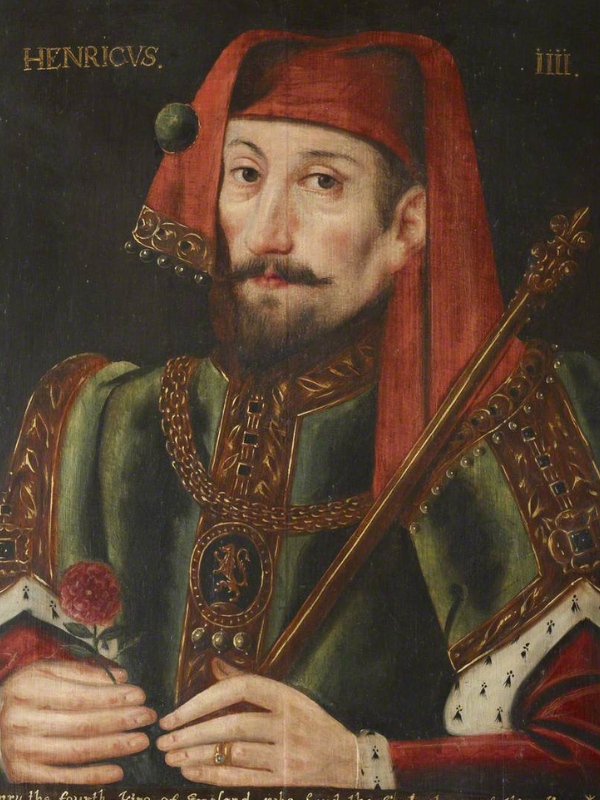
Further Information: King Henry IV

Timeline for the Reign of King Henry IV

The Lancastrian Coup (13 October 1399)
Following his successful military invasion to reclaim his confiscated inheritance, Henry IV Bolingbroke officially deposed his cousin Richard II. He got himself crowned King of England at Westminster Abbey on 13 October 1399, launching the rule of the House of Lancaster. The sacral ceremony introduced a newly discovered holy oil—the Oil of St Thomas—to project divine legitimacy over his usurpation and counter widespread domestic doubts regarding his right to the crown.

Crushing of the Epiphany Rising (January 1400)
Just months into his reign, a group of die-hard royalist earls launched a surprise counter-coup to assassinate the new monarch and restore Richard II to the throne. The king received early intelligence of the plot, evacuated his family to the secure towers of the Tower of London, and rapidly mobilized his guards. The local townspeople captured and brutally executed the conspirators at Cirencester and Bristol before they could launch their armed assault, cementing early Lancastrian survival.

The Welsh Guerrilla War (September 1400)
The monarch’s domestic security fractured completely when the charismatic Welsh magnate Owain Glyndŵr launched an armed insurrection against English rule on 16 September 1400. He systematically burned frontier marcher towns, destroyed local administrative centers, and claimed the sovereign title of Prince of Wales. This border war triggered a grueling, multi-decade guerrilla conflict that drained the royal treasury and anchored large field armies in the western shires for over a decade.

Victory over the Scots at Homildon Hill (14 September 1402)
Faced with a massive Scottish raiding army plundering through the northern shires, Henry’s chief northern allies, Henry Percy, 1st Earl of Northumberland, and his son Henry “Hotspur” Percy, intercepted the invaders. They achieved a total tactical victory at the Battle of Homildon Hill on 14 September 1402, using massed English longbowmen to completely shatter the Scottish ranks and capture numerous high-ranking northern earls.

The French Coastal Raids and Maritime Insecurity (1403–1404)
The legitimacy of the Lancastrian dynasty was heavily challenged internationally when French fleets and Breton privateers launched devastating naval attacks along the southern coast of England. French forces systematically burned Plymouth, raided the Isle of Wight, and blockaded the English channel, partnering with Welsh rebels to land French troops at Milford Haven. This continuous maritime insecurity paralyzed southern trade and forced the crown to spend vast financial reserves to fortify coastal ports.

The Clash at Shrewsbury (21 July 1403)
Furious at the king’s refusal to reimburse his border troops or allow him to ransom his lucrative Scottish prisoners, Henry “Hotspur” Percy turned decisively against the crown. He formed a hostile coalition with the Welsh rebels and marched an army to Shrewsbury. The monarch rushed his own forces north to intercept him, winning a brutal, all-day pitched shield-wall combat at the Battle of Shrewsbury on 21 July 1403, where Hotspur was shot through the face and killed.

The Tripartite Indenture (February 1405)
Internal political instability peaked when the king’s primary enemies formalized a dangerous alliance designed to completely dismantle the English state. Owain Glyndŵr, the Earl of Northumberland, and Edmund Mortimer signed a formal partition treaty known as the Tripartite Indenture. The document legally bound the conspirators to carve up England and Wales into three separate, independent principalities, planning the total destruction of the Lancastrian monarchy before royalist forces could intercept them.

Execution of Archbishop Scrope (8 June 1405)
Internal rebellions reached a dangerous crisis point when Richard Scrope, Archbishop of York, joined a northern noble uprising against the king’s heavy financial extractions. The monarch flatly refused to yield to church immunity laws, ordering Scrope to be immediately beheaded outside the walls of York on 8 June 1405. This radical judicial punishment triggered widespread public horror, earned the king papal condemnation, and sparked persistent rumors that a divine curse had instantly struck the king’s flesh with disfiguring leprosy.

The Capture of Prince James of Scotland (March 1406)
The monarch scored a massive diplomatic and strategic coup when an English merchant vessel intercepted a French ship off Flamborough Head. The sailors successfully captured the eleven-year-old Prince James, the sole surviving heir to the Scottish throne, who was fleeing to France for protection. The king held the young prince a permanent political prisoner in the Tower of London and Windsor Castle for eighteen years, effectively freezing Scottish military aggression and securing the northern border for the remainder of his reign.

Battle of Bramham Moor and Eradication of the Percys (19 February 1408)
The long-running northern rebellions were permanently crushed when the exiled Earl of Northumberland launched a final invasion of Yorkshire using Scottish mercenaries. Sir Thomas Rokeby, High Sheriff of Yorkshire, mobilized the local shire levies to intercept the rebels at the Battle of Bramham Moor. The loyalist forces completely routed the insurgent ranks, killing the Earl of Northumberland on the field and bringing a definitive end to the Percy rebellions, securing the internal borders of the realm.

Sudden Collapse and Death at Westminster (20 March 1413)
The monarch’s tension-filled fourteen-year rule ended in complete physical exhaustion at the age of forty-five on 20 March 1413. While praying before the holy shrine of King Edward the Confessor inside Westminster Abbey, he suffered a sudden, final stroke and collapsed. His attendants carried him into the abbot’s private apartments, where he passed away inside the historic Jerusalem Chamber, fulfilling a prophecy that he would die in Jerusalem. His passing handed the crown completely unopposed to his brilliant eldest son, King Henry V.

The Royal Household of King Henry IV

Marriage to the Wealthy Mary de Bohun (1380)
Long before his usurpation, Henry IV married Mary de Bohun, the co-heiress to one of the largest and most lucrative noble inheritances in England. This union transferred immense territorial estates across the Welsh Marches and the south straight to the Lancastrian line, providing the core financial and military resources that later enabled his successful coup in 1399. The marriage birthed all six of Henry’s legitimate children before her early death in childbirth in 1394, meaning she never lived to see her husband wear the crown or witness her eldest son’s ascent.

Marriage to Joan of Navarre (February 1403)
To build a powerful naval shield along the English Channel and secure cross-channel shipping lanes from pirate activity, the newly crowned monarch married Joan of Navarre in February 1403, the wealthy widow of John IV, Duke of Brittany. Joan served as an intelligent regent during the king’s continuous border campaigns, managing domestic palace finances and navigating complex diplomatic terrain. Despite her loyal service, she was later targeted by her stepson Henry V’s advisors with trumped-up charges of witchcraft and necromancy, which the crown used as a legal pretext to temporarily confiscate her massive dowry to fund the French wars.


The Lineage and Marriages of the Lancastrian Successors
The first marriage produced a remarkably cohesive and exceptionally capable family of successors:

King Henry V (King of England, Lord of Ireland, and Regent of France)
Born on 16 September 1386, he operated as the eldest son and premier warrior heir of the Lancastrian line. He successfully unified the fractured court, conquered Normandy, and won the legendary Battle of Agincourt in 1415 before being named heir to the French throne. He married Catherine of Valois, the daughter of King Charles VI of France, a high-stakes dynastic match that transferred the French crown straight to his lineage.

Thomas of Lancaster, 1st Duke of Clarence (Lieutenant of Ireland)
Born in 1387, he was a formidable frontline general who served as Chief Governor of Ireland and commanded extensive campaigns in Aquitaine. He frequently clashed with his older brother over military strategy, eventually taking supreme command of the English forces in France where he was killed in open combat at the Battle of Baugé on 22 March 1421. He married the wealthy widow Margaret Holland, Duchess of Clarence, though the union produced no legitimate children to pass on his titles.

John of Lancaster, 1st Duke of Bedford (Regent of France)
Born on 20 June 1389, he was a highly brilliant statesman, intellectual patron, and military commander who served as Protector of England during his brother’s campaigns. Following the accession of his infant nephew, he ruled as Regent of France for thirteen years, masterfully defending English conquests against Joan of Arc’s armies and managing the trial that led to her execution. He married first Anne of Burgundy, a match essential to the Anglo-Burgundian military alliance, and second Jacquetta of Luxembourg.

Humphrey of Lancaster, 1st Duke of Gloucester (Lord Protector of England)
Born on 3 October 1390, he was a powerful scholar, humanist book collector, and volatile politician who served as Lord Protector of England during the minority of King Henry VI. He frequently paralyzed the Westminster council through his bitter, long-running factional clashes with Cardinal Henry Beaufort over control of the royal exchequer. He married first Jacqueline, Countess of Hainault, launching a disastrous military expedition to the Low Countries to claim her lands, and second his former mistress, Eleanor Cobham, who was later imprisoned for life for using treasonable sorcery against the king.

Blanche of England (Palatine Countess Consort)
Born in 1392, her hand was deployed as the very first international diplomatic tool of the new dynasty to secure continental legitimacy for her father’s court. She married Louis III, Elector Palatine, in a high-status ceremony at Cologne, bringing a magnificent dowry that included the oldest surviving royal crown in Britain, the Crown of Princess Blanche, which reinforced Lancastrian prestige across the German principalities.

Philippa of England (Queen Consort of Denmark, Sweden, and Norway)
Born in 1394, she was utilized to secure a vital commercial and maritime alliance across the Baltic Sea. She married Eric of Pomerania, King of the Kalmar Union, ruling as an exceptionally active and competent regent of Denmark during her husband’s frequent absences. She successfully commanded the defensive fortifications of Copenhagen against Hanseatic pirate fleets, updated the national currency standard, and served as a primary administrator until her death.

Henry V

King of England 1413–1422
Lord of Ireland 1413–1422
Duke of Aquitaine 1413–1422
Regent of France 1420–1422

Bio:
The spectacular and high-velocity reign of King Henry V transformed the fragile Lancastrian regime into the premier military superpower of Western Europe, successfully capitalizing on the civil madness of the French Valois court to revive the Hundred Years' War. Firmly locking down his domestic borders by suppressing the early Lollard rebellions and the Southampton Plot, he launched a massive amphibious land invasion of Normandy in 1415, capturing the fortified port of Harfleur before his high-attrition campaign faced total encirclement.

On 25 October 1415, his exhausted, disease-ridden infantry met the massed chivalry of the French army at the landmark Battle of Agincourt, where his tactical deployment of defensive stakes and the devastating firepower of the English longbow achieved an overwhelming victory that slaughtered thousands of the French aristocracy. He capitalized on this triumph by launching a methodical, multi-year conquest of Normandy, engineering a brutal six-month siege of Rouen that starved the city into submission.

His ultimate diplomatic triumph occurred in 1420 with the signing of the Treaty of Troyes, an international settlement that disinherited the French Dauphin, named Henry as the sole Regent and heir to the French throne, and sealed the alliance through his marriage to Catherine of Valois, an imperial union cut short when he was struck down by dysentery in the field just months before he could wear the double crown of both nations. 
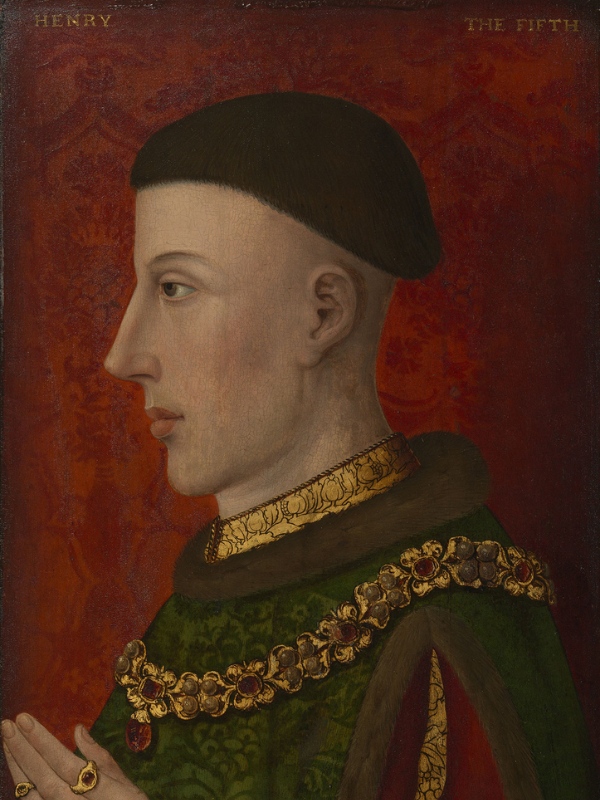
Further Information: Henry V

The Reign of King Henry V

Accession and Dynastic Reconciliation (March 1413)
Following the death of his father, the twenty-six-year-old Henry V took the throne with absolute political baseline security. He moved swiftly to unify a fractured court, issuing royal passwords to old baronial families, restoring the heirs of Percy and Mortimer to their lands, and transferring the remains of King Richard II to a magnificent tomb at Westminster Abbey to close old family feuds and erase the moral taint of the Lancastrian usurpation.

Suppression of the Lollard Oldcastle Revolt (January 1414)
The monarch’s domestic peace faced an immediate religious challenge when his former companion, Sir John Oldcastle, masterminded an armed heretical uprising in London. The king received early intelligence, ambushed the rebel groups at St Giles’s Fields before they could mass, and ordered the systematic execution of the ringleaders, establishing his zero-tolerance stance on treason and heretical subversion.

Thwarting of the Southampton Plot (August 1415)
On the literal eve of his invasion of France, the monarch crushed a palace conspiracy designed to assassinate him and place Edmund Mortimer on the throne. Mortimer unmasked the plot to the king directly, allowing the monarch to instantly arrest the conspirators—including his cousin Richard, Earl of Cambridge, and Henry Scrope, 3rd Baron Scrope of Masham—executing them within days at Southampton to lock down total domestic command before his fleet sailed.

The Siege and Capture of Harfleur (August–September 1415)
The monarch launched his grand offensive by landing an army of 12,000 men at the mouth of the River Seine, initiating a grueling five-week siege of the strategic port of Harfleur. Operating under extreme summer heat, his forces deployed heavy artillery bombardments to breach the walls, forcing the town’s surrender on 22 September 1415. The victory came at a catastrophic cost to the exchequer, as a rampant epidemic of dysentery swept through the English camp, killing or incapacitating a third of his frontline infantry core.

The Battle of Agincourt (25 October 1415)
The monarch led his exhausted, dysentery-ridden army to a historic tactical victory over a massive French royal host in Artois. By masterfully utilizing a narrow bottleneck of ploughed land bordered by thick woods, his massed longbow formations completely broke successive waves of armored French knights, trapping the enemy horsemen in the deep mud. The total tactical slaughter killed over 5,000 French lords and knights, shattering the military elite of France and establishing the longbow as an unassailable weapon of shock warfare.

The Naval Battle of the Seine (15 August 1416)
When a massive Franco-Genoese fleet blockaded the newly won port of Harfleur to starve out the English garrison, the monarch authorized a pre-emptive naval counter-strike. An English fleet commanded by the king’s brother, John, Duke of Bedford, entered the mouth of the Seine and engaged the enemy in a brutal, day-long boarding action. The English forces successfully captured or destroyed the primary enemy warships, lifting the blockade, securing cross-channel shipping lanes, and preserving the maritime pipeline required for future continental campaigns.

The Conquest of Normandy (1417–1419)
The monarch launched a second, highly methodical campaign to permanently annex northern France, moving away from loose plundering raids to execute brutal, continuous sieges across Normandy. His armies systematically captured the heavily fortified city of Caen in September 1417 and blockaded Rouen into absolute starvation for five months, forcing the entire duchy back under direct English administrative command for the first time since the reign of King John.

The Signing of the Treaty of Troyes (21 May 1420)
Following his total military domination of the northern provinces, the monarch dictated the terms of peace to the fractured French court. Under the historic Treaty of Troyes, he disinherited the French Dauphin (the future Charles VII), married the French princess Catherine of Valois, and secured his formal recognition as full Regent and rightful Heir to the Kingdom of France, combining the administrative machineries of both realms under a single sovereign blueprint.

Terminal Illness and Death (August 1422)
The monarch’s spectacular nine-year sovereign rule ended during a grueling midsummer siege campaign against the Dauphin’s stronghold at Meaux. He contracted a severe, chronic case of dysentery or camp fever that completely broke his physical health; too weak to mount his horse, he was carried on a litter to the Château de Vincennes near Paris, where he died at the age of thirty-five on 31 August 1422. The court moved his remains back across the channel to Westminster Abbey, passing the dual crowns of England and France to his infant son, King Henry VI.

The Royal Household of King Henry V
Marriage to Catherine of Valois: June 1420
To permanently lock in his conquest via dynastic bloodlines, Henry married Catherine of Valois, the daughter of King Charles VI of France. The grand wedding took place at Troyes Cathedral, transforming the princess into a vital political shield designed to validate English sovereignty over the French population.

The marriage produced a single child, born at Windsor Castle while Henry was away campaigning on the continent. Named Henry after his father, the infant prince achieved a unique historical status, inheriting both the Kingdom of England and the Kingdom of France before his first birthday, though his inherited mental instability later collapsed into the absolute chaos of the Wars of the Roses.


The Dowager Romance
Following Henry’s sudden death, the young Queen Dowager Catherine found herself heavily restricted by a suspicious English council. She bypassed the court’s marital bans by entering into a secret, highly controversial emotional romance with her Welsh clerk of the wardrobe, Owen Tudor, a relationship that birthed the Tudor line and laid the biological foundation for her grandson, King Henry VII.
Henry V at War

The Battle of Shrewsbury (21 July 1403)
Operating as a sixteen-year-old Prince of Wales, Henry V co-led the royal vanguard against the rebel forces of Henry “Hotspur” Percy. He took direct command of the left flank, fighting in close-quarters, hand-to-hand shield-wall combat. During the peak of the melee, a rebel arrow struck him directly in the face, embedding an iron point six inches into his nose and cheekbone. This injury required an emergency, specialized surgical extraction using a customized screw-mechanism and left him permanently scarred, giving him a formidable warrior appearance for the rest of his life.

The Siege of Harfleur (August–September 1415)
The monarch launched his independent French campaigns by landing an armada at the strategic port town of Harfleur. He encircled the stone ramparts with a ring of trenches, deploying heavy siege cannon to execute a continuous bombardment that successfully breached the masonry. While the garrison capitulated on 22 September 1415, a catastrophic epidemic of dysentery swept his camp, killing or incapacitating over one-third of his frontline troops and severely delaying his planned march across the northern shires.

The Battle of Agincourt (25 October 1415)
Outmarched and cornered by a massive French royal host numbering at least 20,000 men, the king positioned his remaining 6,000 exhausted soldiers across a narrow, muddy gap between the woods of Agincourt and Tramecourt. He ordered his longbowmen to drive sharpened wooden stakes into the ground, completely neutralizing the speed of the French heavy cavalry. The massed archers unleashed a high-velocity rain of arrows, trapping the dense French columns in knee-high clay mud and leading to a total slaughter that killed over 6,000 enemy troops, including ninety top counts and barons.

The Siege of Caen (August–September 1417)
The monarch commenced his second invasion campaign by targeting the wealthy capital of western Normandy. He positioned his artillery to shatter the city’s outer towers, while his brother, Thomas, Duke of Clarence, launched a rapid surprise assault that scaled the low walls of the neighboring abbey. English forces burst into the main streets from behind the lines, capturing Caen and establishing a brutal military example by thoroughly plundering the town and driving the native administrative officials into exile.

The Siege of Rouen (July 1418 – January 1419)
The monarch executed his most ruthless military operation by encircling the capital of Normandy with a dense grid of iron blockhouses to starve out the defenders. When the city authorities expelled 12,000 “useless mouths”—women, children, and the elderly—to conserve their dwindling rations, the king flatly refused to let them pass his lines. The helpless civilians were trapped in the freezing castle ditches for months, eating dogs and rats, until the city capitulated in total horror on 19 January 1419, permanently cementing Lancastrian control over the duchy.

The Siege of Melun (July–November 1420)
Following his recognition as Heir to France, the king marched his unified Anglo-Burgundian army to reduce the strategic town of Melun. The defenders executed a fierce resistance, launching continuous counter-mines that led to a sequence of underground, hand-to-hand combats inside the dark tunnels. The king personally fought a duel against the French governor, Barbazan, within the mine shafts before starvation forced the fortress to surrender after a grueling four-month engineering standoff.

The Siege of Meaux (October 1421 – May 1422)
To clear the final pocket of Dauphinist resistance in northern France, the king threw his forces around the heavily fortified town of Meaux. The operation faced extreme physical attrition; the freezing winter conditions and toxic camp water triggered a severe epidemic of dysentery. The camp fever systematically poisoned the king’s internal organs while he managed the trenches, concluding with the town’s surrender just weeks before Henry’s fatal collapse and sudden death at Vincennes.

Henry VI

King of England 1422–1461 (First reign)
King of England 1470–1471 (Second reign)
Lord of Ireland 1216–1272
King of France 1422–1453

Bio:
King Henry VI’s long and disastrous dual reign witnessed the total collapse of England's continental empire and a violent descent into absolute domestic lawlessness that permanently shattered the authority of the Lancastrian line. Accessing the throne as a nine-month-old infant, his long minority was managed by a fractured regency council that was completely paralyzed by the sudden resurgence of French nationalism under Joan of Arc, resulting in the steady loss of Paris, Normandy, and ultimately the ancient duchy of Gascony by 1453.

Deeply pious, passive, and completely unsuited to medieval governance, Henry's intense reliance on a highly insular circle of court favorites provoked widespread popular fury, exploding in 1450 into Jack Cade's Rebellion, which saw an armed mob storm London to demand fiscal and legal reforms.

The sudden news of the loss of Bordeaux triggered a total mental collapse in August 1453, leaving the king in a condition of absolute catatonia for over a year and forcing Parliament to appoint his wealthy cousin, Richard, Duke of York, as Protector of the Realm. This political transition ignited the Wars of the Roses, a brutal multi-decade civil war that erupted in 1455 at the Battle of St Albans.

Under the aggressive direction of his queen, Margaret of Anjou, the Lancastrian forces fought a sequence of bloody engagements across the shires, until their total tactical annihilation at the catastrophic Battle of Towton in March 1461 forced Henry into flight, enabling the rival Yorkist branch to claim the crown.

After nine years of northern exile and captivity in the Tower, he was briefly restored to power in October 1470 during the brief political maneuver known as the Readeption, a fragile puppet regime engineered by the turncoat Earl of Warwick that collapsed completely within six months when Edward IV returned to crush the remaining Lancastrian forces at Barnet and Tewkesbury, subsequent to which Henry was systematically murdered in his prison cell to permanently extinguish the Lancastrian claim. 
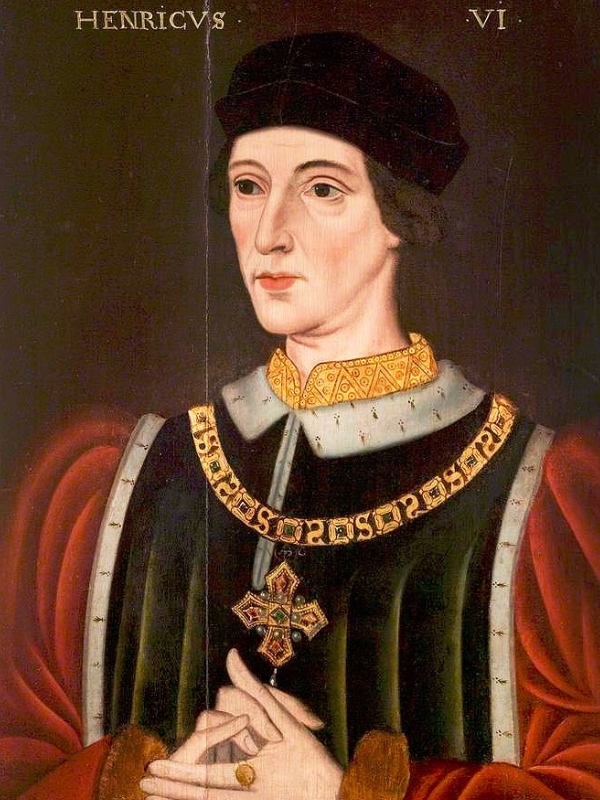
Further Information: King Henry VI

The Reign of King Henry VI

Accession and Dual Regencies (September 1422)
Following the sudden death of his father Henry V, the nine-month-old Henry VI inherited the crown of England. Weeks later, upon the death of his maternal grandfather Charles VI, he was proclaimed King of France, establishing a massive dual monarchy run by his uncles, the Duke of Bedford in Paris and the Duke of Gloucester in London, to manage his minority. This minority setup instantly exposed the dual-realm state to intense noble factionalism and administrative deadlock as the regents competed for control over the royal exchequer.

Double Coronations (1429–1431)
To counter the rising national momentum of Joan of Arc and the coronation of the Dauphin at Reims, the regency council staged two magnificent coronation ceremonies. Henry Chichele, Archbishop of Canterbury, anointed the seven-year-old Henry King of England at Westminster Abbey on 6 November 1429, followed by a grand French coronation at Notre-Dame de Paris on 16 December 1431. This sacral milestone made him the only English monarch officially crowned King of France on French soil, projecting imperial Lancastrian legitimacy across Western Europe.

Cade’s Rebellion (May 1450)
The monarch’s total failure to maintain domestic public order, settle crushing treasury debts, or contain corruption among his favorites triggered a massive social explosion across the southern shires. An armed rebel host of 20,000 men led by Jack Cade marched on London, routing royalist forces at Sevenoaks and executing the hated Lord High Treasurer, James Fiennes, 1st Baron Saye and Sele. The terrified king completely abandoned his capital and fled to Kenilworth Castle, leaving London’s defense to collapse and deeply damaging the prestige of the Lancastrian dynasty.

The Onset of Mental Catatonia (August 1453)
Upon receiving news that his armies were completely annihilated at the Battle of Castillon—an absolute military disaster that lost the entire English empire in France except Calais—the monarch experienced a total mental collapse. He fell into a state of absolute, unreactive catatonia that left him entirely unable to speak, walk, or recognize his own newborn son for eighteen months. This total psychological breakdown caused the Westminster Parliament to appoint his rival, Richard, 3rd Duke of York, as Protector of the Realm, initiating the factional positioning that led straight to the Wars of the Roses.

Capture at the Battle of Northampton (10 July 1460)
When the rival House of York rose in open armed rebellion to clean out his corrupt court circle, the monarch took refuge inside a waterlogged, fortified camp at Northampton. During a severe rainstorm on 10 July 1460, Yorkist forces breached the trenches due to the treachery of Edmund Grey, Lord Grey of Ruthin. The king’s bodyguards were systematically slaughtered around his person, and the monarch was captured alone in his tent, subsequently being transported back to London as a captive puppet monarch to sign away his own son’s inheritance.

The First Deposition and Flight to Scotland (4 March 1461)
Following the devastating Lancastrian defeat at Mortimer’s Cross and the strategic failure to secure London, the young Edward, Duke of York, entered the capital and officially deposed the monarch, claiming the crown as King Edward IV. The deposed king was forced into deep exile, fleeing across the northern border to secure political asylum at the court of Scotland while his indomitable queen, Margaret of Anjou, traveled Europe to rally remaining resistance forces and buy foreign mercenary retinues.

The Brief Re-adeption Restoration (October 1470 – April 1471)
In a stunning geopolitical shift, the rebel Richard Neville, 16th Earl of Warwick (the Kingmaker), allied with Queen Margaret to launch a high-velocity invasion of England, forcing Edward IV to flee the country and restoring the fragile, mentally broken Henry VI to his throne. This brief Re-adeption restoration ended in total structural failure within six months; Edward IV returned with a fresh Burgundian-funded army, smashed the Lancastrian forces at the Battle of Barnet, and threw the bewildered monarch straight back into a prison cell.

Murder inside the Tower of London (21 May 1471)
The monarch’s chaotic, fractured forty-nine-year rule ended in sudden violence inside the Wake Tower of the Tower of London on 21 May 1471. Following the total annihilation of his remaining field forces and the death of his sole son, Prince Edward, at the Battle of Tewkesbury, King Edward IV ordered the permanent elimination of the Lancastrian claimant. Guards murdered the forty-nine-year-old king inside his private chapel, falsely claiming he died of pure melancholy. The court buried his remains at Chertsey Abbey before later moving them to Saint George’s Chapel at Windsor to curb a rising popular cult of martyrdom.

The Royal Household of King Henry VI

Marriage to Margaret of Anjou: April 1445
To secure a temporary truce with the French crown, Henry married the highly ambitious and intelligent fifteen-year-old princess Margaret of Anjou. The marriage treaty, masterminded by the Duke of Suffolk, triggered widespread public fury across the country because it required England to completely surrender its strategic continental provinces of Maine and Anjou to France without securing any dowry in return.

After eight years of childless marriage, Margaret gave birth to their sole son, Edward of Westminster, Prince of Wales. Because the birth coincided exactly with Henry’s total mental catatonia, the king was entirely unable to acknowledge or bless the baby; this vacuum prompted the Yorkist faction to spread rumors alleging the prince was a bastard fathered by court favorites, creating a lifelong dynastic grudge.

Joan of Arc and the Siege of Orléans

Stranglehold on the Loire (October 1428)
The English army launched a massive siege operation against Orléans, the strategic northern gateway to the lands of the French Dauphin. English forces constructed a ring of fortified wooden and stone blockhouses, known as bastides, around the city perimeter to cut off all incoming food supplies. This operation aimed to starve the garrison into absolute submission, block the crossing lines, and lock down total control over the Loire valley to prepare for a definitive push into the southern provinces.

Arrival of the Visionary (April 1429)
The grueling deadlock broke suddenly when a seventeen-year-old peasant girl, Joan of Arc, arrived at the Dauphin’s court claiming direct divine instructions from heavenly voices to drive the English out of France. Clad in custom white armor and carrying her own sacred banner, she successfully bypassed the English river blockades under the cover of night. She slipped directly into the besieged city, instantly lifting the morale of the starving defenders and transforming the psychological landscape of the conflict.

The Storming of the English Bastides (May 1429)
The visionary assumed direct tactical command of the garrison, rapidly transforming a passive defensive holding action into an aggressive counter-offensive. She personally led French columns to storm the primary English strongholds, capturing the fortified positions of Saint-Loup and the critical gateway fortress of Les Tourelles. These victories were achieved in a sequence of fierce, hand-to-hand assaults where she was famously shot through the shoulder by an English crossbow bolt, yet returned to the front lines to spearhead the final charge.

Total Collapse of the Siege (8 May 1429)
Faced with the systematic destruction of their strategic fortifications, heavy manpower losses, and the slaughter of their frontline captains, the remaining English forces abandoned their siege lines. The English commanders ordered a total retreat northward, permanently shattering the myth of Lancastrian military invincibility initially established by King Henry V. This historic collapse completely turned the momentum of the entire Hundred Years’ War and paved the way for the Dauphin’s coronation at Reims.

The Complete Loss of Normandy and Aquitaine

The French Reclamation of Normandy: 1449 – 1450
Following King Henry VI’s total neglect of his military border defenses, King Charles VII of France officially broke the truce. He unleashed a highly modernized, professional standing army backed by a state-of-the-art gunpowder artillery train that systematically flattened English frontier castles; French forces recaptured the capital of Rouen in 1449 and completely smashed the remaining English field army at the Battle of Formigny in April 1450, permanently driving the Lancastrian administration out of Normandy.


Artillery Carnage at Castillon and Loss of Aquitaine: July 1453
The multi-generational conflict met its definitive end in the southwestern duchy of Aquitaine. Henry VI dispatched the veteran general John Talbot with a fresh expeditionary force to relieve the Gascon borders, but the French army trapped the English heavy cavalry behind a dense line of fortified trenches at Castillon; French gunners used over three hundred cannons to rain heavy artillery fire onto the advancing English lines, killing Talbot and annihilating his army.

The total disaster at Castillon brought a definitive conclusion to the three-hundred-year rule of the House of Plantagenet over western France. With Bordeaux surrendering weeks later, the English crown was stripped of every single acre of its continental inheritance except for the narrow, heavily garrisoned outpost at Calais, a sudden territorial collapse that triggered Henry VI’s absolute mental breakdown in London.

Murder in the Tower of London
While contemporary Yorkist records officially claimed Henry died from “pure displeasure and melancholy” upon learning his house had lost the war, modern historical audits confirmed a far more brutal end. When his tomb at Windsor was officially exhumed and opened in 1910, physical anthropologists uncovered his skull completely shattered by a heavy blow, with his silver hair still matted with dried blood, proving he was systematically executed with a blunt weapon inside his prison chapel.
 

The House of York Cadet Branch

The collapse of the Lancastrian state during the mid-fifteenth century was driven by the emergence of the House of York, a rival branch of the Plantagenet line that held a stronger genealogical claim to the English throne. While the ruling House of Lancaster descended from King Edward III's third son, John of Gaunt, the House of York combined the lineages of both his second surviving son, Lionel of Antwerp, and his fourth son, Edmund of Langley, inheriting a senior hereditary legitimacy through the wealthy Mortimer family line.

This threat became an active political movement under Richard, 3rd Duke of York, who used his immense private wealth, extensive midland estates, and his position as the leader of the dissatisfied nobility to openly challenge the incompetent, favor-driven administration of the ailing King Henry VI. When the Lancastrian court repeatedly tried to strip the 3rd Duke of York of his political influence, he took up arms, initiating a war of survival that transformed from a local attempt to clear the king's council into a total dynastic conflict for the crown itself.

The blood feud reached a critical turning point in December 1460 at the Battle of Wakefield, where the Duke of York was ambushed and killed by Lancastrian forces, his severed head mockingly displayed on the gates of York wearing a paper crown. However, this military disaster failed to break the Yorkist cause, as Richard’s eighteen-year-old heir, Edward, Earl of March, immediately assumed leadership of the faction. The young Earl crushed the western Lancastrian forces at Mortimer's Cross before marching his army directly into London, where the enthusiastic citizenry and the southern nobility formally declared him king.

To secure his title, Edward pursued the fleeing Lancastrian court into a blinding snowstorm in Yorkshire, launching the fierce Battle of Towton on 29 March 1461. Involving over fifty thousand combatants, this engagement became the bloodiest single day of combat on British soil, resulting in a total Yorkist victory that destroyed the core manpower of the Lancastrian army, forced Queen Margaret into exile, and placed the House of York at the head of the realm.

Edward IV

King of England 1461–1470 (First reign)
King of England 1471–1483 (Second reign)
Lord of Ireland 1461–1483
Earl of March 1460–1461
Duke of York 1460–1461

Bio:
The spectacular reign of King Edward IV represented a dynamic shift toward aggressive dynastic consolidation and fiscal modernization, bridging the gap between medieval feudalism and the early modern state.

Ascending the throne at the age of nineteen through his crushing victory at Towton, the young king spent his initial years stabilizing the country, using his immense personal charisma and a series of high-velocity border campaigns to suppress lingering Lancastrian resistance in the far north. However, he provoked an immediate political crisis in 1464 AD by secretly marrying Elizabeth Woodville, a relatively low-born Lancastrian widow, completely undermining the complex international marriage negotiations being conducted by his premier kingmaker and cousin, Richard Neville, Earl of Warwick.

This personal choice, combined with the king's subsequent promotion of the Woodville family to the highest ranks of the peerage, deeply alienated Warwick and the king's own brother, the Duke of Clarence, who launched a sudden domestic coup that forced Edward into a temporary, brief exile in Flanders in 1470. Demonstrating spectacular military drive, Edward returned in 1471 with an elite mercenary force, achieving total tactical triumphs at the Battle of Barnet, where Warwick was killed, and the Battle of Tewkesbury, where the Lancastrian heir was slain.

His second reign was characterized by an extraordinary financial recovery; he negotiated the highly lucrative 1475 Treaty of Picquigny with Louis XI of France to extract an annual pension for the treasury, while aggressively auditing customs extractions and streamlining crown land revenues to become entirely self-funding, leaving a wealthy, secure, and undisputed Yorkist throne at his sudden death.
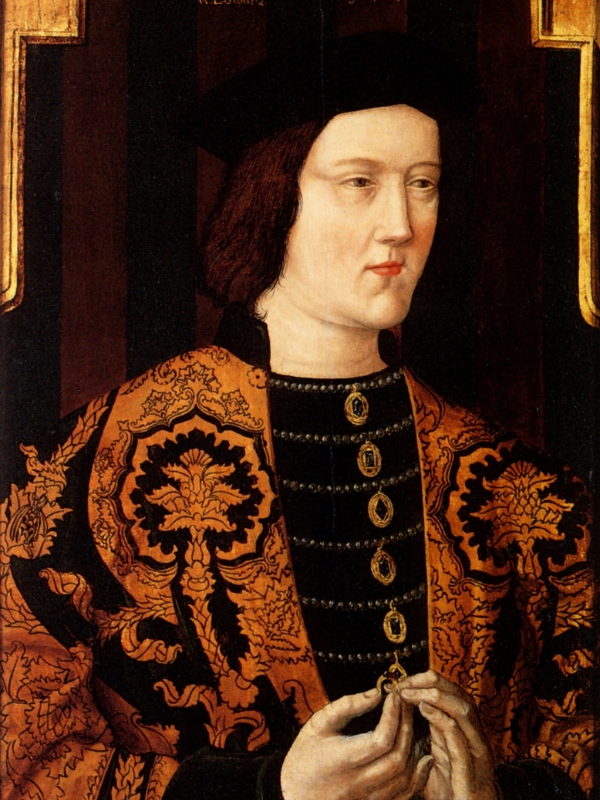
Further Information: King Edward IV

The Reign of King Edward IV

A Blood-Stained Election and Accession (4 March 1461)
Following the devastating Lancastrian defeat and execution of his father at Wakefield, the nineteen-year-old Edward, Duke of York, entered London completely unopposed. Backed by the powerful Richard Neville, 16th Earl of Warwick, the national council elected him to take the crown from the incapacitated King Henry VI, establishing the rule of the House of York and splitting the country into two warring dynastic factions.

Victory at Towton (29 March 1461)
The new monarch finalized his path to the throne by leading his army into Yorkshire to confront the main Lancastrian host. In a blinding Palm Sunday snowstorm, he achieved a total tactical victory at the Battle of Towton, causing a catastrophic rout that degenerated into the bloodiest battle on English soil. The slaughter broke the military power of the Lancastrians and forced Henry VI alongside Queen Margaret to flee across the border to Scotland.

Coronation at Westminster Abbey (28 June 1461)
The monarch returned to the capital to solidify his legal authority. Thomas Bourchier, Archbishop of Canterbury, anointed him King of England inside Westminster Abbey on 28 June 1461. This sacral event locked in his sovereign legitimacy after years of civil war, launching a decade-long struggle to pacify the northern shires and eradicate remaining Lancastrian guerrilla networks.

The Warwick Rebellion (October 1470)
The monarch’s hold on power fractured permanently when his closest ally, the Earl of Warwick (the Kingmaker), turned decisively against him due to a secret court marriage scandal involving the Woodville family. Warwick allied with his former enemy, Queen Margaret, to launch a surprise invasion. The coup forced the king to abandon his army and flee across the stormy seas to seek political asylum at the Burgundian court in Flanders, temporarily restoring Henry VI during the Re-adeption.

Return and Restoration (March 1471)
Backed by vital financial loans and ships from his brother-in-law, Charles the Bold, Duke of Burgundy, the monarch landed a small fleet at Ravenspur in Yorkshire in March 1471. Mimicking Henry Bolingbroke’s historical playbook, he initially claimed he had only returned to demand his ancestral Duchy of York. He systematically rebuilt his army as he marched south, successfully capturing London and throwing the bewildered Henry VI back into a secure prison cell.

Annihilation of the Lancastrian Lines (April–May 1471)
The monarch executed a masterclass in tactical command to permanently secure his crown on two rapid fronts. He defeated and killed the Earl of Warwick at the Battle of Barnet during a heavy spring fog on 14 April 1471, moving swiftly to intercept Queen Margaret’s reinforcing army at the Battle of Tewkesbury on 4 May 1471. The total Yorkist victory resulted in the execution of the Lancastrian elite and the death of Henry VI’s sole son on the field, permanently breaking the back of the Lancastrian resistance.

The Invasion of France and the Picquigny Treaty (July 1475)
The monarch launched a massive military expedition to France, landing a powerful army of knights and longbowmen at Calais to reclaim his ancestral birthright. Rather than fighting a bloody war of attrition, King Louis XI of France used astute financial diplomacy to buy the English army off. They signed the Treaty of Picquigny in August 1745, which granted the English king a massive upfront payment and a permanent annual pension of 50,000 crowns, effectively transforming the French crown into a tributary of the Yorkist treasury.

Execution of the Treasonous Brother George (18 February 1478)
Internal dynastic faction wars fractured the royal household as the King’s younger brother, George, Duke of Clarence, launched continuous plots to undermine the court and slander the Queen’s lineage. Tired of his defiance, the monarch had him arrested for high treason and privately executed inside the Bowyer Tower of the Tower of London on 18 February 1478, prompting long-running contemporary legends that Clarence was drowned in a butt of Malmsey wine to avoid a public beheading.

Sickness and Death (9 April 1483)
The monarch’s twenty-two-year rule ended in sudden sickness and physical decline at the age of forty on 9 April 1483. Following a sudden collapse brought on by an excess of heavy feasting, sedentary luxury, and a severe chill caught while fishing on the River Seine, he died at Westminster. His unexpected passing passed his shattered state into a catastrophic minority succession crisis that claimed the lives of his young sons, the Princes in the Tower.

The Royal Household of King Edward IV

Marriage to the Lancastrian Widow (May 1464)
Edward IV triggered a political explosion across the country by secretly marrying Elizabeth Woodville, a beautiful but impoverished Lancastrian widow with no grand dynastic connections. He kept the marriage hidden from his chief advisor, Richard Neville, 16th Earl of Warwick, who was away in Paris negotiating a prestigious French royal marriage for the king.

This clandestine match turned the Kingmaker into a bitter enemy once the secret leaked, completely freezing out the old Yorkist aristocracy and creating a volatile palace faction by systematically pairing the Queen’s numerous siblings with the wealthiest noble heirs across England.


Lineage and Marriages of the Royal Successors
The marriage produced ten children.

King Edward V (King of England and Prince of Wales)
Born on 2 November 1470, he briefly inherited the crown as a twelve-year-old child in 1483. He was never officially crowned, being rapidly deposed by his uncle and locked inside the Tower of London, where he disappeared from history.

Richard of Shrewsbury, 1st Duke of York (Duke of York and Duke of Norfolk)
Born on 17 August 1473, he married the wealthy child heiress Anne de Mowbray, 8th Countess of Norfolk, in a high-status infant wedding. He disappeared alongside his older brother inside the Tower of London.

Elizabeth of York (Queen Consort of England)
Born on 11 February 1466, she married King Henry VII, permanently unifying the rival houses of York and Lancaster to launch the Tudor dynasty.

Mary of York
Born on 11 August 1467, she was betrothed to John, King of Denmark, but died unmarried at fourteen years old before the alliance could be finalized.

Cecily of York (Viscountess Welles)
Born on 20 March 1469, she married first John Welles, 1st Viscount Welles, to cement ties with a prominent Lancastrian loyalist, and second Thomas Kyme.Margaret of York
Born on 10 April 1472, she died in infancy and was buried in Westminster Abbey.

George Plantagenet, 1st Duke of Bedford
Born in March 1477, he was created Duke of Bedford but died in infancy during an outbreak of plague.

Anne of York (Countess of Surrey)
Born on 2 November 1475, she married Thomas Howard, later 3rd Duke of Norfolk, binding her lineage to the primary military household of the north.

Catherine of York (Countess of Devon)
Born on 14 August 1479, she married William Courtenay, 1st Earl of Devon, securing regional stability across the southwestern shires.

Bridget of York (Nun of Dartford)
Born on 10 November 1480, she was dedicated to the church at a young age, entering the Dominican Dartford Priory in Kent to live a quiet life of perpetual cloistered contemplation.

The Wars of the Roses

Carnage at Towton: 29 March 1461
The battle at Towton stood as the bloodiest engagement ever fought on British soil, matching over 50,000 soldiers against one another in a blinding gale. Edward leveraged the wind to his absolute advantage, ordering his archers to advance, fire a high-velocity rain of arrows into the blinded Lancastrian lines, and step back, forcing the enemy to abandon their defensive ridge to charge into a brutal, hours-long hand-to-hand melee that concluded with the slaughter of over 28,000 men.

Tewkesbury: 4 May 1471
The war concluded in a savage, pre-planned execution model at Tewkesbury. Edward trapped the remaining Lancastrian forces against the River Severn, launching a relentless assault that completely smashed their shield-wall; the melee resulted in the death of the Lancastrian heir, Edward of Westminster, while Edward ordered the immediate decapitation of the surviving rebel leaders inside the town square the next day.

Edward V

King of England April–June 1483
Lord of Ireland 1483
Prince of Wales 1471–1483

Bio:
The tragic and exceptionally brief reign of the boy king Edward V lasted a mere eighty-six days, his entire sovereign footprint completely paralyzed and ultimately destroyed by a swift, ruthless coup d'état engineered from within his own family. Born inside the sanctuary of Westminster Abbey while his father was temporarily exiled in Flanders, Edward spent his youth being meticulously educated at Ludlow Castle under the direct guardianship of his maternal uncle, Anthony Woodville, Earl Rivers.

Upon the sudden death of Edward IV in April 1483, the twelve-year-old prince began his royal progress toward London for his scheduled coronation, but his entou-rage was abruptly ambushed at Stony Stratford by his paternal uncle, Richard, Duke of Gloucester. Gloucester arrested the Woodville loyalists and assumed direct executive control as Protector of the Realm, escorting the young king to the Tower of London under the pretense of preparing for his upcoming ceremonies.

The coronation was repeatedly postponed until June 1483, when a calculated sermon was preached at Paul's Cross declaring that Edward IV's secret marriage to Elizabeth Woodville was bigamous and legally invalid due to a pre-contract with another noblewoman.

Parliament rapidly passed the Titulus Regius decree, declaring Edward V illegitimate and transferring the crown to his uncle, subsequent to which the young prince and his younger brother, Richard of Shrewsbury, vanished completely from the inner chambers of the fortress, generating a multi-generational historical mystery regarding their ultimate assassination in captivity.
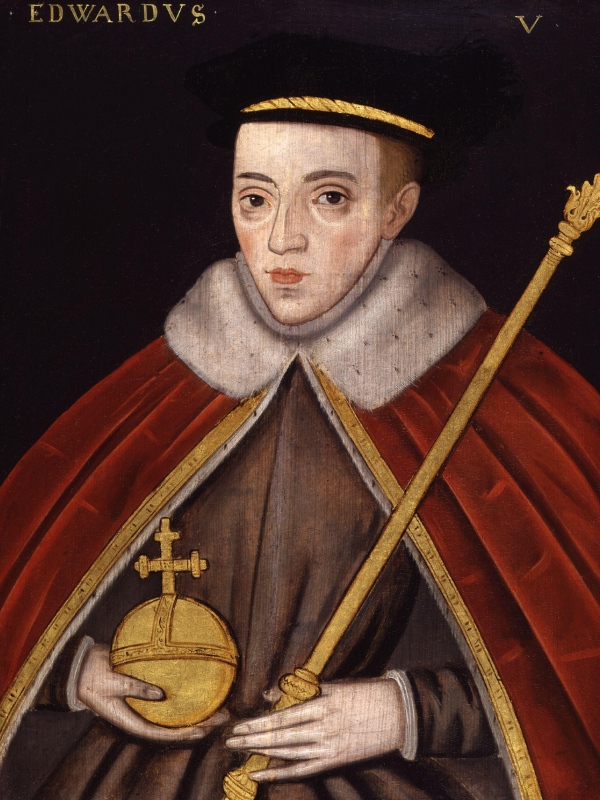
Further Information: King Edward V

The Reign of King Edward V

Accession of the Boy King (9 April 1483)
Following the unexpected death of his father, King Edward IV, the twelve-year-old Edward V inherited the crown. He was residing at Ludlow Castle under the care of his maternal uncle, Anthony Woodville, 2nd Earl Rivers, when the news arrived. This sudden vacancy triggered an immediate, high-velocity scramble for control of his minority government between the Queen’s Woodville kinsmen and the traditional nobility.

Interception at Stony Stratford (30 April 1483)
While traveling to London for his scheduled coronation, the boy-king’s royal escort was intercepted at Stony Stratford by his paternal uncle, Richard, Duke of Gloucester. Gloucester arrested Earl Rivers and the boy’s half-brother, Sir Richard Grey, under swift charges of an alleged Woodville conspiracy against his life, forcefully taking absolute physical custody of the terrified young king and scattering his household.

Entry into London (4 May 1483)
The Duke of Gloucester rode into the capital alongside the boy-king on 4 May 1483, parading Edward through the streets to project an immediate image of loyalty and public stability. The national council officially recognized Gloucester as the Lord Protector of England, while Edward was moved to the royal apartments inside the Tower of London to await his coronation under the Protector’s supervision.

Execution of Lord Hastings (13 June 1483)
The Lord Protector launched a rapid palace purge during a routine council meeting at the Tower of London on 13 June 1483. He accused Edward IV’s veteran minister, William Hastings, 1st Baron Hastings—who fiercely opposed passing over the young king—of sorcery, conspiracy, and high treason. Guards dragged Hastings into the courtyard to be instantly beheaded on a timber construction block, terrifying the remaining councilors into absolute submission.

Postponement of the Coronation (June 1483)
Using the continuous political instability at court and the alleged threat of regional conspiracies as a pretext, the Lord Protector ordered the official postponement of the boy-king’s coronation. The executive machinery of Edward’s chancellery was completely frozen as the date was pushed from May to late June, and eventually canceled entirely, systematically delaying the sacral anointment that would have ended the protectorate.

The Proclamation of Bastardy at Paul’s Cross (22 June 1283)
The Lord Protector launched a direct assault on the boy-king’s legal right to the throne. A popular preacher named Ralph Shaa delivered a highly orchestrated sermon at Paul’s Cross on 22 June 1483, announcing to the general public that Edward V and his siblings were illegitimate bastards. The sermon claimed that King Edward IV had signed a secret marriage pre-contract with Lady Eleanor Butler before his union with Elizabeth Woodville, legally invalidating the royal marriage and its offspring.

The Formal Deposition (25 June 1483)
A grand assembly of lords and commoners met at Westminster to formalize the dynastic shift, officially declaring Edward V deposed under the statutory decree Titulus Regius. The assembly threw their allegiance behind the Lord Protector, who ascended the throne as King Richard III on 26 June 1483. This deposition reduced the young prince to an un-anointed prisoner and permanently closed his eighty-six-day nominal reign, setting the stage for his complete disappearance inside the keeps of the Tower.

Richard III

King of England 1483–1485
Lord of Ireland 1483–1485,
Duke of Gloucester 1461–1483

Bio:
King Richard III’s turbulent and short reign marked the definitive, violent end of the Plantagenet dynasty, his brief grip on power completely consumed by the deep shadow of his usurpation and a continuous state of domestic security alerts.

Having cleared his path to the throne by invalidating his brother's lineage and locking his nephews in the Tower, he instantly faced a severe internal crisis in October 1483 when his key ally, Henry Stafford, 2nd Duke of Buckingham, launched a sudden, failed rebellion in coordination with Lancastrian exiles.

To stabilize his fragile position, Richard implemented an energetic legal program, establishing the Court of Requests to allow impoverished citizens to seek judicial remedies directly from the crown and setting up the Council of the North to streamline administrative security across the turbulent Yorkshire shires. However, his domestic popularity completely evaporated following the sudden death of his sole legitimate son and heir at Middleham Castle, a biological catastrophe compounded by widespread rumors regarding his direct involvement in the murder of the Princes in the Tower.

When the last Lancastrian claimant, Henry Tudor, landed a mercenary fleet in Wales in August 1485, Richard marched his royal forces south to meet the rebels at the Battle of Bosworth Field. Demonstrating immense personal bravery, Richard launched a desperate cavalry charge directly toward Henry's personal banner, killing the enemy standard-bearer before being betrayed by the desertion of the Stanley family and surrounded by hostile infantry, a brutal battlefield death that finalized the total destruction of the Yorkist ruling class and paved the way for the rise of the House of Tudor.
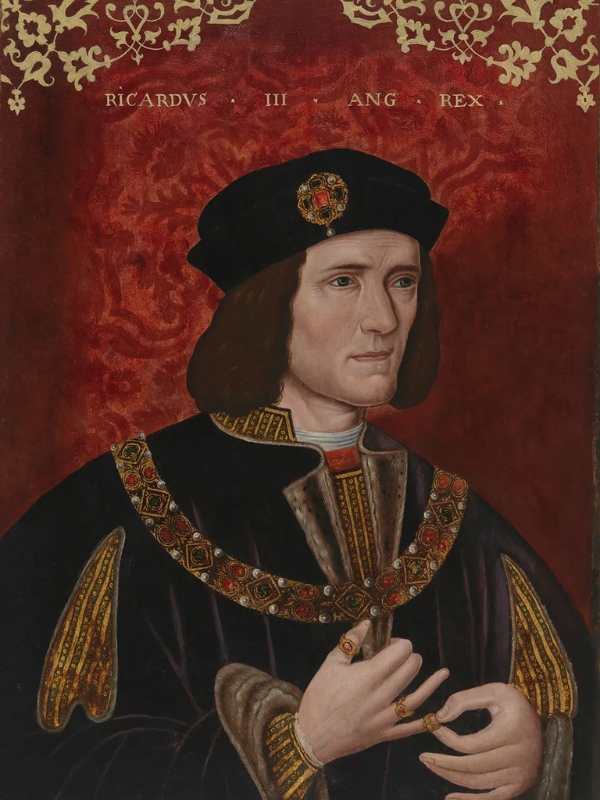
Further Information: King Richard III
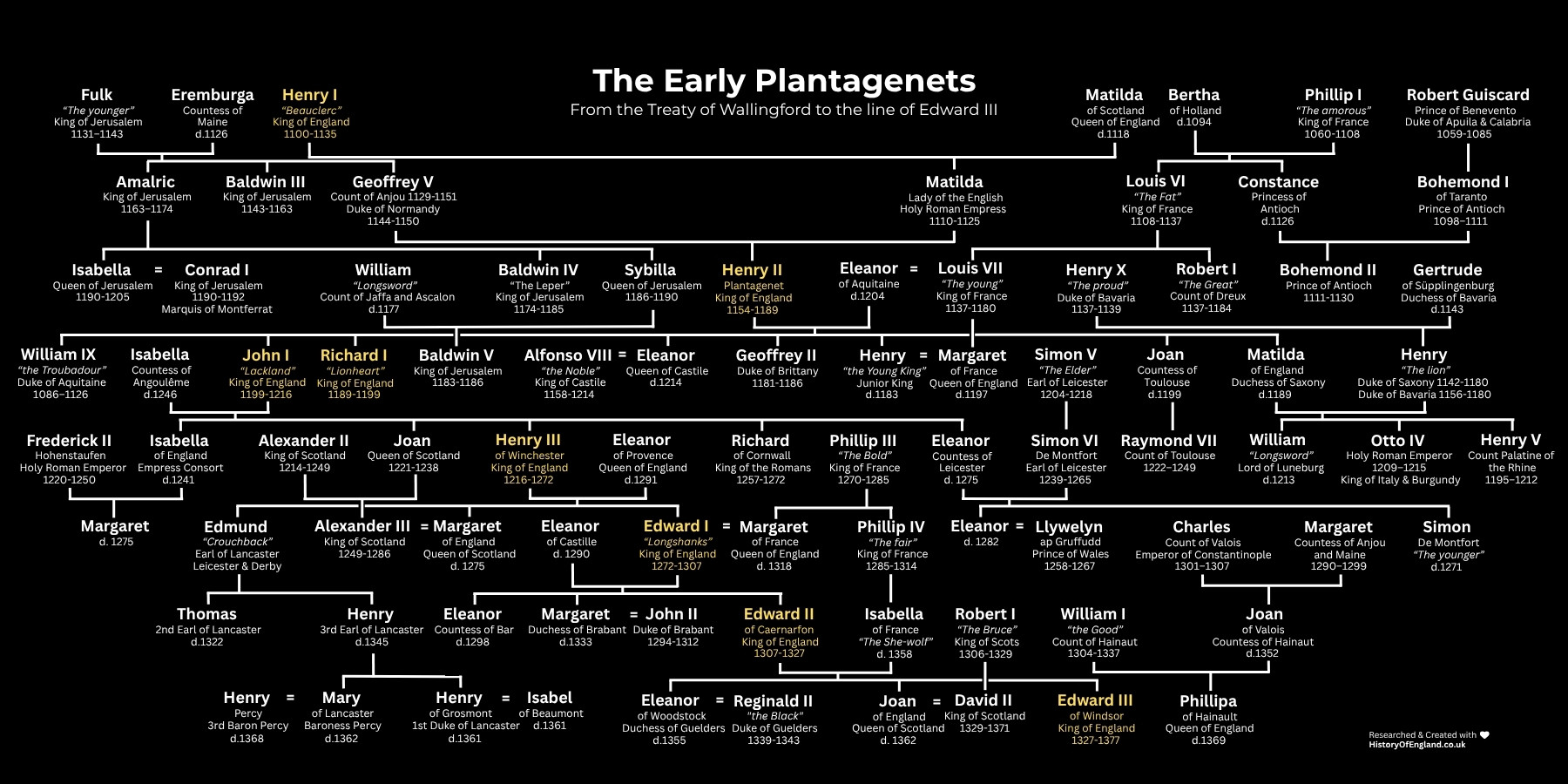
The Reign of King Richard III

Coup and Accession (26 June 1483)
Following his high-speed deposition of his twelve-year-old nephew, King Edward V, Richard III officially accepted a petition from the nobility to take the crown. He began his independent reign as the final monarch of the House of York, bringing a swift and controversial end to the Woodville faction’s control over the palace and setting off an immediate wave of political polarization across the southern shires.

Westminster Coronation (6 July 1483)
Thomas Bourchier, Archbishop of Canterbury, anointed the new monarch King of England inside Westminster Abbey during an exceptionally grand, heavily attended ceremony on 6 July 1483. To project an immediate image of unified Yorkist legitimacy and mask the illegality of his coup, the king insisted that nearly the entire peerage of England attend the procession, walking barefoot to the high altar to secure his sacred anointing before the high altar.

The Suppression of Buckingham’s Rebellion (October 1483)
The monarch’s domestic security faced an immediate challenge when his closest ally, Henry Stafford, 2nd Duke of Buckingham, launched a sudden armed insurrection. Buckingham allied with the exiled Henry Tudor to launch a coordinated coup. The king mobilized his professional forces with extreme speed, capturing the Duke in a severe autumn rainstorm that flooded the river crossings. He ordered Buckingham’s immediate public decapitation in the Salisbury market square without a formal trial, temporarily suppressing the rebellion.

Grand Progress and Northern Favoritism (1483–1484)
The monarch spent the central months of his reign executing a sweeping royal progress through the midlands and the north to cultivate popular support. He established a powerful regional court at York, systematically packed his southern administrative offices with loyal northern gentry, and heavily funded local religious guilds. This intervention deeply alienated the traditional southern nobility, who felt colonized by the king’s northern favorites and grew increasingly sympathetic to a Lancastrian restoration.

Succession Crisis (April 1484)
The long-term stability of the Yorkist household faced a devastating shock when the king’s sole legitimate son and heir, Edward of Middleham, died suddenly of an unexpected illness at Middleham Castle. The tragedy left the Yorkist succession pipeline completely empty, fracturing public confidence in the durability of the regime and heavily encouraging the exiled Henry Tudor to plan an immediate amphibious invasion from his base in Brittany.

Collapse at Bosworth Field (22 August 1485)
Faced with Henry Tudor’s landing in Wales, the monarch mobilized the full military levies of the realm. He marched his army to Leicestershire, confronting the invading rebel host at the Battle of Bosworth Field on 22 August 1485. Despite hours of superior tactical combat where Richard personally charged to kill Tudor, the pre-planned betrayal of the Stanley family and the Earl of Northumberland broke his lines. The resulting rout cost Richard his life on the field, bringing a definitive end to the three-century Plantagenet dynasty.

A simplified family tree of the early House of Plantagenet, stretching from the treaty of Wallingford to Edward III
The Later Plantagenets, mapping out the lineage of Edward III and the rival cadet branches of York and Lancaster

House Of Plantagenet FAQs

What was the Treaty of Wallingford?
The Treaty of Wallingford, signed in 1153 AD, was the decisive diplomatic settlement that brought a definitive end to the chaotic nineteen-year civil war known as the Anarchy.
 
Engineered by English bishops and senior barons, the legal agreement resolved the bitter succession struggle between King Stephen of Blois and the Empress Matilda. Under its terms, Stephen was permitted to keep the English crown for the remainder of his life, but he was forced to permanently disinherit his own children and name Matilda’s brilliant young son, Henry Plantagenet, as his sole rightful heir, securing a smooth transition of power that established the Plantagenet dynasty the following year.
Why was Thomas Becket assassinated?
Thomas Becket was assassinated inside Canterbury Cathedral on 29 December 1170 AD due to a bitter, multi-year constitutional conflict with Henry II over the legal privileges of the Catholic Church.
 
The flashpoint arose when Henry issued the Constitutions of Clarendon, demanding that clerics who committed serious crimes be tried in secular royal courts rather than enjoying total immunity inside lenient church tribunals. Becket fiercely resisted this expansion of crown authority, fleeing into continental exile and later excommunicating royal loyalists, a relentless defiance that eventually drove the furious king to utter a desperate outburst that was interpreted by four knights as a direct command to murder the Archbishop.
What was the Great Revolt of 1173–1174?

The Great Revolt was a massive, highly coordinated civil war that posed the most dangerous threat to Henry II’s sovereignty, launched by his own wife, Eleanor of Aquitaine, and his three eldest sons. Driven by resentment over the king’s refusal to grant his heirs actual executive authority over their inherited lands, the royal princes allied with King Louis VII of France and a powerful coalition of rebellious English and Norman barons to stage a multi-front rebellion.

Henry II crushed the global conspiracy through high-velocity troop movements, capturing the Queen in France and systematically dismantling the rebel strongholds in England to force his family into total submission.

How did Richard the Lionheart fund the Third Crusade?

Richard the Lionheart funded the Third Crusade without bankrupting the domestic treasury by ruthlessly converting the entire assets of the English crown into immediate liquid cash. Upon his accession in 1189 AD, he put nearly every royal office, castle stronghold, and crown estate up for public auction, famously declaring that he would sell London itself if he could find a wealthy enough buyer.

He supplemented these sweeping sales by collecting the heavy Saladin Tithe tax, demanding massive cash payments from senior nobles to renew their charters, and allowing the King of Scots to buy his way out of feudal subjugation, accumulating an immense war chest entirely outside traditional tax revenues.

What was the Assize of Clarendon in 1166?

The Assize of Clarendon was a revolutionary piece of legislation issued by King Henry II that completely transformed the English legal system and laid the permanent foundations of common law. The statute systematically dismantled the arbitrary power of local baronial courts by creating a uniform, nationwide system of royal justice directed by traveling judges.

Crucially, the assize introduced the grandfather of the modern jury trial, requiring a panel of twelve local men in every community to declare under oath whether any individuals were suspected of serious crimes, a procedural shift that established the primacy of the crown over the legal affairs of the realm.

What was the primary purpose of Magna Carta?

The primary purpose of Magna Carta in June 1215 AD was to serve as a binding peace treaty between King John and a powerful faction of rebel barons who had captured London. The document was designed to protect the aristocracy from the king’s arbitrary financial extortions, establishing concrete legal restrictions on royal taxation, wardships, and feudal fines.

Clause 39 of the charter introduced the permanent constitutional principle that no free man could be imprisoned or stripped of his property without the lawful judgment of his peers or the established law of the land, subjecting the personal will of the monarch to the rule of law.

Why did the Pope annul Magna Carta?

Pope Innocent III annulled Magna Carta in August 1215 AD because he viewed the document as an illegal, deeply insulting assault on the divinely ordained authority of the monarchy. Having previously forced King John to surrender England as a papal fief in exchange for political support, the Pope was the official feudal overlord of the realm.

Innocent declared the charter entirely null and void because it had been extracted from a reigning king under the direct duress of armed rebellion, an intervention that instantly invalidated the treaty and plunged England straight back into the First Barons’ War.

Why was the Battle of Bouvines so significant?

The Battle of Bouvines (July 1214 AD) was a monumental military confrontation in Flanders that shattered the territorial power base of the Plantagenet crown in northern France.

King Philip Augustus of France scored a crushing victory over a massive allied coalition that included the Holy Roman Emperor and the mercenary forces of King John. This defeat caused the immediate and total collapse of the Angevin Empire, forcing John to permanently surrender Normandy, Anjou, and Maine to the French crown, a loss of prestige that triggered widespread baronial rebellions back in England.

What were the Provisions of Oxford?

The Provisions of Oxford, forced upon King Henry III by a baronial coalition led by Simon de Montfort in 1258 AD, represented England’s first written constitution.

The document stripped the monarch of his absolute executive authority, placing the daily governance of the country under a supreme council of fifteen barons who held the power to appoint royal officials, audit the treasury, and supervise local castles. This radical reform effectively converted the realm into a managed oligarchy, requiring Parliament to meet three times a year to review the state of the realm and ensuring that the king could make no executive decisions without baronial consent.

What was the Great Cause?

The Great Cause was a complex, high-stakes succession crisis that erupted in 11290 AD following the sudden death of Margaret, Maid of Norway, the infant queen and sole surviving heir to the Scottish throne. Facing the terrifying prospect of a bloody civil war between thirteen competing Scottish noble claimants, the guardians of Scotland requested King Edward I of England to act as an impartial arbitrator.

Edward manipulated the process by forcing all claimants to recognize him as the absolute Lord Paramount of Scotland, eventually selecting John Balliol as king before utilizing his new feudal authority to aggressively undermine Scottish independence and trigger the multi-generational Wars of Scottish Independence.

How many Plantagenet monarchs ruled, and for how long?

There were fourteen Plantagenet monarchs who collectively covered an extensive span of two hundred and forty-five years of medieval English history.

This total line includes the eight initial Angevin and Plantagenet kings from Henry II in 1154 down to the deposition of Richard II in 1399, followed by the three monarchs of the House of Lancaster and the three monarchs of the House of York, concluding with the death of Richard III at the Battle of Bosworth Field in August 1485. 

How significant was the Battle of Bannockburn?

The Battle of Bannockburn, fought in June 1314 AD, was a monumental turning point that shattered the myth of English military supremacy and secured the practical independence of Scotland under King Robert the Bruce. King Edward II led a massive, heavily armed army of knights to relieve the siege of Stirling Castle, but his forces were outmaneuvered by the disciplined Scottish infantry schiltrons.

The resulting English rout slaughtered the core of the Plantagenet chivalry, permanently ending Edward I’s dream of total conquest and exposing the northern shires of England to decades of devastating, unchecked Scottish border raids.

Who were the Lords Appellant?

The Lords Appellant were a powerful, armed coalition of five senior English nobles—including the Duke of Gloucester and Henry Bolingbroke—who launched a political coup in 1387 AD to restrict the erratic, favorite-driven governance of the young Richard II. Accusing the king’s insular court circle of treason, they weaponized the legislative assembly of 1388 AD, historically recorded as the Merciless Parliament, to execute a bloody purge of the administration.

This judicial sweep resulted in the public execution or exile of Richard’s closest friends and advisors, permanently humiliating the monarch and locking the country into a cycle of domestic vengeance.

What was the Treaty of Bretigny?

The Treaty of Bretigny, signed in 1360 AD, was the ultimate diplomatic triumph of King Edward III’s reign, bringing a temporary end to the first major phase of the Hundred Years’ War. Following the capture of the French king at the Battle of Poitiers, the French court agreed to a sweeping territorial settlement to secure his release.

Under the terms, Edward III renounced his direct claim to the French crown in exchange for full, undisputed sovereign possession of Aquitaine, Gascony, Calais, and Ponthieu, liberating these vast lands from French feudal supremacy and making the English king the independent ruler of a third of France.