
The Union of Crowns:
The House of Stuart
The House of Stuart and the Shattering of Absolute Sovereignty
Additional Information: The Stuart Era
The seventeenth century witnessed a profound and volatile restructuring of the English political landscape, driven by the House of Stuart, a headstrong Scottish royal lineage that attempted to reconcile its belief in the divine right of kings with an increasingly assertive and wealthy domestic parliament. Inheriting the unified crowns of England, Scotland, and Ireland in 1603, this dynastic line consistently clashed with the gentry and merchant classes over the boundaries of royal taxation, religious conformity, and legal arbitrary power.
These mounting constitutional and religious fractures eventually pushed the country into an unprecedented era of civil war, resulting in the public execution of a reigning monarch and a temporary, revolutionary collapse of the institution of the throne itself. By the time the family’s direct line was exhausted, the multi-generational struggle had permanently stripped the crown of its absolute executive supremacy, locking in the statutory framework for a modern constitutional monarchy dependent on parliamentary consent.
Page Contents:
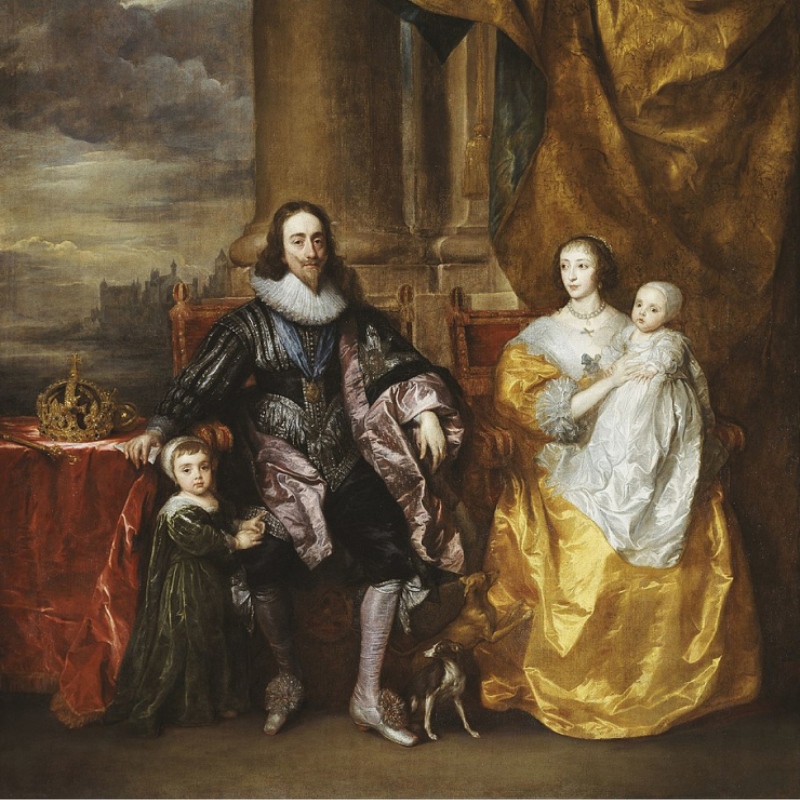
Origins of the House of Stuart: Lineage of the High Stewards
The lineage of the Stuart dynasty began simply through traditional patrilineal migration and the steady consolidation of crown offices. This family line tracks back to eleventh-century Brittany, originating with the hereditary seneschals of Dol-de-Bretagne under the counts of Dol, before Alan FitzFlaad established family holdings in Shropshire following the Norman conquest of England.
The family entered Scottish history during the twelfth century when his younger son, Walter FitzAlan, migrated north to serve as the first hereditary Lord High Steward under King David I. Settling in the northern kingdom, this industrious family took their permanent surname directly from this premier administrative office, gradually converting a localized bureaucratic role into a vast network of noble landholdings across Renfrewshire and the western lowlands. The family entered the direct line of royal politics in 1315 when Walter Stewart married Princess Marjorie Bruce, the daughter of King Robert the Bruce. When the direct male line of the Bruce dynasty became extinct in 1371, Marjorie's son ascended the throne as Robert II, firmly locking the House of Stewart into the sovereign lineage of Scotland.
The introduction of this Scottish dynasty to Great Britain was set in motion in 1503 through a peace treaty engineered by Henry VII, who arranged the marriage of his eldest daughter, Margaret Tudor, to King James IV of Scotland. This single marital alliance was designed to neutralize border warfare, but it instead created an alternative claim to the English throne that became a central focus for the Tudor court.
Following the death of James IV at the Battle of Flodden, the lineage descended through the minority of James V to his infant daughter, Mary, Queen of Scots, whose Catholic adherence and direct Tudor bloodline made her a permanent security concern for her cousin, Elizabeth I. To secure the Scottish succession amidst an intense religious civil war, Mary married her cousin Henry Stuart, Lord Darnley—a match that explicitly combined the two primary Stuart claims to the English throne—producing a single male heir, James VI, on 19 June 1566.
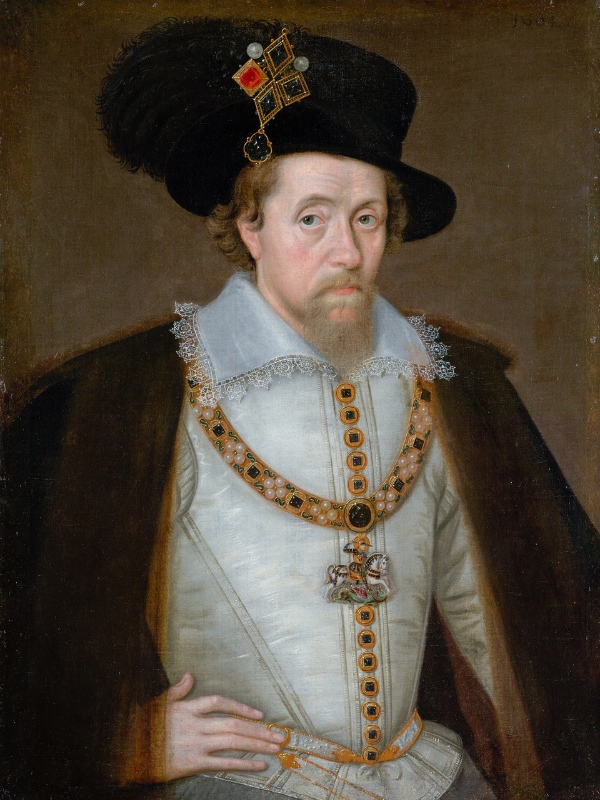
James I
King of England 1603–1625
King of Scotland 1567–1625
King of Ireland 1603–1625
Bio:
The peaceful reign of King James I inaugurated the unified Stuart era by successfully bridging the political and administrative divides of England and Scotland under a single crown. Acsending the English throne in 1603 AD, his governance focused on the intellectual consolidation of his dual realms, utilizing the 1604 AD Hampton Court Conference to address religious fractures and commissioning the monumental King James Bible translation to establish a uniform vernacular text for the national church.
His administration faced an immediate existential threat in 1405 AD from the Gunpowder Plot, a radical Catholic assassination conspiracy that he firmly suppressed to expand his popularity among the domestic gentry.
A deeply literate but dogmatic ruler, James consistently clashed with Parliament over royal spending, customs impositions, and his belief in the absolute divine right of kings, which frequently paralyzed the collection of national subsidies.
On the global stage, he pursued a highly cautious policy of peace with Spain and authorized the Plantation of Ulster in Ireland, systematically settling thousands of Scottish and English Protestants across the northern Irish counties to create a loyal administrative enclave, establishing a stable, peace-bound throne at his death.
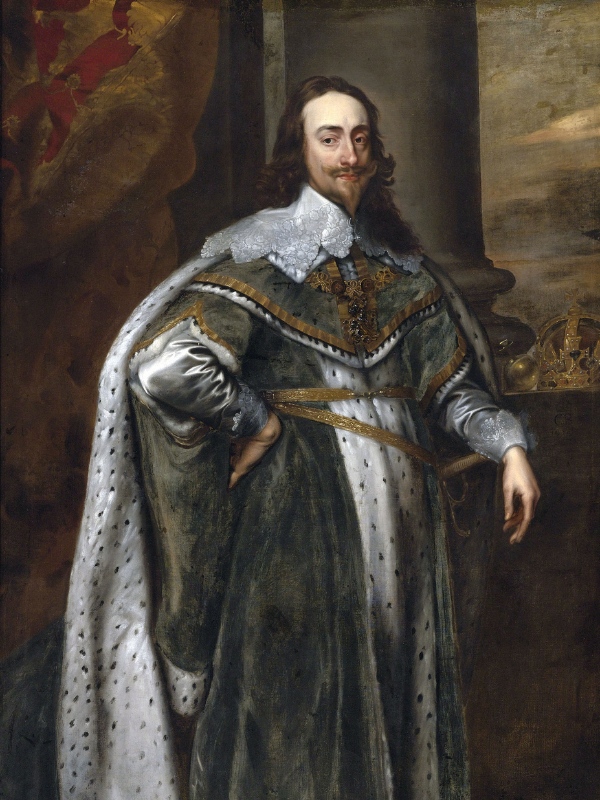
Charles I
King of England 1625–1649
King of Scotland 1625–1649
King of Ireland 1625–1649
Bio:
The turbulent and highly controversial reign of King Charles I witnessed the total collapse of internal constitutional authority and a violent descent into civil war that resulted in his own public execution and the temporary destruction of the institution of the throne. Inheriting his father’s tense relationship with Parliament, Charles immediately alienated the political establishment by elevating the Duke of Buckingham to supreme power and attempting to extract forced loans to fund expensive, disastrous continental naval campaigns. When Parliament responded with the historic Petition of Right in 1628 AD, the furious king dissolved the assembly completely, initiating an unprecedented eleven-year period of personal rule historically recorded as the Eleven Years' Tyranny.
To fund his executive government without parliamentary subsidies, he implemented aggressive financial extractions, most notably expanding the collection of Ship Money from coastal ports to the inland shires, deep-seated grievances that exploded in 1637 AD when his attempt to enforce an English prayer book on Scotland triggered the Bishops' Wars. Facing total financial bankruptcy, he was forced to recall Parliament in 1640 AD, but his immediate refusal to surrender command of the military triggered the outbreak of the English Civil War in August 1642 AD.
Following the total annihilation of his royalist armies by the disciplined New Model Army at the Battle of Naseby in 1645 AD, Charles was captured, subjected to a revolutionary high-court trial for treason against his own subjects, and publicly beheaded on a scaffold outside Whitehall, a seismic constitutional execution that brought a definitive end to the first phase of Stuart rule.
The English Interregnum: The Commonwealth and Protectorate Era
The execution of Charles I in 1649 swept away the monarchy, replacing the crown with a kingless republic known as the Commonwealth. Under this early regime, the Rump Parliament abolished the House of Lords and placed executive power under a civil Council of State. When major legitimist rebellions erupted across Scotland and Ireland, the New Model Army launched a series of high-velocity pacification campaigns, completely crushing the forces of Charles II at the Battle of Worcester to establish a direct military occupation over the entire island.
This civilian republic collapsed on 20 April 1653 when Oliver Cromwell marched musketeers into the chamber to violently dissolve the corrupt assembly by force. He replaced the civil council with a centralized military dictatorship under the Instrument of Government, England's first written constitution. This shift established the Protectorate regime, uncoupling executive power from traditional parliamentary representation to place the entire nation’s treasury and administrative networks under direct army control.
The death of Oliver Cromwell in September 1658 triggered a rapid collapse, as the protectorate lacked the institutional legitimacy to survive its founder's absence. The state polarized between radical army officers and conservative members of Parliament, paralyzing public credit and destroying internal security. Realizing the military dictatorship was entirely untenable, General George Monck marched his forces south from Scotland to London in early 1660, recalled the Long Parliament, and negotiated a secret cross-Channel treaty to restore the Stuart line to the throne.
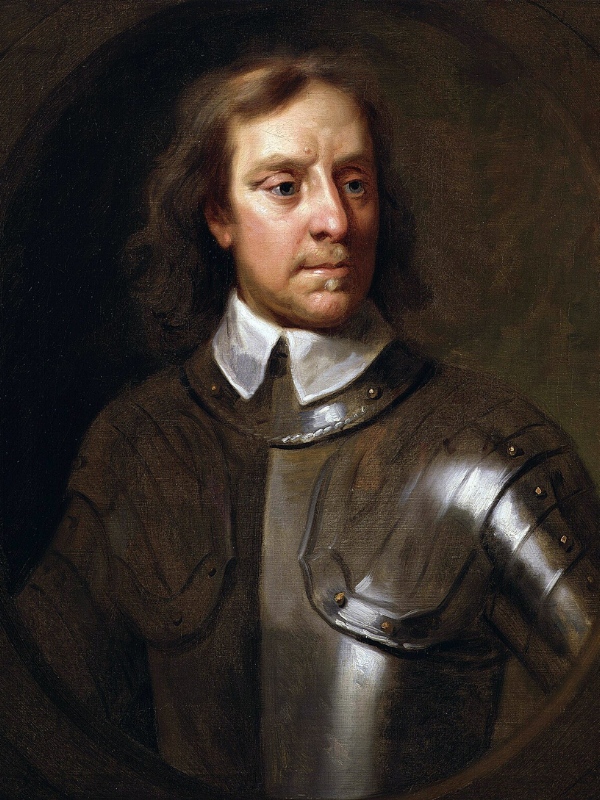
Oliver Cromwell
Lord Protector of the Commonwealth of England, Scotland, and Ireland 1653–1658
Bio:
Lord Protector Oliver Cromwell governed the British Isles through an unprecedented, highly effective military dictatorship, transforming a fragile republican experiment into a centralized, authoritarian protectorate that wielded absolute executive power.
Emerging out of the gentry class to become the premier cavalry general of the New Model Army, his tactical brilliance was spectacularly demonstrated during the total annihilation of royalist forces at Dunbar and Worcester. Upon seizing direct executive control through the Instrument of Government in 1653 AD—the first written constitution in English history—he focused his immense energies on stabilizing the fractured country, enforcing a rigid Puritan social code that criminalized traditional cultural pastimes and siphoned massive tax revenues to maintain a sprawling standing army. When local royalist conspiracies threatened his regime, he implemented the Rule of the Major-Generals, partitioning the country into eleven military districts governed directly by loyal army officers to enforce security.
On the global stage, his aggressive foreign policy deployed the rebuilt navy to crush Dutch commercial networks, capture Jamaica from Spain, and elevate England’s international prestige to heights unseen since the Tudor era. Although Parliament offered him the formal crown under the 1657 AD Humble Petition and Advice, he ultimately rejected the title of king to preserve his republican principles, opting instead for a magnificent, quasi-royal investiture that allowed him to name his eldest son as his legal successor before his sudden death from malaria.
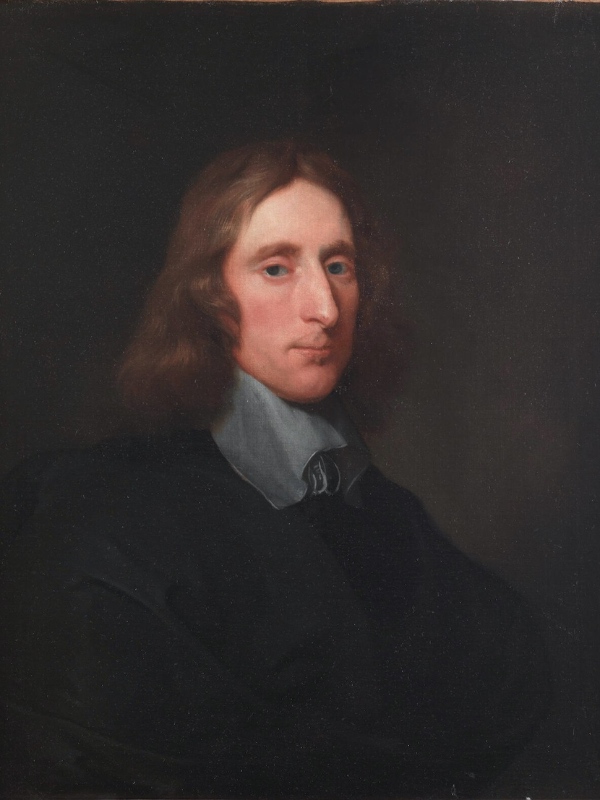
Richard Cromwell
Lord Protector of the Commonwealth of England, Scotland, and Ireland 1658–1659
Bio:
The brief and ineffective regency of Lord Protector Richard Cromwell lasted a mere eight months, his entire executive footprint completely paralyzed and ultimately destroyed by a swift counter-offensive engineered by the high command of the New Model Army.
Lacking both the military prestige and the tactical drive of his father, Richard was entirely unsuited to manage the complex, fiercely competitive factions that controlled the post-civil-war landscape. His administration was instantly confronted by an acute financial crisis, inheriting a bankrupt national treasury that owed millions in back-pay to the standing army, a fiscal bottleneck that forced him to recall Parliament in an abortive attempt to pass taxation subsidies. This move deeply alienated the senior army grandees, who viewed a civilian parliament as an existential threat to their military independence.
In April 1659 AD, the army high command launched a coordinated coup, surrounding the palace with troops and forcing the young Protector to dissolve Parliament at gunpoint. Stripped of all political leverage and facing an open mutiny among his own guards, Richard executed a formal abdication in May 11659 AD, completely dissolving the Protectorate regime and fleeing into a multi-decade continental exile under a false name while the country slid toward the restoration of the monarchy.
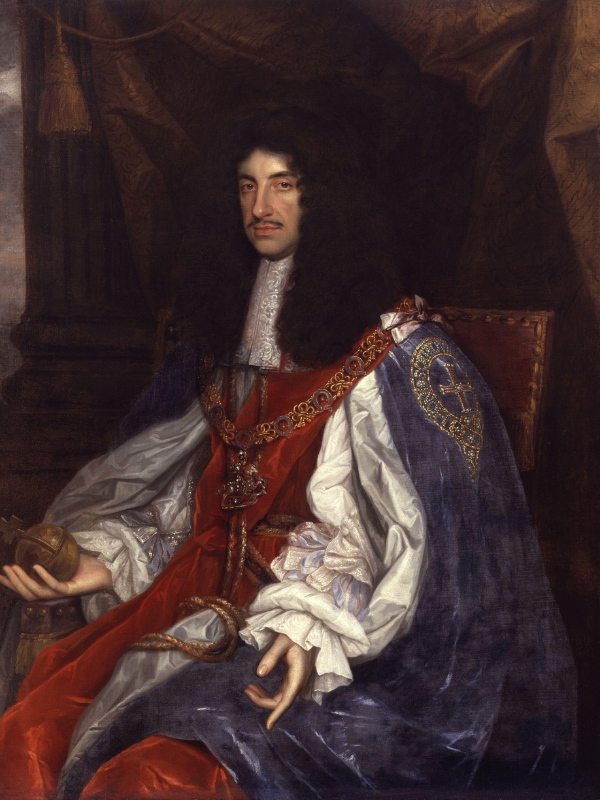
Charles II
King of England 1660–1685
King of Scotland 1649–1685
King of Ireland 1660–1685
Bio:
The spectacular and highly calculated reign of King Charles II successfully restored the ancient architecture of the British monarchy, utilizing a dynamic policy of political compromise and cultural relaxation to heal the wounds of the Interregnum. Returning from a decade of impoverished continental exile in May 1660 AD following the Declaration of Breda, he was welcomed into London by an enthusiastic populace eager to escape the rigid constraints of Puritan rule.
His early years were punctuated by monumental domestic disasters, including the devastating Great Plague of 1665 AD and the Great Fire of London in 1666 AD, which destroyed the medieval urban core of the capital. To fund his expensive court lifestyle and maintain his independence from a suspicious Parliament, he executed the secretive 1670 AD Treaty of Dover, securing a massive annual pension directly from Louis XIV of France in exchange for a promise to support French foreign policy and eventually convert to Catholicism.
His political agility was pushed to its absolute limits during the late 1070s by the Popish Plot, a fabricated anti-Catholic hysteria manipulated by the Whig party to pass the Exclusion Bill and block his openly Catholic brother, James, from the succession. Charles firmly suppressed this constitutional counter-offensive by dissolving Parliament repeatedly, utilizing French gold to rule without the assembly for his final years, and ruthlessly crushing the 1683 AD Rye House Plot to execute the radical republican leadership, leaving a secure, wealthy, and stable throne at his death.
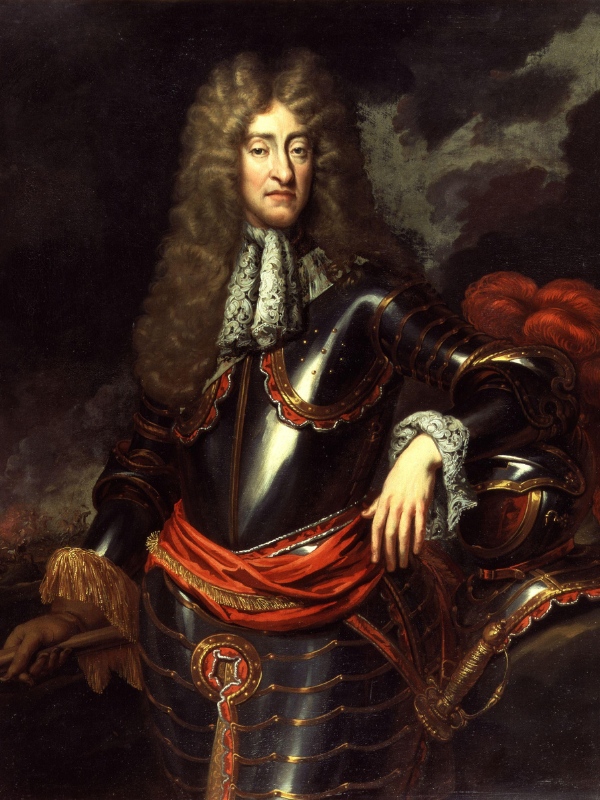
James II
King of England 1685–1688
King of Scotland 1685–1688
King of Ireland 1685–1688
Duke of York 1643–1685
Duke of Albany 1660–1685
Bio:
The short reign of King James II resulted in a total collapse of royal authority, his unyielding determination to promote Roman Catholicism and assert absolute executive power provoking an immediate constitutional counter-offensive from the political establishment.
Ascending to the throne in 1685 AD, he firmly suppressed an early domestic uprising led by his illegitimate nephew, the Duke of Monmouth, executing a brutal campaign of judicial vengeance historically branded as the Bloody Assizes. However, his domestic popularity evaporated when he issued the Declaration of Indulgence to bypass parliamentary statutes and suspend penal laws against Catholics, a move compounded by his arrest of seven Anglican bishops who openly defied his decrees. The definitive flashpoint occurred in June 1688 AD when his Catholic queen gave birth to a healthy son, creating the terrifying prospect of a permanent, multi-generational Catholic dynasty on the English throne. Terrified of this political shift, a powerful coalition of Whig and Tory politicians dispatched a secret invitation to the king's Protestant son-in-law, William of Orange, to launch a naval invasion of the island.
Finding himself completely abandoned by his own military command and facing a total collapse of his administrative networks, James panicked, threw the Great Seal into the River Thames, and fled into a lifelong continental exile in France, an abrupt maritime exit that Parliament legally declared to be a formal abdication of the throne.
The Glorious Revolution
The political catalyst for the revolution arose from a severe domestic crisis over the religious policies of James II, whose aggressive promotion of Roman Catholicism threatened the Anglican establishment.
Resentment reached a breaking point in June 1688 when the birth of a royal son threatened the permanent imposition of a Catholic dynasty, while the king simultaneously used his dispensing power to bypass parliamentary statutes and jail seven bishops who opposed his decrees. In response, a cross-party coalition of seven prominent Whig and Tory aristocrats—the Immortal Seven, including Henry Sidney, the Earl of Danby, and the Earl of Shrewsbury—dispatched a clandestine invitation to the Protestant Dutch stadtholder, William of Orange, to intervene to protect English liberties. When William landed, the domestic political network abandoned James II, whose panicked flight to France created a total vacuum that allowed the elite to re-engineer the boundaries of the crown without a civil war.
This collapse enabled the political leadership to assert direct legislative control, summoning a special Convention Parliament in February 1689 to determine the future governance of the realm. Bypassing ancient hereditary customs, the assembly declared that the king’s flight constituted a formal abdication, subsequently offering the vacant throne to William and his Stuart wife, Mary, as equal co-monarchs. Crucially, this historic transfer of power was made strictly conditional on their explicit acceptance of the Declaration of Right, a landmark constitutional manifesto presented directly to the incoming rulers before their coronation and later codified as the Bill of Rights 1689.
By establishing that the sovereign could never suspend laws, levy taxes, or maintain a standing army during peacetime without the direct statutory consent of the legislature, these strict conditions permanently stripped the crown of its absolute prerogatives, locking in a permanent constitutional settlement that subjected the authority of the throne to the supreme will of Parliament.
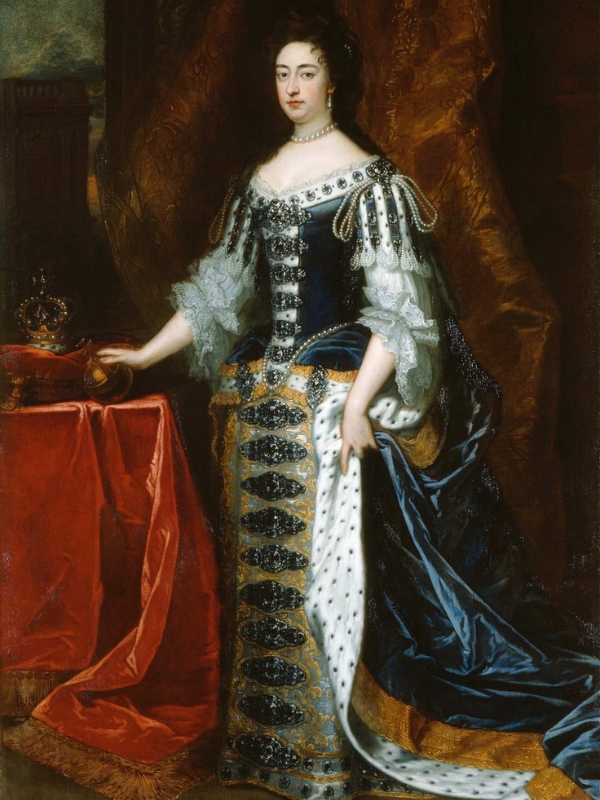
Mary II
Queen of England 1689–1694
Queen of Scotland 1689–1694
Queen of Ireland 1689–1694
Bio:
Queen Mary II governed England through an unprecedented joint sovereignty with her Dutch husband, William III, her personal popularity and direct Stuart bloodline providing the critical institutional legitimacy required to stabilize the post-revolutionary state.
Ascending to the throne in February 1689 AD following the flight of her father, she insisted that she be crowned as a full, equal co-monarch rather than a mere queen consort, though she willingly deferred the active executive and military administration of the country to William whenever he was present. Her personal governance became vital when William left the island to command troops against Jacobite rebels in Ireland, during which times Mary managed the Privy Council with immense administrative skill and coolness, successfully uncovering domestic conspiracies and fortifying the southern coastlines against French maritime threats.
Highly pious and deeply committed to the Anglican church, she dedicated her personal energy to moral reforms and the construction of the monumental Greenwich Hospital for wounded seamen. Her brief reign was cut short when she contracted smallpox at the age of thirty-two, a sudden biological catastrophe that deeply shocked the nation and left her husband to govern as a solitary monarch amidst ongoing dynastic vulnerabilities.
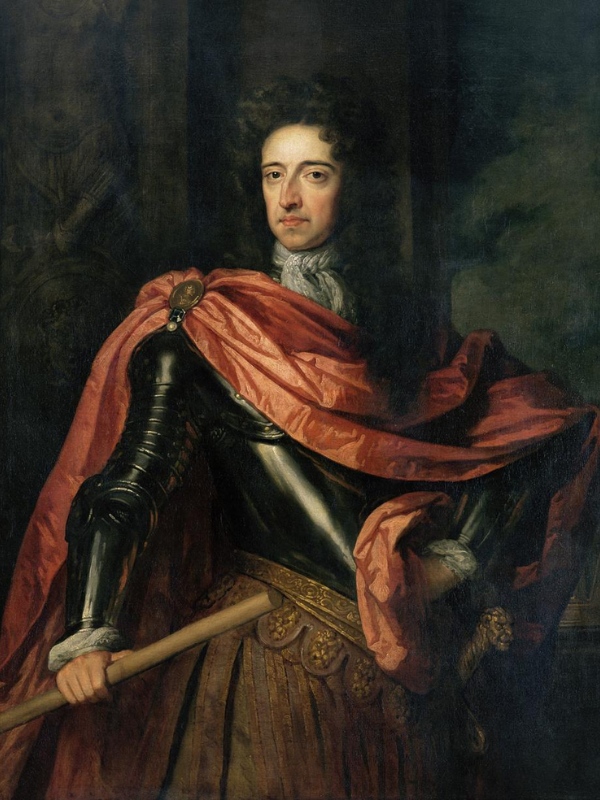
William III
King of England 1689–1702
King of Scotland 1689–1702
King of Ireland 1689–1702
Stadtholder of the United Provinces 1672–1702
Prince of Orange 1650–1702
Bio:
The assertive and highly strategic reign of King William III fundamentally restructured the constitutional and financial architecture of the British state, transforming the crown into a vehicle for global warfare against the expanding power of Louis XIV’s France. Securing the throne through the Glorious Revolution, he accepted the landmark Bill of Rights 1689, a binding constitutional statute that permanently established the supremacy of Parliament over taxation, standing armies, and legislative suspension.
On the military front, William launched a swift, high-velocity campaign to secure his borders, personally leading an army to crush the Jacobite forces of James II at the Battle of the Boyne in 1690 AD, before swiveling his entire resource mass across the Channel to wage the Nine Years' War in Flanders. To fund these astronomical military costs, his administration authorized a massive financial revolution, chartering the Bank of England in 1694 AD to create the modern system of national debt and national credit.
His final years were consumed by a desperate struggle to secure a Protestant succession; following the death of his wife and the last Danish-Stuart heir, he signed the Act of Settlement 1701, permanently excluding all Catholics from the lineage of the throne to lock the country into a secure, parliamentary-approved Protestant future.
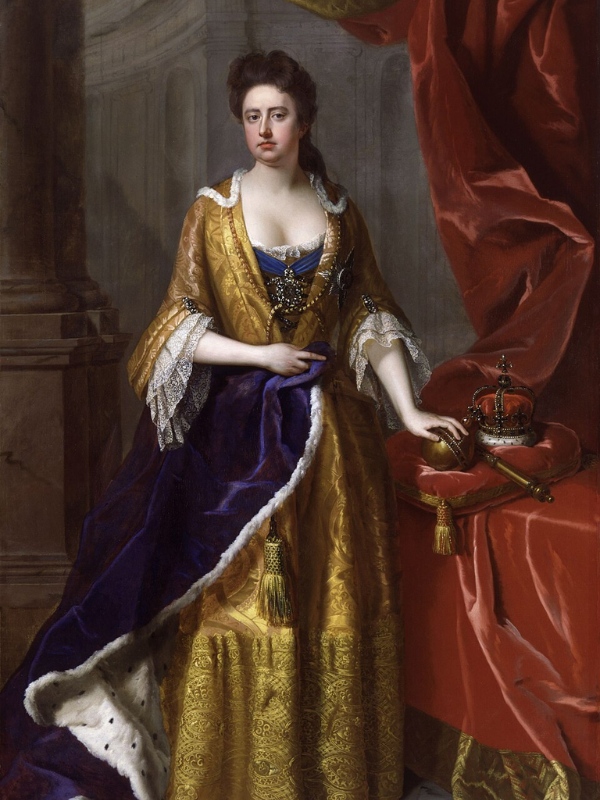
Anne
Queen of England, Scotland, and Ireland 1702–1707
Queen of Great Britain and Ireland 1707–1714
Bio:
The spectacular reign of Queen Anne witnessed the definitive territorial unification of the island and the rise of Great Britain as the premier global maritime and commercial superpower of the Western world.
Accepting the throne in 1702 AD, her administration was immediately thrust into the War of the Spanish Succession, a massive continental conflict where British forces under the Duke of Marlborough achieved monumental tactical triumphs at Blenheim and Ramillies to shatter French military dominance.
Her primary domestic achievement occurred in May 1707 AD with the passage of the historic Acts of Union, which permanently merged the separate parliaments of England and Scotland into a single, unified Kingdom of Great Britain, establishing a uniform trade pool and customs network that accelerated the economic growth of the country.
A deeply conscientious but physically ailing ruler, her governance was heavily influenced by intense rivalries between the Whig and Tory parties, a political tension that forced the gradual centralization of executive power under a single chief minister. Despite her immense successes, Anne’s personal life was a multi-generational tragedy, suffering seventeen failed pregnancies and witnessing the death of her last surviving child, the Duke of Gloucester, a biological vacuum that permanently exhausted the Stuart royal line at her death and activated the Act of Settlement to pass the crown to the House of Hanover.
House Of Stuart FAQs