
Imperial Sovereignty:
The House of Tudor
The House of Tudor and the Architecture of the Sovereign State
Additional Information: The Tudor Period
The dawn of the sixteenth century witnessed a radical and permanent restructuring of the English state, orchestrated by the House of Tudor, an exceptionally astute and uncompromising Welsh-derived dynasty that transformed a exhausted, fractured post-civil-war kingdom into a highly centralized, bureaucratic naval power. seizing the throne in 1485 amidst the bloody mud of Bosworth Field, this calculated dynastic line systematically dismantled the independent military muscle of the old feudal nobility, replacing unstable baronial networks with a fiercely efficient network of royal courts, professional administrative councils, and heavily audited financial chambers.
This institutional expansion broke the ancient spiritual chains binding the nation to the Roman Catholic Church, launching a monumental religious reformation that placed the supreme legislative authority of the crown directly over both church and state, while projecting a formidable global maritime presence that laid down the physical blueprints for trans-oceanic commercial empire.
Page Contents:
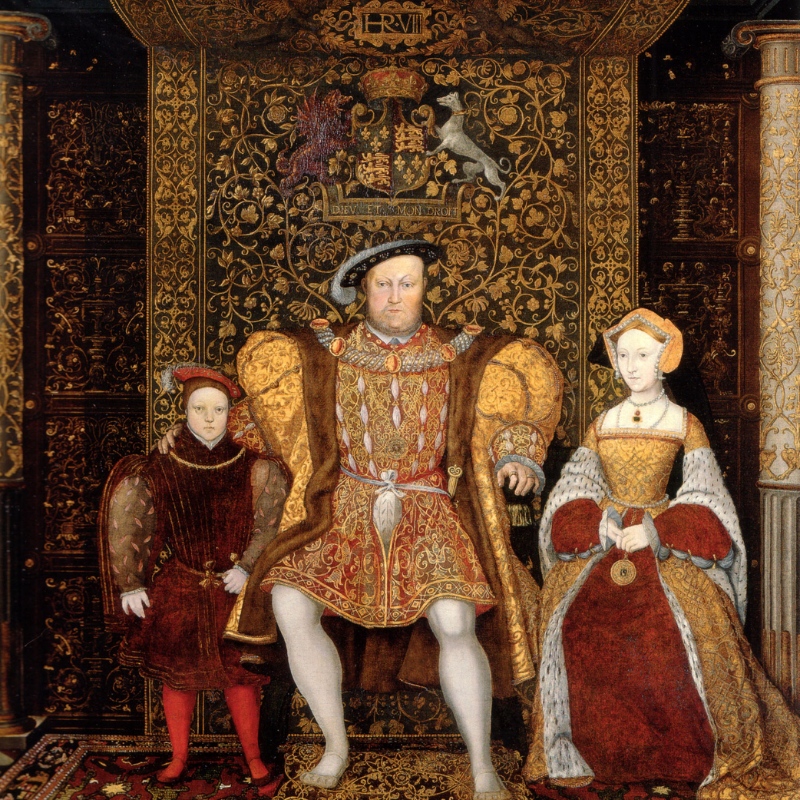
Origins of the House of Tudor: Bosworth and the Marriage of the Roses
The rise of the House of Tudor began with an extraordinary, high-stakes journey that elevated a dispossessed Welsh gentry family to the possession of the English throne. The deep ancestry of the house was rooted not in the Anglo-Norman peerage, but in the ancient, elite patrilineages of North Wales, tracing directly back to Ednyfed Fychan, the brilliant thirteenth-century seneschal to Llywelyn the Great. For generations, this proud Welsh kinship group—the lineage of Penmynydd—had functioned as prominent military and administrative power brokers, until their participation in the failed Owain Glyndŵr rebellion of 1400 AD resulted in the total confiscation of their ancestral estates and stripped them of their legal status under penal statutes.
This domestic ruin forced a young, ambitious descendant named Owen Tudor to seek his fortune as a low-ranking courtier in London, where his striking physical appearance and personal charisma caught the eye of Catherine of Valois, the lonely French widow of King Henry V. Around 1430 AD, Owen executed a scandalous, highly clandestine marriage to the dowager queen, an illicit union that produced two sons, Edmund and Jasper Tudor, who were subsequently legitimized and elevated to the highest ranks of the English peerage by their maternal half-brother, the Lancastrian king Henry VI.
This fragile dynastic elevation was instantly thrust into the violent gears of the Wars of the Roses, converting the young Lancastrian Earls of Richmond and Pembroke into prime targets for Yorkist elimination. To lock in their political security, the family engineered a crucial marriage in 1455 AD between Edmund Tudor and the twelve-year-old Lady Margaret Beaufort, a formidable heiress who possessed a potent, though legally restricted, descent from John of Gaunt and the main Plantagenet line. Edmund died of pestilence in captivity just months before his wife gave birth to his sole posthumous son, Henry Tudor, on 28 January 1457 AD inside the heavily fortified walls of Pembroke Castle.
Following the annihilation of the Lancastrian leadership at the Battle of Tewkesbury in 1471 AD, the fourteen-year-old Henry emerged as the last surviving, viable claimant to the Lancastrian cause. To protect this invaluable biological asset from immediate execution, his fiercely astute uncle, Jasper Tudor, smuggled the young earl across the sea into a protracted, fourteen-year political exile in Brittany and France, where Henry survived as a diplomatic pawn while his mother, Margaret Beaufort, remained in England secretly orchestrating complex aristocratic conspiracies against the Yorkist establishment.
The definitive opportunity for the family occurred during the turbulent summer of 1483 AD, when Richard III's controversial usurpation deeply fractured the political cohesion of the Yorkist faction. Capitalizing on this widespread aristocratic revulsion, Margaret Beaufort negotiated a historic, secret pact with the exiled Woodville queen to betroth Henry Tudor to Elizabeth of York, the eldest daughter of Edward IV, a calculated marital alliance designed to combine the competing claims of the Red and White Roses into a single, unassailable legitimist line.
Backed by a substantial financial loan and a professional mercenary fleet provided by the French crown, Henry Tudor made landfall on the Pembrokeshire coast in August 1485 AD, marching his expanding army through the Welsh mountains to meet the royal forces at Bosworth Field. The engagement reached a critical turning point when Richard III launched a desperate cavalry charge directly toward Henry's personal banner, a lethal strike neutralized when the sudden, turncoat intervention of the Stanley family surrounded the king and hacked him to death in the mud.
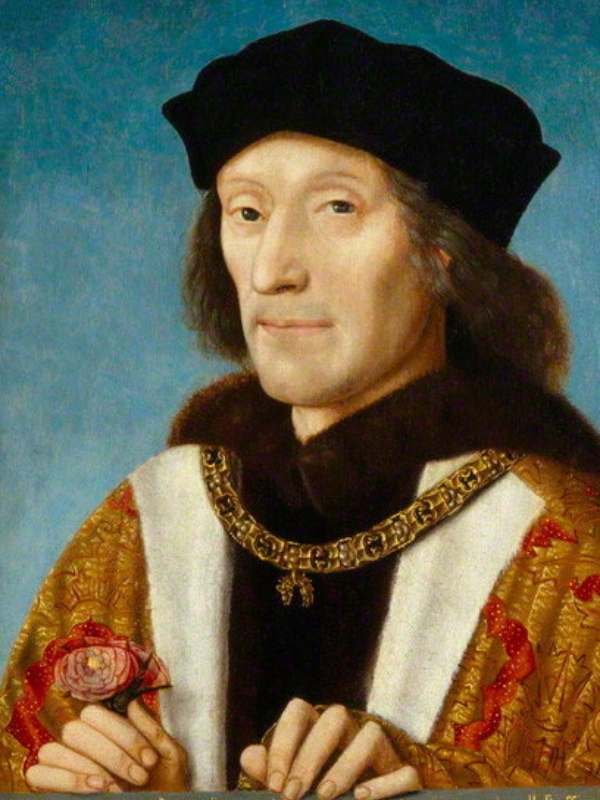
Henry VII
King of England 1485–1509
Lord of Ireland 1485–1509
Bio:
King Henry VII established the Tudor dynasty by executing a highly calculated strategy of fiscal consolidation, defensive diplomacy, and the systematic dismantling of the old nobility's private military power. Securing the crown at Bosworth, he permanently neutralized the Wars of the Roses by marrying Elizabeth of York in 1486 AD, effectively binding the competing claims of Lancaster and York into a single line. He firmly suppressed lingering Yorkist rebellions and pretenders, crushing the forces of Lambert Simnel at the Battle of Stoke Field in 1487 AD.
To break the traditional power of independent barons, he outlawed the practice of retaining private livery armies and expanded the jurisdiction of the Court of Star Chamber to enforce swift royal justice over elite offenders. An exceptionally astute financial administrator, Henry completely restructured the treasury, shifting financial management from the slow Exchequer to the direct, audited control of the Royal Chamber. Through rigorous bond enforcement, aggressive customs auditing, and lucrative commercial agreements like the Magnus Intercursus, he accumulated an astronomical personal fortune for the crown. By avoiding expensive continental wars and engineering strategic dynastic marriages for his children with the royal houses of Spain and Scotland, he left an entirely self-funding, wealthy, and stable throne to his successor.
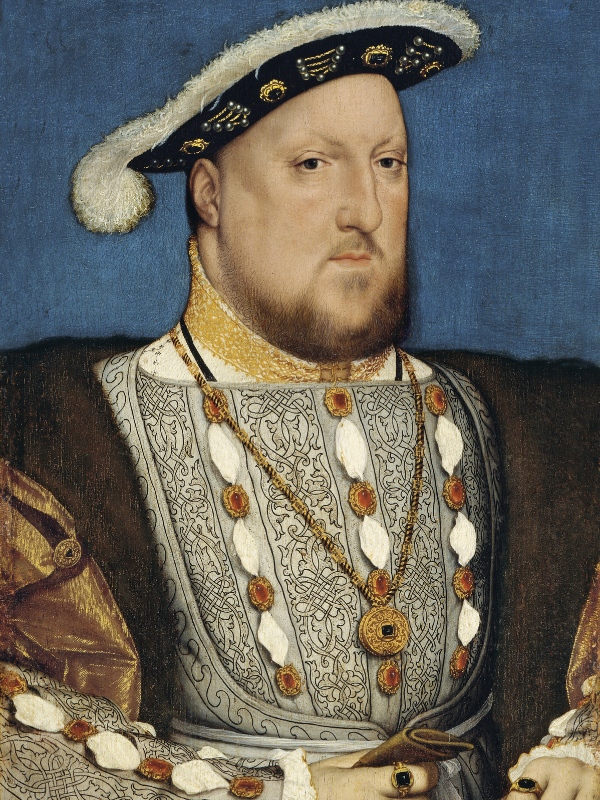
Henry VIII
King of England 1509–1547
Lord of Ireland 1509–1542
King of Ireland 1542–1547
Bio:
The volatile reign of King Henry VIII fundamentally redesigned the constitutional and religious fabric of the country, transforming England into a sovereign nation completely independent of Roman Catholic authority. Driven by an intense determination to secure a direct male heir to stabilize the succession, his initial requests for a papal annulment from Catherine of Aragon resulted in a bitter diplomatic deadlock with Rome. Backed by his chief minister Thomas Cromwell, Henry bypassed papal authority by utilizing Parliament to pass the historic Act of Supremacy in 1534 AD, declaring the English monarch to be the supreme head of the Church of England.
This institutional rupture initiated the English Reformation, enabling the crown to execute the Dissolution of the Monasteries, systematically dissolving over eight hundred religious foundations to confiscate their massive lands and gold treasures directly into the royal treasury. He used these vast funds to construct an elite standing navy, building major warships and heavily fortifying the southern coastlines against continental invasion. His domestic expansion formally integrated Wales into the English administrative layout through the Laws in Wales Acts, while elevating his own title from Lord to King of Ireland.
Though his marital maneuvers and high-velocity political purges led to the executions of prominent statesmen like Thomas More and Thomas Cromwell, his sweeping legislative reforms established the absolute statutory authority of the Crown-in-Parliament.
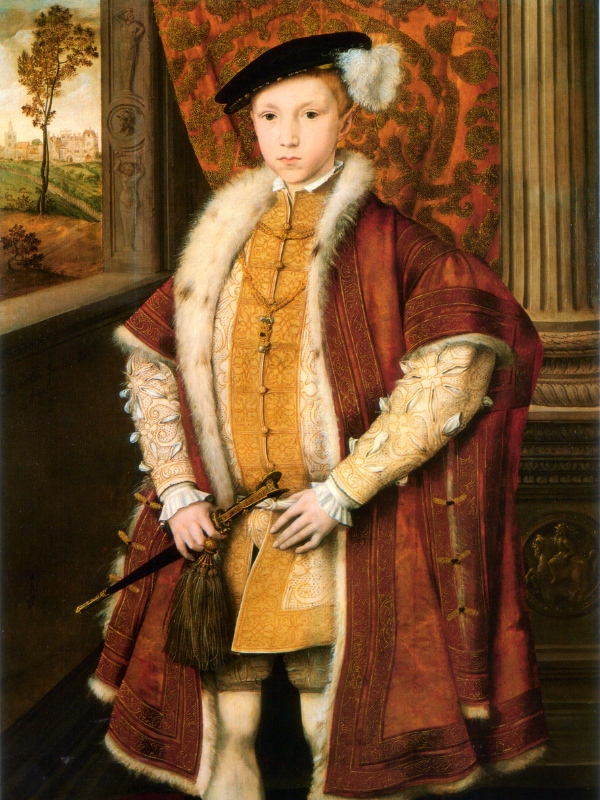
Edward VI
King of England 1547–1553
King of Ireland 1547–1553
Bio:
King Edward VI governed England through a short, intensely radical minority reign that was completely dominated by the systematic enforcement of militant Protestantism across the country. Accessing the throne at the age of nine, his executive government was initially directed by his uncle Edward Seymour, Duke of Somerset, who launched an aggressive military campaign into Scotland to enforce a marriage contract with the young Mary, Queen of Scots, achieving a major tactical victory at the Battle of Pinkie Cleugh.
Somerset's aggressive agricultural enclosures and the rapid enforcement of religious changes triggered widespread social unrest, exploding in 1549 AD into the violent Prayer Book Rebellion in the west and Kett's Rebellion in Norfolk, domestic crises that led to Somerset's downfall and execution. He was replaced by John Dudley, Duke of Northumberland, who worked in close synchronization with the highly literate young king to accelerate the destruction of traditional Catholic infrastructure. Under their direction, Parliament authorized the destruction of church images, the confiscation of chantry lands, and enforced Thomas Cranmer’s Book of Common Prayer to establish an uncompromised vernacular liturgy.
Facing early terminal illness in the summer of 1553 AD, Edward worked frantically to alter the succession, drafting his personal Devise for the Succession to bypass his Catholic half-sister Mary in favor of the Protestant Lady Jane Grey, a desperate constitutional maneuver that collapsed into immediate failure days after his sudden death.
Jane
Queen of England July 1553
Queen of Ireland July 1553
Bio:
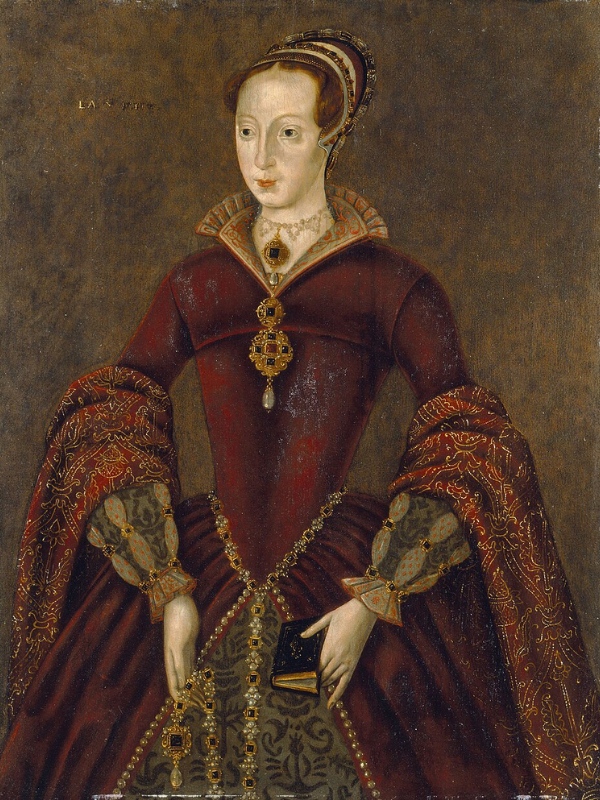
The tragic nine-day queenship of Lady Jane Grey represented a desperate constitutional gamble engineered by the Edwardian political establishment to prevent a Roman Catholic restoration. Highly educated and a devout Protestant, Jane was thrust into the vortex of dynastic politics when her father-in-law, the Duke of Northumberland, persuaded the dying Edward VI to draft the Devise for the Succession, which legally bypassed the direct hereditary lines of both Mary and Elizabeth Tudor.
Following her formal proclamation as sovereign in London on 10 July 1553, she was escorted to the royal chambers within the Tower of London to await her coronation, but this elite political coup was instantly rejected by the country at large. Her cousin, Mary Tudor, fled to her extensive estates in East Anglia and successfully rallied an overwhelming counter-offensive, as the regional gentry and the common populace mobilized in massive numbers to defend the statutory will of Henry VIII.
Recognizing that the Northumberland conspiracy had completely run out of momentum, the Privy Council switched their allegiance to proclaim Mary as the rightful queen on 19 July 1553, forcing the young captive to surrender her crown without a fight. Jane was immediately stripped of her royal garments and imprisoned inside the fortress, where she lived quietly until the sudden outbreak of Wyatt’s Rebellion in early 1554 convinced the new administration that her ongoing survival posed an unacceptable legitimist threat to the security of the realm, resulting in her execution on the green of the Tower.
Mary I
Queen of England 1553–1558
Queen of Ireland 1553–1558
Queen of Spain 1554–1558
Bio:
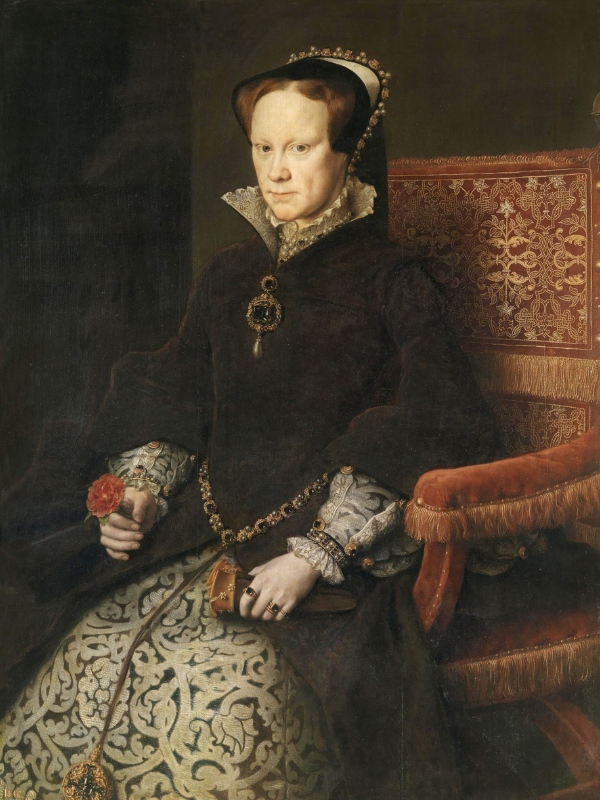
The reign of Queen Mary I was driven by an unyielding determination to reverse the English Reformation and bring the country back into full communion with the Roman Catholic Church. Propelled onto the throne by an overwhelming popular mobilization that completely crushed the Protestant coup of Lady Jane Grey, Mary utilized Parliament to sweep away the religious legislation of her brother Edward’s regime, reinstating the traditional Latin Mass and restoring papal authority over the domestic clergy.
To secure this Catholic restoration within a wider European network, she engineered a highly controversial dynastic marriage to Prince Philip of Spain in 1554, a continental alliance that deeply alienated her own nobility and provoked Wyatt's Rebellion, which she firmly suppressed by personally rallying the London citizenry at Guildhall. To stamp out Protestant dissent, her administration revived ancient heresy laws, resulting in the public burning of nearly three hundred Protestants across the shires, including prominent leaders like Hugh Latimer, Nicholas Ridley, and Archbishop Thomas Cranmer.
While her internal reforms successfully modernized the management of customs collections and repaired the royal finances, her foreign policy suffered a humiliating disaster in 1558 when French forces launched a swift assault to capture Calais, stripping England of its final strategic beachhead on the continent just months before her death.
Elizabeth I
Queen of England 1558–1603
Queen of Ireland 1558–1603
Bio:
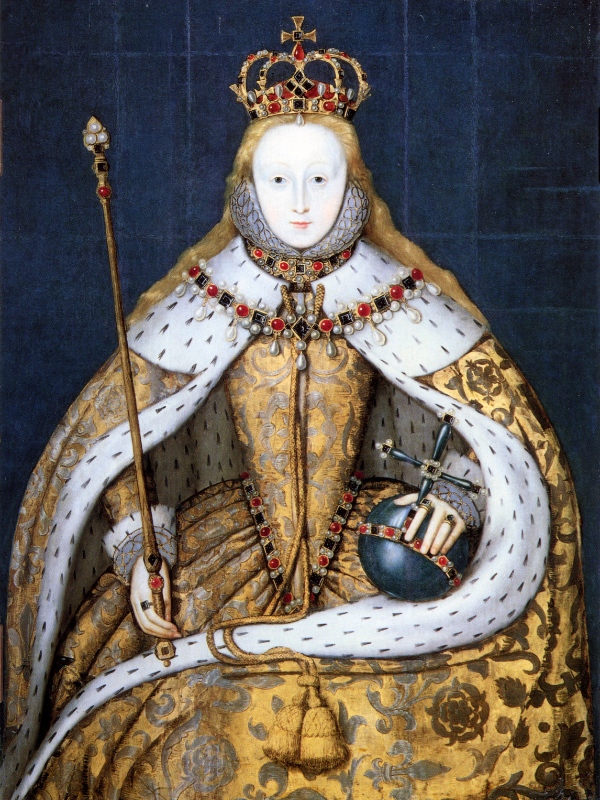
The long reign of Queen Elizabeth I stabilized a deeply fractured kingdom, transforming an isolated island on the edge of Europe into a formidable
maritime power and sparking an extraordinary domestic cultural flourishing.
Inheriting an intense religious crisis, she worked with Parliament to pass the 1559 Elizabethan Religious Settlement, combining the Act of Supremacy and the Act of Uniformity to forge a moderate Protestant national church designed to unify the vast majority of her subjects. Her survival over nearly half a century was a continuous exercise in high-stakes diplomacy and security; backed by her chief minister William Cecil, a highly organized intelligence network uncovered numerous domestic conspiracies and foreign assassination plots, culminating in the 1587 execution of her captive cousin, Mary, Queen of Scots, to permanently eliminate the primary legitimist threat to the throne. This execution provoked Philip II of Spain to launch a massive naval invasion, dispatching the formidable Spanish Armada in 1588 to crush the English state.
Elizabeth demonstrated immense personal leadership by famously rallying her troops on the coast at Tilbury, while her fleet deployed fire-ships and superior artillery coordination to completely scatter the invasion force. She successfully capitalized on this new maritime security to authorize the first English oceanic exploration voyages and early colonization attempts along the American coastline, funding the expansion of chartered trading companies that laid down the foundational commercial networks of the empire before her death in March 1603 brought a definitive end to the Tudor line.
House Of Tudor FAQs