
Monarchy and Reformation:
The Tudor Period
Absolutism, Religious Revolution, and Global Horizons
Additional Information: The House of Tudor
The violent slaughter at Bosworth Field didn't just claim the life of the last Plantagenet king; it shattered the old feudal order and swept a new, ruthlessly pragmatic dynasty to power. In 1485 AD, the ascension of Henry VII consolidated the fractured factions of the civil wars under the formidable banner of the House of Tudor. Over the next century, this highly centralized regime launched a radical overhaul of the English state, aggressively working to secure its shaky legitimacy against continuous internal plots and foreign threats.
This era permanently altered the island's geopolitical trajectory, forcing a dramatic break from the international authority of Papal Rome and the total dismantling of independent baronial armies. By shifting the Crown's focus away from ancient continental territories and toward Atlantic exploration, the Tudors laid the administrative and naval foundations that turned a vulnerable medieval kingdom into a fiercely independent, global Protestant power.
Page Contents:

Bosworth and the Foundations of a Dynasty
1485 - 1509 AD
Additional Information: The Plantagenet Era / The Battle of Bosworth Field
The Tudor dynasty was founded on the morning of 22 August 1485 at the Battle of Bosworth Field, when Henry Tudor defeated and killed King Richard III, ending the senior Plantagenet line. Proclaimed king on the battlefield, the newly styled Henry VII immediately turned his focus to stabilizing his fragile regime and building the legal foundations of his rule.
To heal the dynastic fractures of the Wars of the Roses, Henry VII married Elizabeth of York, the eldest daughter of King Edward IV, in January 1486. This union merged the houses of Lancaster and York, binding the rival white and red rose factions into a single royal icon: the Tudor Rose. To secure his legal position, he back-dated the start of his reign to the day before the Battle of Bosworth. This legal move allowed his first Parliament to pass Acts of Attainder, convicting his Yorkist opponents of high treason, stripping them of their estates, and seizing their wealth into the royal treasury.
Henry VII recognized that the primary threat to the stability of the Crown lay in the private military forces of the medieval aristocracy. He broke the power of the barons, enforcing laws against illegal livery and maintenance, and imposing massive financial penalties on any noble who maintained a private retinue of armed retainers. He bypassed the traditional baronage to govern through a council of loyal lawyers and administrators, most notably the Council Learned in the Law, led by Sir Richard Empson and Edmund Dudley. This council utilized ruthless financial bonds and recognisances to place almost the entire nobility under permanent debt to the Crown, ensuring complete financial extraction and political submission.


Consolidation of Power and the Lovell-Stafford Rebellion
1485 – 1486 AD
The immediate aftermath of the Battle of Bosworth left Henry VII to rapidly legitimize his military conquest before remaining Yorkist networks could regroup. Assembling his first Parliament at Westminster on 7 November 1485, the King back-dated the official start of his reign to 21 August—the day before Bosworth. This legal move allowed his administration to issue sweeping Acts of Attainder that branded Richard III’s combatants as traitors, exposing their estates to royal seizure while enriching the depleted Crown treasury. To stabilize his crown and fulfill a wartime oath, Henry married Elizabeth of York on 18 January 1486, a symbolic union that bound the competing Houses of Lancaster and York under the new Tudor emblem.
Henry VII utilized these attainders to break the landed power of the northern nobility who had fought for the previous regime. The primary target was Richard III himself, whose personal estates in Yorkshire and the midlands were permanently annexed to the Crown. Through parliamentary decrees, John de la Pole, 1st Earl of Lincoln, was stripped of his status as presumptive heir to the throne, while Henry Percy, 4th Earl of Northumberland, was initially imprisoned in the Tower of London and forced to surrender his regional wardenships before being grudgingly restored to a truncated northern command. Thomas Howard, 2nd Earl of Surrey, suffered total forfeiture of his lands and title, remaining locked in the Tower while his East Anglian patrimony was confiscated by royal agents.
In place of this Yorkist peerage, Henry VII elevated a tight-knit circle of Lancastrian loyalists to the highest commands. His uncle, Jasper Tudor, 1st Duke of Bedford, was granted the lordship of Glamorgan alongside the chief justiceship of South Wales. The King’s principal military commander, John de Vere, 13th Earl of Oxford, was restored to his ancestral estates and appointed Lord High Admiral of England, Constable of the Tower of London, and Captain of the King's Bodyguard. Thomas Stanley, 2nd Baron Stanley, was rewarded for his late-hour intervention at Bosworth with elevation to 1st Earl of Derby and granted extensive confiscated Yorkist manors across Lancashire and Cheshire, while Sir Edward Courtenay, 1st Earl of Devon, was raised to his title to lock down the southwestern peninsula.
The peace achieved by this political reordering was shattered just three months later during Eastertide of 1486, when the new dynasty faced its first armed uprising. Francis Lovell, 1st Viscount Lovell—Richard III’s former chamberlain—alongside the Yorkist brothers Sir Humphrey Stafford and Thomas Stafford, broke out of sanctuary at Colchester Abbey to spearhead a coordinated insurrection. Lovell traveled north into Yorkshire to raise an army, while the Stafford brothers moved into the West Midlands to capture Worcester. The plot crumbled under Henry VII’s swift response. Advancing north to York with a royal vanguard, the King dispatched the 1st Duke of Bedford into the countryside to offer full royal pardons to any common rebels who immediately laid down their pikes.
This clemency destroyed the momentum of the rising. Seeing his regional levies melt away, a panicked 1st Viscount Lovell abandoned his northern forces and fled the island to seek refuge at the court of Margaret of Burgundy. Meanwhile, the Stafford brothers' midland campaign collapsed without fighting when their local recruits learned that the northern rising had evaporated.
The brothers fled into sanctuary at Culham Church in Oxfordshire, but Henry VII directly challenged church custom by ordering his agents to drag them out of holy ground by force. The King’s Bench ruled that sanctuary did not apply to cases of high treason, resulting in the public execution of Sir Humphrey Stafford at Tyburn, while Thomas Stafford was pardoned.
Further Information: Consolidation of Power and the Lovell-Stafford Rebellion


Yorkist Pretenders and the Battle of Stoke Field
1487 - 1499 AD
Additional Information: The Chronicles of Britain / Polydore Vergil and the Anglica Historia
The administrative and marriage alliances secured by Henry VII did not instantly extinguish the Yorkist threat; instead, the early years of the new dynasty were plagued by dangerous military insurrections engineered around royal impostors. In early 1487, a powerful coalition of Yorkist diehards launched a plot to overthrow the King. The principal architect was John de la Pole, Earl of Lincoln, who broke his oath of allegiance and fled to Flanders to coordinate a counter-offensive. Seeking a figurehead to legitimize their rebellion, the conspirators trained a ten-year-old boy of humble origins named Lambert Simnel to impersonate Edward Plantagenet, 17th Earl of Warwick, who was the premier surviving male claimant of the House of York and sat securely locked inside the Tower of London.
At the ducal court of Malines, the Earl of Lincoln secured the vital financial and military backing of his maternal aunt, Margaret, Duchess of Burgundy, who provided a core force of two thousand veteran German landsknecht mercenaries under the tactical command of the captain Martin Schwartz. Sailing from Flanders to Ireland, the rebel fleet arrived in Dublin in May 1487, where the Anglo-Irish nobility, led by Gerald FitzGerald, 8th Earl of Kildare, enthusiastically embraced the Yorkist cause. Simnel was formally crowned as King Edward VI in Christ Church Cathedral, and the Irish lords supplemented the German mercenaries with a massive levy of approximately four thousand unarmoured Irish skirmishers under the command of Sir Thomas FitzGerald.
On 4 June 1487, this combined rebel host made landfall at Piel Island in Lancashire, marching rapidly across the Pennines and into the midland shires to gather local recruits. Henry VII responded with decisive speed. Mobilizing the royal levies, the King established his military headquarters at Kenilworth Castle, executing a rapid strategic deployment northward to intercept the invading host before it could threaten the capital.
The two armies collided on the morning of 16 June 1487 along a narrow, sloping ridge bordered by the River Trent at the Battle of Stoke Field in Nottinghamshire, an engagement that stands as the final clash of the Wars of the Roses. The battle was a prolonged, violent encounter that lasted for over three hours, testing the endurance of the combatants. The unarmoured Irish infantry fought with desperate bravery, but their lines were shattered by the continuous, massed volleys of the royal longbowmen. Operating with superior discipline, the royal vanguard, commanded by John de Vere, Earl of Oxford, absorbed the initial charge of Schwartz’s German landsknechts before launching a devastating counter-offensive with heavy steel bills. The rebel army was completely broken and pushed down the ravine.
The Earl of Lincoln, Martin Schwartz, and Sir Thomas FitzGerald were all killed in the hand-to-hand fighting. Lambert Simnel was captured alive, but instead of executing the boy, Henry VII mercifully demoted him to work as a turnspit in the royal kitchens as a calculated statement of contempt toward his noble enemies.
Further Information: Yorkist Pretenders and the Battle of Stoke Field


The Magnus Intercursus
1496 – 1506 AD
The stabilization of the early Tudor regime relied on a foreign policy designed to secure international recognition and end continental support for Yorkist conspiracies. This diplomatic consolidation was initiated in March 1489 by the Treaty of Medina del Campo with the newly unified kingdom of Spain, an alliance that arranged the future marriage of Henry's infant heir, Prince Arthur, to Catherine of Aragon.
While this dynastic pact validated Henry VII's legitimacy among the premier crowns of Europe, the security of the kingdom was threatened from the Low Countries, where Margaret, Duchess of Burgundy, openly supported the Yorkist pretender Perkin Warbeck to destabilize the Tudor Crown. To isolate this threat, Henry VII took the step of imposing a commercial embargo on the Netherlands in 1493, sacrificing the lucrative English cloth trade and moving the merchant adventurers' wool staple from Antwerp to Calais to force Burgundian compliance.
The economic pressure bore fruit on 24 February 1496 through the signing of the Magnus Intercursus—the Great Intercourse—a commercial treaty negotiated between Henry VII and Archduke Philip IV of Burgundy. This agreement transformed trade, granting English merchants the legal right to sell their textiles across the Low Countries exempt from arbitrary local tolls and customs impositions. More importantly for the security of the dynasty, the treaty inserted a political clause that legally bound both administrations to deny sanctuary or financial backing to each other's rebels, forcing Burgundy to expel Warbeck from its borders.
The momentum of this economic containment carried into 1506 when a sudden storm forced Archduke Philip IV to make an emergency landing on the English coast, allowing Henry VII to exploit the situation by extracting the Malus Intercursus—an agreement that granted English traders commercial advantages over Flemish merchants. Crucially, this diplomatic leverage allowed the King to secure the physical custody of the final Yorkist fugitive, Edmund de la Pole, 3rd Earl of Suffolk, who was delivered to the Tower of London to face execution.
Further Information: The Magnus Intercursus


Henry VIII: The Accession of a Renaissance Prince
1509 - 1511 AD
The peaceful transition of April 1509 brought the seventeen-year-old King Henry VIII to the throne, inheriting a secure kingdom, a submissive nobility, and a royal treasury packed with a financial surplus left behind by his father’s cautious reign. To immediately legitimize his succession and resolve a lingering diplomatic deadlock, the young King’s first executive act on 11 June 1509 was to marry his brother's widow, Catherine of Aragon. This alliance secured the backing of the Spanish Crown and cleared the path for their joint coronation at Westminster Abbey on 24 June 1509, an event celebrated across the shires as the dawn of a new age.
Eager to signal a departure from the previous administration's fiscal practices, the young monarch moved to win the support of the landowning classes by launching a purge of his father’s chief financial agents. The court ordered the arrest of Richard Empson and Edmund Dudley, the administrators of the Council Learned in the Law who had extorted the aristocracy through the enforcement of obsolete feudal bonds and recognizances. By canceling numerous outstanding noble debts and executing Empson and Dudley on Tower Hill in August 1510 under a charge of constructive treason, Henry VIII secured the loyalty of the political nation.
This popular opening act allowed the new sovereign to dismantle his father’s cautious isolationist policies, emptying the treasury reserves on lavish tournaments, extravagant Renaissance display, and continental military alliances. The political consensus at Westminster allowed the prince to re-engineer the presentation of the Tudor dynasty, transforming a parsimonious court into a center of European humanism and architectural ambition. Henry VIII projected the embodiment of the Renaissance prince—tall, athletic, fluent in multiple languages, and a master of theology, music, and military engineering.
Bypassing the administrative routines established by the old guard—most notably his grandmother, Lady Margaret Beaufort, who died just weeks after his accession—the King channeled national resources into the construction of coastal defensive networks and the expansion of the Royal Navy.
Under the guidance of his rising almoner, Thomas Wolsey, the King launched a naval expansion program, ordering the construction of flagship warships like the Mary Rose and the Henri Grâce à Dieu. This domestic transformation redirected traditional noble rivalries into choreographed jousting tournaments and international diplomatic spectacles designed to showcase the kingdom's wealth, laying the logistical foundations for his upcoming military interventions on the continent.
Further Information: Henry VIII: The Accession of a Renaissance Prince
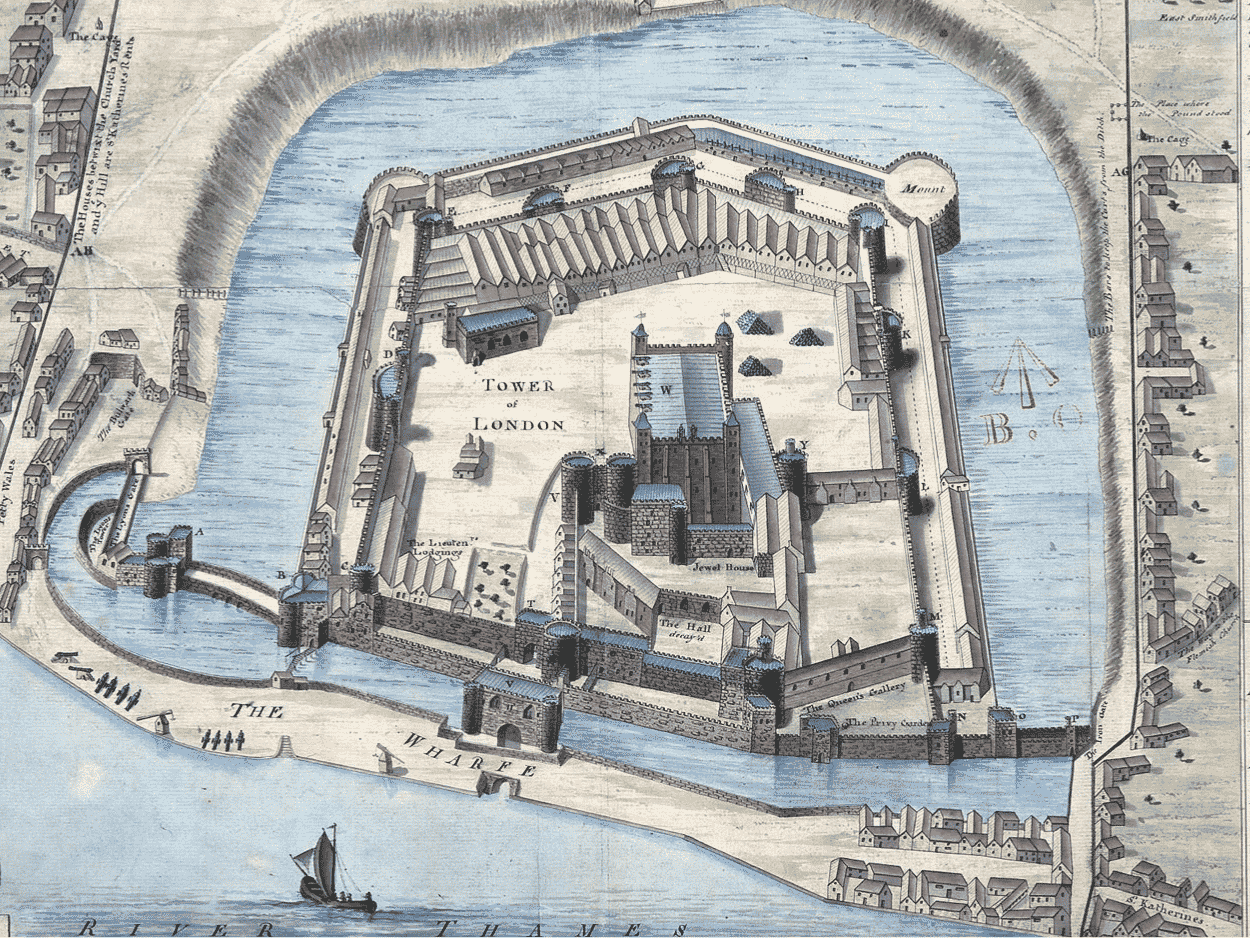

The Battle of the Spurs
1513 AD
Eager to project martial power onto the European mainland and assert his ancestral claims to the French crown, the twenty-year-old King Henry VIII allied with the Holy Roman Emperor Maximilian I to launch an invasion of northern France in the summer of 1513. Financed by the cash reserves left behind by his father, Henry crossed the English Channel with an army of twenty-eight thousand men, quickly laying siege to the fortress towns of Thérouanne and Tournai.
The French military, heavily committed to campaigns in Italy, was forced to dispatch a relief force composed of approximately eight thousand heavy cavalrymen, alongside a separate vanguard of four thousand infantry, under the command of Louis d'Orléans, 2nd Duc de Longueville. This force was ordered by King Louis XII to avoid a pitched battle while delivering vital food supplies to the starving garrison inside Thérouanne.
The opposing forces unexpectedly collided on 16 August 1513 near the village of Bomy, where the allied Anglo-Imperial army anticipated the French movements. Henry's light cavalry and horse archers, supported by a deployment of Imperial heavy horse, caught the French cavalry units by surprise as they hovered in the open valleys. Rather than executing a counter-charge, the French vanguard panicked under a sudden bombardment from hidden English artillery pieces, turning their lines into a headlong retreat. The high-speed pursuit that followed saw the French knights use their spurs so furiously to escape the field that the encounter was branded as the Battle of the Spurs.
The engagement ended in a victory for the young English monarch, resulting in the immediate capitulation of Thérouanne. The engagement cost the French military over forty high-ranking captains killed or captured on the field. The English vanguard captured the Duc de Longueville himself, alongside prominent figures including René de Prie, 2nd Marquis de Rothelin, and the knight Pierre Terrail, Seigneur de Bayard.
While the strategic value of these captured towns was limited—serving primarily to bolster the continental interests of Emperor Maximilian I rather than securing a permanent foothold for England—the victory was exploited by the royal court as a propaganda success, establishing Henry VIII's reputation as a warrior-king across Europe.
Further Information: The Battle of the Spurs
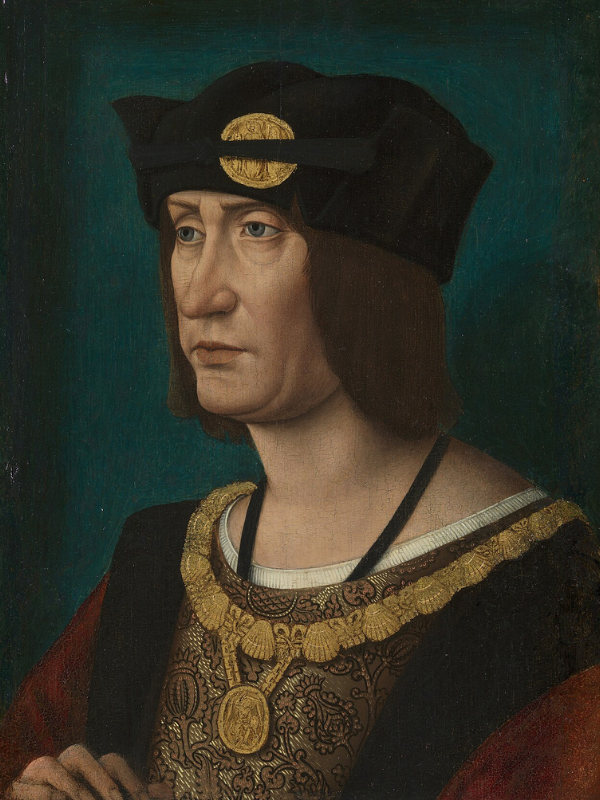


The Battle of Flodden and the Scottish Crisis
1513 AD
The launching of Henry VIII’s continental expedition in the summer of 1513 triggered an immediate military reaction from England's northern frontier, as King James IV of Scotland activated the Auld Alliance with France and declared war against the Tudor state. Seizing upon the absence of the main English field army, the Scottish monarch mobilized an army of thirty-four thousand men, crossing the River Tweed in August to capture the border fortresses of Norham, Etal, and Ford.
This northern push stood as a threat to the security of the realm, forcing the pregnant Queen Regent, Catherine of Aragon, to act with speed to coordinate a home defense network. Operating from London, Catherine issued mobilization orders to the northern counties, dispatching Thomas Howard, 1st Earl of Surrey, to assemble a defensive force of twenty-six thousand archers and billmen from the Yorkshire and Lancashire levies to blunt the Scottish advance.
The two armies finally collided on 9 September 1513 near Branxton in Northumberland, where James IV had deployed his forces along the ridgeline of Flodden Edge. The Earl of Surrey made a tactical maneuver by marching his army around the eastern flank of the hill, cutting off the Scottish line of retreat and forcing James IV to abandon his high ground to engage on the lower slopes of Branxton Hill. The battle turned into a chaotic clash of infantry lines that tested the endurance of both armies, as a heavy afternoon rainstorm turned the marshy clay valley into a slippery battlefield. The Scottish vanguard, utilizing long continental pikes according to European military doctrine, initially achieved momentum, but their tight formations fractured as the soldiers lost their footing on the downhill terrain.
This breakdown allowed the disciplined English infantry to engage in a hand-to-hand melee, utilizing the shorter, lethal billhook to shear off the points of the Scottish pikes and slice through enemy armor. While the Scottish border horsemen under Alexander Home, 3rd Lord Home, abandoned the field after an initial clash, the core of the Scottish nobility launched a desperate charge around the royal standard, defending their monarch but suffering losses. James IV himself was killed on the field within yards of the Earl of Surrey, suffering fatal blade wounds to the throat and head. This collapse claimed the lives of Alexander Stewart, Archbishop of St Andrews, alongside two bishops, eleven earls, fifteen barons, and over ten thousand Scottish soldiers.
The aristocratic casualties included Archibald Campbell, 2nd Earl of Argyll; Matthew Stewart, 2nd Earl of Lennox; William Graham, 1st Earl of Montrose; and John Sinclair, 3rd Earl of Caithness. This triumph smashed the military capability of the Scottish kingdom for a generation, securing the Tudor regime's northern border lines and proving that the English state could successfully defend its sovereignty on multiple fronts.
Further Information: The Battle of Flodden and the Scottish Crisis


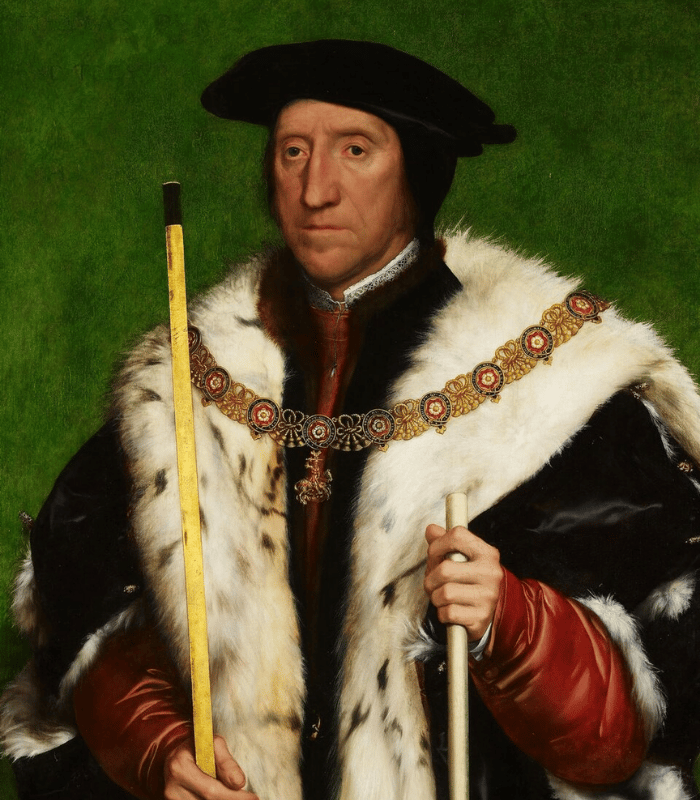
The Ascendancy of Wolsey and the Amicable Grant
1515 – 1525 AD
The daily administration of the early Tudor state became dominated by the rise of Thomas Wolsey, an Ipswich butcher’s son whose administrative efficiency allowed him to secure the offices of Cardinal, Archbishop of York, and Lord Chancellor by 1515. Operating with the authority of an alter rex—an alternative king—Wolsey centralized the kingdom's legal and executive machinery to manage affairs on behalf of the monarch.
The Cardinal expanded the jurisdiction of the Court of Star Chamber and the Court of Requests, turning these central tribunals into legal instruments used to enforce swift royal justice over the wealthy gentry and provincial landowners who traditionally dominated the local counties. To finance Henry VIII’s foreign spectacles and military ambitions, Wolsey bypassed the voting routines of traditional parliamentary taxation, engineering the Tudor Subsidy of 1523—a direct assessment of national wealth based on an audit of individual income.
This extraction pushed domestic endurance to a breaking point in the spring of 1525, when Wolsey attempted to enforce the Amicable Grant to capitalize on the Holy Roman Empire's recent victory over French forces at the Battle of Pavia. Designed as a massive, unparliamentary tax levy demanding one-sixth of the secular clergy's and laity's wealth to fund an immediate invasion of France, this financial imposition sparked a widespread national crisis. Armed tax strikes and insurrections erupted across the manufacturing cloth towns of Suffolk, Essex, and Kent, where over four thousand citizens assembled at Lavenham to refuse payment and challenge the legality of the demand.
Outmanoeuvred by the scale of domestic resistance and realizing that the county militias refused to fire upon their own neighbours, Henry VIII was forced to execute a political retreat, unilaterally repudiating the tax and granting full pardons to the rebel leaders. This domestic collapse permanently fractured Wolsey’s authority and drained the Crown's liquid capital, bringing a sudden halt to Henry VIII's dreams of continental conquest and sowing the seeds of distrust that would lead to the Cardinal's downfall when he failed to secure the King's marital annulment years later.
Further Information: The Ascendancy of Wolsey and the Amicable Grant


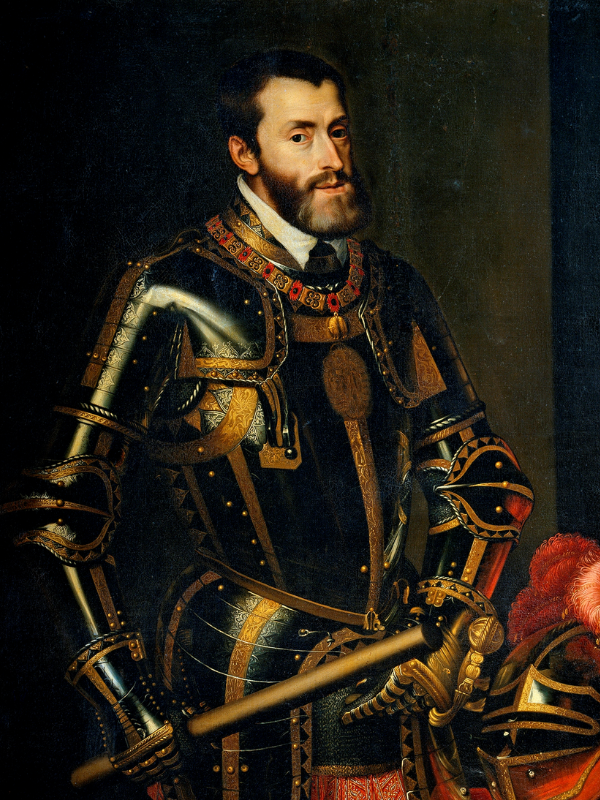
The Field of the Cloth of Gold and Tudor Diplomacy
1520 AD
The international prestige of the Tudor court reached a peak in June 1520 at the Field of the Cloth of Gold, a multi-week diplomatic summit engineered by Cardinal Thomas Wolsey to secure a European peace between Henry VIII and King Francis I of France. Situated on the neutral border zone of Balinghem outside the English stronghold of Calais, this logistical operation required the assembly of a temporary city composed of thousands of gold-woven tents, timber palaces, and canvas pavilions.
The administration spared no expense to project material and cultural equality with the Valois dynasty, constructing a temporary glass-and-timber palace for the English royal household that featured fountains flowing with red wine. For eighteen days, the two monarchs engaged in jousting tournaments, lavish banquets, and wrestling matches designed to display their individual martial prowess and sovereign wealth before the European nobility.
While this spectacle broadcasted England’s financial capability and Renaissance sophistication to the rival crowns of Europe, the political goals of the summit dissolved within months of its conclusion. The display of brotherhood failed to bridge the deep-seated rivalries between the two nations, as Wolsey’s broader foreign policy relied on a balancing strategy that sought to position England as the arbiter of power between France and the Holy Roman Empire.
Realising that an alliance with the Valois Crown offered fewer territorial advantages than a partnership with the Habsburgs, Henry VIII quietly abandoned his diplomatic vows of friendship with Francis I. In August 1521, the King signed the secret Treaty of Bruges with the Holy Roman Emperor Charles V, a geopolitical realignment that nullified the expenditures of the 1520 summit and returned the country to expensive military entanglements in northern France.
Further Information: The Field of the Cloth of Gold and Tudor Diplomacy
The Royal Supremacy and the Break from Papal Rome
1529 - 1534 AD
Additional Information: The History of the Church in England / The Act of Supremacy: Nationalisation of the Faith
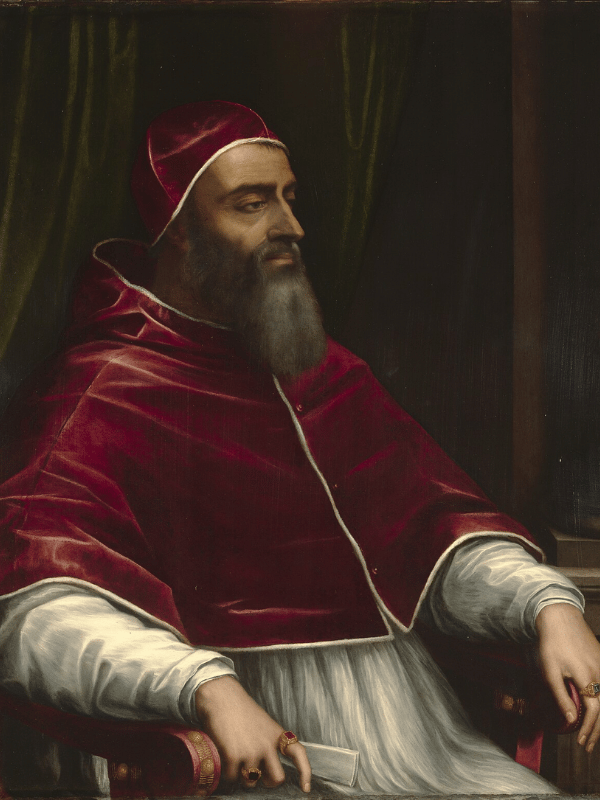
By the late 1520s, the Tudor state faced a severe constitutional crisis due to Henry VIII's need to secure a male heir to stabilize his dynasty. His marriage to Catherine of Aragon had produced only a single surviving child, Princess Mary, and the Queen was past childbearing age. Convinced that his marriage was cursed by God because he had taken his brother's widow, the King demanded that Pope Clement VII grant an annulment based on a passage in Leviticus, so he could marry Anne Boleyn.
Caught in the military grip of Catherine's nephew, the Holy Roman Emperor Charles V—whose armies had sacked Rome in May 1527 and held the Pope captive—the pontiff repeatedly delayed the legation court proceedings at Blackfriars, pushing the English King to execute a break from the international authority of the Roman Catholic Church.
Between 1529 and 1534, Henry VIII used the Reformation Parliament to dismantle papal jurisdiction in England through a series of legislative statutes. The execution of this break was engineered by his chief minister, Thomas Cromwell, who used statute law to cut the financial and legal pipelines to Italy. Parliament passed the Act in Restraint of Annates, which choked off the cash flow of traditional first-year taxes sent from English bishoprics to Rome, redirecting those funds to the royal treasury. This was followed by the Act in Restraint of Appeals of 1533, drafted by Cromwell, which legally banned all legal or spiritual appeals to Rome, declaring in its preamble that "this realm of England is an empire" governed by a king who owed no obedience to any foreign prince, prelate, or pope. This statute allowed the newly appointed Archbishop of Canterbury, Thomas Cranmer, to formally pronounce Henry's first marriage null and void, legitimizing his marriage to Anne Boleyn.
The revolution reached its climax through the historic Act of Supremacy in November 1534, which officially declared the King to be the "Supreme Head on Earth of the Church of England." This statute was paired with the Submission of the Clergy, forcing the English priesthood to surrender its independent lawmaking powers to the Crown, and the Act of Succession, which required adult subjects to swear an oath disinheriting Catherine’s daughter Mary in favor of Anne Boleyn's offspring, the infant Princess Elizabeth.
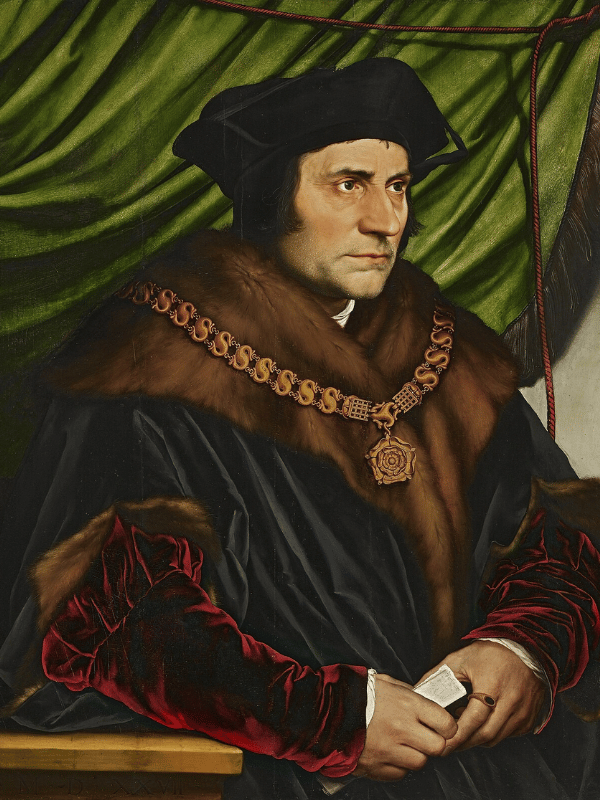
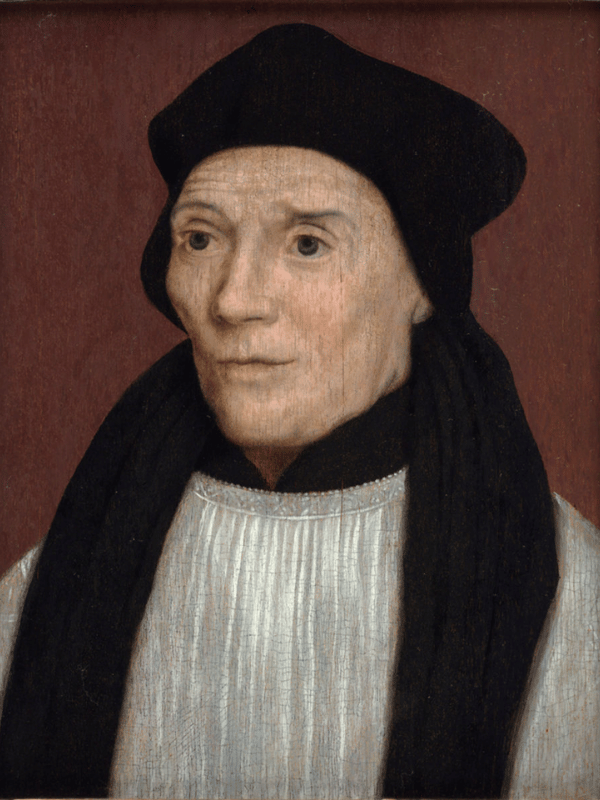
To enforce this new layout, Cromwell weaponized the Treason Act of late 1534, making it a capital crime punishable by death to deny the King’s new spiritual title or brand him a tyrant or heretic. Elite traditionalists who refused to swear the necessary oaths—most notably the King’s former Chancellor, Sir Thomas More, and John Fisher, Bishop of Rochester—were arrested, locked inside the Tower of London, and beheaded on Tower Hill, establishing the sovereign authority of the Crown over the souls and properties of the realm.
---------------------------------------------------------------------------
The parliamentary statutes and legal acts reveal the rapid timeline used to break the English Church away from the authority of Papal Rome:
Further Information: The Royal Supremacy and the Break from Papal Rome
The Pilgrimage of Grace
1536 - 1537 AD
The sweeping transformation of the church infrastructure triggered a popular uprising across northern England in the autumn of 1536, known as the Pilgrimage of Grace. This conflict stands as the largest domestic rebellion faced by the Tudor state.
The trouble flared first on 1 October 1536 in Lincolnshire under the leadership of a local shoemaker named Nicholas Melton, before expanding into a movement that enveloped Yorkshire, Cumberland, Durham, and Westmorland. Within weeks, the movement mobilized a disciplined, well-armed host of forty thousand rebels.
The insurrection was a reaction against the destruction of the old religious order. Led by a lawyer named Robert Aske, the rebels marched beneath the banner of the Five Wounds of Christ, swearing an oath to protect the Catholic faith. They demanded a halt to the closure of local monasteries, the removal of low-born advisors like Thomas Cromwell, and the suppression of Protestant heresies. The pilgrims captured York and Hull, seized the fortress of Pontefract Castle from Thomas Darcy, 1st Lord Darcy, and outnumbered the small royal armies sent north to contain them.
Recognizing his military vulnerability, Henry VIII used diplomacy to delay the rebellion. He dispatched Thomas Howard, 3rd Duke of Norfolk, alongside George Talbot, 4th Earl of Shrewsbury, to negotiate a temporary truce at Doncaster Bridge on 27 October 1536. Operating on instructions from the King, the Duke of Norfolk offered the rebels a royal pardon, a promise to halt further monastic closures, and an oath that a Parliament would be held in York to address their grievances.
Once the rebel army believed the King’s word, broke formation, and returned to their homes, Henry used a small, localized winter riot in January 1537—led by Sir Francis Bigod—as an excuse to repudiate the agreement. He deployed his armies to enforce martial law across the north, arresting and executing 216 rebel leaders.
This targeted execution included the 1st Lord Darcy, Sir Robert Constable, and Aske himself, who was hanged in chains from the heights of York Castle on 12 July 1537.

The tyranny of Thomas Cromwell
1534 - 1540 AD
Additional Information: The History of the Church in England / Dissolution of the Monasteries
The mastermind behind the consolidation of the Royal Supremacy and the extraction of the Church's wealth was Thomas Cromwell, a tavern-keeper's son from Putney who rose to become the King's chief minister, Vicegerent in Spirituals, and Lord Privy Seal. Cromwell was an administrative engineer, launching a bureaucratic revolution that converted England into a centralized fiscal state. Operating with executive authority, he reduced the independent power of the English Church while transforming the Privy Council into a streamlined administrative organ containing a permanent roster of nineteen state counselors.
Cromwell altered life in the shires by ordering every parish church in England to maintain a standardized registry of all local births, marriages, and burials from September 1538 forward, pinning the population to a state tracking grid. To secure the northern borders, he restructured regional governance by packing the Council of the North with crown lawyers and placing Thomas Wharton, 1st Lord Wharton, as Warden of the West Marches to enforce Henrician law along the Scottish borders. Furthermore, through the Laws in Wales Acts of 1535 and 1542, Cromwell legally annexed the entire Welsh principality into the English administrative layout, dividing the territory into twelve uniform shires, abolishing traditional Welsh law, and establishing English as the sole language of the courts.
However, his power remained dependent on keeping the favor of an increasingly erratic King. Following his failure to handle the diplomatic aftermath of the Cleves marriage alignment, Cromwell’s court rivals, led by the conservative Thomas Howard, 3rd Duke of Norfolk, and Stephen Gardiner, Bishop of Winchester, engineered his sudden downfall. On 10 June 1540, the chief minister was arrested during a Privy Council meeting at Westminster, stripped of his decorations, and locked inside the Tower of London.
Condemned without a trial through an Act of Attainder, Cromwell was beheaded on Tower Hill on 28 July 1540. On that same day, Henry VIII married the Duke of Norfolk’s niece, Catherine Howard, proving that even the elite managers of the state machinery were disposable under Henrician tyranny.
Further Information: The tyranny of Thomas Cromwell


The Wives of Henry VIII and the Succession Crisis
1533 - 1547 AD
The unpredictable changes across Henry VIII's court were driven by his obsession with securing a male succession line for the House of Tudor. This dynastic crisis turned the royal bedchamber into a volatile political arena, resulting in the sequential marriage and disposal of six different queens, an execution cycle that shocked the royal courts of continental Europe.
Following the casting off of Catherine of Aragon, Henry married Anne Boleyn in 1533. When Anne failed to deliver a surviving prince, giving birth instead to the future Queen Elizabeth I, chief minister Thomas Cromwell engineered her downfall. Anne was accused of high treason and adultery, locked inside the Tower of London, and executed with a sword by an executioner on 19 May 1536. Just eleven days later, Henry married Jane Seymour, who delivered his only legitimate male heir, Prince Edward, in October 1537, before dying days later from post-childbirth complications.
The final decade of the King's reign saw three further marriage realignments. His fourth marriage to the German princess Anne of Cleves in 1540 was annulled due to the King's personal distaste, a failure that directly cost Thomas Cromwell his head. Henry immediately turned to Catherine Howard, but her pre-marital relationships allowed her court enemies to convict her of high treason, leading to her execution on Tower Green in February 1542. His final wife, Catherine Parr, navigated the factional battles between Protestant and Catholic court elites, serving as a stabilizing presence who secured the formal line of succession for Edward, Mary, and Elizabeth before the King died on 28 January 1547.
Further Information: The Wives of Henry VIII and the Succession Crisis


The Anglo-Imperial Alliance and the Siege of Boulogne
1542 – 1546 AD
In the final years of his reign, Henry VIII attempted to revive his early ambitions of continental conquest by forming a military alliance with Holy Roman Emperor Charles V against King Francis I of France. Signed in February 1543, this Anglo-Imperial pact committed both sovereigns to launch a coordinated invasion aimed at Paris.
Financed by the liquidation of monastic properties, Henry VIII assembled a massive military force across the English Channel, totaling forty thousand infantry, four thousand heavy cavalry, and a large siege train. Arriving at Calais in June 1544, the King split this force into two tactical commands. Rather than marching inland to unite with the Emperor’s advancing armies, Henry VIII altered his strategy to pursue localized territorial gains, ordering his vanguards to lay siege to the maritime fortresses of Montreuil and Boulogne.
The principal royal force, personally commanded by Henry VIII, arrived before the fortified town of Boulogne on 19 July 1544. The operation developed into a siege lasting nearly two months. Royal engineers constructed trench systems to establish a blockade, utilizing heavy cannons to rain artillery fire directly into the medieval ramparts. When the continuous bombardment failed to breach the lower town's defenses, English sappers burrowed beneath the chalk cliffs to detonate a gunpowder mine beneath the Castle of Boulogne. This detonation brought down a section of the stone masonry, and following a series of infantry assaults, the starving French garrison under the command of Jacques de Coucy, Seigneur de Vervins, signed a capitulation on 13 September 1544, surrendering the city keys directly to the English King.
This localized victory triggered a diplomatic and fiscal crisis for the Tudor state. Outraged by Henry VIII's refusal to march on Paris, Emperor Charles V abandoned the alliance and signed a separate peace treaty with King Francis I, leaving England isolated to face a unified French military. In July 1425, the French Crown launched a naval counter-invasion, assembling an armada of over two hundred warships that sailed into the Solent to challenge the English fleet, a maritime engagement that witnessed the sinking of the royal flagship Mary Rose. Simultaneously, a French field army of thirty thousand men besieged the newly captured garrison at Boulogne.
To defend the territory, Henry VIII dispatched Edward Seymour, 1st Earl of Hertford, who executed a series of tactical sorties to repel the French lines. Faced with mutual exhaustion and a bankrupt treasury that forced the Crown to debase the national silver currency, the two nations signed the Treaty of Ardres in June 1546. Under these terms, France agreed to pay an indemnity of two million crowns over eight years, while Henry VIII was permitted to hold Boulogne as a security pledge, a draining military occupation that exhausted the economic reserves of the realm just months before the King’s death.
Stay Connected
The Rough Wooing and Anglo-Scottish Wars
1543 - 1551 AD
In the final years of Henry VIII's reign, the northern frontier erupted into a conflict driven by an English campaign to unite the crowns of Britain. Known as the Rough Wooing, this diplomatic and military offensive sought to compel the Scottish nobility to marry their infant monarch, Mary, Queen of Scots, to Henry’s son and heir, Prince Edward. When the Scottish Parliament rejected the terms of the Treaty of Greenwich in December 1543, choosing instead to renew their Auld Alliance with France, Henry VIII ordered a scorched-earth retaliation. He commanded Edward Seymour, Earl of Hertford, to launch an amphibious raid to burn Edinburgh and lay waste to the border lowlands, a campaign that devastated the shires but failed to break Scottish resolve.
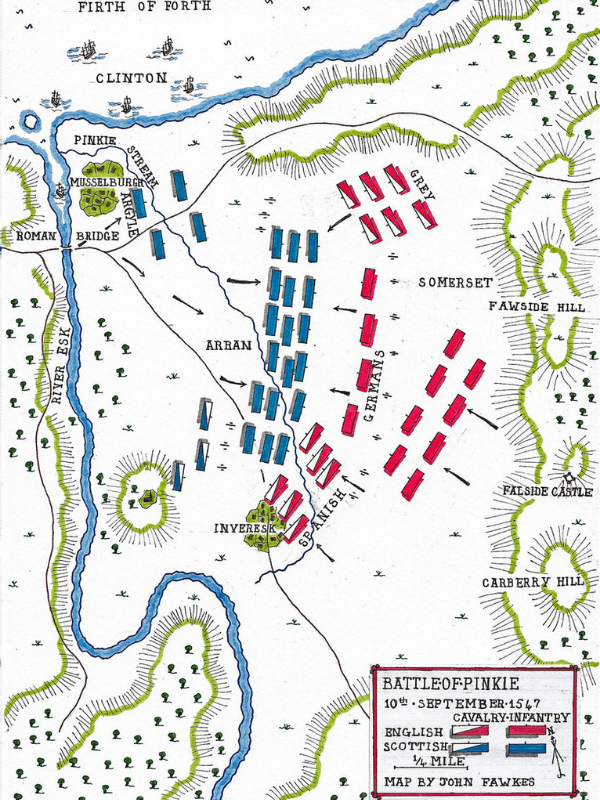
The conflict escalated into a multi-front war following Henry’s death in January 1547. Edward VI’s newly appointed Lord Protector, Edward Seymour, now raised to the title of 1st Duke of Somerset, launched a land and sea offensive to enforce the marriage alliance. In September 1547, the 1st Duke of Somerset marched an army of sixteen thousand troops into Scotland, backed by a supply fleet of sixty warships and transport tenders commanded by Edward Clinton, 9th Lord Clinton. Cornering a larger host of approximately twenty-six thousand Scots along the Lothian coast under the command of James Hamilton, 2nd Earl of Arran, the opposing forces collided on 10 September 1547 at the Battle of Pinkie Cleugh near Musselburgh.
The engagement stands as the first combined-arms battle on British soil. The Duke of Somerset deployed field artillery along the high ground at Inveresk and coordinated a tactical bombardment from the 9th Lord Clinton’s warships anchored offshore in the Firth of Forth. This barrage rained fire directly into the exposed flank of the Scottish ranks before John Dudley, 1st Earl of Warwick, launched a counter-charge with heavy cavalry and Italian mounted arquebusiers to break the dense Scottish spear rings. The English victory at Pinkie Cleugh killed over ten thousand Scots and resulted in the capture of numerous nobles, including George Gordon, 4th Earl of Huntly, who was taken south as a prisoner.
Despite this victory, the Duke of Somerset failed to achieve his political objectives. Rather than submitting to the English garrison network, Mary of Guise, the Queen Dowager of Scotland, smuggled the young Mary, Queen of Scots, across the sea to Brittany in August 1548, betrothing her directly to the French Dauphin, the future King Francis II.
Faced with mounting domestic rebellions, Crown debts exceeding £250,000, and coordinated French military counter-attacks at Haddington, the English administration was forced to dismantle its border fortifications. Under the leadership of John Dudley, now ruling as Lord President of the Council, England signed the Treaty of Boulogne in March 1550, permanently withdrawing its forces from Scotland and bringing an end to the military campaigns.
Further Information: The Rough Wooing and Anglo-Scottish Wars

The Henrician Succession and Seymour Palace Coup
1547 AD
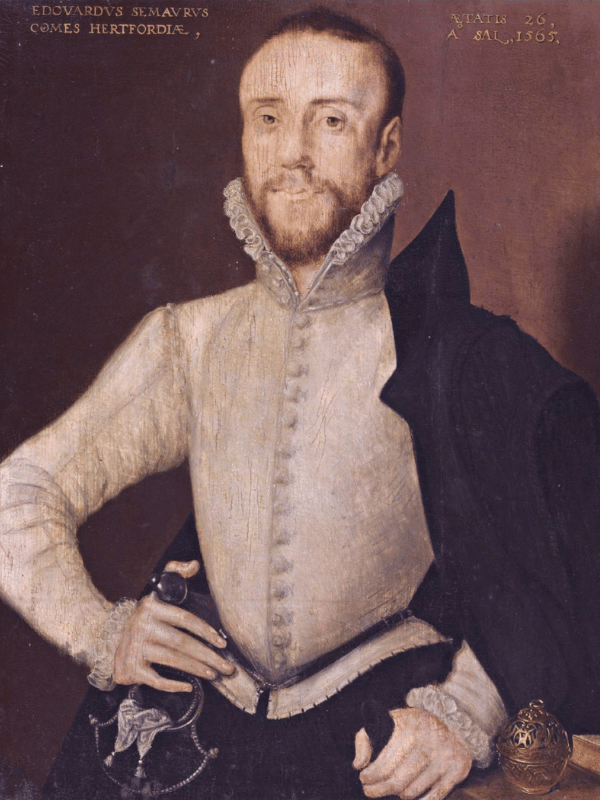
The transition of power following the death of King Henry VIII on 28 January 1547 was executed through a clandestine palace coup that subverted the late monarch's explicit constitutional blueprints. Aware that the King was dying, Edward Seymour, 1st Earl of Hertford, and Sir William Paget, the King's Principal Secretary, conspired to seize the executive machinery of the state.
For three days, the conspirators hid Henry VIII’s death from the public, keeping the royal corpse inside the bedchamber at Whitehall while Parliament continued to sit as if the sovereign were alive. This operational silence allowed the 1st Earl of Hertford to ride to Enfield to secure physical custody of the nine-year-old Prince Edward, while Paget seized control of the dry stamp—the official replica of the King’s signature—using it to alter the royal will and pack the upcoming regency government with reformist allies.
Henry VIII’s will had mandated a collective regency, naming a balanced council of sixteen executors who held equal governing authority until the young King reached his majority at eighteen years old. However, once Prince Edward was brought into the Tower of London, the reformist faction broke this constitutional blueprint. On 31 January 1547, the executors assembled and, influenced by Paget’s promises of land and titles from the Crown estates, voted to consolidate executive power into a singular office. The 1st Earl of Hertford was declared Lord Protector of the Realm and Governor of the King’s Person, an advancement that he finalized by packing the Privy Council and elevating himself to the title of 1st Duke of Somerset.
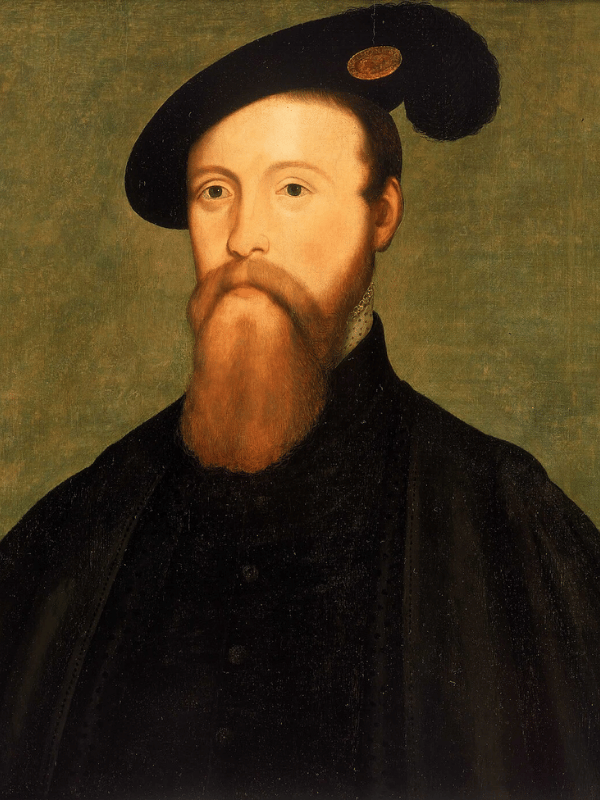
This consolidation of authority ignited a factional war within the Seymour family itself, driven by the ambitions of the protector's younger brother, Sir Thomas Seymour. Furious at being excluded from the core regency council by his brother’s coup, Thomas Seymour demanded a share of the state machinery, building a rival power base at court. To appease these demands, the newly created 1st Duke of Somerset granted him Crown estates, elevated him to the peerage as 1st Baron Seymour of Sudeley, and appointed him Lord High Admiral of England. Rather than neutralizing his sibling, these elevations increased the new 1st Baron Seymour's ambitions; he immediately sought to bypass his brother's authority by conducting a secret marriage to the Queen Dowager, Catherine Parr, in May 1547, and began smuggling pocket money to the young King Edward VI to turn the child against the protector's custody.
To secure a grip over the state machinery and neutralize external resistance, the new 1st Duke of Somerset launched an immediate purge of conservative opposition inside the council. His primary target was Thomas Wriothesley, 1st Earl of Southampton, the Catholic Lord Chancellor who opposed the protector's authority. Somerset used a technical legal infraction to strip the 1st Earl of Southampton of the Great Seal, expelling him from the council and placing him under house arrest.
At the same time, the protector altered the young King's Letters Patent, granting himself the right to appoint or dismiss privy counselors at his own whim and bypassing Parliament entirely to rule the country by direct royal proclamation, an era of executive dominance that locked down the state until the domestic explosions of 1549.


Edward VI and the Radical Reformation
1547 - 1553 AD
Additional Information: The History of the Church in England / Thomas Cranmer and the Book of Common Prayer
The stabilization of the new protectorate administration allowed the Crown to shift from Henry VIII’s conservative Catholicism without a Pope toward an aggressive Protestant revolution. Operating with the backing of the regency council, a network of evangelical theologians viewed the new reign as an opportunity to purge the English Church of its Latin liturgy and scholastic traditions. This top-down transformation was accelerated by the arrival of continental reformers—most notably the German theologian Martin Bucer and the Italian scholar Peter Martyr Vermigli—who were appointed to the divinity chairs at Cambridge and Oxford to train a generation of native preachers.
The primary manager of this theological reordering was Thomas Cranmer, Archbishop of Canterbury, who engineered a uniform legislative template to enforce Protestant conformity across the shires. Moving away from the localized liturgical variations that had defined the medieval church, Cranmer compiled a centralized, vernacular service book, the Book of Common Prayer, which replaced the ancient Latin Missal. To ensure compliance, Parliament passed the Acts of Uniformity, which made church attendance a civic duty. Royal officials and local magistrates conducted parish visitations, utilizing financial penalties and imprisonment to crush traditionalist non-conformity inside local communities before the western religious risings exploded.
Beyond these liturgical changes, the regime executed a redistribution of ecclesiastical wealth to fund its border wars and enrich the nobility. Royal commissioners dismantled the financial networks of local guilds, chantries, and brotherhoods, re-routing capital directly into the hands of the managers at Westminster.
This state-sponsored liquidation altered the daily life of the provincial shires, severing the social links that had bound the common populace to the old faith. By the final months of the reign, the English Church had been stripped of its monastic lands and decorative valuables, establishing a Calvinist theological core that withstood the subsequent Catholic restoration.
Further Information: Edward VI and the Radical Reformation

The Rebellions of 1549: Liturgy and Enclosures
1549 AD
The radical religious changes and economic strains of Edward VI's minority reign triggered two simultaneous domestic rebellions in the summer of 1549. These twin crises bankrupted the regency government of the Lord Protector, Edward Seymour, Duke of Somerset, throwing the state into a panic as thousands of citizens rose to challenge central authority. The unrest was intensified by inflation, debasement of the silver currency, and a new tax on sheep and woolen cloth, which directly threatened the livelihoods of the rural population.
In the southwest, Devon and Cornwall exploded into the Prayer Book Rebellion in June 1549, where local populations rejected the new English liturgy mandated by the Act of Uniformity, demanding the restoration of the traditional Latin Mass and old Catholic customs. The rebels assembled an army of roughly 6,000 men under the leadership of the Cornish squire Humphrey Arundell. They laid siege to Exeter, blocking its water supplies and cutting off royal communication lines to the west. At the exact same time, Kett's Rebellion erupted in Norfolk. Led by a tanner named Robert Kett, over 16,000 peasants and agrarian workers assembled an organized camp on Mousehold Heath outside Norwich. They tore down the timber fences built by wealthy landowners to enclose communal grazing lands, establishing their own court of justice beneath a tree they named the Oak of Reformation to demand agrarian reforms.
Faced with a collapse of domestic security and the refusal of local county militias to take up arms against their own kinsmen, the Duke of Somerset took the step of hiring foreign Italian and German mercenaries to crush the rebellions. In the west, these mercenary units, reinforced by German landsknechts and Italian handgunners under John Russell, 1st Baron Russell, broke the siege of Exeter. They executed a series of engagements that killed over 4,000 rebels at Clyst St Mary and Sampford Courtenay, followed by the execution of Arundell and his captains.
In the east, John Dudley, Earl of Warwick, led a vanguard force of royal cavalry and foreign mercenaries to assault Kett’s camp, catching the peasants when they left the high ground of Mousehold Heath to face the royalists in the open valley of Dussindale on 27 August 1549. The resulting Battle of Dussindale ended in a massacre, leaving over 3,000 peasants dead in the field. Robert Kett was captured, tried, and returned to Norwich to be hanged in chains from the heights of the castle walls.
These victories restored order through force, but the breakdown of domestic security cost the Duke of Somerset his position, allowing the Earl of Warwick to launch a coup at Windsor Castle to seize power.
Lady Jane Grey and the Nine Days' Succession
1553 AD
In the summer of 1553, the stability of the Tudor kingdom faced a critical emergency when the fifteen-year-old King Edward VI lay dying of a lung infection. Recognizing that his death would pass the crown to his Catholic half-sister Mary—a transition that would mean the destruction of the new Protestant state—Edward, influenced by his chief minister John Dudley, 1st Duke of Northumberland, attempted an illegal bypass of traditional succession law.
Edward drafted a document known as the Devise for the Succession, a decree which disinherited both Mary and his younger half-sister Elizabeth, declaring them illegitimate heirs to the throne. Instead, Edward passed the crown directly to his cousin, the Protestant noble Lady Jane Grey, who had been married to Northumberland’s son just weeks earlier. Following Edward’s death on 6 July 1553, Northumberland immediately marched Jane to the Tower of London, proclaiming her Queen of England.
The coup collapsed within nine days. The population rejected Northumberland’s power grab, viewing Mary as the legitimate heir under the terms of Henry VIII’s statutory will. Mary fled to East Anglia, rapidly assembling a loyal army of gentry and shire militias. Recognizing their isolation, the royal council in London turned against Northumberland, declaring his actions treasonous.
Mary entered the capital unopposed to seize the crown, while Lady Jane Grey was removed from the throne, arrested, and locked inside the Tower walls to await trial.

The Catholic Restoration and Marian Persecutions
1553 - 1558 AD
Additional Information: The History of the Church in England / Marian Persecutions and the Oxford Burnings
The accession of Queen Mary I in July 1553 brought an immediate reversal of the previous two reigns. Mary was a traditionalist who viewed her survival as a mandate to erase all Protestant changes, return the English Church to the spiritual fold of Rome, and restore the legal authority of the Pope over the nation. Supported by her cousin, Reginald Pole, who arrived from Rome to serve as Cardinal Legate and later Archbishop of Canterbury, Mary issued parliamentary repeals that swept away the Protestant prayer books, restored the Latin Mass, and re-established ancient monastic titles across the shires.
To secure her lineage and align England with the premier Catholic power bloc of Europe, Mary signed a marriage treaty in January 1554 with Prince Philip of Spain, the future King Philip II. This alliance triggered an armed insurrection across Kent, known as Wyatt's Rebellion, where the rebel leader Sir Thomas Wyatt the Younger marched a force of four thousand men to London before being routed by royal forces at Ludgate. Mary used this crisis to eliminate potential figureheads for future Protestant plots. She ordered the execution of Lady Jane Grey on Tower Green alongside her husband, Lord Guildford Dudley. Furthermore, Mary locked her half-sister, Princess Elizabeth, inside the Tower walls under guard, placing Sir Henry Bedingfield to oversee her confinement.
Once internal security was restored, Mary re-enacted the ancient heresy laws, launching a campaign of persecution that earned her the historical nickname "Bloody Mary." Over the next four years, royal officials arrested and burned at the stake 284 Protestant men, women, and clergymen who refused to recant their faith. This included the former leaders of the Reformation: Hugh Latimer, the former Bishop of Worcester; Nicholas Ridley, the former Bishop of London; and Thomas Cranmer, the former Archbishop of Canterbury, who were all burned outside Balliol College at Oxford.
Far from destroying the new faith, these executions created a class of Protestant martyrs whose stories were documented by John Foxe, ensuring that when Mary died childless on 17 November 1558, the population was prepared to break away from Rome for good.
Further Information: The Catholic Restoration and Marian Persecutions


The Spanish Match and Loss of Calais
1554 – 1558 AD
The marriage between Queen Mary I and Prince Philip of Spain, celebrated at Winchester Cathedral on 25 July 1554, represented a strategy to anchor England within the global Habsburg empire. Prince Philip was the eldest son and primary heir of the Holy Roman Emperor Charles V and Isabella of Portugal, making him the nephew of Mary’s mother, Catherine of Aragon. His family formed the core of European dynastic power; his sister, Joanna of Austria, was Princess Consort of Portugal, while his younger sister, Maria of Austria, became Holy Roman Empress through her marriage to Maximilian II. Philip himself had been previously married to Maria Manuela of Portugal, a union that yielded his eldest son, Infante Don Carlos of Spain.
To ease fears of a foreign takeover by this continental dynasty, the English Parliament restricted the alliance through a marriage treaty. Under these terms, Philip was granted the nominal title of King of England and joint authority over official documents, but he was banned from appointing foreign officials to English government posts, forbidden from taking the Queen or any royal heirs off the island without parliamentary consent, and barred from claiming the English crown if the marriage remained childless. When his father, Emperor Charles V, abdicated his domains in January 1556, Philip ascended the throne as King Philip II of Spain, making Mary the Queen Consort of the Spanish monarchy.
Despite these legal restrictions, King Philip II used his position as joint sovereign to draw the English administration into the ongoing Italian Wars against the French Valois dynasty. In June 1557, Mary I declared war on France to support her husband, dispatching an English force of seven thousand soldiers under the command of William Herbert, 1st Earl of Pembroke, to join the Spanish army operating in northern France. While this force defeated the French army at the Battle of St. Quentin in August 1557, the campaign exposed England’s northern border to a Scottish invasion and left the English Pale in France vulnerable to a counter-offensive.
The climax of this foreign entanglement unfolded in the winter of early 1558. Capitalizing on the fact that the English council had drawn down the winter garrisons of the continental fortresses to conserve funds, the French military leader, Francis Guise, 2nd Duc de Guise, mobilized an army of twenty-seven thousand men.
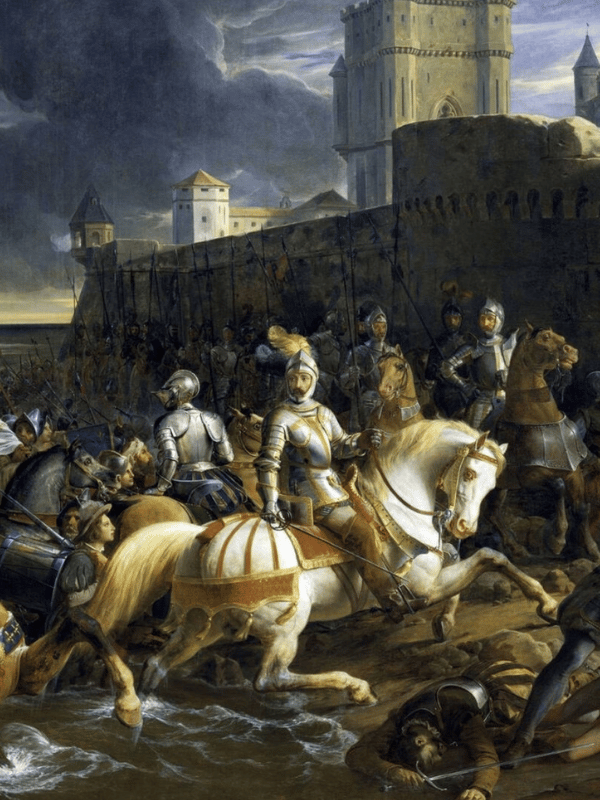
On 1 January 1558, the French vanguard launched a surprise assault on the outer defenses of Calais, using siege artillery to batter down the ramparts of Fort Nieulay and Fort Risenbank. Thomas Wentworth, 2nd Lord Wentworth, the Lord Deputy of Calais, was trapped inside the town with a garrison of only eight hundred men and signed a capitulation on 7 January 1558, surrendering the city after 211 years of continuous English rule. The fall of Calais damaged English national pride, closed the country's main commercial cloth gateway into the European market, and ended Mary I's foreign policy just months before her death.
Further Information: The Spanish Match and Loss of Calais


Elizabeth I: The Elizabethan Religious Settlement
1558 - 1559 AD
Additional Information: The History of the Church in England / The Elizabethan Settlement: The Via Media
The accession of Queen Elizabeth I in November 1558 brought an end to the Marian persecutions and restored national sovereignty. Facing a country deeply fractured by decades of religious changes, the Queen used her first Parliament in early 1559 to establish a compromise known as the Elizabethan Religious Settlement. To navigate the resistance of the Catholic bishops remaining in the House of Lords, Elizabeth and her principal secretary, Sir William Cecil, utilized careful parliamentary management, arresting key conservative churchmen and securing a narrow legislative victory that laid the legal foundations of the new regime.
The blueprint of this settlement relied on two legislative statutes. First, the Act of Supremacy of 1559 revived the national break from Rome, declaring Elizabeth to be the "Supreme Governor" of the Church of England. This title was chosen to soothe traditionalists who rejected a woman holding the Henrician title of Supreme Head, while forcing public officials, university graduates, and clergymen to swear an Oath of Supremacy directly to the Crown on pain of treason. Second, the Act of Uniformity of 1559 made it a legal obligation for every parish in England to use a newly modified version of the 1552 English Book of Common Prayer. This text fused Protestant theology with traditional church hierarchy and priestly vestments, striking a delicate liturgical balance designed to maximize stability.
To enforce this settlement across the country, Elizabeth introduced the Recusancy Laws, imposing a fixed fine of twelve silver pence—the equivalent of a laborer's daily wage—on any citizen who failed to attend the official English services on Sundays. Furthermore, the Crown issued a series of fifty-seven Royal Injunctions in the summer of 1559, establishing an oversight network.
Under these rules, commissioners and local churchwardens were ordered to remove surviving Catholic shrines from local parishes, review the licenses of all preaching clergy, and track these recusants in local ledgers. By positioning Matthew Parker as Archbishop of Canterbury to oversee this discipline, Elizabeth bound the daily religious life of the populace straight to the authority of the Tudor Crown, creating a lasting national church framework before the escalating threats of the Northern Rebellion erupted a decade later.
Further Information: Elizabeth I: The Elizabethan Religious Settlement


The Elizabethan Golden Age
1559 - 1603 AD
The enforcement of the religious settlement ushered in a period of domestic stability and commercial growth, historically recorded as the Elizabethan Golden Age. Following the inflation, currency debasement, and treasury bankruptcies of the mid-Tudor years, the state executed a recovery, masterminded by the financial agent Sir Thomas Gresham. Gresham stabilized the national currency, re-established English credit on the Antwerp exchange, and founded the Royal Exchange in London on 23 January 1571, transforming the capital into a hub for international merchant finance and maritime trade.
To secure this commercial growth, the Crown chartered state-backed monopolies, including the Company of Merchant Adventurers of England and the Muscovy Company, allowing merchants to bypass middlemen and trade directly for raw Baltic timber, iron, and Russian tallow.
This economic stabilization sparked a commercial and cultural boom across the country, as wealth extracted from sheep farming, wool broadcloth exports, and privateer trade fleets funded an architectural and cultural renaissance. Elite families constructed magnificent, window-dense "prodigy houses"—such as Hardwick Hall, engineered by the master stonemason Robert Smythson, and Burghley House, built for William Cecil, 1st Baron Burghley—designed without defensive walls to display the domestic security of the country. At the same time, the state backed an expansion of the literary and leisure economies.
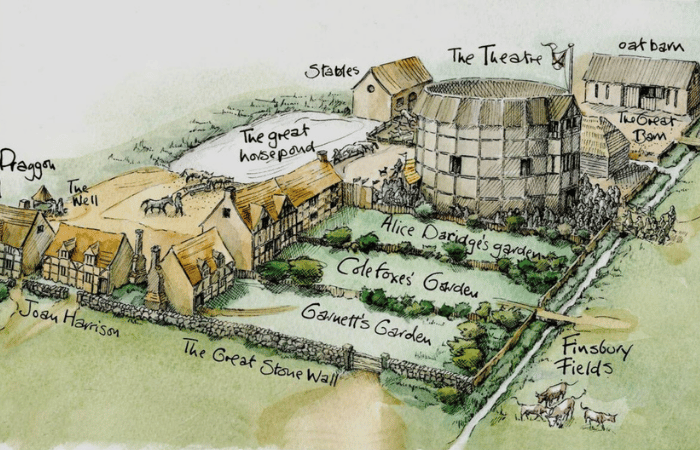
The consolidation of the English language on the public stage allowed the open-air playhouses of London—most notably The Theatre, erected in Shoreditch in 1576, and The Globe, built in Southwark in 1599—to experience a creative boom. Under the patronage of Henry Carey, 1st Baron Hunsdon, acting troupes like the Lord Chamberlain's Men performed the works of William Shakespeare and Christopher Marlowe while expanding the literacy rates of the emerging merchant classes.
Daily life in the country was stabilized by social legislation, culminating in the Elizabethan Poor Laws of 1597 and 1601. This system made local civil parishes legally responsible for raising a local tax to support the elderly, sick, and vulnerable, while organizing work for the unemployed, replacing the old charity systems of the dissolved monasteries.
To enforce this grid of public welfare, the Crown empowered local Justices of the Peace, who supervised churchwardens, appointed overseers of the poor in every parish, and punished able-bodied vagrants. This legislative framework contained domestic food riots during the severe harvest failures of the 1590s, pinning the lower classes to a system of state relief and securing internal order across the shires until the final days of the Tudor Crown.
Further Information: The Elizabethan Golden Age

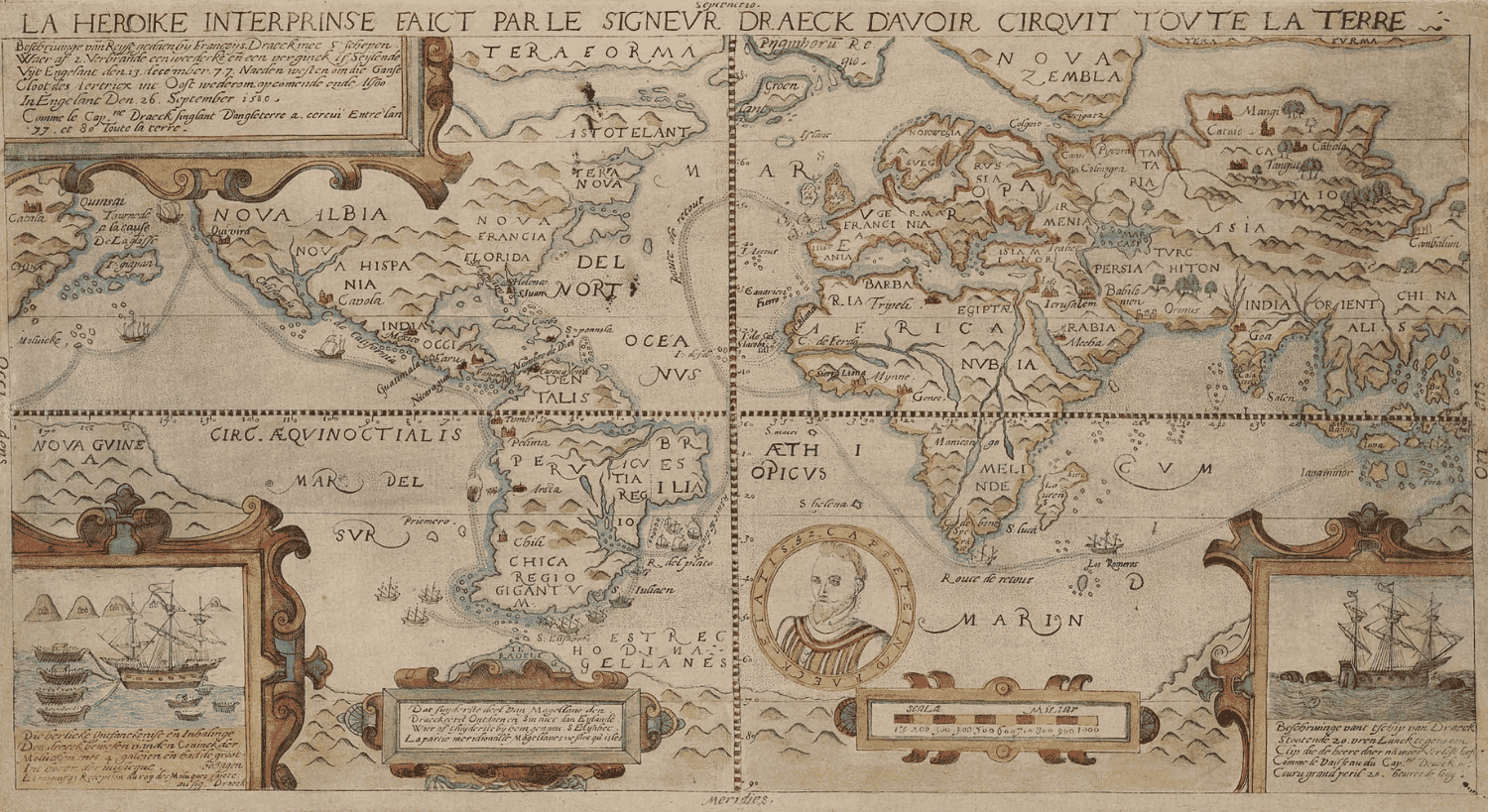
The Circumnavigation of Francis Drake
1577 - 1580 AD
The launch of an armed five-ship squadron from Plymouth in the winter of 1577 marked the beginning of a covert, state-sanctioned raiding voyage that developed into the second successful circumnavigation of the globe. Financed secretly by a syndicate of high-ranking Elizabethan courtiers and investors—including Queen Elizabeth I herself—the expedition was designed to break the maritime monopoly of the Spanish Empire by invading the Pacific Ocean via the treacherous Straits of Magellan. Operating under the command of Francis Drake aboard his flagship the Pelican (later renamed the Golden Hind), the fleet carried nearly one hundred and sixty veteran sailors, carpenters, and soldiers under the guise of an innocent trading voyage to the Mediterranean.
This enterprise was an open act of geopolitical piracy against King Philip II of Spain, designed to capture the immense shipments of silver and gold extracted from the mines of Peru before they could cross the Atlantic to fund Spanish armies in the Low Countries.
The expedition faced immediate internal crisis and extreme environmental resistance as it pushed south along the South American coastline. Arriving at Port San Julián in Argentina in June 1578, Drake confronted a brewing aristocratic rebellion, executing his co-commander Thomas Doughty for mutiny and treason to secure absolute military control over his remaining crews. After abandoning his two worn supply ships, Drake navigated the three remaining vessels through the narrow, freezing labyrinth of the Straits of Magellan in a record sixteen days.
Upon entering the Pacific Ocean in September 1578, the squadron was hit by a massive, multi-week gale that sank the Marigold with all hands and drove the Elizabeth to abandon the voyage and flee back to England, leaving Drake entirely alone aboard the Golden Hind. Undeterred, Drake sailed north along the unfortified Pacific coast of South America, launching surprise amphibious raids on Spanish treasure harbors like Valparaíso and Callao, where Spanish officials had never encountered a foreign warship.
The peak of the raiding voyage occurred on 1 March 1579 off the coast of Ecuador, where Drake tracked and intercepted the heavily laden Spanish treasure galleon Nuestra Señora de la Concepción (popularly known as the Cacafuego). Bypassing the galleon's undefended flanks at dusk, the crew of the Golden Hind unleashed a devastating broadside that shot away the Spanish vessel's mizzenmast, allowing English boarding parties to secure the ship without a single English casualty. The manifest of captured treasure was staggering: the crew spent six days transferring 26 tonnes of silver bullion, thirteen chests of minted silver coin, and eighty pounds of pure gold straight into the hold of the Golden Hind, an immense fortune that completely emptied the regional treasury of Peru.
Knowing that the entire Spanish Pacific fleet was mobilizing to block his return route through the straits, Drake pushed north to search for a mythical Northwest Passage, landing in June 1579 near modern San Francisco to repair his leaking hull and claim the territory as Nova Albion (New England).
To escape his imperial pursuers, Drake launched into the open Pacific, steering across the unknown ocean using captured Spanish charts to navigate the spice lanes of the Moluccas, Celebes, and Java. After narrowly surviving a reef grounding in the Indonesian archipelago that forced the crew to dump tons of cloves and several cannons to lighten the ship, Drake crossed the Indian Ocean and rounded the Cape of Good Hope.
On 26 September 1580, the battered Golden Hind sailed back into Plymouth harbor after a voyage of thirty-four months. The political impact was seismic; the Queen ignored Spanish diplomatic protests, boarded the ship at Deptford, and personally knighted Drake on his own quarterdeck. The captured silver bullion was locked inside the Tower of London, providing the crown with enough liquid capital to completely clear the national debt and fund the military lines that would later repel the Spanish Armada, establishing the definitive blueprint for England's future maritime empire.
Exploration, Privateering, and English Sea Power
1577 - 1603 AD
Additional Information: The First British Empire / Early Atlantic Exploration and Confrontation with Spain
Although the 1589 English Armada had failed, the destruction of the Spanish Armada finalized England's transition into an international maritime power, launching an era of global exploration, long-distance trade, and state-sponsored privateering. Because the traditional trade lines of the Atlantic and Indian Oceans were locked down by the Spanish and Portuguese empires, the Elizabethan state backed a class of maritime adventurers to breach these monopolies and capture new wealth. Operating with thin financial reserves, the Crown relied on these mercenary fleets to project leverage across the Atlantic without deploying the expensive Royal Navy.
The primary weapon of this ongoing maritime expansion remained the state-authorised privateer—merchant captains holding official Letters of Marque from the Queen that legally permitted them to hunt and plunder enemy merchant shipping as a legitimate act of war. Building directly upon the unprecedented success of that 1577–1580 circumnavigation, a new generation of English captains expanded their raiding networks into the Caribbean and the Atlantic shipping lanes.
Instead of operating as isolated raiders, these state-sanctioned fleets weaponised the exact tactical maneuvers Drake had deployed during his capture of the Nuestra Señora de la Concepción, using small, fast-sailing race-built galleons to outmaneuver the sluggish, heavily armed Spanish treasure fleets. The massive financial windfall from that original voyage—including the 26 tonnes of silver bullion, eighty pounds of gold, and thousands of coins that had cleared the foreign debt of the English state—now served as the essential venture capital that funded these subsequent expeditions. By yielding a staggering 4,700% return for the court syndicate that had financed the original voyage, this wealth transformed private piracy into a permanent instrument of national defense. This continuous privateering campaign maintained an unyielding economic blockade against the Spanish Empire, using commercial investments from London merchant syndicates to sustain English sea power across the Atlantic without draining the liquid reserves of the crown.
To maintain this maritime leverage while protecting her treasury, the Queen relied on a faction of privateer captains known as the Sea Dogs. This maritime group included Sir John Hawkins, who served as Treasurer of the Navy, his cousin Sir Francis Drake, Sir Walter Raleigh, and the navigator Sir Martin Frobisher. Operating as a legalized ring of state-sponsored corsairs, the Sea Dogs functioned as a tool of asymmetric warfare. Because the building and provisioning of royal warships was an expensive drain on Crown revenues, Elizabeth I permitted these merchant adventurers to finance their own private combat fleets through joint-stock syndicates.
In return for official Letters of Marque, the captains surrendered a fixed ten-percent share of all captured Spanish plunder to the royal treasury. This arrangement allowed the Sea Dogs to harass Spanish shipping lines, burn Atlantic ports like Santo Domingo and Cartagena, and capture bullion, converting maritime piracy into a self-funding national defense strategy that drained the wealth of the Spanish Empire before the formal outbreak of open war.
Simultaneously, merchants and explorers established early long-distance trading corporations that laid the blueprints for future global expansion. To secure an entry point into the Americas, Sir Walter Raleigh organized maritime expeditions to plant a permanent English colony on the coast of North America, naming the territory Virginia in honour of the Virgin Queen. In April 1585, Raleigh dispatched a fleet of seven vessels commanded by Sir Richard Grenville to settle Roanoke Island.
Although this initial settlement collapsed due to food scarcity and native hostility, it was followed on 31 December 1600 by a more successful corporate endeavor: the formal chartering of the East India Company. Operating as a joint-stock enterprise under the governance of Sir Thomas Smythe, this corporation was granted a monopoly over all trade east of the Cape of Good Hope, sending its first fleet of four merchantmen under the command of Sir James Lancaster to establish factories in the Indian Ocean.


The High Elizabethan Renaissance
1580 - 1603 AD
Additional Information: The Evolution of the English Language / Early Modern English: The Printing Press and Renaissance Expansion
The final decades of Elizabeth I's reign witnessed an explosion of cultural and intellectual output, known as the High Elizabethan Renaissance. With domestic security stabilized by the state spy network and wealth coming in from privateering, London became a creative capital, transforming the language and artistic expression of the nation. To regulate this entertainment sector and enforce Crown censorship, the state empowered the Office of the Revels under Edmund Tilney, Master of the Revels.
Tilney held the sole authority to license public plays, audit scripts for political subversion, and arrest defiant writers, converting the arts into a supervised instrument of state stability. This censorship was demonstrated in June 1599 through the Bishops' Ban, an emergency decree issued by John Whitgift, Archbishop of Canterbury, which ordered the immediate public burning of satirical poetry and banned the printing of verse histories without formal Privy Council approval.
Rather than repeating the open-air plays of the public playhouses, the theatre companies pioneered an indoor theatrical tradition. Troupes like the Children of the Chapel established private, candle-lit indoor theaters within the city walls, most notably at the Blackfriars Monastery complex in 1596, where they charged premium ticket prices to cater to the aristocracy and royal courtiers. These private venues became the primary battlegrounds for the War of the Theatres, a literary feud where rival playwrights utilized blank verse, bitter lampoons, and courtly masques to mock their contemporaries, expanding the artistic boundaries of English literature. At the same time, this literate boom transformed the world of poetry, as courtly writers engineered sonnet sequences and allegorical epics—such as The Faerie Queene, published in 1590 by Edmund Spenser—designed to praise the virtues of the Tudor state and celebrate the Protestant identity of the realm.
Concurrently, the visual arts were used by the state to project royal authority across the shires. High-ranking artists like Nicholas Hilliard produced stylized miniature portraits of the Queen, utilizing gold leaf and crushed lapis lazuli washes to create intimate lockets worn by loyal nobles as badges of personal fealty. On a larger scale, court painters created symbolic works like the Rainbow Portrait, attributed to Marcus Gheeraerts the Younger.
These images presented Elizabeth as an immortal, ageless figurehead of stability, using symbolic iconographies like eyes and ears woven into her clothing to demonstrate her surveillance over the realm while hiding the physical reality of an aging monarch. This propaganda campaign unified national morale, using artistic splendor to bind the ruling class directly to the survival of the Tudor state until its final hours in 1603.


The Throckmorton and Babington Assassination Conspiracies
1583 – 1586 AD
The escalating geopolitical and religious rivalries of the late sixteenth century transformed the Elizabethan court into a target for assassination plots and foreign-backed subversion. Following the 1570 Papal Bull Regnans in Excelsis, which excommunicated Queen Elizabeth I and absolved her Catholic subjects of allegiance to the Crown, a series of conspiracies emerged. These plots aimed to assassinate the Protestant Queen and install her captive cousin, Mary, Queen of Scots, on the English throne.
The first major threat unfolded in 1583 through the Throckmorton Plot, a conspiracy organized by Francis Throckmorton, a Catholic gentleman. Throckmorton acted as a courier between Mary, Queen of Scots, the Spanish ambassador Bernardino de Mendoza, and French Catholic forces led by Henry I, 3rd Duc de Guise, coordinating a planned invasion of Sussex backed by foreign financing to execute a Catholic coup.
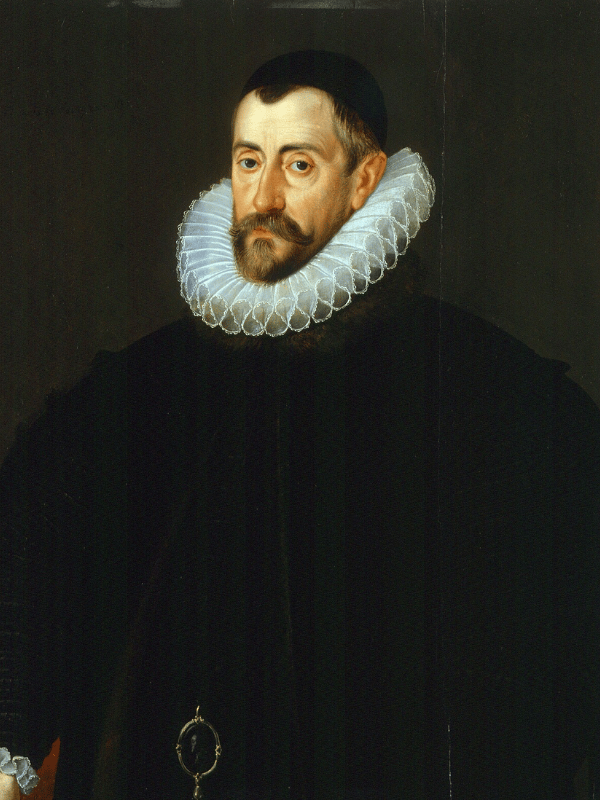
The conspiracy was broken by a centralized intelligence network masterminded by the Queen’s Principal Secretary, Sir Francis Walsingham. Operating from his house in Seething Lane, Walsingham utilized code-breakers and double-agents to monitor Throckmorton’s movements, intercepting his correspondence before arresting him in July 1583. Under interrogation and torture upon the rack in the Tower of London, Throckmorton confessed the layout of the planned invasion, leading to his execution at Tyburn and the expulsion of Ambassador Mendoza, a counter-strike that severed diplomatic relations with Spain. To protect the sovereign, Walsingham and the Privy Council drew up the Bond of Association in late 1584, a legal contract forcing thousands of loyal subjects to sign an oath pledging that in the event of an assassination attempt on Elizabeth I, any individual who would benefit from her death would be executed.
The ultimate trap for the captive Scottish queen was sprung during the summer of 1586 through the Babington Plot, a conspiracy spearheaded by Anthony Babington, a wealthy Catholic from Derbyshire. Babington assembled a cell of six conspirators who plotted to ambush and assassinate Elizabeth I while a Spanish fleet made landfall to liberate Mary. Walsingham’s double-agent, Gilbert Gifford, infiltrated the courier network, instructing the conspirators to smuggle their encrypted letters to Mary inside the linings of beer barrels delivered to Chartley Castle. Every letter was intercepted, copied, and deciphered by Walsingham’s cryptanalyst, Thomas Phelippes.
The definitive breakthrough was achieved on 17 July 1586, when Mary, Queen of Scots, unaware of the surveillance, signed an encrypted reply approving the assassination of her cousin. Phelippes deciphered the text and drew a gallows marker on the parchment before adding a forged postscript requesting the names of the six assassins to entrap the remaining cell. Babington and his co-conspirators were arrested, tried, and executed at St Giles's Fields in September 1586.
Armed with documentary proof of her endorsement of regicide, the Crown launched a state trial at Fotheringhay Castle, resulting in the beheading of Mary, Queen of Scots, on 8 February 1587, permanently closing the primary domestic figurehead for Catholic rebellions and making open war with Spain inevitable.


The Spanish Armada and Campaign of 1588
1585 – 1588 AD
The execution of Mary, Queen of Scots, combined with Elizabeth’s military support for the Protestant Dutch revolt in the Netherlands under the Treaty of Nonsuch, pushed Spain to launch a war of conquest against England. In the summer of 1688, King Philip II of Spain assembled a naval invasion fleet known as the Spanish Armada, consisting of 130 warships carrying over 30,000 soldiers and sailors to cross the sea, link up with the Duke of Parma's army in Flanders, and overthrow the Tudor Crown.
The English navy, under the supreme command of Charles Howard, 2nd Baron Howard of Effingham, and Sir Francis Drake, intercepted the crescent-shaped Armada formation as it sailed up the English Channel in late July. The English utilized a new naval tactic. Rather than attempting to grapple and board the towering Spanish galleons in close-quarters combat, they deployed smaller, faster warships designed by the master shipwright Sir John Hawkins. These vessels were armed with heavy, long-range bronze culverins that could fire broadsides from a distance, battering the enemy hulls without letting the Spanish soldiers approach.
The climax of the defensive campaign occurred on the night of 7 August 1588 off the coast of Gravelines. Sir Francis Drake launched eight fireships—vessels packed with pitch, gunpowder, and tar, set ablaze and sent drifting directly into the tightly anchored Spanish fleet. The sight triggered panic, forcing the Spanish captains to cut their anchor cables and scatter their formations into the open sea.
The next morning, the agile English warships attacked the disorganized fleet at the Battle of Gravelines, inflicting heavy damage before a sudden change in the wind, later celebrated as the "Protestant Wind," drove the surviving Armada ships into a retreat around the rocky coasts of Scotland and Ireland, where dozens of ships were wrecked on the cliffs.
Further Information: The Spanish Armada and Campaign of 1588

William Shakespeare
1589 - 1613 AD
The rapid urbanization of late-sixteenth-century London and the simultaneous growth of commercial public theaters triggered an unprecedented explosion of vernacular drama that permanently reshaped the literary landscape of Early Modern English. This theatrical boom was accelerated by the construction of The Theatre in 1576 by James Burbage, the first purpose-built commercial playhouse in the suburbs of the capital, which broke the traditional reliance on itinerant acting troupes performing in rustic inn-yards. Scribes, actors, and entrepreneurial playwrights found themselves operating within a frantic, highly competitive marketplace where a growing literate public demanded a constant rotation of new scripts.
To meet this immediate commercial pressure, a provincial glove-maker's son from Stratford-upon-Avon named William Shakespeare established himself in London, emerging by 1592 as a prominent playwright, actor, and part-owner of the city's premier acting company, the Lord Chamberlain’s Men (later renamed the King’s Men under King James I).
Working from his primary base at the Globe Theatre—a massive, open-air amphitheater built on the Southwark bankside in 1599 out of salvaged timber—Shakespeare took full advantage of the growing vocabulary of the English Renaissance. While the average late-Elizabethan citizen used a spoken vocabulary of fewer than ten thousand words, Shakespeare put over twenty thousand unique words to use across his thirty-seven plays and one hundred and fifty-four sonnets. He single-handedly introduced over 1,700 new words directly into the English language by changing the way existing words operated.
To widen his choices, he frequently turned established nouns straight into active verbs, changing scant into scanted in King Lear and champion into championed in Macbeth. He combined unrelated Germanic and classical roots to create entirely new descriptive terms, matching lack and lustre into lackluster for As You Like It, and pairing cold with blood to invent cold-blooded in King John. Scribes tracking his scripts also logged the first written uses of essential everyday nouns like eyeball in A Midsummer Night's Dream, manager in Love's Labour's Lost, and addiction in Othello.
This deliberate blending of words changed the rhythm of the written page, moving away from the loose, irregular beats of the old medieval traditions to popularise blank verse—unrhymed lines containing exactly ten syllables with alternating heavy and light stresses. Instead of writing in the Latin of the church or the French of the old nobility, Shakespeare captured a vast cross-section of early modern life by matching his characters' speech directly to their social standing. He paired the elevated, highly descriptive vocabulary of court speech used by kings and nobles with the raw, everyday Anglo-Saxon words spoken by grave-diggers, soldiers, and tavern keepers.
The preservation of his writing was secured after his death in 1623 when his theatrical colleagues John Heminges and Henry Condell gathered his prompt-books and loose scripts to publish the First Folio. This publication printed thirty-six of his plays in a single volume, preventing the loss of masterpieces like Macbeth, The Tempest, and Twelfth Night. By tying his wide vocabulary to the commercial success of the London stage, Shakespeare showed that the native tongue possessed the precision, emotional range, and weight required to build a great national literature, providing future generations of writers with a clear example of vernacular style.
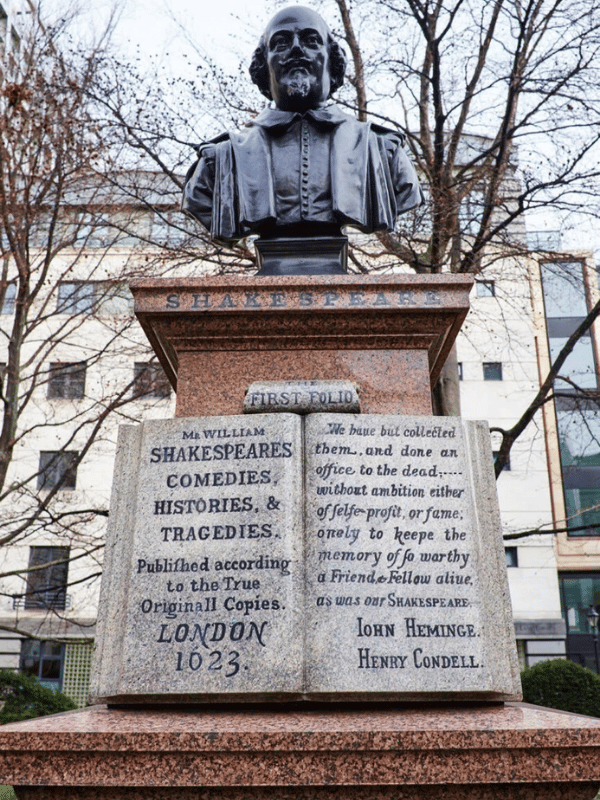
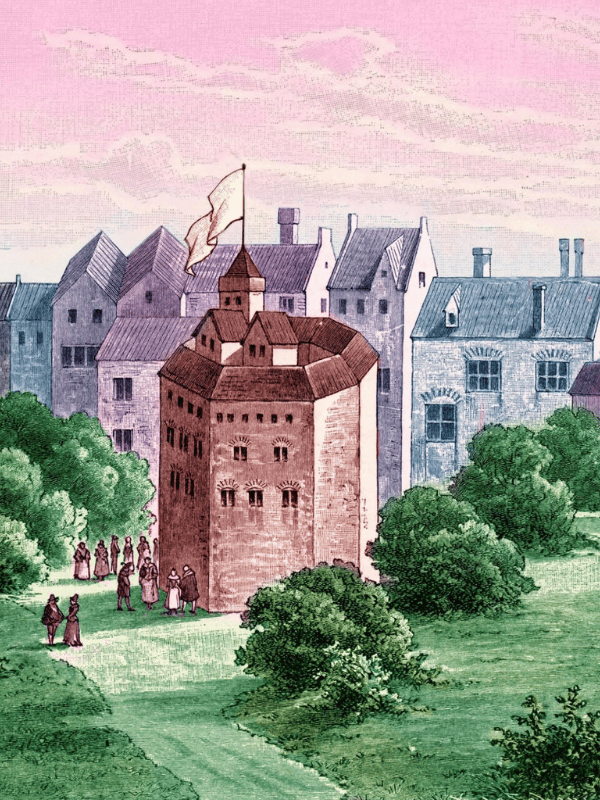
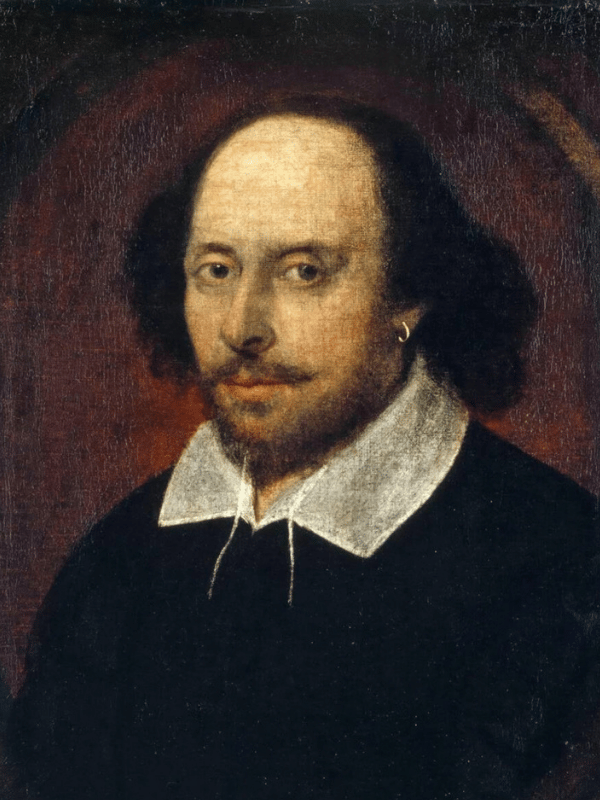
The English Armada and War of Attrition
1589 – 1604 AD
The destruction of King Philip II's invasion fleet generated an overconfident euphoria across the Westminster court, pushing Queen Elizabeth I to launch a naval counter-offensive to break Spanish hegemony. In the spring of 1589, the state mobilized the English Armada—a joint-stock expedition consisting of over 140 ships and 23,000 men under the command of Sir Francis Drake as admiral and Sir John Norreys as general. The objectives were ambitious: destroy the surviving Spanish warships undergoing repairs in the ports of Galicia and Santander, ignite a Portuguese rebellion against Spanish rule in Lisbon, and seize the Azores islands to choke off Philip’s American silver fleets.
However, the campaign degenerated into a high-attrition failure. Drake’s forces were plagued by outbreaks of camp sickness and ran out of provisions due to logistics mismanagement. The troops suffered repulses against the fortified walls of Coruña and the gates of Lisbon, losing over 11,000 men and liquidating the silver wealth captured in 1588. This defeat restored Philip II’s naval leverage and ensured the war would drag on.
The final decade of the conflict devolved into a war of economic and military attrition that pushed the finances of the Tudor state to a breaking point. Philip II rebuilt his Atlantic navy with "Twelve Apostles" galleons, establishing convoy networks that defended the American silver fleets from English privateers, while launching smaller Armadas to threaten Cornwall and Ireland. The English state fought on a vast geopolitical canvas during the 1590s, deploying land forces under Sir John Norreys and Robert Devereux, 2nd Earl of Essex, to support Henry IV of France against Spanish and Catholic League armies in Brittany and Normandy. English operations were driven by the imperative of preventing Spanish forces from capturing deep-water ports along the French coast, which King Philip II intended to use as forward bases for secondary invasion armadas targeting Cornwall and Ireland.
In the Brittany theatre, English forces suffered a tactical disaster in May 1592 at the Siege of Craon, where an overstretched Anglo-French relief column under Norreys was ambushed and routed by a joint Spanish-Breton force commanded by Don Juan del Águila, resulting in the loss of over 1,500 English soldiers and their entire artillery train. To repair this rupture and secure the naval anchorage of Brest, Elizabeth I dispatched a reinforcement fleet in the autumn of 1594.
This campaign culminated in the Siege of Fort Crozon in November 1594, where English troops under Norreys executed a month-long siege against a promontory fort held by a four-hundred-man Spanish garrison. The fortress was finally carried following a frontal assault supported by naval bombardment. While the operation cleared the approaches to Brest, the victory came at a cost, resulting in high casualty rates and the mortal wounding of the naval captain Sir Martin Frobisher, who was shot during the storming of the ramparts.
Concurrently, in the Normandy theatre, English auxiliary forces under the command of Peregrine Bertie, 13th Baron Willoughby de Eresby, fought alongside French royalists to preserve Henry IV's lines of communication. English forces played a defensive role at the Battle of Arques in September 1589, where an Anglo-royalist army repulsed an assault by the Catholic League. This was followed in March 1590 by the Battle of Ivry, where English troops participated in a defeat of League forces, helping to secure Henry IV's claim to the French throne at a major fiscal cost to the London exchequer.
At the same time, the Crown funded garrison networks across the Netherlands to support the United Provinces against the forces of the Spanish Netherlands. This commitment culminated in an Anglo-Dutch tactical victory on 24 January 1597 at the Battle of Turnhout, where English cavalry and infantry under Sir Francis Vere partnered with Maurice of Nassau to defeat a Spanish column under the Count of Varax.
This operational footprint expanded into the Siege of Ostend, which became a three-year war of attrition following its investment by Spanish armies in July 1601. Sir Francis Vere took command of the city's defenses, utilizing maritime reinforcements from England to hold the fortress lines against relentless bombardment. This continental expenditure drained the English state, precisely while the Crown was combating the Spanish-backed Nine Years' War led by Hugh O'Neill, 3rd Earl of Tyrone, in Ulster.
This deadlock was finally broken after the deaths of both Elizabeth I and Philip II. In August 1604, the newly ascended King James I executed a diplomatic pivot, signing the Treaty of London. The treaty secured a stable peace by forcing England to terminate state-sponsored privateering and withdraw its military support from the Dutch rebels, in exchange for Spain recognizing the survival of the independent Protestant state.


The Nine Years' War and the Irish Frontier Conflict
1594 - 1603 AD
While the royal court celebrated in London, the late Tudor state entered its most prolonged, ruinous military conflict on the western frontier. In 1594, a massive, coordinated rebellion exploded across Ireland, remembered historically as the Nine Years' War. The pan-Gaelic uprising was directed by Hugh O'Neill, 2nd Earl of Tyrone, a brilliant, English-educated military commander who successfully transformed traditional clan militias into a highly disciplined, modern standing force. The Earl of Tyrone aggressively equipped his infantry by importing modern matchlock calivers and muskets from the continent, retaining elite mercenary squads known as gallowglass, and securing critical financial and military backing from King Philip II of Spain.
Tyrone repeatedly outmaneuvered successive English campaigns, masterfully utilizing the treacherous bogs, dense forests, and steep valleys of Ulster to launch devastating ambushes. In August 1598, O'Neill intercepted and utterly annihilated the royal army at the Battle of the Yellow Ford, killing the English commander Sir Henry Bagenal and inflicting over 2,000 casualties. The existential threat to English rule grew so severe that the Queen’s volatile favourite, Robert Devereux, 2nd Earl of Essex, was dispatched in April 1599 with an unprecedented army of 16,000 infantry and 1,300 cavalry. The Earl of Essex failed completely to contain Tyrone; he wasted his troop strength on futile southern maneuvers, suffered massive casualties from camp disease, and concluded an unauthorized truce before fleeing back to London, where he was ultimately executed for high treason in 1601.
The decisive turning point of the war arrived under the ruthless command of a new Lord Deputy, Charles Blount, 8th Baron Mountjoy. Baron Mountjoy completely abandoned obsolete, sweeping cavalry charges in favor of a brutal war of attrition. He constructed a tight, suffocating ring of permanent earthen fortresses across the borders of Ulster, deployed the English navy to dynamically land troops behind enemy lines, and instituted an unyielding scorched-earth policy that systematically burned Irish crops and slaughtered livestock to trigger a man-made famine.
In December 1601, Mountjoy achieved a crowning victory at the Siege of Kinsale, trapping a combined force of Irish rebels and 3,500 Spanish troops under the command of Don Juan del Águila. This crushing victory isolated the northern rebellion, forcing Tyrone to submit to unconditional surrender under the terms of the Treaty of Mellifont in March 1603. The settlement broke autonomous Gaelic independence for good, cost the lives of over 100,000 Irish citizens to starvation and conflict, and finalized the centralizing Tudor conquest of Ireland.
Further Information: The Nine Years' War and the Irish Frontier Conflict


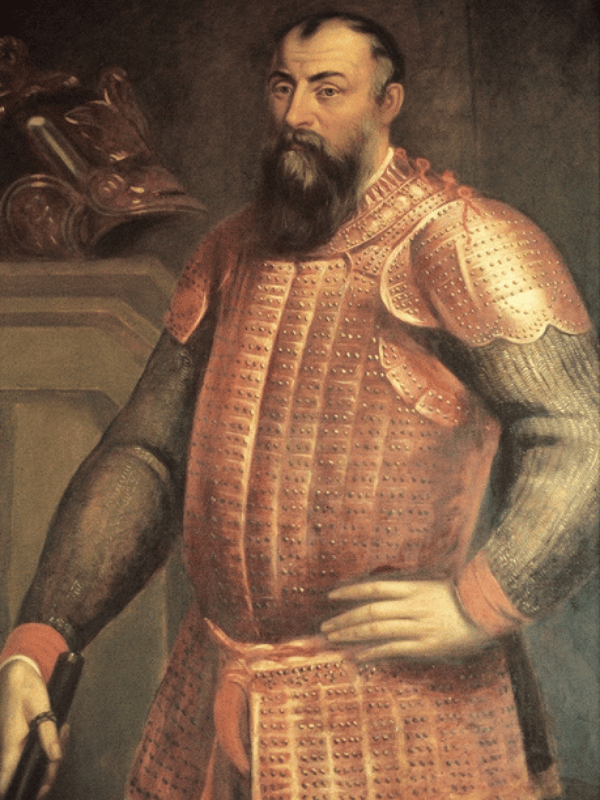
The Question of Succession
1590 - 1603 AD
The most dangerous institutional vulnerability of the late Elizabethan state was the Queen's lifelong refusal to marry or formally designate a successor. By branding herself as the "Virgin Queen" wedded exclusively to England, Elizabeth successfully avoided foreign dominance in her youth, but as she entered her late sixties, this absolute silence created immense anxiety across the country. The lack of a designated heir threatened to plunge the realm back into a dynastic civil war, prompting successive parliaments to regularly petition the Queen to settle the line of succession.
Elizabeth recognized that naming an heir would instantly turn her court into a web of conspiracies, famously declaring that she would not bury her own winding-sheet alive. Scribes and politicians watched her physical health steadily fail, knowing that a sudden death could trigger immediate Catholic invasions or spark competing claims from rival descendants of the House of Tudor.
The primary legal roadblock holding back a peaceful settlement was the century-old royal will of Henry VIII, which had explicitly barred the Scottish Stuart line from inheriting the English crown, favoring instead the English descendants of his younger sister, Mary Tudor. This legal partition left the succession entirely open to volatile aristocratic maneuvering. Seeking to exploit this fragile situation, Robert Devereux, 2nd Earl of Essex, launched an ill-fated armed rebellion in London in February 1601, attempting to storm Whitehall Palace, remove his political rivals, and compel the Queen to name the Scottish King as her heir. The rapid collapse and subsequent execution of the Earl of Essex left the capital under strict military watch, significantly heightening the urgency for a controlled solution to the looming dynastic crisis.
To manage this executive vacuum and outmaneuver rival court factions, the Queen’s principal secretary, Sir Robert Cecil, secretly organized the succession behind the scenes. Between 1601 and 1603, Cecil maintained a highly secure, coded correspondence with King James VI of Scotland, the great-great-grandson of Henry VII.
Utilizing a tight network of trusted couriers, Cecil instructed the Scottish King to adopt a passive diplomatic strategy while the English state machinery was quietly prepared for his arrival. Cecil successfully secured the support of regional magnates, coordinated with local sheriffs, and positioned royal garrisons at strategic crossroads to swiftly suppress any local rebellions.
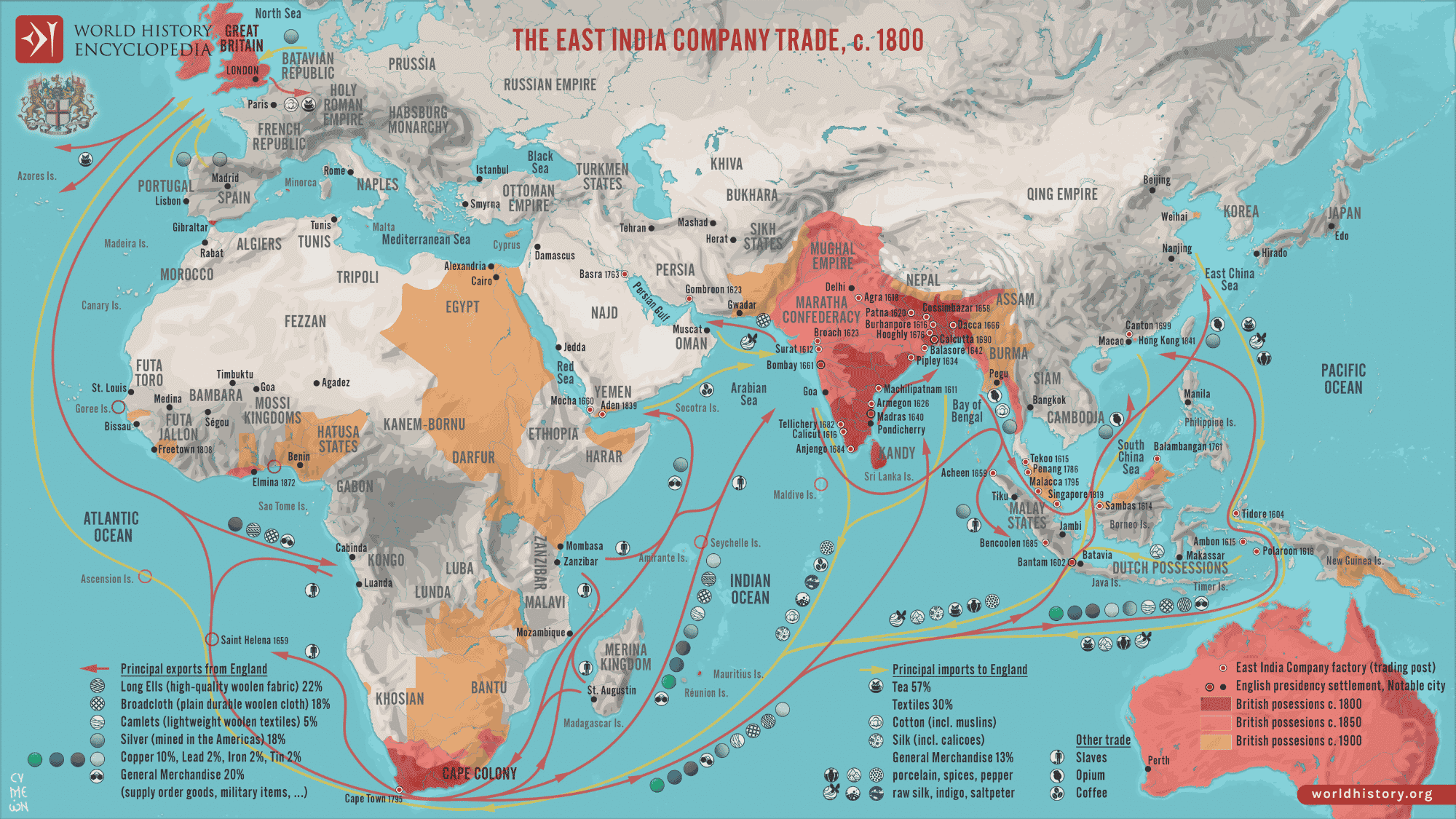
Foundation of the East India Company
1600 AD
Additional Information: The First British Empire / EIC and the Early Factory Monopolies
The final years of the Tudor era witnessed a change in England's global trade, as the royal court looked beyond the Atlantic to establish a foothold inside the markets of Asia. On 31 December 1600, Queen Elizabeth I signed the royal charter incorporating the Governor and Company of Merchants of London Trading into the East Indies, granting this venture an exclusive monopoly over all English maritime trade beyond the Cape of Good Hope.
Moving away from the farming settlement models pursued in the Americas, this enterprise operated as a merchant operation designed to challenge Portuguese and Dutch dominance over the spice traffic of the Indonesian archipelago and the Indian subcontinent. The initial venture assembled a syndicate of 218 knights, aldermen, and merchant adventurers who pooled a starting capital of £68,373, electing Sir Thomas Smythe as Governor of the East India Company to oversee its committee.
The early company voyages relied on an approach that favored the establishment of trading agreements over military aggression. To launch their commercial campaign, the corporation dispatched its first fleet under the command of Sir James Lancaster in February 1601 with four warships: the flagship Red Dragon, the Hector, the Ascension, and the Susan. Lacking the numbers to challenge the military power of the Mughal Empire, the merchants focused on peaceful negotiation with regional rulers. Lancaster reached Sumatra in June 1602, negotiating a trade treaty with the Sultan of Acheh and establishing the company's first coastal outpost, known as a factory, at Bantam on the island of Java to warehouse luxury goods.
The company targeted commodities—most notably pepper, cloves, nutmeg, raw silk, and indigo—shipping these goods back to London where they met high consumer demand. This initial voyage proved profitable, returning to the River Thames with over one million pounds of black pepper that transformed the London merchant elite into a political voice working in partnership with the Crown to protect their corporate privileges. This expanding commerce bypassed traditional domestic manufacturing constraints, as the joint-stock model allowed investors to pool their capital while limiting their personal financial liability, building a self-funding financial base capable of sustaining long-distance maritime voyages. This commercial innovation held the eastern trade in place, providing the Crown with a consistent source of customs revenues and short-term loans.
When the Tudor line ended with the Queen's death in March 1603, the framework established by the 1600 charter remained intact, providing the commercial baseline that subsequent Stuart monarchs would expand to project English corporate power across the Indian Ocean.
Further Information: Foundation of the East India Company


The Death of Elizabeth and Union of the Crowns
1603 AD
Additional Information: The Stuart Era / James I and the Union of the Crowns
On the morning of 24 March 1603, Queen Elizabeth I died at Richmond Palace at seventy years old, bringing a quiet end to the 118-year rule of the House of Tudor. Sir Robert Cecil, who served as the Queen's principal secretary, immediately enforced his meticulously pre-arranged plans to ensure a bloodless succession before any rival claimants could mobilize.
Within mere hours of her final breath, Cecil stood before anxious crowds at Whitehall Cross and Cheapside in London, reading out an official public proclamation to announce the accession of King James VI of Scotland to the vacant English throne. This smooth transition was made possible by months of secret, coded correspondence, successfully outmaneuvering rival court factions led by Sir Walter Raleigh and ensuring the crown passed peacefully to the House of Stuart without a single drop of blood being spilled.
For centuries, the northern border had been a highly volatile, lawless zone defined by brutal military incursions and generations of family blood feuds led by the notorious Border Reivers. By placing both kingdoms under the single personal rule of King James—who travelled south to London in April 1603 and quickly re-branded himself as the King of Great Britain—the Union of the Crowns instantly terminated the military independence of the Scottish frontier.
To enforce order across these newly designated "Middle Shires," King James appointed George Home, 1st Earl of Dunbar, to lead a joint border commission equipped with sweeping martial powers. The Earl of Dunbar systematically dismantled the old reiver clans by executing over one hundred notorious outlaws without trial, tearing down their fortified peel towers, and forcibly dispersing entire families to the newly established plantations in Ireland, effectively transforming a warzone into a secure territory protected by a single Crown.
The death of Elizabeth I closed the chapter on the era of aggressive Tudor centralization, allowing the new Stuart regime to inherit a highly sophisticated corporate state and an burgeoning global empire. This legacy was anchored by a formidable national navy equipped with heavy galleons, a standardized legal framework managed by the Westminster courts, and a global trading footprint led by the newly chartered East India Company. Yet, while King James VI of Scotland now ruled England as King James I, the two nations remained fundamentally distinct; they retained their separate parliaments, distinct legal codes, and conflicting church systems, sharing only a singular sovereign person until the full legislative merger over a century later.
Tudor Period FAQs