
Imperial Consolidation:
The House of Hanover
The House of Hanover and the Consolidation of the Cabinet State
Additional Information: The Georgian Era, The Victorian Era
The dawn of the eighteenth century introduced a permanent stabilization of British governance, directed by the House of Hanover, a German Protestant dynasty that transformed a volatile court into a globally focused constitutional powerhouse.
Inheriting the Kingdom of Great Britain in 1714 under the Act of Settlement, this imported line purposefully withdrew from the day-to-day management of domestic legislation. This executive retreat allowed the political elite to construct the modern foundations of the Cabinet state, centralizing decision-making under a single Prime Minister dependent on a parliamentary majority. By decoupling the administrative machinery from the personal whims of the monarch, this Georgian era locked in the stability required to fund massive trans-oceanic naval campaigns and establish undisputed imperial hegemony across the globe.
The long trajectory of this continental family witnessed deep geopolitical shifts as the dynasty neutralized the armed counter-coups of the Jacobite risings, navigated the loss of the thirteen American colonies, managed the global warfare of the Napoleonic era, and ultimately presided over the legislative reforms of the early nineteenth century that permanently codified the modern boundary lines between the sovereign and the legislature.
Page Contents:
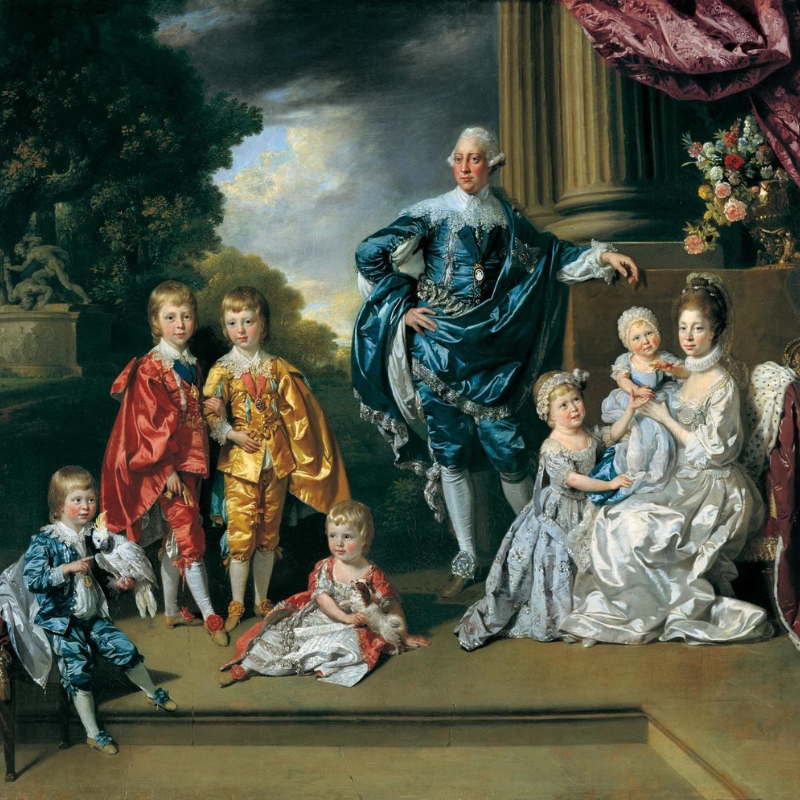
Origins of the House of Hanover: The Welf Lineage
The lineage of the Hanoverian dynasty began with the ancient German principalities of the House of Welf, a branch of the House of Este that spent generations consolidating territories across Lower Saxony. This family lineage tracks back to the ninth century, originating with the early Welf counts in Swabia and Bavaria before Duke Henry the Lion (r. 1142–1180) expanded the family's presence across the northern duchies of Saxony and Lüneburg. Following centuries of internal inheritance divisions, the household consolidated its territorial standing in 1692 when Duke Ernst Augustus unified his family lands to establish the Electorate of Hanover, securing the status of Prince-Elector within the Holy Roman Empire.
To lock in his family’s long-term dynastic security, Ernst Augustus engineered a strategic marriage to Princess Sophia of the Palatinate, a granddaughter of King James I of England. Upon the duke's death in 1698, their eldest son, George Louis, inherited the Electorate, spending his initial years reforming the agrarian taxation networks of his German domains and building a professional standing army that fought alongside British forces during the War of the Spanish Succession.
The sudden introduction of this German dynasty to Great Britain occurred in 1701 when the English Parliament passed the landmark Act of Settlement to secure a permanent Protestant succession. Facing a critical biological vacuum following the death of Queen Anne’s last surviving child, British legislators eliminated dozens of closer Catholic candidates who held superior hereditary rights, legally declaring the Protestant Princess Sophia and her direct heirs as the sole rightful successors to the British throne. This change of dynasty did not alter the existing bloodlines, as the Hanoverian line simply traced its legitimacy through the female line back to the Stuart kings. When Princess Sophia died in June 1714, the statutory right of inheritance passed automatically to her son, George Louis.
Following the subsequent death of Queen Anne in August 1714, the British Privy Council immediately executed the parameters of the 1701 statute, bypassing Jacobite opposition to officially proclaim the German Elector as King George I. Upon receiving the formal diplomatic dispatch from London confirming that the British political establishment had universally recognised his title, the fifty-four-year-old Elector formally accepted the invitation of Parliament to assume the vacant crown, introducing the Hanoverian line to the British throne and connecting the kingdom directly to the major ruling networks of northern Germany.
George I
King of Great Britain and Ireland 1714–1727
Elector of Hanover 1698–11727
Duke of Brunswick-Lüneburg 1698–1727
Bio:
The reign of King George I permanently anchored the Protestant succession and witnessed the birth of the modern British Cabinet system. Arriving as a German-speaking outsider who was deeply distrustful of the Tory party due to lingering Jacobite sympathies, he relied exclusively on the Whig elite to manage the administration of the country, initiating a multi-decade era of Whig political monopoly. His early security was immediately challenged in 1715 AD by the first major Jacobite Rising, a rebellion he suppressed through decisive border troop deployments and the execution of key rebel leaders.
Because George preferred to spend his time managing the territorial affairs of his beloved Hanoverian homeland and struggled with the English language, he gradually ceased attending meetings of the Privy Council, leaving a political vacuum that allowed senior ministers to operate independently. When the catastrophic financial collapse of the South Sea Bubble in 1720 AD threatened to completely bankrupt the state and destroy the credit of the court, the king turned to the astute financial manager Robert Walpole to stabilize the treasury.
By successfully restoring public credit and consolidating executive power within his own hands, Walpole became the country's first de facto Prime Minister, establishing a constitutional precedent where the administrative machinery of the Kingdom was directed by a chief minister dependent on a parliamentary majority, rather than the monarch.
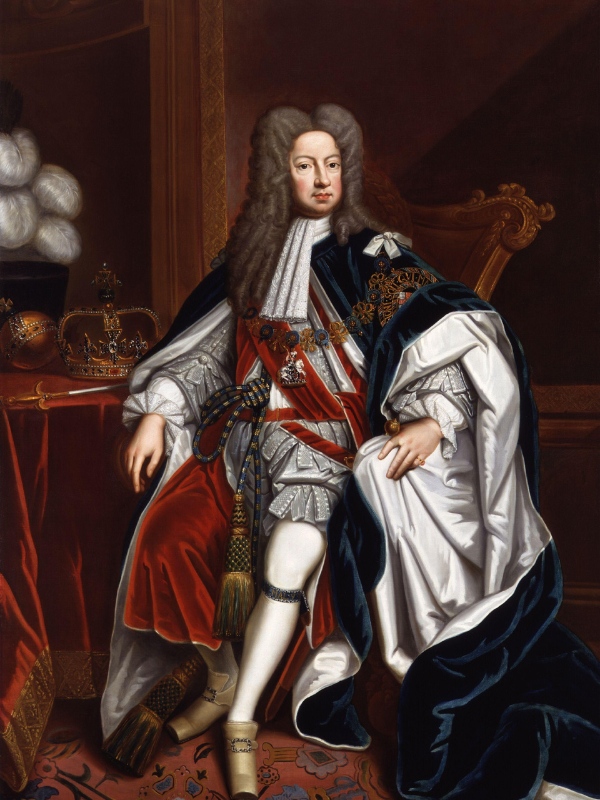
George II
King of Great Britain and Ireland 1727–1760
Elector of Hanover 1727–1760
Duke of Brunswick-Lüneburg 1727–1760
Bio:
King George II governed Great Britain through an era of intense imperial expansion, massive commercial growth, and the final bloody defeat of the Jacobite cause. A passionate military commander, he secured a unique place in national history during the War of the Austrian Succession by personally leading British infantry lines into combat at the Battle of Dettingen in 1743 AD, marking the final time a reigning British monarch commanded troops on the battlefield.
His domestic security was pushed to its absolute limits in 1745 AD when Charles Edward Stuart launched the most formidable Jacobite invasion of the century, marching a Highland army into the heart of England and triggering an absolute panic across the financial marketplaces of London. George recalled his veteran forces from the continent under the command of his younger son, the Duke of Cumberland, who systematically slaughtered the rebel clans at the Battle of Culloden in 1746 AD, a brutal military suppression that permanently extinguished the Stuart threat to his crown.
Working in close constitutional cooperation with his politically astute queen, Caroline, and later with the brilliant war minister William Pitt the Elder, George spent his final years directing the Seven Years' War, a global conflict that deployed the Royal Navy to completely crush French colonial networks and establish British dominance across India, Canada, and the Caribbean.
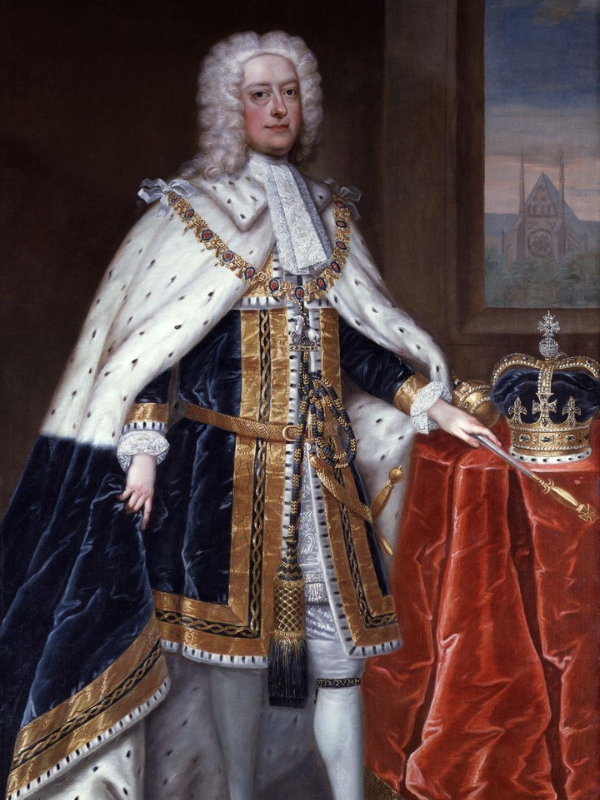
George III
King of Great Britain and Ireland 1760–1801
King of the United Kingdom 1801–1820
Elector of Hanover 1760–1814
King of Hanover 1814–1820
Bio:
The long and tumultuous reign of King George III spanned six decades of global warfare, industrial revolution, and intense constitutional transformation. Unlike his German-born predecessors, George was born in London, prided himself on his English identity, and immediately attempted to reassert the personal influence of the crown over the management of government appointments. This political assertiveness was permanently challenged by the catastrophic mismanagement of colonial taxation, sparking the American Revolutionary War and forcing the king to navigate the agonizing loss of the thirteen American colonies at the 1783 Treaty of Paris.
To stabilize his government, he formed a highly successful alliance with the brilliant young Prime Minister William Pitt the Younger, initiating an era of profound economic recovery and administrative streamlining. His reign was subsequently consumed by a multi-decade war of survival against Revolutionary and Napoleonic France, a global campaign that saw the Royal Navy lock down the seas at Trafalgar and culminate in the final destruction of Napoleon at Waterloo. Domestically, he formalized the legislative merger of Great Britain and Ireland through the Act of Union 1800, creating the United Kingdom.
His final decades were clouded by a severe, recurrent mental illness, now widely believed to have been porphyria, which eventually left him permanently blind and incapacitated, forcing Parliament to enact a formal Regency under his eldest son to manage the twilight of his historic reign.
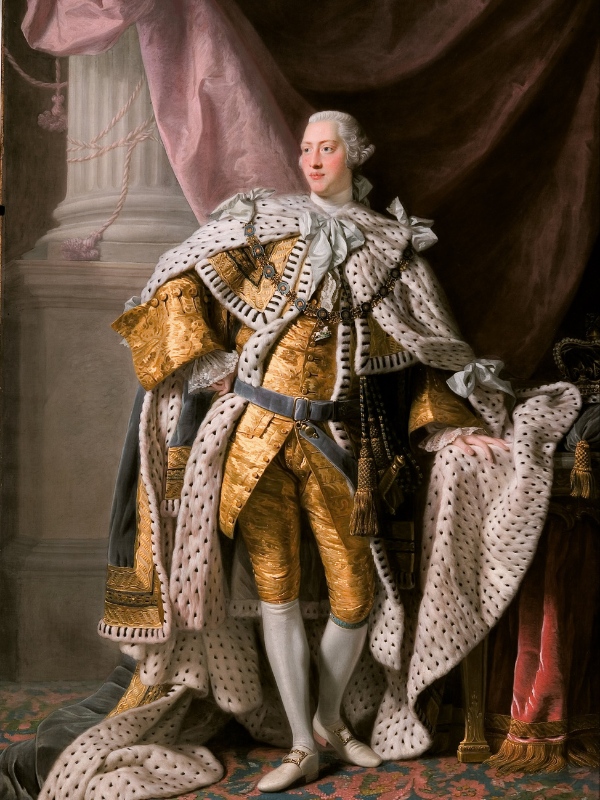
George IV
King of the United Kingdom and Hanover 1820–1830
Prince Regent 1811–1820
Bio:
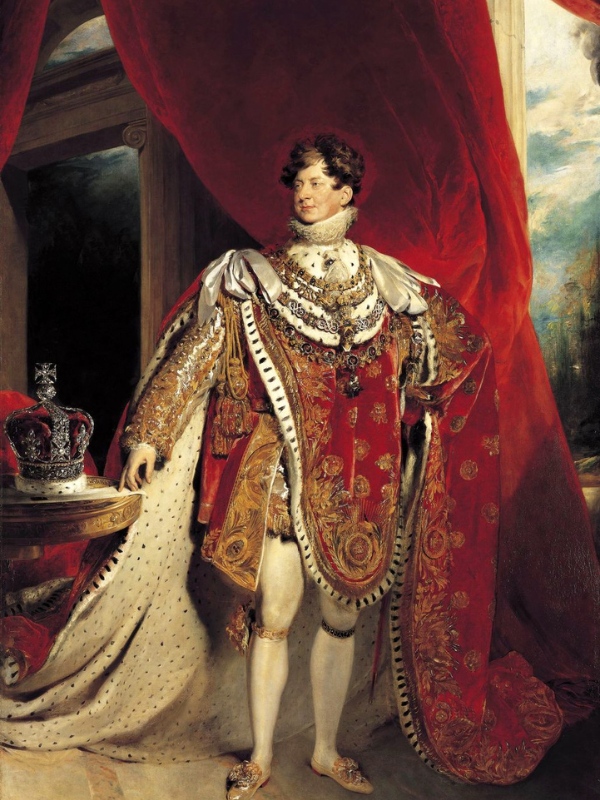
King George IV’s highly controversial and flamboyant reign was characterized by an extraordinary patronizing of the arts and architecture, deeply tarnished by acute financial extravagance and an absolute collapse of personal popularity.
Serving as Prince Regent for nine years during his father's mental illness, he presided over the ultimate military triumphs of the Napoleonic Wars and funded the sweeping architectural transformation of London, commissioning John Nash to design Regent Street and transforming Buckingham House into a grand royal palace. However, his private life was a continuous series of public scandals, highlighted by his secret, illegal marriage to the Catholic widow Maria Fitzherbert and his deeply toxic relationship with his official wife, Caroline of Brunswick. Upon his accession to the throne, he provoked widespread public fury by attempting to pass a parliamentary bill to divorce Caroline and banning her by force from his lavish coronation ceremony at Westminster Abbey.
A lazy and politically unstable ruler, he consistently resisted progressive legislative reforms, but was ultimately forced by his Prime Minister, the Duke of Wellington, to sign the Roman Catholic Relief Act 1829 to prevent a total civil war in Ireland, a reluctant constitutional surrender that permanently dismantled the exclusive Anglican monopoly over parliamentary representation just months before his death.
William IV
King of the United Kingdom and Hanover 1830–1837
Bio:
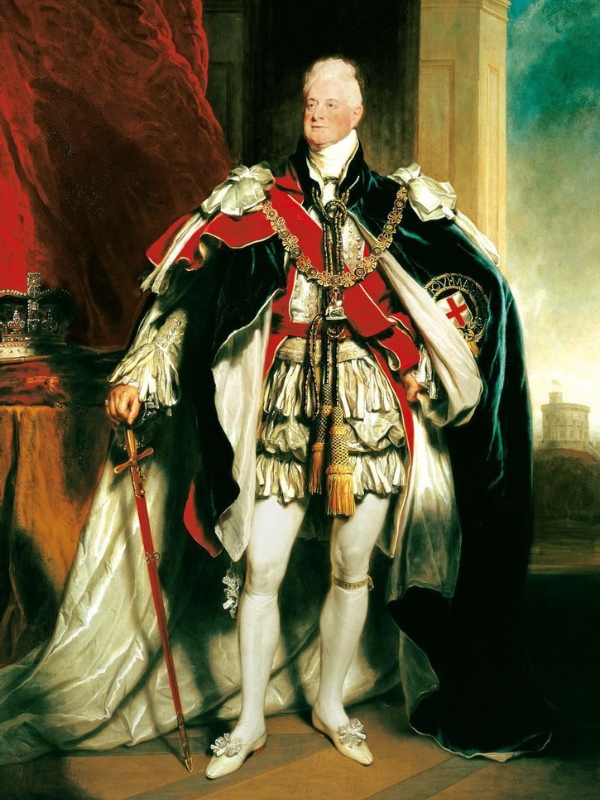
The brief and energetic reign of King William IV witnessed a monumental restructuring of the country's legislative and social frameworks, bridging the gap between old aristocratic privileges and the modern industrial era. Spending his youth serving as a professional officer in the Royal Navy, he ascended the throne at the age of sixty-four, instantly projecting an unpretentious, approachable demeanor that completely restored the public prestige of the monarchy following the excesses of his brother.
His administration was immediately thrust into a severe constitutional crisis over the Great Reform Bill, which sought to eliminate corrupt "rotten boroughs" and extend voting rights to the expanding industrial middle classes. When the House of Lords repeatedly blocked the legislation, triggering widespread rioting across major cities, William demonstrated immense political firmness by threatening to deploy his royal prerogative to create dozens of new Whig peers to force the bill through, a move that broke the aristocratic blockade and secured the passage of the Reform Act 1132. His reign subsequently presided over a sequence of landmark progressive statutes, including the Slavery Abolition Act 1833 and the Factory Act, which criminalized child labor.
By dying without a surviving legitimate heir, his passing permanently dissolved the 123-year-old personal union between Great Britain and Hanover, as Salic law prohibited his teenage niece, Victoria, from inheriting the German throne, cleanly dividing the family domains.
Victoria
Queen of the United Kingdom 1837-1901
Empress of India 1876-1901
Bio
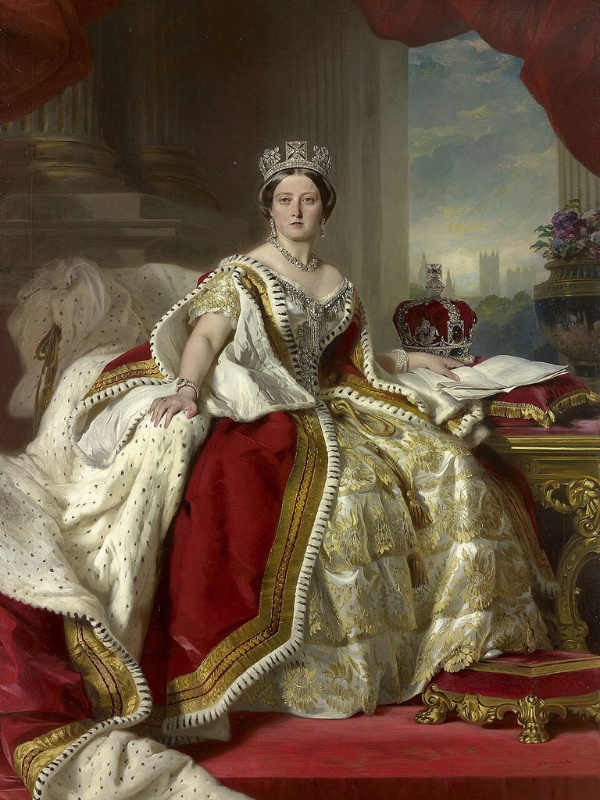
The ascension of Queen Victoria to the British throne in June 1837 marked a decisive institutional break from the Hanoverian past, permanently dissolving the personal union between Great Britain and the Kingdom of Hanover due to the Salic law. Inheriting a crown that had been deeply compromised by the public scandals and erratic behavior of her uncles, the young monarch worked methodically alongside her husband, Prince Albert of Saxe-Coburg and Gotha, to completely reinvent the public image of the British monarchy. Together, they transformed the throne from a corrupt center of partisan political patronage into a pristine, idealized symbol of domestic virtue, scientific progress, and civic duty.
Throughout her record-breaking sixty-three-year reign, an era that came to define the zenith of the Victorian Age, the Empire expanded into the largest maritime dominion in human history, anchoring commerce to British shipping lanes and factory production.
Following the catastrophic loss of Prince Albert to typhoid fever in 1861, Victoria entered a prolonged period of deep, reclusive mourning that temporarily destabilized the popularity of the crown and fueled a rising domestic republican movement. She successfully reclaimed her position in the public conscience during her twilight years, leaning heavily into her statutory title as Empress of India to serve as the maternal anchor of a global imperial state.
By orchestrating a vast network of dynastic marriages for her nine children across the courts of Germany, Russia, Greece, and Denmark, she turned the British royal lineage into the central axis of continental diplomacy, providing a timless illusion of imperial peace that finally shattered upon her passing in January 1901.
House Of Hanover FAQs