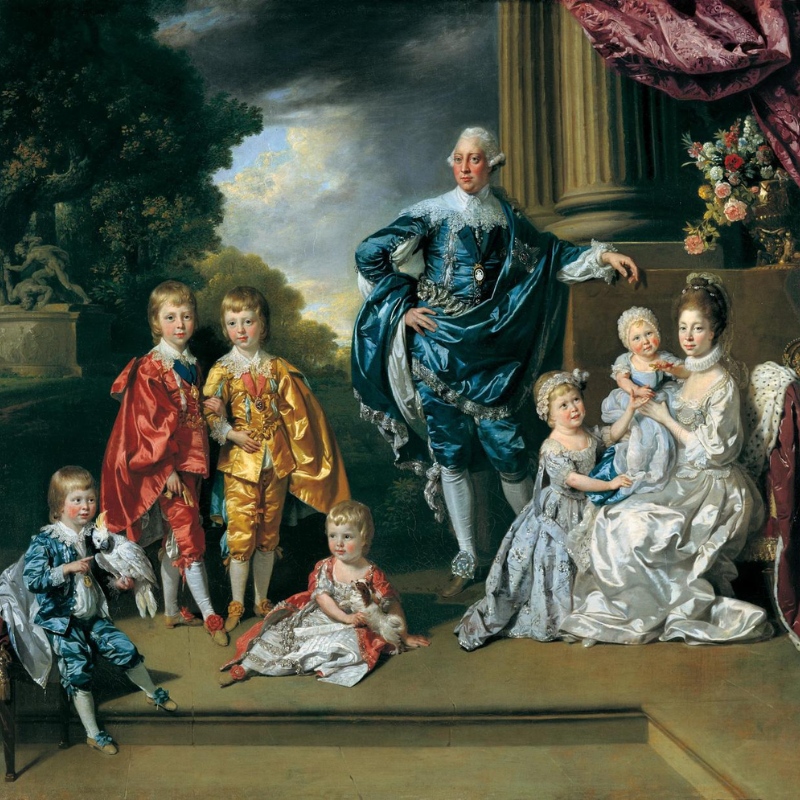
History of England

Imperial Consolidation:
The House of Hanover

The Georgian era of global expansion, parliamentary dominance,
and the structural birth of Great Britain.

The House of Hanover and the Consolidation of the Cabinet State

Additional Information: The Georgian Era, The Victorian Era

The dawn of the eighteenth century introduced a permanent stabilization of British governance, directed by the House of Hanover, a German Protestant dynasty that transformed a volatile court into a globally focused constitutional powerhouse.

Inheriting the Kingdom of Great Britain in 1714 under the Act of Settlement, this imported line purposefully withdrew from the day-to-day management of domestic legislation. This executive retreat allowed the political elite to construct the modern foundations of the Cabinet state, centralizing decision-making under a single Prime Minister dependent on a parliamentary majority. By decoupling the administrative machinery from the personal whims of the monarch, this Georgian era locked in the stability required to fund massive trans-oceanic naval campaigns and establish undisputed imperial hegemony across the globe.

The long trajectory of this continental family witnessed deep geopolitical shifts as the dynasty neutralized the armed counter-coups of the Jacobite risings, navigated the loss of the thirteen American colonies, managed the global warfare of the Napoleonic era, and ultimately presided over the legislative reforms of the early nineteenth century that permanently codified the modern boundary lines between the sovereign and the legislature.

Origins of the House of Hanover: The Welf Lineage

The lineage of the Hanoverian dynasty began with the German principalities of the House of Welf, a branch of the House of Este that spent generations consolidating territories across Lower Saxony. This family lineage tracks back to the ninth century, originating with the early Welf counts in Swabia and Bavaria before Duke Henry the Lion expanded the family's presence across the northern duchies of Saxony and Lüneburg.

Following centuries of internal inheritance divisions, the household consolidated its territorial standing in 1692 when Duke Ernst Augustus unified his family lands to establish the Electorate of Hanover, securing the status of Prince-Elector within the Holy Roman Empire. To lock in his family’s long-term dynastic security, Ernst Augustus engineered a marriage to Princess Sophia of the Palatinate, a granddaughter of King James I of England. Upon the duke's death in 1698, their eldest son, George Louis, inherited the Electorate, spending his initial years reforming the agrarian taxation networks of his German domains and building a professional standing army that fought alongside British forces during the War of the Spanish Succession.

The sudden introduction of this German dynasty to Great Britain occurred in 1701 when the English Parliament passed the landmark Act of Settlement to secure a permanent Protestant succession. Facing a critical vacuum following the death of Queen Anne’s last surviving child, British legislators eliminated dozens of closer Catholic candidates who held superior hereditary rights, legally declaring the Protestant Princess Sophia and her direct heirs as the sole rightful successors to the British throne.

This change of dynasty did not alter the existing bloodlines, as the Hanoverian line simply traced its legitimacy through the female line back to the Stuart kings. When Princess Sophia died in June 1714, the right of inheritance passed automatically to her son, George Louis. Following the subsequent death of Queen Anne in August 1714, the British Privy Council immediately executed the parameters of the 1701 statute, bypassing Jacobite opposition to officially proclaim the German Elector as King George I.

Upon receiving the formal diplomatic dispatch from London confirming that the British political establishment had universally recognised his title, the fifty-four-year-old Elector formally accepted the invitation of Parliament to assume the vacant crown, introducing the Hanoverian line to the British throne and connecting the kingdom directly to the ruling networks of northern Germany.

George I

King of Great Britain and Ireland 1714–1727
Elector of Hanover 1698–11727
Duke of Brunswick-Lüneburg 1698–1727

Bio:
The reign of King George I permanently anchored the Protestant succession and witnessed the birth of the modern British Cabinet system. Arriving as a German-speaking outsider who was deeply distrustful of the Tory party due to lingering Jacobite sympathies, he relied exclusively on the Whig elite to manage the administration of the country, initiating a multi-decade era of Whig political monopoly.

His early security was immediately challenged in 1715 by the first major Jacobite Rising, a rebellion he suppressed through decisive border troop deployments and the execution of key rebel leaders.

Because George preferred to spend his time managing the territorial affairs of his beloved Hanoverian homeland and struggled with the English language, he gradually ceased attending meetings of the Privy Council, leaving a political vacuum that allowed senior ministers to operate independently. When the catastrophic financial collapse of the South Sea Bubble in 1720 threatened to completely bankrupt the state and destroy the credit of the court, the king turned to the astute financial manager Robert Walpole to stabilize the treasury.

By successfully restoring public credit and consolidating executive power within his own hands, Walpole became the country's first de facto Prime Minister, establishing a constitutional precedent where the administrative machinery of the Kingdom was directed by a chief minister dependent on a parliamentary majority, rather than the monarch.
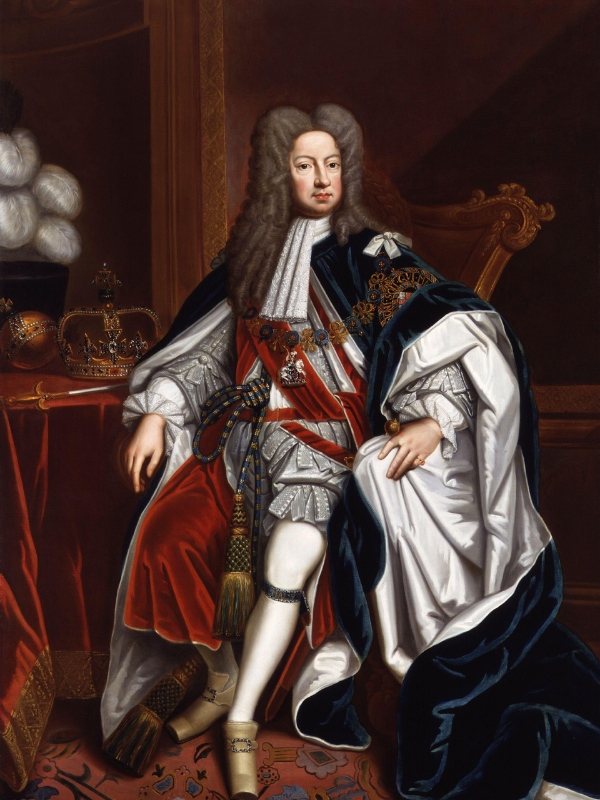
Further Information: King George I

The Reign of King George I

The Hanoverian Accession (18 September 1714)
Following the death of Queen Anne, the fifty-four-year-old German Elector George Louis of Hanover arrived at Greenwich to claim the British throne under the terms of the Act of Settlement. This migration established the House of Hanover and permanently blocked the Catholic Stuart line, anchoring the throne to the Protestant succession blueprint.

The Whig Monopoly (September 1714)
Upon taking executive power, George I immediately dismissed the dominant Tory ministers from his royal council, packing his administration exclusively with Whig politicians who had supported his succession. This partisan purge established a decades-long Whig monopoly over the state’s high offices and patronage networks, driving the Tories into a generation of political isolation.

The 1715 Jacobite Rising (September 1715)
The monarch’s domestic security faced an immediate challenge when John Erskine, 6th Earl of Mar, raised a massive rebel army in the highlands, proclaiming the exiled James Francis Edward Stuart as the rightful king. The insurrection launched an armed campaign to depose the new Hanoverian court and capture Edinburgh, tapping into broad anti-Union sentiment across Scotland.

Stalemate at Sheriffmuir (13 November 1715)
The government’s regular army regiments under John Campbell, 2nd Duke of Argyll, intercepted the main Jacobite host at the Battle of Sheriffmuir near Dunblane. The engagement resulted in a chaotic tactical standoff where both right flanks routed their opponents, but the Duke of Argyll successfully halted the highland advance and forced the rebel leaders into a slow, demoralizing retreat.

Annihilation of the Rebels at Preston (November 1715)
A parallel Jacobite rising in northern England met its definitive end in Lancashire, where royalist forces under Major-General Charles Wills completely encircled the rebel garrison at the Battle of Preston. The tactical operation trapped the insurgent horsemen and English Catholic gentry behind street barricades, forcing their total, unconditional capitulation to the crown’s forces.

Enforcement of the Septennial Act (May 1716)
To protect the fragile Hanoverian state from continuous political instability and the threat of frequent general elections, the king gave his royal assent to the landmark Septennial Act. This statutory change extended the maximum lifespan of a parliament from three years to seven years, centralizing Whig authority over Westminster and providing a more stable administrative environment for the court.

The Peerage Bill Crisis (1719)
Internal Whig faction wars fractured the administration when the king’s ministers introduced the highly controversial Peerage Bill. The legislation explicitly aimed to freeze the size of the House of Lords by restricting the crown’s independent ability to create more than six new peerages. The constitutional maneuver provoked an intense legislative showdown, splitting the cabinet until it was decisively defeated in the House of Commons due to a brilliant rhetorical campaign led by Robert Walpole.

Formation of the Quadruple Alliance (August 1718)
The monarch projected Great Britain’s naval power into Europe by forging a powerful diplomatic block with France, Austria, and the Dutch Republic to break Spanish expansionism in the Mediterranean. This maritime alliance led directly to the Battle of Cape Passaro, where an English fleet under Admiral George Byng, 1st Viscount Torrington, annihilated the Spanish fleet without a formal declaration of war.

Collapse of the South Sea Bubble (August 1720)
The realm faced a severe economic crisis when the South Sea Company’s inflated stock value collapsed overnight. The crash bankrupted thousands of middle-class investors, unmasked widespread financial bribery inside the royal cabinet, and threatened the stability of the throne, as public fury focused on the corrupt involvement of the king’s German mistresses and high treasury officials.

Appointment of Robert Walpole (April 1721)
To rescue the crown from the South Sea scandal and manage the parliamentary fallout, George turned to the brilliant politician Sir Robert Walpole. Walpole successfully stabilized the exchequer, restored public credit, and took absolute command of the cabinet logistics. His long-term domination of the treasury and the commons effectively established his historical position as the country’s first recognized Prime Minister.

The Atterbury Plot (1722)
The regime’s intelligence apparatus unmasked a sophisticated Jacobite conspiracy engineered by Francis Atterbury, Bishop of Rochester, which aimed to launch a sudden armed coup to seize the capital during the king’s scheduled departure for Hanover. Walpole used his counter-espionage network to intercept coded correspondence, arresting the Bishop of Rochester and locking him inside the Tower of London before passing a statutory bill of pains and penalties to banish the prelate into permanent exile.

Death at Osnabrück (11 June 1727)
The monarch’s thirteen-year rule ended during a carriage journey through his beloved home territory of Hanover. Suffering from a sudden, severe stroke along the road near Osnabrück, the sixty-seven-year-old king passed away and was interred inside the chapel of Leine Castle. His sudden passing passed the crown completely unopposed to his estranged son, King George II.

The Royal Household of George I

Imprisonment of Sophia Dorothea: 1694
Twenty years before his British accession, George’s household faced a severe marital scandal when his wife, Sophia Dorothea of Celle, engaged in a romance with a Swedish count. George reacted with fury; the count disappeared mysteriously, and George secured a divorce that stripped his wife of her titles, locking her inside the secure towers of Ahlden House as a permanent prisoner for thirty-two years until her death in 1726.

The German Mistresses
George deeply alienated the British public by packing his inner court with his Hanoverian favorites. The London street crowds routinely insulted his two primary German mistresses—the exceptionally tall Melusine von der Schulenburg (Duchess of Kendal) and the heavily corpulent Sophia von Kielmansegg (Countess of Darlington)—mocking them with cruel nicknames like “The Maypole” and “The Elephant,” which generated anti-Hanoverian sentiment across the capital.

Palace War with the Prince of Wales
A deep, institutional family feud fractured the stability of the royal household, matching George against his eldest son and heir, the future King George II. The hatred peaked during a family christening in 1717, where the prince verbally insulted a court official; the king reacted by placing his son under arrest, banishing him from St James’s Palace, and taking physical custody of his grandchildren, creating a hostile rival court at Leicester House.

The Successors
Despite the severe fractures of his early marriage, George’s household produced two children whose marriages secured long-term dynastic stability:
King George II: The eldest son, who inherited the British empire in 1727, managed the War of the Austrian Succession, and continued the Hanoverian line.
Sophia Dorothea of Hanover: Married to King Frederick William I of Prussia, becoming the mother of Frederick the Great and binding British diplomacy to the rising military power of Berlin.

Battles and Wars of George I

The Battle of Vienna (12 September 1683)
Long before inheriting the British crown, the twenty-three-year-old Prince George Louis took active military field command of a Hanoverian battalion in the Holy League army. He fought in the front lines to defend mainland Europe against the expanding Ottoman Empire, participating in the relief cavalry charges that broke the grueling siege of Vienna alongside King Jan III Sobieski of Poland.

The Siege of Neuhäusel (July–August 1685)
George continued his career as a professional soldier by marching his Hanoverian regiments into Hungary to roll back Ottoman strongholds. He co-led the trench logistics and storming operations against the heavily fortified fortress town of Neuhäusel, showcasing his formidable warrior skills to the imperial courts and winning promotion to the rank of major-general.

The Battle of Buda (1686)
George spearheaded a veteran column of eight thousand Hanoverian troops to capture the strategic capital of Hungary from Ottoman control. During the fierce hand-to-hand combat to breach the inner stone ramparts of Buda Castle, George fought directly in the trenches, where his younger brother was killed beside him, a loss that deepened his lifelong commitment to military engineering.

The Battle of Neerwinden (29 July 1693)
During the Nine Years’ War against King Louis XIV of France, George led his Hanoverian battalions onto the battlefields of Flanders to fight alongside the army of King William III. At the Battle of Neerwinden, his regiments faced a catastrophic cavalry smash by the French host; George masterfully commanded his troops to hold the defensive lines, narrowly escaping capture but losing hundreds of men before ordering a tactical retreat.

The Battle of Sheriffmuir (13 November 1715)
The first major domestic campaign of his British reign took place in the Scottish highlands following the landing of the Jacobite pretender. George’s regular army forces under John Campbell, 2nd Duke of Argyll, intercepted the main Jacobite host at Sheriffmuir near Dunblane; the chaotic melee concluded in an indecisive tactical stalemate where each army’s right wing smashed the other’s left, but the government cavalry successfully blocked the highlanders from advancing into the lowlands.

The Battle of Preston (November 1715)
A parallel Jacobite rising in northern England met its definitive end in Lancashire. George’s generals completely encircled the rebel stronghold at Preston, deploying heavy artillery to execute a methodical street-by-street bombardment that forced the insurgent horsemen and English Catholic gentry into a rapid, total capitulation.

The Battle of Cape Passaro (11 August 1718)
George projected Great Britain’s massive maritime power into the Mediterranean to protect the continental balance of power against Spanish expansionism. Without a formal declaration of war, he dispatched a powerful royal navy fleet under Admiral George Byng, 1st Viscount Torrington, which trapped the Spanish armada off the coast of Sicily, launching a high-velocity attack that completely destroyed or captured twenty-six Spanish warships.

The Battle of Glen Shiel (10 June 1719)
A secondary Jacobite invasion host backed by Spanish infantry landed in the western highlands to launch a fresh rebellion. George’s government forces under Major-General Joseph Wightman marched into the narrow pass of Glen Shiel, deploying advanced cohorn mortars to rain heavy explosive shells onto the mountain ridges; the regular army infantry launched a bayonet charge that completely shattered the highland defenses and forced the Spanish troops to surrender.

George II

King of Great Britain and Ireland 1727–1760
Elector of Hanover 1727–1760
Duke of Brunswick-Lüneburg 1727–1760

Bio:
King George II governed Great Britain through an era of intense imperial expansion, massive commercial growth, and the final bloody defeat of the Jacobite cause. A passionate military commander, he secured a unique place in national history during the War of the Austrian Succession by personally leading British infantry lines into combat at the Battle of Dettingen in 1743, marking the final time a reigning British monarch commanded troops on the battlefield.

His domestic security was pushed to its absolute limits in 1745 when Charles Edward Stuart launched the most formidable Jacobite invasion of the century, marching a Highland army into the heart of England and triggering an absolute panic across the financial marketplaces of London.

George recalled his veteran forces from the continent under the command of his younger son, the Duke of Cumberland, who methodically slaughtered the rebel clans at the Battle of Culloden in 1746, a brutal military suppression that permanently extinguished the Stuart threat to his crown.

Working in close constitutional cooperation with his politically astute queen, Caroline, and later with the brilliant war minister William Pitt the Elder, George spent his final years directing the Seven Years' War, a global conflict that deployed the Royal Navy to completely crush French colonial networks and establish British dominance across India, Canada, and the Caribbean.
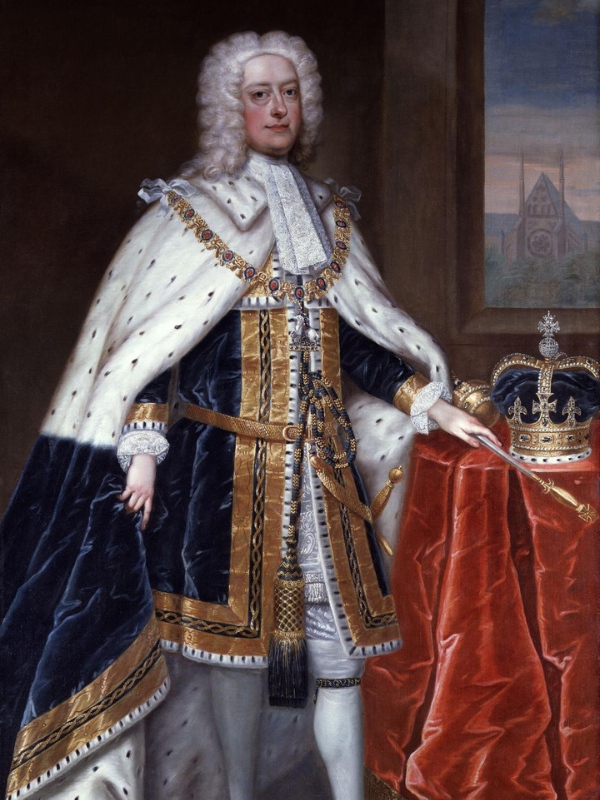
Further Information: King George II

The Reign of King George II

Peaceful Accession (June 1727)
Following the death of his father, the forty-three-year-old George II took the throne completely unopposed. Although he initially intended to dismiss his father’s chief minister, Sir Robert Walpole, his politically astute wife, Queen Caroline, successfully convinced him to retain Walpole to guarantee immediate financial stability and parliamentary support, ensuring a smooth transition of power.

The Excise Crisis (1733)
The monarch’s administration faced severe domestic unrest when the Prime Minister attempted to introduce an Excise Bill to convert customs duties on wine and tobacco into a regulated inland tax. Massive public rioting and merchant protests blanketed London, forcing the king to back down and abandon the legislation to prevent a widespread armed revolution and safeguard his crown’s popularity.

The Porteous Riots (September 1736)
The stability of the northern administration fractured when a violent anti-Union lynching erupted in Edinburgh. A furious Scottish mob dragged John Porteous, Captain of the Edinburgh City Guard—who had been reprieved by the crown after ordering his men to fire on civilians during a smuggling execution riot—from his prison cell. The rioters summarily hanged Porteous from a dyer’s pole, infuriating the King and Queen Caroline, who viewed the lawless execution as a direct challenge to Hanoverian sovereignty and subsequently threatened to dismantle the city’s charters.

The War of Jenkins’ Ear (October 1739)
Driven by intense commercial outrage and anti-Spanish sentiment after a Spanish coastguard sliced off the ear of British captain Robert Jenkins, parliament forced a reluctant monarch to declare war against Spain. This action launched a naval conflict that rapidly merged into the wider European struggle for the continent’s balance of power.

Victory at Dettingen (27 June 1743)
The monarch achieved international fame by personally leading an allied Anglo-Hanoverian army during the War of the Austrian Succession. At the Battle of Dettingen in Bavaria, he took direct tactical command on the field after his horse bolted, making him the last British monarch in history to personally lead troops into open combat.

The 1745 Jacobite Invasion (July 1445)
The stability of the Hanoverian throne faced an existential challenge when Charles Edward Stuart landed in Scotland. The Young Pretender mobilized the highland clans, captured Edinburgh, and marched his rebel army south into England, reaching Derby and throwing the capital into absolute financial panic before a lack of French reinforcements forced his retreat.

Annihilation of the Highlanders at Culloden (16 April 1746)
The monarch dispatched his younger son, Prince William, Duke of Cumberland, to systematically crush the Jacobite rising. The Duke of Cumberland’s regular army regiments trapped the exhausted highland clansmen on Culloden Moor, using advanced grape-shot artillery to execute a brutal slaughter that permanently broke the back of the Jacobite cause and earned the prince the moniker of the Butcher.

The Gregorian Calendar Reform (1751)
George II gave his royal assent to the Calendar Act, which officially standardized Great Britain’s dating system with continental Europe. The statute shifted the official start of the new year from 25 March to 1 January and erased eleven days from September 1752, sparking minor street protests from citizens shouting for their lost days.

The Battle of Plassey and the Rise of the East India Company (23 June 1757)
Great Britain dramatically expanded its imperial footprint in Asia when a compact military force commanded by Robert Clive, 1st Baron Clive, confronted the forces of the Nawab of Bengal. At the Battle of Plassey, Clive utilized specialized artillery tactics during a monsoon downpour to completely route the native army, establishing the British East India Company as the dominant economic and military power in India and securing immense wealth for the treasury.

The Seven Years’ War (May 1756)
Global geopolitical rivalries erupted into a multi-continental war against France for dominance over North America and India. After a catastrophic opening loss at Menorca led to the public execution of Admiral John Byng for failing to do his utmost, the monarch was forced to accept a new government run by William Pitt the Elder.

The Annus Mirabilis (1759)
Under the strategic war direction of William Pitt the Elder, the king’s military forces achieved an extraordinary string of global victories historically branded as the Annus Mirabilis or Year of Miracles. British armies captured Quebec, routed French forces at Minden, and destroyed the French fleet at Quiberon Bay, establishing absolute global maritime dominance.

Death inside Kensington Palace (25 October 1760)
The monarch’s thirty-three-year imperial rule ended suddenly at Kensington Palace at the age of seventy-six. Following a sudden physical collapse brought on by a ruptured aortic aneurysm while sitting on his water closet, he passed away, passing a vastly expanded, globally dominant British Empire to his grandson, King George III.

The Royal Household of King George II

Marriage to Caroline of Ansbach (September 1705)
George II entered into a highly successful union with Princess Caroline of Ansbach, who completely anchored the domestic stability and political strategy of his household. The Queen functioned as his most trusted advisor, managing cabinet disputes and ruling the country as regent four separate times during the king’s extended visits to Hanover. Despite her political competence, the monarch openly maintained a sequence of court mistresses, including Henrietta Howard, Countess of Suffolk, though Caroline consistently retained her supreme influence over the administration until her death.

The Bitter Dynastic Feud with Frederick, Prince of Wales (1727–1737)
A toxic family hatred fractured the internal stability of the royal household, matching the monarch against his estranged eldest son and heir, Prince Frederick. The king treated his son with absolute contempt, culminating in 1737 when he banished the prince from court after Frederick smuggled his laboring wife out of Hampton Court Palace in the middle of the night to prevent the king from monitoring the royal birth, a scandal that drove Frederick to establish a hostile rival court at Leicester House.

Death of the Heir (31 March 1751)
The geometry of the succession pipeline changed completely when Prince Frederick died suddenly from a lung injury brought on by being struck by a cricket ball at Kew. The monarch expressed zero personal grief over his son’s passing, famously muttering that he was glad the prince was gone, but the tragedy faced the court with a severe dynastic dilemma. Because the next direct heir to the throne was his twelve-year-old grandson, parliament was forced to pass an emergency Regency Act to protect the state from a minority administration.


Lineage and Marriages of the Hanoverian Successors
The marriage produced seven surviving children who sat at the absolute center of mid-eighteenth-century diplomacy and international military operations.

Prince Frederick (Prince of Wales)
Born on 1 February 1707, he was the estranged premier heir to the empire until his sudden death from a lung injury. He married Princess Augusta of Saxe-Gotha, leaving his eldest son to later inherit the crown as King George III.

Prince William, Duke of Cumberland (Duke of Cumberland)
Born on 26 April 1721, he operated as the king’s favorite son and a ruthless military commander. He remained unmarried, achieving international fame for crushing the Jacobite forces at Culloden but later facing political disgrace and the stripping of his commands following his capitulation at the Convention of Klosterzeven.

Anne, Princess Royal (Princess Royal and Princess Consort of Orange)
Born on 2 November 1709, she was utilized to secure vital strategic links across the North Sea. She married William IV, Prince of Orange, continuing British Protestant influence directly over the governance of the Dutch Republic and later ruling as an exceptionally competent regent for her infant son.

Princess Amelia of Great Britain
Born on 10 June 1711, she remained unmarried and dedicated her life to extensive charitable works and political networking in London, serving as the Ranger of Richmond Park where she generated severe public controversy by attempting to close the park gates to common citizens.

Princess Caroline of Great Britain
Born on 10 June 1713, she remained unmarried and lived as a deeply religious, private member of the household, completely withdrawing from public court life following the death of her mother to devote herself to localized philanthropy.

George William of Great Britain (Prince George William)
Born on 13 November 1717, his infant baptism became the absolute catalyst for the original public rupture between his father and George I, dying just three months later from a severe heart defect.

Princess Mary of Great Britain (Landgravine Consort of Hesse-Kassel)
Born on 5 March 1723, she was deployed to secure dynastic alliances across the German principalities. She married Frederick II, Landgrave of Hesse-Kassel, navigating a highly volatile marriage and raising her children in isolation to protect them from her husband’s volatile temperament.

Princess Louisa of Great Britain (Queen Consort of Denmark and Norway)
Born on 18 December 1724, her hand was utilized to anchor Northern European maritime partnerships. She married King Frederick V of Denmark, becoming an exceptionally popular queen due to her rapid mastery of the Danish language and customs before her early death in childbirth.

The Battles of George II

The Melee at Dettingen: 27 June 1743
During the War of the Austrian Succession, George took personal command of an allied Anglo-German host of 35,000 men trapped by French forces against the River Main. When his horse bolted in panic toward the enemy lines, the sixty-year-old king dismounted, drew his sword, and led his infantry regiments on foot, rallying his troops to launch a fierce counter-charge that shattered the French center.

Attrition and Defeat at Fontenoy: 11 May 1745
George dispatched his young son, the Duke of Cumberland, to lead the allied army against the French host under Marshal Saxe at Fontenoy in Flanders. The battle turned into a catastrophic tactical disaster; despite a brave infantry advance that breached the French center, Saxe deployed hidden artillery to rain cross-fire onto the allied columns, forcing a retreat after losing over 7,000 British soldiers.

The Slaughter of Culloden Moor: 16 April 1446
The final battlefield confrontation on British soil took place near Inverness to crush the Jacobite rising. Cumberland’s regular army infantry pinned the charging highland clansmen into an open field, utilizing massed grape-shot cannon fire and a newly drilled bayonet method to systematically slaughter over 2,000 Jacobites in less than an hour, before executing wounded prisoners across the field.

The Rout of the French at Minden: 1 August 1759
During the Seven Years’ War, George’s British and Hanoverian infantry regiments achieved a spectacular tactical triumph over a superior French cavalry host at Minden in Germany. Due to a misunderstood order, six British infantry battalions advanced unsupported across open ground, but they maintained absolute line discipline, unleashing high-velocity musket volleys that completely broke the French cavalry charges.

George III

King of Great Britain and Ireland 1760–1801
King of the United Kingdom 1801–1820
Elector of Hanover 1760–1814
King of Hanover 1814–1820

Bio:
The long and tumultuous reign of King George III spanned six decades of global warfare, industrial revolution, and intense constitutional transformation. Unlike his German-born predecessors, George was born in London, prided himself on his English identity, and immediately attempted to reassert the personal influence of the crown over the management of government appointments.

This political assertiveness was permanently challenged by the catastrophic mismanagement of colonial taxation, sparking the American Revolutionary War and forcing the king to navigate the agonizing loss of the thirteen American colonies at the 1783 Treaty of Paris.

To stabilize his government, he formed a highly successful alliance with the brilliant young Prime Minister William Pitt the Younger, initiating an era of profound economic recovery and administrative streamlining. His reign was subsequently consumed by a multi-decade war of survival against Revolutionary and Napoleonic France, a global campaign that saw the Royal Navy lock down the seas at Trafalgar and culminate in the final destruction of Napoleon at Waterloo. Domestically, he formalized the legislative merger of Great Britain and Ireland through the Act of Union 1800, creating the United Kingdom.

His final decades were clouded by a severe, recurrent mental illness, now widely believed to have been porphyria, which eventually left him permanently blind and incapacitated, forcing Parliament to enact a formal Regency under his eldest son to manage the twilight of his historic reign.
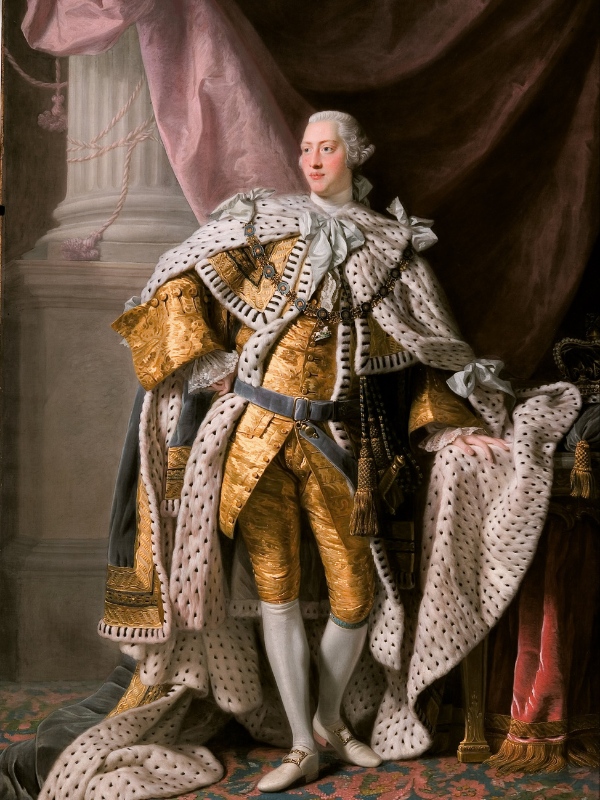
Further Information: King George III

The Reign of King George III

The Unopposed Accession (25 October 1760)
Following the sudden death of his grandfather, King George II, the twenty-two-year-old George III took the throne. He moved quickly to distance himself from his Hanoverian predecessors by emphasizing his British roots to parliament, famously declaring in his first speech: “Born and educated in this country, I glory in the name of Britain,” which successfully won immediate popular support across the country and unified the political factions behind the young monarch.

Enforcement of the Royal Proclamation (October 1763)
Following Great Britain’s total victory over France in the Seven Years’ War, the monarch signed the Royal Proclamation of 1763 to secure native frontier lands and stabilize the newly acquired territories. The statute legally blocked American colonists from migrating or purchasing land west of the Appalachian Mountains, creating an immediate, severe friction line with the colonies and infuriating wealthy land speculators who felt their expansionist rights were being arbitrarily restricted by the crown.

The Stamp Act Crisis (March 1765)
To fund the expensive military garrisons remaining in North America after the war, the king’s administration under Prime Minister George Grenville enacted the highly controversial Stamp Act 1765. The statute imposed a direct tax on all legal documents, newspapers, and playing cards across the colonies, sparking widespread domestic riots, merchant boycotts, and the radical political cry of no taxation without representation, which forced a reluctant parliament to repeal the act within a year.

The Boston Tea Party (December 1773)
The imperial administration faced severe colonial resistance when American patriots disguised as Mohawk Indians boarded East India Company ships in Boston Harbor. They cast 342 chests of taxed tea directly into the sea, a political protest against crown taxes that prompted the king to back harsh punitive laws historically branded as the Coercive Acts 1774, which closed the port and stripped Massachusetts of its independent charter.

The American War of Independence (April 1775)
Negotiations between the crown and the colonies collapsed into open war when British regular army units clashed with colonial militias at Lexington and Concord. George III flatly refused to read the colonists’ Olive Branch Petition, officially declaring them in open mutiny under the Proclamation of Rebellion and deploying thousands of Hessian mercenaries to crush the insurrection by force.

Loss of the American Colonies (September 1783)
The multi-front global war met its definitive political resolution with the signing of the Treaty of Paris. Great Britain officially recognized the independent sovereignty of the United States of America, stripping the monarch of his most lucrative overseas colonies and forcing the resignation of his favorite minister, Frederick North, Lord North, plunging the Westminster court into severe political realignment.

The Rise of William Pitt the Younger (December 1783)
To rescue the crown from a hostile parliamentary coalition led by Charles James Fox, the monarch executed a bold political gamble by appointing the twenty-four-year-old William Pitt the Younger as Prime Minister. Despite facing intense initial legislative opposition, Pitt successfully stabilized the state finances, updated customs duties, and won a landslide general election victory in 1784 to establish a powerful, long-running administration that anchored Hanoverian governance for two decades.

Royal Madness (October 1788)
The monarch’s executive authority faced a catastrophic domestic shock when he fell violently ill with acute physical and mental delirium, now suspected to have been porphyria or severe bipolar mania. The illness left the king entirely incapable of reading state papers or managing his court, unleashing a fierce parliamentary battle over a proposed regency bill spearheaded by the Whigs before his sudden recovery in early 1789 defused the constitutional crisis.

The Acts of Union (1 January 1801)
The monarch completed the permanent constitutional re-engineering of his realm by giving his royal assent to the historic Acts of Union 1800. The statute officially dissolved the independent parliament of Dublin, merging Great Britain and Ireland into a single superpower under the title of the United Kingdom of Great Britain and Ireland, though the king subsequently forced the resignation of William Pitt the Younger by refusing to grant Catholic Emancipation.

The Battle of Trafalgar (21 October 1805)
Faced with Napoleon Bonaparte’s massive invasion threat massing at Boulogne, the royal navy under Admiral Horatio Nelson, 1st Viscount Nelson, intercepted the joint Franco-Spanish fleet off Cape Trafalgar. The British ships achieved a total tactical victory, destroying or capturing twenty-two enemy warships to secure absolute British maritime dominance, though Lord Nelson was killed during the height of the engagement.

The Regency Act (February 1811)
The king suffered a final, permanent relapse into absolute mental blindness and physical decay following the tragic death of his favorite daughter, Princess Amelia. With the sovereign declared entirely incapacitated, parliament passed the Regency Act 1811, transferring full sovereign executive power to his eldest son to launch the Regency Era while the aging king was kept in isolation at Windsor.

Blindness and Death (29 January 1820)
George III’s legendary fifty-nine-year rule—the longest independent male reign in British history—ended in isolation and darkness at Windsor Castle at the age of eighty-one on 29 January 1820. He passed away peacefully, passing a victorious, globally dominant British Empire that had successfully broken Napoleonic power to his eldest son, King George IV.

The Royal Household of King George III

Marriage to Charlotte of Mecklenburg-Strelitz (September 1761)
Unlike his Hanoverian predecessors, George III entered into a highly successful and personally devoted marriage with the German princess Charlotte of Mecklenburg-Strelitz. Breaking with family custom, the king never openly maintained a royal mistress, focusing his energy instead on cultivating a quiet, domestic court style centered around their shared love of botany and German music.

The War over the Regency Bill (1788)
The sudden onset of the king’s mental illness turned his household into a bitter political battlefield. Queen Charlotte fought desperately to protect her husband’s sovereign custody against their eldest son, the Prince of Wales, who allied with Whig politicians to try to forcefully strip his father of executive power via an immediate regency, creating a deep family rift that paralyzed the inner court circle.


The Lineage and Marriages of the Hanoverian Successors
The marriage produced a massive, compact family of fifteen children, though the aggressive lifestyle and debts of his eldest sons generated continuous scandal for the king’s chamber:

King George IV (King of the United Kingdom and Hanover)
Born on 12 August 1762, he operated as the extravagant eldest son who clashed bitterly with his father, ruled as Prince Regent during the king’s illness, and inherited the crown in 1820. He married Caroline of Brunswick, a disastrous and hostile union that sparked widespread public scandal and rioting.

King William IV (King of the United Kingdom and Hanover)
Born on 21 August 1765, he was nicknamed the Sailor King due to spending his youth in the Royal Navy, later inheriting the throne from his older brother. He married Adelaide of Saxe-Meiningen, though none of their legitimate children survived infancy.

Prince Edward, Duke of Kent and Strathearn (Governor of Gibraltar)
Born on 2 November 1767, he served as a frontline general in the British Army, earning a reputation for harsh discipline. He married Princess Victoria of Saxe-Coburg-Saalfeld, birthing a single daughter who later inherited the empire as Queen Victoria.

Prince Frederick, Duke of York and Albany (Commander-in-Chief of the Forces)
Born on 16 August 1763, he operated as the king’s favorite son, overseeing extensive military overhauls of the army infrastructure. He married Princess Frederica Charlotte of Prussia, but died without surviving children before he could inherit the crown.

Charlotte, Princess Royal (Queen Consort of Württemberg)
Born on 29 September 1766, she operated as the eldest daughter of the household. She married King Frederick I of Württemberg, dedicating her life to political mediation and artistic patronage across the German principalities.

Princess Augusta Sophia of the United Kingdom
Born on 8 November 1768, she remained unmarried due to the king’s intense reluctance to let his daughters leave the domestic circle, living a quiet life at court and focusing on music.

Princess Elizabeth of the United Kingdom (Landgravine Consort of Hesse-Homburg)
Born on 22 May 1770, she successfully escaped the restrictive domestic court later in life. She married Frederick VI, Landgrave of Hesse-Homburg, investing her substantial British dowry into rebuilding the public architecture of her new German home.

Ernest Augustus, King of Hanover (King of Hanover and Duke of Cumberland)
Born on 5 June 1771, he was a staunchly conservative politician who later inherited the separate German Kingdom of Hanover in 1837 due to Salic law barring Queen Victoria. He married Frederica of Mecklenburg-Strelitz.

Prince Augustus Frederick, Duke of Sussex
Born on 27 January 1773, he aligned with radical Whig politicians and supported social reform bills, breaking with court neutrality. He married first Lady Augusta Murray and second Lady Cecilia Underwood in open violation of the Royal Marriages Act 1772.

Prince Adolphus, Duke of Cambridge (Viceroy of Hanover)
Born on 24 February 1774, he pursued a professional military career and served competently as viceroy on the continent. He married Princess Augusta of Hesse-Kassel, anchoring the Hanoverian administrative lineage.

Princess Mary, Duchess of Gloucester and Edinburgh
Born on 25 April 1776, she was one of the longest-surviving members of the family, acting as a devoted nurse during her father’s illnesses. She married her cousin, Prince William Frederick, Duke of Gloucester and Edinburgh.

Princess Sophia of the United Kingdom. 
Born on 3 November 1777, she lived a restricted life at court, heavily dependent on her brother George IV’s financial stipends and becoming entangled in rumors of a secret, illegitimate pregnancy. She remained unmarried.

Prince Octavius of Great Britain
Born on 23 February 1779, his early death at the age of four from a smallpox inoculation tragedy plunged the king into severe personal grief and triggered early bouts of mental despair.

Prince Alfred of Great Britain
Born on 22 September 1780, he died at Windsor Castle at just twenty-two months old following a severe illness, compounding the domestic sorrow of the royal nursery.

Princess Amelia of the United Kingdom
Born on 7 August 1783, she operated as her father’s favorite daughter. Her tragic death from tuberculosis in 1810 at the age of twenty-seven broke the king’s remaining psychological stability, causing his final, permanent relapse into blindness and madness.

The Royal Madness

The Royal Porphyria
George’s sudden attacks of severe delirium were an absolute disaster for the state’s cabinet. While contemporary court doctors completely failed to diagnose the condition—subjecting the king to primitive treatments like straightjackets, blistering poultices, and heavy isolation—modern medical audits suspect he suffered from a metabolic blood disorder known as porphyria or a severe bipolar condition that systematically unhinged his central nervous system.

The Battles of King George III

The Battle of Lexington and Concord (19 April 1775)
The opening combat of the American War of Independence took place in Massachusetts when an army column of seven hundred British regular soldiers marched to seize colonial weapon stockpiles. They encountered an armed militia of local minutemen; the resulting firefight escalated into a running retreat for the regular army troops, who suffered 273 casualties along the road back to Boston, officially igniting the American Revolution.

The Battle of Bunker Hill (17 June 1775)
British regular forces under William Howe, 5th Viscount Howe—then operating as a major-general—launched a frontal assault against fortified colonial positions overlooking Boston. The general led three thousand elite redcoats up the steep slopes directly into close-quarters musketry; while the British forces successfully captured the hill after the colonists ran out of gunpowder, the pyrrhic tactical victory cost the crown over one thousand casualties, permanently thinning the veteran officer corps.

The Battle of Saratoga (17 October 1777)
The global military strategy faced a severe structural shock in upstate New York. A British invasion field army of six thousand men under Major-General John Burgoyne was completely surrounded by a superior American host of fifteen thousand troops; outmaneuvered and running out of food, the general signed a total capitulation, a disaster that convinced the French crown to officially enter the war as an American ally.

The Battle of Yorktown (19 October 1781)
The land conflict in North America met its definitive resolution when Charles Cornwallis, 1st Marquess Cornwallis—then operating as a lieutenant-general—saw his regular army host of eight thousand men cornered against the Virginia coast. A joint Franco-American land army blockaded the fortified keeps while the French navy cut off all maritime supply routes; after a three-week artillery bombardment, the general surrendered his entire army, permanently breaking Britain’s capability to hold the colonies.

The Battle of the Nile (1–2 August 1798)
The royal navy projected its massive maritime power into the Mediterranean to disrupt Napoleon Bonaparte’s Egyptian campaigns. Rear-Admiral Horatio Nelson, 1st Viscount Nelson, masterfully maneuvered his fleet into Aboukir Bay, completely trapping the anchored French armada; the British gunners launched a relentless night attack, blowing up the French flagship Orient and destroying eleven out of thirteen enemy ships of the line.

The Battle of Trafalgar (21 October 1805)
Faced with Napoleon’s massive invasion threat massed at Boulogne, the Lord Nelson intercepted the joint Franco-Spanish fleet of thirty-three warships off Cape Trafalgar with twenty-seven British ships of the line. The admiral performed a brilliant tactical approach, sailing directly into the enemy line in two vertical columns; the high-velocity British gunnery destroyed or captured twenty-two allied warships without losing a single British vessel, permanently eliminating the French naval threat to Britain despite the admiral being shot and killed during the melee.

The Battle of Talavera (27–28 July 1809)
During the Peninsular War in Spain, Arthur Wellesley, 1st Duke of Wellington, co-led an allied host against a superior French army under Marshal Claude Victor-Perrin, Duke of Belluno. The Duke of Wellington positioned his twenty thousand British infantrymen along a strategic defensive ridge, ordering them to lie down in the grass to absorb the French artillery fire; the regular army lines stood up by surprise to unleash devastating musket volleys that broke successive French columns, forcing a retreat after losing seven thousand enemy troops.

The Battle of Salamanca (22 July 1812)
The Duke of Wellington executed a brilliant offensive maneuver against the French army under Marshal Auguste de Marmont, Duke of Ragusa, in western Spain. Spotting a sudden gap in the moving French columns, the British commander launched a high-speed combined infantry and heavy cavalry charge that completely smashed the enemy left flank, routing an army of forty thousand Frenchmen in less than forty minutes.

The Battle of Waterloo (18 June 1815)
The multi-generational global wars against Napoleon met their definitive resolution on a field in Belgium. The Duke of Wellington co-led a multinational allied host of sixty-eight thousand men alongside Marshal Gebhard Leberecht von Blücher’s arriving Prussian army, intercepting Napoleon’s final offensive host of seventy-two thousand troops; the disciplined British infantry squares successfully absorbed consecutive heavy cavalry charges for hours, before launching a general counter-attack that permanently broke the French lines, ending the Napoleonic Wars.

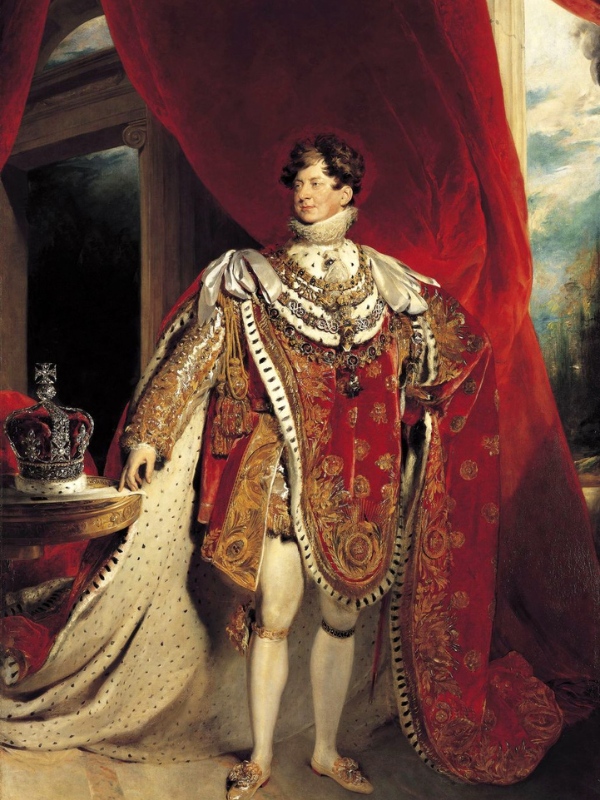
George IV

King of the United Kingdom and Hanover 1820–1830
Prince Regent 1811–1820

Bio:
King George IV’s highly controversial and flamboyant reign was characterized by an extraordinary patronizing of the arts and architecture, deeply tarnished by acute financial extravagance and an absolute collapse of personal popularity.

Serving as Prince Regent for nine years during his father's mental illness, he presided over the ultimate military triumphs of the Napoleonic Wars and funded the sweeping architectural transformation of London, commissioning John Nash to design Regent Street and transforming Buckingham House into a grand royal palace.

However, his private life was a continuous series of public scandals, highlighted by his secret, illegal marriage to the Catholic widow Maria Fitzherbert and his deeply toxic relationship with his official wife, Caroline of Brunswick. Upon his accession to the throne, he provoked widespread public fury by attempting to pass a parliamentary bill to divorce Caroline and banning her by force from his lavish coronation ceremony at Westminster Abbey.

A lazy and politically unstable ruler, he consistently resisted progressive legislative reforms, but was ultimately forced by his Prime Minister, the Duke of Wellington, to sign the Roman Catholic Relief Act 1829 to prevent a total civil war in Ireland, a reluctant constitutional surrender that permanently dismantled the exclusive Anglican monopoly over parliamentary representation just months before his death.
Further Information: King George IV

The Reign of King George IV

Assumption of the Regency (February 1811)
Long before wearing the crown, the Prince of Wales took full independent executive authority over the state due to his father’s permanent relapse into mental blindness. He established a highly lavish, controversial regency court at Carlton House, launching a decade-long era of absolute social extravagance, patronizing the arts, and initiating immense architectural spending that transformed the layout of London.

The Radical War and the Battle of Bonnymuir (April 1820)
The monarch’s initial months on the throne were instantly destabilized by a widespread industrial and political insurrection across Scotland historically branded as the Radical War. Radical weavers and artisans organized a national strike, demanding parliamentary reform and creating a provisional government; a detachment of the 7th Hussars intercepted an armed rebel column at the Battle of Bonnymuir in Stirlingshire, routing the insurgents and leading to the public execution of the ringleaders for high treason.

Exclusion of the Queen (July 1821)
Following the death of his father, George IV officially ascended the throne and banned his estranged wife, Caroline of Brunswick, from attending his grand coronation. When she arrived at Westminster Abbey demanding entry, royal guards physically blocked the queen at the doors, sparking widespread public rioting and anti-Hanoverian protests across London that severely damaged the king’s reputation during his sacral anointment.

The Royal Progress (August 1822)
George IV executed a high-profile diplomatic visit to Edinburgh, masterminded by the author Sir Walter Scott, making him the first reigning British monarch to visit Scotland since the Stuart era. He paraded through the city wearing a bright pink tartan kilt, an intervention that successfully defused local radical unrest, legitimized Scottish cultural expression, and popularized tartan dress across the shires.

Foundation of the National Gallery (April 1824)
To elevate the cultural prestige of his capital, the monarch authorized the purchase of John Julius Angerstein’s private art collection for £57,000 using crown funds. This acquisition formed the absolute institutional nucleus of the National Gallery, establishing a public art collection to directly compete with the Louvre in Paris and anchor national education.

The First Anglo-Burmese War (1824–1826)
Great Britain dramatically expanded its imperial footprint in Asia by launching a highly expensive, multi-season military expedition against the Kingdom of Ava. The British East India Company mobilized army units to invade Burma, successfully bombarding coastal strongholds and conquering Assam and Arakan; the campaign concluded with the signing of the Treaty of Yandabo in February 1826, forcing the Burmese court to pay a massive cash indemnity and open trade lines to the British exchequer.

Destruction of the Ottoman Fleet at Navarino (20 October 1827)
The royal navy projected its massive maritime power into the Mediterranean to intervene in the Greek War of Independence. A combined British-French-Russian fleet under Vice-Admiral Sir Edward Codrington trapped the joint Ottoman-Egyptian armada at Navarino Bay, launching a high-velocity bombardment that annihilated sixty enemy warships and secured Greek autonomy.

Resignation of Lord Goderich (January 1828)
Internal political faction wars fractured the cabinet following the sudden death of George Canning. The king’s weak Prime Minister, Frederick John Robinson, 1st Viscount Goderich—then operating as Lord Goderich—proved entirely incapable of balancing the Whig and Tory factions, collapsing into tears during a private audience until the king forced his resignation.

Appointment of the Iron Duke (January 1828)
To stabilize the executive machinery of the state, George IV turned to the premier hero of Waterloo, Arthur Wellesley, 1st Duke of Wellington. He appointed the Duke of Wellington Prime Minister, initiating a tense partnership that forced the king to submit to sweeping constitutional changes he spent years resisting to preserve domestic public order.

Catholic Emancipation (April 1829)
George IV fell into deep psychological panic when the Duke of Wellington and Sir Robert Peel threatened to resign if he blocked religious reform following Daniel O’Connell’s election victory in Clare. Buckling under the immediate threat of a civil war in Ireland, the king wept openly, signed the Catholic Relief Act 1829, and permanently surrendered the crown’s anti-Catholic statutory position.

The Metropolitan Police (September 1829)
The monarch gave his royal assent to the landmark Metropolitan Police Act 1829 masterminded by the Home Secretary. The statute completely re-engineered the judicial architecture of London, abolishing the traditional parish watchmen system to deploy a standardized, professional force of uniformed police constables answerable directly to the Home Office.

Death at Windsor (26 June 1830)
George IV’s turbulent ten-year rule ended in severe physical decay, blindness, and systemic organ failure at Windsor Castle at the age of sixty-seven on 26 June 1830. Following a final, agonizing stomach hemorrhage brought on by decades of heavy feasting, sedentary luxury, and laudanum addiction, he passed away, passing the crown completely unopposed to his brother, King William IV.

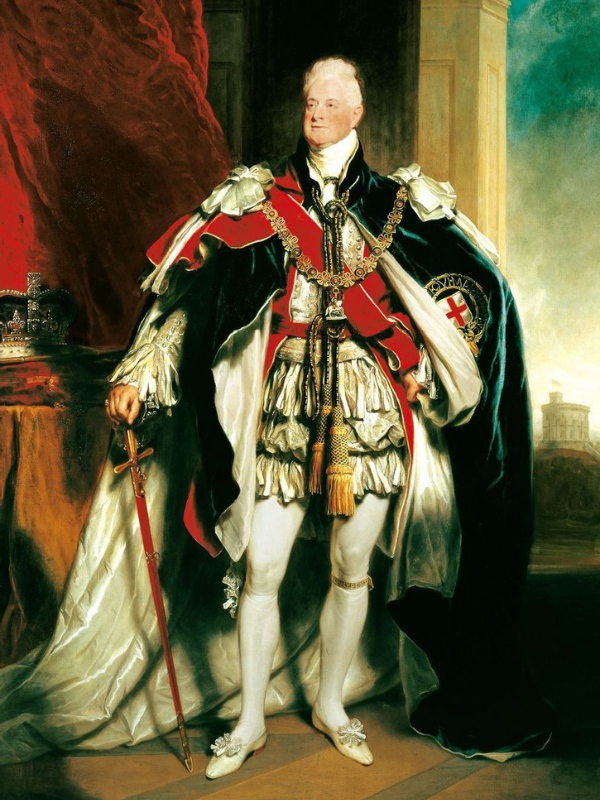
William IV

King of the United Kingdom and Hanover 1830–1837

Bio:
The brief and energetic reign of King William IV witnessed a monumental restructuring of the country's legislative and social frameworks, bridging the gap between old aristocratic privileges and the modern industrial era.

Spending his youth serving as a professional officer in the Royal Navy, he ascended the throne at the age of sixty-four, instantly projecting an unpretentious, approachable demeanor that completely restored the public prestige of the monarchy following the excesses of his brother. His administration was immediately thrust into a severe constitutional crisis over the Great Reform Bill, which sought to eliminate corrupt "rotten boroughs" and extend voting rights to the expanding industrial middle classes.

When the House of Lords repeatedly blocked the legislation, triggering widespread rioting across major cities, William forced the issue by threatening to deploy his royal prerogative to create dozens of new Whig peers to swamp the opposition, a move that broke the aristocratic blockade and secured the passage of the Reform Act 1832. His reign subsequently presided over a sequence of landmark progressive statutes, including the Slavery Abolition Act 1833 and the Factory Act, which criminalized child labor.

By dying without a surviving legitimate heir, his passing permanently dissolved the 123-year-old personal union between Great Britain and Hanover, as Salic law prohibited his teenage niece, Victoria, from inheriting the German throne, cleanly dividing the family domains.
Further Information: King William IV

The Reign of King William IV

Accession of the Citizen King (26 June 1830)
Following the death of his brother King George IV, the sixty-four-year-old William IV ascended the throne completely unopposed. He immediately broke with his brother’s extravagant court style, walking unescorted through the streets of London, dismissing the elite royal guards, and winning immense popular support across the country as the Citizen King.

The Liverpool and Manchester Railway (15 September 1830)
The monarch’s reign witnessed a major breakthrough in global industrial transport with the opening of the world’s first inter-city passenger railway. The historic opening ceremony was marred by tragedy when a premier politician, William Huskisson, was struck and killed by the locomotive Northumbrian, but the event successfully established the permanent baseline for the global railway boom.

The Swing Riots (Autumn 1830)
The administration faced severe domestic unrest when agricultural workers across the southern shires launched the Swing Riots to protest low wages and industrial threshing machines. Armed mobs burned hayricks and destroyed farming equipment, forcing the king to deploy regular military units under William Conyngham Plunket, 1st Baron Plunket, to suppress the movement and convict the ringleaders.

The Fall of the Tory Cabinet (November 1830)
Furious at the Duke of Wellington’s absolute refusal to reform parliament’s voting system, public outrage forced the collapse of the Tory government. William accepted the resignation of Arthur Wellesley, 1st Duke of Wellington, turning executive authority over to Charles Grey, 2nd Earl Grey, to launch a Whig administration entirely dedicated to comprehensive legislative reform.

Bristol Reform Riots (October 1831)
The constitutional crisis over parliamentary reform reached a dangerous flashpoint when Tory lords blocked Earl Grey’s reform legislation. Furious mobs rose in open rebellion across Britain, burning down the Bishop’s Palace in Bristol under the nose of Sir Charles Wetherell and destroying prisons, throwing the court into deep panic regarding a full working-class revolution.

Submission to the Great Reform Act (7 June 1832)
The monarch was forced into a severe political capitulation when Earl Grey threatened to resign unless the king packed the House of Lords with newborn Whig peers to force the legislation through. Faced with total political gridlock, William submitted, forcing the Tory lords to back down and giving his royal assent to the landmark Great Reform Act 1832, which disenfranchised fifty-six rotten boroughs and expanded the franchise.

The Abolition of Slavery inside the Empire (August 1833)
William gave his royal assent to the historic Slavery Abolition Act 1833 to re-engineer the moral and economic architecture of the British Empire. The statute completely outlawed the ownership of slaves across the vast majority of British colonial territories, purchasing the freedom of eight hundred thousand enslaved people using £20 million of public funds to satisfy West Indian planting interests.

Overhaul of the Poor Laws (August 1834)
The administration passed the highly controversial Poor Law Amendment Act 1834 to centralize the country’s social welfare system. The code stopped traditional financial assistance to the poor in their own homes, mandating that to receive state food or shelter, destitute citizens had to enter heavily restricted local workhouses, a reform that generated intense hostility across the industrial towns.

Burning of the Medieval Palace of Westminster (16 October 1834)
The historic heart of British government faced a catastrophic physical erasure when a fire broke out inside the Palace of Westminster. A sudden furnace flare-up from burning archaic wooden tally sticks completely destroyed the House of Commons and the House of Lords, forcing the king to offer the newly built Buckingham Palace as a temporary home for parliament.

Death at Windsor (20 June 1837)
William’s brief seven-year rule ended in physical exhaustion and systemic organ failure at Windsor Castle at the age of seventy-one on 20 June 1837. Suffering from a severe case of asthma and heart failure, he deliberately fought to stay alive until his niece reached her eighteenth birthday to prevent a regency, passing away peacefully to pass the crown to Queen Victoria.

The Royal Household of King George IV

Marriage to Adelaide of Saxe-Meiningen: July 1818
Following the death of Princess Charlotte in 1817, which left the Hanoverian succession empty, William was forced into a dynastic marriage. At fifty-two years old, he married the twenty-five-year-old German princess Adelaide of Saxe-Meiningen, a deeply devoted, religious match that brought immediate moral reform to his household.

The primary desperation of the marriage derived from their absolute failure to provide a surviving direct heir to the throne. Adelaide endured multiple pregnancies, but the children concluded in heartbreaking miscarriages, stillbirths, or infant deaths, including Princess Elizabeth, who died at less than four months old, leaving the palace empty and shifting the succession to his niece Victoria.


Palace War with the Duchess of Kent
A toxic family hatred fractured the stability of the royal household, matching William against his sister-in-law, the Duchess of Kent, and her comptroller, Sir John Conroy. The duchess systematically isolated Princess Victoria from the king’s court to prepare her own regency; the feud peaked during a grand birthday banquet in 1836, where William stood up before a hundred guests and loudly condemned the duchess for insulting his majesty, shouting that he hoped to survive long enough to strip her of her regency ambitions.

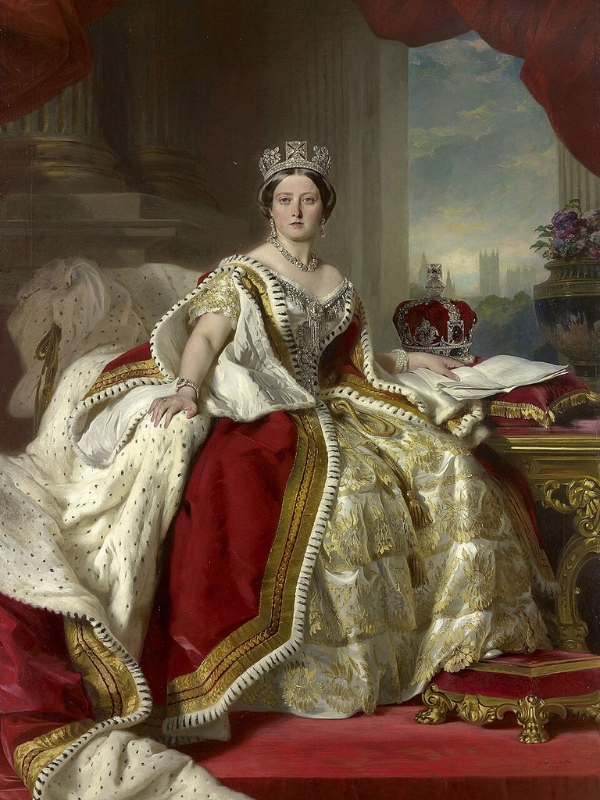
Victoria

Queen of the United Kingdom 1837-1901
Empress of India 1876-1901

Bio
The ascension of Queen Victoria to the British throne in June 1837 marked a decisive institutional break from the Hanoverian past, permanently dissolving the personal union between Great Britain and the Kingdom of Hanover due to the Salic law.

Inheriting a crown that had been deeply compromised by the public scandals and erratic behavior of her uncles, the young monarch worked methodically alongside her husband, Prince Albert of Saxe-Coburg and Gotha, to completely reinvent the public image of the British monarchy. Together, they transformed the throne from a corrupt center of partisan political patronage into a pristine, idealized symbol of domestic virtue, scientific progress, and civic duty.

Throughout her record-breaking sixty-three-year reign, an era that came to define the zenith of the Victorian Age, the Empire expanded into the largest maritime dominion in human history, anchoring commerce to British shipping lanes and factory production.

Following the catastrophic loss of Prince Albert to typhoid fever in 1861, Victoria entered a prolonged period of deep, reclusive mourning that temporarily destabilized the popularity of the crown and fueled a rising domestic republican movement. She successfully reclaimed her position in the public conscience during her twilight years, leaning heavily into her statutory title as Empress of India to serve as the maternal anchor of a global imperial state.

By orchestrating a vast network of dynastic marriages for her nine children across the courts of Germany, Russia, Greece, and Denmark, she turned the British royal lineage into the central axis of continental diplomacy, providing a timless illusion of imperial peace that finally shattered upon her passing in January 1901.
Further Information: Queen Victoria 

The Reign of Queen Victoria I

Separation from Hanover (20 June 1837)
Following the death of her uncle King William IV, the eighteen-year-old Victoria inherited the British throne. Because Salic law in Germany legally blocked a female from inheriting crown lands if a male heir survived, the accession permanently severed the personal union between Great Britain and Hanover, ending the old Hanoverian state geometry and sending her uncle, Prince Ernest Augustus, Duke of Cumberland, across the channel to claim the German kingdom.

The Chartist Crisis and the Peoples Charter (May 1838)
The stability of the early administration faced an immediate domestic challenge when radical working-class leaders published the People’s Charter, demanding universal male suffrage, secret ballots, and the abolition of property qualifications for members of parliament. The movement organized massive political rallies across the industrial shires and presented colossal petitions to Westminster, prompting the queen’s government to deploy regular troops and establish specialized police networks to suppress localized armed risings at Newport.

The Bedchamber Crisis (May 1839)
Victoria’s early independent rule faced a severe political block when the Tory leader, Sir Robert Peel, requested that she dismiss her Whig-appointed ladies of the bedchamber to project political neutrality before he would form a cabinet. The young queen flatly refused, triggering a high-profile constitutional standoff that forced Peel to decline office, allowing her favorite Whig minister, William Lamb, 2nd Viscount Melbourne, to retain power.

The Opium Wars and the Annexation of Hong Kong (1839–1842)
Great Britain projected its massive maritime power into East Asia to protect commercial shipping lines and force the opening of Chinese markets to British merchants. The royal navy bombarded coastal fortresses along the Yangtze River, systematically destroying the outdated defensive networks of the Qing Empire; the conflict concluded with the signing of the Treaty of Nanking in August 1842, forcing China to pay a massive silver indemnity and cede Hong Kong Island to the British crown.

The Great Exhibition (1 May 1851)
Victoria took direct part in the premier cultural triumph of the mid-century by officially opening the Great Exhibition of the Works of Industry of All Nations inside the Crystal Palace in Hyde Park. Masterminded by her husband, Prince Albert of Saxe-Coburg and Gotha, the event displayed cutting-edge global technology to over six million visitors, establishing British industrial dominance.

The Crimean War (March 1854)
Global geopolitical rivalries erupted into open war when Great Britain and France formed a powerful military alliance to block the Russian Empire’s expansion into Ottoman territories. This launched a brutal, high-velocity campaign across the Black Sea that severely strained the resources of the exchequer and led to the creation of the Victoria Cross to reward supreme battlefield bravery.

Suppression of the Indian Mutiny (1857–1558)
Victoria’s imperial security faced an absolute existential challenge when native sepoy soldiers rose in open revolt against the British East India Company. Following a year of savage fighting, British regular army units crushed the rebellion, prompting parliament to pass the Government of India Act 1858, which dissolved the company and transferred direct rule straight to the crown.

The Death of Prince Albert (14 December 1861)
The stability of the royal household faced deep emotional ruin when the Prince Consort died suddenly from typhoid fever or stomach cancer at Windsor Castle. Driven mad by grief, the forty-two-year-old queen fell into a state of absolute, lifelong depression, withdrawing completely from public life for decades to live as the Widow of Windsor and severely weakening the popularity of the monarchy.

The Great Reform Act of Disraeli (August 1867)
The domestic legislative framework was thoroughly re-engineered when the Tory administration under Benjamin Disraeli, 1st Earl of Beaconsfield—then serving as Chancellor of the Exchequer—passed the Representation of the People Act 1867. This landmark statute doubled the size of the electorate by extending the franchise to urban working-class householders, completely altering the political landscape of the shires.

The Empress of India Title (1 May 1876)
Under the strategic direction of her favorite Tory Prime Minister, the Earl of Beaconsfield, parliament passed the Royal Titles Act 1876. The statute officially granted Victoria the grand sovereign title of Empress of India, locking in her legal status alongside the rival empires of Russia and Germany and anchoring her identity firmly to the expansion of the British Raj.

The Irish Land League and Agrarian War (1879–1881)
The administration faced severe domestic instability across the Irish shires when the Irish National Land League, organized by Charles Stewart Parnell, launched a systematic campaign of agrarian agitation and boycotting against British landlords. The queen gave her royal assent to consecutive Protection of Person and Property acts, utilizing emergency executive powers to arrest political leaders and deploy regular troops to enforce evictions before Gladstone stabilized the province through the Land Act 1881.

Celebration of the Golden and Diamond Jubilees (1887–1897)
Victoria emerged from her long isolation to mark her historic fifty and sixty-year milestones on the throne. The jubilees transformed London into a massive imperial display, parading troops from every corner of the British Empire through the streets to celebrate the absolute zenith of British global power and commerce.

The Second Boer War (October 1899)
The final years of the reign were completely dominated by a brutal colonial conflict in South Africa against the independent Boer Republics. The regular army under Horatio Herbert Kitchener, 1st Earl Kitchener, faced devastating guerrilla tactics and international criticism over the implementation of the early concentration camp systems to starve out the Boer families.

Collapse and Death (22 January 1901)
Victoria’s legendary sixty-three-year rule—the second-longest in British history—ended in physical exhaustion and a sequence of minor strokes at Osborne House on the Isle of Wight at the age of eighty-one on 22 January 1901. Her passing brought a definitive end to the House of Hanover, passing a globally dominant British Empire to her son, King Edward VII, to launch the House of Saxe-Coburg and Gotha.

The Royal Household of Queen Victoria

Marriage to Albert of Saxe-Coburg and Gotha (February 1840)
Victoria entered into a highly successful and personally devoted marriage with her German cousin, Prince Albert of Saxe-Coburg and Gotha. Although parliament flatly refused to grant Albert equal kingly status or an expansive stipend, he became her most trusted political advisor and private secretary. He systematically updated the administrative efficiency of the royal archives, reorganized the palace finances, and managed cabinet disputes while the queen was confined by childbearing.

The Lineage and Marriages of the Royal Successors
The marriage produced a massive household of nine children, whom the royal couple strategically paired with the premier royal houses of mainland Europe, transforming the queen into the Grandmother of Europe.

King Edward VII (King of the United Kingdom and Emperor of India)
Born on 9 November 1841, he operated as the premier heir to the empire, frequently clashing with his mother over his lifestyle before inheriting the crown in 1901. He married Princess Alexandra of Denmark, anchoring British diplomatic ties to Northern Europe.

Victoria, Princess Royal (German Empress and Queen Consort of Prussia)
Born on 21 November 1840, she was used to forge a powerful liberal alliance with Berlin. She married Frederick III, German Emperor, becoming the mother of the future German Emperor, Kaiser Wilhelm II, and navigating intense political isolation at the Hohenzollern court.

Princess Alice of the United Kingdom (Grand Duchess Consort of Hesse and by Rhine)
Born on 25 April 1843, her hand was deployed to reinforce Protestant links across the German principalities. She married Louis IV, Grand Duke of Hesse, birthing the future Empress Alexandra of Russia and carrying the gene for hemophilia straight into the Romanov line.

Prince Alfred, Duke of Saxe-Coburg and Gotha (Duke of Edinburgh and Saxe-Coburg and Gotha)
Born on 6 August 1844, he pursued a distinguished professional career in the Royal Navy. He married Grand Duchess Maria Alexandrovna of Russia, a high-status match with the Romanov dynasty that strained relations between London and St Petersburg over precedence disputes.

Princess Helena of the United Kingdom (Princess Christian of Schleswig-Holstein)
Born on 25 May 1446, she was kept close to the court to serve as her mother’s administrative assistant. She married Prince Christian of Schleswig-Holstein, dedicating her life to nursing organizations and charitable enterprise inside Great Britain.

Princess Louise of the United Kingdom (Duchess of Argyll)
Born on 18 March 1848, she broke with traditional dynastic custom by marrying a British subject rather than a foreign prince. She married John Campbell, 9th Duke of Argyll, establishing herself as an exceptionally talented sculptor and a prominent patron of higher education and the arts.

Prince Arthur, Duke of Connaught and Strathearn (Governor General of Canada)
Born on 1 May 1850, he pursued an extensive, decorated career in the British Army. He married Princess Louise Margaret of Prussia, later serving as a highly popular Governor General of Canada to lock down imperial security across the dominion.

Prince Leopold, Duke of Albany (Duke of Albany)
Born on 7 April 1853, his independent administrative and academic career was severely limited by his constant struggle with hemophilia. He married Princess Helena of Waldeck and Pyrmont, before his early death from a brain hemorrhage following a minor fall.

Princess Beatrice of the United Kingdom (Princess Henry of Battenberg)
Born on 14 April 1857, she operated as her mother’s devoted lifelong companion, private secretary, and literary editor. She married Prince Henry of Battenberg, under the strict constitutional condition that the couple remain permanently inside the queen’s household.

The Wars of Queen Victoria

The First Opium War (1839 – 1842)
A naval and land conflict launched against the Qing Dynasty of China to force the reopening of trade routes and protect British opium merchants, concluding with the annexation of Hong Kong.

The First Anglo-Afghan War (1839 – 1842)
An invasion of Afghanistan launched by the British East India Company to block Russian imperial expansion, ending in a catastrophic tactical retreat from Kabul.

The First Anglo-Sikh War (1845 – 1846)
A fierce border conflict between the British East India Company and the Sikh Empire in the Punjab, resulting in a pyrrhic British victory and territorial concessions.

The New Zealand Wars / Land Wars (1845 – 1872)
A multi-decade sequence of armed conflicts between the British colonial government and various Māori tribes over contested land ownership and sovereignty.

The Second Anglo-Sikh War (1848 – 1849)
A secondary military campaign in the Punjab that led to the complete dissolution of the Sikh Empire and the formal annexation of the region into the British Empire.

The Second Anglo-Burmese War (1852 – 1853)
A short, amphibious invasion of southern Burma launched to resolve trade disputes, resulting in the permanent annexation of the province of Pegu.

The Crimean War (1854 – 1856)
A major European military alliance campaign alongside France to halt the Russian Empire’s expansion into Ottoman territories across the Black Sea.

The Second Opium War / Arrow War (1856 – 1860)
A secondary joint Anglo-French military intervention in China to enforce wider trade legalizations and open diplomatic quarters in Beijing.

The Anglo-Persian War (1856 – 1857)
A short campaign launched to force Persia to surrender its control over the strategic frontier city of Herat in Afghanistan.

The Indian Mutiny / Great Rebellion (1857 – 1858)
An intense, widespread military uprising of native sepoy soldiers that resulted in the collapse of the East India Company and the transfer of direct rule to the British crown.

The Anglo-Ashanti Wars (1823 – 1900)
A long-running sequence of five separate frontier conflicts on the Gold Coast (modern Ghana) matching British forces against the expanding Ashanti Empire:
The First War (1823–1831) – Fought predominantly before her accession, though border friction remained active.
The Second War (1863–1864) – A low-intensity border standoff crippled by tropical disease outbreaks.
The Third War / Sagrenti War (1873–1874) – A punitive expedition led by Sir Garnet Wolseley that successfully burned Kumasi.
The Fourth War (1895–1896) – A bloodless invasion that forced the Ashanti King into formal submission and exile.
The Fifth War / War of the Golden Stool (1000) – A final uprising led by Queen Yaa Asantewaa that resulted in the formal annexation of Ashanti territory.

The Ambela Campaign (1863)
A frontier expedition launched along the North-West Frontier (modern Pakistan) to suppress a regional religious uprising against British border forts.

The Bhutan War / Duar War (1864 – 1865)
A brief conflict over control of the strategic Duar border passes, ending with Bhutan ceding territory in exchange for an annual crown subsidy.

The British Expedition to Abyssinia (1867 – 1868)
A highly complex, logistically heavy punitive rescue mission sent to storm the mountain fortress of Magdala to release captured British diplomats.

The Anglo-Zulu War (1879)
An unauthorized invasion of the Zulu Kingdom in South Africa launched to consolidate British colonial borders, marked by an opening disaster at Isandlwana and a final victory at Ulundi.

The Second Anglo-Afghan War (1878 – 1880)
A secondary invasion of Afghanistan launched to preempt Russian diplomatic influence, resulting in British control over Afghan foreign policy.

The First Boer War (1880 – 1881)
A short conflict matching British regular forces against independent Transvaal Boers in South Africa, ending in a rare British military defeat at Majuba Hill.

The Anglo-Egyptian War (1882)
A naval bombardment and land invasion executed to suppress the Urabi Nationalist Rebellion and secure permanent financial and military control over the Suez Canal.

The Mahdist War / Sudan Campaigns (1881 – 1899)
A long-running colonial conflict against the Islamic Mahdist state in Sudan, marked by the fall of Khartoum and finalized by Herbert Kitchener’s artillery victories.

The Third Anglo-Burmese War (1885)
A lightning, two-week river campaign launched to block French commercial competition, resulting in the total deposition of King Thibaw and the final annexation of upper Burma.

The Anglo-Zanzibar War (27 August 1896)
Historically recorded as the shortest war in global history, lasting exactly thirty-eight minutes, when a British naval squadron bombarded the sultan’s palace to install a client ruler.

The Second Boer War (1899 – 1902)
A massive, multi-province conflict in South Africa against the independent Boer Republics, which cast its shadow onto Victoria’s deathbed and permanently altered British military organization.

A simplified family tee depicts the intricate matrimonial and political alliances of The House of Hanover across early modern Europe

House Of Hanover FAQs

What was the Treaty of Paris 1783?

The Treaty of Paris 1783 was the definitive peace settlement that brought a formal end to the American Revolutionary War between Great Britain and the United States, along with its continental allies.

Under the terms of the treaty, the British crown officially recognized the absolute independence of the thirteen American colonies, surrendering a massive territorial empire that stretched from the Atlantic coast westward to the Mississippi River.

The treaty forced a deep reorientation of British foreign policy, prompting the empire to swivel its commercial focus away from the Americas and toward aggressive colonial expansions across India, Australia, and the Pacific.

How many Hanoverian monarchs ruled, and for how long?

There were six monarchs who ruled the House of Hanover, collectively covering a span of one hundred and twenty-three years of British history.

This line began in August 1714 with the accession of George I and descended through George II, George III, George IV, and William IV, before concluding with the death of Queen Victoria in January 1901, an era that transformed Britain from an agrarian society into the world’s premier industrial and imperial superpower.

What was the Hanoverian claim to the throne?
The Hanoverian claim to the British throne was established by the Act of Settlement 1701, a statutory law passed by Parliament to guarantee a permanent Protestant succession.
 
Following the death of Queen Anne’s last surviving child, British legislators deliberately bypassed over fifty senior Catholic claimants who held superior hereditary rights under ancient dynastic custom. Instead, they designated Princess Sophia of the Palatinate—a granddaughter of King James I—and her Protestant heirs as the sole rightful successors to the crown.
 
When Sophia died just weeks before Queen Anne in 1714, her eldest son, George Louis, Elector of Hanover, automatically inherited the throne by statutory right, smoothly initiating the Hanoverian line.
What was the Act of Union 1800?
The Act of Union 1800 was a major legislative milestone passed by the separate parliaments of Great Britain and Ireland to merge the two realms into a single sovereign nation known as the United Kingdom of Great Britain and Ireland.
 
Effective on 1 January 1801, the statute permanently dissolved the Irish Parliament in Dublin, transferring a portion of Irish political representation directly to the Westminster parliament in London. Driven by British fears that a rebellious Ireland could be used as a beachhead for a French invasion during the Napoleonic Wars, the union centralized administrative control, created a uniform trade pool, and bound the wealth of the two islands under a single executive crown.
What was the Great Reform Act of 1832?
The Great Reform Act of 1832 was a monumental piece of legislation that permanently restructured the English electoral system, averting a potential revolution by expanding political power to the rising industrial middle classes.
 
The statute systematically disenfranchised dozens of corrupt “rotten boroughs”—depopulated rural hamlets that had returned members to Parliament through aristocratic bribery—and redistributed those vacant seats to rapidly growing industrial cities like Manchester and Birmingham.
 
While the act maintained a strict property qualification that still excluded the working class from voting, it shattered the exclusive political monopoly of the landed aristocracy and established the precedent that the composition of the legislature must adapt to demographic changes.
Why was the Regency Act of 1811 enacted?
The Regency Act of 1811 was enacted because King George III had become permanently incapacitated by severe, recurrent mental illness, rendering him entirely incapable of executing his royal duties.
 
The statute transferred the executive authority of the crown to his eldest son, the future George IV, who assumed the title of Prince Regent. This transfer of power triggered a dramatic shift in court culture, replacing the old king’s frugal, deeply religious, and quiet lifestyle at Windsor with a flamboyant era of grand architecture, immense financial extravagance, loose morals, and unprecedented patronizing of the arts in London.
What was the impact of the Seven Years' War?

The Seven Years’ War, ending in 1763, completely redrew the global map of empire by breaking French colonial power and establishing Great Britain as the world’s premier maritime and commercial superpower.

Through decisive victories in Canada, India, and the Caribbean, the British military secured total dominance over North America and the Indian subcontinent. However, the astronomical financial cost of this global conflict left the British treasury carrying a massive national debt, a fiscal crisis that prompted Parliament to levy aggressive, unconstitutional taxes on the American colonies to help fund the permanent frontier garrisons, directly triggering the American Revolution.

What was the Royal Marriages Act of 1772?

The Royal Marriages Act of 1772 was a strict piece of legislation passed at the absolute insistence of King George III to control the marital alliances of the royal family and protect the prestige of the dynasty.

Prompted by his outrage after his brothers secretly married non-aristocratic English women without his knowledge, the statute made it completely illegal for any descendant of George II under the age of twenty-five to marry without the explicit consent of the reigning sovereign.

Any marriage contracted without this royal approval was legally null and void, a strict boundary line that caused decades of private scandals and effectively barred royal princes from entering into legitimate unions with commoners.

What was the significance of the Battle of Dettingen?
The Battle of Dettingen, fought in June 1743 during the War of the Austrian Succession, holds a unique place in British history as the final time a reigning monarch personally commanded troops on the battlefield. King George II led a combined allied army of British, Hanoverian, and Austrian soldiers to secure a tactical victory against French forces in Bavaria.
 
While the engagement itself had limited long-term impact on the wider continental war, the king’s personal bravery at the front line dramatically boosted his domestic popularity and reinforced the martial identity of the early Hanoverian court.
What was the political result of the Battle of Culloden?
The Battle of Culloden marked the final military confrontation on British soil, resulting in the total annihilation of the Jacobite army by veteran government forces commanded by the Duke of Cumberland.
Charles Edward Stuart’s Highland clans were completely broken by superior government artillery and disciplined infantry tactics in less than an hour.
 
Cumberland capitalized on this triumph by launching a brutal, scorched-earth campaign across the Highlands, executing suspected rebels, banning the traditional clan system, outlawing the tartan, and confiscating ancestral weapons, an absolute suppression that permanently dismantled the social infrastructure required to launch any future Stuart restoration.